


Key Takeaways
Treat science's deepest assumptions as questions, not unquestionable findings
Question the creed. Sheldrake argues that science is held back when philosophical commitments are treated as settled facts. He lists assumptions such as nature being mechanical, consciousness being only brain activity, and evolution having no purpose, then asks whether each is actually established by evidence. The distinction matters: science and its technologies can succeed without proving every worldview attached to them.
A revealing prediction. In 1963, Francis Crick and Sydney Brenner told Sheldrake that biology's major puzzles, development and consciousness, would be solved within roughly a decade or two. Their research made important advances, but the puzzles remained. For Sheldrake, this gap between confident prediction and incomplete explanation is a reason to keep inquiry open, not to declare science a failure.
What's valuable here is the demand to separate reliable findings from the worldview used to interpret them. The history of science supports that habit: assumptions often guide productive research, yet they can also define which questions seem legitimate. Still, an unanswered question does not count as evidence for any particular alternative. The strongest form of Sheldrake's challenge is methodological: make foundational commitments explicit, then ask what observations could change them. That standard should apply equally to materialism and to the book's own proposals.
Study living systems as organized wholes, not merely piles of parts
Organization matters. The mechanistic view treats organisms as machines whose behavior can, in principle, be explained by their components. Sheldrake contrasts this with an organismic view: living things build, maintain, and repair themselves, and their parts operate within larger systems. A cell belongs to a tissue, a tissue to an organ, and an organ to a body. A whole can have properties that are not apparent in its parts considered separately.
The blender problem. As a student, Sheldrake ground up rat livers to isolate enzymes. The experiment revealed information about chemical reactions, but not how a rat lives or behaves. The analogy is a computer: identifying its materials does not reveal how its components are organized or what the machine is doing.
This is a strong case for levels of explanation, not a rejection of molecular biology. A circuit diagram and a chemical inventory answer different questions; neither makes the other useless. Systems biology and ecology likewise study interactions that disappear when components are isolated. The caution is that calling a whole irreducible can become a stopping point rather than an explanation. The productive question is which properties require a higher-level model, and whether that model predicts outcomes better than a parts-only account.
Ask whether nature's regularities are learned habits, not eternal rules
A historical alternative. Sheldrake proposes that nature's regularities may behave more like habits formed through repetition than laws fixed for all time. He calls the proposed process morphic resonance: similar systems, he suggests, are influenced by the patterns of similar systems in their past. In this account, new patterns can arise, and repeated patterns become easier to reproduce.
Crystals as a test case. The book describes compounds whose crystals appeared in unexpected forms, sometimes changing what manufacturers could produce. The ritonavir drug, for example, developed a less soluble crystal form that disrupted production. Sheldrake interprets such episodes as potentially consistent with cumulative memory in nature. They are observations worth explaining, but they do not by themselves establish morphic resonance or changing natural laws.
The memorable move is to treat regularity as something that might have a history, rather than assuming timeless rules from the outset. It encourages testable questions about whether repeated processes change. But changing measurements of a constant do not automatically show that the constant itself varies; experimental error and calibration remain live alternatives. Likewise, an unusual crystal form can arise from ordinary conditions such as contamination or temperature. A convincing test needs preregistered predictions that distinguish resonance from these established explanations.
Do not explain consciousness away just because mechanisms remain incomplete
Experience is the puzzle. Materialist theories aim to explain minds through physical processes, but subjective experience remains difficult to capture in descriptions of brain activity. Knowing how the eye and brain respond to light does not, by itself, explain what seeing a color feels like. Sheldrake argues that calling experience an illusion does not remove the problem, because an illusion is still experienced.
A third position. The book considers panpsychism, the view that basic forms of experience may exist in nature and become more complex in organized systems. This differs from the claim that atoms think like people. It is presented as one possible alternative to both mindless matter and a separate, immaterial soul. The discussion draws on philosophers such as Galen Strawson and Alfred North Whitehead.
The distinction between explaining the functions of perception and explaining its felt quality remains philosophically important. It blocks a quick verbal solution, but does not prove that consciousness is fundamental or widespread. Panpsychism faces its own difficult question: how do tiny, basic experiences combine into the unified perspective of a person? A useful approach is to keep separate the empirical study of attention, report, and neural activity from the metaphysical question of why any of that activity is accompanied by experience.
Look for biological goals without assuming the cosmos has a fixed plan
Development has direction. Plants and animals often reach characteristic forms despite disruption. Sheldrake describes dragonfly embryos that can develop into complete, smaller embryos after part of an egg is damaged, and mud wasps that rebuild nest structures when an experimenter removes or alters them. Such cases suggest organized, flexible development rather than a simple sequence of mechanical pushes.
A vocabulary for goals. In developmental biology, an attractor is an end state toward which a process tends, while a chreode is a recurring pathway toward that end. Sheldrake argues that these ideas help describe growth and behavior, and proposes that future possibilities may help shape present activity. He distinguishes this claim about organisms from the much larger, unresolved question of whether evolution as a whole has a purpose.
Purposeful language can be useful when it identifies what an organism reliably does, especially when it adjusts after damage. In biology, this can be described through feedback, regulation, and evolved functions without assuming that the future literally pulls the present. The distinction between organism-level goals and a cosmic plan is particularly important: evidence that a wasp repairs a nest supports flexible behavior, not a predetermined destination for the universe. Good explanations make the level of the claim explicit.
Treat genes as contributors to development, not self-sufficient architectural blueprints
Genes have limits. Sheldrake argues that genes contribute to inheritance without containing a complete design for an organism. The Human Genome Project found about 23,000 human genes, fewer than many researchers expected, and gene studies often explained only a fraction of inherited differences. In one example discussed in the book, a study linked about fifty genes to height, but together they accounted for only about 5 percent of its estimated heritability.
Inheritance has layers. Epigenetic inheritance refers to changes in gene activity that can pass between generations without altering the DNA sequence. The book describes examples in animals and people, including inherited effects associated with nutrition and chemical exposure. Sheldrake proposes that organizing fields and morphic resonance may also contribute to inherited form. That final claim is his hypothesis, not an established explanation.
The useful correction is to avoid treating a gene as a miniature instruction for a visible trait. Development depends on regulation, cellular context, and interactions among many components, so genetic influence need not translate into simple prediction. The missing-heritability problem also warns against equating statistical association with a full causal account. Yet limited prediction does not show that genes are unimportant, or that a nonmaterial inheritance mechanism is needed. The key is to compare competing explanations against the same developmental evidence.
A damaged brain can disrupt memory without proving memories sit there
Storage is not settled. The standard view is that memories persist as physical changes in the brain. Sheldrake points to experiments by Karl Lashley, who trained animals and then removed or damaged brain regions without erasing some learned behaviors. He also describes chicks that retained a learned avoidance after researchers removed a brain area active during learning.
A rival hypothesis. Sheldrake proposes that memory may depend on morphic resonance, a kind of influence from similar patterns in an individual's past, rather than stored traces alone. He also recounts research in which moths retained an avoidance learned as caterpillars despite the major changes of metamorphosis. These findings raise questions about storage and retrieval, but do not show that the brain is unnecessary or that resonance is the answer.
The distinction between where learning changes brain activity and where a memory is stored is worth preserving. Memory can be distributed across networks, and damage may impair access without destroying every component of a learned pattern. That makes lesion studies informative but not decisive against physical memory mechanisms. The moth example is striking, yet it still needs a detailed account of which biological structures preserve the learning. A competing theory gains strength when it predicts results that ordinary neural models do not.
Test extended-mind claims without confusing vivid experience with established mechanism
Perception feels outward. When people look at a tree, the tree appears in the surrounding world, not inside the skull. Sheldrake argues that this experience deserves consideration and proposes that perceptual fields may extend beyond the brain. This resembles embodied approaches to cognition, which emphasize that perception depends on an organism's active relationship with its environment.
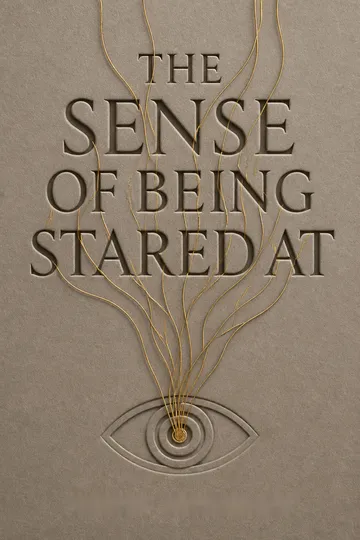
A more controversial extension. The book reports surveys and experiments on the sense of being stared at. In direct-looking tests, blindfolded participants guessed whether someone behind them was looking at them, with reported accuracy often around 55 percent rather than the 50 percent expected by chance. Sheldrake interprets this as evidence for extended perception. The results, even if reliable, do not by themselves identify the mechanism or prove that attention travels through an external field.
The embodied-cognition connection gives this argument a grounded starting point: perception is not merely a screen assembled inside the head, but an activity shaped by movement and surroundings. That insight does not require extrasensory perception. Claims about detecting an unseen gaze need especially careful controls for sound, timing, and analysis choices, because a small apparent effect can be sensitive to procedure. The right response is neither ridicule nor premature certainty, but transparent replication designed to isolate the proposed mechanism.
Investigate anomalous experiences with stronger tests, not reflexive belief or dismissal
Measure the claim. Sheldrake reviews research on telepathy, animal anticipation, and precognition, arguing that these experiences merit controlled investigation. In ganzfeld experiments, a relaxed participant tried to identify an image viewed by a distant sender. The book reports an average hit rate of about 34 percent, compared with 25 percent expected from choosing among four images. In telephone tests, participants reportedly identified a randomly selected caller about 45 percent of the time, above the 25 percent chance rate.
Interpretation remains contested. Sheldrake argues that dismissing such results before examining them is not scientific skepticism. But a result above chance does not settle whether the cause is telepathy. The evidence needs independent replication, clear protocols, and analysis plans set before data are collected, with unsuccessful results reported as fully as successful ones.
The book's strongest procedural point is that claims should be assessed by evidence rather than excluded by definition. Its own studies, however, also require scrutiny on ordinary methodological grounds. Small effects across many trials can be distorted by flexible analysis, selective reporting, or subtle procedural differences. Preregistration and multi-laboratory replication help distinguish a robust signal from a fragile one. Those safeguards do not prejudge the outcome; they make a positive result more persuasive and a negative result more informative.
Pair powerful treatments with human context and honest outcome comparisons
Medicine has multiple strengths. Vaccination, public sanitation, antibiotics, and surgery have transformed health. Sheldrake does not deny these achievements; he argues that a focus on physical interventions can overlook expectation, social connection, lifestyle, and emotional state. Placebo responses show that a patient's expectations can affect reported symptoms and, in some cases, measurable outcomes. The book also notes that supportive care can matter when patients face serious illness.
Compare what helps. Rather than assuming that conventional or alternative therapies work, Sheldrake proposes comparative effectiveness research: test available treatments against one another and assess benefits, risks, and costs. This is distinct from asking only whether a treatment beats a placebo. The approach leaves room for useful therapies while requiring evidence, and it gives patients more relevant information about their choices.
This is a constructive case for broadening evaluation without abandoning clinical standards. Context and expectation can shape care, but they do not make every treatment effective or safe. Comparative trials can answer practical questions, provided outcomes are meaningful, adverse effects are counted, and practitioner skill is considered. The distinction between placebo effects and specific treatment effects also matters: the former can be clinically relevant, while still leaving patients exposed to ineffective or harmful interventions if evidence is not examined carefully.
Make science more reliable by exposing its human institutions to scrutiny
Scientists are people. Sheldrake challenges the image of researchers as detached observers immune to pressure. Expectations can shape experiments, publication decisions favor positive findings, and funding priorities influence which questions get asked. A study of mislabeled rats illustrates the point: students told that randomly assigned animals were either maze-bright or maze-dull obtained results consistent with those labels.
Reform the process. The book advocates wider use of blind methods, fuller publication of negative results, more open scientific debate, and public input into a portion of research funding. It also favors recognizing that different sciences use different methods and explanations. These proposals do not make scientific findings arbitrary. They aim to make the sources of bias visible and give neglected questions a fair test.
The central insight is not that science is unreliable, but that reliability is an achievement built from institutional safeguards. Blinding, data access, replication, and disclosure of conflicts reduce predictable human biases. The book is right to resist treating consensus as a substitute for evidence, though consensus can also reflect accumulated expert checking rather than mere conformity. Public participation can broaden priorities, but technical review remains essential. The strongest reform combines plural questions with shared standards for transparent evidence.
Analysis
Science Set Free is both a critique of scientific materialism and a proposal for a more open scientific culture. Its central strength is the insistence that practical success does not settle metaphysical questions. A successful drug, a reliable physical law, or a detailed brain scan does not automatically prove that every aspect of life and mind is reducible to mechanics. The book also makes a compelling institutional point: researchers are shaped by incentives, expectations, disciplinary habits, and funding systems, so objectivity must be protected through practice rather than assumed as a personal virtue.
Its argumentative weakness is that it sometimes moves too quickly from an explanatory gap to a preferred alternative. Limits in genetic prediction do not establish morphic resonance; evidence that a brain lesion does not erase a learned behavior does not establish nonlocal memory; and above-chance performance in a disputed experiment does not identify telepathy as its cause. The same skepticism applied to materialism must be applied to Sheldrake's hypotheses. Observation, interpretation, and mechanism are separate steps, and the book's more extraordinary claims are strongest when presented as questions for testing rather than conclusions already earned.
A productive reading therefore separates the book into two contributions. The first is a valuable methodological challenge: make assumptions explicit, widen inquiry, and test whether existing explanations account for all relevant evidence. The second is a set of speculative theories, especially morphic resonance and extended perception, whose status depends on independent, repeatable tests. That distinction preserves the book's energy without confusing intellectual openness with equal evidential support. Its lasting lesson is not that science should accept every anomaly, but that it should specify in advance what evidence would justify acceptance, revision, or rejection.
Review Summary
The Science Delusion receives mixed reviews. Some praise Sheldrake's challenge to scientific dogma and materialistic worldviews, finding his ideas thought-provoking and important. Others criticize his reliance on anecdotal evidence and unconventional theories like morphic resonance. Reviewers appreciate Sheldrake's call for open-mindedness in science but question the validity of his alternative explanations. The book is seen as both fascinating and frustrating, with some finding it a valuable critique of scientific assumptions and others dismissing it as pseudoscience.
People Also Read








Glossary
Morphic resonance
Proposed memory across similar systemsSheldrake's hypothesis that similar patterns of activity influence one another across time and space. A present system is proposed to draw on the past patterns of similar systems, creating a cumulative memory that affects how the pattern forms again. The hypothesis is presented as applying to physical, biological, behavioral, and mental organization. It is speculative and not an established scientific mechanism.
Morphic field
Proposed organizing fieldIn Sheldrake's theory, a field within and around a self-organizing system that helps organize its form or activity. The term covers proposed fields for biological development, animal behavior, social coordination, and mental activity. Morphic fields are described as shaped by morphic resonance and as influencing patterns without transferring energy in the usual physical sense.
Morphogenetic fields
Proposed fields shaping formFields proposed to organize the development of form in plants and animals. Sheldrake uses the term for patterns that guide embryos and growing organisms toward characteristic structures, including when development is disrupted. In his account, these fields are influenced by morphic resonance from similar past organisms. Their existence and proposed role are not accepted as established scientific explanations.
Chreode
Habitual developmental pathwayA term used in developmental biology for a recurring pathway through which a developing system tends to reach an outcome. In Waddington's landscape analogy, a chreode is like a valley that channels a ball toward an end point. Sheldrake uses the concept to describe habitual routes through morphic fields toward developmental or behavioral goals.
Holon
Whole that is also partA system that functions as a whole at one level while also belonging as a part to a larger whole. A cell, for example, is a whole composed of parts and a part of a tissue or organism. The term emphasizes nested organization, where each level can have properties that are not captured by describing its components alone.
Holarchy
Nested hierarchy of wholesA nested arrangement of holons, each of which is both a whole and part of a larger whole. The concept describes organization across levels, such as molecules within cells, cells within tissues, and tissues within organisms. It is used to emphasize that parts and wholes interact, rather than treating complex systems as simple aggregates.
Panpsychism
Mindlike experience throughout natureThe view that some basic form of experience or mentality is present throughout nature, rather than appearing only in human brains. In the version discussed in the book, simple systems do not have humanlike consciousness; more complex experience emerges as systems become more organized. Panpsychism is a philosophical position, not an experimentally established account of consciousness.
Epigenetic inheritance
Inherited changes without DNA-sequence changesThe transmission across generations of changes in how genes are expressed without changing the underlying DNA sequence. Such changes can involve chemical modifications that affect whether genes are active. The book presents epigenetic inheritance as one form of material inheritance that complicates a strictly gene-sequence-based account of heredity.
Ganzfeld
Sensory-reduction telepathy testA laboratory procedure used in some telepathy experiments. A participant relaxes in a setting with reduced sensory input, often with uniform visual and auditory stimulation, while another person views a randomly chosen image. The participant reports impressions and later ranks a set of possible images. The method is designed to test whether the participant identifies the target more often than chance predicts.
Presentiment
Physiological response before an eventA proposed anticipatory response in which a person's body appears to react before an unpredictable emotional stimulus is presented. Experiments described in the book measured changes such as skin conductance before a computer randomly selected an image. Sheldrake interprets reported results as possible influence from the future, but the interpretation remains controversial and requires robust independent replication.
FAQ
What's The Science Delusion about?
- Challenging Scientific Dogmas: Rupert Sheldrake critiques ten fundamental assumptions of modern science, which he refers to as "dogmas." These include beliefs like "Is Nature Mechanical?" and "Are Minds Confined to Brains?"
- Exploring Consciousness and Nature: Sheldrake argues that these dogmas limit scientific inquiry and creativity, advocating for a more open-minded approach that could lead to new discoveries.
- Morphic Resonance Hypothesis: The book introduces morphic resonance, suggesting that memory and habits are inherited through non-material fields connecting similar organisms across time and space.
Why should I read The Science Delusion?
- Innovative Perspective: Sheldrake offers a fresh perspective on science, encouraging readers to question established beliefs and consider alternative explanations for phenomena.
- Interdisciplinary Approach: The book bridges gaps between science, philosophy, and spirituality, appealing to a wide audience interested in these fields.
- Encouragement of Inquiry: By advocating for a less dogmatic approach, Sheldrake fosters a spirit of exploration and critical engagement with scientific concepts.
What are the key takeaways of The Science Delusion?
- Questioning Assumptions: Sheldrake emphasizes the importance of questioning foundational scientific assumptions, which can lead to new insights and discoveries.
- Morphic Fields and Resonance: He introduces the concept of morphic fields, challenging traditional genetic determinism by suggesting a collective memory influences organisms.
- Consciousness and Purpose: The author argues that consciousness is fundamental to reality and that recognizing purpose in nature can lead to a more holistic understanding of life.
What are the best quotes from The Science Delusion and what do they mean?
- “The biggest scientific delusion of all is that science already knows the answers.”: This highlights the author's belief that overconfidence in scientific conclusions can stifle further inquiry.
- “The laws of nature are not fixed.”: Sheldrake suggests that the laws governing the universe may evolve, challenging the view that they are immutable.
- “Morphic resonance is a process whereby similar patterns of activity resonate across time and space.”: This encapsulates the core idea that memory and habits are shared among similar organisms through a collective memory.
What are the ten dogmas of modern science discussed in The Science Delusion?
- Nature is Mechanical: This dogma posits that everything operates like a machine, devoid of purpose or consciousness, which Sheldrake challenges.
- Matter is Unconscious: The belief that matter lacks consciousness is another dogma; Sheldrake argues consciousness may be fundamental to reality.
- Laws of Nature are Fixed: This dogma asserts that universal laws are unchanging, a notion Sheldrake questions by proposing they may evolve.
How does Sheldrake define morphic resonance in The Science Delusion?
- Collective Memory: Morphic resonance is described as a process where similar patterns resonate across time and space, influencing organisms' development and behavior.
- Non-Material Influence: Sheldrake posits that non-material morphic fields shape organisms' characteristics, challenging the view that inheritance is solely genetic.
- Implications for Science: This concept suggests scientific inquiry should consider non-material influences, opening new research avenues in biology and consciousness.
What is the relationship between consciousness and the brain according to The Science Delusion?
- Consciousness as Fundamental: Sheldrake argues consciousness is not just a byproduct of brain activity but a fundamental aspect of reality.
- Mental Causation: He suggests mental processes can influence physical actions, implying a complex interaction between mind and matter.
- Critique of Materialism: Sheldrake critiques the materialist view that dismisses consciousness as an illusion, advocating for its recognition as a significant reality.
How does The Science Delusion address the concept of purpose in nature?
- Purposes Exist: Sheldrake argues that living organisms have intrinsic purposes and goals, contrasting with the mechanistic view that denies purpose.
- Attractors and Goals: He introduces attractors, goals organisms are drawn toward, suggesting nature is directed by inherent goals.
- Evolutionary Implications: Recognizing purpose implies evolution may have goals, challenging the view that it is purely chance-driven.
What is the significance of the "missing heritability problem" in The Science Delusion?
- Genetic Limitations: The missing heritability problem highlights that many traits cannot be fully explained by genetics alone.
- Need for Broader Understanding: Sheldrake argues this problem underscores the need for a comprehensive understanding of heredity, including non-genetic factors.
- Implications for Research: This calls for reevaluating genetic research assumptions and exploring alternative inheritance explanations.
How does Sheldrake propose to test the hypothesis of morphic resonance?
- Experimental Evidence: Sheldrake suggests testing morphic resonance through experiments on crystallization, observing if the process becomes easier over time.
- Behavioral Studies: He proposes studying animal behavior to see if learned behaviors spread more easily, indicating a resonance effect.
- Cultural Inheritance: The hypothesis can be applied to cultural phenomena, examining if skills spread more rapidly as more individuals adopt them.
How does The Science Delusion relate to the concept of consciousness?
- Consciousness Beyond the Brain: Sheldrake argues consciousness is not confined to the brain and may be influenced by morphic fields.
- Experiential Knowledge: He highlights the importance of subjective experiences in understanding consciousness, complementing scientific inquiry.
- Potential for Expanded Understanding: Exploring consciousness through morphic resonance opens possibilities for understanding phenomena like telepathy.
What role do beliefs and expectations play in healing, according to The Science Delusion?
- Power of Belief: Sheldrake emphasizes that beliefs and expectations can significantly influence health outcomes, as seen in the placebo effect.
- Psychological and Social Factors: He discusses how social relationships and emotional support enhance healing, often overlooked in traditional medicine.
- Integrative Health Approaches: Sheldrake advocates for healthcare models incorporating psychological and social dimensions, leading to more effective treatments.
About the Author
Other books by Rupert Sheldrake


Download PDF
Download EPUB
.epub digital book format is ideal for reading ebooks on phones, tablets, and e-readers.








