

Key Takeaways
Treat spiritual practice as an experiment, not a test of belief
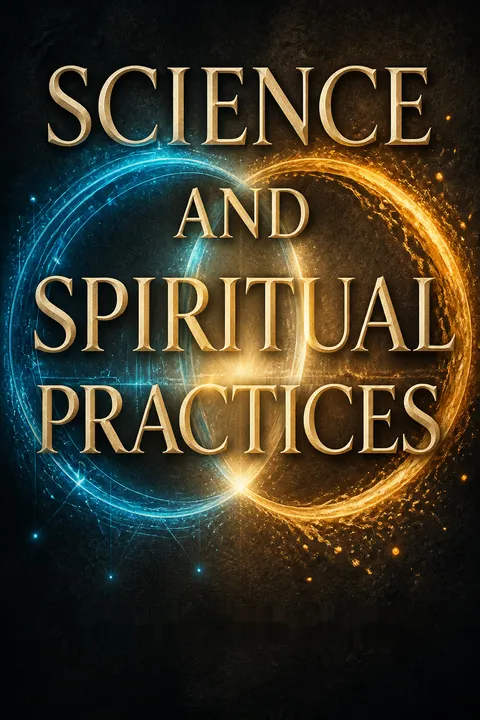
Practice can come first. Rupert Sheldrake describes beginning as an atheist biologist, drawn to living plants and animals but taught to analyze organisms as mechanisms. Meditation gave him a way to explore consciousness without first adopting religious beliefs. His travels through Hindu, Sufi, and Christian settings widened that inquiry, eventually leading him back to Christianity. The book applies the same open invitation to seven practices: meditation, gratitude, attention to nature and plants, ritual, group singing, and pilgrimage.
Evidence has boundaries. Research reviewed in the book links spiritual practices with better mental and physical health, but the studies do not establish that a divine or universal consciousness exists. The practical invitation is simpler: try a practice, notice its effects, and distinguish what experience shows from what a worldview says it means.
The book's most useful bridge is methodological: a person need not settle metaphysical questions before trying a practice. That resembles learning through experience in medicine and education, where a technique can be assessed for effects without agreement on every theory behind it. The distinction also protects intellectual honesty. Lower stress after meditation is evidence about stress, not proof of a transcendent mind; nor does a brain scan showing activity explain away the experience. The approach works best when empirical outcomes and spiritual interpretations remain connected but not confused.
Use meditation to notice thoughts, not force your mind blank
Attention, not erasure. In focused meditation, attention returns to a mantra or the breath. In open-monitoring forms, the meditator observes sensations and thoughts without immediately reacting. In both, thoughts still appear; the practice is to notice distraction and return to the present, rather than demand perfect stillness. Herbert Benson called the body's calming shift during practices such as meditation and slow breathing the relaxation response. It includes slower breathing and heart rate, and can reduce stress-related arousal.
Benefits have limits. The book describes research linking meditation with reduced anxiety and depressive symptoms, and an eight-week mindfulness study that found measurable brain-structure changes. Such findings support the value of practice, not the claim that consciousness reaches beyond the brain. A small minority can experience worsening psychiatric symptoms, which makes qualified guidance important for people at risk.
Meditation is often misunderstood as thought suppression, a goal that can turn ordinary mental activity into evidence of failure. Cognitive science offers a more practical interpretation: attention can be trained to notice distraction and disengage from it, much like a skill practiced in sport or music. This reframes a wandering mind as the material of the exercise. The book's brain findings are compelling but should be read with care: structural differences do not by themselves reveal whether meditation caused every difference, or what consciousness ultimately is.
Turn gratitude into a practice of noticing what money hides
Trace what sustains you. A paid transaction can make dependence invisible. Buying food at a self-checkout leaves little room to think about the soil, farmers, transport workers, or the many people whose work keeps a meal possible. Sheldrake expands gratitude from personal favors to the wider conditions of life: family, society, plants, animals, Earth, and the cosmos. In a ten-week experiment described in the book, participants who regularly listed things they appreciated reported greater optimism and well-being than comparison groups who wrote about hassles or ordinary events.
Make it reciprocal. A useful practice is to name specific gifts, then consider how to pass care onward. Saying grace before a meal is one simple way to make that recognition shared. Gratitude is not an order to accept mistreatment: companies can use positivity to discourage justified anger, and the book argues that thankfulness must leave room to confront injustice.
Gratitude's force here is not cheerfulness but a correction to the illusion of self-sufficiency. That connects with social science on reciprocity: gifts and help create relationships that markets can obscure by assigning everything a price. Naming those dependencies can support generosity and strengthen ties. Yet gratitude becomes ethically thin when used to demand compliance from people facing unfair conditions. A sound practice keeps two capacities together: appreciation for what genuinely sustains life, and clear judgment about what needs to change.
Spend unhurried time outdoors; nature quiets rumination and restores attention
Attend to a place. The more-than-human world means the natural world beyond human society, from plants and animals to Earth and the wider cosmos. Sheldrake argues that direct contact with it can counter a culture that presents nature mainly as data or raw material. One simple exercise is a regular sit spot: return to the same outdoor place in different weather and seasons, observe its plants and animals, and listen before trying to name everything.
The effects are measurable. In a Stanford study described in the book, people assigned to a fifty-minute walk in a natural setting reported less anxiety and brooding than those who walked in an urban setting. The nature group also improved on a working-memory measure. Japanese forest-bathing research is presented as finding lower cortisol and other calming effects. These findings support access to nature as a health resource, not a substitute for protecting it.
The sit spot turns nature from scenery into a relationship built through repeated attention. That matters because familiarity can reveal seasonal change, animal behavior, and ecological dependence that a quick visit misses. Research on attention restoration offers a complementary account: natural settings may give directed attention a break from constant demands. The benefits are not equally accessible to everyone, however. Safe parks, time, and transport are unevenly distributed, so nature connection is also a question of public design and environmental justice, not only personal discipline.
Study a flower closely to encounter life beyond human purposes
Look from another scale. Flowers evolved long before humans, and many of their colors and shapes help attract insects that pollinate them. That explanation describes a function, but Sheldrake asks whether function exhausts the experience of beauty. A hand lens makes the question tangible: close inspection reveals details that ordinary looking misses, while a wildflower can be contemplated without the garden's list of chores. Flowers also disclose patterns shared across plant families, such as recurring three-, four-, or five-part structures.
Plants have their own histories. The book traces how sacred groves and venerable trees have served as places of worship and refuge, while modern parks preserve some of the same functions. A tree offers a slower scale of life and, through roots, fungi, soil, and branches, a visible image of interdependence. The exercise is to learn one plant or tree well, rather than treat greenery as background.
Close observation makes a useful distinction between explaining a thing and exhausting its meaning. Evolutionary biology can explain why a flower attracts pollinators; it does not settle whether beauty is only a human response or whether other organisms experience anything analogous. The book treats that open question generously, though its spiritual answer remains an interpretation rather than a demonstrated result. The practical gain does not depend on resolving it: patient attention can deepen ecological literacy and make an abstract idea like interdependence perceptible.
Use repeated rituals to make belonging tangible across generations
Repetition carries identity. Passover and Christian Communion link present participants with founding stories and with people who performed the rites before them. Secular national holidays do something similar by recalling shared historical events. Anthropologist Arnold van Gennep described many rites of passage in three parts: separation from an old status, a transitional period, and incorporation into a new one. A graduation, for example, marks more than passing exams; it publicly recognizes a changed social role.
A disputed explanation. Sheldrake proposes that rituals may also connect participants across time through morphic resonance, his hypothesis that repeated patterns in nature influence similar patterns later. He compares this proposed natural memory with the way ritual deliberately repeats earlier forms. The idea is controversial and not established scientific consensus. Even without it, ritual's capacity to structure transitions and reinforce group identity is understandable through shared attention, memory, and social participation.
Ritual is a technology for making transitions public. A private feeling of becoming an adult, joining a community, or mourning a loss gains social reality when others witness and respond to it. This helps explain why rituals can steady people during uncertain periods: they provide a recognizable sequence when everyday roles are changing. The proposed influence of past rituals through morphic resonance is a much larger claim and needs evidence that rules out ordinary transmission and shared culture. The social function remains meaningful without that hypothesis.
Sing with others; synchronized voices build bonds that listening cannot
Make music together. In chanting and group singing, people coordinate breath, sound, and attention. Sheldrake calls this social entrainment: participants fall into shared timing and rhythm. The book presents evidence that choir members often report improved mood and social connection. In one study of a classical choir, saliva levels of an immune marker rose by an average of 150 percent during rehearsal and 240 percent during performance. Those figures come from a particular study, not a guaranteed effect for every singer.
Participation matters. Listening can move a person, but singing makes people contributors to a shared event. The book describes community choirs, religious chants, and devotional singing as ways to connect people with one another and with a tradition. Group synchrony is not automatically benevolent: armies and sports teams also use coordinated song and movement to strengthen unity. Singing can bind a group, while its purpose determines whom that group includes or excludes.
Shared rhythm provides a bodily route into social connection. It lets people coordinate without needing to negotiate every movement or feeling in words, a useful feature in groups of strangers as well as established communities. That may explain why collective singing can feel unusually intimate despite being simple. The same mechanism can intensify conformity or hostility when a group defines itself against outsiders. The book's invitation is strongest when singing is participatory and welcoming, rather than treated as proof that one tradition or community has exclusive access to spiritual experience.
Walk toward a place with intention, then bring its meaning home
A journey changes its purpose. Pilgrims and tourists may visit the same cathedral, spring, or mountain, but pilgrimage gives the journey an intention: thanksgiving, healing, penance, or a search for inspiration. Walking makes the approach part of the practice. Sheldrake describes taking his godson on a route to Canterbury, stopping at a medieval well, visiting the cathedral, lighting candles, and attending choral evensong. The shared walk mattered as much as arriving at the destination.
Old routes are returning. The number of recorded pilgrims reaching Santiago de Compostela on foot, bicycle, or horseback rose from about 1,000 in 1987 to 263,000 in 2015. The book links pilgrimage's possible benefits to walking, time outdoors, purposeful activity, and supportive expectations. A local journey can therefore be meaningful without expensive travel. The useful test is what the traveler seeks at the site and what care or insight is carried back into ordinary life.
Pilgrimage combines movement, purpose, place, and expectation, which makes it difficult to isolate a single cause when people report healing or transformation. Walking and time outdoors have benefits of their own; supportive company and hope can also shape experience. Those explanations do not make a pilgrim's experience trivial, but they do caution against treating improvement as proof of a supernatural cause. The practice is especially accessible when a local place is chosen and the journey itself receives attention, rather than being reduced to collecting a destination.
Analysis
The book's organizing claim is that spiritual practices can be approached as repeatable human activities before their metaphysical interpretations are settled. Its strongest move is to place laboratory findings beside lived experience without insisting that one cancels the other. Meditation changes attention and stress physiology; singing coordinates bodies and relationships; gratitude makes dependence visible; pilgrimage gives movement a purpose. Together, these practices offer an account of well-being that includes social belonging, contact with nature, and shared time, dimensions that a narrowly individual model of health can miss.
The argument is strongest when it stays close to these observable effects. The evidence varies in quality, and many findings about religious participation are correlational. Social support, income, health, and selection into communities can all influence the association between religious practice and well-being. Specific interventions, such as gratitude exercises or mindfulness courses, provide a clearer test, but they still do not settle questions about divine presence or consciousness beyond the brain.
That distinction matters because the book also challenges materialism and proposes ideas such as morphic resonance and panpsychism. It is fair to note that neural correlates do not logically prove that experience is confined to the brain. It is equally important to say that this limitation does not establish a cosmic mind. The competing interpretations require evidence beyond the fact that spiritual experiences feel profound. The author's own practices and biography give the book warmth, but his Christian and panpsychist commitments shape how he reads ambiguous experiences.
A productive reading therefore separates three levels: what a practice asks someone to do, what measurable outcomes follow, and what larger reality those outcomes might imply. The first two levels are actionable and often supported by research. The third remains philosophical and open to disagreement. That openness is not a weakness if it is kept explicit. It lets secular readers adopt meaningful practices without pretending that health benefits prove theology, while allowing religious readers to understand scientific findings without reducing their traditions to treatment plans.
Review Summary
Science and Spiritual Practices receives mixed reviews, with ratings ranging from 1 to 5 stars. Positive reviews praise Sheldrake's approach to bridging science and spirituality, finding it insightful and thought-provoking. Critics argue the book lacks scientific rigor and leans too heavily on spiritual concepts. Some readers appreciate Sheldrake's exploration of practices like meditation, gratitude, and connecting with nature, while others find the content repetitive or biased. The book's reception largely depends on readers' expectations and openness to spiritual ideas in a scientific context.
People Also Read









Glossary
Morphic resonance
Hypothesized memory in natureSheldrake's hypothesis that similar patterns of activity influence one another across time and space. In this account, repeated patterns build a kind of natural memory, making similar forms or behaviors more likely to recur. He applies the idea to habits in species and to rituals, but it remains controversial and is not established scientific consensus.
More-than-human world
Nature beyond human societyA phrase associated in the book with cultural ecologist David Abram. It refers to the living and physical world beyond human social and built environments, including plants, animals, landscapes, weather, Earth, and the wider cosmos. The term emphasizes that human life depends on a much larger world and is not separate from it.
Relaxation response
Calming shift in physiologyHerbert Benson's term for a bodily state associated with practices such as meditation, controlled breathing, yoga, and muscle relaxation. It involves reduced physiological arousal, including slower breathing and heart rate, and can counter the fight-or-flight response. Sheldrake presents it as one measurable pathway through which meditation may support health.
Social entrainment
People synchronizing through rhythmThe coordination of people's movements, breathing, or sounds around a shared rhythm. In the book, chanting, singing, dancing, and marching are examples. Entrainment can create a felt sense of unity and improve group coordination, although the same bonding process can serve purposes ranging from communal celebration to military discipline.
Panpsychism
Mindlike experience throughout natureA philosophical position discussed by Sheldrake in which mentality or experience is a basic feature of nature, rather than something appearing only in human brains. Panpsychism does not mean that every object has humanlike consciousness. Its proponents generally propose that more complex forms of experience arise in more complex, self-organizing systems.
Mindfulness-based stress reduction
Structured mindfulness training programA program developed by Jon Kabat-Zinn that adapts mindfulness practices and yoga into a structured course for managing stress and supporting health. It emphasizes attention to present-moment experience without immediate judgment or reaction. The book presents it as one route by which meditation entered secular healthcare settings.
FAQ
What's Science and Spiritual Practices about?
- Exploration of Practices: The book examines spiritual practices like meditation, gratitude, and rituals, focusing on their effects on health and consciousness.
- Science and Spirituality Integration: Rupert Sheldrake argues for a harmonious relationship between science and spirituality, suggesting they can enrich our understanding of existence.
- Personal Insights: The author shares personal experiences from exploring the intersections of science, spirituality, and nature.
Why should I read Science and Spiritual Practices?
- Holistic Perspective: The book offers insights into how spiritual practices can enhance well-being, supported by scientific research.
- Practical Advice: Readers receive guidance on incorporating spiritual practices into daily life, fostering deeper connections with themselves and the world.
- Challenge to Materialism: Sheldrake invites readers to consider alternative perspectives on consciousness, challenging the materialist worldview.
What are the key takeaways of Science and Spiritual Practices?
- Spiritual Practices' Benefits: Practices like meditation and gratitude can improve mental health and well-being, with measurable benefits such as reduced anxiety.
- Morphic Resonance: Sheldrake introduces this concept, suggesting memory is inherent in nature, influencing organisms through a collective memory.
- Nature Reconnection: The book emphasizes reconnecting with nature, advocating for a deeper appreciation of the environment for spiritual and physical health.
What are the best quotes from Science and Spiritual Practices and what do they mean?
- Exploration through Practices: "Spiritual practices help us to explore this question for ourselves," highlighting personal insights gained from spiritual engagement.
- Inclusivity of Practices: "All of them are open to Christians, Jews, Muslims, Hindus, Buddhists, animists, neo-shamans, people who are spiritual but not religious, New Agers, secular humanists, agnostics, and atheists," emphasizing the universal applicability of spiritual practices.
- Science and Religion Dichotomy: "The old-fashioned opposition between science and religion is a false dichotomy," suggesting that both can coexist and complement each other.
What is morphic resonance as defined in Science and Spiritual Practices?
- Memory in Nature: Morphic resonance posits that memory is inherent in nature, allowing organisms to draw upon a collective memory.
- Collective Influence: This concept suggests that learning and behavior are influenced by the experiences of previous generations.
- Controversial Idea: It challenges conventional scientific views on memory and learning, proposing a new understanding of organism-environment interactions.
How does meditation affect our health according to Science and Spiritual Practices?
- Stress Reduction: Meditation reduces stress levels, leading to lower blood pressure and improved mental health.
- Self-Awareness Enhancement: Regular practice increases self-knowledge and emotional awareness, aiding mental process control.
- Neuroplasticity Benefits: Studies show meditation can lead to structural brain changes, enhancing memory, emotional regulation, and attention.
What role does gratitude play in Science and Spiritual Practices?
- Emotional Well-Being: Gratitude is linked to increased happiness and life satisfaction, with grateful individuals experiencing better mental health.
- Social Connections: It fosters stronger social bonds and prosocial behavior, enhancing community ties.
- Mindset Shift: Gratitude shifts focus from entitlement to appreciation, helping individuals recognize life's positive aspects.
How does Sheldrake suggest we reconnect with the more-than-human world?
- Nature Immersion: Spending time in nature, observing interconnectedness, can be achieved through practices like forest bathing.
- Mindful Observation: Engaging with nature through mindful observation of plants and animals can lead to transformative experiences.
- Rituals and Practices: Incorporating nature-honoring rituals can help individuals feel more connected to the earth and its cycles.
What are some spiritual practices discussed in Science and Spiritual Practices?
- Meditation: Various forms, including mindfulness and mantra-based practices, are discussed for their mental and physical health benefits.
- Pilgrimages: The significance of pilgrimages in fostering spiritual growth and connection to sacred places is explored.
- Rituals: The role of rituals in connecting individuals to cultural heritage and collective memory is examined.
How does Science and Spiritual Practices address the relationship between science and spirituality?
- Complementary Perspectives: Sheldrake argues that science and spirituality can inform and enrich each other.
- Materialism Critique: The book critiques the materialist worldview, proposing a holistic understanding of consciousness.
- Experiential Knowledge: Emphasizes the importance of direct experience in both scientific and spiritual contexts.
What scientific evidence does Sheldrake provide in Science and Spiritual Practices?
- Rituals Research: Studies show rituals' positive effects on mental health, reducing anxiety and depression.
- Morphic Resonance Experiments: Experiments support morphic resonance, suggesting past experiences influence present behaviors.
- Health Benefits of Practices: Research indicates spiritual practices like meditation and gratitude improve immune function and reduce stress.
What practical advice does Sheldrake offer in Science and Spiritual Practices?
- Incorporating Rituals: Readers are encouraged to include rituals like singing and chanting in daily life for spiritual connection.
- Engaging with Nature: Spending time in nature is recommended to deepen spiritual practice and promote well-being.
- Practicing Gratitude: Emphasizes gratitude as a spiritual practice, enhancing connection to others and the universe.
About the Author
Other books by Rupert Sheldrake


Download PDF
Download EPUB
.epub digital book format is ideal for reading ebooks on phones, tablets, and e-readers.








