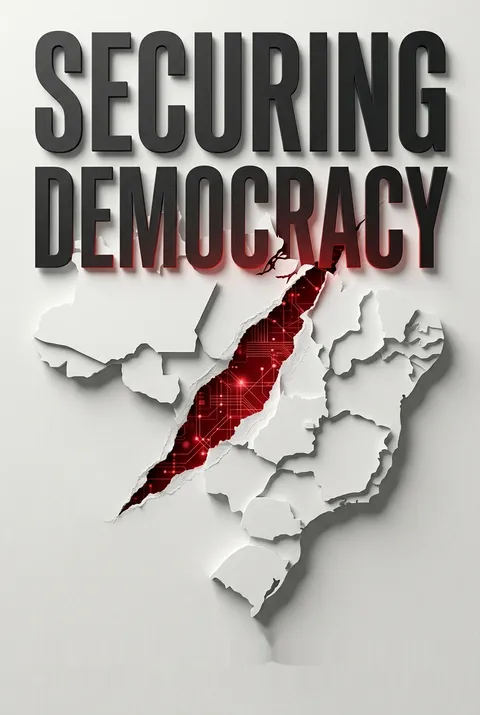


Key Takeaways
A judge who jailed Lula helped clear Bolsonaro’s path, then joined his cabinet
A political turning point. Sérgio Moro became a national hero by leading Operation Car Wash, a sweeping corruption investigation. In 2017, he convicted former president Luiz Inácio Lula da Silva. Lula was leading polls for the 2018 election, but the conviction barred him from running. Jair Bolsonaro won, then appointed Moro justice minister, a move that made Moro’s claim to political neutrality harder to sustain.
The archive changed the story. In 2019, an anonymous source gave Greenwald years of private messages between Moro and prosecutors. They showed Moro advising prosecutors on cases he was supposed to judge, including Lula’s. Prosecutors also discussed their political opposition to Lula’s party. The disclosures did not establish that every Car Wash prosecution was false. They did, however, expose a profound conflict between the task force’s public claims of impartiality and its private conduct.
The case illustrates why democratic legitimacy depends on procedure as well as outcomes. A prosecution can uncover genuine corruption and still become politically dangerous if the judge collaborates with one side. The appointment of Moro to Bolsonaro’s cabinet intensified suspicions because it connected a consequential judicial decision to a powerful political reward. That connection does not, by itself, prove a bargain. It does make transparency and independent review essential. Public admiration can make scrutiny feel like an attack on justice, when scrutiny is precisely what distinguishes impartial law enforcement from a popular faction wielding state power.
Treat anti-corruption crusades as dangerous when they bypass due process
Coercion can distort evidence. Operation Car Wash relied on preventative imprisonment, detention before conviction that Brazilian law allowed only in limited circumstances. The task force used it far more broadly: more than 120 people were held, often for months, and some for over a year. Prosecutors made release conditional on cooperation, including accusations against more powerful figures. Some accusations may have been true, but pressure also created incentives to tell authorities what they wanted to hear.
Punishment spread beyond court. Prosecutors illegally leaked accusations to friendly media, where allegations could wreck reputations before a trial, or even when charges never followed. This method helped make the task force appear unstoppable. Greenwald’s reporting showed that fighting corruption is not a license to abandon safeguards. When detention, plea deals, and public shaming become tools to produce convictions, an anti-corruption campaign can reproduce the abuses it claims to oppose.
The important distinction is between prosecutorial power and prosecutorial correctness. Investigators need tools to expose sophisticated wrongdoing, but each tool creates incentives that can corrupt the evidence it produces. Pretrial detention is especially potent because it turns a legal process into immediate physical leverage. Public leaks add reputational punishment before a person can answer allegations. The book’s account therefore asks readers to judge an anti-corruption campaign not only by the powerful people it convicts, but also by the fairness of the methods used to convict them.
Voters may choose chaos when democracy leaves daily emergencies untouched
Anger preceded the election. Bolsonaro’s victory did not arise from ideology alone. Brazil faced economic distress, unemployment, violent crime, and a corruption scandal that reached across political parties and major businesses. In 2013, a protest against a twenty-centavo transit-fare increase grew into demonstrations against corruption, public services, violence, and the political class. About two million people joined protests over the following weeks, and polls found more than 80 percent of the population sympathetic to them.
Desperation widened the opening. Many voters backed Bolsonaro despite his openly authoritarian and bigoted record, because they wanted to punish a system they believed had failed them. He presented himself as its enemy and promised simple remedies to problems people experienced directly. The book does not portray this choice as harmless or wise. It argues that contempt for political elites can make even a long-serving politician seem like an outsider if he promises to break the system.
This account resists the easy claim that voters were simply deceived or that an extremist victory reflects a sudden mass conversion to extremism. It distinguishes support for a candidate’s identity as a disruptor from agreement with every belief he holds. That distinction helps explain political behavior without excusing its consequences. It also raises a harder question for democratic parties: when institutions appear unable to deliver safety, opportunity, or honest government, moral warnings about a candidate may lose force. Anger is not a policy program, but ignoring its material sources leaves it available for demagogues to organize.
Remember how democracies are dismantled behind the language of rescue
Brazil’s past was not distant. In 1964, the military overthrew the elected president João Goulart with US support, then ruled for 21 years through censorship, torture, and political violence. Newspapers and political elites helped describe the coup as a defense of democracy. The dictatorship kept democratic-looking institutions, but stripped them of meaningful power. Its record matters because Bolsonaro repeatedly praised the regime and argued that it had not killed enough of its opponents.
A murder pierced censorship. In 1975, journalist Vladimir Herzog died after being detained by the dictatorship. Officials claimed he had taken his own life, but his rabbi identified signs of torture, and public skepticism grew. More than 8,000 people attended his funeral despite efforts to block the gathering. Herzog’s death helped drive protests that contributed to Brazil’s return to democracy. The 1988 Constitution then established strong protections for civil liberties and the press.
The historical pattern is not simply that dictators abolish democracy in one dramatic move. It is that repression can be presented as protection, while formal institutions remain as a decorative shell. Herzog’s funeral matters because a public, credible challenge to an official story made private violence visible and shareable. The book’s history also warns against treating democratic restoration as permanent: constitutions can protect freedoms, but their guarantees depend on institutions and citizens willing to enforce them. Remembering authoritarianism is therefore a political resource, not a substitute for present-day vigilance.
Verify leaked archives, and keep reporters outside the source’s crime
A leak is a lead, not a verdict. The source claimed to have hacked Telegram accounts used by judges and prosecutors, then sent Greenwald a huge archive of chats and documents. The material was difficult to interpret, highly technical, and too extensive to review casually. Reporters checked documents against messages already held by journalists, consulted knowledgeable sources, and examined the archive for internal consistency. The source’s claims alone were not enough to justify publication.
Distance protects journalism. Brazilian lawyers warned that reporters could be prosecuted if they encouraged or directed the hacking. Greenwald therefore avoided requests for specific targets and kept communications showing that he had not instructed the source. The newsroom also secured the files outside Brazil, so local authorities could not simply seize them to stop publication. Verification and legal caution did not remove all risk, but they helped distinguish reporting on an illegal source from participating in the source’s illegal act.
The central discipline here is to separate three questions: whether material is authentic, whether it is newsworthy, and whether a journalist helped obtain it unlawfully. Conflating them allows authorities to treat publication as proof of conspiracy. At the same time, a source’s sincerity cannot substitute for verification, especially when an archive is both stolen and politically explosive. The book’s account also highlights an operational lesson: digital security is part of reporting, not a technical afterthought. Secure storage, careful communication, and independent checking help protect the public value of a leak without turning the newsroom into an extension of its source.
Give dangerous reporting institutional allies before power isolates the newsroom
Partnerships added credibility and reach. Greenwald initially hoped to work with Globo, Brazil’s dominant media group, which had previously partnered with him on Edward Snowden’s revelations. But its leadership would not confirm that an earlier ban on working with the Intercept had been lifted. After the first reports appeared, Brazil’s largest newspaper, Folha, joined the investigation. The center-right magazine Veja followed, despite years of flattering coverage of Moro.
Independent checks mattered. Folha and Veja examined the archive and confirmed that messages matched conversations their own reporters had exchanged with prosecutors. Over the following months, they and other outlets helped publish more than 100 stories. Their participation made it harder to dismiss the investigation as one foreign journalist’s partisan campaign. The alliances did not erase competitors’ past biases, but they brought additional expertise, verification, audiences, and public protection to reporting that could otherwise have been isolated.
The surprising feature of these partnerships is that they joined organizations with incompatible histories and political instincts around a shared evidentiary question. That does not make the outlets neutral, nor does it guarantee that collaboration will always improve reporting. It does distribute the burden of verification and makes the story harder to quarantine as the work of a single adversary. In a polarized media environment, credibility can depend less on a newsroom’s self-description than on whether independent actors with different incentives can inspect the same evidence and reach compatible conclusions.
Authoritarians attack the messenger to make exposure look like conspiracy
The response targeted the reporters. After the first stories appeared, Bolsonaro’s allies promoted calls for Greenwald’s deportation and imprisonment. An anonymous online account circulated fabricated evidence alleging he had paid Russian hackers and paid a politician to leave Congress. The claims spread widely through social media and messaging apps, even after specialists identified obvious flaws. Greenwald, his husband David Miranda, and their children received threats, and the family began traveling with armed guards in an armored vehicle.
A legal threat followed. Moro’s agencies investigated Greenwald’s finances, and Bolsonaro publicly suggested he might be jailed. In January 2020, prosecutors charged him with crimes connected to the hacking, despite a police report finding no evidence that he had participated. A judge rejected the charges, citing a Supreme Court order protecting the journalist, but suggested the conduct might otherwise warrant prosecution. The episode shows how retaliation can make the act of reporting itself appear criminal.
Disinformation is effective not because every audience believes every claim, but because constant accusation can shift attention from the evidence to the reporter’s character and motives. The fabricated stories also exploited real uncertainty around an unlawful hack, turning a genuine ethical question into a false narrative of complicity. Yet labeling every institutional response as authoritarian would be too easy: criminal investigations can be legitimate, and journalists should not receive blanket immunity. The critical test is whether scrutiny is evidence-based, even-handed, and independent of the officials embarrassed by the reporting.
Press freedom survives when courts, legislators, and citizens make retaliation costly
The response became collective. Public demonstrations and support from journalists, lawmakers, legal groups, and civil-society organizations made the threats against Greenwald a national test of press freedom. The Supreme Court barred investigations tied to his reporting. Congress rejected major parts of Moro’s proposed anti-crime package and passed an Abuse of Authority law intended to curb judicial and prosecutorial overreach. The court also overturned convictions after finding violations of defendants’ rights.
Lula’s release marked a turning point. In November 2019, the Supreme Court ruled that defendants could not be imprisoned before exhausting their appeals, and Lula left prison. That ruling did not directly declare his conviction invalid, and the book does not claim the reporting alone caused his release. Greenwald argues that the disclosures helped create political room for the court to act. The case shows how reporting can inform institutional correction when other branches and the public are willing to respond.
The reporting’s impact was not a single exposé delivering justice from the outside. It depended on journalists making evidence public, courts reconsidering conduct, legislators changing rules, and citizens defending the right to report. That distribution of responsibility is a strength: no newsroom should be the final judge of guilt, and no court should be insulated from public scrutiny. The outcome also cautions against overstating causation. The Supreme Court’s ruling rested on a broader constitutional question, while the reporting altered the climate around it. Journalism can open a political possibility without controlling what institutions do with it.
Defend due process even for hackers, propagandists, and political enemies
Rights cannot be factional. Greenwald’s reporting depended on information obtained through hacking, yet he argued that journalists should be free to receive and report newsworthy material without directing the crime. He also objected when Brazilian authorities used pretrial detention against the accused hackers for an excessive period. In the book’s account, the Supreme Court later ordered their release pending trial. Greenwald even criticized some court actions against Bolsonaro-aligned propagandists when he believed their rights were being restricted.
The legal fight remained unresolved. The charges against Greenwald were dismissed, but the prosecution appealed, and the judge’s ruling left open the possibility of a renewed case if Supreme Court protections were withdrawn. His conclusion is not that journalists are beyond law. It is that the public needs a press able to investigate power, and that legal protections must apply even when the journalist, source, or target is unpopular.
This principle is hardest to keep when political conflict feels existential. A right defended only for allies is a temporary advantage, not a durable liberty. The book’s own tensions make the point concrete: the source may have committed crimes, the reporting served a public interest, and the state still had an obligation to respect fair process. These are not mutually exclusive judgments. A democratic society must be able to condemn hacking, investigate wrongdoing, and protect publication from retaliation without collapsing those separate questions into one all-purpose accusation.
Analysis
The book’s strongest contribution is its account of how a celebrated institution can become dangerous without abandoning its most popular slogan. Operation Car Wash appeared to challenge elite impunity, a real and deeply resented feature of Brazilian political life. Its public appeal was therefore not merely manufactured. The problem, as Greenwald presents it, was that success and adoration weakened scrutiny of the methods used to achieve it. Preventative detention, leaks, and secret coordination could then be framed as necessary tools of a righteous mission rather than as threats to impartial justice.
The narrative also refuses a comforting story in which authoritarianism arrives only through a coup. Brazil’s military dictatorship left political memories, institutional vulnerabilities, and habits of public language. Bolsonaro’s election came through democratic procedures, amid anger at corruption, violence, and economic insecurity. The lesson is not that elections are unimportant, but that elections cannot by themselves repair institutions that have lost public trust. A leader can exploit that gap while claiming to speak for people whom conventional politics has disappointed.
The reporting itself raises a productive ethical tension. The source’s access was achieved through hacking, yet the public interest in evidence of judicial misconduct was substantial. Greenwald emphasizes verification, nonparticipation, and legal protections, but the account remains the journalist’s own description of his process and its success. Readers should therefore distinguish the strength of the disclosed messages from the broader claims made about their consequences. The source’s motives, the archive’s completeness, and the causal role of the reporting in Lula’s release are different questions, not one settled verdict.
Ultimately, the book makes press freedom concrete. It is not only the right to publish, but the capacity to protect sources, withstand retaliation, and persuade institutions to examine evidence. The alliances with Folha and Veja mattered because credibility was contested across political lines. The Supreme Court and Congress mattered because journalism cannot itself enforce rights. The most durable democratic defense is thus neither heroic journalism alone nor faith in courts alone, but an arrangement in which each can challenge the others, and none can claim immunity from scrutiny.
Review Summary
Readers praise Securing Democracy My Fight for Press Freedom and Justice in Bolsonaro's Brazil as a gripping account of Greenwald's reporting on political corruption in Brazil. Many highlight the author's courage in facing threats and attacks while defending press freedom. The book is lauded for its detailed context on Brazilian politics and history. Some reviewers note Greenwald's controversial online presence but emphasize the importance of his journalism. Overall, the book is seen as an engaging, informative read about a significant political scandal and its aftermath.
People Also Read






Glossary
Operation Car Wash
Brazilian corruption investigationA major Brazilian anti-corruption investigation that began with money laundering linked to a car wash and expanded into bribery and kickback schemes involving Petrobras, construction companies, politicians, and business leaders. Judge Sérgio Moro and a prosecutorial task force became its public faces. The investigation won broad support but was later discredited by disclosures of improper judicial and prosecutorial conduct.
Vaza Jato
Leak exposing Car WashThe name used for the Intercept Brasil’s reporting on leaked private communications involving Operation Car Wash prosecutors and Judge Sérgio Moro. The phrase combines a Portuguese word for a leak with the name Lava Jato, the Brazilian name for Operation Car Wash. The series revealed evidence of collusion, political bias, and other misconduct.
preventative imprisonment
Detention before convictionA form of detention imposed before a defendant has been convicted. Brazilian law permitted it in limited circumstances, such as when a suspect posed a concrete danger to witnesses or an investigation. Greenwald describes Operation Car Wash prosecutors using the measure far more broadly, sometimes holding suspects for months or longer and using the possibility of release to pressure them into cooperating.
lawfare
Law used for political endsThe use of legal processes as a political weapon, including to weaken, disqualify, or delegitimize an opponent. In the book, the term is applied to the prosecution of Lula, which Greenwald argues was tainted by political motives and violations of judicial neutrality. The term does not itself establish that a prosecution is improper; the claim depends on evidence about conduct and purpose.
foro privilegiado
Special court jurisdictionA Brazilian rule that gives certain officeholders, including ministers and members of Congress, access to a special jurisdiction for cases connected to their official roles. The protection was introduced after the dictatorship as a safeguard against politically motivated prosecutions in lower courts. Greenwald notes that, in practice, the Supreme Court’s heavy caseload could make this protection function like effective immunity.
AI-5
Dictatorship-era repression decreeThe Fifth Institutional Act, issued by Brazil’s military dictatorship in 1968. It gave the regime sweeping power, including the ability to suspend civil liberties and reduce democratic institutions to a façade. The book presents AI-5 as a symbol of the dictatorship’s most repressive period and notes that Bolsonaro-aligned figures invoked its possible return as a threat against political opponents.
About the Author
Other books by Glenn Greenwald

Download PDF
Download EPUB
.epub digital book format is ideal for reading ebooks on phones, tablets, and e-readers.








