Plot Summary
Arrival at the Tower
Thomas Senlin, a reserved schoolmaster from a coastal village, arrives at the foot of the Tower of Babel with his new wife, Marya, for their honeymoon. The Tower, a legendary monument of civilization, looms above a chaotic, multicultural market. Senlin, comforted by facts and routines, is both awed and unsettled by the teeming crowds and the unpredictability of the place. He clings to his guidebook and his rules, determined to keep Marya safe and to experience the wonders he's long dreamed of. But the Tower's immensity and the swirl of humanity quickly overwhelm his sense of order, foreshadowing the unraveling of his plans and the beginning of a journey far more perilous than he imagined.
Lost in the Market
Amid the dense, ever-shifting market at the Tower's base, Senlin and Marya are separated when she goes to buy a dress. Senlin's attempts to wait and search for her are thwarted by the market's constant transformation and the indifference of the crowd. He is robbed, disoriented, and forced to confront his own helplessness. The loss of Marya is not just a logistical problem but a shattering of his identity and confidence. As he spirals into panic and despair, the Tower's promise of adventure turns into a nightmare of confusion and loss, setting the stage for his desperate quest to find his wife.
Descent into Chaos
Senlin's search for Marya leads him to the Skirts, the dangerous no-man's land at the Tower's base, where he meets Adam, a streetwise youth. Together, they witness the crash of an airship and the ensuing looting, a stark display of the Tower's lawlessness and the fragility of life. Senlin's illusions about the Tower's civility are shattered as he is drawn into its unpredictable violence. The encounter with Adam, who has his own tragic story of loss, marks the beginning of Senlin's transformation from a passive observer to a man forced to act and adapt in order to survive.
The Search Begins
After fruitless attempts to find Marya through the Lost and Found and the indifferent authorities, Senlin realizes he must ascend the Tower to search for her. He hires Adam as a guide, only to be betrayed and robbed again. Alone and stripped of his possessions, Senlin is forced to rely on his wits and determination. He begins to understand that the Tower is not a place of reason and order, but of shifting allegiances and constant peril. His journey upward is no longer a honeymoon, but a quest for survival and reunion, fueled by guilt, love, and a growing sense of agency.
The Parlor's Deadly Game
Senlin's ascent brings him to the Parlor, a ringdom where visitors are forced to participate in elaborate, immersive plays. Cast as a butler in a melodramatic farce, Senlin is swept into a deadly game when one of the actors goes mad and murders another. Teaming up with Edith, a resourceful woman trapped in the same play, Senlin must navigate a maze of locked rooms, false props, and real danger. Their escape is fraught with violence and moral compromise, culminating in their imprisonment and Edith's brutal branding. The Parlor exposes the Tower's capacity for cruelty and the thin line between performance and reality.
Lessons in Survival
The ordeal in the Parlor leaves Senlin and Edith scarred, both physically and emotionally. Edith's resilience and Senlin's growing pragmatism forge a bond between them, even as they are separated by the Tower's arbitrary rules. Senlin's illusions about fairness and justice are further eroded as he witnesses the branding of exiles and the indifference of the Tower's bureaucracy. He learns that survival requires not just intelligence, but adaptability, alliances, and a willingness to act against his own instincts. The experience hardens him, preparing him for the greater challenges ahead.
The Basement and the Beer-Me
Senlin's journey takes him through the Basement, a squalid, drunken ringdom powered by human labor and vice. Here, he encounters Finn Goll, a cunning merchant who offers both guidance and manipulation. The Basement's beer-powered machinery and its population of hods—slaves condemned to endless labor—reveal the Tower's exploitative core. Senlin's interactions with Goll and the other denizens of the Basement teach him the value of discretion, the dangers of trust, and the necessity of self-reliance. The lessons of the Basement will shape his approach to every subsequent challenge.
The Parlor's Dark Secrets
As Senlin continues his ascent, he uncovers the true nature of the Parlor: a surveillance state where every action is observed, judged, and punished. The obsession with stoking fires, the constant role-playing, and the presence of hidden clerks and peepholes create an atmosphere of paranoia and control. Senlin's growing awareness of the Tower's mechanisms—both literal and social—fuels his determination to outwit its masters. The Parlor's dark secrets mirror the Tower's larger reality: a place where power is maintained through spectacle, fear, and the manipulation of hope.
The Baths: Hope and Dread
The Baths, a ringdom of luxury and relaxation, offers Senlin a temporary reprieve from the Tower's brutality. Here, he befriends Tarrou, a jovial but broken man, and encounters Ogier, a talented but embittered painter. The Baths' beauty is undercut by its own forms of exploitation and violence, including public executions and the ever-present threat of debt slavery. Senlin's search for Marya leads him into a web of intrigue involving wifemongers, false friends, and the enigmatic Commissioner. The Baths become a crucible where hope and dread intermingle, and where Senlin must decide how far he is willing to go to find his wife.
The Wifemonger's Web
Through Ogier, Senlin learns of Marya's entanglement in the schemes of wifemongers and predatory nobles. Marya, resourceful and resilient, has survived by navigating a labyrinth of social traps, false benefactors, and dangerous suitors. Her story, as recounted by Ogier, reveals the Tower's commodification of women and the pervasive corruption of its upper echelons. Senlin's quest becomes not just a search for his wife, but a battle against the forces that have ensnared her. The revelation of Marya's predicament galvanizes Senlin, transforming his mission from one of reunion to one of rescue and rebellion.
The Port Master's Dilemma
Senlin is recruited by Finn Goll to serve as Port Master in New Babel, a position that offers both opportunity and peril. Surrounded by thieves, smugglers, and desperate workers, Senlin must navigate a world of shifting loyalties and constant surveillance. His friendship with Adam deepens, but is complicated by secrets and betrayals. The arrival of the Red Hand, the Commissioner's monstrous enforcer, raises the stakes and forces Senlin to confront the limits of trust and the costs of leadership. The Port Master's dilemma is one of survival: how to maintain integrity and hope in a world designed to crush both.
Friends, Foes, and Betrayals
As Senlin plots his escape from New Babel, he is forced to confront the duplicity of those around him. Adam's confession of betrayal, Iren's divided loyalties, and the machinations of Rodion and Goll create a web of suspicion and danger. Senlin's plan to steal a ship and rescue Voleta, Adam's sister, hinges on manipulating the ambitions and fears of his enemies. The line between friend and foe blurs, and Senlin must decide whom to trust, whom to forgive, and how much of himself he is willing to sacrifice for the sake of others.
The Red Hand Strikes
The arrival of the Red Hand and the Commissioner's forces turns the port into a battlefield. Rodion's treachery, Goll's self-interest, and the chaos of battle force Senlin and his allies into desperate action. Edith's return from the brink, Iren's ferocious defense, and Voleta's daring all play crucial roles in the struggle for survival. The Red Hand's rampage, fueled by drugs and madness, exposes the Tower's capacity for both horror and heroism. In the crucible of violence, Senlin's leadership is tested, and the bonds of his makeshift crew are forged in blood and fire.
The Plan Unfolds
Senlin's intricate plan to escape the port and steal the Stone Cloud comes to fruition amid chaos and betrayal. The convergence of Rodion, Goll, and the Commissioner creates a perfect storm of conflict, allowing Senlin and his crew to seize their moment. The booby-trapped decoy, the manipulation of rival factions, and the timely intervention of Edith and Iren all contribute to the success of the escape. The plan's success is bittersweet, marked by loss, guilt, and the realization that freedom in the Tower is always provisional and hard-won.
The Battle for the Stone Cloud
The final battle for the Stone Cloud is a maelstrom of violence, courage, and sacrifice. Senlin, Adam, Edith, Voleta, and Iren fight not just for their lives, but for the possibility of a future beyond the Tower's grasp. The destruction of the Gold Finch, the defeat of Rodion, and the escape from the Commissioner's forces are hard-won victories, paid for in blood and trauma. The crew's unity is tested and affirmed, and Senlin emerges as a true captain, responsible not just for himself, but for the lives and hopes of his companions.
Escape into the Storm
The Stone Cloud, battered but free, ascends into the storm, leaving the ruins of the port and the Tower's lower ringdoms behind. Senlin, now Captain Tom Mudd, reflects on the cost of their escape and the challenges that lie ahead. The crew, each marked by loss and transformation, must learn to trust one another and to share the burdens of survival. The storm is both a literal and metaphorical passage: a crossing from captivity to freedom, from despair to hope, and from the known dangers of the Tower to the unknown perils above.
A Captain's Resolve
As the Stone Cloud sails into the unknown, Senlin resolves to continue his quest for Marya, now armed with hard-won experience, a loyal (if damaged) crew, and a new sense of purpose. The journey has transformed him from a timid schoolmaster into a leader capable of navigating the Tower's dangers and forging alliances in adversity. The ghosts of the past—lost friends, broken promises, and the memory of Marya—haunt him, but also drive him forward. The story ends not with closure, but with the promise of further adventure, struggle, and the enduring hope of reunion and redemption.
Characters
Thomas Senlin
Senlin begins as a reserved, rule-bound headmaster, more comfortable with books than people. His love for Marya is sincere but awkward, and his initial approach to the Tower is naive and idealistic. The loss of Marya shatters his confidence and forces him into a crucible of survival, adaptation, and moral compromise. Over the course of his journey, Senlin evolves into a pragmatic, resourceful, and sometimes ruthless leader. His relationships—with Adam, Edith, Iren, and others—are marked by both trust and betrayal, reflecting his struggle to balance hope, guilt, and the demands of leadership. Senlin's arc is one of painful growth: he learns that survival in the Tower requires not just intelligence, but courage, adaptability, and the willingness to act, even when the cost is high.
Marya Senlin
Marya is the catalyst for Senlin's journey, her disappearance transforming his honeymoon into a quest. Though initially seen through Senlin's anxious perspective, Marya emerges as a complex, independent woman—fearless, charming, and adaptable. Her survival in the Tower's labyrinth of dangers, wifemongers, and predatory nobles reveals her intelligence and strength. Marya's fate is entwined with the Tower's systems of exploitation, but she resists victimhood, navigating her circumstances with wit and agency. Her absence haunts Senlin, shaping his every decision and fueling his transformation. Marya represents both the hope of reunion and the reality that love, in the Tower, must be fought for and redefined.
Adam Boreas
Adam is a young, capable, and deeply wounded survivor. His early betrayal of Senlin is motivated by desperation and the need to protect his sister, Voleta. Adam's journey is marked by shame, resilience, and a fierce devotion to family. His experiences as a clerk, a branded exile, and a laborer in the Tower's underbelly have left him both practical and haunted. Adam's relationship with Senlin evolves from suspicion to genuine friendship, but is always complicated by secrets and the ever-present threat to Voleta. Adam's arc is one of hard-won maturity: he learns to trust, to forgive, and to fight for something beyond mere survival.
Edith Winters
Edith is introduced as a resourceful, courageous woman trapped in the Parlor's deadly game. Her ordeal—branding, loss of her arm, and subsequent transformation into a pirate first mate—marks her as both victim and warrior. Edith's mechanical arm, powered by a dangerous serum, symbolizes her resilience and the costs of survival in the Tower. Her relationship with Senlin is built on mutual respect, shared trauma, and a refusal to surrender to despair. Edith's arc is one of adaptation and leadership: she becomes a key member of Senlin's crew, embodying the possibility of redemption and the strength found in chosen family.
Voleta Boreas
Voleta, Adam's younger sister, is a vivacious, daring performer trapped in the Tower's web of exploitation. Her acrobatic skills and indomitable spirit make her both a target and a beacon for those around her. Voleta's resilience in the face of objectification and danger is matched by her loyalty to Adam and her quick wit. She represents the possibility of innocence and joy surviving amid the Tower's corruption. Voleta's arc is one of liberation: her escape from the Steam Pipe and her role in the crew's survival affirm the value of courage, creativity, and the bonds of family.
Iren
Iren is a physically imposing, illiterate woman who serves as Finn Goll's enforcer. Her journey from brute to ally is marked by her willingness to learn, her growing sense of agency, and her eventual loyalty to Senlin and his crew. Iren's strength is both a weapon and a vulnerability; her illiteracy makes her dependent, but her determination to overcome it signals her desire for a different life. Iren's arc is one of transformation: through her relationship with Senlin, she discovers new possibilities for herself and becomes a crucial defender and tactician for the crew.
Finn Goll
Goll is a cunning, self-interested merchant who recruits Senlin as Port Master. His philosophy is one of ruthless pragmatism: trust is for the weak, and power is maintained through manipulation and self-interest. Goll's duplicity and shifting allegiances make him both a mentor and an antagonist. His hidden family life reveals a capacity for tenderness, but his actions are always calculated for personal gain. Goll embodies the Tower's ethos of survival at any cost, serving as both a warning and a foil to Senlin's evolving morality.
Rodion
Rodion is the owner of the Steam Pipe, a den of vice and exploitation. His ambition, cruelty, and willingness to betray make him a formidable antagonist. Rodion's manipulation of Adam and Voleta, his rivalry with Goll, and his pursuit of the Commissioner's favor drive much of the conflict in New Babel. Rodion's downfall is a product of his own hubris and the shifting alliances of the Tower. He represents the predatory nature of power in the Tower, where loyalty is always provisional and violence is never far away.
The Red Hand
The Red Hand is the Commissioner's executioner, a drug-fueled, nearly inhuman killer. His presence is a constant threat, embodying the Tower's capacity for arbitrary and spectacular violence. The Red Hand's encounters with Senlin, Iren, and Edith are marked by brutality, but also by moments of strange vulnerability and cryptic speech. He is both a tool of power and a victim of it, his humanity eroded by the very system he serves. The Red Hand's arc is one of terror and tragedy, a reminder of the costs of survival in the Tower.
Commissioner Pound
The Commissioner is the autocratic master of the Baths and the Ararat, obsessed with control, hygiene, and the accumulation of art and influence. His pursuit of the stolen painting, his manipulation of the Red Hand, and his ruthless enforcement of order make him a central antagonist. The Commissioner's interactions with Senlin reveal the Tower's obsession with appearances, status, and the suppression of dissent. He is both a product and a perpetuator of the Tower's corruption, a symbol of the dangers of unchecked authority.
Plot Devices
The Tower of Babel
The Tower itself is the central plot device, a vast, multi-leveled structure filled with diverse societies, technologies, and dangers. Each ringdom is a self-contained world with its own rules, rulers, and perils. The Tower's verticality and complexity serve as both a literal and metaphorical obstacle: to ascend is to confront new challenges, to be transformed, and to risk losing oneself. The Tower's shifting geography, hidden mechanisms, and constant surveillance create an atmosphere of uncertainty and paranoia, driving the characters to adapt, conspire, and rebel.
Lost and Found
The motif of loss—of Marya, of innocence, of identity—drives the narrative and the characters' development. The search for lost loved ones, the posting of desperate notes, and the constant threat of separation create a sense of urgency and vulnerability. Loss is both a source of pain and a catalyst for growth, forcing characters to confront their limitations, to form new alliances, and to redefine themselves in the face of adversity.
Role-Playing and Performance
The Parlor's immersive plays, the constant need to perform, and the blurring of reality and fiction are central to the Tower's control. Characters are forced to adopt roles, to improvise, and to navigate shifting allegiances. Performance becomes a means of survival, but also a source of danger and confusion. The line between actor and audience, between self and other, is constantly crossed, reflecting the Tower's manipulation of perception and power.
Betrayal and Trust
The Tower's environment of suspicion and competition makes trust both precious and perilous. Betrayals—by Adam, by Goll, by the Tower itself—are frequent and often devastating. Yet, the possibility of genuine friendship, loyalty, and sacrifice persists, offering hope amid the Tower's cynicism. The tension between trust and betrayal drives the plot, shapes the characters' choices, and underscores the story's central questions about morality and survival.
The Red Hand and the Commissioner
The Red Hand and the Commissioner serve as both plot drivers and symbols of the Tower's capacity for cruelty. Their pursuit of Senlin, their manipulation of others, and their willingness to use violence to maintain control create a constant sense of threat. Their actions force the protagonists to adapt, to conspire, and to fight back, fueling the story's momentum and raising the stakes at every turn.
The Stolen Painting
The painting at the heart of the conflict is both a literal object of value and a symbol of the Tower's obsession with possession, status, and control. Its true nature—whether masterpiece, forgery, or key—remains ambiguous, driving the characters to deception, betrayal, and violence. The painting's journey mirrors Senlin's own: sought after, misunderstood, and ultimately transformed by the trials of the Tower.
Narrative Structure and Foreshadowing
The novel's structure—episodic, ascending, and recursive—mirrors the Tower itself. Each ringdom presents new challenges, new characters, and new lessons, building toward a climax of escape and self-discovery. Foreshadowing is used to create suspense, to hint at the dangers ahead, and to underscore the inevitability of change. The story's cyclical nature—loss, adaptation, betrayal, and renewal—reflects the Tower's endless capacity for both destruction and creation.
Analysis
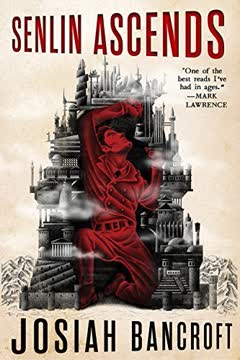
Senlin Ascends is a modern fable of survival, transformation, and the search for meaning in a world designed to confound and consume. At its heart, the novel is an exploration of how ordinary people are shaped—and often broken—by systems of power, violence, and exploitation. The Tower of Babel, with its dizzying complexity and shifting dangers, is both a setting and a metaphor for the challenges of modern life: the loss of certainty, the erosion of trust, and the constant need to adapt. Senlin's journey from timid schoolmaster to determined captain is a testament to the resilience of hope and the possibility of redemption, even in the face of overwhelming odds. The novel interrogates the nature of leadership, the costs of survival, and the meaning of love in a world where every bond is tested and every ideal is threatened. Ultimately, Senlin Ascends is a story about the necessity of forging new families, new identities, and new paths in a world that offers no easy answers—only the promise of further ascent, struggle, and the enduring hope of reunion.
Last updated:
Review Summary
Senlin Ascends receives overwhelmingly positive reviews, praised for its originality, gorgeous prose, and compelling protagonist. Thomas Senlin, a headmaster who loses his wife at the Tower of Babel during their honeymoon, must ascend through bizarre ringdoms to find her. Reviewers highlight the unique world-building, steampunk elements, and Senlin's remarkable character development from timid academic to resourceful survivor. The tower's levels each present distinct, imaginative societies. Critics appreciate Bancroft's literary writing style and the book's exploration of civilization, capitalism, and human dignity. Some readers found the pacing slow initially or disliked the "woman in distress" trope, but most consider it a masterpiece deserving its hype.