

Key Takeaways
Meditate to meet the moment, not to flee from it
Practice waking up. The book teaches shamatha, or calm-abiding meditation: a simple way to train attention by staying with the breath. Its purpose is not to drift into bliss or escape difficult feelings. It is to become more present with life as it is, including its pleasant and painful parts. The author presents the Buddha’s search for a way to face suffering as the tradition’s origin story for this practice. The practical invitation is smaller than enlightenment: sit down, notice what is happening now, and return to it.
Keep the aim ordinary. The breath is useful because it is always happening, and attention to it brings the mind back from rehearsing the past or projecting into the future. The hoped-for result is greater presence with work, relationships, and the rest of daily life.
The practice is compelling partly because its target is modest: attention to an ordinary bodily process rather than a dramatic altered state. That makes meditation less vulnerable to the trap of treating calm as proof of success. Attention training can help people notice experience before reacting, but it does not guarantee serenity, and distress is not evidence of failure. The book’s Buddhist origin story supplies meaning for practitioners who value that tradition; readers outside it can still test the method without adopting every religious claim.
Write down why you want to sit before motivation fades
Make intention conscious. The author argues that people already act with intentions, but often without noticing them. A deliberate pause helps distinguish a chosen reason from a passing impulse. He recounts asking a young attendee why he came to a meditation event; the man admitted he was curious and could watch his favorite show later on a recording. That answer counted. The point is not to manufacture a noble purpose, but to identify an honest one.
Use your reason as a reminder. Someone might begin to meditate to feel less stressed, handle emotions better, or be more present with friends. The author suggests asking the question quietly for a few minutes, letting possible answers arise without judging them, then writing down the one that feels genuine. Motivation may change, but a clear starting point helps when practice gets difficult.
This is a practical use of intention-setting: a reason becomes a reference point when immediate comfort competes with a longer-term aim. Behavioral science distinguishes goals that feel personally chosen from those pursued mainly to satisfy outside expectations; the former tend to feel more sustaining. The book’s permissive stance also matters. If meditation is reserved for people with spiritually impressive motives, many beginners will disguise their actual reasons rather than examine them. One caution: a written intention can guide practice, but it should not become a rigid test of whether someone is meditating correctly.
Give your attention a home in posture and breath
Settle the body first. Sit on a cushion or chair, with a stable base and an upright, comfortable spine. Rest your hands on your thighs, soften your face, and let your gaze fall loosely toward the floor with eyes open. The author favors an alert posture over a collapsed one, while allowing practical adjustments if sitting on the ground causes pain. The setup is meant to support attention, not win points for looking like a statue.
Follow natural breathing. Do not force the breath into a special rhythm. Notice its physical sensations as they are. When attention wanders into a memory, plan, or fantasy, silently label the activity “thinking” and return to breathing. The return is the technique. A session is not ruined because thoughts appeared; noticing that they appeared is part of the work.
The instructions coordinate bodily stability with a simple attentional anchor, an approach that makes the exercise concrete for beginners. Eyes-open practice also emphasizes that meditation is training for engagement with the world, not withdrawal from it. Comfort deserves equal attention: an upright posture should not mean enduring pain, and a chair can be as suitable as a cushion. This distinction prevents discipline from being confused with needless strain. The method’s simplicity is a strength, though people with particular physical or psychological needs may need adapted guidance.
Let awareness catch the drift and mindfulness return to breath
Use two mental skills. The book calls mindfulness trenpa, the ability to hold attention on what is happening. Awareness, sheshin, is the capacity to know what is happening in the present, including noticing that attention has wandered. In meditation, awareness catches the mind planning a vacation; mindfulness brings attention back to the breath. The two are not competing techniques. One registers the drift, and the other re-engages with the chosen object.
Carry them beyond sitting. Awareness might register a phone ringing or a barista calling a name. Mindfulness is then being fully present in the conversation or while tasting a drink. The author describes meditation, using the Tibetan term gom, as becoming familiar with one’s own mind. Repeatedly noticing distraction and returning makes that familiarity more available in ordinary encounters.
The distinction is useful because it separates noticing from sustaining attention. People often assume that concentration means never being distracted; this account treats the recognition of distraction as a skill in its own right. The idea also resembles metacognitive monitoring, the ability to notice what the mind is doing rather than being wholly absorbed in it. Still, the metaphor should not imply that every lapse can be corrected instantly. Fatigue, stress, and surroundings shape attention. The practice offers a way to respond to distraction, not a promise to eliminate it.
Build a practice around ten minutes, a place, and a routine
Lower the starting friction. The author recommends beginning with about ten minutes a day and creating a regular place to sit. A cushion left ready in a quiet corner can make practice easier to begin than repeatedly rearranging a room. A chair or household pillow can work too. Choose a time that fits a real routine, such as after coffee or after work, rather than an exact hour that turns every delay into a failure.
Keep the measure steady. Decide how long a session will last before sitting down, then avoid shortening it when restless or extending it when the mind feels unusually calm. Do not grade sessions as good or bad. The author credits daily practice during a month-long retreat with helping meditation become a lasting habit, and encourages beginners to establish a workable rhythm at home or while traveling.
This is environmental design applied to attention: prepare the setting so starting requires fewer decisions. Behavioral routines often become easier when attached to stable cues, and a visible practice space can serve as such a cue without requiring elaborate equipment. The advice to keep session length fixed also reduces performance scoring. The book mentions a claim about habits forming after a particular number of days, but the more durable lesson is consistency rather than a magic threshold. Ten minutes is a starting suggestion, not a universal prescription.
Answer avoidance with a plan, and discouragement with your reason
Recognize the three obstacles. The author groups common barriers under laziness, speedy-busyness, and disheartenment. Laziness is the urge to skip practice or drift through it. Speedy-busyness is repeatedly postponing meditation while filling the day with other tasks. Disheartenment is concluding that practice is pointless because changes are not immediate. These are not proof that someone lacks the aptitude to meditate; they are predictable forms of resistance.
Respond without self-attack. A prepared place and regular routine can counter postponement. When laziness appears, take one small step toward sitting rather than waiting to feel inspired. When discouraged, recall the reason for beginning. Throughout, the author emphasizes gentleness: losing focus or missing a day is a reason to resume without scolding, not to turn meditation into another source of guilt.
The three labels help distinguish different problems that can otherwise blur into the vague accusation of being undisciplined. One requires less friction, another requires protecting time, and the third requires patience with delayed feedback. Pairing that diagnosis with self-kindness is important: harsh self-criticism can make a practice feel threatening, while permissiveness without a plan can leave avoidance untouched. The balance is compassionate structure. The book’s approach is strongest when it treats a lapse as information about the routine, not as a verdict on the person.
Feel the emotion beneath its story before acting
Separate feeling from narrative. The book uses klesha for afflictive emotions that hook attention and leave a person drained. Anger after an argument, for example, may keep recycling imagined replies and explanations. The author advises noticing the emotion itself instead of feeding the story around it. Ask what the feeling is like in the body, whether it shifts, and where it seems strongest. Do not suppress it or treat it as a command.
Pause before reacting. If desire pushes someone to buy an unaffordable jacket, or anger urges a sharp reply, meditation can help create a moment between impulse and action. The author calls this form of renunciation not rejecting emotion, but declining to follow its habitual demand. On the cushion, returning to the breath while allowing a feeling to be present rehearses that pause for everyday life.
The distinction between emotion and its accompanying interpretation has clear value: a feeling can be real without every explanation attached to it being accurate. This resembles approaches in emotion regulation that encourage observing sensations and thoughts before choosing a response. The aim is not emotional numbness, and the book explicitly warns against suppression. A useful limit is that intense or persistent distress may call for support beyond meditation. Sitting with an emotion can build tolerance, but it should not be confused with handling every crisis alone.
Trust calm as a capacity to uncover, not a prize to win
Understand the Buddhist view. The author describes tathagatha-garbha, or buddha nature, as an innate potential for wakefulness shared by everyone. In the Shambhala tradition, basic goodness names the view that people are fundamentally capable of kindness, strength, and wisdom. This is a spiritual claim, not a mood that must be present in every meditation session. The book compares it to sunlight obscured by passing clouds: agitation may cover a sense of peace without proving that peace is impossible.
Let experience matter. The author urges readers to notice moments of ease and presence rather than waiting for a permanent state of bliss. Enjoying a meal attentively can offer a glimpse of that peace just as sitting can. Such moments may support confidence in the practice and encourage a more respectful view of other people, even when their actions are difficult.
The image of obscured sunlight gives a humane alternative to defining a person by their most distressed moment. It can support resilience and reduce shame, especially when framed as a contemplative perspective rather than a scientific finding. There is also a needed distinction between human worth and behavior: believing in another person’s potential does not require excusing harm or abandoning boundaries. The account is most useful when basic goodness provides a reason to stay curious and compassionate, not a reason to deny the complexity of suffering.
Let meditation show up in speech, choices, and relationships
Make practice visible in conduct. A dharmic person, in the book’s Buddhist usage, embodies the teachings in ordinary life rather than claiming special status. The author draws on a traditional list of seven qualities: passionlessness, meaning the ability to stay with discomfort; contentment; fewer unnecessary actions; ethical conduct; awareness of a teacher or community; prajna, or clear seeing; and an attitude of goodness. These qualities describe a direction of practice, not a badge of spiritual achievement.
Apply attention socially. Fewer unnecessary activities includes reconsidering habits that drain energy, speaking with care instead of gossiping, and reducing mental distraction enough to attend to what matters. Good conduct means working on oneself while trying to benefit others. A teacher or community can provide support and an example, without requiring worship or surrendering judgment.
This section connects inward attention to social responsibility, a crucial correction to the idea that meditation is merely private stress management. Its emphasis on speech and conduct makes progress observable in relationships, not just in subjective calm. The community element also counters the risk of interpreting every experience alone. At the same time, ideals such as contentment and fewer activities can be misread as passivity. Clear seeing includes recognizing when action, advocacy, or a firm boundary is the most responsible response.
Relax the urge to make meditation another achievement
Do the practice, then soften. The author warns that ambition can turn meditation into another contest, with the practitioner striving to have the best session or become a better person on schedule. His closing instruction is to learn the method and then relax into it. He recalls a ballet dancer describing the need to master precise movements and then release excess tension while performing. The same principle applies to meditation: follow the instruction, and do not add unnecessary struggle.
Stay present off the cushion. Relaxing does not mean giving up responsibility. It means meeting pleasure without immediately searching for what is missing, and meeting hardship without demanding an instant fix. Continue sitting through ordinary distraction, and bring the same openness to daily life. In this sense, meditation is less a project of becoming someone else than practice in being present as oneself.
The warning against turning meditation into a performance project is especially apt in a culture that readily converts well-being into another metric. Relaxation here is not laxity; it is reduced interference after the basic task is understood. That distinction also explains why discipline and ease belong together. The book’s language of accepting oneself can be liberating, provided it does not become an excuse to avoid change where change is needed. Presence can make action more deliberate, not less necessary.
Analysis
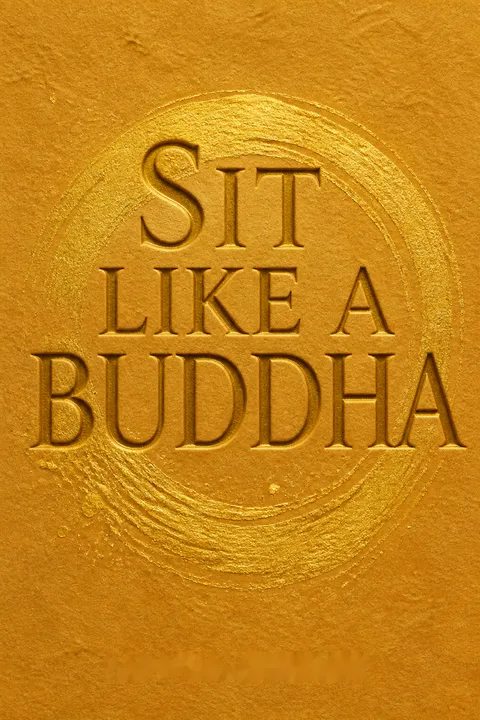
Sit Like a Buddha is a compact practical guide, originally about 21,000 words, built as a ten-step path for people new to meditation. Its structure moves from motivation and technique to habit, emotional practice, Buddhist views of human nature, and everyday conduct. The author’s personal teaching stories give the method a conversational texture, while the central practice remains deliberately spare: sit upright, attend to natural breathing, notice distraction, and return.
The book is difficult to compress because it is doing two jobs. It teaches a repeatable exercise, and it interprets that exercise through Shambhala Buddhism. The first can be practiced without accepting the second. A reader can try breath attention and gentleness as methods while understanding buddha nature and basic goodness as tradition-specific views rather than established psychological facts. Preserving that distinction makes the guide more accessible without flattening its religious setting.
Its strongest practical insight is that meditation is not measured by uninterrupted focus or immediate calm. The repeated return to the breath, paired with an accepting response to distraction, gives beginners a way to continue without turning every session into a verdict. The advice about a prepared space, a manageable duration, and a stable routine translates that intention into behavior. The treatment of emotions extends the same method: notice the feeling, loosen the story, and avoid treating impulse as instruction.
The book’s broadest claim, that people are innately good and peaceful, is best read as a contemplative orientation, not a universal description of mental health. It can counter shame and encourage compassion, but it should not erase trauma, harmful conduct, or the need for professional help. The guide is most persuasive when it joins kindness with agency: accept the mind’s present activity, then choose how to respond. Its memorable promise is not that life becomes easy, but that attention can make it more honestly lived.
Review Summary
Sit Like a Buddha is highly praised as an accessible, concise guide to meditation for beginners. Readers appreciate Rinzler's simple, relatable writing style and practical approach. Many found it helpful in starting or reinvigorating their meditation practice. The book offers clear instructions, addresses common obstacles, and emphasizes kindness and self-awareness. Some readers noted its Buddhist perspective, while others found it applicable regardless of spiritual beliefs. Overall, it's recommended for those seeking a straightforward introduction to meditation or support for an existing practice.
People Also Read









Glossary
shamatha
calm-abiding meditationA meditation practice that trains attention by resting it on the natural breath. In this book, shamatha is intended to cultivate wakefulness and presence, not sleepiness or escape. When thoughts pull attention away, the practitioner notices, labels the activity as thinking, and returns to the breath.
trenpa
holding attentionThe Tibetan term the book uses for mindfulness, understood as the capacity to keep attention with what is happening. A person can apply trenpa to breathing, a conversation, or eating. The practice is not acquiring a new faculty, but learning to use an existing capacity more deliberately.
sheshin
present knowingThe Tibetan term the book uses for awareness: knowing what is happening in the present, including events in the physical and mental environment. During meditation, sheshin notices that attention has wandered. It works with mindfulness, which then brings attention back to the breath.
gom
becoming familiar withA Tibetan word the book presents as another way to understand meditation. Practice makes a person more familiar with their own mind and habitual patterns. Rather than trying to force an ideal state, the meditator learns to recognize the changing thoughts, emotions, and moments of calm that arise.
klesha
afflictive emotionA term for emotions that hook attention and can leave a person feeling drained. Anger, for instance, may sustain itself through repeated mental arguments. The book advises neither acting out nor suppressing such feelings, but noticing the emotion and loosening the story that keeps it in motion.
renunciation
not following an impulseIn the book’s usage, renunciation does not mean denying or suppressing an emotion. It means declining to follow the habitual action an emotion urges, such as retaliating in anger or buying something unaffordable. The person stays present with the feeling while choosing a more deliberate response.
tathagatha-garbha
buddha natureA Sanskrit term the book translates as buddha nature: the innate potential for wakefulness that, in this Buddhist view, all people share. The author describes it as a peaceful capacity that can be obscured by changing thoughts and emotions, but is not destroyed by them.
basic goodness
innate capacity for goodnessA Shambhala Buddhist view that people are fundamentally capable of being awake, kind, strong, and wise. The book presents meditation as a way to experience and act from this goodness, rather than seeking lasting worth in possessions, jobs, or relationships. It is a spiritual perspective, not a clinical diagnosis.
speedy-busyness
avoiding practice through activityThe pattern of wanting to meditate but repeatedly filling the day with other tasks until there is supposedly no time left. The book treats it as a distinct obstacle from simple reluctance. A regular time, a prepared place, and a manageable session can make it harder for this postponement pattern to take over.
prajna
clear, superior knowingA Sanskrit term the book explains as seeing things as they are rather than only through personal preference or ideas about how they should be. Prajna includes understanding oneself and applying clear attention in everyday situations, such as conversations and meals, not only during formal meditation.
dharmic person
one embodying the teachingsA person who brings Buddhist teachings into ordinary conduct rather than treating them as ideas separate from daily life. The book describes qualities including contentment, ethical behavior, clear seeing, and a helpful attitude. The phrase refers to an ongoing practice of becoming more aware and authentic, not a claim of enlightenment.
About the Author
Other books by Lodro Rinzler



Download PDF
Download EPUB
.epub digital book format is ideal for reading ebooks on phones, tablets, and e-readers.








