

Plot Summary
Prologue
The story opens after its great sorrow: Sita has vanished into the earth, leaving only grass and a trace of her hair, and Ram is taking their twin sons, Luv and Kush, toward Ayodhya.
Hanuman guards the city against Yama, the god of death, until Ram loses his ring in a crack in the palace floor and asks him to retrieve it. The crack leads to the serpent realm, where King Vasuki will show Hanuman the ring only after hearing the story of Sita and Ram.
The frame begins with aftermath rather than origin, making the epic feel less like a sequence of victories than a remembered loss. Sita is reduced to grass and a strand of hair, while Ram's sons must enter a home that has never been theirs. Hanuman's errand turns grief into narration: he cannot stop time, but he can carry the story across it. The ring seems a small object against such vast losses, yet its fall opens a passage between worlds and makes memory the condition of return.
A Child in the Furrow
At the start of the sowing season, King Janaka of Mithila turns the first furrow with a golden plough and uncovers a smiling infant. He names her Sita and claims her as his daughter, though she has no human mother. Elsewhere, King Dashratha of Ayodhya grieves that his three queens have borne no sons.
His daughter Shanta is sent to King Rompada, where she draws the isolated ascetic Rishyashringa out of his father's forest refuge and into marriage. Rishyashringa's ritual brings rain to Anga, then a sacred potion to Ayodhya. Its division among Kaushalya, Kaikeyi, and Sumitra produces four sons: Ram, Bharata, Lakshman, and Shatrughna. Sita and the princes grow up in two kingdoms shaped by very different answers to inheritance.
The opening links two forms of parenthood that the social order tends to separate. Janaka accepts a child without biological claim, while Dashratha's anxieties about succession make Shanta valuable chiefly for what her actions can produce. Yet Shanta exercises intelligence and courage rather than serving as a passive instrument. The parallel establishes a central tension: families depend on inheritance, but moral worth cannot be reduced to bloodline. Sita's extraordinary birth and the princes' ritual conception both make lineage feel less like nature than a story society tells about belonging.
The Forest School
Janaka raises Sita amid sages, debate, and the practical knowledge of her mother's kitchen, where she learns how food sustains both body and thought. Ram and his brothers study under Vasishtha, but the former king Vishwamitra wants students tested beyond the palace.
When he asks Dashratha for princes to guard a forest ritual, Ram chooses the perilous route rather than the safe one. At the hermitage he meets Sita among Janaka's daughters. Rakshasas attack the ceremony, and Ram kills their leader Tadaka, then Subahu, while Marichi escapes.
The group later reaches the abandoned hermitage of Ahilya. Ram restores the cursed woman without condemning her, prompting her husband Gautama to accept her again. Vishwamitra sees in Ram both a fighter and a ruler capable of restraint.
Sita's education joins intellectual inquiry to domestic labor, refusing the assumption that wisdom belongs only to sages or courts. Ram's first tests expose a different problem: a king must sometimes use force, but force alone cannot make a community humane. His treatment of Ahilya matters as much as his victory over Tadaka, because it shows that judgment can be tempered by compassion. The sequence also gives Sita and Ram their first meeting within a contested forest, where culture's expansion is not innocent and protection carries a cost.
The Bow Breaks
In Mithila, Janaka sets Shiva's enormous bow as the test for Sita's marriage. Sita has already lifted it effortlessly while cleaning the palace armoury, and the princes who come to compete cannot even raise it.
Ravana nearly manages, but his pride throws him off balance and pins him beneath the bow. Ram lifts it and breaks it while trying to string it. The sound brings Parashurama, the warrior-sage who has punished kings for violating social rules.
Ram answers his challenge without yielding to rage, then strings Parashurama's bow and redirects his final arrow toward the sage's rigid convictions. Parashurama withdraws from violence. Sita marries Ram, and their siblings marry as well: Lakshman to Urmila, Bharata to Mandavi, and Shatrughna to Shrutakirti.
The broken bow makes marriage less a prize awarded by strength than a test of what strength serves. Ram's impulsive force wins Sita but also provokes Parashurama, whose life has been organized around punishment. Their encounter distinguishes justice from endless retaliation without pretending that rules are harmless. The four marriages join two households and carry Mithila's customs into Ayodhya. Sita enters that union as a person formed by questions and observation, not simply as the reward for a prince's achievement.
A Hunt Ends in Guilt
Years after the weddings, Dashratha goes hunting and tries to shoot by sound while blindfolded. His arrow strikes Shravana, a young man carrying his blind parents on pilgrimage.
Dashratha finds the boy dying beside the water and confesses what happened; Shravana's father curses the king to suffer separation from his own son. Returning to Ayodhya, Dashratha becomes terrified that his heirs may leave him before he can pass on the crown. He decides Ram should be crowned the next morning.
The sudden announcement sets the palace racing toward a celebration, but Bharata and Shatrughna are away with their maternal family. In the women's quarters, Manthara sees the succession as a threat to Kaikeyi's rank and begins pressing the queen's deepest fears.
Dashratha's error is not a calculated crime but a failure of perception: he mistakes a human being for prey because he trusts his own senses too completely. The curse converts private guilt into public consequence, but the king's attempt to outrun that consequence accelerates the crisis. His coronation plan is emotionally understandable and politically careless. Manthara's influence works because the palace already organizes affection through rank, inheritance, and access. Fear does not arrive from nowhere; it grows in the gaps that the household's hierarchy has left open.
Kaikeyi Claims Her Boons
Manthara warns Kaikeyi that Ram's coronation will make Kaushalya queen mother and leave Bharata subordinate. Kaikeyi had once saved Dashratha in battle, and the king promised her two unclaimed boons. She now demands that Bharata receive the throne and Ram live in the forest for fourteen years.
Bound by his promise, Dashratha collapses under the demand. Ram accepts exile at once to protect the Raghu clan's reputation for keeping its word. Sita refuses his order to remain behind, insisting on sharing his life beyond the palace, and Lakshman joins them.
Kaikeyi's chamber, once prepared for coronation, becomes the place where Ram exchanges royal clothes for bark. As the three leave, Ayodhya's people gather to protest, but Ram persuades them to let the family honor its obligations.
The catastrophe is driven less by malice than by a political structure that treats promises and status as absolute while giving little room for repair. Kaikeyi converts an old act of courage into present leverage, while Manthara supplies the fearful interpretation that makes the demand feel necessary. Ram's composure protects the clan's public integrity but breaks his father's heart. Sita's decision introduces a counterweight: where Ram follows a rule, she chooses a relationship, and her choice makes exile an act they undertake together rather than a sentence imposed on her.
Sandals on the Throne
At the Ganga, Ram leaves the sleeping citizens behind and crosses with Sita and Lakshman into the forest. Months later, Bharata arrives with Shatrughna and a royal procession, his head shaved in mourning.
He tells Ram that Dashratha has died after the exile began and that Kaikeyi's demand has made him despise the crown. Ram still refuses to return before the fourteen years are complete. The brothers perform their father's rites together, then Bharata accepts rule only as regent.
He carries Ram's sandals back and places them on Ayodhya's throne, while he lives outside the city at Nandigram. Ram, Sita, and Lakshman continue south. Their years in the forest turn royal duty into daily survival, and Sita learns its paths, foods, and seasons firsthand.
Bharata's refusal prevents the succession crisis from becoming a war between brothers. His sandals make absence visible: authority rests in Ayodhya, but the person who should wield it remains in the forest. The arrangement preserves the family promise without pretending it has caused no harm. Ram and Bharata both relinquish personal claim, yet their choices are not identical. Bharata governs in anticipation of return, while Ram treats exile as an opportunity to examine what kingship demands beyond possession of a throne.
A Nose in the Forest
In Dandaka, Sita, Ram, and Lakshman encounter Surpanakha, a rakshasa woman who has lost her husband and son and is drawn to the two princes. Ram declines her advances because he is married; Lakshman rejects her too. When Surpanakha turns on Sita, Lakshman cuts off her nose. She flees to her brothers Khara and Dushana, who attack the hermitage with a large force.
Ram and Lakshman kill them and their warriors, then cremate the dead rather than leaving them to the forest animals. Surpanakha watches from a distance and carries the defeat to Lanka. Ram understands that the violence has not ended the conflict; it has given Ravana a reason to answer humiliation with force.
The episode refuses a clean division between innocent desire and monstrous threat. Surpanakha's approach is rejected, but the mutilation that follows is vastly more consequential than rejection; her body becomes the terrain on which men answer perceived insult. Sita recognizes that the princes' victory will be read differently by those who suffered it. Ram's funeral rites preserve a claim to humanity even after battle, yet they cannot undo the humiliation that has set the next violence in motion.
The Golden Decoy
Ravana sends the shape-shifting Marichi to appear as a golden deer near Sita's hut. Sita, captivated by its impossible beauty, asks Ram to catch it. Ram pursues the animal and kills it, but Marichi uses Ram's voice to cry for help. Sita panics and urges Lakshman to go; when he refuses to leave her, she accuses him of wanting Ram dead so he can claim her.
Wounded by the accusation, Lakshman draws a protective line around the hut and departs. Ravana then arrives disguised as a starving hermit and asks Sita for food. She steps outside the boundary to preserve the household's reputation for hospitality. Ravana reveals himself, seizes her, and flies south. Sita drops her jewels along the route; Jatayu attacks and loses a wing.
The deception succeeds by turning virtues against one another. Sita's generosity draws her across the boundary, Lakshman's obedience keeps him at first from responding to panic, and Ram's wish to please his wife takes him away from her protection. The famous line is not merely a magical safeguard; it divides social identity from bodily vulnerability. Sita's jewels and Jatayu's resistance transform a kidnapping into a traceable event, preserving her agency even when escape is impossible.
The Search Begins
Ram returns to an empty hut and searches wildly through the forest, asking animals and trees where Sita has gone. He finds the dying Jatayu, who identifies Ravana and the direction of the flying chariot. After cremating the bird as a father would be honored, Ram and Lakshman continue south.
They defeat the headless, insatiable Kabandha, whose release from a curse directs them toward the vanaras of Kishkindha. At the hermitage of Shabari, Ram accepts berries she has tasted to make sure they are sweet, while Lakshman recoils at the breach of palace manners.
Near Lake Pampa, Hanuman approaches them in a hermit's disguise. Ram's openness wins his trust, and Hanuman carries the brothers to Sugriva, an exiled monkey prince who has seen Sita's scattered jewels.
The search changes Ram from a figure defined by composure into a husband exposed to grief, while the forest answers his panic through imperfect witnesses and unexpected allies. Jatayu's sacrifice and Shabari's hospitality matter because both come from beings whom rank might teach a prince to overlook. Lakshman's disgust at the berries reveals how social refinement can obstruct recognition. Hanuman's introduction turns the search from solitary pursuit into a network of reciprocal help.
Vali Falls to Ram
Sugriva tells Ram that his brother Vali drove him from Kishkindha and took his wife, Ruma. He agrees to help find Sita if Ram restores his throne. Ram tests his strength, then hides among trees while Sugriva challenges Vali.
Because the brothers look alike, Ram misses his first chance; Sugriva returns wearing a flower garland, and Ram's arrow strikes Vali from concealment. Vali condemns the unfairness of the killing, while Ram argues that a ruler who used force against his brother cannot claim the protections of civilized conduct.
Sugriva becomes king and names Vali's son Angada his heir. The rainy season delays the search. When Sugriva neglects his promise amid feasting, Lakshman storms his court, and Tara calms him long enough for the search parties to assemble.
The alliance is morally useful and ethically compromised. Ram restores a dispossessed brother, but does so through an ambush that Vali can plausibly condemn. The narrative does not dissolve that contradiction; it makes political action depend on whose rules are being applied and who benefits from them. Naming Angada heir prevents victory from erasing the previous household altogether. Sugriva's later delay exposes the fragility of obligations once immediate danger has passed, and Tara's intervention shows the practical intelligence that the new king lacks.
Hanuman Finds Sita
The southern search party reaches the sea without knowing where Lanka lies. Jatayu's brother Sampati sees across the water and identifies Sita in Ravana's garden. Remembering his forgotten strength after Jambuvan urges him onward, Hanuman leaps to the island.
He searches the city and finds Sita beneath the Ashoka trees, guarded but refusing Ravana's gifts and pressure. Ram's signet ring convinces her that the visitor is genuine; she gives Hanuman her hairpin and a private memory for Ram.
Hanuman offers to carry her home, but she insists Ram must come himself. Before leaving, Hanuman destroys the garden, kills Ravana's son Akshaya, and is captured. His burning tail becomes a torch that sets much of Lanka alight, while Sita's grove remains untouched.
The ring and hairpin create a chain of recognition across distance: each object verifies not only identity but continuing attachment. Sita's refusal to escape on Hanuman's back is not passive waiting; she protects Ram's role in restoring her freedom and refuses to let the rescue become another act that decides for her. Hanuman's destruction of Lanka changes him from messenger to combatant. His warning also carries an unresolved cost, since the city's inhabitants suffer for their king's decision.
A Bridge of Stones
Ram's army of vanaras, bears, and other forest allies reaches the sea, where Varuna refuses to alter its nature. Nala and Nila build a crossing from rocks that remain afloat, and Hanuman marks them with Ram's name so they hold together. Ravana's brother Vibhishana leaves Lanka after urging the king to return Sita and being rejected.
Ram welcomes him despite Lakshman's suspicion, then accepts his knowledge of the city. Hanuman carries the army across the completed bridge. Ravana's son Indrajit binds Ram and Lakshman with serpent weapons, but Garuda arrives with the birds and breaks the coils. Ram still offers Ravana a chance to end the conflict by releasing Sita. Ravana refuses, and the armies settle into a siege.
The bridge literalizes the book's preferred alternative to domination: cooperation among different kinds of beings makes a passage where none existed. Yet the crossing is also an invasion, and Vibhishana's defection complicates the boundary between loyalty and conscience. Ram's willingness to receive a rakshasa suggests that moral judgment should follow action rather than birth. His offer of peace matters because it distinguishes rescue from conquest, even as the refusal makes war unavoidable.
The War Takes Its Due
The siege becomes a series of costly duels. Hanuman kills Akshaya in Lanka, while Indrajit uses illusion and serpent weapons to turn the battle against Ram's side. His arrow strikes Lakshman near the heart, and Jambuvan identifies a life-restoring herb on a distant Himalayan mountain.
Hanuman flies north, carries back the whole mountain when he cannot identify the plant, and Lakshman recovers. Lakshman later kills Indrajit during a fierce duel at the ritual site where the prince is seeking new power.
Kumbhakarna is roused from his long sleep and enters the battle, but Ram cuts him down. In another assault, Hanuman rescues Ram and Lakshman from the sorcerer Mahiravana's underground realm. Each victory weakens Lanka, but widows, wounded soldiers, and frightened children fill the city.
The war repeatedly tests whether devotion can remain humane amid escalating violence. Hanuman's strength is most useful not when he seeks glory but when he carries the mountain that may save Lakshman. Meanwhile, Indrajit's loyalty to his father makes him admirable and dangerous at once; the conflict does not make every opponent morally empty. The suffering of Lanka's civilians prevents military success from looking clean. Even a rescue undertaken for justice consumes lives beyond those who chose the original wrong.
Ravana's Last Stand
With his sons and brothers dead and Lanka broken by siege, Ravana finally faces Ram himself. Ram asks him repeatedly to release Sita, but Ravana raises his bow instead. Their arrows meet across the battlefield until Ram cuts off Ravana's heads, only for them to grow back. Vibhishana tells Ram that a hidden pot of immortal nectar lies in Ravana's navel.
Ram hesitates to strike below the face or heart, so Lakshman breaks the pot with an arrow. Ram then kills Ravana with a divine missile. Before Ravana dies, Ram approaches him without weapons and seeks the knowledge he has not shared. Ravana recognizes that his learning never became wisdom. Ram orders proper funeral rites for both armies and installs Vibhishana as Lanka's king.
Ravana's defeat resolves the military contest but not the ethical questions that made it meaningful. He is capable of learning, devotion, and political brilliance, yet his desire to possess Sita prevents him from seeing her as a person. Ram's final approach grants the enemy dignity without excusing his act. The funerals refuse to let victory turn the dead into mere obstacles. Knowledge survives its possessor only when another person approaches it with humility rather than entitlement.
Fire Cannot Judge
After Lanka's mourning ends, Sita is bathed and adorned before being brought to Ram. The crowd watches, but Ram speaks as a king concerned with his family's honor, denying that the war was fought for her and releasing her to go wherever she chooses. Sita asks for a fire to be built and walks into it. The flames do not harm her, and the fire-god confirms that her thoughts and body remained true.
Ram accepts her again, though his brief joy gives way to public restraint. The ordeal settles the question of her chastity for the gathered army, but it cannot undo the humiliation of having to prove herself after surviving abduction. Sita returns to Ram's side, carrying a wound that the victory cannot heal.
The trial makes reputation a public tribunal with no reliable standard of evidence. Sita's ordeal demonstrates what she already knows about herself, yet its social force depends on a fire-god speaking for her. Ram's shift from grieving husband to guardian of clan honor exposes the distance between private attachment and public office. The episode's painful irony is that Sita must survive a second danger after the first has ended. Victory returns her body, not necessarily her trust.
Ayodhya's Lamps Return
Ram, Sita, Lakshman, and their allies fly north in the Pushpak, stopping to thank the sages, animals, and helpers who sustained them. Ram also seeks forgiveness for killing Ravana, acknowledging that the king possessed wisdom alongside his destructive appetites.
At Nandigram, Hanuman tests Bharata's willingness to yield the throne, then reports that Ram is returning. Bharata welcomes him, and the brothers enter Ayodhya together. Urmila wakes from the long sleep she accepted on Lakshman's behalf and struggles to recognize her changed husband.
The city bathes and adorns the returned exiles, then celebrates Ram's coronation with Sita beside him. Hanuman sits at Ram's feet, and the household receives the king it had waited fourteen years to see.
The return is not a simple restoration of the world before exile. The brothers are older, the mothers have aged, and the palace must absorb the forest's marks on those who once left it as princes. Ram's request for forgiveness for killing Ravana complicates the triumph with moral remainder. The coronation presents kingship as stewardship rather than property, with Bharata's regency and Hanuman's service reinforcing that authority depends on others' willing care.
Gossip Exiles Sita
After Sita becomes pregnant, palace women ask her to sketch Ravana from memory, though she says she never saw his face. The drawing becomes an excuse for gossip, and a washerman publicly rejects his own wife by comparing her with the queen who once lived in Ravana's house.
Ram hears the rumor and believes that defending Sita will make the people question his rule. Though Lakshman protests that she proved her purity in fire, Ram orders him to take her into the forest without warning her.
Sita leaves believing she is going to gather berries. On the journey, Lakshman tells her the truth. She refuses to call herself helpless, points out that the same society that condemned her would have condemned Ram for resisting it, and chooses to remain in the forest.
The second separation is more devastating than the first because it is not caused by an enemy outside the household. Ram's governing logic makes public opinion an obligation even when it is cruel, while Sita bears the bodily cost of preserving his legitimacy. Her response does not absolve him; it refuses to let his failure define her inner life. The episode turns the central question of the epic inward: can a ruler uphold social order without reproducing the violence by which that order protects itself?
The Sons Challenge Ram
Sita finds shelter with Valmiki, who teaches the twins Luv and Kush the song of Ram without telling them their father's identity. The boys grow into skilled archers and singers, learning from Sita how to survive without treating the forest as an enemy.
When they sing their father's story before Ram's court, they condemn the king for abandoning their mother. Later, they capture the horse released for Ram's Ashwamedha ritual and defeat the warriors sent to reclaim it, including Ram's brothers and Hanuman.
Ram enters the forest himself, but Sita stops the fighting and identifies the boys as their children. Ram asks her to return only if she will prove her purity again before the people. Sita calls on the earth and disappears into it; Ram reaches too late to hold her.
The twins inherit both sides of their parents: Ram's capacity for duty and Sita's refusal to accept a false measure of worth. Their song makes the king listen to his own life from outside the throne, while their resistance to the royal horse turns the succession ritual into a challenge to authority. Sita's final refusal is not a plea for recognition but a boundary. She will not submit to another public test, even for the reunion she once longed for.
The River Takes Ram
After Sita's departure, Ram returns to Ayodhya with Luv and Kush but cannot restore the life they lost. When a divine visitor demands a private audience, Lakshman breaks his promise to guard Ram's solitude so the visitor cannot curse the city. Ram orders Lakshman to honor the penalty attached to that broken vow.
Lakshman leaves Ayodhya and dies in the forest, and Hanuman guards the gates against Yama. Ram then understands that the end of his reign has arrived. He walks into the Sarayu, leaving his sons on the throne. The brothers inherit a kingdom, but not the family they hoped to rebuild. In the frame story, Hanuman's journey after Ram's ring becomes the final act of carrying their lives into memory.
Ram's last choices show the cost of making rule-following the highest form of love. Lakshman protects Ayodhya at the price of his own place beside his brother, just as Sita earlier paid for the king's reputation. The ending does not portray Ram's reliability as uncomplicated virtue; it leaves behind a ruler who has served his people and lost the people closest to him. The sons' succession offers continuity, but the household remains irreparably altered.
Epilogue
In Naga-loka, Vasuki points Hanuman to a mountain made not of stone but of rings identical to Ram's. Each one marks another telling of the same cycle: Sita rises from the earth, Ram descends to her, and both return to their realms when the age ends.
Hanuman returns to Ayodhya and learns that Ram has entered the Sarayu. Luv and Kush inherit the throne. The waters that carried Ram seep into the earth that holds Sita, and the land bears fruit again. Hanuman's search ends without the ring, but with a wider understanding of the story he has carried.
The ring's multiplicity dissolves the expectation that one telling can be definitive. Hanuman's failed retrieval becomes a discovery: the story survives because it repeats, not because anyone can possess its final version. Sita and Ram are joined through the earth and river even after separation, while Luv and Kush embody the next turn of the cycle. The epilogue makes continuity less a happy restoration than a new generation inheriting consequences. Memory, like the ring, returns in altered forms, carrying both loss and renewal.
Analysis
This retelling treats the Ramayana not as a simple contest between virtue and evil, but as a study of how people act when private feeling collides with public systems. Ram's exile initially appears noble because he refuses to treat Ayodhya as property and keeps his father's promise. The same commitment to royal reputation later makes him abandon Sita when gossip threatens the crown. The book refuses to let readers settle comfortably on one image of him: dependable ruler and painful husband remain the same person.
Sita is the story's clearest counterpoint to rule-bound authority. She is not merely faithful to Ram; she is intellectually alert, practically skilled, and capable of acting without social permission. Her knowledge of food, forest life, and human motive repeatedly sustains others. When society turns her into a symbol of purity, she insists on the difference between her selfhood and the role imposed on her. Her final refusal to return on the condition of another public test makes the epic's deepest wound also an act of self-possession.
The forest and the city operate as competing moral environments. The city provides food, kinship, and institutions, but uses hierarchy and reputation to control its members. The forest offers freedom from those judgments while exposing people to hunger and danger. Neither realm is ideal. Dharma, as the book presents it, means responding to context and consequence rather than applying a rule as if it were universal and costless.
Ravana's learning without self-knowledge mirrors the danger of power without empathy. Hanuman offers the alternative: strength becomes meaningful when it serves someone else's need. The final frame widens the story beyond one lifetime, presenting repeated tellings as part of its meaning. Its many versions preserve different angles of the same unresolved questions: who gets to define justice, what love asks of power, and whether a society can protect people without making them pay for its fear.
Review Summary
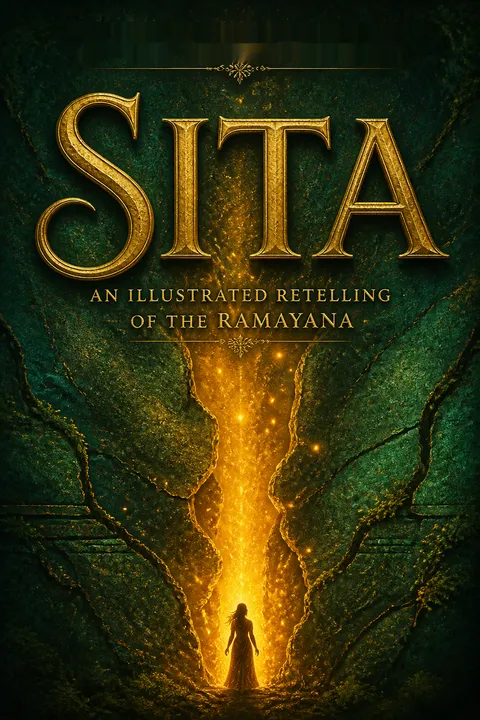
Sita: An Illustrated Retelling of the Ramayana receives mixed reviews. Many praise Pattanaik's storytelling, research, and fresh perspective on the epic, particularly highlighting Sita's character. Readers appreciate the inclusion of various regional interpretations and philosophical insights. However, some criticize the book for not truly focusing on Sita's perspective and for potentially misrepresenting certain aspects of the original text. The illustrations and additional commentary are generally well-received, though some find them distracting. Overall, the book seems to offer a new take on the Ramayana that sparks discussion and reflection.
People Also Read







Characters
Sita
Earth-born thinkerFound in a furrow and adopted by Janaka, Sita grows up among sages, courtly debate, and the work of her mother's kitchen. She notices how thought and nourishment depend on one another, and how different people interpret the same act. Her relationship with Ram is shaped by both tenderness and clear-eyed independence: she chooses to accompany him, challenges his assumptions, and sustains herself through practical knowledge. Sita's defining strength is not invulnerability but an ability to recognize what others want her to be without confusing it with who she is. She repeatedly makes choices in the face of rules, expectations, and public judgment.
Ram
Rule-bound princeThe eldest son of Dashratha, Ram is trained by Vasishtha in reflection and by Vishwamitra in the duties of a warrior. He is gentle in private, disciplined in public, and reluctant to treat a kingdom or a person as property. His strongest impulse is to keep promises and protect the legitimacy of the Raghu line, even when that duty conflicts with personal happiness. This makes him dependable, but not always kind in the way those closest to him need. Ram's character is built around the strain between the man who loves and the king who must answer to a society that judges him.
Hanuman
Devoted forest envoyA vanara scholar, warrior, and servant of Sugriva, Hanuman combines immense physical power with curiosity and diplomatic tact. His education under the sun gives him command of sacred learning and magical abilities, but his most important quality is attentiveness: he listens before deciding whom to trust. Ram inspires Hanuman to use strength in service of another person's purpose rather than his own advancement. His loyalty is not born from fear or reward. He is capable of acting independently, yet understands when to let another person lead. That combination makes him both an effective messenger and a model of devotion.
Lakshman
Fiercely loyal brotherRam's younger brother follows him into exile and becomes his constant guard. Lakshman acts quickly, loves intensely, and often interprets danger through anger before he has considered another person's perspective. His devotion gives Ram practical protection, but it also makes him dependent on his brother's judgment and vulnerable to orders he believes are wrong. His marriage to Urmila is part of a larger household life that duty repeatedly interrupts. Through his loyalty, the story asks whether love means obedience, protection, or the willingness to challenge someone one admires.
Ravana
Learned Lankan kingRavana is a powerful ruler, accomplished musician, and learned devotee of Shiva, born to the sage Vishrava and the rakshasa Kaikesi. He has exceptional knowledge, wealth, and strength, yet measures his worth through what he can acquire and command. His rivalry with Kubera and his appetite for dominance shape his idea of kingship. Ravana can inspire fierce loyalty, but he repeatedly mistakes possession for love and authority for right. The contrast between his intellectual brilliance and limited self-understanding gives him complexity without excusing the harm he causes.
Bharata
Reluctant regentKaikeyi's son, Bharata is a prince who values his brother more than the crown his mother secures for him. He feels shame at benefiting from Ram's exile and refuses to treat Ayodhya as personal property. His loyalty is practical as well as emotional: he accepts responsibility for governing, but does so in a way that preserves Ram's claim and reminds the city that his rule is temporary. Bharata offers a distinct model of authority from both Ram and Ravana. He can serve the kingdom without needing to possess it.
Dashratha
Anxious aging kingDashratha rules Ayodhya and loves his sons, especially Ram, but fear often drives his decisions. His longing for heirs leads him to marry repeatedly and seek ritual help, while his attachment makes him reluctant to let his sons face danger. He values the Raghu clan's reputation and gives Kaikeyi promises whose consequences he does not adequately consider. Dashratha's private tenderness cannot shield him from the public duties of kingship, and his attempts to control the future often make it less secure.
Janaka
Sita's wise fatherKing of Mithila and Sita's adoptive father, Janaka is a patron of sages and philosophical discussion. He accepts Sita as his daughter without requiring a claim of blood, and he values wisdom alongside strength when considering her marriage. His court brings different minds together, and his example helps shape Sita's habit of asking questions rather than accepting convention automatically. Janaka represents a ruler who can remain engaged with worldly responsibilities while seeking a wider understanding of them.
Kaikeyi
Warrior queenKaikeyi is Dashratha's beautiful, courageous queen and Bharata's mother. Her skill as a charioteer and her past bravery in battle give her a strong sense of her own worth. Yet her position in a household of several queens leaves her vulnerable to fears about rank and her son's future. Manthara gives those fears a sharper political shape. Kaikeyi's choices reveal how insecurity can transform legitimate claims into actions that harm a family, even when the person making them believes she is defending what is hers.
Manthara
Fearful palace attendantKaikeyi's lifelong nurse and Bharata's caretaker, Manthara has little formal power and depends on her place within the queen's household. She reads the proposed succession as a threat to both Kaikeyi and herself, then persuades Kaikeyi to act on that fear. Her loyalty is genuine, but it narrows into possessiveness because she has built her security around one person's favor. Manthara shows how an overlooked servant can influence the palace by giving voice to anxieties that others prefer not to name.
Urmila
Patient sister and wifeSita's sister and Lakshman's wife, Urmila belongs to the close-knit family formed by the marriages between Mithila and Ayodhya. Her life is shaped by the absence created when Lakshman chooses to accompany Ram into exile. The tale associates her with a remarkable act of sleep and sacrifice, but her significance is also domestic: she represents the person whose contribution is easily overlooked when public attention follows a hero's journey. Urmila's quiet presence asks what devotion costs those who remain at home.
Shanta
Courageous elder sisterDashratha's daughter and Ram's elder sister, Shanta is adopted into Rompada's household and entrusted with approaching the sheltered ascetic Rishyashringa. She combines intelligence with courage, crossing a boundary that others fear to approach. Her actions restore rain to Anga and help secure heirs for Dashratha. Shanta's story gives a daughter an active role in the continuation of a royal family, rather than treating sons as the only source of dynastic possibility.
Vishwamitra
Warrior turned sageOnce a king, Vishwamitra becomes a sage whose practical knowledge complements Vasishtha's philosophical teaching. He takes Ram and Lakshman into the forest, trains them in weapons, and expects them to face dangers rather than avoid them. His past ambition makes him attentive to the difference between power and wisdom. Vishwamitra is also willing to provoke questions, especially about who is protected when culture expands into the forest. He prepares princes not merely to fight but to think about the consequences of ruling.
Sugriva
Exiled vanara princeSugriva is driven from Kishkindha after a misunderstanding with his brother Vali and seeks refuge on a mountain Vali cannot enter. He is frightened, politically calculating, and eager to regain his kingdom and wife. His alliance with Ram rests on an exchange of help, and his later delay shows how quickly a beneficiary can forget the promise that secured his rise. Sugriva is capable of accepting counsel and learning to rule beyond brute dominance, though that growth requires pressure from Ram and Tara.
Vali
Dominant vanara kingVali is Sugriva's powerful elder brother, a warrior whose physical dominance makes him difficult to challenge. He believes Sugriva betrayed him by sealing a cave after a battle, and he responds by driving his brother away and taking control of Kishkindha. Vali's strength makes him a compelling leader to his followers, but he treats power as proof of entitlement. His objections to the rules of combat reveal a conflict between the force he uses to govern and the fairness he demands when he is vulnerable.
Vibhishana
Conscience within LankaRavana's brother, Vibhishana is a rakshasa who values counsel and the safety of Lanka over the king's pride. He warns Ravana against keeping Sita by force and is willing to oppose his own family when its actions threaten the kingdom. His religious devotion does not erase his political judgment; he sees that a ruler's private desire can become a public disaster. Vibhishana complicates the idea that a person's people or birth determine their moral character.
Mandodari
Clear-eyed queen of LankaRavana's chief queen, Mandodari is intelligent, politically perceptive, and alert to the consequences of his appetite for control. She understands that Sita's captivity endangers Lanka and that Ravana's desire is not the same as love. Her care for Sita reflects both compassion and an awareness of the danger facing women in the palace. Mandodari's warnings show how often sound judgment can be present in a household yet powerless against a ruler's self-image.
Valmiki
Poet of the forestValmiki is the sage and poet who gives Sita refuge and teaches her sons the song of Ram. His hermitage becomes a place where the children can learn outside the court's hierarchy. He is also susceptible to the desire for recognition through his work, a weakness that Hanuman's account of another Ramayana helps him examine. Valmiki links lived experience to song, carrying private history into public memory.
Luv and Kush
Forest-raised twin archersSita's twin sons grow up in Valmiki's forest hermitage, learning archery, music, and the rhythms of the natural world. Luv and Kush differ in temperament and skill, and Sita refuses to measure one against the other. Their training makes them capable of acting independently, while the song they learn gives them a way to question the authority of a king they do not yet know as their father.
Jatayu
Vigilant vulture allyAn old vulture who watches over Ram and Sita's forest dwelling, Jatayu recognizes Ravana's abduction as an injustice and intervenes despite his age. His sacrifice gives Ram the direction he needs to begin the search.
Surpanakha
Passionate rakshasa princessRavana's sister, Surpanakha is a powerful forest-dweller whose desires and grief are treated as threats by the princes she approaches. She has lost family and seeks connection, but her attack on Sita escalates the encounter into violence. Her story makes the consequences of humiliation and retaliation difficult to separate.
Shabari
Generous forest hostA forest woman who offers Ram and Lakshman berries, Shabari tastes each one first to ensure it is sweet. Ram accepts her care without judging it by palace manners, revealing his ability to recognize hospitality across social difference.
Sulochana
Steadfast warrior's wifeIndrajit's wife, Sulochana understands her husband's loyalty to Ravana and faces the danger of war with composure. Her concern for his dignity gives the enemy household a personal presence beyond its role in battle.
Plot Devices
The Ring and Hairpin
Proof across distanceRam's ring allows Hanuman to establish his identity when he finds Sita in Lanka. Sita returns the trust with her hairpin and a private memory that only Ram will understand. Together, the objects turn jewelry into evidence of an unbroken relationship. The frame story gives the ring a second function: its fall opens the way to Naga-loka and prompts Hanuman to narrate the epic. The devices connect recognition, memory, and the act of storytelling.
Kaikeyi's Two Boons
Promise becomes exileDashratha's old promise to grant Kaikeyi two wishes becomes the political mechanism that removes Ram from Ayodhya and places Bharata on the throne. The boons are not inherently evil; Kaikeyi's demands draw force from Manthara's interpretation of palace hierarchies and from Dashratha's insistence that a king must keep his word. The device binds private gratitude to public consequence and begins the long separation that shapes the family.
The Golden Deer
Desire opens a breachMarichi's golden-deer disguise offers Sita something rare in a life marked by self-restraint: a wish of her own. Ram pursues it to please her, while Marichi's imitation of Ram's voice draws Lakshman away. Ravana then uses Sita's hospitality to lure her beyond the protective line. The sequence turns affection, fear, and social obligation into openings for abduction. The deer is not simply a magical lure; it is the first break in the trio's carefully maintained protection.
The Floating Bridge
Alliance made traversableNala and Nila lead the construction of a bridge across the sea from rocks that will not sink. Hanuman's inscription of Ram's name makes the stones hold together, while the vanaras and other forest creatures provide the labor. The bridge turns a distant search into a collective crossing and makes the rescue possible without asking the sea to surrender its nature. It embodies the book's recurring idea that cooperation can create a path where individual strength cannot.
Sita's Fire Ordeal
Purity before witnessesAfter Ram's army defeats Ravana, Sita faces an ordeal before the assembled witnesses to establish that captivity has not changed her inward fidelity. The fire cannot harm her, and its divine testimony answers the public suspicion that Ram's authority is meant to satisfy. Yet the scene does not settle the deeper conflict between private trust and public reputation. The later gossip in Ayodhya shows that proof can be accepted in one moment and disregarded when a community finds another reason to judge.
FAQ
0. Synopsis & Basic Details
What is Sita: An Illustrated Retelling of the Ramayana about?
- Sita's Earthly Journey: The book retells the ancient Indian epic, the Ramayana, from the perspective of Sita, focusing on her journey from being found in a furrow to her eventual return to the earth, highlighting her wisdom, resilience, and agency amidst societal expectations and personal trials.
- Dharma's Complexities Explored: It delves into the multifaceted concept of dharma (righteous conduct, human potential) through the choices and dilemmas of its characters, particularly Ram's adherence to rules and Sita's embodiment of unconditional love and understanding, questioning rigid interpretations.
- Humanity's Inner Landscape: Devdutt Pattanaik uses the narrative to explore the human mind's fears, desires, and capacity for growth, presenting the epic not just as a historical or mythological account, but as a psychological map of human potential and the interplay between nature and culture.
Why should I read Sita: An Illustrated Retelling of the Ramayana?
- Fresh Interpretive Lens: This retelling offers a unique, Sita-centric perspective, challenging traditional patriarchal narratives and inviting readers to re-evaluate familiar characters and events through a lens of empathy and nuanced understanding, making it a compelling Sita analysis.
- Deep Cultural Immersion: Pattanaik seamlessly weaves in diverse regional folklores, philosophical debates (Upanishads, Charavaka), and cultural practices, providing a rich, multi-layered understanding of Indian thought and the epic's enduring influence across various traditions.
- Visually Engaging Narrative: As an illustrated retelling, the book enhances comprehension and emotional connection through evocative artwork, making complex philosophical ideas and intricate plot points accessible and memorable for a wide audience.
What is the background of Sita: An Illustrated Retelling of the Ramayana?
- Multifaceted Oral Tradition: The book draws from the vast and varied oral and written traditions of the Ramayana across India and Southeast Asia, acknowledging that "there are many Ramayanas," and that the story is a living, evolving narrative, not a single fixed text.
- Philosophical Underpinnings: Pattanaik grounds the narrative in core Hindu philosophical concepts like karma, dharma, aham (ego), atma (true self), and the interplay of Shiva (hermit/detachment) and Vishnu (householder/engagement), offering a Ramayana explained through its spiritual depth.
- Author's Interpretive Approach: Devdutt Pattanaik, known for his work on Indian mythology, approaches the epic not as a historical account but as a psychological and cultural document, aiming to "rediscover the Ramayana as one of the many maps of the human mind," as stated in the author's note.
What are the most memorable quotes in Sita: An Illustrated Retelling of the Ramayana?
- "Fear is a constant, and faith is a choice.": This profound statement from Vasuki in the Epilogue encapsulates a central theme of the book, highlighting the human condition's inherent anxieties and the conscious decision required to overcome them through belief and trust.
- "I am Ram's and he is mine. We are complete with each other. I need no other.": Sita's declaration to the Gandharva in the forest, even after her banishment, powerfully asserts her unwavering fidelity and self-sufficiency, defining her character beyond external circumstances and societal judgment.
- "You need your Ramayana more than I need mine. You wrote your Ramayana so that the world remembers Valmiki; I wrote my Ramayana so that I remember Ram.": Hanuman's humble yet insightful words to Valmiki reveal the essence of true devotion and the purpose of storytelling, distinguishing between creation for validation and creation for love.
What writing style, narrative choices, and literary techniques does Devdutt Pattanaik use?
- Conversational & Accessible Prose: Pattanaik employs a direct, conversational tone that makes complex philosophical ideas and ancient narratives easily digestible, often using simple language to convey profound insights, making the Ramayana accessible.
- Interweaving Folklores & Debates: A key narrative choice is the seamless integration of diverse regional folk tales, philosophical discussions (e.g., Sulabha and Janaka, Jabali's materialism), and cultural practices, enriching the main plot with layers of context and alternative perspectives.
- Psychological & Symbolic Interpretation: Pattanaik consistently uses literary devices like symbolism (e.g., Sita as earth, bow as relationship), metaphor, and internal monologue to delve into characters' unspoken motivations and emotional states, transforming the epic into a map of the human psyche rather than a mere historical account.
1. Hidden Details & Subtle Connections
What are some minor details that add significant meaning?
- Sita's Kitchen Wisdom: Beyond her philosophical debates, Sita's practical knowledge of the kitchen, learned from Sunaina, symbolizes her connection to nourishment, sustenance, and the domestic sphere as the "first yagna-shala," bridging intellectual wisdom with earthly well-being. This is a subtle detail often missed in Sita analysis.
- Lakshman's Sleep Vow: The detail of Lakshman asking Nidra, the goddess of sleep, to transfer his sleep to Urmila for fourteen years highlights his extreme devotion and sacrifice, but also subtly foreshadows the emotional cost of such absolute self-denial and the eventual separation from his wife.
- Ram's Atonement for Brahmahatya: Ram's act of seeking forgiveness from Ravana's spirit in the Himalayas, acknowledging the "wisdom" in one of Ravana's ten heads, reveals a profound nuance in Ram's character, showing his capacity for introspection and regret beyond mere victory, a deeper Ramayana meaning.
What are some subtle foreshadowing and callbacks?
- Vibhandaka's Line & Lakshman-rekha: The story of Vibhandaka drawing a line to protect his celibacy, which women could not cross without bursting into flames, subtly foreshadows the Lakshman-rekha, drawing a parallel between male celibacy and female chastity, and the dangers of crossing boundaries, whether physical or moral.
- Ram's Anguish & Sita's Exile: Ram's intense emotional breakdown and weeping when Sita is abducted, and his subsequent stoicism, subtly foreshadows his later coldness during Sita's fire trial and second exile, hinting at the internal conflict between his personal feelings and his public duty as king.
- Hanuman's Birth & Strength: The tale of Hanuman mistaking the sun for a fruit and being struck by Indra's thunderbolt, leading to a curse that makes him forget his strength, subtly foreshadows Jambuvan's later role in reminding him of his powers, enabling his leap to Lanka and highlighting the theme of forgotten potential.
What are some unexpected character connections?
- Shanta's Influence on Dashratha: Dashratha's daughter, Shanta, often a minor character, plays a pivotal role in securing Rishyashringa's help for Dashratha to have sons, subtly connecting the king's desire for heirs to his daughter's sacrifice and the broader theme of fertility and societal balance.
- Ravana's Family as Mirrors: The detailed backstories of Ravana's family members (Mandodari's origin, Surpanakha's lost husband/son, Vibhishana's devotion) reveal them not just as antagonists but as complex individuals, often victims of Ravana's pride or instruments of a larger karmic design, adding depth to Ravana motivations.
- Valmiki's Transformation & Sita's Guidance: The bandit Ratnakar's transformation into Valmiki, the poet of the Ramayana, is directly influenced by Sita's wisdom and presence, establishing an unexpected guru-disciple relationship where Sita, the "abandoned" queen, becomes the catalyst for the epic's creation and the poet's enlightenment.
Who are the most significant supporting characters?
- Manthara, the Catalyst of Fate: Beyond being a mere manipulator, Manthara is presented as an instrument of Brahma's will, ensuring Ram's exile to fulfill a cosmic purpose, and her future rebirth as Kubija in Krishna's life subtly connects the two avatars and the cyclical nature of karma.
- Jatayu & Sampati, Avian Guides: These two vultures, brothers, serve as crucial informants for Ram and Hanuman respectively, symbolizing loyalty and sacrifice. Jatayu's dying words direct Ram, and Sampati's keen eyesight guides Hanuman, highlighting the unexpected allies found in nature.
- Shabari, the Devoted Tribal: Shabari, the tribal woman who offers Ram pre-tasted berries, represents unconditional devotion and challenges societal norms of purity. Ram's acceptance of her offering underscores his ability to see beyond superficial rules to a person's true humanity, a key aspect of Ram's character development.
2. Psychological, Emotional, & Relational Analysis
What are some unspoken motivations of the characters?
- Kaikeyi's Deep-Seated Insecurity: Beyond Manthara's manipulation, Kaikeyi's actions stem from a profound insecurity about her status as a "junior queen" and her son Bharata's future, fueled by Dashratha's preferential treatment of Ram and her own mother's abandonment, revealing complex Kaikeyi motivations.
- Ram's Burden of Perfection: Ram's stoicism and adherence to rules are not just virtues but also a psychological burden. His decision to banish Sita, despite knowing her purity, is driven by an unspoken need to maintain his "maryada purushottam" image and the Raghu clan's reputation, even at immense personal cost.
- Ravana's Quest for Validation: Ravana's insatiable hunger for power, knowledge, and even Sita, is rooted in a deep-seated inadequacy stemming from constant comparison to his half-brother Kubera and his desire to prove himself superior, revealing a complex Ravana psychology driven by ego rather than pure malice.
What psychological complexities do the characters exhibit?
- Sita's Internal Freedom: Despite physical captivity and emotional abandonment, Sita maintains profound psychological freedom. Her ability to find joy in small things, teach board games to her captors, and ultimately choose her return to the earth, demonstrates a mind unburdened by external validation, embodying true liberation.
- Lakshman's Righteous Rage: Lakshman's fierce loyalty often manifests as impulsive anger and a black-and-white view of justice. His struggle to reconcile Ram's seemingly cruel decisions (like Vali's killing or Sita's banishment) with his idealized image of Ram reveals his own internal conflict and emotional immaturity compared to Ram's detached wisdom.
- Hanuman's Selfless Devotion: Hanuman's character embodies the psychological complexity of selfless service. His ability to act with immense power and wisdom, yet remain humble and without personal ambition, reflects a mind that has transcended ego, finding fulfillment solely in the service of a higher purpose.
What are the major emotional turning points?
- Dashratha's Guilt over Shravana: The accidental killing of Shravana, a dutiful son, is a major emotional turning point for Dashratha, triggering his fear of losing his own sons and his impulsive decision to coronate Ram, setting in motion the chain of events leading to exile.
- Ram's Anguish Post-Abduction: Ram's raw, uninhibited grief and despair after Sita's abduction, where he questions trees and birds, marks a significant emotional turning point, revealing his human vulnerability and deep attachment, contrasting sharply with his later stoicism.
- Sita's Final Act of Agency: Sita's decision to return to the earth rather than undergo another public trial is a powerful emotional climax. It signifies her ultimate assertion of self-worth and freedom from societal judgment, transforming her from a victim into a figure of profound dignity and self-sovereignty.
How do relationship dynamics evolve?
- Ram and Sita: From Duty to Deep Understanding: Their relationship evolves from a marriage bound by ritual and duty to one of profound, unspoken understanding. Despite physical separation and Ram's public rejection, Sita's continued love and support, and Ram's internal suffering, reveal a bond that transcends conventional expectations.
- Ram and Lakshman: From Shadow to Independent Choice: Lakshman's unwavering loyalty to Ram is tested by Ram's increasingly detached and rule-bound decisions. Their dynamic shifts from Lakshman being Ram's "shadow" to Lakshman making his own ultimate choice to follow dharma, even if it means self-sacrifice, highlighting the evolution of Lakshman motivations.
- Ravana and His Family: Loyalty vs. Wisdom: Ravana's relationships with his family (Mandodari, Vibhishana, Indrajit) are characterized by a tension between their loyalty to him and their attempts to offer wise counsel. Their ultimate suffering and deaths underscore the destructive nature of Ravana's unchecked ego and his inability to listen, leading to the tragic downfall of his entire clan.
4. Interpretation & Debate
Which parts of the story remain ambiguous or open-ended?
- Ram's True Intentions for Sita's Exile: The narrative leaves ambiguous whether Ram truly doubted Sita's chastity or if her banishment was solely a political act to uphold royal reputation. This ambiguity fuels ongoing debate about Ram's character and the nature of his dharma.
- The Nature of Ram's Divinity: While later retellings explicitly portray Ram as Vishnu incarnate, Valmiki's original text often shows Ram as a human hero who sometimes senses his divinity but struggles with human emotions and limitations, leaving his divine awareness open to interpretation.
- The Cyclicality of Time and Rebirth: The Epilogue, with Vasuki's revelation of infinite Rams and Sitas, presents a cyclical view of time where events repeat. This raises questions about free will versus destiny, and whether characters truly learn or are merely playing out predetermined roles.
What are some debatable, controversial scenes or moments in Sita: An Illustrated Retelling of the Ramayana?
- The Mutilation of Surpanakha: Lakshman's brutal disfigurement of Surpanakha, a woman expressing desire, is highly controversial. The text itself questions the ethics, asking if "villains have no gender" and if the punishment fits the "crime" of expressing desire, sparking debate on male violence against women in the epic.
- The Killing of Vali by Stealth: Ram's decision to kill Vali from behind, rather than in a fair fight, is a contentious act that challenges his image as "maryada purushottam." The narrative presents Vali's arguments against this "foul play," forcing readers to grapple with the complexities of justice and the means to an end.
- Sita's Trial by Fire (Agnipariksha): Ram's demand for Sita to prove her purity through fire, despite her unwavering fidelity, is one of the most debated scenes. It highlights the harshness of societal judgment and the burden placed on women, leading to discussions about female agency and the patriarchal aspects of the epic.
Sita: An Illustrated Retelling of the Ramayana Ending Explained: How It Ends & What It Means
- Sita's Return to Earth: The story culminates with Sita, after being called to prove her purity once more, choosing to return to her mother, the Earth, rather than submit to endless societal scrutiny. This act is a powerful assertion of her autonomy and a rejection of a culture that prioritizes reputation over truth. It signifies her ultimate liberation from human judgment and her return to her primal, untamed nature.
- Ram's Enduring Solitude and Departure: Ram is left with his sons and a golden statue of Sita, ruling Ayodhya but living in profound solitude, haunted by his choices. He eventually walks into the Sarayu river, signifying his departure from the mortal realm. This ending emphasizes the tragic cost of his adherence to dharma and societal expectations, portraying him as a king who sacrificed personal happiness for his people's perception.
- The Eternal Cycle of Existence: The Epilogue reveals that Ram's lost ring leads Hanuman to Naga-loka, where he discovers a mountain of rings, each representing a past Ram. This cyclical ending, where Sita and Ram are reborn in every Treta Yuga, suggests that their story is not a singular historical event but an eternal, recurring narrative that continually explores the human condition, the interplay of fear and faith, and the endless quest for dharma. This provides a profound Sita: An Illustrated Retelling of the Ramayana ending explained through a philosophical lens.
About the Author
Other books by Devdutt Pattanaik


Download PDF
Download EPUB
.epub digital book format is ideal for reading ebooks on phones, tablets, and e-readers.








