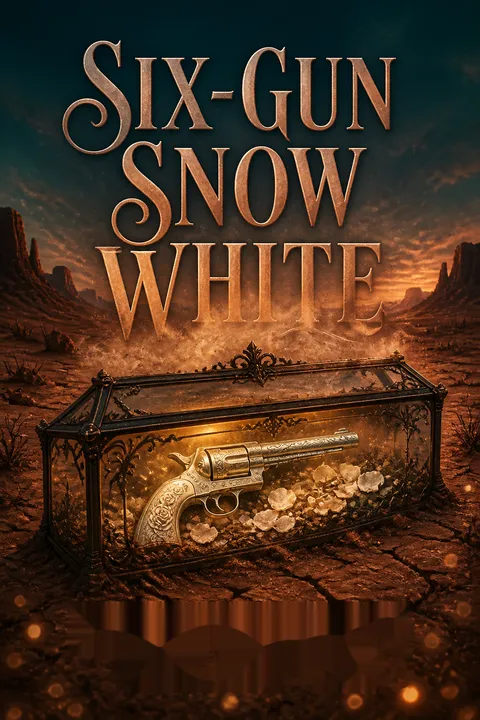


Plot Summary
A Marriage Bought in Stars
Mr. H, a wealthy prospector who measures affection as possession, meets Gun That Sings, a Crow woman, while she trades elk meat in a Montana store. Her refusal only sharpens his desire. He returns with lavish dresses, jewelry, and the threat of his armed power, until she submits to marriage and becomes Sarah H.
At his coastal estate, he dresses her in silk and remakes her life to suit his own fantasies. When she becomes pregnant, Sarah cuts herself in despair and is confined until the birth. She dies afterward, leaving a daughter with her dark hair, copper skin, and blood-red mouth. That daughter will tell the story as Snow White.
The story begins with a bargain that is not a bargain at all. Mr. H interprets wealth and social standing as a right to another person's body, while Sarah's constrained consent exposes the violence hidden inside respectable marriage. His attempt to turn her into a white, obedient wife makes their daughter inherit the contradiction: she is loved as an ornament but denied a place in the family. The fairy-tale pattern is present from the start, but its familiar gifts are instruments of coercion. The silver dresses promise transformation while making clear who has the power to define what transformation means.
The Silver Gun's Child
Mr. H keeps his daughter hidden from most visitors, presenting her at dinner as a carefully dressed curiosity and otherwise confining her to his vast estate. She makes a kingdom of its private boardwalk, shooting galleries, zoo, and slot machine, where wooden coins can be exchanged for small privileges.
Her father rewards her with a silver-handled revolver called Rose Red, adding a pearl whenever she pleases him and an opal when she turns ten. She learns to shoot tin targets and hunt, but her first real bird falls to a bullet through its eye. The girl grieves over the seagull she has killed, discovering that her skill can injure what she meant to keep. Her play is private, but the gun will become a way to act beyond it.
The estate looks like abundance, yet its pleasures are structured around isolation and control. The slot machine teaches the girl to treat affection as a reward system: obey, receive a token, hope for more. Rose Red makes that lesson physical. Her father's approval is built into the gun's pearls, while the opal's resemblance to her mother's eyes ties inheritance to violence and absence. The seagull's death is an early rupture in the child's fantasy of mastery. She can hit what she aims at, but she cannot guarantee that the result will be kind. That gap between intention and consequence follows her into adulthood.
The Queen of Spades
When Mr. H marries the daughter of a railroad baron, his hidden child watches the wedding from a tree and hopes the new wife might become a companion. Before the ceremony, she discovers a huge black mirror among the bride's belongings. After the newlyweds return, Mrs. H finds the girl in her private saloon, wins their card game, and studies her as a problem to correct.
She condemns the girl's skin and hair, then gives her the name Snow White, turning the fairy-tale heroine into a standard the child can never meet. Mrs. H also pulls the slot machine's lever without feeding it a coin; it produces a row of apples and a shower of silver. Snow White sees that the beautiful stranger can make her father's private world obey different rules.
The stepmother's arrival transforms the girl's longing for family into a lesson in racial hierarchy. Snow White hopes for care because she has never had a mother; Mrs. H instead offers a name that defines the child through lack. The name is not a neutral insult but a demand to become white, civilized, and acceptable on someone else's terms. The mirror and the rigged slot machine give that demand a supernatural dimension. They hint that Mrs. H has access to power beyond the household, while the child has only the fragile authority of a room she once considered her own.
A Child Inside the Mirror
Mrs. H makes Snow White scrub, starve, and endure beatings, presenting each punishment as instruction in womanhood. While searching for the black mirror, Snow White finally watches it reveal Mrs. H's earlier life: as a servant, the young woman was ordered to labor until a forest power answered her desperation.
The vision shows her trading for a harder kind of power and emerging with the emerald ring Snow White has noticed. Later, the mirror displays Mrs. H pregnant, although her body in the room remains unchanged.
Snow White watches the reflected woman give birth to a boy, who grows quickly and presses his hands against the glass to meet hers. Her stepmother has brought another child into the family, but he remains trapped on the mirror's far side.
The mirror complicates Snow White's view of cruelty without excusing it. It shows that Mrs. H once suffered under the same gendered labor she now imposes, and that she answered powerlessness by choosing hardness. Her history explains the shape of her worldview: control is safer than vulnerability, and pain is the price of agency. The mirrored birth extends that bargain into the next generation. Snow White gains a brotherly bond without gaining a shared world, so even intimacy arrives divided by glass. The mirror does not offer simple truth; it reveals how people inherit damage and then reproduce it as discipline.
The Dress of Fire
As Mr. H prepares to come home, Mrs. H forces Snow White through another freezing milk bath, tightens her into stays, and dresses her in a blazing yellow gown intended to make her presentable. Snow White recognizes the black mirror in Mrs. H's history and confronts her about the magic she witnessed.
Mrs. H explains that magic is what remains available to people denied ordinary power, but offers no promise that it will bring freedom without a cost. Snow White refuses to perform for her father. She burns the dress, takes Rose Red, steals an Appaloosa she helped raise, and rides out in men's clothes. The estate's gated comforts become a prison she has chosen to leave, and the road begins with no safe destination in sight.
Snow White's departure is the first decision made for herself rather than for a father's approval or a stepmother's rules. Yet the choice is not a clean liberation. Her body still carries the habits of obedience, and she has little knowledge of the world beyond the estate. Mrs. H's explanation of magic is also a warning: power does not erase dependence on bargains. By burning the dress, Snow White rejects a role before she can imagine a stable alternative. The act is both escape and refusal, an attempt to stop being displayed even as she rides into a world ready to judge her by other standards.
Ruby Dust and Pinkerton
Snow White crosses mining camps on her way north, surviving on hunting, rough food, and the speed of her draw. In Haul-Off, she shoots a miner who tries to take her gun, then breaks down afterward when one of the pearls falls from Rose Red. Near Nevada, she takes work in a ruby mine, where low wages and company debts keep her underground longer than planned.
A Pinkerton agent hired to retrieve her finds her there. He pays her debts, feeds her, then admits that his contract requires her heart. He proposes a card draw; Snow White cheats and wins the ace. When they face off, she shoots his knee and shoulder, takes his weapons, and leaves him a deer's heart to carry back instead of her own.
The frontier offers Snow White distance from her father's house but not freedom from its economy. Men still assume that her body and belongings are available for the taking, while the mining company turns labor into another form of captivity. Her violence is defensive, yet it costs her emotionally: the lost pearl makes her feel her father's judgment even after she has left him. The Pinkerton's contract literalizes the world's treatment of her as property, with a heart reduced to proof of delivery. Cheating the card game is a rare moment when she uses a skill learned in isolation to disrupt someone else's certainty.
Oh-Be-Joyful's Open Door
Rather than enter Crow country, where her appearance and the danger of white pursuit could make her unwelcome, Snow White turns toward Oh-Be-Joyful, a Montana settlement run by seven women who have fled their own histories.
They take her in, wash the road and mine dust from her, feed her, and give her work instead of demanding a confession. Snow White builds a small house, hunts for the communal kitchen, and slowly makes room for animals: a red fox, a bear, and a half-blind kit.
Bang-Up Jackson offers a bed and steady company, while Witch Hex warns that old ties may come knocking. Little Mab proposes a bank robbery, but Bang-Up refuses to risk the town's hard-won safety. Snow White has found shelter, though she still struggles to live inside it.
Oh-Be-Joyful is not a rescue that cures Snow White; it is a community that asks her to participate without requiring her to become legible first. Work gives her a practical role, while the animals allow closeness without interrogation. The refusal to rob a bank matters because it marks the settlement's boundaries: survival cannot depend on importing the law's violence into their own refuge. Witch Hex's warning recognizes that escape is not a single crossing but an ongoing practice. Snow White can build a house, yet the deeper task is learning that safety does not have to be earned through endless usefulness.
The Boy Behind Glass
The boy Snow White once saw through the mirror grows up in Mrs. H's world after crossing into it with deer legs and a voice that runs backward. He believes that Snow White's heart can undo what is wrong with him and win him a mother's love, so he follows her trail west.
Unlike the Pinkerton, he does not understand himself as a professional pursuer; he is driven by a child's belief that being repaired will make him wanted. He gathers money and stories along the route, even exhibiting his unusual legs in a brothel. The men who remember Snow White's gunfire help him follow her reputation. His search runs beside hers, though she does not know that the boy from the mirror is closing in.
The boy's pursuit repeats the novel's central confusion between love and repair. He imagines a heart as a tool that can restore his body and secure affection, just as Snow White once believed that obedience might turn her into someone her stepmother could love. Their parallel lives expose how a child can mistake conditional acceptance for a solvable defect. His deer body also makes visible what Snow White has experienced as social division: he is marked as not belonging before he can explain himself. The narrative grants him longing without making that longing harmless, since his imagined cure requires another person's heart.
Three Visits, Three Deaths
As autumn approaches, a figure wearing Gun That Sings's face appears at Snow White's door and offers a lesson in rolling cigarettes. Snow White wants the mother she never knew, accepts the smoke, and collapses. Bang-Up draws the black poison from her body and the women nurse her back.
The visitor returns with whiskey and another lesson, and Snow White drinks despite suspecting a trap; once again, her companions revive her, this time forcing the liquor back out. Snow White admits through her actions that she is searching for death, not simply being fooled. On the third visit, the visitor is Mrs. H, carrying apples and a deck of cards. Snow White refuses the offered game, bites an apple, and dies as Mrs. H catches her.
The repeated visits turn maternal longing into a mechanism of self-destruction. Snow White is not merely tricked by a disguise; she accepts the offers because they resemble the care she has wanted all her life. The companions' rescues keep her alive, but they cannot make her desire safety. Her first two choices make that conflict visible, while the final refusal of the card game shows that she no longer believes a fair contest can change the outcome. Taking the apple is an act of consent to pain and a test of whether anyone will catch her. Mrs. H does, but the catch comes too late to undo the poison.
The Glass Gunslinger
Snow White does not wake after Mrs. H catches her. The women of Oh-Be-Joyful eventually exhibit her in a glass case during their travels with a Wild West show, arranging Rose Red and her rifle around her still body. Deer Boy reaches the show and spends his nights near the case, speaking to the girl he has pursued across the West.
Believing her heart could restore him, he opens the display and cuts his own chest, trying to trade his blood for hers. He does not wound himself deeply enough to die, and Snow White does not stir. The women clean and tend to him, while her body remains untouched by his sacrifice. His long search has brought him close to her, but it has not made them whole.
The glass case turns Snow White from a person into a spectacle, completing the trajectory that began when her father dressed her for display. Even the outlaws who care for her cannot prevent the show from making her stillness into an attraction. Deer Boy's attempted exchange repeats the logic of bargains that has shaped both their lives: a body must be paid, traded, or repaired before it can receive love. His blood does not awaken Snow White, and the failure challenges the fairy-tale expectation that a kiss or sacrifice can reverse injury. Care remains present, but it cannot substitute for her own return to life.
A Pulsar of Her Own
Roughly a century after her collapse, a flood carries the glass case into a tree and breaks it open. Snow White wakes during the rescue, leaves the show and its history behind, and begins again in the modern world. She takes ordinary work, eventually earns a doctorate in physics, and returns once to the coastal estate, now a museum, without finding comfort in its old photographs.
She builds a life without explaining herself to strangers. A history professor with an unusual gait catches her attention, and she considers asking about his story. Instead, her work in astronomy gives her another way to listen: Snow White discovers a pulsar in the Horsehead Nebula, whose steady signal turns the night sky into a vast, distant conversation.
The ending refuses both a return to innocence and a neat restoration of the past. Snow White's survival begins with a disaster that breaks the container holding her, but waking does not erase the accumulated history of violence, displacement, and spectacle. Her education gives her a form of authorship that differs from the father's property, the stepmother's mirror, and the show's display case. The pulsar is not a cure or a new family; it is a signal she can detect without possessing. Her final attention to the professor suggests a tentative openness to another person's story, while her work lets her claim a place in a universe larger than the one that tried to name her.
Analysis
Six-Gun Snow White uses a familiar fairy-tale inheritance to examine how stories can turn social power into something that feels natural. Mr. H calls possession love; Mrs. H calls punishment education; the Pinkerton calls a heart part of a contract. Each character acts within a language that makes coercion seem ordinary. Snow White's challenge is not only to escape these people but to recognize when their terms have entered her own idea of affection. Her hope that suffering will make her lovable persists even after she has left the estate.
The novel's images of mirrors, games, costumes, and bodies all concern who gets to define a person. The mirror reveals hidden histories but cannot reunite the people it shows. Rose Red gives Snow White agency while carrying the marks of her father's approval. The slot machine offers a child the feeling of choice inside a system designed by an adult. Later, the glass case repeats the original display of the daughter as an object, even among women who care for her. The book does not pretend that self-knowledge alone breaks these structures; Snow White's escape remains costly, partial, and vulnerable to the desire for a mother.
Its shifting narration makes that vulnerability formal as well as psychological. Snow White's early voice sorts experience with the wit of someone who has learned to survive by naming what others conceal. When the storytelling moves away from her direct account, her life becomes a tale told by others, echoing the loss of control she has faced. Her final return to first-person presence and her work in physics do not erase the old story. They give her a different relation to it: she can study a signal without owning it, and make a life that is not measured by whether someone else approves of her face.
Review Summary
Six-Gun Snow White reimagines the classic fairy tale as a Western, featuring a half-Native American protagonist. Readers praised Valente's lyrical prose and unique storytelling, though some found the narrative confusing or problematic in its portrayal of Native Americans. The novella explores themes of racism, abuse, and identity, with a strong feminist undertone. While many appreciated the creative retelling and vivid imagery, others felt the ending was unsatisfying. Overall, the book received mixed reviews, with fans of Valente's work generally enjoying it more than newcomers.
People Also Read
Characters
Snow White
The half-Crow gunslingerMr. H's daughter and the story's fierce, self-questioning center, Snow White grows up hidden on a wealthy estate, rewarded for pleasing her father and condemned by her stepmother for looking like her Crow mother. She is observant, skilled with a gun, and often more comfortable with animals than people. Her understanding of love is damaged by the adults who define care as ownership, punishment, or a bargain. Even so, she keeps making practical choices: she rides, hunts, works, builds, and learns how to survive. Her blunt humor and changing narrative voice let her examine the stories other people impose on her without pretending that insight alone can heal what they have done.
Mr. H
The silver-hungry patriarchA wealthy prospector with an instinct for ore and a possessive approach to people, Mr. H treats money as both proof of worth and a means of control. He coerces Gun That Sings into marriage, then keeps their daughter hidden while furnishing her with extravagant toys, costumes, and a prized revolver. His affection is real in its own limited way, but it is conditional and self-serving: he wants the girl to entertain him and reflect well on him, not to choose her own life. He represents a frontier power that calls itself generous while quietly deciding who may belong.
Gun That Sings
The Crow motherA Crow woman with a strong will, Gun That Sings bargains for herself and her family before Mr. H's wealth and threats overwhelm her choices. As Snow White's mother, she is both a real absence and the imagined shape of the heritage Snow White cannot fully reach. Her daughter inherits her dark hair, copper skin, and red mouth, but grows up without her language or community. Gun That Sings remains central to the novel's questions about what can be passed down even when a family is severed by coercion, secrecy, and distance.
Mrs. H
The polished stepmotherMr. H's second wife, Mrs. H arrives from Boston with education, beauty, and a firm belief in the rules that define respectable womanhood. She regards Snow White's Crow features as something to correct and uses clothing, grooming, food, and household labor to press the girl into her ideal of femininity. Her coldness is not simple vanity: her past has taught her that power comes through endurance and that softness invites harm. She can be both a product of restrictive social rules and an enforcer of them, making her relationship with Snow White intimate, frightening, and difficult to reduce to a familiar wicked-stepmother role.
Deer Boy
The mirrored outsiderA young man with deer legs and a backward-running voice, Deer Boy is marked as strange wherever he goes. He longs to be accepted by his mother and believes that some change to his body will make that possible. His travels echo Snow White's, but his hope for repair leads him toward a dangerous idea of what another person's heart can provide. He is vulnerable, lonely, and capable of tenderness, even while his longing risks turning another person into the instrument of his own rescue.
The Pinkerton
The hired retrieval manA Pinkerton agent hired to bring Snow White back, he sees himself as a professional doing a job rather than as a villain. His contract asks for more than her return, and he accepts that demand as part of the work. He uses patience, food, and apparent kindness as readily as he uses weapons, making him difficult to read until his intentions are plain. His pursuit brings the coercive authority of the wealthy into the open country Snow White has tried to claim for herself.
Bang-Up Jackson
The settlement's hard bossOne of the seven women who run Oh-Be-Joyful, Bang-Up is a cattle rustler and a practical guardian of the town's fragile independence. She expects residents to contribute and distrusts choices that could invite the law into their refuge. With Snow White, she offers food, a bed, and physical comfort without pretending that recovery can be ordered. Her care is sturdy rather than sentimental, shaped by the knowledge that a community survives through both affection and limits.
Witch Hex Watson
The wary frontier witchA Maine woman who has fled a history of suspicion and loss, Witch Hex brings a hard-earned knowledge of magic and human repetition to Oh-Be-Joyful. She warns Snow White that the past will return in familiar disguises and urges her to protect the life she is building. Hex is not simply a keeper of spells; she is a builder who treats physical work as a way to endure. Her caution comes from experience, but it cannot make other people's choices for them.
Little Mab Volsky
The bright bandit queenA bank robber with a taste for risk and spectacle, Little Mab sees money as a way to secure practical needs for the women of Oh-Be-Joyful. She can make danger sound exhilarating, yet her plans are not driven only by greed. Her energy offers Snow White the possibility of acting violently for a shared purpose, a possibility the town's leader ultimately rejects. Little Mab is a reminder that independence can mean very different things even among women who have all escaped control.
Cocklebur Macaluso
The scarred town companionA sharp-tongued wildcat and one of Oh-Be-Joyful's most vivid residents, Cocklebur meets Snow White with practical care rather than questions. She helps strip the runaway's clothes and clean away the grime of the trail, making room for rest when Snow White can no longer manage herself. Her own scars testify to a life in which other people have tried to exert power through violence. She understands that comfort can begin with a warm bath and a quiet presence.
Woman Without a Name
The Crow horse thiefA Crow woman who escaped a family tragedy, she is an accomplished rider and one of Oh-Be-Joyful's founders. Her experience makes her alert to the risks Snow White's arrival could bring to Crow people, and she discourages the runaway from treating ancestry as an automatic homecoming. She is neither a simple rejection of Snow White's heritage nor a guide who can settle it for her. Her survival has taught her to protect the living people in front of her.
Old Epharim
The scarred camp cookA formidable cook and hunter in Oh-Be-Joyful, Old Epharim feeds the settlement from whatever the women can catch or gather. She makes care tangible through meals and practical attention, and she observes others without rushing to interfere. Her size, scars, and quiet composure challenge the narrow ideas of femininity that shaped Snow White's childhood. She is one of the town's steady presences, offering a place at the communal pan rather than a demand for explanation.
Astolaine Bombast
The escaped catalogue brideAstolaine was ordered from a catalogue as a bride, then left behind when her husband decided she had failed him. She escaped into the woods and eventually found refuge among the women of Oh-Be-Joyful. Her past exposes the market logic that treats women as products to be assessed and returned. At camp, she contributes practical skills and music, adding another kind of life to a settlement built by people who refused the roles designed for them.
Charming
The Appaloosa companionThe Appaloosa Snow White helped deliver and later steals when she leaves the estate, Charming becomes her most constant companion on the road. He carries her through terrain she does not know and remains a source of uncomplicated physical presence. Snow White can feed, groom, and ride him without bargaining for approval. Their bond offers a contrast to the human relationships that have made affection feel conditional.
Thompson
The red fox companionA red fox Snow White names while she is still confined to her father's estate, Thompson shares her private games and her makeshift saloon. He represents the small, nonverbal companionship available to a lonely child, and his image later recurs in the strange stories Snow White encounters.
Plot Devices
The black mirror
A window between livesMrs. H's ancient mirror first appears among her wedding belongings, reflecting a moon when the sky is dark. It later reveals scenes from her past and shows a pregnancy absent from her body in the room. The mirror also holds a growing child on its far side, connecting Snow White's secluded life to another strange inheritance. Its function is not simply to predict events: it makes hidden histories visible while keeping the people it shows separated from one another. The mirror's images repeatedly offer knowledge without an easy path to action.
Rose Red
A weapon carrying approvalMr. H gives his daughter a revolver made with silver from his fortune. Each red pearl in its grip marks a time she pleased him, and an opal later changes its weight. Snow White names the gun Rose Red and learns to shoot accurately long before she leaves the estate. The revolver protects her on the road, but its ornaments preserve the father's system of conditional affection. It carries both the skill he encouraged and the approval he used to control her, making every use of the weapon more complicated than simple self-defense.
The slot machine
A private economy of hopeOn the estate's boardwalk, Snow White plays a special machine with wooden tokens her father gives her. It can pay out silver when its reels align, turning luck into a rare reward inside a life where nearly every privilege is assigned. Its changing seasons echo the passage of time, while one impossible spin produces apples and coins without payment. The machine links childhood play to the novel's larger interest in chance, obedience, and rigged outcomes. It lets Snow White practice hoping for a result she cannot control.
Milk and clothing
Punishment disguised as refinementMrs. H uses cold milk baths, corsets, combs, and elaborate dresses to make Snow White resemble her ideal of a white, respectable woman. She presents discomfort as education and pain as proof that the child is improving. The repeated rituals turn ordinary objects of grooming into instruments of discipline, linking the household's private abuse to wider racial and gender rules. The fire-colored gown is especially charged because Mr. H once used a similar dress as one of his gifts to Gun That Sings. Snow White ultimately refuses to wear the role her family has chosen for her.
Cards and hearts
Bargains made visibleCards mark several moments when a character's fate appears to depend on chance, from the household game between Snow White and Mrs. H to the Pinkerton's deadly challenge. Snow White's card skill lets her recognize that a game may only look fair. The demand for a heart pushes the metaphor into the body: love, family, and survival are treated as things that can be taken or exchanged. The novel's opening Coyote story frames this pattern, suggesting that a divided heart can keep contradictory selves alive at once. The device gathers the book's bargains without resolving them into a simple moral equation.


Download PDF
Download EPUB
.epub digital book format is ideal for reading ebooks on phones, tablets, and e-readers.








