

Key Takeaways
Treat tiny household clues as hypotheses about unmet human desire
Small clues, larger needs. Small Data means modest observations about everyday behavior and possessions that, when interpreted together, can reveal motivations that people may not state directly. The book opens with LEGO facing steep losses while research predicted children wanted simpler, faster toys. During a home visit, an 11-year-old skateboarder proudly showed his worn Adidas sneakers. Their scuffs proved, to him, the skill and effort he had invested in skating. LEGO’s team saw a parallel: children might pursue mastery, not instant gratification. The company returned to smaller bricks and more challenging sets. By 2014, its sales had risen, and it had become the world’s largest toy maker.
Look for the story beneath. A household object is not proof by itself. Its value comes from how it fits with other observations about a person’s routines, pride, and aspirations.
What's striking is that the sneaker did not merely reveal a preference for difficult toys. It exposed the social meaning of difficulty: visible effort could become a badge of competence among peers. That distinction can change product design more than a survey about desired features. The case also shows the proper role of an anecdote: it can generate a sharp, testable hypothesis, but it cannot establish that a whole generation shares the same motive. Strong research would use the clue to ask better questions, then test whether the pattern recurs across children, settings, and products.
Pair behavioral observation with analytics, because clicks omit emotional context
Two kinds of evidence. Big Data can reveal patterns across many transactions or online actions. Small Data adds close observation of people’s offline lives, such as how they use their homes, talk about products, and behave when no audience is expected. The book argues that digital behavior is often curated, while self-reports can miss habits people barely notice. In the Tally Weijl research, phone records showed early-morning activity. Interviews and bedroom observations helped explain it: girls were waking up to send outfit photos to friends for opinions. Neither the phone data nor the interviews alone supplied the full account.
Triangulate, then interpret. The method combines data sources rather than treating one as a complete portrait. A click may show what happened; observation can suggest what the action meant in context.
This is a useful distinction between measurement and explanation. Digital records are excellent at establishing frequency and sequence, but weak at identifying purpose without contextual evidence. Ethnographic observation can supply that context, while also being vulnerable to the observer’s assumptions. The strongest design therefore treats each source as a check on the others. The approach also raises a practical boundary: private records and home access require informed consent, careful data minimization, and a clear account of how observations will be used. More intimate evidence is not automatically better evidence.
Read cultural excess as compensation, then build the missing escape route
Notice what feels exaggerated. Lindstrom looks for imbalances, or conspicuous gaps between daily life and what people seem to want. In the Russian Far East, he noticed crowded refrigerator doors covered with travel magnets, often placed where children could see them. He interpreted the display as a low-cost way for families to imagine travel they could not afford. Combined with observations about isolated mothers and weak trust in online shopping, this helped inspire Mamagazin, an online store and community built with Russian mothers. In Saudi homes, water imagery, safety toys, and other details led him to design a mall around water, calm, and a sense of refuge.
Treat meanings as hypotheses. The same object can carry different meanings in different places. The useful question is not simply what people own, but what desire the object may help express or satisfy.
The cross-cultural comparisons make desire visible as something shaped by constraints, not just individual taste. A travel magnet can stand in for an unreachable journey, while a shopping environment can offer a temporary feeling of safety. That is a powerful lens for product and service design. Its risk is overreading symbols: magnets may also be souvenirs, decoration, or family habit. A disciplined researcher should actively seek explanations that compete with the favored interpretation, then check those explanations with residents rather than treating culture as a codebook.
Design for the people who share a decision, not an average buyer
One package, two viewpoints. An Indian cereal brand faced two generations of household decision makers: mothers-in-law and daughters-in-law. The older women’s vivid clothing and cooking spices suggested a preference for saturated colors. Younger women, influenced by different ideas of naturalness, favored green. Lindstrom also considered their different heights and eyesight. On a supermarket shelf, the older shopper might notice the lower part of a package, while a taller, younger shopper saw its upper section more clearly. The proposed design used vivid spice-inspired colors below and restrained greens and browns above, with information about ingredients. Since Indian rules barred human figures on the package, a baby-sized spoon became its emotional image.
Design for shared use. The aim was not to average opposing preferences, but to make one product legible and appealing from both perspectives.
This case resembles inclusive design: different users encounter the same object from different physical and social positions. Instead of forcing a single ideal customer into the center, the package acknowledges the household as a small decision-making system. That insight applies well beyond consumer goods, especially where purchases involve family members with unequal authority. Still, the explanation depends on several linked interpretations, including color symbolism and visibility. Shelf testing with the intended shoppers would be essential to distinguish a persuasive story from a design that actually improves recognition and choice.
Make stores stages for belonging, not just shelves for products
A shop can host an experience. Lowes Foods could not win by matching Walmart on price or online sellers on convenience. Lindstrom’s observations suggested that shoppers wanted more local connection and a break from the sameness of American retail. The redesign added a produce area tied to local farmers, plus two playful counters selling rotisserie chicken and sausage. Staff played comic rivals, and the store’s Chicken Dance invited customers to join in. The company reported that average basket size rose 7 percent, transaction volume 23 percent, and chicken sales 120 percent.
Build a reason to stay. The changes made shopping participatory and gave customers shared moments to discuss. The store became more than a route between aisles and checkout, while still selling ordinary groceries.
What's striking is the shift from retail as inventory management to retail as social choreography. The chicken and sausage counters created a common spectacle, while local produce gave the store a place-based identity. This aligns with service design, which treats the customer’s whole journey, including social interaction, as part of the product. The reported gains are encouraging, but the account does not isolate which intervention caused which result. A store should measure not only sales, but repeat visits, customer comfort, and whether employees can sustain the performance without it becoming forced.
Give invisible emotional progress a physical ritual people can carry
Make progress tangible. Jenny Craig wanted clients to stay with its weight-loss program. Research into jewelry collectors suggested that a bead could represent memory, identity, and membership in a community. The company introduced a charm bracelet for clients, with beads marking achievements and setbacks. A counselor could give a client who gained weight a bead that framed the lapse as recoverable rather than as a reason to disappear. Lindstrom reports that pilot testing and later rollouts cut the company’s attrition rate in half.
Objects can hold a story. For Trollbeads collectors, individual charms commemorated events such as a child’s graduation or a day at the beach. The Jenny Craig idea adapted that emotional function to a program where progress is gradual and setbacks can feel discouraging.
A token can make an abstract process visible, helping someone remember both the effort and the people who support it. In behavioral science terms, the bracelet serves as a cue and a record of identity, not merely a reward. That distinction matters: a symbolic object may strengthen commitment, but it cannot replace sound nutrition advice, accessible counseling, or a program suited to the client’s circumstances. The reported retention result is notable, though the book does not describe the study design in enough detail to judge how much the bracelet itself contributed.
Bring online peer approval into physical spaces without copying the screen
Make the store socially useful. Tally Weijl’s teenage shoppers often visited in groups, tried on clothes, and asked friends for judgments. Some girls used their phones early in the morning to send outfit photos for feedback. The redesigned Vienna store brought that routine into the dressing room: a large interactive mirror let shoppers connect with friends online and ask for live opinions while trying on clothes. The space also offered a lounge, phone chargers, and theatrical decor that welcomed customers who wanted to browse rather than buy immediately.
Join the two settings. The store did not try to defeat online social life. It combined physical touch and fitting with the peer feedback already central to the girls’ shopping habits. The book reports stronger revenues and four times as many Facebook fans after the redesign.
This is a clear example of designing around an existing social practice instead of demanding that customers abandon it at the shop door. The physical fitting room adds something digital shopping cannot: the feel and fit of clothing. The live mirror joins that tactile information to peer opinion. However, integrating social media into a changing room also makes privacy and image control central design questions. Any modern version would need consent at every step, secure handling of logins, and the option to try clothes without being recorded or rated.
Engineer the feeling of quality, not only the product’s function
Sensation carries meaning. Roomba owners treated their robotic vacuums as companions, often naming them and displaying them partly in view. The machines’ small sounds helped make them seem cute and personable. When engineers removed those sounds, the product became more efficient but, in Lindstrom’s interpretation, less emotionally distinctive. A different example came from China, where he observed fast-moving doors, rapid service, and a preference for speed. For the car company he advised, quick door movement and immediate responses were intended to match local expectations of quality.
Function is not the whole experience. A product’s timing, sound, texture, and movement can shape what users think it is for. The same sensory cue may signal warmth in one setting and speed or competence in another.
The cases point to an important design principle: users judge products through embodied experience, not specifications alone. A sound can make a machine seem responsive; a door’s movement can communicate precision or urgency. This is especially relevant in interfaces, where latency and feedback often determine whether an action feels successful. Yet the cultural claims require careful validation. Fast movement may reflect infrastructure or habit rather than a shared definition of quality. Prototypes tested with actual users can separate a plausible cultural story from a sensory feature that people genuinely prefer.
Use seven Cs to turn observations into testable business concepts
Follow the trail. The book’s 7C methodology organizes research into Collecting, Clues, Connecting, Causation, Correlation, Compensation, and Concept. First gather perspectives and observations. Then identify distinctive clues, connect them into possible patterns, ask what emotion or cause may explain them, and determine when a behavior began. Next, identify the desire that appears unmet, then develop a concept that could address it. Lindstrom recommends revising early assumptions rather than protecting them; some initial lines of inquiry will lead nowhere.
End with a test. His examples include combining a supermarket with entertainment and community, and blending social feedback with a clothing store. The framework is a route from observation to an idea, not a guarantee that the idea is correct or commercially viable.
The framework’s strength is procedural: it slows the leap from an intriguing detail to a product proposal by asking researchers to connect evidence, emotion, and a plausible unmet desire. It also makes creative work teachable without pretending that insight arrives mechanically. The weak point is the language of causation. In small qualitative samples, causal explanations are usually provisional, and patterns can reflect selection bias or the investigator’s expectations. The best use of the seven steps is iterative: develop a concept, test it with people who were not part of the original interpretation, and revise when their behavior disagrees.
Analysis
Small Data is a business book built from travel narratives and client case studies, with an applied research framework at the end. Its central proposition is that consumer behavior becomes intelligible when minor physical and social clues are read together, especially when those clues conflict with what people say or what large datasets measure. The LEGO sneakers make that claim memorable: a child’s worn shoes recast effort as a source of status, challenging a prediction that young consumers wanted easier toys. Across later cases, the same logic connects household details to commercial design, from Russian refrigerator magnets to an online mothers’ community, and from girls’ morning outfit messages to an interactive dressing room.
The book’s most durable contribution is not the claim that every object contains a hidden truth. It is the insistence that research should move between scales and modes: aggregate behavior, direct conversation, physical context, and observed action. That approach resembles abductive reasoning, where researchers form the best available explanation for surprising evidence, then seek observations that might confirm or overturn it. It also anticipates experience-centered design, in which sound, movement, social interaction, and atmosphere are part of a product rather than decorative extras.
The method’s vulnerability is the same feature that makes the stories compelling. A striking detail can invite an elegant interpretation, and an elegant interpretation can outrun the evidence. The author’s broad claims about national character, gender, and emotion are often better treated as prompts for investigation than as established findings. Small samples can reveal overlooked possibilities, but they cannot alone show how common a pattern is or prove why it occurs. Triangulation, replication, and explicit attempts to disconfirm a favored explanation are essential.
There is also an ethical tension in entering homes, examining personal possessions, and reading digital traces. Permission matters, but so do limits, especially when observation becomes commercially actionable. Used carefully, Small Data offers a sharp corrective to research that mistakes measurable activity for human meaning. Its best lesson is methodological humility: notice closely, interpret provisionally, and test the story before building the business around it.
Review Summary
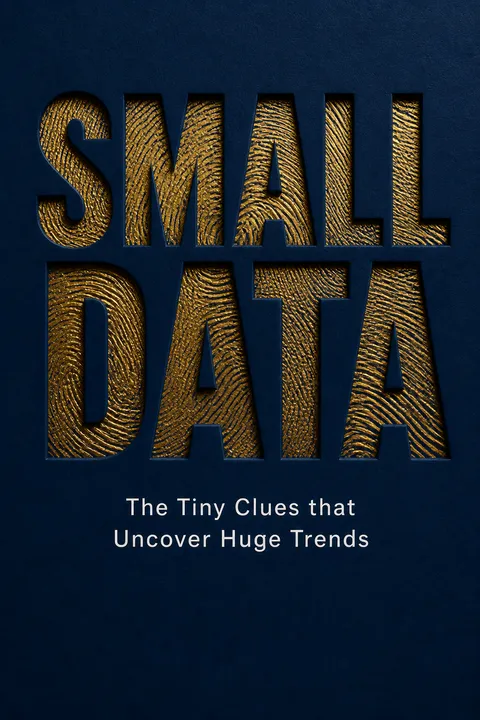
Small Data explores how tiny clues in consumer behavior can reveal major marketing insights. Lindstrom argues that observing small details and interacting directly with consumers yields valuable information big data misses. He shares case studies of how this approach helped rejuvenate brands like Lego. While some readers found his conclusions far-fetched, many praised the book's fascinating cultural observations and marketing lessons. Critics noted some cultural generalizations seemed inaccurate. Overall, most found it an engaging, thought-provoking read that challenges the overreliance on big data in business.
People Also Read







Glossary
Small Data
Everyday clues to desireSmall Data refers to modest observations about people’s lives, including habits, possessions, gestures, and preferences. No single clue is necessarily meaningful on its own. When combined with other observations and interpreted in context, these details can suggest emotional needs, aspirations, or tensions that people may not directly express.
Subtext Research
Context-rich consumer observationSubtext Research is Lindstrom’s approach to understanding consumers through a mix of home visits, interviews, observation, online behavior, and other everyday evidence. It seeks the motivations beneath stated preferences by examining what people do and the settings in which they do it. The research is exploratory and depends on combining clues rather than treating one response as decisive.
Small Mining
Interpreting connected cluesSmall Mining is the process of arranging and analyzing collected observations to search for patterns, contrasts, and possible emotional explanations. Lindstrom describes placing notes, images, and other findings together so that relationships become visible. The process is meant to generate or refine a hypothesis about unmet desire, not to make any individual object prove a conclusion.
7C methodology
Seven-stage insight processThe 7C methodology is Lindstrom’s sequence for moving from observation to a business concept: Collecting, Clues, Connecting, Causation, Correlation, Compensation, and Concept. Researchers gather evidence, identify and relate clues, examine possible causes and points of change, infer an unmet desire, and develop a response. It is a guide for inquiry, not a formula that guarantees accurate conclusions.
Permission Zone
A setting for emotional releaseA Permission Zone is an environment, activity, or social cue that allows people to enter a different emotional state or behave in ways they might otherwise restrain. The book gives examples such as a cinema, a playful store experience, or a casual conversation that becomes less formal. In retail, the concept is used to design an experience that makes particular actions feel acceptable.
Somatic Marker Hypothesis
Emotion guides decisionsThe Somatic Marker Hypothesis, associated in the book with neuroscientist Antonio Damasio, describes how emotional associations influence decision-making. Past experiences can attach feelings to cues, shaping later choices without deliberate calculation. Lindstrom applies the idea to branding, arguing that distinctive or unexpected sensory combinations can create memorable associations. A marketing application should not be confused with proof that any particular design will produce a predictable response.
Twin Self
The age felt insideThe Twin Self is Lindstrom’s term for the emotional age a person experiences internally, which may differ from chronological age. He connects it to formative experiences of independence, unmet childhood wishes, and identities people continue to carry. In branding, the concept encourages designers to consider the consumer’s felt identity, not only age-based demographic categories.
Breaking the Frame
Signaling a less visible identityBreaking the Frame describes a small, often deliberate sign of individuality that contrasts with a person’s public role or routine surroundings. Lindstrom uses examples such as a conspicuous personal object or a playful product displayed in an otherwise orderly home. The detail can suggest how someone wants to be seen beyond the identity imposed by work, culture, or daily expectations.
Transition Zone
A change-making experienceA Transition Zone is an experience that marks a shift in a person’s life or emotional state, such as taking a first major trip, becoming a parent, or sending a child to college. Lindstrom links remembered happiness to such distinct moments rather than treating it only as a continuous mood. The term also helps researchers notice times when identity and consumer behavior may change.
Blue Script
A brand’s functional layerBlue Script is Lindstrom’s label for the practical, observable elements of a brand or experience, such as product features, layout, instructions, and service steps. He contrasts it with Green Script, the emotional sequence a brand intends people to feel. Considering both layers helps a company assess not only whether a product works, but what meaning and experience accompany its use.
Green Script
A brand’s emotional arcGreen Script is Lindstrom’s term for the intended emotional progression of a brand experience. It asks how people should feel at different points, rather than listing only functions or features. The idea is illustrated through retail environments designed to evoke feelings such as wonder, belonging, freshness, or care. Green Script complements the more functional Blue Script.
FAQ
What's Small Data: The Tiny Clues that Uncover Huge Trends about?
- Focus on Small Data: The book emphasizes the importance of small, often overlooked details in understanding consumer behavior and cultural trends.
- Contrast with Big Data: Martin Lindstrom critiques the reliance on Big Data, arguing it lacks emotional insights necessary for true understanding.
- Real-World Examples: It includes case studies like LEGO's turnaround and Roomba's marketing strategies, showcasing how small observations can lead to significant business insights.
Why should I read Small Data by Martin Lindstrom?
- Unique Perspective: Lindstrom offers a fresh viewpoint on data analysis, encouraging readers to look beyond numbers to understand emotional and cultural contexts.
- Practical Applications: The insights can be applied in marketing, product development, and branding, making it valuable for professionals.
- Engaging Storytelling: The narrative is filled with anecdotes and observations from Lindstrom's global travels, making it both informative and enjoyable.
What are the key takeaways of Small Data?
- Importance of Observation: Observing people in their natural environments can reveal insights that data alone cannot, emphasizing ethnographic research.
- Emotional Connection: Successful brands create emotional connections with consumers, achievable through understanding small data.
- Cultural Nuances: Cultural differences shape consumer behavior, urging marketers to consider local customs and preferences.
How does Small Data critique Big Data?
- Lack of Emotional Insight: Lindstrom argues Big Data often fails to capture emotional nuances crucial for effective marketing.
- Narrow Focus: Big Data typically analyzes specific datasets without considering broader cultural contexts, leading to missed insights.
- Need for Integration: He advocates for balancing Big Data and Small Data to gain a comprehensive understanding of consumers.
What specific methods does Martin Lindstrom use in Small Data?
- Subtext Research: Involves visiting consumers in their homes to gather small data, observing behaviors and preferences not captured in surveys.
- Small Mining: Analyzing small data to find patterns and insights that inform branding and marketing strategies.
- 7C Framework: Guides the process of transforming small data into actionable insights, including steps like Collecting, Clues, and Connecting.
What are some examples of Small Data in action from Small Data?
- LEGO's Turnaround: Observing children's play habits led to more complex building sets, understanding desires beyond sales data.
- Roomba's Emotional Connection: Owners treated robotic vacuums like pets, an emotional connection highlighted by Lindstrom's research.
- Cereal Packaging in India: Designed packaging appealing to different generations, addressing cultural dynamics through colors and designs.
How does Small Data relate to consumer behavior?
- Understanding Motivations: Delves into emotional and psychological factors driving consumer behavior, revealing underlying motivations.
- Cultural Influences: Emphasizes consumer behavior's heavy influence by cultural context, shaping preferences.
- Transforming Insights into Action: Insights from small data inform marketing strategies and product development, connecting with consumers on a deeper level.
What is the 7C framework in Small Data?
- Overview of the 7C Framework: Consists of Collecting, Clues, Connecting, Causation, Correlation, Compensation, and Concept.
- Step-by-Step Process: Guides users through gathering insights, identifying emotional drivers, and developing actionable concepts.
- Application in Research: Encourages applying the framework in research and marketing efforts to uncover valuable insights.
How can businesses apply the insights from Small Data?
- Integrate Small Data: Conduct ethnographic research and observe consumer behavior in real-life settings to uncover hidden desires.
- Focus on Emotional Engagement: Create emotional connections by understanding consumer stories and cultural contexts.
- Balance Data Approaches: Combine Big Data and Small Data for more effective and comprehensive marketing strategies.
What challenges does Martin Lindstrom address in Small Data?
- Overreliance on Big Data: Critiques businesses' tendency to rely solely on Big Data, overlooking emotional and cultural factors.
- Cultural Misunderstandings: Highlights challenges brands face in new markets without understanding local cultures.
- Balancing Speed and Quality: Discusses maintaining quality while catering to consumers' desire for speed and efficiency.
What are the best quotes from Small Data and what do they mean?
- "Everything in life tells a story.": Emphasizes that every detail can provide insights into consumer behavior and cultural trends.
- "Our businesses will not improve through Big Data alone.": Highlights the need for a holistic approach that includes Small Data.
- "Desire is always linked to a story.": Suggests marketers focus on the emotional and cultural contexts of consumer behaviors.
How does Martin Lindstrom define Small Data?
- Small Data Defined: Tiny clues and insights revealing significant trends and consumer behaviors, often from direct observation.
- Contrast with Big Data: Seen as too broad and impersonal, while Small Data is rich in context and emotional relevance.
- Cultural Relevance: Deeply rooted in cultural contexts, essential for understanding consumer behavior in different markets.
About the Author
Other books by Martin Lindstrom





Download PDF
Download EPUB
.epub digital book format is ideal for reading ebooks on phones, tablets, and e-readers.








