Plot Summary
Spring's Uneasy Awakening
On the mountain, spring's return is both a promise and a warning. Life surges—plants sprout, animals stir, and the sisters, Sheila and Angie, move through a world that is both lush and precarious. Yet, beneath the surface, decline is seeded: eggshells thin, water sours, and the mountain's ancient rhythms are threatened. The mountain is not just a backdrop but a living, breathing force, indifferent to human suffering, yet deeply entwined with the fates of those who dwell upon it. This is a place where the boundaries between the natural and the supernatural blur, and where unpredictable things seep in, setting the stage for a story of survival, inheritance, and transformation.
Sisters Bound, Sisters Torn
Sheila and Angie, sisters by blood but opposites in temperament, share a cramped, threadbare attic room. Sheila is precise, yearning for order and escape, while Angie is chaotic, impulsive, and often the target of scorn at school. Their relationship is fraught with resentment and misunderstanding, yet necessity binds them together. Their family's poverty and trauma—an absent father, a mother stretched thin, and a mysterious old woman, Thena, in the back room—force the girls into uneasy alliance. The sisters' daily routines—feeding rabbits, foraging, enduring school—are colored by hunger, shame, and the ache of wanting something more, something different, even as they remain tethered to each other and the mountain.
Monsters in the Margins
Angie's world is populated by monsters she draws on index cards—creatures with too many teeth, twisted limbs, and names that hold power. These cards are more than a game; they are her way of making sense of a world that feels hostile and unpredictable. The monsters sometimes seem to take on a life of their own, demanding to be placed in certain locations, influencing events in subtle, uncanny ways. For Sheila, the monsters are a nuisance, a sign of Angie's refusal to face reality. Yet, as the story unfolds, it becomes clear that Angie's creations are both a shield and a conduit for forces beyond her understanding, blurring the line between fantasy and reality.
The Rope and the Scar
Sheila bears a thick, pink scar around her throat—a remnant of a mysterious childhood surgery, or perhaps something stranger. She feels a rope around her neck, invisible to others but ever-present, growing heavier with each passing year. The rope is a symbol of trauma, shame, and the weight of family history. It tethers her to the mountain, to her family, and to the pain she cannot escape. The rope's pull is both literal and metaphorical, shaping Sheila's movements, her relationships, and her sense of self. It is a reminder that some wounds never fully heal, and that the past is never truly past.
The Mountain's Hungry Heart
The mountain is not a passive setting but an active participant in the story. It knows the footsteps of all who cross it—animal, human, predator, prey. When two women are brutally murdered while camping nearby, the mountain absorbs their blood and grief, their pain seeping into its core. The violence awakens something ancient and restless beneath the surface, a force that will ripple through the lives of Sheila, Angie, and everyone on the mountain. The mountain's hunger is both literal and symbolic, a reminder of the cycles of life and death, and the ways in which trauma echoes through the land and its people.
Outsiders and Old Wounds
The sisters' insular world is occasionally breached by outsiders—hikers, police, and the rare visitor to their remote home. These encounters are fraught with suspicion, longing, and the ever-present threat of violence. The old woman, Thena, is a living link to the past, her stories weaving together family history, mountain lore, and personal trauma. Her tales of the Man of Stone and other supernatural encounters hint at a deeper reality beneath the surface. The family's struggles are mirrored in the land itself—eroded, scarred, and yet stubbornly alive.
The Murder in the Woods
The murder of two women on the Appalachian Trail sends shockwaves through the community. Fear and suspicion spread, and the sisters' already precarious existence becomes even more fraught. Angie, obsessed with survival and heroism, fantasizes about catching the killer, while Sheila is haunted by the violence and its echoes in her own life. The police search the woods, but the mountain keeps its secrets. The murder becomes a catalyst, forcing the sisters to confront their own fears, desires, and the darkness that lurks both outside and within.
The Boy with the Red Eye
Sheila encounters a mysterious boy with a bloody red spot in his eye—a figure who can see the invisible rope around her neck and seems to exist on the margins of reality. He is both a guide and a threat, challenging Sheila to confront her fears and the truth about herself. Their interactions are charged with danger, curiosity, and a strange intimacy. The boy's presence blurs the boundaries between the living and the dead, the real and the imagined, and his connection to the mountain's deeper mysteries becomes increasingly apparent as the story unfolds.
The Cards That Choose
Angie's monster cards become increasingly central to the unfolding events. The cards seem to have a will of their own, choosing when and where to appear, influencing the sisters' actions and the fate of those around them. The act of naming and placing the cards is a form of magic, a way of shaping reality. Yet, the cards also represent the limits of agency—the sense that some forces are beyond control, that destiny is both chosen and imposed. The sisters must learn to navigate the tension between fate and free will, between the stories they tell and the realities they inhabit.
The Starved Woman Returns
A monstrous figure from Angie's cards—the Starved Woman—returns in unexpected ways, appearing where she should not be, haunting Sheila with visions of hunger, shame, and insatiable need. The Starved Woman is both a personal demon and a collective specter, embodying the pain of deprivation, the fear of being consumed, and the longing for something more. Her reappearance signals a turning point, forcing the sisters to confront the consequences of their actions, the power of their imaginations, and the unresolved traumas that bind them to the mountain and to each other.
The Worm King's Bargain
As the search for the murderer intensifies, Angie turns to the most powerful and unpredictable of her cards—the Worm King—for guidance. The Worm King is a figure of transformation and decay, a force that can lead to salvation or destruction. Angie bargains with the Worm King, seeking his help to find the killer, but the price is steep. The alliance tests Angie's courage, resourcefulness, and her willingness to confront the darkness within herself. The Worm King's intervention sets in motion a chain of events that will bring the sisters face to face with the mountain's deepest secrets.
The Ravine of Reckoning
The sisters' separate quests converge in a ravine where Angie, following the Worm King's guidance, confronts the murderer. The encounter is brutal and chaotic, a tangle of bodies, fear, and violence. Sheila arrives in time to join the struggle, and for a moment, the sisters are united in purpose and action, their minds and bodies working as one. Together, they manage to subdue the killer, binding him with the invisible rope that has haunted Sheila for so long. The confrontation is both a literal and symbolic reckoning, a test of their strength, their bond, and their ability to face the darkness that has shaped their lives.
The Trap and the Tangle
With the murderer subdued, the sisters must decide what to do with him. They choose to bury him—literally and figuratively—within the mountain, sealing the wound he has inflicted on their world. The act is both a sacrifice and a secret, a way of protecting themselves and their community, but also a burden they must carry. The rope around Sheila's neck grows heavier, the cost of survival etched into her flesh and memory. The sisters' complicity binds them together, even as it isolates them from the world around them.
The Mountain's Secret Seals
The mountain responds to the sisters' actions, sealing the wound where the murderer was buried, covering the scar with moss and roots. Yet, the healing is incomplete—the trauma lingers, the rope remains, and the sisters are changed. The mountain's indifference is both a comfort and a curse, a reminder that life goes on, but that the past is never fully erased. The sisters must learn to live with what they have done, to find meaning and hope in the aftermath of violence and loss.
The Rope's Final Test
Sheila, desperate to be free of the rope, enlists Angie's help to cut it. Despite their efforts, the rope remains, a stubborn reminder of the ties that bind—family, trauma, the mountain itself. The sisters turn to Angie's cards for guidance, drawing a new card that depicts the mountain's heart, an eye watching from within. The message is clear: some burdens cannot be simply cut away; they must be understood, integrated, and carried with intention. The sisters begin to accept the complexity of their inheritance, the ways in which pain and love, freedom and responsibility, are intertwined.
The Gift of Letting Go
In the aftermath, the sisters find moments of connection and grace. Sheila crafts a gift for Juanita, the girl she loves but cannot approach, pouring her secrets and hopes into a vessel made of mountain materials. Angie, growing into her own strength, prepares for a future beyond the mountain, even as she remains rooted in its soil. The sisters' relationship, once defined by rivalry and resentment, is transformed by shared experience, mutual recognition, and the hard-won understanding that survival is not just endurance, but the willingness to change, to forgive, and to let go.
Characters
Sheila
Sheila is the elder sister, marked by trauma and a deep sense of responsibility. The invisible rope around her neck is both a literal and symbolic weight, representing the scars of her past, her family's history, and the inescapable pull of the mountain. Sheila is introspective, cautious, and desperate for escape, yet fiercely protective of Angie. Her journey is one of self-discovery, as she confronts her fears, her desires (including her secret love for Juanita), and the limits of her agency. Sheila's development is shaped by her struggle to reconcile the need for control with the necessity of surrender, and by her gradual acceptance of the complexities of love, loss, and survival.
Angie
Angie is Sheila's younger sister, a force of chaos and creativity. Scorned at school and misunderstood at home, Angie retreats into a world of monsters and survival fantasies, using her index cards as both shield and weapon. Her impulsiveness masks a deep sensitivity and a longing for recognition and agency. Angie's relationship with Sheila is fraught but essential; together, they navigate the dangers of their world, both real and imagined. Angie's arc is one of empowerment—learning to harness her imagination, confront real threats, and ultimately act with courage and compassion, even as she remains a creature of the mountain.
The Mountain
The mountain is more than a setting—it is a character in its own right, shaping the lives of all who dwell upon it. It is a place of beauty and danger, memory and forgetting, nurturing and devouring. The mountain's rhythms are echoed in the cycles of the sisters' lives, its wounds mirrored in their own. It is both a source of strength and a site of trauma, a force that must be reckoned with, respected, and, ultimately, accepted as both home and challenge.
Thena (The Old Woman)
Thena is the sisters' elderly relative, a repository of family lore and mountain wisdom. Her stories—of the Man of Stone, of old wounds and hidden treasures—are both warnings and guides, connecting the present to a deeper, mythic past. Thena's decline and death mark a turning point, forcing the sisters to confront the legacy they inherit and the choices they must make. Her presence lingers, a reminder that the past is never truly gone, and that the stories we tell shape the world we inhabit.
The Boy with the Red Eye
The boy is a supernatural figure who can see the invisible rope around Sheila's neck and exists on the threshold between worlds. He is both guide and challenger, forcing Sheila to confront truths she would rather avoid. His bloody red eye is a symbol of insight and trauma, a wound that sees and is seen. The boy's ambiguous nature—part ghost, part mountain spirit, part mirror—makes him a catalyst for Sheila's transformation, embodying the dangers and possibilities of crossing boundaries.
Bonnie (The Mother)
Bonnie is the sisters' mother, a survivor who works long hours at the asylum to keep the family afloat. Her love is practical, often expressed through sacrifice and endurance rather than affection. Bonnie's own dreams and disappointments echo in her daughters' struggles, and her relationship with them is marked by both distance and deep, unspoken care. She is a figure of resilience, shaped by the same forces that bind and threaten her children.
The Murderer
The murderer is both a literal threat and a symbol of the violence that haunts the mountain. His presence catalyzes the sisters' journey, forcing them to confront the darkness within and without. Though he is dangerous, his ultimate fate—buried and sealed within the mountain—reveals the limits of his power and the strength of the sisters' bond. He is a reminder that evil is both external and internal, and that survival requires both confrontation and containment.
Juanita
Juanita is the object of Sheila's secret affection, a girl from school who represents the possibility of love, escape, and a different life. Though she is largely absent from the main action, Juanita's presence shapes Sheila's dreams and decisions, embodying the longing for connection and the fear of rejection. She is both real and idealized, a figure onto whom Sheila projects her hopes and vulnerabilities.
The Monster Cards
Angie's monster cards are more than drawings—they are living symbols, agents of fate, and tools of magic. Each card represents a different aspect of the sisters' struggles—hunger, fear, cunning, sacrifice. The cards' ability to influence events blurs the line between imagination and reality, offering both danger and possibility. They are a testament to the power of naming, storytelling, and the creative act as a means of survival.
The Worm King
The Worm King is the most powerful and unpredictable of Angie's cards, a figure of decay, rebirth, and dangerous bargains. He represents the forces that cannot be controlled, the price of power, and the necessity of confronting the darkness within. The Worm King's intervention is both a blessing and a curse, forcing the sisters to reckon with the consequences of their choices and the limits of their agency.
Plot Devices
The Rope
The invisible rope around Sheila's neck is the central metaphor of the novel, representing the weight of family history, personal trauma, and the inescapable ties that bind us to place and kin. The rope's physicality—its chafing, its drag, its resistance to being cut—mirrors the psychological burdens the characters carry. It is a device that externalizes internal struggle, making visible the invisible wounds that shape identity and destiny.
The Monster Cards
Angie's monster cards function as both plot device and thematic anchor. They are tools of agency, allowing Angie to influence events, but also agents of fate, sometimes acting beyond her control. The cards' ability to appear, disappear, and reconstitute themselves introduces elements of magical realism, blurring the boundaries between imagination and reality. They serve as a means of foreshadowing, a way of externalizing inner fears, and a mechanism for exploring the power and limits of storytelling.
The Mountain as Character
The mountain is not merely a backdrop but an active participant in the story. Its moods, wounds, and responses shape the plot, influence character decisions, and provide a framework for exploring themes of inheritance, survival, and transformation. The mountain's indifference, its cycles of decay and renewal, and its capacity to absorb and conceal trauma make it both a source of danger and a site of healing.
Foreshadowing and Recurrence
The novel employs recurring motifs—rabbits, ropes, monsters, wounds, and the changing seasons—to create a sense of inevitability and interconnectedness. Events and images echo across chapters, building tension and deepening meaning. The recurrence of the Starved Woman, the reappearance of destroyed cards, and the cyclical nature of violence and healing all serve to reinforce the novel's exploration of fate, agency, and the persistence of the past.
Dual Perspectives and Narrative Structure
The story alternates between Sheila's and Angie's perspectives, allowing for a nuanced exploration of their inner lives, their misunderstandings, and their gradual movement toward mutual recognition. The use of close third-person narration, interspersed with moments of magical realism and mythic storytelling, creates a layered, immersive narrative that reflects the complexity of the sisters' world and the porous boundaries between reality and imagination.
Analysis
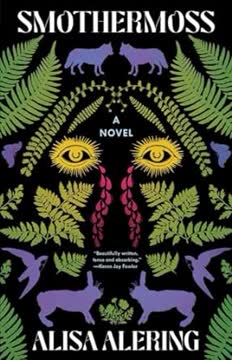
Smothermoss is a haunting, lyrical exploration of what it means to be bound—by family, by place, by history, and by the wounds we inherit and inflict. Through the intertwined stories of Sheila and Angie, Alisa Alering crafts a narrative that is both deeply personal and mythic, grounded in the gritty realities of poverty, violence, and longing, yet suffused with the uncanny and the magical. The mountain is both home and adversary, a force that shapes and is shaped by those who live upon it. The novel interrogates the limits of agency—how much of our fate is chosen, how much imposed—and the ways in which imagination, storytelling, and love can be both a refuge and a weapon. The rope around Sheila's neck, the monsters in Angie's cards, and the mountain's indifferent embrace all serve as metaphors for the burdens we carry and the possibility of transformation. Ultimately, Smothermoss is a story of survival—not just endurance, but the hard, necessary work of change, forgiveness, and the creation of new stories from the ruins of the old.
Last updated:
Review Summary
Smothermoss by Alisa Alering receives mixed reviews (3.43/5). Readers praise its atmospheric, lyrical prose and vivid Appalachian setting, with strong character development of sisters Sheila and Angie. Many appreciate the gothic, magical realism elements and exploration of queerness. However, critics note the weak mystery plot, confusing narrative structure, and unresolved themes. The blurred lines between reality and fantasy frustrate some but captivate others. Reviewers either love its ambiguous, dreamlike quality or find it underdeveloped and meandering. The audiobook narration receives consistent praise for authentic Appalachian accents.