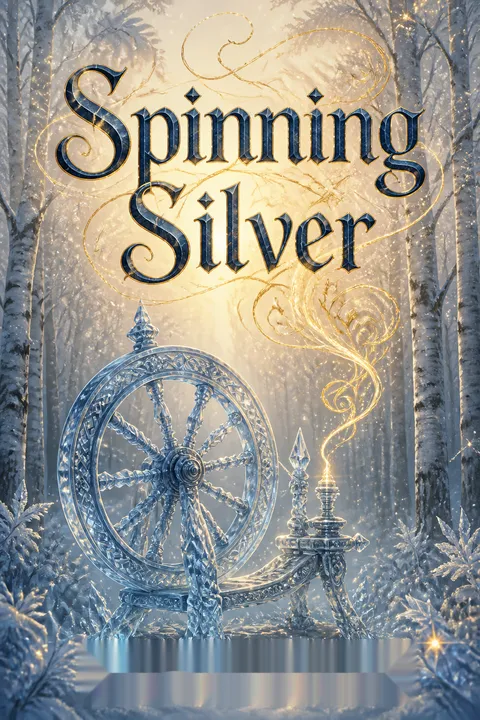


Plot Summary
Miryem Calls In Debts
At sixteen, Miryem watches the neighbors who owe her father money feast while her coughing mother lies without warmth or medicine. Her father is gentle, but cannot bear to demand repayment; the family’s poverty has become a debt everyone else expects them to forget. Miryem takes his ledger, calculates what each borrower owes, and knocks on their doors before dawn.
She accepts coins and goods at fair market value, then buys soup, eggs, bread, candles, and wool for home. Her father is astonished by the food and the payments. From then on, Miryem runs the lending business herself, determined that her parents will no longer starve because other people find it convenient not to pay.
Miryem’s first act of authority is inseparable from care: she does not become a lender to accumulate wealth, but because her mother’s illness exposes the material cost of her father’s gentleness. The village has turned his generosity into an informal subsidy, while its familiar stories cast the creditor as the villain. Miryem answers with exact numbers, making fairness visible where custom has depended on vagueness. Her severity is therefore both a survival skill and a defense against being made responsible for everyone else’s comfort. The scene establishes the book’s central tension: obligations can protect people, but only when power cannot quietly redefine who owes what.
The White Tree Answers
Wanda grows up on a failing farm with an abusive father, Gorek, and brothers Sergey and Stepon. Her mother dies after childbirth and is buried beneath a white tree that belongs, by local fear, to the Staryk. Years later, when Gorek’s debt leaves him threatening to sell Wanda into marriage, Miryem claims her labor instead.
Wanda is startled by the Mandelstams’ warm meals and their mother Rakhel’s affection, but keeps her head down and works. When Sergey returns from the forest emptied by a Staryk’s attack, Wanda carries him to the white tree, brews tea from its bark, and watches him vomit out the raw flesh that stole his soul. She then feeds him extra milk and confronts Gorek about his hunger.
Wanda’s early life teaches her to treat care as labor rather than comfort. She understands animals, chores, and danger because those have predictable consequences; human affection is harder for her to trust. Her mother’s tree offers a rare counterforce to Gorek’s household, but its help does not erase Wanda’s learned silence. Saving Sergey changes that silence into action: she risks anger and punishment without becoming suddenly sentimental. The tea made from the tree links survival to the land and to memory, while the meal at Miryem’s house offers a contrasting model of kinship. Wanda’s growth begins not with confidence, but with discovering that she can act even while afraid.
A Ledger Crosses Town
As repayments restore the Mandelstams’ house, Miryem hires Wanda to collect debts and pays her in actual coin. She teaches Wanda arithmetic and writing, turning the ledger from a private instrument into a skill Wanda can use herself.
Meanwhile, Miryem takes a purse of silver from her grandfather Moshel, expands her loans into nearby villages, and converts wool, food, and labor into money. A visit to Vysnia shows her that Moshel’s respected place in the Jewish community depends on the financial discipline her father lacked.
When she returns, she and her family find strange hoofprints and pointed boot marks around their home. Her parents conceal the Staryk’s approach from the village, fearing that suspicion could make their Jewish neighbors targets.
The ledger becomes a technology of agency for both women. Miryem uses accounting to expose hidden obligations; Wanda’s literacy lets her participate in that system rather than remain merely its object. Yet the same success brings social danger. Miryem’s Jewish family must calculate not only loans but also the cost of being seen as aligned with supernatural power. The Staryk’s footprints at their door make that risk physical, while the family’s decision to suppress the evidence shows how prejudice can force people to conceal even the truth that threatens them. Learning numbers does not free Wanda or Miryem from unequal structures, but it gives them a language for negotiating within them.
Silver Demands Its Price
After a sudden blizzard, the Staryk leaves six silver coins at the Mandelstams’ door. Miryem recognizes that he expects her to turn them into gold, so she carries them to Isaac, a young jeweler in Vysnia. He shapes the uncanny silver into a ring that the duke’s servant buys for ten gold pieces.
Miryem returns six to the Staryk on the road, and he takes them without praise, leaving her chilled and furious. On the next trip, her driver Oleg tries to rob her in the forest, convinced that her money is stolen from honest borrowers. The Staryk freezes Oleg before he can kill her. Oleg is later found dead, while Miryem survives with the next, much larger silver demand still hanging over her.
Miryem’s gift is first demonstrated through collaboration, not solitary sorcery: Isaac’s craft gives the silver a form the market can value. The ring reveals that beauty itself can become an economic force, drawing the duke’s wealth toward a material he cannot explain. Oleg’s attempted robbery echoes the village’s old accusation that creditors live by theft, but this time the story is used to justify actual violence. The Staryk’s intervention saves Miryem while demonstrating that his protection is neither tender nor safe. His power makes repayment feel less like commerce than tribute, sharpening the difference between Miryem’s carefully recorded debts and the obligations imposed by force.
A Crown for Irina
The Staryk’s next purse contains far more silver, and Miryem again relies on Isaac’s skill. A necklace enthralls the duke, who commissions a silver crown as a dowry for his daughter Irina. Irina has grown up overlooked in her father’s household, with only her nurse Magreta’s steady care; she also remembers the young tsar, Mirnatius, tormenting dead squirrels in the garden.
The duke intends to display Irina at his feast and secure a royal marriage. Mirnatius arrives, and Irina wears the silver ring, necklace, and crown as her father planned. The marriage proceeds quickly. That night, she discovers that her new husband’s beauty conceals a fire demon, and escapes through a mirror into a frozen world.
Irina’s jewelry does not simply make her visible; it gives her father a means to market her politically. The contrast between the beautiful objects and Irina’s lack of choice exposes the courtship as an exchange arranged by men who treat women as dynastic assets. Her childhood memory of Mirnatius’s cruelty complicates the fairy-tale image of a handsome royal bridegroom before the marriage even begins. The mirror offers a literal alternative to the room prepared for her, but it is not a comfortable escape: it sends her into another dangerous realm. Like Miryem’s silver, Irina’s inheritance becomes power only when she learns how to use it against the people who claim ownership of her.
Wanda Says No
While Miryem is away, Kajus persuades Gorek to marry Wanda to his son Lukas, offering drink instead of a fair bride price. Wanda refuses. Gorek beats her and turns on Stepon when the boy tries to hold him back with the fireplace poker. Sergey arrives and wrestles the poker away, but Gorek falls into the boiling porridge pot and dies.
Knowing Kajus will blame them, Wanda and Sergey bury their saved pennies beneath the white tree and flee into the forest. They send Stepon to the Mandelstams, who shelter him and hear his account. Pursued by villagers, Wanda and Sergey find an abandoned hut, repair its bed and chair, and discover that food, warmth, and finished work appear as if an unseen housekeeper shares the place.
Wanda’s refusal is not a sudden rejection of family obligation; it follows years in which Gorek has treated her labor and future as property. The accident that kills him traps the siblings between private abuse and public law, which is likely to punish them without considering the danger they faced. Their escape is consequently practical as well as emotional: they divide their scant savings, protect Stepon, and move toward a place where they might survive. The hut’s unexplained gifts complicate their instinct to take only what they can repay. Even in refuge, Wanda and Sergey repair what they use, showing how deeply they have internalized the need to earn safety.
Mirrors Become Roads
In the frozen realm, Irina learns that the Staryk king keeps her captive as a queen because her proven silver-to-gold magic is valuable. She bargains for answers and uses a small mirror to track sunset, preserving Shabbat even when daylight has vanished.
At the same time, she finds that her silver jewels let her cross through reflections into Mirnatius’s rooms. The fire demon inside him, Chernobog, reveals its hunger for her and threatens Magreta when Irina disappears.
Irina returns to the palace rather than leave her nurse exposed, then uses public appearances and political questions to keep Mirnatius from treating her as a helpless bride. She persuades him to summon the nobles to Vysnia, where she hopes to turn rivalries into protection.
Irina’s survival depends on distinguishing different kinds of power. The mirror provides physical escape, the ring resists the tsar’s coercion, and political knowledge makes her difficult to dismiss as a frightened girl. Her observance of Shabbat also gives time a structure in a kingdom designed to erase ordinary days. Yet every refuge creates a new obligation: fleeing alone might save Irina while leaving Magreta vulnerable. Her return is not submission, but a calculated acceptance of risk on behalf of someone she loves. The scene presents agency as more than escape; it includes the ability to re-enter danger on chosen terms and make other people’s assumptions work against them.
A Queen in Glass
After Miryem completes the Staryk’s third conversion, he comes to Moshel’s home and claims her as his queen. He takes her through the white forest road to the glass mountain, where his nobles watch her with contempt. Miryem turns the silver crown to gold before them, proving her gift, but the king brings her to his chamber and nearly poisons her.
He admits that he has no wish to share a bed with her, yet considers their marriage binding. Miryem refuses a jewel chest as compensation and bargains instead for three questions each night. Her first questions establish that she cannot leave without his help. He gives her silver to convert, servants to wait on her, and no comfort beyond what she demands.
The crown ceremony converts a private economic talent into public political fact. Miryem’s gift earns her rank, but it does not make the Staryk court welcome her or protect her from her husband’s contempt. Her bargaining over questions is therefore a way to build knowledge where affection and trust are unavailable. The poison episode makes the marriage’s legal form grotesquely literal: the king recognizes an obligation while trying to kill its beneficiary. Miryem’s practical response is not to mistake compliance for kindness. She insists on terms, food, and service because material conditions are the first things she can control in a realm where even the doors refuse to stay visible.
The Hut Keeps Accounts
In the forest hut, Wanda and Sergey find potatoes, oats, wool, and tools, but fear stealing from whoever may return. They mend the chair and rebuild the bed instead of simply taking shelter. Wanda learns to spin finer yarn and decode an intricate knitted pattern into numbers, then follows those numbers to reproduce it. Food appears when they need it, and their own porridge is eaten by an unseen visitor.
Stepon, meanwhile, stays with Rakhel and Josef Mandelstam, who feed him and let him help with collections. When the Mandelstams remember Miryem is in Vysnia, they set out with Stepon. A blizzard loses their driver Algis and leaves the party stranded beneath a tree, where Stepon hears Sergey chopping wood and reunites the family.
The hut’s magic is meaningful because it meets the siblings through ordinary acts of repair, cooking, and craft. Wanda does not conquer the uncanny house; she responds to it with the same ethic she uses toward borrowed food, making restitution and learning from the work left behind. Her ability to translate stitches into numbers extends the literacy Miryem taught her into a new medium. Stepon’s journey adds another form of courage: he is frightened by crowds and noise, but still goes searching for the siblings he misses. The rescue is communal rather than heroic. Each person contributes a small, concrete competence, and that cooperation becomes the family’s first alternative to Gorek’s violent household.
The Winter Is Made
Miryem discovers from the Staryk king that the unnatural snow in his realm also falls across Lithvas. He has deliberately prolonged winter to strengthen his kingdom and protect the glass mountain’s failing walls. Crops are dying, rivers are freezing, and the king takes pride in the damage.
In the mortal world, Irina persuades Mirnatius that the worsening winters threaten his tax base and invite rebellion. She proposes luring the Staryk king to Vysnia and offering him to Chernobog instead of herself.
Mirnatius agrees after Irina points out the political limits of his borrowed power. She summons rival nobles, including Prince Ulrich and his daughter Vassilia, and arranges to marry Vassilia to Mirnatius’s cousin Ilias to weaken a competing claim to the throne.
The revelation turns winter from atmosphere into policy. The Staryk king is not merely a force of nature; he has chosen to impose a climate crisis as a strategy, and the consequences fall first on people with the least power to escape it. Irina sees the same crisis through statecraft: failed harvests mean lost taxes, hungry subjects, and armies ready to exploit weakness. Her plan is morally compromised, but it treats politics as material reality rather than a contest of noble intentions. Mirnatius’s agreement marks a rare shift from self-protective evasion to attention, because Irina makes the danger legible in terms he has ignored.
Two Queens Meet
Driving through the Staryk realm, Miryem finds Irina and Magreta stranded beside a river at the boundary of darkness. Irina recognizes the silver jewelry as the means of her passage, and Miryem takes both women to the witch’s hut. The two women understand that each has been trapped by a powerful husband: Irina by Chernobog’s appetite, Miryem by the Staryk king’s claim.
They devise a plan to use the king’s hunger for gold against him, while Irina returns to Mirnatius to secure political cover and arrange the confrontation at Vysnia. Before their wedding journey, Miryem completes the Staryk’s impossible demand to convert every coin in his three vast storerooms, moving much of the silver into a river tunnel to meet the deadline.
The meeting collapses the book’s separate fairy-tale plots into a practical alliance. Neither woman mistakes shared danger for instant intimacy; each tests what the other knows and what she is willing to risk. Their different strengths complement one another: Irina understands court politics and the demon’s behavior, while Miryem understands exchange, materials, and the Staryk’s obsession with exact repayment. The witch’s hut provides neutral ground between worlds, though not a guarantee of safety. Miryem’s manipulation of the storerooms shows how she can satisfy the literal terms of a demand while refusing its intended purpose. Her intelligence becomes a method for surviving rules designed by others.
The Wedding Ring
Miryem’s completed task earns the Staryk king’s escort to Basia and Isaac’s wedding, where she promised to dance. In the crowded celebration, her parents recognize her, and the dancing grows into a shared circle that briefly joins mortals and Staryk. When midnight ends the dance, the king tries to take Miryem away.
Irina and Mirnatius arrive with a silver chain and candles, and Chernobog fights the Staryk across the wedding hall. The king names the demon, throws Mirnatius into the fireplace, and is caught when Wanda, Sergey, Stepon, and the Mandelstams hold the chain together. Irina orders the guests to flee. Chernobog survives, but the Staryk king is taken beneath the city and held inside rings of fire and silver.
The wedding’s dance briefly creates a social form that neither sovereign controls: people join hands across divisions, and the room becomes larger than its walls. That fragile unity does not erase the coercion that brought the king there, nor can celebration stop violence once the two supernatural powers meet. Wanda’s family makes the chain effective by holding together, turning the ordinary physical limits of their bodies into a collective restraint. The scene also refuses a simple victory: Chernobog is wounded but remains dangerous, and the Staryk king becomes a prisoner. The dance matters not because it defeats power, but because it gives people a shared rhythm in which to resist it.
A Prisoner’s Bargain
With the Staryk king imprisoned, Irina returns to court and secures Vassilia’s marriage to Ilias, reducing the chance of an immediate succession war. Miryem visits her afterward and warns that Chernobog will eventually consume the Staryk people, not just their king.
Irina cannot accept the price of allowing the king to resume his raids, but she chooses to confront the danger directly. She uses her silver jewels and a mirror to carry Chernobog into the frozen realm.
The demon is nearly extinguished by the cold, then recovers and rushes toward the river and waterfall, where it can drink from the kingdom’s life. Irina remains behind with Magreta, holding a white nut received through the hut’s water mirror, and tries to plant it in frozen ground.
Irina’s decision exposes the narrowness of victory when every available alliance is built on coercion. She has helped capture the king, but cannot accept the prospect of letting a demon consume an entire people as punishment for his crimes. Taking Chernobog across the mirror is an attempt to move the threat away from Lithvas, yet it also risks giving the demon access to a new source of life. The nut offers a counter-image to the demon’s appetite: something small, inherited, and capable of future growth. Irina cannot make it grow by will alone. Her failure preserves the story’s insistence that good intentions require material conditions and help from others.
The Chain Comes Apart
Miryem returns to the underground cell and asks the imprisoned king for promises: he must help defeat Chernobog, end the unnatural winter, and stop the Staryk from raiding mortals. He refuses to save himself by abandoning his people. When Chernobog’s fire approaches, the king urges Miryem to kill him rather than let the demon use him as a path to the Staryk.
Miryem spots Irina’s silver necklace joining the broken chain. She turns the necklace to gold, breaking the binding, and the king escapes into the night. A tsar’s guard wounds him as he reaches the hillside, but Sergey stops the guard from striking again. Miryem and Sergey carry the injured king to the witch’s hut, where Wanda recognizes the house from the siblings’ refuge.
Miryem’s choice is a reversal of her earlier trust in clean accounting. Here, no payment can make the outcome fair: releasing the king risks renewed winter, while leaving him chained means the destruction of his people. His refusal to bargain away their lives makes his pride legible as more than vanity, though it does not erase his previous violence. Miryem acts despite lacking certainty, and the conversion of the necklace breaks a restraint built from silver without pretending to repair every injury. Sergey’s intervention extends the rescue beyond Miryem’s isolated judgment. Their actions move the conflict from a sealed dungeon into the shared, uncanny space of the hut.
The Nut Finds Soil
At the hut, Miryem realizes its rooms exist in both worlds and asks the wounded king how to reopen the passage. Wanda explains that Stepon carries a white fruit from their mother’s tree, grown from the graves of the five dead babies and their mother. Stepon offers it, and Rakhel agrees that it should be used to save the Staryk children.
Miryem passes the seed through the water mirror to Irina, who buries it at the boundary between night and twilight. Back at the hut, Miryem’s family recites a blessing for trees in bloom. The seedling rises into a white tree, flowering silver and gold. Its branches give the king enough strength to open a road into his realm, where he asks Miryem to help fight Chernobog.
The seed gathers several forms of inheritance without reducing them to a single symbol. It grows from the dead children buried by a father who treated them as lost labor, yet it becomes a gift that can protect another people’s children. Wanda’s explanation gives the Staryk king a history he cannot price or claim, and Rakhel’s consent makes the transfer an act of chosen generosity rather than appropriation. The blessing works through shared memory and communal speech, not an individual’s command. Miryem’s family supplies the human language that allows the tree to grow, while the king supplies the winter needed to sustain it. The bridge is made from interdependence, not conquest.
Sunlight Breaks the Mountain
Miryem rides with the Staryk king into his realm and finds Chernobog drinking from the waterfall that pours through the mountain’s broken wall. The demon has grown enormous, and the Staryk knights cannot drive it back. Miryem enters the mountain and reaches the crack, where the water and silver are draining away. She lures Chernobog into the tunnel, then turns the remaining silver hoard into gold.
Sunlight trapped in the gold floods the crystal passages, burning away the demon’s ash and strength. Chernobog forces its way through the broken opening and is reduced to a small remnant outside as the mountain seals behind it. The king recognizes Miryem’s achievement, while she returns through the mirror exhausted and wounded.
The climax turns Miryem’s commercial talent into ecological repair. Gold has mattered throughout the book as wealth, tribute, and a concentrated form of sunlight; here its stored light becomes a weapon against the creature consuming the mountain’s water. The Staryk king can fight Chernobog physically, but only Miryem can transform the hoard that has sustained the crisis. Her strategy depends on knowledge of materials and on the demon’s own greed, drawing it into a space where its appetite becomes a trap. Yet the victory is not clean or costless. The king’s realm has suffered extensive damage, and Miryem’s body bears the labor of intervention.
The Fire Leaves Mirnatius
Chernobog follows Irina back through the mirror, furious that the mountain has been sealed. It tries to seize Irina and Magreta, but its hands recoil from them because it promised to leave Irina and her loved ones unharmed. When the demon turns on Mirnatius, Irina argues that their marriage gives her a claim on him too, then slides her silver ring onto his finger.
Chernobog is forced out of Mirnatius’s body as a burning coal. A scullery maid smothers it with sand and ash before it can escape. Mirnatius survives, weeping and no longer possessed. In the same aftermath, the tsar pardons Wanda, Sergey, and Stepon and grants them forest land, allowing them to establish a farm rather than return to Gorek’s property.
The ring’s final use transforms marriage from a transaction imposed on Irina into a claim she deliberately exercises. She invokes the demon’s own promise, then uses a symbol of her coerced union with Mirnatius to separate the man from the force that has controlled him. The scullery maid’s practical response is crucial: a royal crisis ends through an ordinary worker who knows how to smother a fire. The pardon similarly gives Wanda’s family legal protection and land, replacing the precarious survival of Gorek’s farm with a future they can shape. Neither resolution makes past harm disappear, but both shift power toward people previously treated as expendable.
A Home Beyond Debt
Wanda, Sergey, and Stepon return to their old town with the tsar’s pardon and letters from Moshel forgiving debts. They recover their goats and chickens, bury Gorek’s remains beside the family graves, and leave the failing farm behind.
At their forest holding, they build a household that welcomes the Mandelstams and anyone else in need. Miryem spends the next months helping the Staryk repair their damaged mountain, organize supplies, and replant its groves. When the first snow returns, the king brings her home as promised.
He asks her parents to consent to his courtship, offering wealth as evidence of standing. Miryem refuses the Staryk courtship ritual and requires him to follow her family’s customs. He agrees, and they marry under a Jewish canopy.
The ending resolves the opening’s question of what a debt is by showing several ways an obligation can be answered. Moshel’s forgiveness releases borrowers without denying their hardship; the tsar’s land grant gives Wanda’s family a basis for independence; the Staryk king must seek Miryem’s consent through the customs that matter to her. Miryem returns to family without surrendering the knowledge and authority she gained abroad. Her final condition rejects both the king’s assumption that his crown defines the terms and the fairy-tale expectation that romance excuses coercion. The home she chooses is not an escape from obligation, but a place where obligations can be negotiated.
Analysis
Spinning Silver builds its fairy-tale machinery out of ordinary questions: who is fed, who is paid, who can refuse a marriage, and whose account of an event will be believed. Miryem’s arithmetic, Wanda’s labor, and Irina’s political calculations are different forms of literacy. Each woman learns to read a system that others have presented as inevitable, then uses its rules without mistaking rule-following for justice. The novel’s bargains are not metaphors detached from material life. They determine whether a family eats, whether a girl is sold, whether a kingdom survives winter, and whether a supernatural power can be bound.
The story also refuses to make resilience synonymous with hardness. Miryem’s coldness protects her family but risks isolating her; Wanda’s silence protects her until speaking becomes necessary; Irina’s restraint lets her observe the court but cannot keep her safe by itself. Their choices become effective when knowledge meets relationship. Wanda’s family holds the chain; Miryem’s parents supply the blessing that wakes the tree; Irina’s legal marriage becomes a defense against the demon’s claim. Collective action does not erase unequal power, but it can interrupt the assumption that the vulnerable must face it alone.
The novel’s most unsettling moral complication is that defeating one predator can empower another. Chernobog threatens Lithvas, while the Staryk king’s winter threatens the same people from another direction. Miryem and Irina must act before they can secure a clean outcome, and their decisions leave real costs behind. The ending does not pretend that courage dissolves those costs. Instead, it offers bounded forms of repair: pardons, land, restored family ties, a reopened road, and a marriage entered on terms Miryem chooses. Fairy-tale transformation here is not escape from history. It is the difficult work of changing who has the power to make the terms.
Review Summary
Spinning Silver receives mostly glowing reviews, praised for its immersive storytelling, complex characters, and clever reimagining of Rumpelstiltskin. Readers appreciate the strong female protagonists, Jewish representation, and atmospheric winter setting. Many consider it superior to Novik's previous work, Uprooted. Some criticism includes slow pacing and confusing POV shifts. Overall, the novel is lauded for its magical prose, intricate plot, and exploration of themes like antisemitism and female empowerment, making it a favorite among fantasy readers.
People Also Read






Characters
Miryem
The calculating lenderMiryem is a Jewish moneylender’s daughter in a poor town whose worsening winters make every payment matter. She is observant, numerate, and willing to be disliked when politeness would leave her family hungry. Her skill lies not only in arithmetic but in seeing how value changes when goods move between people. She is fiercely protective of her parents and increasingly attentive to people who have been treated as property. Miryem’s pride can make her seem cold, but it is also a defense against being cheated or diminished. Her story tests whether exactness can coexist with mercy, and whether a person who survives by demanding fair payment can choose generosity without becoming powerless.
Wanda
The quiet survivorWanda is the strong daughter of a poor farmer, shaped by hunger, grief, and her father’s violence. She is economical with words and initially distrustful of kindness, having learned to expect that adults will turn her labor into their own advantage. Her strength is practical: she remembers details, works steadily, and notices when someone is in danger. Miryem’s household offers her food, wages, and the unusual gift of learning to read numbers. Wanda’s relationship with her brothers is complicated by resentment and responsibility, but she does not reduce them to burdens. Her hard-won agency grows through acts of protection and refusal rather than through a sudden change in temperament.
Irina
The overlooked duke’s daughterIrina is a duke’s daughter raised in an aristocratic household that values her chiefly as a possible marriage alliance. Plain, watchful, and intellectually alert, she has learned to observe power from the margins rather than expect affection from it. Her nurse Magreta offers care, while her father’s ambitions place her in political danger. Irina’s inherited connection to the Staryk gives her an unusual relationship to cold, but she does not mistake ancestry for mastery. Her temperament combines restraint with a keen sense of risk; she asks pointed questions when silence would make her easier to control. She is especially attentive to the difference between a public promise and the power to enforce it.
The Staryk king
The winter sovereignThe Staryk king rules a hidden realm of glass, silver, and perpetual winter. He expects promises to be exact and treats honor as a binding law, but his rigid pride often makes him cruel to those he believes beneath him. Gold fascinates him as a rare and potent resource, and he sees Miryem’s talent primarily through what it can provide his kingdom. His manner is formal, imperious, and emotionally guarded; even when he recognizes a debt, he struggles to express regard except through obligations and acts of restitution. The contrast between his command of winter and his dependence on others gives his authority an uneasy edge.
Mirnatius
The beautiful young tsarMirnatius rules Lithvas from a court organized around his beauty, luxury, and unpredictable attention. He is the son of a condemned sorceress and has grown used to treating people as pieces in a private spectacle. His taste for art and fine clothing sits uneasily beside the political duties he neglects. Mirnatius can be vain, cruel, and frighteningly impulsive, yet his behavior also suggests someone shaped by a childhood in which affection and safety were scarce. He resents being managed by others but relies on powers he does not fully control. His presence complicates easy distinctions between a monster and the person forced to live beside one.
Wanda’s mother
The voice beneath the treeWanda’s mother is a farmer’s wife whose life is marked by repeated childbirth, poverty, and a husband who dismisses her warnings. After her death, the white tree beside the family graves becomes a channel through which she can still guide her children. Her care is expressed in practical protection and in gifts that carry the weight of what the family has lost.
Stepon
The youngest brotherStepon is Wanda and Sergey’s younger brother, quiet, literal, and easily overwhelmed by crowds and noise. He understands animals more readily than people and often needs time to find words. His attention to small changes makes him a valuable witness, while his loyalty to his siblings gives him courage beyond his apparent fragility. He offers a different measure of strength from the adults around him.
Sergey
Wanda’s steadfast brotherSergey is Wanda’s brother, a capable young farmworker who has grown protective of Stepon. He is practical, physically strong, and accustomed to the risks of living near the Staryk forest. His relationship with Wanda is shaped by years of shared work and unequal burdens, but he proves dependable when their family is threatened. He is slower to speak than to act.
Magreta
Irina’s devoted nurseMagreta has served Irina’s family for decades and becomes the closest thing Irina has to a mother. She is observant, skilled with her hands, and cautious about danger, having learned how quickly powerful households can turn on the vulnerable. Hair brushing, sewing, and food are her language of care. Her affection is deep, though she sometimes underestimates Irina’s capacity to choose her own risks.
Josef Mandelstam
Miryem’s gentle fatherJosef is Miryem’s father, a tender and generous man who struggles to demand repayment from neighbors. He prefers to absorb hardship himself rather than risk humiliating anyone else, a quality that leaves his family exposed. His gentleness is sincere, not weakness, but Miryem must take over the work he cannot do. He values learning, prayer, and acts of welcome.
Rakhel Mandelstam
The generous motherRakhel is Miryem’s mother, a warm presence whose illness makes the family’s poverty urgent. She notices the emotional costs of Miryem’s growing hardness and worries about what survival is making of her daughter. Her hospitality extends to Wanda and Stepon even when they arrive as strangers. Rakhel’s compassion is practical: she offers meals, rest, and belonging.
Moshel
Miryem’s exacting grandfatherMoshel is Miryem’s maternal grandfather, a respected banker in Vysnia. He prizes discipline, clear accounts, and independence, and judges people by how they handle responsibility rather than by sentiment. His advice gives Miryem tools to expand her business and negotiate from a stronger position. Beneath his reserve, he is proud of her competence and protective of his family.
Chernobog
The demon of flameChernobog is a supernatural hunger bound to the tsar’s power, a creature of fire that feeds on lives and seeks ever greater strength. It is manipulative and theatrical, using promises of beauty, wealth, and authority to disguise the cost of its bargains. Its attachment to Mirnatius is both parasitic and coercive: it grants power while demanding that he serve its appetite. Chernobog treats law as useful only when it protects its own terms, making every bargain dangerous.
Isaac
The jeweler with steady handsIsaac is a young jeweler in Vysnia and the intended husband of Miryem’s cousin Basia. He has a careful eye for craft and recognizes that the Staryk silver can be made into objects wealthy buyers will covet. His work helps translate Miryem’s talent into money. Isaac is ambitious but practical, and takes pride in making beautiful things well.
Gorek
Wanda’s violent fatherGorek is a poor farmer whose grief and frustration curdle into control and violence. He drinks and gambles away borrowed money, then expects his children, especially Wanda, to absorb the consequences through labor and obedience. He sees marriage as a transaction he can arrange for himself. His household gives Wanda an early education in how power can be exercised without justice.
Basia
Miryem’s city cousinBasia is Miryem’s well-dressed cousin, a year older and raised with the security of a prosperous household. Her marriage to Isaac represents the ordinary happiness and domestic future Miryem sometimes envies. Basia is affectionate toward Miryem, though she does not fully see the cost behind the opportunities her cousin creates.
Vassilia
The salt prince’s daughterVassilia is the daughter of Prince Ulrich, whose wealth and military power make her a major figure in succession politics. She has been raised to expect a royal match and understands the court’s rules of rank. Proud and politically astute, she can read a calculated slight quickly. Her anger does not prevent her from recognizing a useful alliance when one is offered.
Ilias
The tsar’s eligible cousinIlias is Mirnatius’s cousin, a handsome young nobleman who is accustomed to courtly attention and close to his influential aunt. He is self-regarding and sensitive to status, but not incapable of adapting when a marriage gives him a path to power. His role makes dynastic ambition concrete.
Kajus
The krupnik brewerKajus is a prosperous brewer who owes money to Miryem’s family. He uses charm when it serves him and treats other people’s vulnerability as an opening for advantage. His dealings with Wanda’s family reveal how respectable commerce can hide coercion.
Oleg
The compromised driverOleg is a village carter who once gives Miryem and her mother rides to Vysnia. He is known as cheerful and helpful, but financial resentment makes him vulnerable to a story that justifies taking what is not his. His presence shows how familiar kindness and sudden violence can coexist.
Flek
The Staryk attendantFlek is one of the Staryk servants assigned to Miryem. She is guarded and dutiful, but her hesitation reveals that the kingdom’s rigid hierarchy contains private fears and attachments. Her daughter is central to what Flek hopes to protect. Miryem’s treatment of her gradually makes room for a bond not defined solely by service.
Plot Devices
Miryem’s Ledger
Makes obligations visibleThe ledger records the original loans, repayments, interest, and goods accepted by Miryem’s family. Miryem uses it to challenge neighbors who have benefited from her father’s reluctance to collect. It also teaches Wanda the arithmetic and writing that let her track payments and make decisions for herself. The book’s broader moral question about debt is grounded in this practical object: a record can protect the vulnerable from convenient forgetfulness, but it can also become a tool of coercion when wielded without regard for the person who owes. The ledger represents accountability, not automatic virtue.
The Silver-to-Gold Gift
Turns skill into leverageMiryem can transform Staryk silver into gold, a rare ability that makes her useful to the winter king and valuable to human nobles. Isaac’s jewelry gives the transformed metal a form the market desires, while the Staryk uses repeated deliveries to bind Miryem to increasingly dangerous demands. The gift changes in meaning as the plot advances: first it is a way to earn money, then a means of surviving captivity, and ultimately a force that can alter the balance between the Staryk kingdom and Chernobog. The transformation is powerful because it joins material knowledge, human craft, and supernatural capacity.
The White Tree
Carries memory into actionThe white tree stands beside the graves of Wanda’s siblings and mother, marking the boundary between the human village and the Staryk road. Wanda turns to it for guidance, and its bark helps her restore Sergey after a Staryk steals his soul. Later, the tree’s fruit becomes a possible bridge between worlds. The tree holds grief without making grief passive: it gives the living a way to act, remember, and care for people beyond the family who first planted it. Its magic grows from lives lost and from choices made by those still living.
Mirrors and Water
Open doors between realmsIrina’s silver jewelry allows her to pass through reflections into the Staryk realm, making mirrors and pools of water both hiding places and routes of travel. Their rules are not simple: different pieces of jewelry are needed, and some people cannot cross with her. The witch’s hut and its washtub connect the women’s separate stories, eventually letting a seed pass between worlds. Reflections therefore function as thresholds that demand attention to what is on the other side, rather than as convenient escape portals. They also make private rooms porous, placing political danger literally behind the characters’ reflections.
Promises and Names
Give words binding forceIn the Staryk world, bargains are enforced through truth, status, and the speaker’s willingness to honor a promise. The king’s insistence on exact terms makes both his threats and his obligations consequential. Names can also mark identity and power, as shown by Chernobog’s demand for the Staryk king’s name and Miryem’s gift of a name to Flek’s daughter. The system is not morally neutral: the powerful can impose terms, but a carefully made promise can also constrain them. Characters repeatedly survive by understanding not only what has been said, but who has the standing to demand or refuse it.
The Mortal Instruments Series

About the Author
Other books by Naomi Novik





Download PDF
Download EPUB
.epub digital book format is ideal for reading ebooks on phones, tablets, and e-readers.








