

Key Takeaways
If love requires you to disappear, the relationship is not mutual care.
Watch what happens to you. The book describes a Caretaker as someone who becomes so focused on a borderline or narcissistic family member's emotions and demands that their own preferences, relationships, and sense of self shrink. They may smooth over outbursts, take on dropped responsibilities, or apologize without knowing what they supposedly did wrong. The key sign is not simply being generous. It is a persistent imbalance: one person's needs organize the household, while the other's needs go unspoken.
Judge the pattern, not the label. The author outlines behaviors associated with BPD and NPD, but stresses that only a qualified professional can diagnose these disorders. Readers can still notice whether a relationship leaves them chronically anxious, confused, isolated, or diminished without deciding what diagnosis explains it.
The focus on the Caretaker's experience offers a useful shift from trying to decode another person's personality to noticing what the relationship demands. That is compatible with relational approaches that assess patterns of interaction rather than assigning all responsibility to one individual. It also reduces the temptation to use a diagnosis as a verdict. A critical distinction matters: self-erasure can occur in many relationships, and distress alone does not establish BPD or NPD. The strongest use of this lens is practical, identifying what feels unsafe or persistently one-sided and seeking informed support.
Stop treating another adult's emotions as your job to manage.
Separate empathy from responsibility. The Caretaker often assumes that if a partner is angry, frightened, or despairing, it is their duty to restore calm. The book argues that this belief can lead to apologizing to end a silent treatment, cancelling plans to prevent a scene, or accepting blame for feelings they did not create. These actions may bring short-term relief, but they teach the Caretaker to monitor the other person instead of their own limits.
Own your side of the interaction. The practical distinction is between caring about someone's distress and taking over responsibility for it. A person can listen, offer support, or encourage professional help while still recognizing that another adult's emotions and choices are not under their control.
This distinction resembles the broader psychological idea of differentiated responsibility: people can remain connected without treating another person's internal state as their own assignment. It can reduce guilt and clarify which actions are genuinely available. Still, responsibility is not always neatly divided. Partners may have mutual obligations, and caregivers sometimes must respond to real risks. The useful test is not whether helping is wrong, but whether help is freely chosen, proportionate, and compatible with safety and self-respect. A boundary should not become indifference to an urgent crisis.
Recognize the rescuer-victim-persecutor cycle before it recruits you again.
See the repeating roles. The book uses Stephen Karpman's Drama Triangle to explain how conflict can cycle through three positions: a persecutor blames or attacks, a victim feels powerless, and a rescuer takes over responsibility. Two people can switch roles rapidly. A Caretaker may begin by rescuing, then feel exhausted and become angry, then collapse into helplessness or guilt. The argument changes, but the underlying roles remain.
Notice the FOG. Fear, obligation, and guilt can keep the Caretaker uncertain about what is reasonable. For example, fear of an outburst, obligation to keep the family functioning, and guilt about disappointing a partner can make saying no feel impossible. Naming these pressures creates a pause in which a different response becomes possible.
The triangle is memorable because it describes a process rather than a fixed cast of villains. Family-systems thinking similarly asks how each person's response can stabilize a recurring pattern, without claiming that everyone has equal power or responsibility. That qualification is essential: a person facing coercion or violence is not simply co-creating a game. The model is most useful for everyday cycles of blame and rescue, while serious abuse calls for safety planning and outside help, not just a more skillful role change.
A brief good spell is not evidence that the pattern has changed.
Track behavior over time. The book describes how a Caretaker may interpret a kind gesture or calm stretch as proof that the relationship is finally improving. When the old conflict returns, they may try harder, give more, or make another bargain to recover that hope. One example follows a partner who repeatedly turns social outings into conflict. The Caretaker eventually stops waiting for agreement and begins attending events independently, discovering that the feared confrontation does not always happen.
Look for sustained change. A temporary apology, promise, or pleasant day is not the same as consistent accountability and changed behavior. The book's point is not to dismiss every positive moment, but to judge the relationship by repeated actions rather than by the relief of a brief reprieve.
This is a sharp application of learning theory: unpredictable rewards can make a behavior especially persistent, because an occasional payoff keeps hope alive. In relationships, the payoff may be affection after a painful conflict rather than a material reward. Tracking patterns across weeks or months can counter the vividness of the latest good or bad moment. At the same time, change should not be ruled out categorically. Reliable evidence includes sustained effort, accountability, and follow-through, not a promise or a diagnosis.
Build boundaries around your choices, not promises about their behavior.
Define your own line. The book treats boundaries as the separation between what belongs to you and what belongs to someone else: your thoughts, feelings, needs, and decisions are yours, and another adult's are theirs. A boundary is more than asking someone to stop. It identifies what you will do if a behavior continues. For instance, you might say that you will leave a conversation when yelling begins, then calmly follow through.
Make the limit enforceable. The most useful boundaries concern actions within your control, such as ending a call, declining a request, or arranging your own transportation. The book recommends choosing important limits carefully and applying them consistently. It also encourages practicing with safer relationships first, so asserting a preference becomes less unfamiliar.
This framing turns boundaries from attempts to control another person into decisions about one's own participation. That distinction is widely useful in conflict resolution: consequences are clearer when they describe an action the speaker can actually take. The approach also makes consistency more important than forceful wording. However, not every limit can be implemented safely or independently. Financial dependence, caregiving duties, shared housing, and retaliation can constrain choices. In those cases, boundaries may require practical support, legal advice, or a safety plan rather than a private resolve to follow through.
Say what happened, what you feel, what you want, then act.
Keep communication concrete. The book presents a four-part method called the Yale communication model. First identify an observable event, then name your feeling, state what you would like, and decide what you will do if the request is not met. For example, someone could describe a conversation becoming loud, say they feel overwhelmed, ask to speak more quietly, and leave if the shouting continues. This keeps the request specific and avoids turning it into a debate about someone's character.
Do not make agreement a prerequisite. The method is meant to clarify the speaker's position, not guarantee cooperation. The book argues that repeated discussions and logical explanations often fail to change entrenched interactions. A self-directed next step, such as ending the conversation or attending an event alone, may be more useful than another argument about whether the choice is justified.
The method combines elements familiar from assertive communication and conflict de-escalation: describe behavior rather than character, own feelings, and make a concrete request. Its strongest feature is the final step, which shifts attention from persuading someone else to deciding what remains within one's control. Yet even careful wording cannot make an unsafe or unwilling person receptive. Communication tools work best when there is enough safety for dialogue. When there is intimidation or violence, outside intervention matters more than refining the script.
Rebuild your life through reciprocal friendships and deliberate self-care.
Restore more than rest. The author links recovery to recovering daily choices and relationships outside the Caretaker role. Suggestions include protecting time alone, reconnecting with friends, tending to sleep and meals, making room for enjoyable activities, and seeking a therapist or support group familiar with these dynamics. One client creates a separate retreat space and finds that having somewhere quiet to go reduces stress and makes time with her husband more manageable.
Practice reciprocity. Healthy friendship is not a tally of favors, but it includes a broadly balanced exchange of attention, invitations, help, and consideration. Caretakers may overgive and then feel hurt when others do not return the same energy. Asking for help, accepting kindness, and allowing a friendship to end when it remains one-sided help restore mutuality.
The emphasis on social reconnection recognizes that isolation can distort judgment: outside relationships provide perspective, practical help, and experiences of being valued without constant crisis. Reciprocity also works as a behavioral signal. When one person always initiates and repairs, the imbalance becomes visible. The advice is strongest when self-care is understood as more than individual wellness routines. Stable housing, income, healthcare, and trustworthy people may be necessary conditions for choice, not optional extras. A support network should be selected for safety and reliability, not simply for optimism.
Expect recovery to loop through grief, limits, letting go, and rebuilding.
Expect uneven progress. Borrowing from Elisabeth Kübler-Ross's stages of grief, the book describes denial, anger, bargaining, depression, and acceptance as recurring parts of recognizing a painful relationship. It then adds boundary-setting, letting go, and rebuilding. A Caretaker might first hope a partner will change, become angry when the same behavior returns, try a new bargain, and eventually confront the limits of their influence.
Measure progress by your actions. Acceptance does not mean approving of mistreatment. In this account, it means seeing the situation clearly enough to stop organizing life around a hoped-for transformation. Boundaries and rebuilding can also require repeated practice. A lapse into guilt or old rescuing behavior is treated as a reason to reassess and restart, not proof that recovery has failed.
The stages provide a map for feelings that can otherwise seem like evidence of personal weakness. Their value is descriptive, not predictive: grief research does not support a universal, orderly sequence that everyone must complete. The book's own emphasis on cycling is therefore more credible than a rigid checklist. Readers can use the stages to name a current response, while avoiding the idea that anger or sadness must occur on schedule. The practical destination is not emotional neatness, but more accurate appraisal and greater freedom to choose.
Choose staying, distance, or leaving by safety and lived reality.
Make the decision specific. The book does not present one answer for every relationship. It asks readers to weigh the frequency and severity of harmful behavior, the effect on children, available finances and support, the value they find in the relationship, and whether new boundaries make daily life more workable. It discusses staying with clearer limits, living separately, maintaining limited contact, or ending contact when ongoing harm makes interaction unsafe or intolerable.
Treat danger differently. One case describes a family leaving after escalating conflict and a firearm threat. The book's central lesson in such situations is not to manage the other person's emotions alone. Threats of violence, physical abuse, or danger to children call for professional and emergency support. Separation also needs practical planning, especially when housing, money, custody, or legal arrangements are involved.
The refusal to prescribe either loyalty or immediate departure respects the complexity of shared families, finances, and caregiving. It also shifts the decision from an abstract moral test to concrete questions about safety and daily life. A diagnosis should not be the deciding factor; conduct, risk, and the person's own limits matter. The book's examples show why a simple stay-or-go slogan is inadequate. In situations involving coercive control or violence, specialized advocates and legal professionals can help assess options more safely than relationship advice alone.
Analysis
The book's central contribution is a change in the unit of analysis. Rather than asking how to make a volatile partner more loving, it asks what the other person is doing to keep the relationship operating as it does. The Caretaker is not blamed for another adult's behavior, but is invited to notice how rescuing, appeasing, hiding conflict, and abandoning personal preferences can preserve an unequal arrangement. That distinction creates a practical form of agency: change the actions within reach, even when another person's feelings remain beyond control.
Its strongest tools are concrete. The Drama Triangle gives recurring conflict memorable roles; boundary-setting turns a vague wish for respect into a decision about one's own participation; and the communication model helps translate distress into an observable event, a request, and a self-directed next step. The movement from isolation toward reciprocal friendships is especially important because support offers both emotional relief and a reality check.
The book also needs careful handling. It was published in 2013, and its descriptions sometimes portray people with BPD or NPD as uniformly immature, manipulative, or unlikely to change. These are heterogeneous diagnoses, not reliable explanations for every harmful act, and the book's descriptions should not be used to diagnose a partner. Borderline personality disorder can respond to specialized treatment, and a diagnosis does not excuse abuse. Conversely, abuse does not require a diagnosis to be taken seriously. The author's toddler comparisons and advice to accommodate another adult's anxiety may be useful to some readers but can normalize unequal labor or obscure coercion if applied indiscriminately.
The framework is most responsible when treated as a guide to self-observation, not a clinical verdict or universal relationship rulebook. Readers should assess behavior, safety, and sustained accountability, while recognizing material constraints that limit choice. Professional support can help distinguish conflict, mental illness, and abuse, and can make decisions about contact or separation safer. The book's lasting message is not that one person can repair the whole relationship, but that self-respect begins when care no longer requires self-erasure.
Review Summary
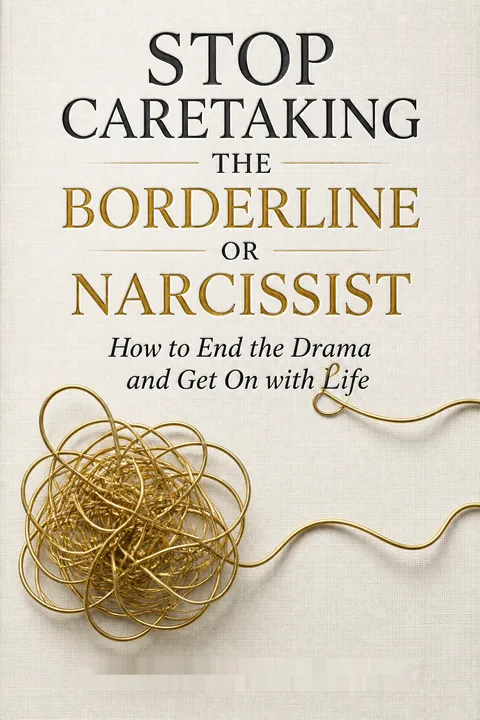
Stop Caretaking the Borderline or Narcissist receives mostly positive reviews for its insights into relationships with personality disorders. Readers praise its practical advice, compassionate approach, and life-changing impact. Many found it helpful for understanding their own caretaking behaviors and setting boundaries. Some criticize it for perpetuating stigma around BPD/NPD or oversimplifying complex issues. Others appreciate its no-nonsense style and validation for those in difficult relationships. The book is highly recommended for those dealing with borderline or narcissistic individuals, though some suggest reading it alongside other resources.
People Also Read








Glossary
Caretaker
Overfunctions for another adultThe book's term for a person who becomes excessively responsible for a borderline or narcissistic family member's feelings, tasks, and stability. Caretakers may be capable and independent in other parts of life, yet in this relationship they suppress their own needs, smooth over conflict, and attempt to rescue or change the other person.
Drama Triangle
Three shifting conflict rolesA relationship model attributed to Stephen Karpman that describes recurring positions of persecutor, victim, and rescuer. The persecutor blames, the victim feels powerless, and the rescuer takes over responsibility. Participants may switch positions while the underlying pattern continues, keeping problems centered on blame and rescue rather than direct, balanced problem-solving.
Caring Triangle
A self-responsible alternativeThe book's alternative to the Drama Triangle. It replaces victimhood with acceptance and self-responsibility, persecution with assertion and action, and rescuing with chosen, respectful care. The model asks a person to accept the situation as it is, act on their own behalf, and let other adults take responsibility for their own choices.
FOG
Fear, obligation, and guiltAn acronym used for fear, obligation, and guilt, which the book describes as pressures that can keep a Caretaker confused and compliant. Fear of an outburst, a belief that one must preserve the family, or guilt about disappointing someone can encourage overfunctioning. Recognizing these feelings can help a person pause before automatically rescuing.
Yale communication model
Four-part assertive communicationA communication technique presented in the book for making a clear request without blame. The speaker names an observable event, describes their own feeling, states what they would like, and identifies what action they will take if the situation does not change. The final step must be within the speaker's control, rather than a threat that depends on another person's compliance.
Pathological altruism
Giving that harms the giverA level of Caretaker involvement in which helping and pleasing others remain rewarding, but giving becomes excessive and personal needs receive little attention. The person may struggle to accept help, fail to express resentment directly, and feel depleted or unappreciated. The book uses the term for a self-sacrificing pattern, not as a diagnosis.
Mystification
Confusion about relationship realityThe book's term for obscuring what is happening through contradictory behavior, denial, or pretending that painful events did not occur. A partner may rage and then behave as if nothing happened, while the Caretaker hides the episode or doubts their own interpretation. This confusion can make it harder to assess the relationship and seek outside support.
Unfinished business
Repeated childhood relationship patternsThe book's label for unresolved feelings and interaction patterns from childhood that recur in adult relationships. Someone who felt chronically criticized, rejected, or responsible for a parent's emotions may find themselves in a familiar dynamic with a partner. The concept explains repetition as a learned relational template, not as proof that a person consciously seeks mistreatment.
FAQ
What's Stop Caretaking the Borderline or Narcissist about?
- Focus on Caretaker Dynamics: The book delves into the relationship dynamics between caretakers and individuals with borderline or narcissistic personality disorders, highlighting the emotional sacrifices caretakers make.
- Understanding Personality Disorders: It provides insights into the characteristics of BPD and NPD, explaining how these disorders impact relationships and lead to caretaking behaviors.
- Path to Healing: The author outlines a structured approach for caretakers to let go of their roles and focus on self-care, leading to healthier relationships.
Why should I read Stop Caretaking the Borderline or Narcissist?
- Gain Clarity on Relationships: The book offers clarity for those overwhelmed in relationships with individuals exhibiting BPD or NPD traits, helping them understand the emotional turmoil they face.
- Practical Strategies for Change: It provides practical strategies and exercises to help caretakers break free from unhealthy patterns, improving mental health and well-being.
- Empowerment and Self-Discovery: Reading this book empowers individuals to rediscover their identities and needs, fostering self-worth and independence.
What are the key takeaways of Stop Caretaking the Borderline or Narcissist?
- Understanding Caretaking: Caretaking is a learned behavior often rooted in childhood experiences with dysfunctional family members, and recognizing this pattern is the first step toward change.
- Stages of Healing: The book outlines stages of healing, including denial, anger, bargaining, depression, and acceptance, which caretakers often experience.
- Setting Boundaries: A significant takeaway is the importance of setting boundaries to protect one’s emotional health, with methods provided for establishing these effectively.
What is the Caretaker role as defined in Stop Caretaking the Borderline or Narcissist?
- Caretaker Definition: A caretaker prioritizes the needs of a partner with BPD or NPD over their own, leading to emotional exhaustion and loss of identity.
- Emotional Distortions: Caretakers experience emotional distortions, such as minimizing their own feelings and overreacting to the partner’s emotional states.
- Impact on Relationships: This role can lead to unhealthy dynamics where the caretaker feels responsible for the partner’s happiness, resulting in resentment and burnout.
How can I identify if I am a Caretaker according to Stop Caretaking the Borderline or Narcissist?
- Self-Reflection Questions: The book provides self-reflective questions to help individuals assess their roles in relationships, focusing on feelings of anxiety and responsibility for the partner’s emotions.
- Caretaker Test: An appendix includes a Caretaker Test to help readers evaluate their behaviors and identify caretaking tendencies.
- Signs of Caretaking: Common signs include feeling overwhelmed, constantly trying to please the partner, and neglecting one’s own needs.
What are the stages of healing outlined in Stop Caretaking the Borderline or Narcissist?
- Denial: Recognizing something is wrong but not wanting to confront it, with caretakers often hoping for change without taking action.
- Anger: Acknowledging feelings of frustration and hurt, a critical step toward understanding the relationship's impact.
- Acceptance: Recognizing the reality of the partner’s mental illness and the need for personal change, essential for moving forward.
What is the Drama Triangle mentioned in Stop Caretaking the Borderline or Narcissist?
- Roles Defined: The Drama Triangle consists of victim, persecutor, and rescuer roles, with caretakers often oscillating between these in relationships with BPD or NPD individuals.
- Impact on Relationships: This dynamic perpetuates unhealthy interactions, where caretakers feel responsible for the partner’s emotions.
- Strategies for Change: The book provides strategies for exiting the Drama Triangle, including asserting personal needs and refusing to engage in blame or victimhood.
What is the "Caring Triangle" in Stop Caretaking the Borderline or Narcissist?
- New Behavioral Framework: The "Caring Triangle" encourages acceptance, assertion, and self-responsibility instead of victim, persecutor, and rescuer roles.
- Focus on Self-Responsibility: Emphasizes taking responsibility for one's own feelings and actions rather than trying to control or fix the other person.
- Visual Representation: Includes a visual representation to help readers apply these concepts in daily life, reinforcing the shift from caretaking to self-care.
How can I stop being a caretaker according to Stop Caretaking the Borderline or Narcissist?
- Recognize Your Role: Acknowledge your role as a caretaker and understand the emotional patterns that led you to prioritize others' needs over your own.
- Set Clear Boundaries: Emphasizes setting clear boundaries with the BP/NP, stating what behaviors you will not tolerate.
- Focus on Self-Care: Encourages prioritizing your own needs and engaging in self-care practices to break the cycle of caretaking.
What are some practical strategies from Stop Caretaking the Borderline or Narcissist?
- Use the Yale Communication Model: Suggests using this model to express thoughts and feelings clearly and assertively, facilitating effective communication.
- Practice Positive Self-Talk: Emphasizes positive self-talk and affirmations to build self-esteem and counter negative thoughts.
- Engage in Self-Reflection: Encourages regular self-reflection to assess feelings, needs, and desires, helping individuals stay connected to themselves.
How does Stop Caretaking the Borderline or Narcissist define boundaries?
- Clear Limits: Boundaries are clear limits set to protect emotional well-being, delineating acceptable behaviors from others.
- Firmness and Consistency: Emphasizes being firm and consistent in enforcing boundaries, not wavering under pressure.
- Communication of Boundaries: Provides examples of how to express boundaries clearly and assertively without engaging in conflict.
What are the best quotes from Stop Caretaking the Borderline or Narcissist and what do they mean?
- "You cannot heal anyone else; you can heal only yourself.": Emphasizes focusing on your own healing and well-being rather than trying to fix the BP/NP.
- "Everything starts with you figuring out what you want to do with your life.": Highlights the necessity of self-discovery and understanding your own desires and goals.
- "You are the only one who can decide how you want to live your life.": Reinforces personal agency and the power of choice, reminding readers they can shape their own lives.
About the Author
Other books by Margalis Fjelstad
Download PDF
Download EPUB
.epub digital book format is ideal for reading ebooks on phones, tablets, and e-readers.








