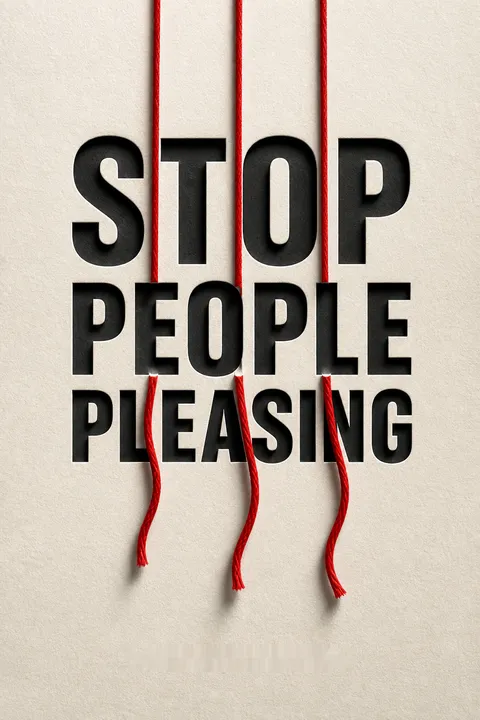


Key Takeaways
Stop treating fear-driven compliance as proof of kindness
Muriel worked hard, but invisibly. She took on colleagues’ tasks, stayed late, and tried to become indispensable. Yet when managers favored cluttered product packaging, she stayed silent despite evidence that simpler designs worked better. After the product failed and layoffs began, she was let go. Her effort had not made her a vital contributor because it had displaced the judgment and initiative her role required.
Kindness has different engines. Genuine generosity is a freely chosen concern for others. People-pleasing, as the book describes it, is often an attempt to prevent rejection or earn approval. From the outside, both can look like helpfulness. Inside, one feels like a choice; the other like an anxious obligation that can breed exhaustion and resentment.
Muriel’s story makes a useful distinction between visible busyness and meaningful contribution. In organizations, reliable helpers can become so effective at absorbing neglected work that others stop noticing the value of their judgment. The same pattern can occur in families, where one person’s overfunctioning hides how much responsibility others could carry. Still, not every extra effort signals insecurity, and generosity need not be perfectly free of hope for appreciation. The practical test is whether the help is chosen, sustainable, and compatible with the person’s own responsibilities, rather than offered chiefly to manage fear.
Find the belief beneath every automatic yes
The reflex has roots. The book identifies four beliefs that can make refusal feel dangerous: that relationships require putting others first, that personal worth depends on usefulness, that a good person never disappoints anyone, and that disagreement threatens the relationship. Jackie, who took responsibility for her siblings as a child, came to see constant caretaking as proof of being a good wife and mother. She felt guilty even when her own health needed attention.
Look for the rule, not just the request. A favor may trigger the belief that saying no is selfish, or that someone else’s disappointment is your fault. The book treats these beliefs as possible products of experience and current habits, not as proof of a single cause. Naming the rule helps clarify what a more balanced response could be.
This model is compelling because it shifts attention from the surface behavior to the meaning assigned to it. A request is not inherently threatening; the internal rule that refusal equals abandonment can make it feel that way. That distinction resembles cognitive models in which interpretations shape emotional reactions. At the same time, childhood history should not become a universal explanation or a self-diagnosis. Family roles, culture, economic dependence, and workplace power can also shape who feels able to refuse. Understanding the pattern is most useful when it opens choices, not when it fixes someone permanently in a label.
Challenge the story that one refusal makes you unlovable
Catch the distorted thought. The book presents the BLUE model, a cognitive behavioral therapy tool for noticing four styles of negative thinking: blaming yourself, scanning for bad news, predicting unhappy outcomes, and exaggerating the negative. A person who declines a babysitting request might assume the resulting inconvenience is entirely their fault, then agree out of guilt.
Replace verdicts with fairer thoughts. Ask what a compassionate, clear-eyed friend would say. Missing one school meeting to address a migraine does not establish that someone is a bad parent. Likewise, putting health or rest first is not automatically selfish. The point is not to replace every difficult thought with a cheerful one, but to test whether the thought is accurate and proportionate before allowing it to dictate behavior.
The friend test is a compact way to interrupt a double standard: people often extend others more patience than they offer themselves. That move is compatible with cognitive behavioral approaches, which examine how interpretations influence feelings and actions. Its strength lies in demanding a more accurate account, not forced positivity. A refusal can cause real inconvenience, and sometimes an apology or repair is appropriate. The useful question is whether the person is accepting reasonable responsibility for their own choice, or taking responsibility for every consequence another adult experiences.
Practice small refusals before attempting your hardest confrontation
Build tolerance gradually. Exposure therapy means deliberately encountering a feared situation in steps, rather than escaping it each time. The book suggests creating a fear hierarchy, an ordered list of situations from mildly uncomfortable to especially difficult. Someone who fears conflict might first decline a salesperson’s upgrade, then refuse a coworker’s shift request, and later raise a disagreement with a manager.
Stay through the discomfort. The purpose is to learn that tension can rise and then pass without the predicted catastrophe occurring. Slow breathing may help someone remain present instead of reflexively yielding. The book recommends tailoring the sequence to personal fears and practicing in real situations when feasible. The goal is not to enjoy confrontation or provoke it, but to discover that respectful disagreement is survivable.
This advice turns courage into a learnable behavior rather than a personality trait. Gradual practice can offer corrective experience: a person predicts disaster, speaks up, and observes what actually happens. That is a valuable alternative to waiting until confidence magically arrives. The pacing matters, however. A low-stakes refusal is not equivalent to confronting an abusive person or a powerful employer. Exposure should increase manageable discomfort, not expose someone to genuine danger; complex trauma or severe anxiety may call for professional support rather than improvised exercises.
Stop doing everyone's share to prove your place
Notice the motive first. The book recommends pausing when resistance appears and asking why you are about to help. Repeating the question, sometimes called the five whys method, can reveal whether the choice comes from care, fear, guilt, or habit. Jackie’s caregiving identity and Janelle’s eight years in a miserable workplace show how a pattern can persist because it feels familiar, even when it is costly.
Make room for other people. The book links autonomy, or the ability to think and act from one’s own judgment, with reducing overwork. If one person manages every family errand or fixes every colleague’s mistake, others may come to rely on that arrangement. Doing less can mean asking family members to identify their own needs, take on chores, or solve problems they can handle.
The invitation to do less is more than workload management. It questions a relationship system in which one person’s competence quietly becomes everyone else’s excuse not to participate. In organizational psychology, role expectations can stabilize around repeated behavior, so changing a pattern may initially unsettle the group. That does not mean every unequal division is freely chosen or easily changed: caregiving duties, disability, and financial dependence can constrain options. The principle is strongest when it helps people renegotiate responsibility realistically, rather than treating all dependence as exploitation.
State boundaries clearly, then enforce proportionate consequences
A boundary defines your limits. In the book, boundaries protect emotional as well as physical space and clarify what behavior, time, information, or access you are willing to allow. The author describes three patterns: healthy boundaries are balanced, rigid boundaries keep people at a distance, and porous boundaries allow too much intrusion. Grant, for example, told his friend Rhett that repeated sales pitches were unacceptable and that continued pressure would end their contact.
Make the limit observable. Identify what matters to you, explain the boundary plainly, and decide what you will do if it is ignored. A consequence might be ending a conversation, refusing another loan, or blocking someone online. A limit that is never communicated is hard for others to respect; one that is announced but never enforced becomes unreliable.
Boundaries are often misunderstood as tools for controlling other people. Their more defensible function is to specify what one person will do in response to a situation. That keeps the focus on agency: Grant could not make Rhett stop selling, but he could choose whether to remain in contact. The emphasis on consequences is useful, though proportionality matters. A consequence should protect the stated limit, not punish someone for disagreeing. The book’s distinction between porous and rigid boundaries also prevents the common mistake of equating self-respect with emotional isolation.
Use a settled policy instead of defending each no
Make refusal less negotiable. The book cites a study of 120 students reported in the Journal of Consumer Research. Students instructed to use an identity-based phrase such as “I don’t” when facing temptation were more successful at saying no than students using “I can’t.” The book applies the distinction to requests: a policy can feel firmer than a temporary inability. It also suggests declining a whole category of requests, such as speaking engagements during certain months, rather than reconsidering each one.
Choose a simple response. When a request would displace other work, ask the requester which existing priority should move. Another option, called the relational account, briefly explains that other obligations prevent taking on the request. A concise answer leaves less room for debate than a long defense full of details.
Policies reduce decision fatigue and make refusals more consistent, which is especially useful when repeated requests exploit the same hesitation. The reported study is suggestive, but a student experiment about resisting temptation does not establish that one phrase works equally well in every relationship or workplace. Tone, context, and power matter. The most durable lesson is not to use verbal tricks, but to decide what is genuinely unavailable before a request arrives. A brief, truthful explanation can preserve warmth without turning a personal limit into a courtroom case.
Let others manage the disappointment your honest no creates
Separate influence from ownership. A refusal may disappoint someone, but that reaction does not automatically mean the refusal was wrong. The book argues that people-pleasers often feel responsible for regulating others’ moods, then agree to favors to restore approval. The result may be a quiet accumulation of resentment, indirect hostility, or exhaustion. Genuine care does not require taking charge of another adult’s emotional response.
Own what is yours. A person is responsible for their own words, actions, and feelings, and should still treat others respectfully. This does not mean ignoring harm or refusing to repair a mistake. It means not assuming that every frown, frustrated response, or unmet desire must be fixed by surrendering a reasonable limit. Someone else can be unhappy with a decision while the relationship remains intact.
This distinction protects both sides of a relationship. When one person continually manages another’s discomfort, the other loses opportunities to cope, negotiate, or accept disappointment. The boundary is not between caring and indifference; it is between offering support and assuming total responsibility. Still, other people’s reactions can contain useful feedback, and a reflexive claim that their feelings are solely their problem can become dismissive. The mature position is to listen, assess whether the decision was fair, and remain willing to repair harm without treating all disapproval as a command.
Analysis
The book’s central contribution is its insistence that people-pleasing is not simply excessive niceness. It is a strategy for managing anticipated rejection, and its apparent kindness can conceal fear, self-erasure, and attempts to secure approval. That reframing explains why overgiving can produce resentment instead of intimacy: the giver is not merely offering help, but often hoping the help will guarantee acceptance. Muriel’s workplace story makes the cost concrete. She performed abundance while withholding the judgment her role needed.
The practical sequence is coherent: identify the belief behind compliance, challenge distorted predictions, practice manageable disagreement, reduce overfunctioning, define limits, and make refusal routine. These moves address thought, behavior, and social context rather than relying on the vague instruction to become more confident. The strongest advice is procedural. A pause before agreeing, a graduated practice plan, or a clear consequence makes self-respect observable.
The argument is most persuasive when it treats assertiveness as compatible with compassion. It is less convincing when it makes broad claims about the causes of people-pleasing or suggests that others’ emotions are entirely theirs to manage. People’s choices are shaped by culture, caregiving obligations, workplace hierarchy, and material dependence. In some settings, direct refusal carries genuine costs, not merely imagined ones. Likewise, generosity can be freely chosen even when it brings approval, and receiving help does not make someone manipulative.
A careful application therefore distinguishes anxiety-driven compliance from deliberate accommodation. The aim is not to maximize refusal or to regard all requests as intrusions. It is to restore choice: help when the action fits one’s values and capacity, decline when it does not, and tolerate the fact that another person may dislike the decision. The book is most valuable as a practical guide to reclaiming that choice, not as a diagnosis of every accommodating relationship.
Review Summary
Stop People Pleasing receives mixed reviews, with an average rating of 3.84/5. Many readers find it helpful for understanding and overcoming people-pleasing tendencies, praising its practical advice and relatable examples. Some appreciate its straightforward approach and easy-to-apply techniques. However, others criticize repetitive content and feel the examples are unrealistic. The book is generally recommended for those struggling with assertiveness and setting boundaries, though some readers find it basic if they've read similar self-help books.
Glossary
People-pleasing
Approval-seeking complianceA pattern of accommodating others primarily to avoid rejection, disapproval, or conflict, rather than from freely chosen generosity. The book associates it with suppressing one’s opinions and needs, overcommitting, and feeling responsible for others’ happiness. The same helpful action can be generous or people-pleasing depending on the motive and whether the person can freely refuse.
Spotlight effect
Overestimating others’ attentionA tendency to believe that other people notice and judge one’s behavior more closely than they actually do. The book connects this perception to people-pleasing: someone who already fears rejection may imagine that every mistake is being watched, making them more likely to overcorrect, avoid disagreement, or work excessively to prevent criticism.
BLUE model
Labels negative thinking patternsA cognitive strategy for noticing four types of distorted negative thoughts: blaming oneself, looking for bad news, making unhappy guesses about the future, and exaggerating negative conclusions. The book recommends recognizing these patterns and replacing them with more realistic thoughts before they drive a person to comply, self-blame, or assume a refusal will ruin a relationship.
Exposure therapy
Gradual practice with feared situationsA method of deliberately approaching situations that provoke fear or anxiety, in a gradual and planned way, rather than continually avoiding them. In the book’s application, a person practices increasingly difficult acts of disagreement or refusal and learns to tolerate the discomfort. The text notes that therapists commonly conduct exposure therapy, while also describing its principles for self-practice.
Fear hierarchy
Ranked list of feared situationsAn ordered sequence of situations that cause anxiety, arranged from less difficult to more difficult for a particular person. For someone afraid of confrontation, it might begin with declining a sales offer and progress toward voicing disagreement at work. Each step is practiced before moving to a harder one, building tolerance for conflict-related discomfort.
Compassionate assertiveness
Kind, direct self-advocacyA way of stating one’s needs, opinions, or limits clearly while remaining considerate of the other person. It differs from aggression because it does not rely on unnecessary force or hostility. The book presents it as an alternative to both silence and domineering behavior, and recommends seeking solutions that acknowledge both parties’ concerns.
Three Levels of Personal Boundaries
Healthy, rigid, and porous limitsThe book’s categorization of boundaries as healthy, rigid, or porous. Healthy boundaries protect personal values while allowing appropriate closeness. Rigid boundaries keep others at excessive distance, while porous boundaries allow too much intrusion or entanglement. The framework emphasizes that limits can vary by relationship and situation, while warning against persistent extremes.
Relational account
Explains refusal through obligationsA way to decline a request by briefly explaining that existing responsibilities or commitments prevent taking it on. Rather than presenting refusal as a rejection of the requester, the explanation shows that time or capacity is already allocated elsewhere. The book recommends this approach as a way to communicate limits while reducing the chance that a refusal is interpreted as personal hostility.
Unconditioned self
Self-worth without external approvalA concept the book attributes to Paul Dalton: the authentic core of a person, understood as worthy apart from criticism, achievements, possessions, or other people’s approval. The contrasting learned self depends on external validation to feel acceptable. The book suggests that quiet reflection and self-compassion can help people reconnect with this less approval-dependent sense of identity.
FAQ
1. What is "Stop People Pleasing" by Patrick King about?
- Core Focus: The book addresses the problem of people-pleasing—constantly prioritizing others’ needs and approval at the expense of your own well-being.
- Goal: It aims to help readers recognize, understand, and break free from self-defeating people-pleasing habits.
- Practical Approach: Patrick King provides actionable strategies, psychological insights, and real-life examples to help readers become more assertive and set healthy boundaries.
- Outcome: By following the book’s advice, readers can reclaim their autonomy, improve self-esteem, and lead more authentic, fulfilling lives.
2. Why should I read "Stop People Pleasing" by Patrick King?
- Identify Harmful Patterns: The book helps you recognize if you’re a people-pleaser and understand the negative impact it has on your life and relationships.
- Actionable Solutions: It offers practical tools and step-by-step methods to change ingrained habits and beliefs.
- Empowerment: Readers learn to assert themselves, say no without guilt, and set boundaries, leading to healthier relationships and greater self-respect.
- Emotional Well-being: The book addresses the emotional roots of people-pleasing, such as fear of rejection and low self-worth, and provides ways to heal and grow.
3. What are the key takeaways from "Stop People Pleasing" by Patrick King?
- People-pleasing is Harmful: It’s rooted in insecurity, fear, and a need for approval, and leads to self-neglect, resentment, and unhealthy relationships.
- Origins Matter: Childhood experiences, low self-worth, fear of confrontation, and distorted beliefs about kindness often drive people-pleasing.
- Change is Possible: Through self-awareness, cognitive behavioral techniques, and habit change, you can reprogram your beliefs and behaviors.
- Boundaries and Assertiveness: Setting clear boundaries and learning to say no are essential skills for overcoming people-pleasing.
4. How does Patrick King define people-pleasing in "Stop People Pleasing"?
- Not True Generosity: People-pleasing is not genuine kindness; it’s driven by insecurity, fear of rejection, and a need for approval.
- Defensive Behavior: It’s a defensive act to avoid negative consequences, not an affirmative act to create positive outcomes.
- Self-Neglect: People-pleasers suppress their own needs, opinions, and emotions to keep others happy, often at their own expense.
- Cycle of Resentment: This behavior leads to built-up resentment, passive-aggression, and ultimately damaged relationships.
5. What are the main causes of people-pleasing according to "Stop People Pleasing"?
- Distorted Beliefs: A belief that serving others is always good and putting oneself first is selfish or bad.
- Low Self-Worth: Feeling unworthy of love or acceptance unless constantly pleasing others.
- Fear of Confrontation: Avoiding conflict at all costs, leading to non-assertive behavior and suppressed needs.
- Childhood Conditioning: Early experiences of conditional love, rejection, or codependency often set the stage for people-pleasing habits.
6. What is the "spotlight effect" and how does it relate to people-pleasing in Patrick King's book?
- Definition: The spotlight effect is the tendency to overestimate how much others notice and judge your actions.
- Amplifies Insecurity: For people-pleasers, this effect intensifies the fear of disapproval and rejection.
- Behavioral Impact: It leads to over-modulating behavior, increased anxiety, and avoidance of assertiveness.
- Solution: The book suggests observing others’ reactions objectively to realize that far fewer people are focused on you than you think.
7. How does "Stop People Pleasing" by Patrick King suggest reprogramming beliefs and thought patterns?
- Cognitive Behavioral Therapy (CBT): The book recommends using CBT principles to identify and challenge distorted thoughts.
- The BLUE Model: Recognize negative thinking patterns—Blaming myself, Looking for bad news, Unhappy guessing, and Exaggeratedly negative thoughts.
- Replace with True Thoughts: Actively substitute negative beliefs with realistic, compassionate, and empowering thoughts.
- Practice Self-Compassion: Learn to accept and love yourself, and understand that assertiveness and self-care are not selfish.
8. What practical habits does Patrick King recommend to stop people-pleasing?
- Build Self-Awareness: Regularly question your motives and recognize when you’re acting out of fear or habit.
- Develop Autonomy: Value your own opinions and make decisions based on your needs, not just others’ expectations.
- Do Less: Stop over-functioning in relationships and allow others to take responsibility for themselves.
- Let Go of the Past: Acknowledge and release the influence of past negative experiences or criticism.
- Be Honest and Assertive: Communicate your needs and boundaries clearly, even if it causes temporary discomfort.
9. How does "Stop People Pleasing" by Patrick King advise setting and enforcing boundaries?
- Define Core Values: Identify what’s truly important to you and use these values to set your boundaries.
- Communicate Clearly: Explicitly state your boundaries to others—don’t rely on hints or passive signals.
- Set Consequences: Decide in advance what actions you’ll take if someone violates your boundaries, and follow through.
- Adjust as Needed: Recognize that boundaries can be healthy, rigid, or porous, and adjust them based on the situation and relationship.
- Prepare for Pushback: Expect some negative reactions, but understand that others’ discomfort is not your responsibility.
10. What techniques does Patrick King offer for saying no assertively in "Stop People Pleasing"?
- Use “I Don’t” Statements: Saying “I don’t” instead of “I can’t” frames your refusal as a personal policy, making it less negotiable.
- Reject Categories: Set blanket rules for types of requests, making it easier to say no without guilt.
- Relational Account: Reference your existing commitments to others when declining new requests.
- De-Prioritize: If you must say yes, ask what should be deprioritized to accommodate the new request.
- Keep It Simple: Use direct, concise refusals and avoid over-explaining or justifying your decision.
11. What are the most common pitfalls and challenges when trying to stop people-pleasing, according to Patrick King?
- Guilt and Anxiety: Feeling guilty for prioritizing yourself or fearing others’ disappointment.
- Pushback from Others: Facing resistance or anger from people accustomed to your compliance.
- Difficulty Enforcing Boundaries: Struggling to follow through with consequences when boundaries are crossed.
- Relapsing into Old Habits: Automatically reverting to people-pleasing behaviors under stress or pressure.
- Misunderstanding Assertiveness: Confusing assertiveness with aggression or fearing it will damage relationships.
12. What are the best quotes from "Stop People Pleasing" by Patrick King and what do they mean?
- “The need to please others may appear to be generous and selfless, but it is one of the most selfish ways of behavior.”
- This highlights that people-pleasing is often about self-protection and seeking approval, not true generosity.
- “People-pleasers are not born—they’re made.”
- Emphasizes that these behaviors are learned and can be unlearned with conscious effort.
- “No can be a complete sentence.”
- Encourages readers to assert their boundaries without feeling obligated to justify or explain themselves.
- “You must be more selfish. Often, we have the belief that selfishness is always bad and never good. The reality is that you must be selfish, even if you want to serve others, because only then can you operate at full capacity.”
- Reframes selfishness as necessary self-care, not a negative trait.
- “A life devoid of no is one that is not your own; it is one that is lived for other people.”
- Reminds readers that saying no is essential for living authentically and maintaining control over their own lives.
About the Author
Other books by Patrick King






Download PDF
Download EPUB
.epub digital book format is ideal for reading ebooks on phones, tablets, and e-readers.








