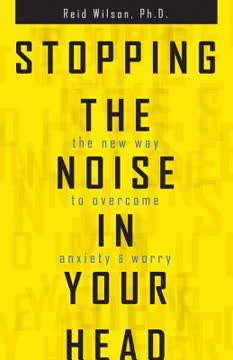
Key Takeaways
1. Anxiety is a Cunning Competitor, Not Just a Feeling
To win over our needless worries and unhelpful anxiety, it’s best to consider that we are engaged in a mental competition with broad strategies and more precise tactics.
Personify your challenge. Imagine Anxiety as a clever opponent in a mental competition, not just an internal state. This externalization helps you strategize against it, recognizing its "moves" and developing "tactics" to win back control of your life. Anxiety studies your weaknesses, exaggerates threats, and feeds you false information to keep you stuck.
Anxiety's winning strategy. Your opponent scores points by convincing you to spend energy protecting yourself and stepping back from challenges. It thrives when you organize your life around defensive strategies like avoidance, tension, and constant worry about the future. To win, you need an offensive plan that pushes you into its territory.
Competitions have rules. Just like poker or chess, this mental competition has rules and rituals. Understanding these rules, especially how Anxiety manipulates your natural responses, is the first step to changing your play. You need a coach (the author) to explain the game, expose Anxiety's tricks, and teach you winning strategies.
2. Your Desire for Certainty and Comfort Fuels Anxiety
When our desire for the comfort of security and confidence turns into a requirement, it will drive a great deal of our worries, fears, self-criticisms, and disappointments.
Comfort is a trap. We all naturally seek comfort, certainty, and control. However, when these desires become rigid requirements, they transform into demands that the world cannot consistently meet. This creates an "enemy" of any doubt or distress, leading us to constantly try to eliminate unpleasant feelings.
The "get rid of" problem. This urge to "get rid of" discomfort or doubt is precisely what Anxiety exploits. When you push away difficulties, like a pendulum, they return with greater force. This resistance strengthens anxiety, creating a vicious cycle where avoidance leads to more fear, stronger symptoms, and a greater urge to avoid.
Self-deception in avoidance. We often deceive ourselves into believing that avoiding difficult tasks makes us happier or more comfortable. In reality, avoidance:
- Fails to identify creative solutions.
- Prevents personal growth and satisfaction.
- Doesn't eliminate worry; it merely shifts it to the background as nagging self-criticism.
Anxiety thrives on this avoidance, making your world smaller.
3. Retrain Your Brain: Distinguish Actionable Signals from Useless Noise
Either a worry represents a valid concern and therefore becomes the first step in your problem-solving process, or that worry is irrelevant, distress-provoking noise you should not address.
Signal vs. Noise. Not all worries are equal. A "signal" is a legitimate concern that prompts problem-solving and action (e.g., an overdue paper). "Noise" is repetitive, unproductive, and irrelevant worry that offers no solution (e.g., panicking about a submitted paper at 3 AM). Anxiety's goal is to confuse you, making noise sound like urgent signals.
The amygdala's role. Your amygdala, the brain's "ESC key," instantly responds to perceived threats. It can be triggered by a "fast-track" (e.g., a sudden loud noise) or a "slow-track" (catastrophic self-talk). While the fast-track is vital for survival, the slow-track often puts you in an unwarranted state of distress. The amygdala has no "just kidding" button; once triggered, it stays on alert.
Make it NOT about content. Anxiety uses the content of your worries (e.g., fear of contamination, heart attack, humiliation) to distract you from the real challenge: your inability to tolerate doubt and distress. Your first task is to correct misinformation about your specific fears, turning them from "signals" into "noise." This frees you to focus on the core work of tolerating uncertainty.
4. Embrace the Paradox: Want What You Fear to Disarm Anxiety
I could still recognize how inconvenient and unpleasant the situation was, but by letting my body and mind respond to this new and refreshing perspective, delivered in a memo to self, I instantly changed my relationship with this (unpleasant and inconvenient) moment.
The "I want this" stance. When faced with discomfort or uncertainty, instead of resisting, paradoxically embrace it. Tell yourself, "This is exactly what I want right now." This isn't about liking the unpleasantness, but about accepting its presence. This shift instantly changes your relationship with the moment, freeing up mental energy previously consumed by resistance.
Working memory's power. Your conscious awareness (working memory) can only hold about four pieces of information at a time. Resisting a difficult moment ("I can't stand this!") consumes valuable mental resources. By dropping resistance and adopting acceptance, you free up mental space to focus on coping skills and problem-solving.
Love the mat, run toward the roar. This paradoxical approach is akin to martial artists who "love the mat" (accepting falls as part of training) or running "toward the roar" in the jungle (facing fear head-on). It's about choosing to feel clumsy, awkward, unsure, and afraid, because these feelings are inevitable when you push your boundaries and learn.
5. Act "As Though": Step Forward Even When You Doubt Your Ability
Don’t wait until you are certain that this approach will work for you. Take actions now, while you are feeling doubtful, scared, and insecure about my suggestions.
The power of "acting as though." We constantly "act as though" in daily life (e.g., assuming cars will stop at red lights). Apply this to anxiety: act as though the content of your worry is irrelevant, or as though you have enough skills to face the challenge, even when you feel insecure. This isn't faking it; it's a powerful intervention to bypass rigid beliefs and take action.
Bypass rigid beliefs. Anxiety often convinces you that you lack the skills or that the situation is too risky, creating an "intolerance of uncertainty." "Acting as though" allows you to sidestep these firmly held beliefs without needing to dismantle them first. You act despite the doubt, creating new experiences that eventually reshape your beliefs.
Practice trust. Don't wait for certainty or confidence to appear before acting. Anxiety thrives on this waiting game. Instead, take a courageous leap of faith, acting on principles you understand, even if you don't yet fully trust the outcome. This builds self-trust and reinforces the belief that you can handle whatever happens.
6. Be Cunning: Provoke Anxiety by Asking for More of What It Offers
Whenever we can engage the symptom in any way other than fearing it or fighting it, we have our best chance of beating it.
The Brer Rabbit offense. Like Brer Rabbit tricking Brer Fox, use cunning and paradox against Anxiety. Instead of trying to suppress anxious thoughts or symptoms, ask for more of them. If your knees shake, tell Anxiety, "Make them shake harder!" This unexpected response disarms Anxiety, which expects you to resist.
Delegate the disturbance. When a fearful thought or symptom arises, delegate the responsibility of intensifying it to Anxiety. For example, if you're worried about blushing, tell Anxiety, "Please make my cheeks bright lobster red!" Once you've made this request, turn your attention back to your task. You're not trying to make it happen, but to ask for it.
Disrupt the pattern. This tactic is about disrupting Anxiety's established pattern. It thrives on your resistance. By asking for more, you stop resisting, which can paradoxically lead to symptoms fading or becoming less bothersome. It's an aggressive, counterintuitive move that shifts control from Anxiety to you.
7. Talk Like a First Responder: Use Firm, Simple Self-Talk to Guide Action
Your First Responder voice needs to be the executive voice, in charge.
Executive self-talk. We engage in self-talk constantly. When facing anxiety, cultivate a "First Responder" voice – firm, simple, and direct – to guide your actions. This executive voice overrides the panicky, resistant messages from your fearful side. It's a compassionate gesture to give yourself clear directives when you're feeling overwhelmed.
Bite-sized mantras. Translate your strategy into brief, actionable self-instructions or motivating messages. These aren't meant to replace fearful thoughts, but to immediately follow them, redirecting your focus. Examples:
- Encouragement: "I can handle this anxiety."
- Instruction: "Keep moving. Focus on question three."
- Cunning: "Give me more, please!"
Moment-by-moment battle. Expect a continuous internal dialogue between the urge to escape and your intention to push forward. Your new messages are designed to come immediately after any instruction to run. Detach from the urge to escape, absorb yourself in your executive messages, and return your attention to your task.
8. Shift Your Attitude: Cultivate Approach Emotions to Undo Fear
If you will pull up a positive emotion on the heels of these negative feelings, you can literally dismantle all that mental and physical preparation to run.
Transforming emotions. You can transform fear by activating competing, more adaptable emotions. This isn't just replacing one feeling with another; it's "undoing" the neurochemistry and physiology of fear. When you allow yourself to feel afraid, then consciously call up an emotion of approach (e.g., curiosity, excitement, desire), you can dismantle the urge to escape.
Positive meaning and broadening. Negative emotions narrow your thinking, making you feel stuck. Positive emotions, however, broaden your thinking, opening up new possibilities. By actively generating a positive meaning for why you're facing fear (e.g., "This is an opportunity to learn"), you cultivate a more powerful ability to envision and achieve a positive future.
The power of "wanting." Elevate your willingness to embrace doubt and discomfort by attaching the emotion of "wanting" to that statement. Want to get stronger, want to experiment, want to reach your desired outcome. This strong, meaningful desire to step forward will, over time, spontaneously lower the primacy of your fear and activate the physiology of approach.
9. Play the Game: Score Points Against Anxiety by Changing Your Response
In this competition, you win every time you score a point. Focus on scoring as many points as possible.
The "scoring points" game. This is a practical game to train your mind. Your objective is to use challenging activities as a stimulus to generate doubt and distress, then practice new responses. Each "play" is brief: notice Anxiety's disturbance, respond with a meaningful message, and return your attention to your chosen task. That's one point.
Rules for scoring:
- Score only when bothered: Points are earned when distress or noisy worry bothers you, not when you're simply moving through an activity.
- Anticipation counts: You can score points even when anticipating a difficult task, as anxious doubts often arise then.
- Back-to-back points: If Anxiety disturbs you again moments later, it's a new opportunity to score.
- Fear is okay: Scoring may feel scary initially; accept this as part of the process.
- Don't check for benefits: Focus on following the protocol, not on whether symptoms are immediately reducing.
Attitude shift is key. The game reinforces an attitude shift: viewing difficulties as challenges, not threats. Your goal is to become bothered, then respond with encouragement, instruction, or cunning self-talk, and immediately refocus. This consistent practice builds "muscle memory" for a new, more resilient response to anxiety.
10. Define Your Outcome: Your Future Goals Fuel Your Courage
Courage is not the absence of fear, but rather the judgment that something else is more important than one’s fear.
Your "outcome picture." Clearly define what you want your life to look like without Anxiety's limitations. This "outcome picture" (e.g., career change, travel, stronger relationships, mental peace) becomes your motivation and the prize you're fighting for. It needs to be bigger and more valuable than your fear.
Motivation equation. Your motivation to face fear is a combination of a strong outcome picture, determination, and courage. When your desired future is compelling enough, it pulls you through the discomfort and uncertainty of the present challenge. This makes the hard work feel worthwhile.
Courage over comfort. You are not here to avoid fear, but to act regardless of it. This means willingly stepping into situations that provoke doubt, awkwardness, and insecurity, because you judge your future goals to be more important than your momentary fear. This commitment to your values is the ultimate source of your strength and resilience.
Last updated:
Similar Books