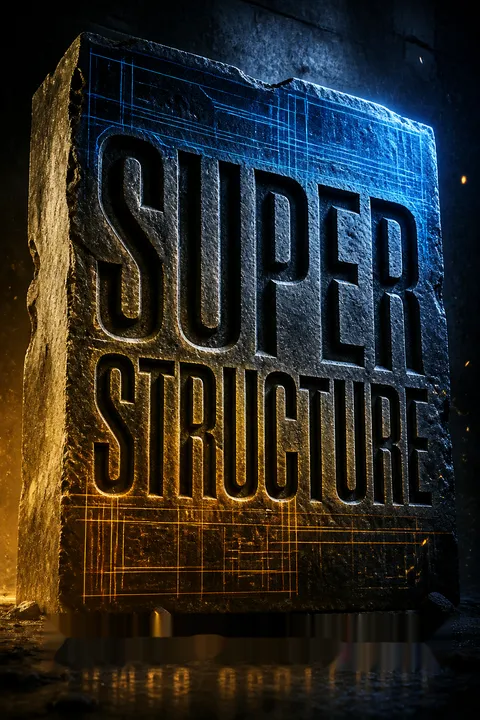


Key Takeaways
Structure does not constrain story, it makes imagination legible.
Form helps feeling travel. Bell argues that a writer’s vivid images and emotions do not automatically become a gripping reading experience. Structure gives those ideas a shape readers can follow, understand, and care about. He points to Dow Mossman’s novel, The Stones of Summer, whose striking prose did not prevent readers from losing their way in its lack of clear plot and structure.
Craft serves connection. The point is not to trade originality for a template. Structure is a way to carry original material without burying it in confusion. A reader can admire beautiful sentences and still abandon a story if there is no compelling reason to keep turning pages.
The distinction between artistic impulse and audience experience is central to craft across fields. A musician needs more than an intense feeling; arrangement makes that feeling perceptible to listeners. The Mossman example makes the case memorable, though one novel’s reception cannot prove that weak structure caused its commercial failure. Taste, marketing, and historical context also matter. The sturdier claim is practical: when readers cannot track what matters, the author’s intended emotion has fewer chances to land.
Treat the story's signposts as navigation, not a route you must obey.
A map can stay flexible. Bell calls the major structural moments signposts: recognizable story events that help a writer see what kind of scene might come next. The framework uses three acts, with five central anchors: an opening disturbance, two irreversible turning points, a midpoint moment of self-confrontation, and a final battle. Other beats offer extra guidance, not mandatory stops.
Writers can enter differently. An outliner may sketch these moments before drafting. A discovery writer may draft freely, then use them to diagnose a stalled middle or reshape a rough draft. Bell’s practical compromise is to know a few key events while leaving room to invent what happens between them.
This is most useful as a navigation system, not a prediction that every successful story follows identical coordinates. A map reduces the mental burden of deciding what to do next, while flexibility protects discovery. The framework also gives collaborators a shared vocabulary for discussing pacing and turning points. Its limitation is that a writer can mistake recognizable beats for sufficient storytelling. A scene still needs specific motives, consequences, and a voice that could not be supplied by a template.
Define what kind of death your lead is fighting before drafting.
Make the stakes concrete. Bell uses death broadly: physical death, professional ruin, or psychological collapse. The central conflict should threaten something important enough that the lead must act. In The Fugitive, Richard Kimble faces execution if he is caught. In The Verdict, a lawyer risks losing his ability to practice and the identity built around his profession. A character can face more than one kind, but one should dominate.
Build a strong premise. Bell’s LOCK System names four foundations: Lead, Objective, Confrontation, and Knock-out Ending. A brief pitch can then establish who the lead is, what event pulls them into the conflict, and what they stand to lose. If those pieces are vague, a writer may have an intriguing situation but not yet a story engine.
The three forms of danger help writers translate abstract stakes into consequences a reader can picture. Professional and psychological threats can be as compelling as physical danger when the story makes the loss specific. This resembles risk analysis: a threat becomes actionable when someone can identify what is vulnerable and what response is required. The caution is against inflating every problem into life-or-death melodrama. The stakes must feel proportionate to the character and the story world.
Generate freely, then organize the material into scenes readers can follow.
Separate invention from arrangement. Bell recommends letting ideas arrive without judging them too soon, then shaping the strongest material into a coherent story. His White-Hot Document is a freewriting file for accumulating character and plot ideas, revisiting them, and adding new thoughts. Scene cards offer another route: record possible moments, then sort and connect the most promising ones.
Keep discovery alive. A writer can also journal about the draft, ask story questions before sleep, sketch a mind map, or skip ahead when a scene stalls. These are ways to generate material, not guarantees that every idea belongs in the finished book. The key is to keep the imaginative phase active while making deliberate choices about what serves the plot.
The method resembles divergent and convergent thinking. First, produce options without demanding immediate coherence. Then select, connect, and revise. That separation can reduce the pressure that makes a blank page feel like an examination. It also explains why planning and discovery need not be opposing identities. Still, an abundance of notes can become its own form of procrastination. The test is whether a technique produces usable scenes, sharper stakes, or a clearer character, rather than merely more pages of preparation.
Disrupt ordinary life, then close the door behind your lead early.
Begin with a disturbance. The opening should interrupt the lead’s ordinary world with trouble, change, or a question that creates tension. In The Wizard of Oz, Dorothy is first seen running with Toto, frightened before the audience knows why. That small mystery gives the scene forward motion. A quiet opening can work, but it still needs friction or an unsettling implication.
Commit the lead to conflict. Bell calls the first major threshold a Doorway of No Return: an event that makes retreat to the old life impossible. He recommends reaching it before roughly one fifth of a novel. In The Hunger Games, Katniss volunteering for her sister pushes her directly into the Games. A glimpse of coming trouble can prepare readers for that commitment.
An opening disturbance gives readers an immediate question to carry forward, while an early commitment prevents the premise from remaining hypothetical. Together, these moments create causal momentum: something changes, and the lead must respond. This is a strong default for plot-driven fiction, not an absolute rule for every literary style. A slower opening can still engage through voice, tension, or a compelling pattern of attention. The useful test is not speed alone, but whether the first pages create a reason to continue.
Give the lead someone to protect and a belief to outgrow.
Show care before crisis. A Care Package is an existing relationship in which the lead demonstrates concern for another person. Katniss protecting her younger sister helps readers see more than her survival instinct. Such a bond can make even a deeply flawed lead more human, because the reader sees whom they value.
Give the arc resistance. The Argument Against Transformation is an early belief that contradicts the lesson the lead may need to learn. Rick in Casablanca begins as someone who avoids taking sides, setting up the moral change the story will test. Together, care and resistance make character change legible: readers see both what the lead loves and why changing will be difficult.
These devices connect plot mechanics to moral psychology. A relationship reveals what the lead values in action, while a stated belief gives the story a clear proposition to test. The pairing can prevent an arc from feeling like a sudden personality swap. Care should not, however, function as a shortcut that automatically earns sympathy. Readers may judge a character by the harm they cause, not only by one tender bond. The relationship is most persuasive when it complicates the lead’s choices rather than excusing them.
Put a mirror at the midpoint where the lead sees the real cost.
Make the center matter. Bell’s Mirror Moment is a midpoint scene in which the lead confronts a difficult truth about identity or survival. One version asks, in effect, what kind of person the lead has become and whether change is necessary. Another makes the lead face the possibility that the odds are overwhelming. Either kind clarifies what the story is truly about.
Let the scene guide the arc. In Casablanca, Rick’s cruel response to Ilsa forces him to face the selfishness he has adopted. In The Hunger Games, Katniss has a moment of believing she may not survive. These are different crises, but each turns the middle of the story into more than another obstacle. It becomes a sharper understanding of the conflict.
The midpoint works well as a diagnostic because it links external events to internal meaning. A character’s self-assessment can reorganize how readers interpret earlier choices and anticipate future ones. This resembles a change in a problem-solving model: the facts remain, but their significance shifts. The idea is strongest when the moment emerges from accumulated pressure. If inserted only because a midpoint is due, it can feel like a reflective pause imposed from outside the story.
Give every scene a clear want, resistance, and changed outcome.
Build scenes from conflict. Bell describes three basic elements: an objective, opposition, and an outcome. The point-of-view character wants something, a person or circumstance blocks it, and the scene ends with a result. Opposition can be another character, inner conflict, social pressure, or even nature. A character alone still needs a want, such as comfort or information.
Make the result matter. Scenes often gain momentum when the lead ends in a worse position, though occasional relief can help vary the rhythm. An unexpected detail, revelation, or response can also refresh a familiar situation. Before drafting, a writer can identify the character’s goal, possible obstacles, likely result, and one surprising possibility. On revision, emotional reactions can be checked for consistency and shown through action, physical response, thought, or dialogue.
This scene model is a compact causal test: desire meets resistance, producing a consequence. It is useful because it exposes scenes that provide information without changing the character’s situation or understanding. The advice to worsen the lead’s position creates suspense, but applied mechanically it can exhaust readers and make the world feel relentlessly punitive. Variation matters. A win can deepen attachment, establish false security, or reveal a new cost, so forward motion does not require constant defeat.
Let costly kindness reveal the lead's humanity under pressure.
Care can become action. Bell calls a Pet the Dog moment an instance when the lead pauses amid personal danger to help someone more vulnerable. It differs from a Care Package, which is a relationship already established before the main conflict. In The Fugitive, Richard Kimble risks being discovered to help a sick child receive urgent medical attention.
Let compassion carry consequences. The act makes Kimble more than a fugitive focused on escape, but it also increases the chance that others will recognize him. That cost is important: kindness becomes a choice made under pressure, not a decorative gesture that leaves the plot untouched. The moment can involve a small kindness or a major rescue, provided it shows what the lead will risk for another person.
A costly act of care is persuasive because it reveals values through behavior rather than explanation. In moral psychology, choices made under competing pressures often tell more than stated principles. The scene also creates a useful tension between instrumental survival and responsibility to others. But a vulnerable person should not be reduced to a prop whose sole purpose is to prove the hero is good. Giving that person agency and consequence makes the compassion feel reciprocal and human.
Escalate opposition until the lead reaches a credible point of defeat.
Make the middle tighten. After the first threshold, the lead meets an early obstacle, then a sequence of mounting challenges. A second Doorway of No Return, often a major setback or earned discovery, points the story toward its final confrontation. The opposing force grows more dangerous or the lead’s options narrow. In To Kill a Mockingbird, Tom Robinson’s conviction is a devastating setback that intensifies the danger and injustice around Scout and Atticus.
Let the lights go out. Bell’s Lights Out beat is the moment when victory seems impossible or every available choice carries a severe cost. It should arise from the conflict already in motion, not from an arbitrary disaster. That apparent defeat concentrates the story’s pressure and makes the lead’s next decision consequential.
Escalation is not simply adding larger explosions. It is shrinking the space in which the lead can act while making the consequences more personal. A setback feels earned when it follows from earlier choices, opposition, or the world’s rules. The apparent-defeat moment can then sharpen the reader’s question: what value will the lead preserve when success is no longer assured? If every crisis is instantly reversed, however, the story teaches readers not to take its danger seriously.
Make the final choice prove what the lead has become.
Set up courage in advance. The Q Factor is an emotional reminder introduced early, such as an object, person, or memory, that helps the lead find resolve near the climax. In Mr. Smith Goes to Washington, Jefferson Smith’s visit to the Lincoln Memorial gives the idealism he later needs to face political corruption. The reminder works because the story has already attached meaning to it.
Finish with proof. The Final Battle may be physical, moral, or both. In Casablanca, Rick gives up the future he wants in order to serve a larger cause. The Transformation that follows should be visible in the lead’s choice or behavior. A character may become a different person, grow stronger, or refuse to change, producing tragedy. The ending needs to show what the conflict has done.
A planted emotional reminder gives the climax continuity: the lead’s courage comes from values and relationships already present in the story, not a convenient new resource. The final choice then acts as evidence of change, which is more convincing than a character simply announcing a lesson. Transformation need not mean moral improvement; deterioration or refusal can also complete an arc. The key is coherence between the pressure, the choice, and the story’s implied view of what matters.
Analysis
Super Structure is best understood as a practical diagnostic for narrative momentum, not a universal law of fiction. Its central insight is that readers need more than striking prose or an imaginative premise. They need changing circumstances, legible stakes, and a character whose choices make the emotional consequences clear. The book’s three-act model translates that need into a sequence of useful questions: What disrupts ordinary life? What makes retreat impossible? What truth does the lead confront? What final choice resolves the conflict?
The framework’s strongest feature is its integration of plot and character. The lead’s threatened physical, professional, or psychological life supplies urgency, while the early belief, midpoint self-confrontation, and final transformation give events meaning. Scene-level tools reinforce the same logic. A want meets opposition, producing a result that changes the situation. The Care Package and Pet the Dog beats make sympathy behavioral rather than merely asserted. The Q Factor shows how an ending can draw emotional force from something established earlier.
The framework also treats planning as adaptable. Outliners can use signposts before drafting; discovery writers can use them to understand a messy draft or escape a stalled middle. The distinction between generating ideas and organizing them is particularly useful. It makes structure a support for creativity rather than its substitute.
The main risk is overapplication. A writer could turn every beat into a required checkpoint, force constant worsening, or mistake familiar patterns for compelling scenes. Reader expectations vary by genre and artistic aim, and a tidy arc is not the only legitimate form of meaning. The book’s commercial claims should likewise be read as craft advocacy, not proof that structure alone produces sales. Its best use is as a revision instrument: when a story feels inert or confusing, locate the missing pressure, choice, or consequence. Then let the writer’s particular material determine the shape.
Review Summary
Super Structure receives high praise from readers for its concise yet comprehensive approach to story structure. Many found it helpful for both plotters and pantsers, appreciating its flexibility and practical advice. Readers commend Bell's clear explanations, relatable examples, and the book's ability to inspire and improve their writing. Some reviewers noted overlap with other writing guides but still found value in Bell's unique perspective. A few critics felt certain sections were redundant or relied too heavily on movie examples rather than novels.
Glossary
Super Structure
Story-shaping signpostsBell’s flexible approach to organizing a novel around major moments of disruption, commitment, character testing, crisis, climax, and change. It uses three-act movement and a set of named signposts to help writers develop a coherent story. The framework is intended to guide both advance planning and revision, while leaving room for invention.
Signposts
Major narrative momentsThe name Bell gives to recognizable scenes or story beats that help writers orient themselves while drafting. Some indicate a major change in the lead’s situation, while others reveal character or intensify conflict. They function as guidance for what kind of event may be useful, not as a requirement to plan every scene in advance.
LOCK System
Four story foundationsAn acronym for Lead, Objective, Confrontation, and Knock-out Ending. Bell presents these as core elements for a workable story premise: a character readers can follow, an objective connected to meaningful stakes, opposition that creates conflict, and a decisive ending. The system can also help writers form a concise pitch for a novel.
Death stakes
The lead's central jeopardyBell’s term for the consequential danger that makes a novel’s central conflict urgent. Death may be physical, such as execution; professional, such as losing the ability to practice a career; or psychological, such as losing a sense of self. A story can include multiple forms, but one should usually define its primary danger.
Care Package
An established bond of careA pre-existing relationship in which the lead shows concern for another person through words or actions. It gives readers evidence of the lead’s capacity to care, even when the character is flawed or selfish in other ways. Bell distinguishes this relationship from a new act of assistance that occurs during the main conflict.
Argument Against Transformation
An early belief resisting changeAn early statement or behavior that expresses the lead’s belief against the lesson or change the story may demand. It establishes the starting point of the character arc and makes the eventual transformation, or refusal to transform, easier to recognize. Bell links this belief to the story’s theme, understood as a life lesson tested by events.
Doorway of No Return
An irreversible story thresholdA major event that pushes the lead into the central conflict and makes a return to ordinary life feel impossible. The first doorway launches the main confrontation; the second turns events toward the final battle. Bell emphasizes that the lead must face consequential stakes after crossing, rather than merely observe the story’s trouble.
Mirror Moment
Midpoint self-confrontationA scene near the middle of a story in which the lead confronts a disturbing truth about identity, change, or the likelihood of survival. One form asks what kind of person the lead has become and what must change. Another makes the lead face the apparent impossibility of winning. The moment clarifies the story’s central inner or outer struggle.
Pet the Dog
A risky act of compassionA moment during the main conflict when the lead pauses to help someone more vulnerable, despite having pressing troubles of their own. The action reveals humanity and can strengthen the reader’s bond with the lead. It is distinct from the Care Package because it involves a new act or relationship arising during the story’s central action.
Lights Out
The apparent point of defeatA late-story crisis in which the lead appears unable to win or faces a dilemma with no easy solution. The moment concentrates danger and uncertainty before the final confrontation. It may come from the strength of the opposition or from competing costs, but it should grow from the story’s established conflict.
Q Factor
An emotional source of resolveAn emotional element introduced earlier in the story that helps the lead find courage or direction near the climax. It may be an object, a memory, a mentor, or a character whose weakness warns against a choice. Its effect depends on the meaning already attached to it, rather than its sudden appearance as a convenient solution.
White-Hot Document
Freewriting for story ideasA working document for recording story and character ideas without initially stopping to organize or judge them. The writer returns to the material, highlights promising discoveries, adds depth, and repeats the process. Bell presents it as a way to gather imaginative raw material before shaping scenes and plot.
About the Author
Other books by James Scott Bell
Download PDF
Download EPUB
.epub digital book format is ideal for reading ebooks on phones, tablets, and e-readers.








