

Key Takeaways
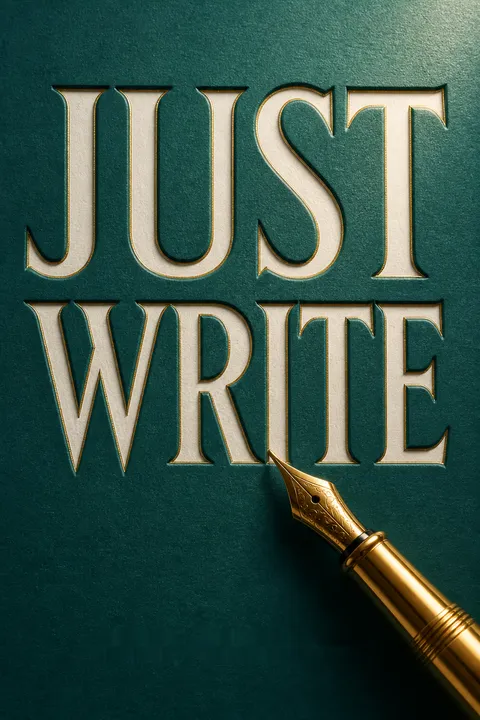
Write to transport readers, not to prove how literary you are.
Protect the reading trance. Readers want to enter a story so completely that they stop noticing the act of reading. Every confusing viewpoint shift, unnecessary explanation, or slow stretch can act like a speed bump. Bell recalls a heavily promoted novel that lost him early: it introduced too many characters, delayed a close viewpoint, and let backstory overwhelm forward motion. Publicity could not repair the weak reading experience.
Entertainment can matter deeply. Bell also describes finishing the stylistically awkward novels Kings Row and An American Tragedy because their characters faced enormous questions about love, evil, ambition, and loss. Readers may come for pleasure, but pleasure need not be shallow. The craft challenge is to make the story absorbing while giving its emotional events enough weight to linger.
What's striking is the distinction between literary ambition and literary display. A story can address serious ideas without asking readers to admire its difficulty. This resembles good interface design: complexity may exist beneath the surface, but the user should not have to fight the interface to reach it. The warning is not to flatten every novel into fast commercial fiction. Some readers actively seek difficulty, and some experiments succeed. The useful test is whether a difficulty deepens the intended experience or merely interrupts it.
Give a clean premise complex characters and stakes that survive scrutiny.
Build a sturdy promise. Bell recommends expressing a novel in a few clear sentences: introduce the lead and their situation, identify the event that pulls them into the central struggle, then state what is at risk. That irreversible turning point is the Doorway of No Return, the moment when the protagonist enters the main conflict and cannot simply return to ordinary life. A pitch is not a full synopsis. It tests whether the idea has a strong foundation.
Plan the opposition, too. Erle Stanley Gardner built mysteries by tracing the criminal scheme from motive and temptation through planning, action, and concealment. The writer need not show this sequence to readers, but understanding it helps make the plot coherent. The more extraordinary the premise, the more carefully the ending must explain how events make sense. Surprise earns trust when it feels unexpected and, in retrospect, inevitable.
A concise premise is useful because it forces causal clarity. In design and engineering, a simple specification can expose hidden dependencies before construction becomes expensive. Fiction benefits from the same discipline: a writer who knows what the story promises can spot scenes that do not serve it. Yet a pitch is only a diagnostic, not a measure of artistic worth. Some character-led or experimental work resists easy compression. The test is whether the writer can explain the dramatic engine, even if the finished work remains formally complex.
Use story structure as a map, not a cage.
Give the story direction. Bell treats structure as a way to guide readers through material, not as a requirement to outline every scene. A conventional novel has a beginning, middle, and end. He places the opening at roughly the first fifth, the ending in about the final quarter, and the long middle between them. Early scenes establish a character and disturbance; a major turning point pushes the lead into the central struggle. In the final act, the conflict accelerates toward resolution.
Keep the middle alive. Act II can remain flexible because each scene grows from the last: the lead acts, meets resistance, and must respond. If the story stalls, ask whether the stakes feel serious, whether the opponent has real power, and what could make the situation worse. A pantser can discover scenes as they go while still steering toward a few important turning points.
The map metaphor resolves a false choice between spontaneity and planning. Cognitive science distinguishes a goal from the many routes available to reach it: a clear destination can support flexible navigation rather than rigid execution. In fiction, a handful of structural landmarks can reduce aimlessness without dictating every creative choice. The risk is treating one familiar pattern as universal law. Bell's own advice is most useful when structure is treated as a reader-oriented hypothesis, tested against the needs of the particular story.
Make characters change under pressure, not by authorial convenience.
Let conflict expose character. A protagonist becomes visible through choices made under pressure. Some characters change their basic values, as Scrooge moves from selfishness toward generosity. Others retain their essential nature but become more capable, as a decent person forced to survive a dangerous ordeal. A tragic lead may reject an opportunity to change. Each path should emerge from the story's events rather than a sudden authorial decision.
Give everyone an inner argument. Memorable characters often want something while fearing or believing its opposite. A principled lawman may feel fear; a loyal person may be tempted by desire. Opponents also need reasons they consider valid, not merely a taste for evil. Even minor characters can feel distinct through unusual behavior, speech, or appearance. These choices create characters who can surprise readers without seeming implausible.
The section's strongest insight is that credibility and surprise are partners, not opposites. A character feels rounded when an unexpected action reveals an existing tension, not when it arrives from nowhere. That is close to how people are understood in everyday life: behavior becomes meaningful against a history of motives and constraints. The approach also resists simple moral sorting by asking readers to understand an opponent's reasoning. Understanding is not endorsement, however, and a villain's sympathetic history should not erase the harm caused by their choices.
Make every scene earn its place through conflict, motion, and emotion.
Put something at risk. Bell argues that a lead needs more than inconvenience at stake. The danger may be physical death, the loss of a career, or psychological damage that changes how the character can live. His compact Because exercise starts with a one-sentence plot description, then asks why the lead must succeed. If that answer feels weak, the story may lack enough pressure.
Make opposition active. A scene works when characters pursue goals that collide. In 12 Angry Men, one juror's refusal to accept a quick guilty verdict forces eleven others to examine their assumptions. The confined jury room stays dramatic because each person has a distinct position and something at stake. If a draft feels stalled, list possible setbacks, then choose the one that most sharply complicates the protagonist's next move.
Conflict is more than argument or physical danger. It is incompatible goals under limited time, information, or power. That makes the principle portable across thrillers, romance, comedy, and domestic fiction. The 12 Angry Men example shows how a single setting can feel dynamic when personalities and evidence keep changing the balance. A useful qualification is that not every scene needs a crisis. Quiet scenes can create contrast, intimacy, or anticipation, but they still need to alter what the reader understands or what a character wants.
Make readers work for backstory only when it deepens the present scene.
Show the moment in motion. Showing lets readers infer a character's feelings from behavior, speech, and detail. Telling summarizes or explains. Neither approach is always superior: intense scenes often benefit from close observation, while transitions and routine events may need summary. The key is to avoid explaining what a scene can reveal more powerfully through action.
Release information on purpose. Exposition supplies context; backstory gives the character's earlier history. Bell advises cutting anything readers do not yet need, then weaving essential facts into tense dialogue, thought, or an unfolding event. In a detective story he discusses, a character prepares a gun before greeting a visitor. The gesture creates questions before later conversation fills in their history. Act first, explain when the explanation becomes meaningful.
This approach treats information as a change in the reader's mental model. A detail becomes compelling when it answers a question the scene has already raised, rather than arriving as a block of context detached from action. That is why delayed explanation can create curiosity without confusing the audience. The distinction between showing and telling should remain flexible, though. Summary can create pace, compression, or a distinctive narrative voice. The real problem is not explanation itself, but explanation that asks for attention without adding tension, insight, or orientation.
Draft freely, revise cold, and stop perfectionism from stealing whole books.
Separate invention from judgment. Bell advises writers to produce a first draft without constantly restarting to polish the opening. Set a manageable word quota, review the previous day's work lightly, and keep moving. Once the draft is complete, put it aside for at least three weeks, then read it as a reader would. Mark the places where attention might fade before attempting major repairs.
Study what needs repair. He recommends examining plot, structure, character, scenes, dialogue, theme, and voice, then practicing the weakest areas through craft books, close reading, and feedback. A writer who repeatedly rewrites the first chapters may be using revision to avoid the uncertainty of finishing. A completed imperfect draft gives the writer something concrete to diagnose; an endlessly perfected beginning does not.
The separation between drafting and revision resembles divergent and convergent thinking. The first generates possibilities; the second evaluates and selects. Mixing them too early can turn every sentence into a referendum on the writer's ability. Bell's process protects creative momentum while reserving rigorous judgment for a stage when the whole design is visible. Still, a fixed waiting period will not suit every schedule or temperament. The deeper principle is to create enough distance to read the manuscript freshly, not to obey a calendar ritual.
Build your writing life around controllable work, not publishing outcomes.
Measure the work you control. A writer cannot command an agent's decision, a book's ranking, or a reader's taste. Bell instead recommends tracking words, study, and completed projects. He suggests estimating a comfortable weekly output, then setting a quota about 10 percent higher to encourage growth. A day off can protect energy rather than undermine discipline.
Expect setbacks without surrendering. Kathryn Stockett received sixty rejections before an agent agreed to represent The Help. Her story illustrates persistence, not a promise that everyone will eventually get the same result. Bell advises letting disappointment register, learning what can be learned, and returning to the work. A writing life also needs room for health, relationships, and interests beyond publication, especially when the business disappoints.
The distinction between controllable actions and uncertain outcomes is psychologically useful because it gives effort a stable target. It also avoids the trap of treating every rejection as an accurate judgment of a writer's capacity. The Stockett anecdote illustrates persistence, but survivorship stories can obscure the many equally persistent writers who do not become bestsellers. A humane reading of the advice therefore joins ambition with limits: track effort, improve the work, and do not make commercial validation the only measure of a life.
Treat publishing routes as changing tools, not verdicts on talent.
Adapt to the available routes. The Kindle's 2007 debut helped open digital publishing directly to writers, making it possible to reach readers without first winning approval from a major house. Traditional publishing did not disappear, but writers gained more options, including independent and hybrid paths. The opportunity brings responsibility: a self-publisher must ensure editing, design, formatting, distribution, and description copy meet professional standards.
Think like a publisher. Bell breaks the work into choosing projects, producing books well, and finding readers. A strong idea needs both a distinctive voice and a plausible audience. Writers can hire specialists for tasks they cannot do well, but they remain responsible for the quality of the finished book. Publishing is a business environment that changes; an individual rejection or weak sales period is not a final judgment on artistic potential.
The book's account of digital change is a reminder that institutions shape access as well as taste. When distribution becomes cheaper, more voices can reach readers, but selection work shifts toward readers, recommendation systems, and the authors themselves. That expanded access is real, though it does not remove competition or guarantee discoverability. The soundest conclusion is neither that traditional publishing is obsolete nor that self-publishing is easy. Each route is a different bundle of services, control, risk, and labor.
Grow a backlist and reader community instead of chasing one launch.
Build value over time. Long tail marketing means earning from a growing range of work across time rather than depending on one breakout title. Short stories and novellas can test ideas, introduce a character, or give new readers a low-risk way into an author's work. Hugh Howey's original Wool story was about 12,000 words; reader response encouraged him to continue the series. Each installment still needs to feel satisfying on its own.
Market like a person. Bell regards reader recommendations and an email list as more durable than a constant stream of sales pitches. Social media should create useful, enjoyable interaction, with promotion a small share of what an author posts. A clear book description and a strong sample help convert curiosity into a purchase. The book itself remains the best basis for word of mouth.
A backlist functions like a portfolio: multiple works give readers more ways to discover an author and reduce reliance on a single launch. Short fiction can also serve as a low-cost experiment, but only if it is written as a complete experience rather than a fragment designed merely to extract another purchase. The community advice is equally important. Marketing built on trust resembles relationship maintenance more than advertising. Its limits are practical: a large catalog still needs consistent quality, and no amount of reader engagement can guarantee commercial success.
Analysis
Just Write is both a fiction-craft manual and an argument for treating authorship as a durable practice amid industry change. Its central thread is a productive tension: release the imagination, then impose enough structure and revision to make the imagined story legible and compelling to another person. The reader is not merely a market statistic. The reader is the participant whose attention, curiosity, and emotional investment complete the work.
The book is especially valuable where it turns abstractions into diagnostic questions. Does the lead face a meaningful risk? What is the opponent doing elsewhere? Would a stranger want to hear this character's story? Where might a busy reader stop? These questions help writers move from vague dissatisfaction to specific revision. Its strongest craft advice is causal: character, plot, stakes, and scene choices should shape one another, rather than exist as separate boxes to check.
The same practical spirit governs the writing life. Quotas, study, feedback, and measurable production make creative work less dependent on mood, while rest and projects outside writing make persistence more sustainable. The publishing argument is historically situated in the early digital self-publishing era. Its broad lesson, that writers have more than one route to readers, remains useful; particular platforms, services, and market tactics are time-sensitive and should not be mistaken for permanent rules.
The book's commercial orientation is also its main limitation. It often treats reader engagement and market performance as closely aligned, although literary value, experimentation, and sales do not always move together. Structure can clarify a story, but a conventional three-act model cannot prescribe every successful form. Read its principles as tools for testing effects, not laws that determine artistic legitimacy. The lasting message is less a promise of publication than a method: write with energy, learn the craft, finish the work, and keep improving the experience offered to readers.
Review Summary
Just Write receives mostly positive reviews for its motivational approach and practical advice on both writing craft and the publishing process. Readers appreciate Bell's accessible style and find the book encouraging, especially for new writers. Many highlight its usefulness for self-publishing authors. Some criticize repetition and basic advice, while others value the reminders. The book is praised for its blend of writing tips, career guidance, and industry insights. Several reviewers note it rekindled their passion for writing during difficult times.
People Also Read







Glossary
Fictive dream
Immersive story experienceThe absorbing state in which readers feel present inside a fictional world rather than conscious of reading sentences on a page. Bell uses this idea to explain why confusing exposition, weak viewpoint, implausible events, or unnecessary slow passages can interrupt a story's effect.
Doorway of No Return
Entry into the main conflictThe turning point that pushes the protagonist out of the ordinary situation and into the central struggle. After crossing this threshold, the character cannot simply return to the previous life unchanged. Bell uses the concept to help writers shape the transition from a novel's opening into its main action.
Mirror Moment
Midstory self-confrontationA reflective moment, often near the middle of a story, when the lead confronts either a question of identity or the apparent certainty of defeat. The moment clarifies the character's inner struggle and can connect the story's earlier setup with its eventual outcome.
Shadow Story
Off-scene character activityThe events, motives, and plans unfolding outside the scene currently being narrated. It includes what opponents and supporting characters are doing, as well as secrets or desires the lead may not consciously recognize. Developing this unseen material can generate complications, twists, and richer character behavior.
Crosscurrents of emotion
Competing feelings in a sceneThe simultaneous presence of emotions that pull in different directions, such as attraction mixed with fear or duty opposed by desire. Bell argues that these tensions make characters and scenes more psychologically vivid because readers experience complexity rather than a single, predictable feeling.
Long tail marketing
Value from a growing catalogA publishing strategy that builds results through a continuing range of quality work rather than relying only on a single bestseller or launch. Each additional book, story, or series can give readers another entry point and contribute to ongoing sales, though continued production does not guarantee commercial success.
About the Author
Other books by James Scott Bell
Download PDF
Download EPUB
.epub digital book format is ideal for reading ebooks on phones, tablets, and e-readers.








