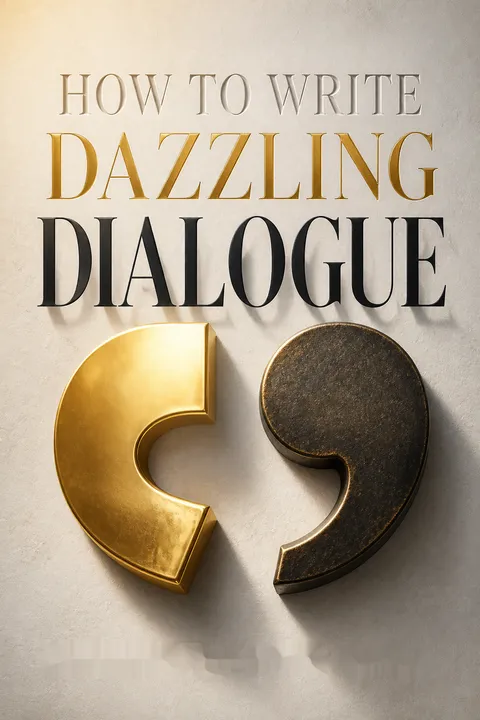


Key Takeaways
Use dialogue as the quickest test of whether a manuscript can hold attention
The first pages decide. Bell opens with three imagined submissions. One begins with a character alone, thinking about her past; another has spouses reciting facts they both know; the third starts with a taut exchange between a detective and a psychologist. The first two stall or feel artificial. The third creates a question and makes the writer seem in control.
Readers notice the difference. Agents and editors may stop reading quickly, while ordinary readers often make the same judgment without naming it. Crisp dialogue signals that characters have motives and that the story is moving. Weak dialogue can drain momentum before the plot has had a chance to prove itself.
Dialogue is unusually visible because readers can test it against their own experience of conversation. A line that sounds false can break trust in the whole fictional world. Yet dialogue is not the only measure of craft: a deliberately quiet opening may succeed through image, voice, or suspense. The useful lesson is not to force speech onto every first page, but to treat the opening as a promise. If characters speak, their words should make that promise feel credible.
Give every speaker an agenda, then make the agendas collide
Speech should do something. Bell treats fictional dialogue as action shaped into words. Before drafting a scene, identify what each character wants, even if the goal is as modest as getting a drink. Then create resistance. In the barbecue scene from Gone With the Wind, Scarlett wants Ashley to choose her, while he tries to uphold his engagement and contain his feelings. Their conversation is compelling because neither is simply exchanging information.
Opposition creates movement. When Scarlett's persuasion fails, she changes tactics, and when that fails, she acts physically. Rhett then enters with a different aim: puncturing her confidence. The scene keeps changing because each speaker is trying to influence the others. Even small objectives become dramatic when someone blocks them.
An agenda gives dialogue a direction, much as an objective gives an actor something playable. It also clarifies why a character chooses one tactic over another: charm, evasion, threat, silence, or a sudden joke. The framework is strongest when motives differ but remain psychologically plausible. If every exchange becomes a contest, ordinary intimacy can disappear. Conflict need not mean hostility; competing needs, mismatched assumptions, or unequal knowledge can supply the pressure.
Make exposition emerge from pressure, not from characters reciting known facts
Dialogue has five jobs. It can convey story information, reveal character, establish tone, set a scene, and express theme. A line may do several jobs at once, but it should not exist merely to explain what the reader needs to know. Bell warns against characters announcing facts they already share, such as a spouse explaining where they live or what the other character does for a living.
Hide facts inside conflict. At a high-school reunion, an awkward greeting between former lovers can gradually expose their past through pointed questions and evasions. The reader learns what happened because one person wants an answer and the other resists, not because the narrator pauses to summarize. Information can also be delayed. Beginning with action and leaving some causes unclear can create curiosity rather than confusion.
This advice aligns dialogue with ordinary social inference: people rarely explain shared context unless they are making a point, reminding someone, or pretending not to know. That makes exposition more believable when it carries a second purpose. The five functions also offer a practical editing test: a line that does none of them may be expendable. Still, some exposition is simply necessary. Concealment works when the reader has enough footing to stay curious rather than feel lost.
Train your ear until each character sounds unmistakably different
Find the voice before polishing lines. Bell's Voice Journal is a free-form exercise in which a writer answers prompts in a character's voice, quickly and without planning every sentence. The goal is to discover speech patterns that feel unexpected but consistent. He also recommends reading dialogue aloud, turning screenplay scenes into prose, practicing improvisation, and writing short exchanges between contrasting characters.
Practice makes choices audible. A clipped detective, an ornate visitor, and a talkative schemer should not sound interchangeable. Differences can come from vocabulary, sentence structure, regional expressions, or the specialized language of a peer group. The Voice Journal is especially useful for testing what a character notices, avoids, or jokes about, not just which words they use.
Voice is more than a verbal costume. It reflects attention: two people in the same room can describe entirely different things because they have different histories and priorities. Reading aloud catches awkward rhythm, while improvisation helps writers escape the first predictable response. The risk is reducing a character to a signature accent or catchphrase. Distinctive voices should remain flexible enough to change with audience, danger, embarrassment, and deliberate self-presentation.
Add fear and barriers when friendly conversation goes flat
Raise the cost of speaking. A scene can become tense when a character fears losing something: a relationship, a secret, a job, or control. Bell's fear factor is a prompt to ask what each person worries will happen. In one example, two friends talk over coffee, but one has just received an inappropriate advance from the other's husband. Ordinary questions become loaded because a truthful answer could damage the friendship.
Put obstacles in the exchange. An interruption by a third person is an outer barrier. Shame, uncertainty, or a hidden motive is an inner one. Either can make simple communication difficult. Bell suggests revisiting a weak scene and increasing the friction, perhaps through a sharper disagreement, a badly timed interruption, or a character's refusal to answer.
A useful test for a quiet scene is not whether the characters are arguing, but whether something meaningful is at stake in what they say or withhold. Fear makes the subtext legible without requiring a character to explain it. At the same time, tension should be calibrated. If every coffee conversation contains a secret capable of destroying a friendship, readers may feel the writer's hand. Small discomforts and modest risks can create more convincing pressure.
Build a cast whose differences generate conflict before anyone speaks
Design contrast into the cast. Bell calls this orchestration: shaping characters so their temperaments and speaking styles naturally rub against one another. In The Maltese Falcon, the terse detective Sam Spade contrasts with Joel Cairo's formal manner and Kasper Gutman's expansive talk. Brigid O'Shaughnessy adds another pattern, shifting between apparent vulnerability and deception. The differences help scenes produce tension without forcing it.
Try a role-based lens. The book adapts the Parent, Adult, Child roles from transactional analysis as a writing tool. A Parent asserts authority, an Adult tries to reason calmly, and a Child responds emotionally or impulsively. A character can shift roles to gain leverage. A character web, a map of relationships and hidden connections, can also reveal reasons for friction that neither person states outright.
This approach treats a cast as a system rather than a collection of biographies. A character's effect depends partly on who is in the room with them. The role lens is useful for quickly staging power dynamics, but it is a heuristic, not a complete account of personality. Real people move among rationality, authority, and emotional need in more complicated ways. The best dialogue lets roles shift, blur, and sometimes surprise the other characters.
Use silence, surprise, and compression to make each line work harder
Let the unsaid carry weight. Subtext is the meaning beneath the spoken exchange, often built from secrets, memories, fears, or unequal knowledge. In Hemingway's Hills Like White Elephants, a couple discusses an unnamed procedure, and the woman's silence and attention to the surroundings communicate more than a direct explanation would. A surprising reply can work similarly, redirecting a conversation and making readers ask what lies behind it.
Revise for force and pace. Bell recommends cutting routine openings and repeated information unless the character has a reason to use them. A loose drafting exercise, the Cheap Champagne Method, lets characters speak freely before the writer edits. Short dialogue with little description speeds a scene; pauses, action, and inner thought slow it down and deepen the character's experience.
Silence invites readers to participate by interpreting gestures, gaps, and mismatches between words and behavior. That participation can make a scene more memorable than a full explanation. Compression also sharpens rhythm, but extreme terseness can turn people into machines exchanging plot points. The writer's task is not to remove every hesitation. It is to distinguish meaningful hesitation from verbal padding, then use pacing to control how much the reader must infer.
Keep mechanics and dialect light enough that readers hear the scene
Make the page easy to follow. Dialogue punctuation and speaker cues should clarify who speaks without calling attention to themselves. Bell favors the unobtrusive attribution said, recommends omitting it when the speaker is already clear, and uses action beats selectively. Too many elaborate substitutes or repeated gestures make the reader work through clutter instead of listening to the exchange.
Signal voice without burdening readers. Dialect, profanity, and period language can establish place and social texture, but heavy use may slow comprehension or repel some readers. Bell advises giving a dialect a clear first impression, then using only occasional reminders. For historical speech, research the period but keep the language accessible; a few contextual clues can suggest an unfamiliar expression without turning the scene into a vocabulary test.
Technical choices are most effective when they disappear into comprehension. A reader should not have to solve attribution or decode every sentence before reaching the emotional beat. This does not mean all prose should sound neutral: a carefully chosen dialect feature can carry social history and place. The tradeoff is between texture and legibility, and it varies by genre and audience. Consistency matters more than imposing one universal level of formality.
Let characters argue the theme instead of making them deliver a sermon
Turn an idea into a dispute. Bell's method begins by stating a story's theme plainly, then giving its opposing view to another character. In On the Waterfront, Edie believes people owe one another care, while Terry initially sees self-preservation and toughness as the rules of life. Their disagreement makes the film's moral question part of their relationship rather than a lesson delivered to the audience.
Give the belief a dramatic arc. A character who changes can argue against the eventual lesson early in the story. That gives the audience a position to watch being tested. The crucial step is to make the conversation arise from what the characters want and fear. If they sound like speakers at a debate, the theme has displaced the story instead of deepening it.
A theme becomes more persuasive when it has to survive contact with a competing worldview. Dialogue can give both positions emotional logic, allowing readers to experience the cost of each belief rather than receive a verdict. This is also a useful check on caricature: the opposing character should have reasons, not merely objections. The technique has limits, since some stories communicate their central idea more effectively through choices and consequences than through explicit discussion.
Place comic relief inside the obstacle, not outside the story
Let humor complicate the task. Bell describes comic relief as a way to make a dramatic scene more pleasurable without abandoning its purpose. In his hospital example, a protagonist urgently seeks a particular doctor, but two elderly volunteers keep interrupting one another with corrections and competing recollections. Their bickering creates humor while delaying the information he needs.
Make the comedy belong. The exchange also reveals the volunteers' personalities and establishes the hospital's social atmosphere. Because the humor arises from the obstacle, it does not feel like a separate performance inserted to entertain the reader. Quirks and verbal clashes can make brief characters memorable, but they work best when they also shape the scene, its pace, or the protagonist's difficulty.
Humor can regulate emotional intensity: a comic beat gives readers a moment of release while keeping them inside the same story world. The hospital scene works because the volunteers' behavior is both funny and consequential. This is more durable than a detached gag. Still, comic relief is tonal, not merely structural. A joke that trivializes suffering or arrives at the wrong emotional moment can weaken the scene, even if it technically creates an obstacle.
Analysis
Bell's central claim is practical: dialogue improves when it is treated not as a transcript of everyday speech, but as purposeful, shaped behavior. The book's strongest organizing idea is the character agenda. It explains why a line is spoken, why a speaker chooses one tactic over another, and how an exchange can carry information without sounding like a briefing. The surrounding craft advice follows from that premise. Voice, conflict, subtext, silence, and pacing are not separate ornaments; they are ways of making speech reveal action and character at once.
The book is also unusually teachable because it moves between memorable scenes and usable exercises. The Voice Journal develops an ear; reading aloud tests rhythm; screenplay adaptation makes writers notice what dialogue needs from narrative; and free drafting can uncover material before the inner editor intervenes. Its examples range from classic novels and films to weak sample passages, which helps show both the effect and the failure mode of a technique.
Some recommendations are deliberately firm, especially the advice on exposition, compression, dialect, and profanity. These are useful defaults, not laws. Long speeches, conspicuous dialect, or abundant profanity can be artistically justified when they express character or establish a world. Likewise, dialogue is not necessarily the fastest route to improvement for every manuscript. A story may fail because of structure, point of view, or stakes before dialogue becomes the central problem.
The most transferable practice is to revise scene by scene: identify what each person wants, what blocks them, what the exchange reveals, and which lines merely repeat known information. Then read the scene aloud and remove whatever weakens its pressure. That process respects the book's core insight while leaving room for styles that are quieter, more experimental, or less dependent on verbal conflict.
Review Summary
How to Write Dazzling Dialogue receives generally positive reviews, with readers praising its practical tips and examples. Many find it helpful for both beginners and experienced writers, appreciating Bell's concise explanations and focus on specific dialogue techniques. Some reviewers note that the book is short and repetitive, with outdated examples. However, most agree it offers valuable insights on creating tension, revealing character, and improving overall dialogue writing skills. The book's tone and exercises are particularly well-received.
People Also Read






Glossary
Voice Journal
Character voice exerciseA free-form document written in a character's voice, often by answering prompts quickly and without extensive planning. The writer uses it to discover vocabulary, rhythm, attitudes, and unexpected ways of responding. It can be revisited as the character develops, and longer journals can be reserved for principal characters.
Cheap Champagne Method
Unedited dialogue draftingA drafting exercise in which the writer lets characters improvise a conversation without quotation marks, attributions, or action beats. The aim is to generate freely before judging the material. Much of the result may be discarded, but useful lines, conflicts, or plot possibilities can emerge from the unfiltered exchange.
character web
Map of character relationshipsA planning tool that places major characters on a page and connects them with lines representing their relationships. The writer considers whether each connection is familiar, hidden, or unknown to the characters. Exploring these links can generate secrets, tensions, and story possibilities that give dialogue an underlying layer of meaning.
Parent, Adult, Child
Three interaction rolesA role-based lens adapted from transactional analysis. The Parent asserts authority, the Adult seeks balanced and rational discussion, and the Child responds emotionally, impulsively, or dependently. Writers can assign roles to characters before a scene and use changes in role to create shifts in power. The book presents this as a practical craft tool.
the fear factor
Fear driving scene tensionA scene-planning prompt that asks what each character fears or worries about during a conversation. The concern may be minor or extreme, and characters need not fear the same outcome. Identifying those risks can make ordinary questions, evasions, and silences carry tension and clarify what speaking honestly might cost.
inner dialogue
A character's self-conversationA form of interior writing in which a character appears to question, answer, argue with, or advise themselves. Unlike a direct presentation of thoughts as statements, it gives the mind an internal back-and-forth. Writers can use it to turn explanatory narration into an immediate, conflicted experience.
action tag
Physical beat identifying a speakerA character's physical action placed with dialogue, often serving in place of a speech attribution. An action tag can identify who is speaking and add emotional or situational information. The book cautions against using one for every line, since constant gestures can clutter the page and make readers search for significance.
sidestep
Unexpected conversational replyA response that avoids the obvious answer to the preceding line. A sidestep can introduce tension, humor, or subtext by making the reader wonder why the speaker has changed direction. It should be motivated by the character or situation; random non sequiturs may confuse rather than deepen the exchange.
FAQ
1. What is "How to Write Dazzling Dialogue" by James Scott Bell about?
- Focus on Fictional Dialogue: The book is a comprehensive guide to writing effective, engaging dialogue in fiction, emphasizing its importance in storytelling.
- Practical Techniques: Bell provides actionable advice, exercises, and examples to help writers improve their dialogue-writing skills.
- Covers All Levels: The book addresses both foundational concepts and advanced techniques, making it suitable for beginners and experienced writers alike.
- Real-World Examples: It draws on classic novels, screenplays, and Bell’s own experience to illustrate key points.
2. Why should I read "How to Write Dazzling Dialogue" by James Scott Bell?
- Fastest Manuscript Improvement: Bell argues that dialogue is the quickest way to assess and elevate the quality of a manuscript.
- Industry Insight: The book explains how agents, editors, and readers judge writing skill based on dialogue, impacting publishing success.
- Avoid Common Pitfalls: It helps writers sidestep frequent mistakes like expository or unnatural dialogue.
- Engaging and Practical: The book is filled with exercises, examples, and actionable tips that can be immediately applied to your writing.
3. What are the key takeaways from "How to Write Dazzling Dialogue"?
- Dialogue as Action: Dialogue should always serve a purpose, acting as a "compression and extension of action" rather than idle chatter.
- Character Agendas: Every character in a scene should have an agenda, and conflict between agendas creates compelling dialogue.
- Five Functions of Dialogue: Dialogue must reveal story information, reveal character, set tone, set the scene, or reveal theme.
- Practical Tools: The book offers specific techniques for training your ear, increasing tension, and shaping dialogue for maximum impact.
4. How does James Scott Bell define great fictional dialogue in "How to Write Dazzling Dialogue"?
- Purposeful Speech: Dialogue must always have a purpose, furthering a character’s agenda or the story’s action.
- Stylized, Not Realistic: Fictional dialogue is not a direct copy of real speech; it’s crafted to feel real while serving the story.
- Conflict-Driven: The best dialogue arises from characters with opposing objectives, creating tension and interest.
- Multi-Functional: Effective dialogue simultaneously reveals character, advances plot, sets tone, and can even hint at theme.
5. What are the most common dialogue mistakes highlighted in "How to Write Dazzling Dialogue"?
- Expository Dialogue: Characters unnaturally stating information they both already know, just for the reader’s benefit.
- "Character Alone, Thinking" Openings: Starting with a character reflecting alone, which often lacks engagement.
- Bloated or On-the-Nose Dialogue: Dialogue that is too direct, unnatural, or filled with unnecessary exposition.
- Overuse of Dialect or Adverbs: Heavy dialect and excessive adverbs can distract or annoy readers rather than enhance authenticity.
6. What are the five main functions of dialogue according to "How to Write Dazzling Dialogue"?
- Reveal Story Information: Dialogue can deliver exposition, but it must be done artfully and within conflict.
- Reveal Character: How a character speaks—vocabulary, syntax, regionalisms—shows their background and personality.
- Set the Tone: The style and rhythm of dialogue establish the genre and mood of the story.
- Set the Scene: Dialogue can help immerse readers in the setting and dynamics of a scene.
- Reveal Theme: Dialogue can subtly or overtly express the story’s deeper messages, especially when embedded in conflict.
7. How does "How to Write Dazzling Dialogue" recommend training your ear for writing better dialogue?
- Voice Journals: Write free-form, stream-of-consciousness monologues in your character’s voice to develop distinct speech patterns.
- Read Aloud: Hearing your dialogue helps catch unnatural phrasing and rhythm issues.
- Convert Movie Scripts: Rewrite screenplay dialogue as prose to study how dialogue functions in different formats.
- Improv and Practice: Engage in improvisational exercises or write scenes with random characters to stretch your dialogue skills.
8. What techniques does James Scott Bell suggest for increasing conflict and tension in dialogue?
- Opposing Agendas: Ensure each character wants something different in the scene, creating natural friction.
- Arguments and Barriers: Introduce disagreements, interruptions, or emotional barriers to communication.
- The Fear Factor: Tap into characters’ worries or secrets to add subtext and tension.
- Avoid "Coffee Scenes": Even in friendly conversations, inject some form of trouble or underlying conflict.
9. What are James Scott Bell’s top craft secrets for shaping great dialogue in "How to Write Dazzling Dialogue"?
- Orchestration: Build a cast of characters with contrasting personalities and quirks to maximize potential for conflict.
- Flip the Obvious: Avoid predictable lines by having characters respond in unexpected ways.
- Subtext: Let meaning simmer beneath the surface, using what’s unsaid to create intrigue.
- Compression and Silence: Trim dialogue to its essence and use silence or sidesteps for impact.
- Control Pace: Adjust the amount of description and white space to speed up or slow down scenes.
10. What are the top 10 dialogue issues addressed in "How to Write Dazzling Dialogue"?
- Punctuation: Master the rules for dialogue punctuation, including em-dashes, ellipses, and paragraph breaks.
- Attributions, Adverbs, Action Tags: Use "said" as default, minimize adverbs, and vary with action beats.
- Dialects: Use dialect sparingly and strategically, especially in historical fiction.
- Backstory: Reveal character history naturally, breaking up long speeches with action or reaction beats.
- Inner Dialogue: Distinguish between inner monologue and inner dialogue for character depth.
- Experimental Dialogue: Understand the risks and rewards of breaking conventional dialogue rules.
- Cursing: Consider market preferences and use strong language judiciously.
- Thematic Dialogue: Embed theme in natural, conflict-driven exchanges.
- Comic Relief: Use dialogue for humor to lighten dramatic tension.
- Period Dialogue: Balance authenticity with readability, sprinkling in period-appropriate words.
11. What are some of the best quotes from "How to Write Dazzling Dialogue" and what do they mean?
- "Dialogue is a compression and extension of action." — Dialogue should always move the story forward, not just fill space.
- "Every word, every phrase that comes out of a character's mouth is uttered because the character hopes it will further a purpose." — Characters must have clear motivations in every scene.
- "Act first, explain later." — Start with action and let exposition emerge naturally, keeping readers engaged and curious.
- "Fiction is not pure realism. Fiction is stylized realism for a purpose." — Dialogue should feel real but be crafted for narrative effect.
12. How can writers immediately apply the advice from "How to Write Dazzling Dialogue" by James Scott Bell to their own work?
- Analyze Existing Scenes: Review your manuscript for dialogue that lacks conflict, purpose, or distinct character voice.
- Practice Exercises: Use Bell’s suggested exercises—voice journals, reading aloud, improvisation—to strengthen your dialogue skills.
- Revise for Compression: Edit dialogue to remove fluff, on-the-nose responses, and unnecessary attributions.
- Focus on Agendas and Subtext: Before writing or revising a scene, clarify each character’s agenda and look for opportunities to add subtext or tension.
- Use the Top 10 Checklist: Refer to Bell’s list of dialogue issues as a revision tool to catch and fix common mistakes.
About the Author
Other books by James Scott Bell


Download PDF
Download EPUB
.epub digital book format is ideal for reading ebooks on phones, tablets, and e-readers.








