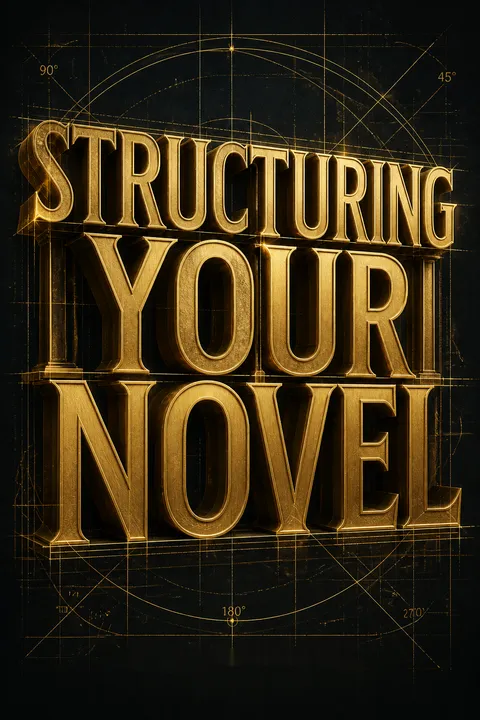


Key Takeaways
Use structure as a story’s load-bearing shape, not a formula
Structure supports invention. Weiland treats structure as an arrangement of essential story moments, not a recipe for characters, settings, or style. A familiar shape gives the writer a way to judge whether the story is building, turning, and resolving, while leaving the story’s particular contents open. Her approach combines the broad sweep of three-act storytelling with a more detailed map of turning points, scenes, and sentences.
Use it as a diagnostic. A story can be structured instinctively, but understanding the underlying pattern helps a writer find why a draft feels stalled or unconvincing. The framework is most useful as a set of questions: Has the central conflict taken hold? Has the character’s situation changed? Does the ending grow from what came before?
What's valuable here is the distinction between a constraint on sequence and a constraint on imagination. A sonnet’s form does not dictate its subject, and story structure can work similarly: it helps readers recognize movement without prescribing what that movement means. The caution is that a map can become a substitute for observation. A writer who checks off events mechanically may produce a story that is balanced on paper but emotionally inert. Structure earns its keep when it reveals a problem in the draft, not when it replaces judgment.
Open at the first consequential domino, not the character’s biography
Create a specific question. A hook gives readers enough information to wonder about something concrete, rather than leaving them confused about the basic situation. An opening can raise questions about a character’s danger, a strange event, or an unexplained choice. The first lines also begin introducing character, setting, and tone, so the curiosity feels attached to a real story rather than a gimmick.
Start when events begin to matter. Weiland advises locating the first event that sets the plot moving, then resisting the urge to explain everything that came before. Hemingway’s story about Francis Macomber begins after something important has happened; the reason for the characters’ strained behavior emerges later, once readers have reason to care. Backstory gains force when it answers a question the story has already made urgent.
A good opening manages two kinds of uncertainty at once. It invites uncertainty about what will happen, while minimizing uncertainty about who is present, where they are, and what they are trying to do. That distinction resembles a useful principle in interface design: make the next choice intriguing, but make the controls legible. Mystery can pull a reader forward; disorientation often pushes one away. The right amount of explanation depends on genre and voice, but withholding essentials is not the same as creating suspense.
Use the opening quarter to make the stakes personal and legible
Build attachment before upheaval. The first 20 to 25 percent of a novel establishes the people, setting, and pressures that make later events matter. Readers need to understand what the protagonist values and what could be lost. In True Grit, early scenes show Mattie’s relationship with her father before his murder, so her pursuit of his killer carries emotional weight rather than functioning as mere plot machinery.
Make the setting do work. Settings can orient readers, distinguish a character’s ordinary life from later danger, and give the story a visual frame. A smaller cast and a few recurring places are often easier to follow and develop than a crowd of names and locations. The point is not to delay the plot with introductions. Each early scene should help readers understand what is at stake when the story changes direction.
The opening quarter is a form of emotional accounting. Before a story can make a loss feel costly, it must establish what the loss means to this particular person. That resembles risk communication: a warning becomes persuasive when the audience can connect it to something concrete. The danger is overexplaining the ordinary world until it becomes more interesting than the story’s disruption. A few sharply chosen relationships, habits, and places can establish more than a catalogue of background facts.
Turn the plot at 25, 50, and 75 percent
Use turning points to renew momentum. Weiland places major shifts near the quarter marks. Around 25 percent, the First Plot Point ends the setup and pushes the protagonist into a situation that cannot simply be ignored. Around 50 percent, the Midpoint changes the character’s approach, often moving them from reacting to events toward taking action. Around 75 percent, the Third Plot Point drives the character toward the final confrontation, often through a severe setback.
Separate cause from commitment. The Inciting Event starts the chain of events; the Key Event draws the protagonist into it. A crime may occur before a detective accepts the case. The events can coincide, but need not. These percentages are guides, not exact deadlines. The essential test is whether each turn changes what the protagonist can do and what the reader expects next.
These markers function like checkpoints in a long argument: each should alter the story’s premise, not merely add another obstacle. The shift from reaction to action is especially useful because it makes the middle feel developmental rather than repetitive. Still, percentage targets are a rough pacing instrument, not evidence that every narrative has the same internal clock. A quiet novel, an ensemble story, or a deliberately fragmented narrative may distribute its pressure differently. The practical question is whether the turn feels earned and consequential at its chosen location.
Give each scene a goal, an obstacle, and a consequential outcome
Make the scene answer a question. A scene is driven by what a character wants, what prevents them from getting it, and what happens as a result. A prisoner trying to obtain a shovel for an escape plan might be blocked by a suspicious guard; the guard’s refusal or punishment changes what the prisoner can attempt next. The obstacle should arise from the goal and the story, not arrive as unrelated noise.
Let the outcome propel the next scene. The result may be a full defeat, a partial success, or a victory that creates a new problem. It need not be spectacular, but it should change the character’s position. If the character gets everything desired without complication, the scene may close off the very pressure that keeps the larger story moving.
This scene model makes revision concrete. Instead of asking whether a passage feels exciting, a writer can ask what the character wants and what changes by the end. That is a powerful diagnostic because readers experience plot through changing possibilities. The model should not be mistaken for a demand that every scene end in catastrophe. A quiet exchange can carry a consequential outcome, while a dramatic mishap can feel empty if it does not affect anyone’s choices.
Let characters react, rethink, and choose before the next burst of action
Give events an emotional afterlife. The Sequel is the response phase after a scene’s outcome. It lets the character register what happened, face a dilemma, and decide what to do next. After Elizabeth Bennet is insulted by Darcy at a dance in Pride and Prejudice, her reaction shapes the choice to avoid him. That quiet response helps carry the result of the earlier scene into the next one.
Use tension as well as conflict. A sequel can be brief or expansive, internal or expressed through conversation. It does not need a fresh argument or fight. A character weighing a dangerous choice can keep readers engaged because the threat of what may happen creates tension. Alternating action with reaction gives the story room to develop character and prevents relentless conflict from becoming monotonous.
The reaction phase is where plot becomes psychology. Without it, a protagonist can seem like a device being pushed from event to event; with it, readers can see how experience changes judgment. This has a close connection to learning: people do not merely encounter consequences, they interpret them, sometimes wisely and sometimes not. The author’s framework makes that interpretation visible. The risk is overlong reflection that repeats what the scene has already shown, so the response should reveal a new feeling, problem, or decision.
Build opposition from competing goals, not random interruptions
Tie conflict to desire. A scene’s opposition matters when it blocks something a character genuinely wants and grows from the established plot or personality. Arguments can reveal motives, but conflict inserted only to create noise feels artificial. A protagonist and antagonist may even want the same thing; their different methods can sharpen the conflict and expose their contrasting values.
Use subplots to deepen the main story. A subplot can explore a secondary part of the protagonist’s life, such as a strained relationship alongside an adventure plot. In the Hornblower stories, the hero’s domestic difficulties add emotional dimension to his naval exploits. Subplots should enrich character or theme without stealing the story’s focus. Nor does every page need a confrontation: tension, reflection, and quieter scenes give conflict room to matter.
Conflict becomes richer when opposition is more than a villain saying no. Shared aims create a moral comparison: two characters may pursue the same good through incompatible ideas of responsibility, justice, or loyalty. This also prevents antagonists from becoming obstacles with no inner logic. Subplots can perform similar work by testing the protagonist outside the main arena. The limitation is proportion. A secondary thread should deepen the reader’s understanding of the central story, not compete with it for attention without adding meaning.
Make transformation visible through choices before and during the climax
Let change accumulate. A character arc is not convincing if a protagonist remains unchanged for most of the book and suddenly becomes wiser at the end. The events should pressure the character’s beliefs and behavior over time. Near the midpoint, the protagonist begins moving beyond reflexive reaction; in the final act, a crisis forces a direct confrontation with the weakness or fear that has limited them.
Prove the change in action. Weiland recommends establishing an early moment that displays the character’s flaw, then a later moment that reveals a different choice. In Thor, the opening shows the hero acting with arrogance and aggression; near the climax, he chooses self-sacrifice to protect others. The contrast lets readers observe transformation rather than simply being told that it occurred.
Visible change matters because readers judge character through decisions under pressure. A stated realization is only a hypothesis; a costly choice is evidence. The before-and-after comparison also helps writers check whether the arc is legible without an explanatory speech. Not every story needs a morally improved protagonist, however. A character may harden, fail to change, or discover that an old belief was sound. The deeper requirement is coherence between the character’s experience and the choice made at the decisive moment.
Make the ending surprising in the moment, earned by what came before
Prepare the pieces. A satisfying climax can surprise readers, but its outcome should follow from details already established. In The Hunger Games, previously introduced poisonous berries become part of the protagonists’ final tactic. The turn is unexpected, yet it does not rely on a new power or rescue invented at the last minute. The climax should resolve the main conflict and connect the protagonist’s decisive action to their change.
Give the story a landing. The Resolution follows the climax, ties off the important threads, and offers a glimpse of life beyond the conflict. It can leave some future uncertain without withholding the answer to the book’s central question. A sad ending can work when the loss matters and has been prepared for. A sudden external rescue or a book-ending cliffhanger can undercut the reader’s investment.
The strongest surprise changes the reader’s interpretation of familiar material rather than introducing an unrelated solution. This is why planting details matters: it lets hindsight feel like recognition instead of a trick. A brief resolution also respects the difference between closure and total explanation. Readers need the main dramatic promise fulfilled, but they do not need a complete biography of every survivor. The balance varies by genre and by a book’s place in a series, yet emotional consequence should remain clear.
Put causes before reactions, then cut prose that adds no force
Keep sentences in causal order. Motivation-Reaction Units describe the sequence from an external stimulus to a character’s response. A car hits the protagonist’s vehicle, then the character reacts; the reader encounters the cause before the effect. Reactions commonly move from feeling or thought to physical action and then speech. This order helps readers follow what happened and understand why the character responds as they do.
Revise for precision. Weiland warns against common distractions such as unclear pronouns, accidental run-ons, and descriptions that explain what readers already understand. Strong verbs and specific details often do more than piles of modifiers. This is not a ban on fragments, lyrical language, or deliberate disorder. A writer can break the expected sequence for an effect, but clarity should be the default rather than an accidental casualty.
Sentence-level causality is a small-scale version of plot structure. When readers can trace stimulus to response, they can inhabit a character’s perception rather than spend attention reconstructing the action. The advice to cut excess supports that same goal: every phrase either guides attention or competes for it. Yet strict linearity is not always desirable. Fragmentation, delayed explanation, and unusual syntax can represent shock or disorientation. The key distinction is whether disruption is an intentional effect or merely a preventable source of confusion.
Analysis
Weiland’s central contribution is not simply a three-act template. It is a nested account of causality. At the largest scale, a protagonist encounters a disruption, changes strategy, faces a crisis, and resolves a central question. At the scene scale, a goal meets resistance and produces a new problem. At the sentence scale, a stimulus produces a reaction. These levels reinforce one another: when a character’s immediate response causes the next scene goal, local movement becomes evidence of the larger arc.
That nesting is what makes the book useful as a revision tool. A writer can trace a weak passage from the sentence upward. Perhaps the prose obscures who acted, the scene lacks a goal, or the event does not alter the protagonist’s options. The remedy is not necessarily more action. It may be clearer cause and effect, a more personal stake, or a consequential decision. The emphasis on reaction also counters a common misunderstanding that momentum means constant spectacle. Reflection can generate forward motion when it changes what a character intends to do.
The framework’s main risk is treating approximate proportions as laws. The quarter marks offer practical expectations, but narrative forms differ. An ensemble novel may distribute agency across several characters; a literary work may intentionally delay a conventional external turning point; a mystery may make controlled withholding central to its design. The book’s strongest version of structure accommodates such variation because it focuses on function rather than exact placement. Its less flexible rhetoric about universal requirements can tempt writers to diagnose difference as failure.
The most productive reading, then, is neither anti-structure nor obedient to formula. Use the map to identify promises, reversals, and consequences. Keep what creates emotional and causal coherence; alter what merely satisfies a diagram. The reader should feel the architecture through the story’s momentum, not see the scaffolding standing in its way.
Review Summary
Structuring Your Novel receives mostly positive reviews, praised for its clear explanations of story structure and practical advice. Readers appreciate Weiland's engaging writing style and helpful examples. Many found the book invaluable for improving their writing, especially the sections on story and scene structure. Some readers felt parts were repetitive or overly prescriptive. Overall, it's highly recommended for writers seeking to enhance their storytelling skills, with particular praise for its insights on novel structure and scene development.
People Also Read





Glossary
Dramatic Question
The story’s central questionThe central question the main plot asks and the ending must answer. It is usually framed around whether the protagonist will achieve or avoid a consequential outcome, such as escaping danger or overcoming a personal failing. It differs from a short-lived opening hook, which may raise curiosity but need not drive the entire story.
Inciting Event
The plot’s initiating eventThe event that starts the chain of circumstances driving the story. It may happen before the first chapter or away from the protagonist, as when a crime occurs before a detective joins the case. Its function is to set the plot in motion, not necessarily to involve the protagonist immediately.
Key Event
The protagonist’s entry pointThe moment the protagonist becomes engaged with the situation created by the Inciting Event. In a detective story, the crime can begin the chain of events, while the detective’s decision to take the case draws them into it. The Key Event can coincide with the Inciting Event, but it usually follows it.
First Plot Point
The setup’s decisive turning pointA major turn, usually near the 25 percent mark, that ends the setup and changes the protagonist’s situation. It is more than an event that happens to the character: it requires or provokes a consequential response that commits the character to the story’s next phase.
Midpoint
The story’s central shiftA major change near the middle of the story that ends the protagonist’s mainly reactive phase and encourages a more active approach to the conflict. It should grow naturally from earlier events while changing the story’s direction or the character’s understanding of what must be done.
Pinch Point
A reminder of opposing powerA moment that emphasizes the antagonist’s strength or the danger of the central conflict. The book places one in each half of the Second Act. A pinch point can show the antagonist acting directly, reveal the effects of their plans, or make the threat more immediate for the protagonist and reader.
Scene
Goal, conflict, and outcomeThe action half of a larger story unit. A character pursues a goal, meets conflict that obstructs it, and reaches an outcome that changes the situation. That outcome often creates a new problem, giving the next story unit a reason to begin. A scene’s ending may be a partial success rather than a dramatic catastrophe.
Sequel
Reaction, dilemma, and decisionThe response half of a larger story unit, not a follow-up book. The character reacts to the previous scene’s outcome, considers the dilemma it created, and makes a decision that leads to a new goal. A sequel can be brief or extended, and it often relies on tension rather than overt conflict.
Motivation-Reaction Units
Cause followed by responseA sentence-level method for keeping action and response in a clear order. An external event or stimulus motivates a character’s reaction. That reaction may include feeling or thought, physical response, deliberate action, and speech. The method is a default for clarity, not a prohibition against intentional changes in sequence.
Yes, But! disaster
A qualified scene victoryA scene outcome in which the character achieves some or all of the immediate goal, but encounters a complication that prevents the success from resolving the larger problem. The character may win only part of what they sought or discover that the apparent victory carries a cost. It lets the plot advance without making every scene a total defeat.
FAQ
What's "Structuring Your Novel" about?
- Focus on Structure: "Structuring Your Novel" by K.M. Weiland is a guide that emphasizes the importance of structure in storytelling. It explains how structure is the foundation of successful stories.
- Universal Principles: The book outlines universal principles that apply to all stories, helping writers understand how to time major events and evaluate pacing.
- Practical Techniques: It provides practical techniques for empowering a writer's unique vision and flipping structural weaknesses into strengths.
- Scene and Sentence Structure: Beyond story structure, it also delves into scene and sentence structure, offering a comprehensive approach to crafting a novel.
Why should I read "Structuring Your Novel"?
- Improve Storytelling Skills: The book is designed to help writers improve their storytelling skills by understanding and applying the principles of structure.
- Avoid Common Pitfalls: It helps writers avoid common pitfalls like saggy middles and unnecessary conflict, ensuring a more engaging narrative.
- Empower Creativity: By understanding structure, writers can empower their creativity without feeling restricted by formulaic approaches.
- Broaden Craft Mastery: Learning about structure can broaden a writer's understanding and mastery of the craft, making their stories more compelling.
What are the key takeaways of "Structuring Your Novel"?
- Importance of Structure: Structure is crucial for creating powerful plot and character arcs, and it underpins all successful stories.
- Scene and Sequel: The book introduces the concept of "scene" (action) and "sequel" (reaction) as fundamental building blocks of a story.
- Plot Points: It emphasizes the importance of major plot points at specific intervals (25%, 50%, 75%) to maintain pacing and reader engagement.
- Sentence Structure: Proper sentence structure, including motivation-reaction units, is essential for clear and effective prose.
How does K.M. Weiland define a "scene" in "Structuring Your Novel"?
- Unit of Action: A scene is defined as a unit of action that includes a goal, conflict, and disaster (outcome).
- Goal: The character's goal in a scene drives the action and is a step toward the overall story goal.
- Conflict: Conflict arises as an obstacle to the goal, keeping the story moving forward and engaging the reader.
- Disaster: The scene ends with a disaster or outcome that propels the story into the next scene.
What is the "scene and sequel" structure in "Structuring Your Novel"?
- Scene: The scene is the action part, where the character pursues a goal and faces conflict leading to a disaster.
- Sequel: The sequel is the reaction part, where the character processes the scene's events, faces a dilemma, and makes a decision.
- Balance of Action and Reaction: This structure balances action and reaction, ensuring both plot progression and character development.
- Flexibility: While the structure is foundational, it allows for flexibility and variation to suit different story needs.
How does "Structuring Your Novel" address sentence structure?
- Motivation-Reaction Units: The book introduces motivation-reaction units (MRUs) as a method for structuring sentences logically.
- Cause and Effect: Sentences should follow a cause-and-effect order, with motivations leading to reactions.
- Order of Reactions: Reactions should be presented in a natural order: feeling/thought, action, and then speech.
- Clarity and Cohesion: Proper sentence structure ensures clarity and cohesion, making the prose more effective and engaging.
What are the major plot points according to "Structuring Your Novel"?
- First Plot Point (25%): This is a game-changing event that marks the end of the First Act and propels the character into the story.
- Midpoint (50%): A significant event that changes the story's direction and shifts the character from reaction to action.
- Third Plot Point (75%): This plot point sets the stage for the Climax, often representing the character's lowest point.
- Climax and Resolution: The Climax resolves the main conflict, and the Resolution ties up loose ends, providing closure.
How does K.M. Weiland suggest handling backstory in "Structuring Your Novel"?
- Avoid Info Dumps: The book advises against dumping backstory at the beginning, as it can overwhelm and bore readers.
- Integrate Seamlessly: Backstory should be integrated seamlessly into the narrative, revealed gradually as needed.
- Use Sparingly: Only include backstory that is essential to understanding the plot or character motivations.
- Foreshadowing: Use backstory to foreshadow future events, adding depth and intrigue to the story.
What are the best quotes from "Structuring Your Novel" and what do they mean?
- "Structure is required in all of art." This quote emphasizes that structure is a fundamental aspect of all creative endeavors, including writing.
- "No conflict, no story." It highlights the importance of conflict in driving the narrative and keeping readers engaged.
- "The first chapter is the appetizer." This analogy suggests that the opening chapter should entice readers and set the tone for the rest of the story.
- "A great first line is the collateral that grants the author a line of intellectual credit from the reader." This quote underscores the power of a strong opening line to capture reader interest.
How does "Structuring Your Novel" help with character development?
- Character Arcs: The book emphasizes the importance of character arcs, showing how characters should change and grow throughout the story.
- Goals and Motivations: It stresses the need for clear character goals and motivations to drive the plot and create relatable characters.
- Conflict and Reaction: Characters should face conflict and react in ways that reveal their personalities and contribute to their development.
- Integration with Plot: Character development should be integrated with the plot, ensuring that character actions and growth are logical and impactful.
What advice does K.M. Weiland give for writing a strong opening in "Structuring Your Novel"?
- Hook the Reader: The opening should hook the reader with an intriguing question or situation that piques curiosity.
- Introduce Key Elements: It should introduce the main character, setting, and conflict, providing a foundation for the story.
- Avoid Info Dumps: The opening should avoid overwhelming readers with backstory or unnecessary details.
- Set the Tone: It should set the tone for the rest of the story, giving readers an idea of what to expect in terms of style and theme.
How does "Structuring Your Novel" address the use of prologues and epilogues?
- Prologues: The book advises caution with prologues, suggesting they should only be used if absolutely necessary and should hook the reader.
- Epilogues: Epilogues should provide closure without tying up every loose end too neatly, allowing for a sense of continuation.
- Integration with Structure: Both prologues and epilogues should fit within the overall structure, serving a clear purpose in the story.
- Avoid Overuse: Overuse of prologues and epilogues can detract from the main story, so they should be used sparingly and thoughtfully.
Helping Writers Become Authors Series
About the Author
Download PDF
Download EPUB
.epub digital book format is ideal for reading ebooks on phones, tablets, and e-readers.








