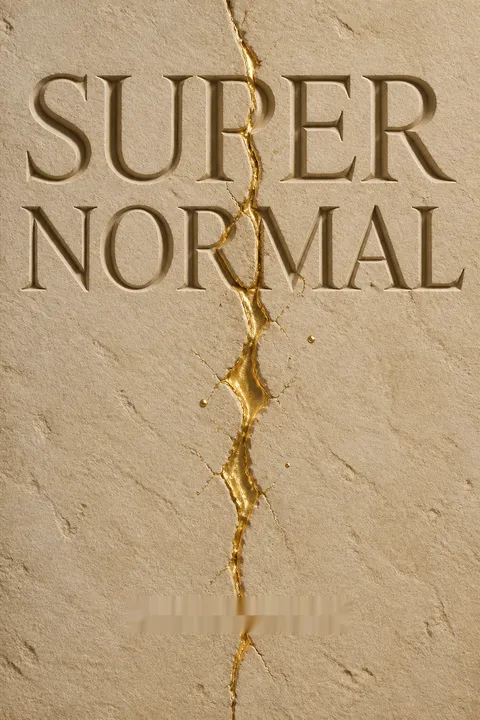


Key Takeaways
Call survival supernormal, not invulnerable: achievement can coexist with pain
Success is not proof of ease. Meg Jay calls people who exceed expectations despite childhood adversity supernormal. Resilience means adapting well under hardship, not snapping back unchanged or feeling fine. Helen, whose brother died and whose father later died by suicide, built a career serving people around the world. Still, she felt exhausted, lonely, and unlike others. Her accomplishments did not cancel her distress. The term is meant to replace the idea that resilient people possess immunity or special powers.
Hardship is widespread. The book reports that as many as three-quarters of children and teens encounter at least one significant adversity. That prevalence makes resilience less a rare superhero trait than a common, complicated human response.
What's striking is how easily outward competence becomes a misleading health measure. A person can meet school or work expectations while struggling in relationships, sleep, or physical health. That distinction matters in schools, clinics, and families, where praise for achievement can unintentionally close off questions about distress. The framing also avoids making resilience an innate badge: it describes adaptation in context. Its limit is that a celebratory label can still pressure people to perform strength, so recognition should make room for need, not merely admire endurance.
Track the pileup of hardship, not only the most dramatic event
Adversity often travels in clusters. The Adverse Childhood Experiences Study, conducted with nearly 18,000 mostly middle-class participants, found that nearly two-thirds had experienced at least one measured hardship, and almost half reported two or more. One study cited in the book found that 80 percent of children facing one adversity encountered at least one more. Jay calls this clustering an adversity package: one difficulty can make other problems more likely.
Repetition wears people down. Many childhood stressors are not single shocks but recurring strains. Toxic stress is prolonged or frequent stress without enough support to help a child recover. Like repeated minor impacts, these burdens can accumulate in developing bodies and minds, raising later risks to health even when no single event seems catastrophic.
This cumulative view changes the question from whether one incident was severe enough to count to how much strain a person carried, for how long, and with what support. It also resists a common ranking contest in which people compare stories and decide whose pain qualifies. The account is strongest when it treats risk as probabilistic rather than destiny. A count of adversities can identify patterns, but it cannot capture their meaning, timing, or the protective relationships that may alter their effects.
Put frightening experiences into words before silence defines them
Fear can leave a child wordless. In the 1976 Chowchilla kidnapping, children endured a bus hijacking and confinement underground, yet many could not name what had happened. Emily, a child whose father misused alcohol, heard adults argue about his problem but did not understand the language. For a time, she thought a neighbor was demanding pickles when he was asking for liquor. Without words or an explanation, children may know something is wrong without being able to organize it.
Naming creates a place to begin. Alexithymia means difficulty identifying and expressing feelings. Jay argues that a trusted person can help supply labels and context, turning a confusing experience into something that can be thought about and discussed. A name does not erase harm, but it can reduce the isolation of believing the experience is unspeakable.
The connection between language and understanding is more than a communication tip. Naming helps separate what happened from what a child may conclude about themselves, such as being at fault or uniquely strange. Adults therefore have a practical role: notice, ask plainly, and explain without forcing a child to produce a polished account. Still, a label should not be treated as a complete interpretation. People may need time, and the first available word may not be the one they ultimately choose.
Turn anger toward a solvable injustice, not toward yourself
Anger can mobilize action. Paul was bullied at school, and after classmates threw rocks hard enough to injure him, he decided he would find a way to resist. He used judo, physical training, and study to build mastery. As an adult, he recognized that anger had helped him persist. In Jay's account, anger can signal that something is unjust and energize a person to address a problem rather than surrender to it.
The direction matters. Anger is not automatically useful, and chronic rage can harm the person carrying it. Its value lies in purposeful action: protecting oneself, solving a problem, or seeking help. Paul did not need to hurt his bullies to fight back; he needed routes toward competence, safety, and a future beyond their judgment.
This reading makes room for an emotion that is often treated as a defect, especially when people are expected to remain agreeable under unfair conditions. Anger can restore a sense of agency by identifying a violated boundary. But agency depends on context: confronting a powerful aggressor may be dangerous, and not every injustice has an immediate individual solution. The useful question is not whether anger is good or bad, but what action it supports and whether that action improves safety and control.
Respect survival skills, then notice when they outlive the danger
Children adapt with the tools available. When Mara's mother's mental illness made home unpredictable, Mara escaped by retreating to a closet shelf, listening to music, reading, and imagining other lives. This kind of mental distancing is dissociation, a broad set of ways to disengage from surroundings. Jessie, whose older sister was violent, developed a different adaptation: she monitored moods and tiny changes in the home to anticipate danger.
Useful adaptations can become costly. Mara's inner refuge helped her endure what she could not change. Jessie's vigilance helped her detect threats, but in adulthood it came with exhaustion and difficulty sleeping. These responses were not evidence that either girl was fine. They were strategies shaped by unsafe conditions, and they could persist after those conditions changed.
The strength of this perspective is that it asks what a behavior did for someone before judging what it looks like now. Distraction, scanning, and emotional distance may once have protected a person; treating them as senseless habits misses their history. The same strategies can become restrictive when danger is no longer present. A careful response distinguishes past usefulness from present cost, without demanding that a person simply switch off an adaptation built through repeated experience.
Do not mistake flawless performance for a childhood without unmet needs
Competence can conceal distress. Elizabeth grew up beside a brother with serious special needs. Her family relied on her to be undemanding, dependable, and exceptionally successful. Martha, whose mother criticized and controlled her, learned to perform the version of herself that others seemed to want. Jay uses family hero for a child who supports a troubled household through achievement or caregiving. A false self is a protective presentation that can take over when showing spontaneous feelings feels unsafe.
Adaptation has a price. Elizabeth's achievement did not mean she had no needs, and Martha's social ease did not mean she felt known. Their stories caution against praising maturity without asking what it required. The aim is not to condemn achievement or flexibility, but to make space for the person underneath the role.
This distinction is useful wherever institutions reward self-management: the most reliable student, sibling, or colleague may be carrying responsibilities that remain invisible precisely because they are handled well. At the same time, not every polished persona signals injury. Social roles and selective self-presentation are ordinary parts of life. The relevant question is whether a person can also express preferences, receive care, and change roles without fearing rejection. Performance becomes troubling when it is the only safe way to belong.
Grieve a lost parent even when there was no funeral
Loss is not limited to death. Nadia's parents were killed during a robbery while she was in college. Sam's father left when Sam was nine, then largely disappeared from his life. Their losses were different, but both men and women can be deprived of parental care through death, abandonment, divorce, illness, or incarceration. Disenfranchised grief is sorrow that receives little recognition or social permission, leaving a person unsure whether they are entitled to mourn.
Grief keeps changing shape. Nadia's loss returned at graduation, on Mother's Day, and during ordinary moments when she wanted parental advice. Sam did not understand that he had lost a father until his future wife named the loss for him. Acknowledging grief does not require pretending that every family relationship was loving or that a parent can be replaced.
The insight broadens the social understanding of bereavement: people may mourn not only a person who died, but the relationship, protection, or imagined future that never arrived. Recognition can be especially important when the loss is complicated by anger or relief. Still, different kinds of parental loss should not be collapsed into one experience. Naming a shared absence can create connection without erasing the distinct circumstances, loyalties, and feelings each person carries.
Use second chances to change your surroundings and your options
Adulthood can open a new route. Anton grew up amid poverty and his father's criminal behavior. At nineteen, he drove across the country toward a life that was not organized around his hometown and its reminders. Jay calls major transition points second-chance opportunities: moments when new settings, education, work, or relationships can redirect a life. For some people, physical distance reduces daily reminders and makes it easier to build routines that were impossible at home.
Distance is a beginning, not an eraser. Anton found work, a room, and new relationships, but years later his father used Anton's identity on a loan, reviving old fear. A move can alter circumstances and reduce cues; it cannot guarantee that the past will stay away. A reboot is a chance to make new choices, not proof that earlier experiences have vanished.
Anton’s story makes environment part of the resilience equation. Personal effort matters, but access to a safer place, education, work, and supportive people can change what effort can accomplish. This is a corrective to advice that treats every problem as an individual mindset challenge. The caution is equally important: relocation alone may leave learned fears and practical vulnerabilities intact. A fresh start is most durable when changes in setting are paired with resources and relationships that make the new life sustainable.
Choose a trustworthy audience before sharing a painful story
Disclosure is a decision, not a duty. Rachel, who experienced sexual abuse by her brother, often left clues about her distress before she could explain it directly. As an adult, she found that putting the experience into words helped her understand it. Jay describes how disclosure can help organize confusing memories and connect a person with others who understand, but the response matters: blame, disbelief, or pressure can make someone feel less safe.
Share in chosen circles. A person may begin with a therapist, support group, or trusted friend, and decide what to tell, when, and how much. Rachel built a small network of people with whom she could speak more freely. Keeping some information private does not make a person dishonest; the goal is meaningful connection and self-understanding, not public confession.
The balance here is important because disclosure is often praised as inherently liberating. The book's account is more careful: the listener's response can shape whether telling becomes relief or another injury. That makes confidentiality, empathy, and the freedom to stop essential conditions, not optional courtesies. Selective sharing can be understood as boundary-setting rather than avoidance. A person should not have to turn private pain into public testimony to earn credibility or care.
Help others by choice, not because rescue is your only role
Pain can become useful knowledge. David grew up caring for a depressed mother and became a social worker who supported children facing difficult family lives. Jay uses altruism born of suffering for the tendency to turn painful experience into concern and practical help for others. People who have struggled may recognize needs that outsiders overlook, and meaningful service can give their skills direction.
A helper still needs limits. David sometimes felt responsible for clients even outside work and worried about people who needed saving. A role that once brought worth can become a new burden if every relationship repeats the pattern of being the capable one. Helping can be a vocation, a small act, or not one's path at all. Rest and choice protect both the helper and the people receiving care.
This account avoids the assumption that suffering must be redeemed by service. It recognizes that experience can deepen attention and compassion, while also resisting the demand that survivors make their pain useful to everyone else. The distinction between chosen contribution and compulsory caretaking is crucial. Meaningful work can support identity, but it should not be the only source of belonging or self-worth. A sustainable helper can care deeply without being permanently on call.
Let safe relationships revise your expectations, without promising a perfect ending
Connection can make a different life imaginable. The Harvard Grant Study followed 268 men across decades. Its director, George Vaillant, concluded that close relationships were more influential to well-being than the biological traits its founders first emphasized. Jay connects this finding to resilience: partners, friends, mentors, siblings, and children can provide safety and positive experiences that help counter isolation and stress.
A painful past is not a forecast. Jennifer feared that childhood domestic violence meant she might repeat her parents' unhappy life. She chose a different partner and built a home where her children felt safe. The book argues that family history creates risk, not destiny. Love does not erase trauma, guarantee happiness, or make every relationship safe. The work of resilience continues, but good experiences can become real parts of the story.
The relational emphasis is a powerful counterweight to heroic self-sufficiency. It suggests that recovery is not merely an internal achievement; it can emerge through ordinary, repeated experiences of being respected and cared for. The Grant Study is influential but its original sample was all male and drawn from Harvard, so its conclusions should not be treated as a universal formula. The broader point is less narrow: relationships matter, while their form and meaning vary across lives.
Analysis
The book’s central achievement is to relocate resilience from personality to process. Instead of treating the successful adult as evidence that childhood adversity left no mark, it shows how outward competence can coexist with grief, vigilance, health costs, loneliness, and carefully managed identities. Its superhero metaphor is most effective when it complicates the hero: survival adaptations are powerful, but they are not superpowers, and the person admired for coping may still need care.
The narrative method gives this argument emotional force. Individual stories make abstract patterns legible: Sam’s father leaving becomes a defining rupture; Jessie’s observation skills arise from danger at home; Rachel’s careful disclosure illustrates both the need for language and the risk of being misunderstood. Research supplies scale and context, while the stories resist reducing people to a score or diagnosis. This combination also highlights a useful distinction between resilience as visible performance and well-being as a broader, changing set of outcomes.
The main tension is the temptation to romanticize adversity. The book repeatedly warns that hardship can damage health and that achievement may conceal its costs, yet stories of exceptional success can still invite readers to see suffering as a source of strength or purpose. The more defensible lesson is narrower: people adapt through personal capacities, supportive relationships, and opportunities, but adversity itself is not a gift. The account is strongest when it recognizes the ordinary infrastructure of survival, including teachers, siblings, friends, safe settings, and access to treatment.
Its practical implication is not to demand toughness or disclosure. It is to notice hidden strain, make language available, offer reliable support, and respect a person’s control over their story. Resilience is neither a permanent trait nor a tidy ending. It is a life shaped by the balance between old dangers and new sources of safety, agency, and connection.
Review Summary
Supernormal by Meg Jay explores resilience and adversity, focusing on individuals who overcame challenging childhoods. Readers found the book insightful, relatable, and therapeutic, praising Jay's ability to weave research with personal stories. Many appreciated the emphasis on resilience and the potential for growth through adversity. Some readers found the superhero analogies excessive, while others felt the book lacked new insights. Overall, the book was well-received for its exploration of childhood trauma, coping mechanisms, and the power of resilience in shaping adult lives.
People Also Read







Glossary
Supernormal
Beyond expected adaptationJay's term for people who adapt and achieve beyond what might be expected after significant adversity. It emphasizes that their lives depart from what society considers ordinary in both their burdens and their accomplishments. The term does not imply invulnerability: a supernormal person may be successful and still experience distress, loneliness, or lasting effects of stress.
Resilience
Adapting amid adversityThe process of adapting well in the face of adversity, trauma, tragedy, or ongoing stress. In the book, resilience is not a fixed trait that guarantees a quick recovery or a return to an unchanged state. It is a complex, changing pattern of functioning that may look strong in one area of life while distress remains in another.
Adverse Childhood Experiences (ACE) Study
Study of childhood adversityA large study sponsored by the CDC and Kaiser Permanente that examined childhood abuse, neglect, and household dysfunction in nearly 18,000 mostly middle-class participants. It helped demonstrate how common childhood adversity is and how cumulative exposure is associated with later health risks. Jay uses it to challenge the assumption that serious childhood problems belong only to other families.
Adversity package
Clustered childhood hardshipsJay's description of how childhood hardships often occur together rather than one at a time. One adversity may contribute to additional stressors, and children facing one problem are often exposed to others as well. The term emphasizes cumulative circumstances, such as a parent's addiction alongside conflict, neglect, or financial strain, rather than treating each event in isolation.
Toxic stress
Prolonged unsupported stressFrequent or prolonged stress that continues without adequate support to help a child recover. Unlike brief, manageable challenges, toxic stress repeatedly activates the body's stress response and can affect developing brains and bodies. The book compares its cumulative wear to repeated impacts: harm may arise not only from one extreme event, but from ongoing strain.
Alexithymia
Difficulty naming feelingsDifficulty identifying and putting feelings or experiences into words. Jay uses the term to explain why children may sense that something frightening or confusing has happened without being able to describe it. The problem is not necessarily deliberate secrecy. Children may lack the vocabulary, context, or help needed to make an experience understandable.
Dissociation
Disengaging from surroundingsA broad range of ways a person can mentally disengage from the immediate environment. In Jay's account, it can include looking away, retreating into imagination, becoming absorbed in music, or otherwise distancing oneself from an overwhelming situation. Some forms can help a child endure what cannot be changed, though persistent distancing may have costs.
False self
Protective public presentationA concept associated with Donald Winnicott, describing a presentation of oneself that protects more genuine feelings and wishes when spontaneous expression feels unsafe. Socially appropriate behavior is ordinary, but the false self can become restrictive when it dominates a person's identity and earns approval while the person's own preferences and emotions remain hidden.
Family hero
Child who supports familyA child who helps a distressed family function by achieving, caregiving, or otherwise providing pride and stability. The role can bring real competence and recognition, but it may also hide the child's own needs. Jay applies the idea to children who become unusually responsible while a parent or sibling receives most of the family's attention.
Disenfranchised grief
Unrecognized or unsupported sorrowGrief that is not acknowledged or socially supported. It can follow a loss that others do not recognize as bereavement, including abandonment by a parent or the loss of a relationship that was painful and complicated. People experiencing it may feel they have no right to mourn, even when they have lost care, protection, or an imagined future.
Second-chance opportunities
Turning points for changeOpportunities, often during the transition to adulthood, to redirect a life through new settings, education, work, relationships, or purposeful groups. They can give people more control over circumstances than they had as children. Jay stresses that such opportunities can create a new path, but they do not automatically erase earlier stress or its effects.
Altruism born of suffering
Helping shaped by hardshipA term for the tendency of some people to turn painful experiences into concern and practical help for others. Having faced adversity may make a person more alert to suffering that others miss and more motivated to prevent others from enduring it. Jay presents this as one possible response to hardship, not an obligation or universal outcome.
About the Author


Download PDF
Download EPUB
.epub digital book format is ideal for reading ebooks on phones, tablets, and e-readers.








