

Key Takeaways
Turn underused streets into low-cost prototypes for a more people-centered city.
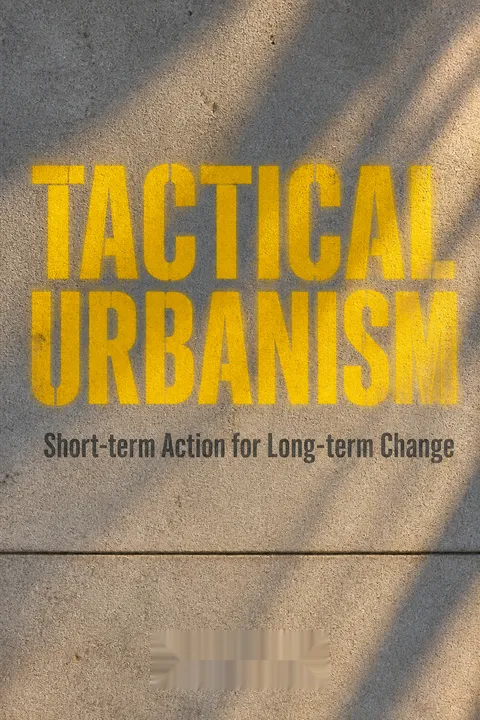
Make change tangible. Tactical Urbanism is neighborhood change through short-term, low-cost, adaptable projects and policies. It can be led by residents, nonprofits, businesses, developers, or governments. The idea is not to replace major infrastructure, but to make progress while large plans wait, and to learn from changes people can actually experience.
Start with a street. In 2009, New York temporarily closed parts of Broadway to traffic and put out folding chairs. A place previously dominated by vehicles became a place to sit, talk, and take in Times Square. The temporary setup made a different use of the street visible without requiring a permanent redesign first. Similar low-cost seating, food trucks, and movable furniture helped enliven Boston’s underused Rose Kennedy Greenway.
What's powerful here is that a prototype changes the public conversation from speculation to experience. A drawing asks people to imagine a future; a temporary plaza lets them test how it feels and what it enables. That immediacy can reveal needs that formal consultations miss. But a busy pilot is not automatic proof of lasting demand. Its timing, programming, and novelty can inflate participation, so observation should be paired with repeated use and feedback from people who do not already support the idea.
Let people experience a proposal before asking them to approve it.
Test the real place. New York’s Broadway conversion was introduced as a six-month pilot, with chairs, tables, planters, and programming. The Department of Transportation then studied traffic, crashes, and pedestrian activity. During the pilot, injuries to motorists and passengers fell 63 percent, pedestrian injuries fell 35 percent, and foot traffic rose 11 percent in Times Square. The city used this evidence to support permanent construction.
Keep the claim precise. By the end of 2013, pedestrian traffic in Times Square had risen 15 percent to more than 400,000 people per day, while travel times improved and injuries continued to fall. Area retail rents also rose sharply. These changes accompanied the project, but they do not by themselves establish that the plaza caused every economic gain.
A pilot gives people and officials a common object to assess, while creating a lower-stakes way to revise a decision. This resembles experimental design: change one part of a system, observe outcomes, then adjust. The book’s emphasis on before-and-after measurement is especially valuable because vivid anecdotes can exaggerate success. Strong evaluations also ask what else changed at the same time, whether benefits reach different groups, and what happens after initial excitement fades.
Use visible small wins to move stalled plans into policy.
Demonstrate the alternative. In Dallas, residents transformed a struggling block with temporary shops, outdoor seating, and a protected bike lane. They displayed the rules that made those features difficult to build, turning a street event into a public argument about outdated regulations. The city changed ordinances, added the bike lane to its plan, and one pop-up shop became a permanent business.
Make the case investable. In Memphis, a two-day demonstration on Broad Avenue cost about $25,000 and attracted more than 15,000 visitors. It helped catalyze over $20 million in private investment, alongside new businesses and property renovations. The temporary project did not single-handedly cause every investment, but it helped make the corridor’s potential legible to residents, businesses, and officials.
These projects work as demonstrations and as political signals. They show that a different street is physically possible, while building a constituency that can ask for policy changes. The Dallas example also makes regulation visible: rules that seem abstract in a document become concrete when people see what they prevent. Yet investment is not an uncomplicated measure of success. Rising interest can benefit a district while increasing pressure on existing residents and businesses, so revitalization should be judged by who can remain and participate.
Take civic design to everyday places, not only evening meetings.
Meet people where they are. Conventional planning meetings often draw those with time, confidence, and familiarity with civic processes. Somerville, Massachusetts, tried another approach after a proposed streetscape plan met resistance. The city turned a small parking lot into a pop-up plaza for three days, with tables, chairs, food trucks, music, and performers. The temporary space brought the idea to people in the neighborhood rather than asking them to evaluate it on paper at City Hall.
Let use inform discussion. The plaza appeared alongside a planning charrette. Visitors could experience the proposed public space, talk about it, and leave comments. The response revealed broader support than the earlier process had suggested, and the city began working toward a permanent conversion. Tactical projects can therefore widen participation by turning a planning proposal into part of daily life.
This is a practical correction to the assumption that an open meeting is automatically an inclusive process. Participation depends on where, when, and how people are asked to contribute. A visible trial can include people who would never attend a formal hearing, and direct experience often produces more grounded feedback. Still, the people who happen to pass by are not necessarily representative either. Good outreach must deliberately include children, older adults, disabled people, and residents who face barriers to public participation.
Adapt the tactic to local conditions instead of copying a success.
Reuse the logic, not the template. The book presents Tactical Urbanism as an old human practice with a modern name. In Delft, residents frustrated by speeding traffic altered their street so drivers had to slow down. Their design became the Dutch woonerf, a residential street giving priority to people outside cars; national standards incorporated the approach in 1976. A grassroots response became formal practice because it addressed a real local problem.
Distinguish intent from appearance. DIY urbanism includes individual creative projects, but not every DIY act seeks lasting change. Yarnbombing may decorate a street; a tactical intervention aims to demonstrate a possibility, address a need, or influence policy. The same intervention can succeed in one setting and fail in another. A chair or parklet cannot overcome a street where few people walk and traffic feels hostile.
The historical examples resist the myth that every useful city idea begins with a professional plan. They also suggest that legitimacy can grow through repeated use, practical value, and public acceptance. The key is not to romanticize informality: a street intervention still affects people who did not organize it, and safety or access concerns may be real. Context-sensitive adaptation is more responsible than treating a celebrated project as a universal kit.
Treat every intervention as a test with evidence and an exit plan.
Find the cause first. A useful project begins by listening to people affected, choosing a specific site, and asking what is driving the problem. The Five Whys is a technique for repeatedly asking why a problem exists until its underlying causes become clearer. A missing crosswalk, for example, may reflect more than absent paint; it may point to a street design or approval process that consistently neglects pedestrians.
Build a short feedback loop. The authors describe a process that moves from understanding the users and problem to generating ideas, prototyping, and testing. Their 48x48x48 approach connects a 48-hour action to shorter- and medium-term follow-up, rather than assuming a distant master plan will stay relevant. Measure what matters, learn from failure, and decide whether to revise, remove, or make the change permanent.
The method combines human-centered inquiry with a useful form of humility: a design is a hypothesis, not a verdict. Testing at small scale can prevent expensive commitment to a mistaken assumption. The discipline of setting an exit or revision point is equally important, since temporary projects can quietly become permanent without clear review. Measurement should include lived experience as well as counts, because speed, safety, and belonging are not fully captured by a single metric.
Document and organize the work so a neighborhood experiment can spread.
Make the project legible. In Raleigh, graduate student Matt Tomasulo wanted residents to walk to destinations they assumed were too far away. He created signs showing walking times and directions, attached with removable ties. Twenty-seven signs cost about $300. A formal permit was expected to take up to nine months and cost more than $1,000, including insurance. Tomasulo documented the signs, explained their purpose online, and connected the project to the city’s existing walking goals.
Turn attention into adoption. When officials removed the signs, residents objected. Tomasulo gathered 1,255 petition signatures in three days, and the city agreed to a sanctioned pilot. The idea spread to other communities, and the project developed into Walk [Your City], with reusable sign templates. Documentation, communication, and a network of supporters helped transform a small local act into a replicable civic tool.
A visible intervention can attract attention, but clear documentation explains what it is trying to accomplish and how others might adapt it. Digital networks make that sharing faster, while local relationships help turn online interest into practical support. This case also shows the limits of assuming connectivity is universal: not everyone has equal access to digital tools or civic networks. Effective replication needs accessible instructions and local partners, not just a downloadable template.
Use tactical projects to expose inequity, not excuse permanent underinvestment.
Know what temporary action cannot do. The authors do not present Tactical Urbanism as a fix for every urban problem. It cannot replace major infrastructure, repair bridges, or resolve the affordable housing crisis. A temporary park or street redesign can address an immediate need, but its scale and duration place real limits on what it can deliver.
Plan for stewardship and fair access. New York’s plaza program relied on business improvement districts to maintain and program many spaces. Neighborhoods without such organizations risked having fewer resources to manage their plazas. The city and a private partner set aside $800,000 to help underserved areas participate. That example makes clear that a successful public-space pilot needs maintenance, programming, and a fair way to distribute support, not simply a ribbon-cutting.
The strongest version of this approach treats temporary action as a bridge to durable public capacity, not a cheap substitute for it. If residents must continually provide unpaid labor to receive basic services, experimentation can shift responsibility from institutions onto communities with the fewest resources. Equity therefore concerns both who gets to use a space and who bears the work of maintaining it. Public agencies remain essential for safety, funding, and ensuring that neighborhood improvements reach places with less political influence.
Analysis
The book’s central contribution is to reposition small urban interventions as a form of practical governance. A painted crossing, temporary plaza, or neighborhood market is not merely a modest design gesture. Properly organized, it tests assumptions, gives residents a tangible role, generates evidence, and can make a policy change politically imaginable. The book’s narrative moves from the surprise of a newly opened Times Square to examples in Portland, Raleigh, Dallas, Memphis, and elsewhere, then offers a method for choosing, building, and evaluating interventions.
Its most convincing insight is that the built environment is not only planned; it is also learned through use. Conventional planning can make a proposal legible on paper, but a physical pilot reveals how people actually respond. This makes Tactical Urbanism especially useful where the cost of waiting is high and the cost of testing is comparatively low. The historical examples reinforce that the impulse is not new: the contemporary label gathers older practices of informal commerce, street adaptation, and collective placemaking into a recognizable approach.
The argument is strongest when temporary action is connected to formal responsibility. The examples show citizen initiatives influencing public agencies, but they also show that lasting change depends on officials, funding, maintenance, and policy. That creates a productive tension: bypassing bureaucracy can expose its failures, yet permanent improvements require institutions capable of serving everyone. The book acknowledges this, though its celebratory case studies can make success appear more repeatable than it is. Pilots can mislead if they measure attendance without inclusion, overlook displacement, or confuse a novelty effect with durable demand. Its most useful lesson is therefore not that small interventions always work, but that cities should make it easier to test ideas openly, learn from the results, and invest where evidence and public need align.
Review Summary
Tactical Urbanism receives mostly positive reviews for its accessible guide to urban improvement projects. Readers appreciate the comprehensive examples, practical advice, and inspiration for citizen-led initiatives. Some criticize its American-centric focus and repetitiveness. The book is praised for explaining the concept clearly, providing case studies, and offering step-by-step instructions. Critics note it may be outdated and lacks discussion of racial issues in urban planning. Overall, it's considered a valuable resource for those interested in community-driven urban design, despite some limitations.
People Also Read




Glossary
Tactical Urbanism
Small actions for larger changeAn approach to neighborhood building that uses short-term, low-cost, and scalable interventions or policies. It can be initiated by residents, businesses, nonprofits, developers, or governments. Projects make proposed changes visible and testable, while remaining connected to a broader aim such as safer streets, more public space, or policy reform.
Phase 0 implementation
Early temporary project testA temporary project put in place after formal planning but before a major long-term investment. It provides immediate benefits while allowing people to evaluate the idea and gather information. If the test reveals problems, the design can be adjusted before larger sums are spent; if it succeeds, it can maintain momentum toward a permanent project.
Intersection repair
Community-led street intersection conversionThe citizen-led transformation of a street intersection into a neighborhood gathering place. Projects may use murals, seating, bulletin boards, kiosks, or other amenities to slow traffic and encourage local interaction. Portland’s Share-It Square helped establish the approach, which later received municipal support and spread to other communities.
Guerrilla wayfinding
Informal walking directions in publicA temporary, often citizen-led system of signs that directs people to nearby destinations and communicates walking times. The Raleigh Walk project used removable signs to challenge the assumption that local places were too far to reach on foot. It began without municipal approval and later became a sanctioned pilot.
Park(ing) Day
Temporary park in parking spaceAn annual event in which participants temporarily convert metered parking spaces into small public places, often with seating, greenery, or art. The San Francisco design group Rebar began the project in 2005, using a paid parking space to question how street space was allocated. Its model spread internationally and influenced longer-running parklet programs.
Five Whys
Repeated questions to find causesA problem-analysis technique that asks why a problem exists, then asks why again about each answer until underlying causes become clearer. The book applies it to urban projects so that an intervention responds to more than a visible symptom. The number five is a guide, not a rigid rule; some problems need more or fewer questions.
48x48x48
Three linked project time horizonsA planning approach that links a short intervention of roughly 48 hours to follow-up over about 48 weeks and a medium-term horizon of about 48 months. The numbers are flexible. The method encourages organizers to connect a visible first action with continued learning and a realistic route toward longer-lasting change.
Build-measure-learn
Test, assess, and reviseAn iterative process for trying a project in the real world. Organizers build a prototype, measure its effects using relevant qualitative or quantitative evidence, and learn what should change. They can repeat the cycle, abandon the idea, or invest in a more permanent version. The process accepts failure as useful information rather than treating it as wasted effort.
Sunnyside Piazza study
Research on neighborhood intersection repairA study by Jan Semenza examined the effects of a Portland intersection repair project on nearby residents. It compared reported health and neighborhood experience around Sunnyside Piazza with results from an adjacent control area. The findings suggested stronger community and health ratings near the project, while reflecting self-reported outcomes rather than proof that the intervention alone caused every difference.
FAQ
1. What is Tactical Urbanism: Short-term Action for Long-term Change by Mike Lydon and Anthony Garcia about?
- Focus on Small-Scale Change: The book explores how short-term, low-cost, and often temporary urban interventions can lead to significant, long-term improvements in cities.
- Citizen and Government Roles: It highlights the power of both grassroots citizen actions and government-led initiatives to transform public spaces and influence urban policy.
- Case Studies and Examples: The authors provide real-world examples from cities like Portland, New York, Dallas, and San Francisco to illustrate the impact of Tactical Urbanism.
- Bridging Temporary and Permanent: The book emphasizes how temporary projects can catalyze lasting policy and physical changes in urban environments.
2. Why should I read Tactical Urbanism by Mike Lydon and Anthony Garcia?
- Empowerment Through Action: The book inspires readers to take initiative in improving their neighborhoods, showing that meaningful change doesn’t always require large budgets or lengthy processes.
- Practical Guidance: It offers actionable advice and a clear methodology, making it accessible for citizens, planners, and policymakers interested in urban improvement.
- Addresses Modern Urban Challenges: The book responds to issues like bureaucratic gridlock, budget constraints, and public disengagement with nimble, bottom-up solutions.
- Encourages Collaboration: It stresses the importance of partnerships between citizens, local governments, and organizations for sustainable urban change.
3. What are the key takeaways from Tactical Urbanism: Short-term Action for Long-term Change?
- Small Actions, Big Impact: Short-term, low-cost interventions can lead to significant, long-term urban transformation.
- Iterative and Flexible Approach: Tactical Urbanism projects use rapid prototyping, testing, and adaptation to refine solutions before permanent investment.
- Community Engagement is Crucial: Broad, early involvement of stakeholders ensures project relevance, support, and sustainability.
- Bridging Theory and Practice: The book demonstrates how Tactical Urbanism complements traditional planning by providing “phase 0” tools to test ideas in real-world settings.
4. How does Tactical Urbanism by Mike Lydon and Anthony Garcia define Tactical Urbanism and its purpose?
- Definition: Tactical Urbanism is a set of short-term, low-cost, and scalable actions aimed at improving urban spaces and addressing deficiencies in the built environment.
- Purpose: It serves as a tool for both citizens and governments to reclaim, test, and improve neighborhoods, often leading to permanent change.
- Flexibility and Iteration: Projects are designed to be adaptable, allowing for quick adjustments based on community feedback and measurable outcomes.
- Catalyst for Policy Change: Temporary interventions are used to demonstrate potential, build support, and inform long-term urban policy and design.
5. What are the main concepts and definitions introduced in Tactical Urbanism by Mike Lydon and Anthony Garcia?
- Tactical Urbanism vs. DIY Urbanism: Tactical Urbanism includes both sanctioned and unsanctioned projects with strategic goals, while DIY urbanism is more informal and may not aim for long-term change.
- Strategies vs. Tactics: Strategies are long-term plans; tactics are agile, short-term actions that help implement or test those strategies.
- Phase 0 Implementation: Temporary, low-cost projects are used to pilot and test ideas before committing to expensive, permanent infrastructure.
- Build–Measure–Learn Cycle: Inspired by The Lean Startup, this cycle encourages rapid prototyping, data collection, and learning from both successes and failures.
6. How did Tactical Urbanism emerge, and why is it relevant now according to Mike Lydon and Anthony Garcia?
- Response to Slow Planning: Tactical Urbanism arose as a reaction to the slow, bureaucratic, and expensive traditional planning processes that often fail to deliver timely improvements.
- Economic Constraints: The Great Recession forced cities and citizens to do more with less, making low-cost, quick interventions more attractive and necessary.
- Technological and Social Trends: The rise of the Internet, social media, and mobile technology has empowered citizens and governments to organize and implement projects more efficiently.
- Changing Urban Demographics: Increased demand for walkable, transit-friendly neighborhoods from Millennials and Baby Boomers has driven the need for rapid urban improvements.
7. What is the five-step design thinking process for Tactical Urbanism projects explained in Tactical Urbanism by Mike Lydon?
- Empathize: Understand the needs and perspectives of those affected by the project, ensuring interventions benefit the community.
- Define: Identify a specific opportunity and analyze root causes to focus the project on meaningful issues.
- Ideate: Brainstorm and research potential solutions, considering factors like simplicity, compatibility, and trialability.
- Prototype: Develop a quick, inexpensive version of the project, planning logistics, partnerships, and materials.
- Test: Implement the project using the build–measure–learn cycle, collecting data and feedback to refine and inform long-term strategies.
8. What are some notable examples of Tactical Urbanism projects discussed in Tactical Urbanism by Mike Lydon and Anthony Garcia?
- Times Square Pedestrianization: Temporary closure to cars using simple materials led to permanent redesign and economic benefits.
- Intersection Repair in Portland and Hamilton: Citizen-led efforts transformed intersections into safer, community-oriented spaces, later adopted by city programs.
- Build a Better Block in Dallas and Memphis: Temporary neighborhood revitalization projects demonstrated the potential for permanent zoning and infrastructure changes.
- Walk [Your City] in Raleigh: Guerrilla wayfinding signs improved perceptions of walkability and were eventually sanctioned and expanded by the city.
- Park(ing) Day and Parklets: Temporary parks in parking spaces influenced permanent public space programs in multiple cities.
9. How does Tactical Urbanism by Mike Lydon and Anthony Garcia address sanctioned versus unsanctioned projects?
- Sanctioned Projects: Recommended for larger, complex interventions with official support, providing legitimacy and often funding but requiring navigation of bureaucratic processes.
- Unsanctioned Projects: Suitable for small, quick actions when official channels are unresponsive, but carry legal and safety risks.
- Transition to Sanctioned: The book provides examples of unsanctioned projects gaining official approval after demonstrating success and community support.
- Risk and Collaboration: It advises anticipating eventual collaboration with authorities and encourages governments to view citizen-led actions as opportunities, not vandalism.
10. What role does measurement and data play in Tactical Urbanism according to Mike Lydon and Anthony Garcia?
- Validation of Interventions: Collecting quantitative and qualitative data demonstrates the effectiveness of projects and builds support for permanent change.
- Accessible Tools: The book highlights low-cost methods for measuring pedestrian and bicycle volumes, traffic speeds, retail sales, and user satisfaction.
- Build–Measure–Learn Process: Iterative data collection allows project leaders to test assumptions, learn from failures, and optimize designs before permanent investment.
- Political Leverage: Data-driven results have been crucial in overcoming resistance and scaling up Tactical Urbanism initiatives.
11. What practical advice does Tactical Urbanism by Mike Lydon and Anthony Garcia offer for implementing projects?
- Design Thinking Approach: Follow principles of empathy, defining opportunities, planning, prototyping, testing, and iterating for successful projects.
- Choosing Sanctioned vs. Unsanctioned: Decide on the approach based on project goals, risks, and community context, weighing the benefits and challenges of each.
- Funding and Partnerships: Seek appropriate funding sources and partners, including local businesses, nonprofits, and government agencies.
- Community Engagement: Early and broad involvement of stakeholders ensures buy-in, helps identify needs, and builds social capital for sustainability.
12. What are the best quotes from Tactical Urbanism by Mike Lydon and Anthony Garcia, and what do they mean?
- “In order to do something big, to think globally and act globally, one starts with something small and starts where it counts.” This highlights the power of small, localized actions as the foundation for broader urban change.
- “It is primarily through the strength and joy of our community involvement that we begin to heal the alienation and disconnectedness so prevalent in American cities.” This quote emphasizes how Tactical Urbanism fosters social cohesion and community identity.
- “Instead of town hall meetings, charrettes, and long discussions, just go on-site to where the problem is and start fixing things within days, not years.” This advocates for hands-on, immediate action over protracted planning processes.
- “If you take anything away from this book, we hope you’ve learned that person is you. So stop reading and get started. Today!” The concluding call to action encourages readers to become active participants in shaping their urban environments.
Download PDF
Download EPUB
.epub digital book format is ideal for reading ebooks on phones, tablets, and e-readers.








