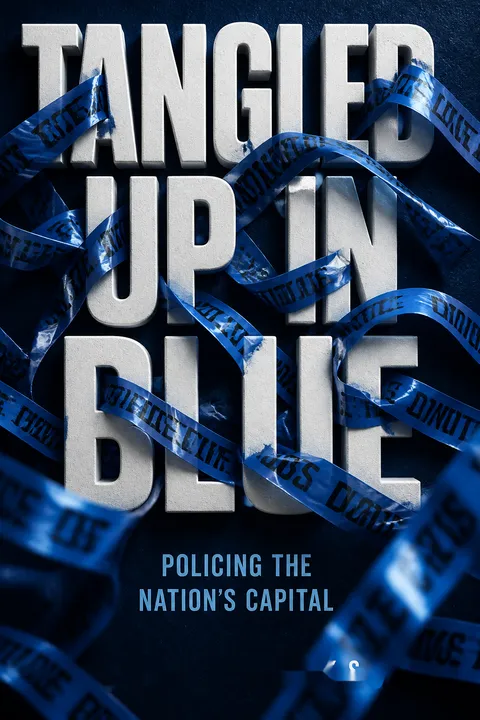


Key Takeaways
See policing from inside without mistaking one officer's experience for the whole institution
A badge changed the view. Rosa Brooks was a law professor, human-rights advocate, and daughter of activist writer Barbara Ehrenreich when she became an armed reserve officer in Washington, DC. Her family and colleagues mostly viewed police as agents of an unjust system. She wanted to understand how officers made sense of their work, not to prove that they were heroes or villains. Her patrols brought her into the poorest parts of the city, especially Seventh District, where violence and deprivation were routine.
Experience has limits. Brooks’s account complicates the debate, but she stresses that it is one person’s experience, filtered through her identity and limited assignment. She cannot claim to represent every officer, district, or community. The book’s method resembles participant observation: learning a culture by taking part in its daily practices.
What's valuable here is the distinction between proximity and omniscience. Immersion can expose routines that abstract debate misses, such as how officers handle a family crisis or a dead body. But entering an institution does not make one observer representative of it. Brooks's candor about her limits strengthens the account: readers can take her stories seriously without treating them as a census of American policing. The same standard is useful whenever a vivid personal narrative is offered as evidence about a large system.
Stop expecting patrol officers to solve every social failure with handcuffs
Patrol has no script. Officers respond to whatever arrives through 911, from shootings and assaults to a child running away, a family argument, or a frightened driver with a spider in her car. The shift ends, the run sheet starts blank again, and most calls do not produce a neat resolution. Brooks sees officers acting as medics, mediators, and monitors as often as arresting people. They check on the mentally ill, search for missing children, calm disputes, and wait with grieving families.
The default responder. In neighborhoods with scarce social services, residents call police about problems that might otherwise go to counselors, health workers, or community mediators. That makes police the catch-all institution, even though patrol officers are not trained or equipped to address every cause of distress. The work is often humane, but the mismatch is built into the job.
The book makes visible a form of institutional substitution: when other services are absent, the most available public agency inherits their work. This can feel helpful in a single crisis, yet it quietly defines social problems as police problems. The distinction matters because a kind officer cannot replace stable mental-health care, housing support, or family services. The account also resists a common simplification: police presence can be intrusive and still be requested by residents who have nowhere else to turn.
Teach officers to read uncertainty without turning every unknown into a threat
Danger dominated training. At the academy, recruits repeatedly watched videos of officers being attacked and learned that even an ordinary call could become lethal. They practiced watching hands, controlling rooms, and staying ready to draw a weapon. Yet the same training urged patience, respect, and rapport. Those goals can collide: staring at a person's hands, refusing to let them sit, or shining lights into a car may improve an officer's tactical position while making cooperation harder.
The lesson stays incomplete. The curriculum offered eight units on vehicle offenses and one on force, but no dedicated unit on race and policing. In a dark apartment, Brooks and her partner encountered a startled, naked teenager. They kept their guns lowered and talked him through the encounter. A more threat-focused response could have turned confusion into a shooting.
This is a problem of attention as much as policy. Training teaches people what to notice, and repeated threat rehearsal can make rare dangers feel typical. Under pressure, that mental frame may crowd out benign explanations. The account does not imply that officers should ignore danger; it asks how training can cultivate both readiness and restraint. A system that teaches only how to avoid being surprised risks producing officers who interpret ambiguity itself as evidence of menace.
Systemic racism survives even when individual officers sincerely reject racial bias
Two truths coexist. Brooks rejects both the claim that every officer is a racist thug and the claim that disparities simply reflect individual criminal choices. In Washington, Black residents made up 47 percent of the population, while a cited 2019 report found that 86 percent of MPD arrests were of Black people. Poverty, residential segregation, unequal access to jobs, and biased enforcement all shape who encounters police and who gets arrested.
Victims matter too. Brooks also insists that violent crime is real, and that people in poor Black neighborhoods are often its victims. Black community leaders, including some who supported tougher laws, did so partly in response to violence harming their own communities. A police officer deciding whether to arrest someone may face a real victim seeking safety and a defendant whose options have been narrowed by structural disadvantage.
The strongest feature of this argument is its refusal to make structural explanation cancel personal harm. A history of exclusion helps explain concentrated poverty and enforcement, but it does not make a robbery victim's fear less urgent. Conversely, responding to crime with punishment alone can deepen the conditions that reproduce it. This is a difficult moral balance, not a tidy middle position. It also cautions against treating diversity among officers as a complete remedy when institutional routines and neighborhood inequalities remain unchanged.
A minor arrest can become a long punishment chain for a poor family
Custody keeps reaching outward. Arrest means more than handcuffs and a night in a cell. It can mean missed work, lost income, court dates, fines, a criminal record, and barriers to housing or employment. A Justice Department study cited by Brooks found that 68 percent of released prisoners were rearrested within three years, and 83 percent within nine. Children with an incarcerated parent face elevated risks of emotional and behavioral difficulties, and their families may lose both income and caregiving.
Small charges still cost. Brooks describes arrests for offenses such as driving without a valid permit, minor theft, or failure to appear. In Washington, DC, nineteen out of twenty arrests were for nonviolent offenses. Many cases were later dropped by prosecutors, but the arrest had already consumed public resources and disrupted someone's life. The cage is not a metaphor for the people experiencing it. It is the start of consequences that can outlast the original offense.
The chain reaction is a useful way to assess punishment: not only asking whether a law was broken, but what the intervention does to dependents, employment, and future stability. This does not mean every arrest is unjustified. It means proportionality should include downstream costs, which are often invisible in the moment of enforcement. The book's account is especially persuasive because it shows how a formally brief detention can create practical penalties long before a court reaches a final judgment.
Design rules to limit bias without criminalizing every messy conflict
Discretion cuts both ways. Washington, DC, requires arrest when officers have probable cause to believe an assault occurred in a domestic relationship. The rule arose because officers often dismissed abuse, especially violence by men against women. But the legal definition of a domestic relationship broadened to include siblings, housemates, and former housemates. Brooks describes an adult nurse arrested after hitting her sister during a one-time fight over laundry, despite the family disruption and the minor nature of the incident.
Procedure can trap compassion. In another case, Brooks and her partner planned to let a hungry shoplifter go with a warning from the store. A routine warrant check revealed an outstanding failure-to-appear warrant, requiring an arrest. The check was responsible procedure, but it turned a potentially humane response into a jail trip. Rules can prevent arbitrary treatment, yet rigid rules can also produce punishment where judgment might better serve safety.
This tension appears whenever institutions try to remove bias by narrowing individual discretion. Rules can protect people from an officer's indifference, favoritism, or prejudice. But rules also struggle with context, especially when a category designed for one kind of harm captures a very different situation. The answer is not simply more discretion or less discretion. It is accountability that checks both: safeguards against dismissing real abuse, alongside review of whether a mandatory response fits the people and facts before the officer.
Train officers to accept manageable risk instead of transferring it to civilians
Fear can distort the odds. The academy taught recruits to treat every unknown as potentially lethal. Yet Brooks notes that police work did not rank among America's ten most dangerous occupations in the data she cites; in 2018, 39 officers were feloniously killed nationwide, while 31 died in accidents. The job carries real risks, but an exaggerated sense of constant danger can make ordinary movements seem threatening.
Who bears the mistake? In one burglary-alarm call, Brooks and her partner entered a dark apartment with their guns lowered. The person inside turned out to be an unarmed teenager using his father's shower. A tactical, weapon-ready approach might have protected the officers, but increased the chance of shooting someone harmless. Brooks argues that officers should protect the public first and accept some risks inherent in a voluntary, trained profession.
This proposal challenges the way safety is usually measured. Institutions often count danger to employees more readily than danger created for the public by defensive routines. The relevant question is not whether officers deserve protection, but whether every marginal gain in officer safety justifies a greater risk of force against civilians. The tradeoff is real, and the book's argument is deliberately demanding. Its strongest form asks departments to compare risks honestly rather than letting fear automatically settle who must bear them.
Give officers space to question practice before cynicism hardens into doctrine
Silence shapes the job. Brooks found that academy instruction largely avoided the hardest questions: racial disparities, over-incarceration, alternatives to arrest, and how to define effective policing. Recruits learned forms, weapons rules, and tactics, but rarely debated what public safety should mean. In the field, officers sometimes described residents as animals or treated whole neighborhoods as hopeless. Repeated exposure to crisis can make contempt seem like a practical coping mechanism.
Build a forum, not a lecture. Brooks helped create Police for Tomorrow, a fellowship pairing newer MPD employees with workshops on race, poverty, mental illness, use of force, and alternative responses. Fellows developed community projects and heard from activists, scholars, and residents. The program joined police with legal scholars, a former prosecutor, a civil-rights investigator, and a formerly incarcerated law professor. It gave officers permission to discuss problems their ordinary training left untouched.
The initiative treats culture as something shaped by conversation and incentives, not merely by individual character. New officers may arrive with questions, then learn that asking them brings little reward. A protected forum can make reflection professionally legitimate and connect abstract critique to practical decisions. Dialogue alone cannot substitute for discipline, transparent data, or consequences for misconduct. Still, reform efforts are more credible when officers can examine the institution alongside people who experience its harms.
Stop assigning police every civic problem, then starving the services that prevent it
More crime definitions, more police work. Brooks describes over-criminalization as the growth of criminal penalties for conduct that might once have been treated as a civil violation or social problem. Washington had about 55 MPD officers per 10,000 residents, more than several large cities she compares it with, and many other police forces also operated there. Yet high police staffing did not erase the poverty, violence, and unmet needs that filled patrol shifts.
Budgets reveal priorities. In Oakland in 2017, policing received 41 percent of the city's general fund, while human services received less than 30 cents for every policing dollar. Brooks argues that cuts to education, health care, and rehabilitation can worsen the conditions that generate calls for police, while enforcement spending leaves fewer resources for prevention. Civilian officials could handle many minor traffic and regulatory violations, reducing armed encounters over low-level issues.
The institutional cycle is the book's broadest policy insight: unmet need produces calls for enforcement, and the expansion of enforcement can crowd out the services that address need earlier. Reallocating responsibilities is not a claim that police are unnecessary; it is a claim that armed officers should not be the default answer to every public problem. Any redesign must also preserve an effective response to violence and ensure that residents can access alternative services when they need them.
Analysis
Brooks builds her case through a productive tension between proximity and distance. She wears the uniform, learns the codes, makes arrests, and sees what patrol work feels like from within. Yet she remains a law professor with a critical vocabulary for race, punishment, and institutional design. That split perspective is not a defect to be resolved. It is the book's engine: each world exposes what the other tends to overlook.
The narrative also rejects a false choice between describing structural injustice and acknowledging individual violence. Poor communities are subject to disproportionate enforcement, but they are also harmed by robbery, assault, addiction, and gun violence. A reform argument that ignores victims loses moral credibility; a safety argument that ignores inequality mistakes the visible crisis for its full cause. Brooks shows why officers can sincerely want to help and still participate in practices that compound harm.
The book's most consequential insight is that institutional behavior is shaped by the allocation of attention and risk. Training makes danger salient, law makes certain responses mandatory, and bureaucratic incentives reward documented compliance more reliably than thoughtful judgment. This helps explain how harmful outcomes can emerge without a conspiracy of malicious individuals. It also means that reform cannot depend on hiring kinder officers alone. Training, enforcement priorities, social services, and accountability must change together.
The memoir's limits deserve equal attention. Brooks's reserve status, education, whiteness, family resources, and ability to leave the job shape what she could see and how she was treated. Her experience offers a powerful set of cases, not a representative sample. Police for Tomorrow demonstrates the possibility of internal learning, but workshops cannot by themselves correct deeply rooted disparities or rebalance public budgets. The book is most useful not as a final verdict on policing, but as a demand to replace polarized certainty with specific questions: Which interventions reduce harm, for whom, and at whose expense?
Review Summary
Tangled Up in Blue receives mostly positive reviews for its insightful look into policing from the perspective of a law professor turned reserve officer. Readers appreciate Brooks' balanced approach, highlighting both the challenges officers face and systemic issues in policing. Some criticize the book's memoir-like elements and wish for more policy discussion. Many find it thought-provoking and valuable for understanding the complexities of modern policing, though opinions differ on Brooks' conclusions and proposed solutions.
People Also Read






Glossary
participant observation
Learning through direct participationA research method in which an observer enters a community or institution and takes part in its activities to understand its practices and point of view. Brooks's police service gave her firsthand access to academy training, patrol routines, and officer culture. She emphasizes that this access informs her account but cannot make her experience universal or representative.
10-33
Officer emergency callA police radio signal used to announce that an officer is in immediate danger and needs urgent assistance. In MPD training, officers were taught to activate the radio's emergency button, state the signal, and give their location so nearby units could respond quickly. The academy also used practice drills to condition recruits to move immediately when they heard it.
10-99
Solo patrol statusMPD radio terminology indicating that an officer is operating alone. New officers first patrol with a more experienced partner and must complete supervised field training before becoming certified to work in 10-99 status. Brooks's certification marked her transition from a reserve officer who needed a partner to one authorized to patrol independently.
no-papered
Arrest not formally chargedA case is no-papered when prosecutors decide not to file formal charges after an arrest. Brooks notes that this can happen because evidence or police work is insufficient, or because prosecutors consider the alleged offense too minor to pursue. The arrest still consumes time and public resources and can disrupt the arrested person's work and family life.
over-criminalization
Expansion of criminal penaltiesThe growth of laws that define more conduct as criminal, including minor violations and behavior that might otherwise be handled through civil penalties or social services. Brooks argues that this expansion increases the situations in which police can arrest people, often for low-level offenses, while drawing enforcement disproportionately into poor communities and communities of color.
Police for Tomorrow
Officer reflection fellowshipA fellowship developed by Brooks, Georgetown Law, and the Metropolitan Police Department for newer police employees. It used workshops, mentoring, and community projects to address issues largely missing from academy instruction, including race, poverty, mental illness, use of force, and alternatives to arrest. The program aimed to help officers question existing practices and participate in change within the department.
FAQ
What's Tangled Up in Blue about?
- Personal Journey: Tangled Up in Blue chronicles Rosa Brooks's experiences as a reserve police officer in Washington, DC, from 2016 to 2020, blending memoir with critical analysis.
- Cultural Insights: Brooks offers a unique perspective on policing, informed by her background as a law professor and her family's history of activism.
- Themes of Race and Class: The book explores the intersections of race, class, and policing, aiming to foster understanding between police and the public.
Why should I read Tangled Up in Blue?
- Nuanced Perspective: Brooks provides a balanced view of policing, avoiding extremes and offering objectivity in a polarized climate.
- Engaging Storytelling: The book is filled with vivid anecdotes and personal reflections, making complex subjects accessible and engaging.
- Call for Reform: Readers interested in criminal justice reform will find Brooks's insights a compelling call to action.
What are the key takeaways of Tangled Up in Blue?
- Understanding Police Culture: Brooks emphasizes the importance of understanding the culture and challenges within police departments.
- Complexity of Policing: Policing involves navigating social issues like poverty and systemic racism, often overlooked in public discourse.
- Empathy and Connection: Brooks advocates for dialogue and understanding to bridge the gap between law enforcement and communities.
What are the best quotes from Tangled Up in Blue and what do they mean?
- “A good day is a day you go home safe.”: Reflects the primary concern of police officers—survival amidst constant danger.
- “There’s no such thing as a routine call.”: Highlights the unpredictability of police work and potential escalation of minor incidents.
- “You make the department look bad, you will be hung out to dry.”: Illustrates the tension between individual actions and institutional accountability.
How does Brooks's background influence her perspective in Tangled Up in Blue?
- Activist Family: Her upbringing instilled a critical perspective on authority and social justice.
- Academic Expertise: As a law professor, Brooks analyzes the legal and ethical implications of policing.
- Personal Experience: Her decision to become a police officer provides firsthand insights that enrich her narrative.
How does Tangled Up in Blue address issues of race and policing?
- Racial Disparities: Brooks discusses stark racial disparities in policing, particularly in Washington, DC.
- Community Relations: Emphasizes the need for better relationships between police and communities of color.
- Personal Stories: Illustrates real-life implications of racial dynamics through interactions with community members and officers.
What challenges does Brooks face as a reserve police officer?
- Navigating Gender Dynamics: Encounters gender biases and expectations within the police force.
- Balancing Expectations: Grapples with conflicting expectations of being a police officer and an activist.
- Physical and Emotional Strain: Shares struggles with the physicality of the job and psychological impact of experiences.
How does Tangled Up in Blue depict the relationship between police and the communities they serve?
- Trust Issues: Illustrates deep mistrust between police and marginalized communities.
- Community Voices: Amplifies voices of community members, fostering empathy and understanding.
- Collaborative Solutions: Advocates for police working alongside community members to address issues.
What specific methods or advice does Tangled Up in Blue offer for improving policing?
- Community Engagement: Advocates for meaningful engagement with communities to build trust.
- Training and Education: Emphasizes training officers to understand social contexts of crime.
- Innovative Programs: Discusses initiatives like Police for Tomorrow to foster dialogue and reform.
How does Brooks’s experience as a reserve officer differ from that of full-time officers?
- Part-Time Commitment: Limited exposure to full-time policing realities, creating a different dynamic.
- Less Structured Training: Must seek out experienced officers for learning, leading to inconsistent experiences.
- Unique Perspective: Part-time status allows critical distance from police culture, enriching her narrative.
How does Tangled Up in Blue contribute to the conversation about police reform?
- Critical Analysis: Provides thoughtful critique of current practices and policies, highlighting areas for reform.
- Empathy and Understanding: Encourages readers to empathize with both police and community members.
- Call to Action: Serves as a call for readers to engage in discussions and advocate for change.
What impact does Tangled Up in Blue hope to have on readers and the broader conversation about policing?
- Encouraging Dialogue: Aims to spark conversations about complexities of policing and need for reform.
- Raising Awareness: Seeks to raise awareness of systemic issues within policing, including racial disparities.
- Inspiring Action: Hopes to inspire readers to take action in their communities for meaningful change.
About the Author
Other books by Rosa Brooks
Download PDF
Download EPUB
.epub digital book format is ideal for reading ebooks on phones, tablets, and e-readers.








