

Key Takeaways
Let moral clarity begin with the human being abortion ends
A changed point of view. The book opens with abortion doctor Anthony Levatino. After his five-year-old daughter died in a car accident, he returned to work and found that he could no longer see an abortion as an abstract procedure. He quit within eight months. Bernard Nathanson, a founder of the abortion-rights movement who said he had overseen tens of thousands of abortions, also changed his position after accepting the humanity of the unborn child.
The book's central charge. Anderson and DeSanctis argue that abortion harms not only the unborn child, but also women, families, medicine, law, politics, and public culture. Their central moral claim is that human life has worth independent of usefulness, wantedness, or ability. The chapters build outward from that claim to a wider indictment of abortion's social effects.
What's striking is the book's use of conversion as an entry point: a personal loss changes what one doctor can see in his patients. Such stories can make moral questions vivid, but they are testimony, not proof that every person will interpret the experience the same way. The argument's force ultimately depends on whether readers accept its account of fetal moral status. That distinction matters: empathy can open a debate, while the biological and ethical reasoning must carry the case.
Judge personhood by what a human is, not what it can do today
One life, developing. The authors argue that fertilization begins a new human organism. A zygote, embryo, fetus, newborn, and adult are not separate organisms, but stages in one developing life. They use an ultrasound of coauthor Ryan Anderson's unborn child to make this continuity tangible: the baby seen before birth was the same child who would later be born.
Capacity versus performance. The book rejects theories that grant moral status only to beings currently able to reason, plan, communicate, or feel pain. It argues that newborns and people with severe cognitive impairment would also be excluded by such tests. Instead, the authors ground equal worth in human nature, which they describe as rational even when its capacities are undeveloped or inaccessible. Their political conclusion follows: government should protect every human being from lethal violence.
The section joins a scientific description to a moral conclusion, but those are distinct steps. Embryology can describe development; it cannot, by itself, establish which beings deserve rights. The book's answer is a stable-status principle: dignity should not rise and fall with current abilities, which offers a strong defense of equality for infants and people with profound impairments. The harder question is whether belonging to the human species is sufficient to establish the same legal status at every developmental stage. That is the ethical hinge, not a laboratory finding.
Bodily autonomy matters, but the book argues it cannot erase parental duties
The violinist analogy. Philosopher Judith Jarvis Thomson asks readers to imagine waking up connected without consent to a sick violinist who needs one's body to survive. She argues that disconnecting could be permissible even if the violinist dies, and applies the analogy to pregnancy. The authors respond that most pregnancies follow consensual sex, unlike the involuntary connection in the thought experiment, and that abortion generally aims to end the unborn child's life, not merely to stop providing bodily support.
Intention and responsibility. They distinguish abortion from treating conditions such as ectopic pregnancy or a cancerous uterus, where treatment may foreseeably cause fetal death without making that death the intended goal. The authors argue that parents have special duties to their children, including children conceived unexpectedly. They acknowledge the severe burden of pregnancy, but maintain that bodily autonomy does not justify intentionally killing an innocent child.
The analogy highlights a genuine moral tension: bodily integrity is important, and pregnancy involves prolonged physical demands that ordinary rescue scenarios do not. The authors' response usefully draws attention to intention and to the relationship between parent and child. But consent to sex, responsibility for conception, and the scope of bodily obligations remain separate questions, particularly in pregnancy caused by rape or coercion. A careful debate should not let either the violinist example or the parental-duty argument settle every case by metaphor alone.
Test abortion's promise of freedom against women's lived costs and choices
A promise under pressure. The book challenges the claim that legal abortion was necessary for women's equality. It notes that women's educational attainment and workforce participation continued to rise as abortion rates fell, though this comparison alone cannot show what caused either trend. The authors also argue that widespread abortion can make pregnancy seem like a private problem for women, while making it easier for men, employers, or partners to expect women to avoid motherhood.
Health and grief. They cite a study estimating that about 2 percent of abortions involve complications, while warning that reporting is incomplete. They also discuss regret, coercion, and mental-health research. The authors emphasize a 2011 review associating abortion with elevated mental-health risks, while criticizing the Turnaway study, which reported no increased risk compared with women denied abortions. The research is contested, and the book favors one side of that dispute.
The chapter is strongest when it asks whether a nominal choice is genuinely free in the presence of partner pressure, financial strain, or limited support. That question connects abortion to broader research on constrained choice and social inequality. The evidence about long-term mental health is less decisive than the book's confident language suggests: study design, prior mental health, and selection effects complicate causal claims, and researchers disagree. A sound account should make room for both women who feel relief and women who experience lasting distress, without treating either group as an exception to be ignored.
Ask who bears abortion's unequal burden, especially girls and disabled children
A history with consequences. The authors trace the early birth-control movement's ties to eugenics, citing Margaret Sanger's writing about reducing births among people she considered unfit. They argue that today's abortion patterns continue a troubling legacy, although historical influence does not by itself prove present-day intent. The book reports that Black women accounted for 38.4 percent of U.S. abortions in 2019, despite being a much smaller share of the female population.
Selection by sex or diagnosis. A 2019 study cited by the authors estimated that more than 23 million girls were missing worldwide because of sex-selective abortion, chiefly in China and India. They also cite a weighted estimate that about 67 percent of U.S. pregnancies diagnosed with Down syndrome ended in abortion. Pregnancy-resource centers, which offer material aid and counseling, are presented as an alternative, though their quality and practices are disputed.
The central ethical question is whether prenatal selection reproduces discrimination that would be condemned after birth. The examples of sex selection and disability diagnosis make that challenge concrete, while high termination rates can also reflect unequal access to disability services and family support. Racial disparities likewise call for scrutiny of structural conditions, not just individual decisions or the intentions of providers. The book is right to ask who has real alternatives. Its historical argument needs care, however: past eugenic commitments warrant examination, but present-day disparities alone do not establish a direct line of purpose.
When medicine treats killing as care, its healing mission becomes unstable
The patient before birth. The book contrasts fetal surgery, such as treatment for spina bifida, with abortion: medicine may operate on an unborn child to improve health, yet may also use medical tools to end that same child's life. The authors see this as a contradiction in medicine's purpose. They recount how the American College of Obstetricians and Gynecologists shifted from opposing elective abortion to lobbying for greater legal access, and how medical arguments influenced the reasoning in Roe v. Wade.
Institutions and incentives. Planned Parenthood reported 354,871 abortions in its 2019-2020 annual report. The authors challenge its claim that abortion is only a small share of its services, arguing that counting each test or consultation separately makes the percentage misleading. They also argue that public funds indirectly support abortion providers by covering other expenses. Their broader concerns include weak reporting, safety oversight, and pressure on clinicians with conscientious objections.
Medicine is not only technical skill; it also depends on judgments about what counts as treatment, harm, and a patient's interests. The chapter's contrast between fetal surgery and abortion exposes how strongly those judgments depend on moral premises and clinical context. Still, calling abortion categorically outside health care does not resolve the disagreement, because many professional bodies and patients use a different definition of health care. Claims about safety, funding, and institutional conduct require independent scrutiny rather than being treated as settled by the book's examples.
Do not let courts settle a moral conflict by inventing constitutional rules
From privacy to viability. The authors argue that the Constitution contains no right to abortion. In 1973, Roe v. Wade grounded abortion rights in privacy and created a trimester framework. Its companion case, Doe v. Bolton, defined a broad health exception that, in the authors' view, made meaningful restrictions difficult. In 1992, Planned Parenthood v. Casey replaced the trimester system with a rule against laws imposing an undue burden before fetal viability.
A problem of legal method. The book notes that some scholars who support abortion rights have also criticized Roe's reasoning. It argues that the Court displaced democratic decision-making and relied on shifting legal tests rather than clear constitutional text or history. Its proposed remedy is to overturn Roe and Casey, allowing lawmakers to decide abortion policy. This argument is about constitutional interpretation as well as abortion: the authors believe judicial authority was used to constitutionalize a contested policy position.
The critique of Roe's legal reasoning has force even for readers who favor abortion rights: a policy outcome can be defended politically without being well grounded in constitutional text. But showing that a ruling was poorly reasoned does not determine what legislatures should enact. Nor does returning an issue to democratic control guarantee fair outcomes for those without political power. The chapter is most useful when it separates two questions often collapsed together: whether courts have authority to establish a right, and what moral and legal protections unborn life should receive.
Track how party platforms and media language make abortion seem ordinary
A changing political boundary. The authors describe a Democratic Party that once included prominent pro-life politicians, then increasingly made support for abortion a condition of party membership. They trace the shift from the slogan that abortion should be safe, legal, and rare to platforms supporting federal funding and broader access. They also argue that public opinion is more restrictive than Roe-era law: the book cites polling in which only 13 percent supported elective abortion in the final trimester.
A cultural feedback loop. The chapter portrays news coverage, social platforms, entertainment, and corporations as forces that shape what the public regards as normal. Examples include Hollywood consultants advising on abortion storylines, companies offering travel assistance for employees seeking abortions, and technology platforms removing or limiting pro-life content. The authors argue that euphemistic language and selective attention keep the realities of abortion out of public view.
Political labels and media framing do shape which questions seem legitimate, and the book's examples show how terminology can steer attention toward rights, procedure, or fetal development. But accusations of systematic bias need evidence from representative coverage, not only selected cases. Likewise, polling answers depend on wording and on whether respondents know the policy being described. The strongest takeaway is methodological: compare headlines, platform statements, and actual policy positions, then ask what information each framing leaves out. That discipline should apply equally to pro-life and pro-choice advocacy.
Pair legal protection with practical support, or the case for life stays incomplete
A both-and response. The book's conclusion argues that changing law is necessary but insufficient. The authors call for efforts to reduce both the supply of abortion and the pressures that lead women to seek it, through legal protections, cultural persuasion, and direct help for mothers and families. They urge pro-life advocates to debate social policies on their merits rather than treating every disagreement over paid leave or tax credits as proof that someone is not genuinely pro-life.
A place to turn. Mikaela, an eighteen-year-old who faced pressure to abort and was turned away from home, found housing and support at Mary's Shelter in Virginia. The program let her stay while she prepared for motherhood and continued her education. She later reconciled with her father and planned to become a teacher. Her story illustrates the book's practical claim: material help can make continuing a pregnancy possible, not merely a principle to praise.
This is the book's most constructive move: it connects a strong claim about human dignity to the ordinary infrastructure that makes care possible. Housing, counseling, childcare, and community support can widen a person's options in ways that slogans cannot. The approach also acknowledges that law alone cannot create a culture of welcome. Its effectiveness depends on sustained resources, accountability, and listening to the women being served. Without those conditions, support programs risk becoming symbols of compassion rather than dependable help.
Analysis
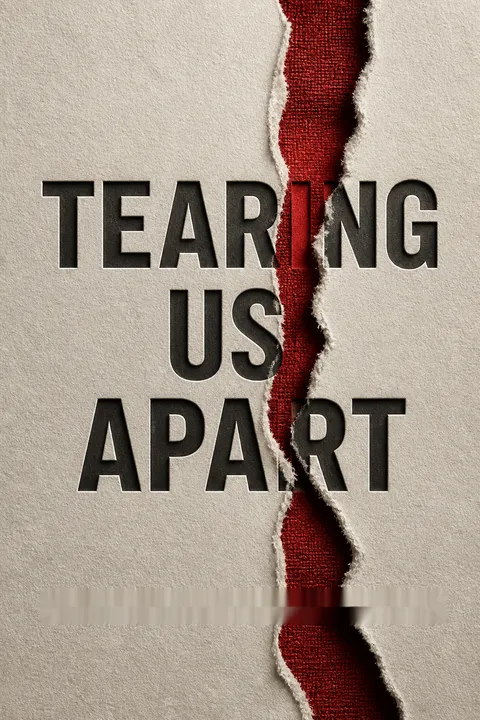
Tearing Us Apart is a 2022 work of political and moral advocacy, organized as a chain of social harms. It begins with the authors' foundational claim that an unborn child is a human being with equal moral worth, then argues that permissive abortion law damages women and families, entrenches discrimination, distorts medicine, weakens constitutional government, polarizes politics, and narrows public debate. Its structure is cumulative: accept the first moral premise, and the later institutional critique becomes part of a single story about a society that treats dependency as a reason to exclude.
The book's strongest contribution is to insist that abortion debates involve more than individual preference. It directs attention to partners who pressure women, economic systems that penalize pregnancy, prenatal selection against disability, and support networks that determine whether a choice is practically available. Its closing insistence on pairing legal change with concrete care also gives the argument a civic program rather than leaving it at condemnation.
Its major analytical weakness is that it often moves too quickly from correlation, institutional example, or historical association to broad causal claims. Racial disparities do not alone demonstrate eugenic intent; changes in women's education do not isolate abortion's effect; and studies of post-abortion mental health remain vulnerable to methodological disputes. The text also gives little space to the strongest opposing arguments, especially the consequences of compelled bodily support and the range of women's experiences.
The central disagreement is therefore both moral and political. Biological continuity is a strong descriptive claim, but the equal-rights conclusion requires an ethical account of why species membership or human nature grounds legal personhood. Conversely, autonomy arguments need to explain why bodily control should override the interests of developing human life. The book is most illuminating when it makes these premises visible. It is less persuasive when it presents disputed empirical claims as if they followed automatically from them. Readers can gain most by separating the moral argument, the legal argument, and the empirical claims, then evaluating each on its own terms.
Review Summary
Tearing Us Apart receives mostly positive reviews for its comprehensive examination of abortion's societal impacts. Readers praise its well-researched arguments and data supporting the pro-life stance. Some find it informative and thought-provoking, while others criticize its tone as condescending. The book is seen as timely following the Dobbs decision, though some question the validity of certain statistics. Overall, it's recommended for those seeking to understand or strengthen pro-life arguments, but may not change minds of strong abortion supporters.
People Also Read






Glossary
Body-self dualism
Separates person from organismA theory that treats the human organism and the person as different kinds of entities. In the book's account, the person is identified with a mind, brain, or center of consciousness associated with a body, rather than with the embodied human being. The authors reject this view as unable to explain the unity of bodily and mental action.
Moral dualism
Separates humanity from moral statusA view that accepts that an unborn child is biologically human but denies that every human being has equal moral worth. The book describes this position as making moral status depend on currently exercisable abilities, such as self-awareness or reasoning. The authors argue that this standard could exclude newborns and people who temporarily or permanently lack those abilities.
Rational nature
Capacity rooted in human natureThe authors' term for the basic kind of being they believe every human is, whether or not that human can currently reason or communicate. They distinguish this underlying nature from abilities available at a particular moment. On their account, the rational nature shared by embryos, newborns, adults, and cognitively impaired people grounds equal personhood and dignity.
Reliance interest
Dependence on an existing legal ruleA legal consideration used when a court decides whether to preserve precedent. In Planned Parenthood v. Casey, the plurality argued that women had organized relationships and plans around the availability of abortion. The book challenges that claim, arguing that abortion was not necessary for women's educational or economic progress.
Undue burden
A substantial obstacle to abortionThe standard established in Planned Parenthood v. Casey for evaluating abortion regulations before fetal viability. A law was unconstitutional if its purpose or effect created a substantial obstacle for someone seeking an abortion. The book argues that this test gave judges broad discretion and produced uncertainty about which restrictions were legally permissible.
Fetal viability
Ability to survive outside the wombThe stage at which a fetus may be capable of surviving outside the womb, usually with medical assistance. Roe and Casey used viability as a boundary for state regulation of abortion. The authors argue that survival outside the womb is an arbitrary measure of moral worth, since dependence and developmental capacity change gradually rather than at a single moment.
Turnaway study
Study of abortion and later wellbeingA longitudinal study discussed in the book that compared women who received abortions with women who sought abortions but were denied them. Its findings were used to argue that abortion did not increase depression, anxiety, or suicidal ideation. The authors question its participation and retention rates; the study and its interpretation are part of a broader research dispute.
Download PDF
Download EPUB
.epub digital book format is ideal for reading ebooks on phones, tablets, and e-readers.








