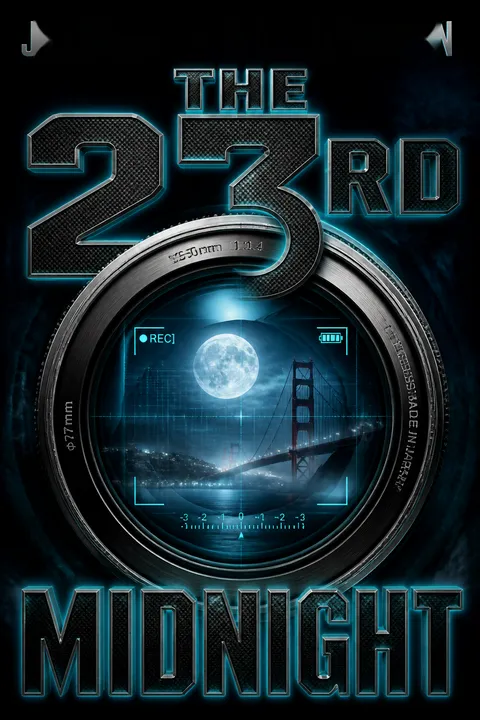


Plot Summary
Prologue
Before the main investigation begins, Blackout stalks Catherine Fleet on her regular walk through San Francisco. He pepper-sprays her, strangles her, then smothers her baby, Josephina, when an elderly jogger interrupts.
The witness, Jacob Johnston, photographs Blackout and runs, but Blackout stops him, destroys his phone, and shoots him. Later, Blackout films a private tribute to the victims and thinks of Evan Burke, the imprisoned serial killer he regards as a mentor. He has begun a spree, and he wants its author to notice.
The opening makes violence a performance before it becomes a mystery. Blackout carefully stages his approach, records his work, and imagines an audience, while Catherine’s final concern is for her child. That contrast exposes the moral vacancy beneath his elaborate self-image: he treats murder as authorship, but the people he kills remain irreducibly human. Jacob’s interruption also gives the spree its first consequence beyond the chosen victims. Blackout’s need to control the scene creates a witness, then turns that witness into another killing. His imagined bond with Burke supplies the motive the investigation will gradually uncover.
The Bestseller Heckler
Two days before the murders become public, crime reporter Cindy Thomas begins touring her biography of Evan Burke, the imprisoned killer whose crimes she has spent months documenting. At Book Passage, her fiancé, homicide inspector Richard Conklin, and her Women’s Murder Club friends support her as she tells readers to take strangers seriously.
Ralph Hammer, a bespectacled man in a leather jacket, accuses Cindy of profiting from Burke’s notoriety. After the event, Lindsay Boxer and Rich leave dinner when their lieutenant reports a homicide nearby. They find Hammer dead in his car, with Cindy’s book on the back seat. Lindsay suspects the heckler may have been followed, but the odd placement of the book leaves open a darker possibility.
Cindy’s public advice is both earned and compromised: she hopes Burke’s story can prevent harm, yet the book also gives a killer’s self-mythology a new audience. Hammer’s challenge forces that ethical discomfort into the room, but his murder prevents anyone from settling it as mere debate. The book in his car functions as evidence and as a deliberate ambiguity, making authorship itself feel dangerous. Lindsay’s unease comes from a familiar professional problem sharpened by friendship: she cannot yet know whether the insult to Cindy caused the killing, but she has seen the victim alive and knows how quickly a public argument can become a crime scene.
A Murder Made for Lindsay
At home, Lindsay learns that Hammer was disabled with a stun gun, strangled with a garrote, then shot after he was already dead. The next morning, an email signed Blackout arrives at her squad. Its video shows Hammer’s murder from inside the car, then addresses Lindsay directly. The killer has made her a viewer of his crimes.
While Lindsay watches, medical examiner Claire Washburn shows her another body: Jacob Johnston, the elderly jogger from the prologue, shot in the head and chest, with stun-gun marks on his neck. The matching excess in both killings links the cases. Before Lindsay can settle on a motive, police report that a woman and baby have washed ashore at Baker Beach.
Blackout’s choice of recipient turns evidence into coercion. Lindsay is not merely asked to solve a crime; she is forced to witness it in the killer’s chosen form, at his pace, with no ability to intervene. The repeated use of a stun gun and extra gunshots suggests a signature built around control and spectacle rather than efficiency. Jacob’s death confirms that the killer will eliminate anyone who disrupts his preferred scene. The arriving bodies at Baker Beach widen the case while reopening Lindsay’s emotional memory of Burke’s earlier victims. Her investigative attention and her private grief begin to occupy the same space.
Baker Beach Returns
Lindsay recognizes the bodies as Catherine Fleet and her infant daughter, Josephina, whose red hair and dark-haired mother recall the unsolved grief attached to Burke’s past crimes. Catherine’s husband, Brad, says his wife took the baby for her usual walk and never came home.
He expected to see them before work, then waited until evening to call police. Claire’s preliminary examination finds that Catherine was strangled and that pepper spray had irritated her eyes; Josephina was smothered.
Catherine’s rings remain on her hand, and neither body shows evidence of sexual assault. Brad knew Jacob Johnston from the neighborhood, but nothing yet explains the link. The resemblance to Burke’s victims makes Lindsay fear that someone is deliberately invoking the older case.
The beach scene works through traumatic recognition: Lindsay sees not only two new victims but the outline of an earlier case she believed had been closed. The resemblance tempts investigators toward a simple copycat theory, while the distinct killing methods resist it. Catherine’s routine walk also demonstrates how ordinary familiarity can be exploited by a watcher who learns a victim’s habits. Brad’s grief is credible but cannot itself establish innocence; Lindsay must hold compassion and suspicion together without confusing either for proof. The case’s central psychological pressure emerges here: Blackout uses echoes of Burke to make the past feel active, while the police must distinguish imitation from collaboration.
Pasadena’s Red Tracksuit
Cindy continues her tour in Pasadena, where a woman named Marge Warner confronts her for writing about Burke after one of his victims was killed near Marge’s neighborhood. Cindy leaves shaken and fails to sign the books, then becomes stranded overnight when fog cancels her flight home. At the hotel, she reads that Beth Welky, a visiting mother and volunteer, has been murdered on a nearby seminary path.
Lindsay receives Blackout’s video: he approaches Beth under the pretense of needing directions, pepper-sprays her, and strangles her. Surveillance from both bookstores shows the same quiet man watching Hammer and leaving Vroman’s with Marge. Police identify him as Marvin Bender, making the book tour appear to mark the killer’s path.
Beth’s death transforms Cindy’s professional itinerary into a map of possible danger, though the apparent connection may be a trap. Marge’s anger has a concrete source in a victim whose life was close to her own, giving Cindy an uncomfortable counterweight to her belief that the book can educate readers. Blackout exploits that moral tension by arranging violence near public events without explaining why. The surveillance image of Bender offers the police something visually definite, but visibility is not the same as culpability. The section tests a familiar investigative bias: when a killer controls the evidence and its timing, the most conspicuous suspect may simply be the person he wants the police to see.
The Bender Detour
Detectives Cappy O’Neil and Paul Chi bring Bender in after he tries to ram their car while evading questioning. He admits attending both bookstore events with Marge but denies knowing Hammer or Beth, and Lindsay senses his hostility is not the same as guilt for these murders.
Cindy finds an anonymous envelope at the Chronicle. It contains a prison commissary receipt and a note from Burke announcing that he is writing his own account of his life, with Cindy somehow involved in its ending.
Soon after, Blackout sends Lindsay another video, this time showing him shoot college student Michael Brill during what appeared to be a rescue ride near Las Vegas. The killer’s messages and victim locations keep changing, while the link to Burke grows harder to dismiss.
Bender’s arrest shows how easily aggression can masquerade as a motive. His reckless flight gives police a real offense, but Lindsay resists converting that offense into proof of murder. Burke’s note then complicates the investigation by making the imprisoned killer an active presence in the story, not merely its subject. Michael Brill’s killing further erodes the idea that the crimes are all aimed at people connected to Cindy’s appearances. Blackout’s most stable pattern is not a victim type but his control over what investigators see. He can generate a suspect, a message, and a new crime faster than the police can decide which details belong together.
Yuki Faces the Sullivan Trial
While Lindsay’s team follows Blackout, prosecutor Yuki Castellano tries Lewis Sullivan for torturing his wife, Barbara. Police found Barbara chained in the basement, gravely injured, while Lewis had taken their sons to lunch.
Lewis admits beating her but claims anger and their sexual relationship made the assault a terrible mistake. Yuki counters with medical evidence, the tools recovered in the basement, and Barbara’s hesitant testimony about the attack and earlier abuse she had hidden to protect her children.
She refuses Lewis’s offer to plead to lesser charges. The jury finds him guilty of child endangerment, aggravated assault, and attempted murder. Judge Froman sentences him to life, with the possibility of parole, after Barbara describes her injuries in private.
Yuki’s case is a struggle over who gets to define violence. Lewis presents an intentional pattern as an episode of lost control, while Yuki rebuilds the attack through injuries, restraints, medical testimony, and Barbara’s fractured memories. The courtroom demands a coherent account from someone whose trauma has disrupted coherence. Yuki’s refusal of the plea offer risks a weaker outcome, but it also refuses to let the severity of the assault be negotiated away. Judge Froman’s parole provision introduces a different moral model from Yuki’s demand for permanent confinement: accountability is necessary, yet the legal system leaves room for a future judgment about change.
Cindy Keeps Traveling
After Cindy’s successful Las Vegas appearance, Lindsay accompanies her to a signing at the Poisoned Pen in Scottsdale, despite the team’s concern that Blackout may be tracking the tour. Cindy speaks confidently to a packed audience, and Lindsay watches the room without spotting anyone suspicious.
The trip restores some of Cindy’s pleasure in her work; she is no longer only reliving her time with Burke, but enjoying the readers and the stage. Back in San Francisco, Lindsay learns that the Las Vegas victim was Michael Brill, a student who had been shot by another man before Blackout picked him up.
The timing still looks threatening, but Cindy has received no direct message from the killer. Lindsay returns home believing she got her friend safely out of danger.
Cindy’s decision to continue touring is not simple recklessness. Public speaking gives her a way to reclaim a professional identity that Burke’s crimes and the hecklers’ accusations have narrowed. Lindsay’s presence offers protection, but it also reveals the limits of protection: she can monitor a room, not control the road, the hotel, or the unseen person studying Cindy’s schedule. The absence of a visible threat creates false relief rather than security. Michael Brill’s prior shooting further complicates the pattern, since Blackout did not create the original crisis but chose to exploit it. He turns chance encounters into opportunities for authorship.
Blackout Takes Cindy
When Cindy fails to appear or answer her phone, Rich realizes she has been missing since morning. Blackout emails Lindsay a video of Cindy bound and gagged in a dim warehouse. He removes her gag long enough to demand everything she knows about Burke, promising that her knowledge will keep her alive.
A second video shows the warehouse door and then an empty commercial alley; a call to Lindsay confirms that the killer is directing the police. In a later clip, he reveals his face and says Cindy is not cooperating, then signs off with a message that could mean she is dead. Lieutenant Brady argues that Blackout would have filmed a death if he had killed her. His theory gives the team reason to keep searching.
Cindy’s abduction reverses the book’s earlier arrangement: the reporter who turned a killer’s history into public knowledge is now being forced to supply him with that history. Blackout’s demand makes information itself a hostage currency. The videos exploit the police’s strongest instincts, especially Rich’s need to act and Lindsay’s need to read every image for clues. Brady’s inference that Cindy remains alive is psychologically useful but not yet evidence, so hope arrives with a dangerous ambiguity. Blackout’s face is another calculated gesture: he wants to be recognized, yet his altered appearance and staged camera angles continue to deny investigators a stable identity.
Burke Names His Price
Lindsay and Brady visit Evan Burke at San Quentin, hoping his knowledge of serial killers or his prison contacts can locate Cindy. Burke initially claims ignorance, then studies photographs of Catherine and Josephina and recognizes that their deaths imitate his own history without identifying the killer. After the abduction, he offers help in exchange for a restaurant meal outside prison.
The officers instead bring him a steak dinner inside the cage. Burke confirms the detail of Cindy’s blue sweatshirt, information never released publicly, proving he has a channel to the outside. He gives no location. The visit leaves Lindsay and Brady with proof that Burke may know more than he admits, but no lawful way to compel him to share it.
Burke treats the emergency as another negotiation over his own importance. The meal is not merely a privilege; it is a test of whether the police will let him set the terms of their response. His knowledge of Cindy’s clothing is the first concrete sign that his connection to Blackout may extend beyond admiration. Still, the officers cannot convert suspicion into a useful lead, and Burke’s refusal preserves his favorite position: the person who knows more than everyone else. Lindsay’s anger matters because it sharpens her perception without making her immune to his manipulation. Burke’s charm is a weapon precisely because it invites personal reaction.
Barbara’s Last Message
After Lewis Sullivan’s conviction, attorney Maurice Switzer finds Barbara dead in her bedroom, her throat cut and a bloody message signed by Blackout on the wall. Her husband remains jailed, so he could not have attacked her. The murder turns a court case into a direct warning to Yuki and the Women’s Murder Club.
As Lindsay’s team investigates, Barbara’s neighbor Tom Watkins recalls an unfamiliar gray sedan waiting near the house before dawn. At the same time, a caller named Marion Witmar contacts the police after recognizing Blackout’s voice in the videos. She identifies him as Bryan Catton, her former partner, a brilliant man who once choked her nearly to death. She warns that he is dangerous and may have changed his face.
Barbara’s murder destroys the comforting boundary between a solved case and the next danger. Lewis has been convicted, but the verdict cannot protect the person whose testimony made it possible. The bloody message imitates the signature found at the Sullivan home, turning evidence from the earlier trial into a tool of intimidation. Witmar’s call supplies what forensic searches could not: a human memory of Catton’s voice and violence. Her testimony is emotionally costly, since identifying him means exposing herself to the man she fears. The section shows how private abuse can become public evidence, but also how delayed recognition may be the only route to stopping a repeat offender.
The Empty Victorian
Witmar tells police that Catton studied drama with Austin Reynolds and once shared an apartment with him. Lindsay, Rich, Joe, and FBI agent Mike Wallenger visit Reynolds, who resembles the image of Blackout but is cleared when his fingerprints do not match Catton’s military records.
The false lead costs time, yet it redirects the team toward Catton’s history. At a derelict Haight-Ashbury Victorian listed as Catton’s last address, Lindsay and Brady find the beige sofa, armchair, and bookcase from his videos.
A desk contains receipts for video glasses and weapons, victim obituaries, a clipping about the reward for Cindy, and a photograph from her Scottsdale signing. Joe finds a strand of blond hair caught beneath a drawer, suggesting Cindy was held there and moved.
The Reynolds visit dramatizes the difference between resemblance and identity. Lindsay’s certainty that she has found Blackout is emotionally understandable, but the fingerprint result forces the investigation back to evidence. At the abandoned Victorian, the familiar furniture makes the killer’s constructed persona suddenly material: the videos came from a room, the room belonged to a man with a history, and Cindy was physically present there. Yet the hair strand offers presence without rescue. The evidence answers where Catton worked and watched, not where he has taken his captive. Lindsay’s guilt about not protecting Cindy is therefore not solved by discovery; it intensifies as the team understands how closely the killer had been observing them.
The Bookstore Trap
With Catton’s known addresses exhausted, Lindsay and Rich detour to Brooks’s Books, the shuttered shop where Catton once worked. They spot a gray former police sedan with false municipal plates in the lot and a partly open door beneath a transom window matching Blackout’s warehouse video.
Brady surrounds the building and SWAT sends in Mastiff, a reconnaissance robot operated by Lindsay from the squad car. The search confirms that Catton is inside, but he claims Cindy is gone. Rich and Lindsay then see a man in black cross the lot toward the sedan. They intercept him. Catton draws a gun, but Rich shoots his arm, allowing Lindsay to handcuff him. Catton refuses to reveal where Cindy is.
The bookstore becomes legible through accumulated details rather than a single revelation: the car, the transom, the earlier warehouse footage, and Catton’s old employment align. Mastiff lets the police inspect danger without putting a hostage team blindly into the building, while Lindsay’s position outside gives her a different role from the one she expected. The capture is a tactical victory, not an emotional resolution. Catton is wounded and restrained, but Cindy is still missing. His refusal to identify her location extends his control past the moment of arrest. The distinction matters: apprehending a perpetrator and rescuing a victim are separate tasks, and the first cannot be mistaken for the second.
The Dumpster Search
Police tear through the abandoned shop but find no Cindy. Rescue dogs Holmes and Crispo follow the scent from her cardigan to a dumpster in the adjoining lot. Rich climbs in and discovers her zipped inside a garment bag, barely breathing. Lindsay helps lift her onto a drop cloth while paramedics rush her to the hospital.
Meanwhile, the dogs locate a trapdoor beneath a desk and lead the team into a concealed basement flat. It contains Catton’s bed, kitchenette, computer, video glasses, and a screen displaying images of his victims and the people he intended to target, including Lindsay, Joe, Julie, and the Women’s Murder Club. The list shows that Catton had been watching the team as closely as they watched him.
The rescue depends on embodied knowledge rather than digital surveillance: the dogs follow Cindy’s scent where cameras and databases have failed. Her recovery is fragile, and Rich’s physical search answers the emotional question that the videos kept suspended. The hidden flat then changes the scale of the threat. Catton was not merely passing through crime scenes; he had built a domestic base beneath a familiar workplace and turned his victims into an organized display. The images of Lindsay’s family make the investigation personal in a new way, but they also clarify the structure of his obsession. He sought not just to kill, but to arrange a final audience around his own imagined masterpiece.
Burke’s Secret Coauthor
In Catton’s journal, Lindsay finds that his Marine service ended after he ignored an order to stop firing during a mission. He describes the violence as exhilarating and later calls Burke a friend whose approval he hopes to earn.
A locked box in the hidden flat contains letters showing that Catton posed as Burke’s attorney, visited him at San Quentin, and discussed suitable victims. Burke had helped direct the Fleet murders and planned attacks on Cindy and Lindsay.
The manuscript Catton was writing about Burke confirms that the killer wanted both recognition and collaboration. Lindsay and Brady confront Burke with the letters and confiscate the privileges he had negotiated. His carefully cultivated distance from Blackout collapses into rage.
The letters convert a suspected influence into a conspiracy. Burke did not simply inspire a copycat; he helped shape the target list while preserving the illusion that prison had ended his agency. Catton’s military journal supplies a psychological origin without excusing him: the decisive element is not combat exposure alone, but his remembered pleasure in disobeying the order to stop. The camera, manuscript, and victim grid all extend that pleasure into civilian life. Burke and Catton share a hunger for authorship, but the evidence strips Burke of the role he prefers, that of untouchable observer. His loss of privileges is small beside the harm done, yet symbolically denies him control of the story.
A Good Day Home
Cindy recovers in hospital, then receives the Women’s Murder Club at home, where she is too weak to speak comfortably but asks to hear everything. Rich, Lindsay, Yuki, and Claire bring food, flowers, and familiar music; Cindy jokes through a notepad about becoming a star witness. Catton faces charges for seven murders, kidnapping, and attempted murder.
Lindsay returns to therapy and describes the siege, the hit list, and Rich saving her when Catton aimed a gun at her. She admits that relief has not erased fear. In a final visit to Burke, Lindsay and Brady reveal the letters and manuscript, then watch guards remove the comforts he once bargained for. Brady encourages Lindsay to take time off, and she accepts the possibility of a vacation.
The resolution does not pretend that arrest restores everyone to their earlier selves. Cindy’s humor returns in a limited, bodily vulnerable form, while Lindsay needs therapy to narrate what her professional discipline had kept contained. The recovered friendship is practical as well as emotional: the women bring soup, adjust pillows, and make space for Cindy to participate without performing strength. Burke’s final humiliation gives Lindsay a measure of justice, but not a guarantee that trauma will vanish. Her willingness to rest is the more consequential ending. For a detective whose identity is built around endurance, accepting care becomes an act of judgment rather than retreat.
Analysis
The novel’s central conflict is not simply between police and a killer, but between people who narrate violence and people who must live with its consequences. Cindy writes Burke’s history hoping that knowledge can protect readers, while Burke and Catton treat criminal notoriety as a form of authorship. Blackout’s videos make this contest literal: he selects the images, music, and audience, then tries to turn Lindsay into an unwilling critic of his work. The police counter that performance with slower forms of knowledge: autopsies, surveillance, testimony, phone records, witness memory, and coordinated search.
The novel also distinguishes attention from understanding. Burke receives attention because he has cultivated it; Catton wants to inherit that audience. Cindy’s public success attracts both readers and hostility, but neither visibility nor expertise gives her control over how others use her story. The imprisoned killer’s continued influence reveals that confinement can restrict movement without ending a person’s social power. His correspondence and staged mentorship extend his reach through another man.
The parallel Sullivan trial complicates any simple account of justice. Yuki must translate Barbara’s fragmented memories into a legal argument, while Lewis tries to recast prolonged violence as a private misunderstanding. The court’s verdict establishes accountability, yet Barbara’s later murder shows that a correct judgment cannot by itself make a vulnerable person safe. The case therefore refuses to equate conviction with repair.
Lindsay’s arc is quieter but equally important. She begins by treating endurance as part of competence, even as work strains her health and family life. Catton’s surveillance of Julie and the people Lindsay loves makes that professional boundary impossible to maintain. Her eventual return to therapy and willingness to consider time away do not diminish her commitment. They recognize that a protector who denies her own limits risks becoming another instrument of the system rather than a person within it. The book’s strongest answer to the killers’ self-mythology is collective action: friendship, careful evidence, and care that continues after the arrest.
Review Summary
The 23rd Midnight receives mostly positive reviews, with readers praising its fast-paced plot, engaging characters, and thrilling storyline. Many fans enjoy the Women's Murder Club series and find this installment compelling. Some criticize predictability and repetitiveness, while others appreciate the character development and multiple plot threads. The book features Detective Lindsay Boxer hunting a copycat killer, Cindy Thomas on a book tour, and Yuki Castellano prosecuting a domestic abuse case. Overall, readers find it an entertaining addition to the series, though opinions vary on its quality compared to earlier books.
People Also Read









Characters
Lindsay Boxer
The relentless homicide sergeantLindsay leads the investigation into the killings, balancing forensic discipline with a strong personal investment in the people around her. She is married to Joe, mother to Julie, and a close friend of Cindy, Yuki, and Claire. Her habits are those of a committed investigator: she studies crime scenes, tests theories, and resists conclusions unsupported by evidence. Yet she also carries the work home, loses sleep, and worries that stress is diminishing the mother her daughter receives. Her professional identity is bound to protecting others, which makes her reluctance to accept help psychologically important. The case forces her to acknowledge that competence does not make her invulnerable.
Cindy Thomas
The reporter inside the storyCindy is a San Francisco Chronicle crime reporter, author, and one of Lindsay’s closest friends. Her biography of Evan Burke gives her public authority on serial murder, but the research has left her anxious and vulnerable to the killer’s history. She wants the book to offer useful warnings rather than simply enlarge a murderer’s fame. Cindy is ambitious, candid, and stubbornly committed to her tour, partly because speaking to readers helps her reclaim confidence. Her relationship with Rich is affectionate and steady, even when he fears for her safety. She brings an ethical journalist’s instinct to the investigation, asking whether the apparent connection between the murders and her appearances is actually supported by evidence.
Bryan Catton
The gifted former MarineCatton is a highly intelligent former Marine with a history in drama, a fascination with films, and a talent for constructing performances. He values control, precision, and recognition, combining technical preparation with a theatrical sense of framing. His intelligence does not produce empathy; instead, it gives him more elaborate ways to observe and manipulate other people. He studies the people around Cindy and Lindsay, and he treats the camera as a tool for making his private fantasies public. His relationship to violence is shaped by a need to continue an experience he once found exhilarating, while his fixation on Burke offers an audience and a model for his ambitions.
Evan Burke
The imprisoned killer-authorBurke is a convicted serial killer serving multiple life sentences, and Cindy’s biography has made him the subject of intense public attention. Narcissistic and socially agile, he treats interviews, correspondence, and prison privileges as ways to extend his influence beyond his cell. He is interested in how history will remember him and how his body count compares with other killers. Burke can be charming when it serves him, but his charm is a form of self-presentation rather than genuine connection. His relationship with Cindy is built around access to her writing and audience, while his interactions with Lindsay and Brady become contests over information and control.
Richard Conklin
Lindsay’s partner and anchorRich is an SFPD homicide inspector, Lindsay’s longtime partner, and Cindy’s fiancé. He brings warmth and humor to the squad, but his loyalty becomes fierce when Cindy is threatened. Years of working alongside Lindsay have made them an unusually effective team, with a trust that lets each act quickly for the other. Rich’s relationship with Cindy is intimate and supportive, though fear sometimes makes him press her to withdraw from public events. His professional discipline holds even when he is personally overwhelmed. He is defined by practical care: following leads, staying present, and taking risks when someone he loves is in danger.
Yuki Castellano
The exacting prosecutorYuki is a skilled prosecutor and a member of the Women’s Murder Club. In court, she is precise about evidence and procedure, but she also understands that jurors respond to the human reality behind a case. She prepares Barbara Sullivan carefully and must adapt when trauma makes Barbara’s memories fragmentary. Yuki’s confidence is not the absence of anxiety; it is the ability to keep working while aware of the stakes. Her marriage to Lieutenant Jackson Brady connects her to the police team, but her courtroom responsibilities remain her own. She is driven by a belief that a victim’s account deserves to be heard without being rewritten as provocation.
Claire Washburn
The murder club’s medical examinerClaire is San Francisco’s chief medical examiner and one of Lindsay’s closest friends. Her autopsies provide critical distinctions between cases that look similar at first glance, including how victims were killed and whether a body was moved. She combines clinical expertise with an unusually open emotional life; the deaths of women and children affect her because she refuses to treat victims as routine. Claire is also a mother and a steady presence in the Women’s Murder Club. Her friendship gives Lindsay a place to speak without translating everything into police procedure, while her professional judgment keeps grief from becoming an investigative conclusion.
Jackson Brady
The steady homicide lieutenantBrady leads the SFPD homicide squad and directs the task force pursuing Blackout. A former Miami detective, he knows when to manage from a distance and when to stand beside his investigators. His confidence in Lindsay is grounded in years of seeing her solve cases, but he also recognizes when personal stakes could cloud a colleague’s judgment. He protects Rich from being placed too close to Cindy’s kidnapping while keeping him involved in the wider effort. Brady’s authority is firm without being theatrical, and his trust helps a fragmented team keep working through uncertainty.
Joe Molinari
Lindsay’s husband and adviserJoe is Lindsay’s husband, Julie’s father, and a former member of federal intelligence and behavioral-analysis units. He offers Lindsay a different perspective on motive and stress, drawing on professional experience without pretending that his theories are proof. Their marriage is affectionate and candid, though the demands of homicide work often leave him caring for Julie alone. Joe supports Lindsay’s career while reminding her of the family life that work can crowd out. His return to an FBI role becomes part of the couple’s practical discussion about childcare and the cost of unpredictable hours.
Sonia Alvarez
The sharp new investigatorAlvarez is a younger homicide inspector recently transferred from Las Vegas, where she worked undercover in Vice. Funny, perceptive, and comfortable with technology, she contributes fresh eyes to the Blackout investigation and recognizes the importance of his edited videos and chosen music. Her prior work gives the task force useful contacts in Nevada. Alvarez is still learning the rhythms of the San Francisco squad, but she is not timid about challenging assumptions or volunteering an interpretation. She becomes a reliable partner to Lindsay and Rich as the case grows more demanding.
Barbara Sullivan
The battered wife and witnessBarbara is Lewis Sullivan’s wife and the mother of their two boys. Her injuries leave her physically fragile and her recollections incomplete, but she makes a difficult effort to tell the court what she remembers. Before the assault, she had concealed earlier abuse because she feared Lewis and worried about the effect on her children. Her testimony reveals the pressures that can keep a person in a dangerous home: threats, shame, concern for custody, and the hope that harm will stop. Yuki’s preparation gives Barbara room to speak without pretending that trauma produces a neat, uninterrupted narrative.
Lewis Sullivan
The husband on trialLewis is Barbara’s husband and the defendant in Yuki’s attempted-murder case. He admits causing severe injuries but frames the violence as a loss of control triggered by marital conflict. His account minimizes the planning and duration implied by the restraints and wounds. Lewis’s self-understanding depends on separating his claims of love from the harm he inflicted, a contradiction the prosecution asks the jury to confront. His behavior toward Barbara and his children is central to the trial’s question of intent and responsibility.
Catherine Fleet
A young mother with a routineCatherine is Brad Fleet’s wife and Josephina’s mother. Her regular morning walk provides the killer with a predictable opportunity, while her concern for her daughter remains the clearest measure of her character in the opening crime. She had stepped away from her advertising job to care for Josephina and was known to neighbors as part of a settled family life.
Josephina Fleet
Catherine’s infant daughterJosephina is Catherine and Brad Fleet’s baby. She is usually carried on her mother’s daily walk, a detail that makes their routine visible to anyone watching the neighborhood. Her death sharpens Lindsay’s response to the case because she sees in Josephina the vulnerability of her own young daughter.
Jacob Johnston
The witness who intervenesJacob is an elderly jogger who encounters Blackout during the attack on Catherine and Josephina. Rather than accept the killer’s attempt to pass the scene off as harmless, he recognizes the danger, takes photographs, and tries to call for help. His quick decision becomes an important early clue in Lindsay’s investigation.
Beth Welky
The visiting runnerBeth is a married mother visiting Pasadena, known to her family and friends as generous and active in volunteer work. She is jogging when Blackout approaches her with a request for directions. Her ordinary kindness gives him the opening he needs, while her life outside the crime offers no clear explanation for why he chose her.
Marion Witmar
The survivor who recognizes CattonMarion is Bryan Catton’s former partner. She recognizes his voice in a publicized video and contacts police despite fearing that he could retaliate. Her memory is specific: she recalls his intelligence, his appetite for attention, and the violence that nearly killed her. By speaking up, she turns a nameless voice into a traceable person.
Marvin Bender
The hostile false leadBender is a pharmaceutical salesman who attends both Cindy’s bookstore events with Marge Warner. His sour temperament and reckless attempt to evade police make him look suspicious, but Lindsay distinguishes his general hostility from evidence linking him to the murders. He illustrates how easily an abrasive bystander can become a convenient theory.
Austin Reynolds
Catton’s former roommateReynolds is an actor and copy editor who studied drama with Catton and once shared an apartment with him. His resemblance to Catton briefly draws police attention, but fingerprint comparison establishes that they are different people. He offers investigators a limited view of Catton’s student years and competitive nature.
Cappy O’Neil
The veteran task-force detectiveCappy is a seasoned homicide detective with a broad network of informants and years of experience, including work on the Zodiac investigation. He searches Hammer’s home and helps interrogate Bender. His dry humor steadies the task force, while his experience keeps attention on the difference between a compelling lead and a confirmed fact.
Paul Chi
The analytical investigatorChi is Cappy’s partner, a tireless investigator with exceptional analytical ability. He helps connect surveillance images, pursues Bender, and tests what the available evidence can actually establish. His careful reasoning complements Cappy’s field experience and helps the team avoid mistaking proximity for proof.
Plot Devices
Blackout’s video glasses
The killer’s forced audienceBlackout records selected murders through video glasses, then sends the footage to Lindsay. The recordings show both his methods and his need to direct how police experience each crime. He edits some videos, adds classical music, and frames endings as if he were releasing a film. The glasses also create a recurring investigative puzzle: images reveal gestures, rooms, and bits of the environment, but often conceal identifying details. Their recordings ultimately help expose Catton’s face, his work space, and his pattern of watching the Women’s Murder Club.
Cindy’s Burke biography
A book that draws dangerCindy’s authorized biography of Evan Burke begins as an attempt to turn access to a serial killer into useful reporting. Its launch gives her a public platform, attracts hostile responses, and becomes a recurring object in the investigation when a copy appears in Hammer’s car. The book also links Cindy to Burke in the killer’s imagination. As Blackout seeks Burke’s approval and wants Cindy’s knowledge, the biography becomes more than a publication: it is the bridge between the imprisoned killer, his admirer, and the police trying to understand the murders.
The victim pattern
A false trail with purposeThe victims initially resist a single explanation. Some are connected to Cindy’s tour only by location, while Catherine and Josephina resemble victims from Burke’s earlier crimes and Jacob dies after interrupting an attack. That irregularity keeps investigators from relying on one profile or one motive. The apparent pattern becomes clearer as the team learns that Blackout is not choosing a consistent demographic; he is combining opportunities with targets selected to impress Burke. The shifting pattern lets the killer misdirect the police while gradually revealing his fixation.
The hidden bookstore flat
A lair beneath ordinary wallsThe abandoned bookstore conceals a concealed living and working space beneath its basement. The trapdoor and disguised partition help Catton move unseen, while the laptop, video glasses, journal, and locked box preserve the material evidence of his crimes and his relationship with Burke. The setting turns a former workplace into a private production studio and hiding place. Its eventual discovery supplies evidence, reveals the scale of Catton’s surveillance, and leads rescuers to the clues that locate Cindy.
The Sullivan courtroom case
A parallel test of evidenceYuki’s prosecution of Lewis Sullivan runs alongside the serial-murder investigation. Barbara’s damaged memory, Lewis’s claim of lost control, and the medical record force the jury to infer intent from actions rather than rely on a single confession. The case gives the novel a second investigation into violence concealed inside familiar relationships. It also introduces Barbara and the people around her to Blackout’s expanding target list, making a courtroom resolution vulnerable to a threat beyond the trial itself.
Women's Murder Club Series Series


About the Author
Other books by James Patterson




Download PDF
Download EPUB
.epub digital book format is ideal for reading ebooks on phones, tablets, and e-readers.








