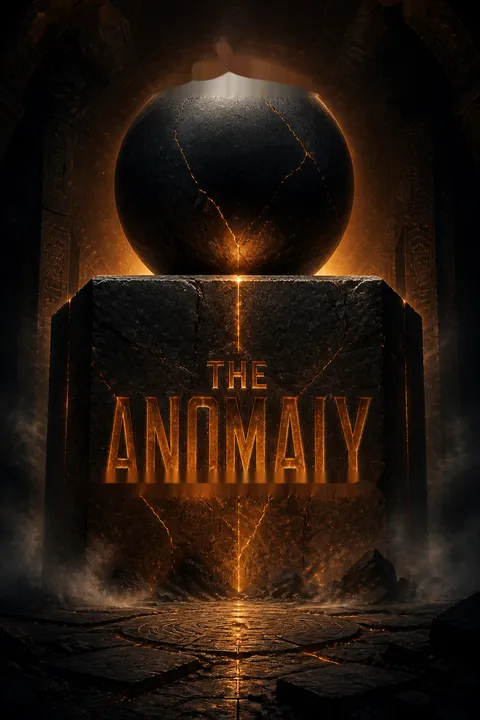


Plot Summary
Prologue
In a darkness beneath the Grand Canyon, explorer George struggles to drag Samuel toward the dawn. Samuel is bleeding and refuses to leave the wall he has been scratching with a knife. Their Native companion Maqk helps pull him until something in the cave seizes Maqk and carries him away.
George and Samuel run for the narrow opening, abandoning the work Samuel insists he must finish. The scene leaves behind two mysteries: what hunted the explorers underground, and what Samuel was carving while danger closed in.
The prologue makes the cave a place where knowledge and survival pull in opposite directions. Samuel’s refusal to abandon his carving gives the unseen threat a human counterpoint: even in terror, he is compelled to finish recording something. Maqk’s sudden disappearance establishes that the danger is physical, not merely legendary, while the sliver of dawn promises escape without explaining what the survivors are escaping from. By opening with a failed expedition rather than Nolan’s modern search, the novel presents the cavern as a story already in progress, one whose missing evidence has outlasted its witnesses.
The 1909 Promise
Nolan Moore hosts The Anomaly Files, a small web series about disputed history, and hopes a new cable deal will give it a future. His producer, Ken, secures funding from the Palinhem Foundation, whose representative Feather joins the crew for a Grand Canyon expedition.
Nolan’s target is Kincaid’s cavern, described in a 1909 newspaper story about a Smithsonian expedition that supposedly found an underground civilization. The Smithsonian has no record of the explorers, and later searchers have found nothing.
Nolan’s new publisher has also agreed to acquire his self-published books, but the success feels fragile. He is still carrying the failure of his screenwriting career and the distance from his ex-wife, Kristy, as he prepares to make a mystery into a show.
Nolan’s expedition begins as both a professional gamble and a defense against feeling finished. He sells uncertainty as a virtue, partly because the show needs mysteries and partly because open questions spare him from having to make firm claims about his own life. Ken recognizes the financial stakes and treats the trip as a last chance for the series. Feather’s presence seems like routine sponsor oversight, while Gemma, the journalist covering the crew, introduces a sharper test: whether Nolan’s appetite for wonder can survive scrutiny.
The Canyon Takes Measure
At the canyon rim, Nolan’s first unscripted reaction to the vast landscape is an awkward silence; Ken makes him film a polished introduction instead. Gemma then challenges his credentials and his habit of repeating claims he has not verified.
Their argument turns personal when she asks about Kristy, the successful journalist Nolan still admires. He admits his own shortcomings helped end the marriage, but retreats before explaining more. The crew descends a steep, unauthorized trail to the Colorado River, where their guide Dylan insists on control of the raft.
Feather goes overboard in the rapids, then swims back with startling ease. That moment unsettles Nolan’s assumptions about the gentle, eager sponsor representative, even as the team reaches camp and prepares to search the river cliffs.
The canyon forces Nolan out of his practiced role as a presenter. His stiff performance at the rim contrasts with the real awe he cannot quite translate into television, while Gemma’s questions expose how often he substitutes fluency for firsthand knowledge. Feather’s athletic recovery complicates the harmless persona she presents, though the crew has no reason yet to treat it as a warning. The descent also makes the group dependent on one another: their investigation is no longer just a collection of claims but a physically risky undertaking.
The Opening in the Stain
Nolan has narrowed Kincaid’s likely location to a stretch of canyon wall using the newspaper account and other researchers’ theories. The crew spends hours searching it from the raft and finds nothing. As Nolan prepares a disappointed sign-off, cameraman Pierre notices a small dark mark appear and vanish with the changing light.
It is a cave mouth, partly hidden by a rock lip and far below the height described in the article. At camp, Pierre studies the footage and judges that the wall can be climbed. The next morning he makes the ascent first, wearing Nolan’s shirt so the footage can suggest Nolan led the discovery. Nolan, uneasy with heights, follows the rest of the team up the exposed rock face.
The discovery arrives through patient looking rather than Nolan’s grand theory. Pierre’s camera catches what the group’s repeated searches missed, and the event quietly shifts authority away from the show’s host toward the person doing the actual work. Nolan accepts Pierre’s help, but the staged shirt swap shows how television turns collaboration into a story about a single hero. The opening also offers a concrete reward for Nolan’s persistence, while creating the risk that he has mistaken an overlooked natural feature for the legendary site.
A Ladder Beneath Rock
The first cave has an antechamber and a narrow passage, but the passage ends without Kincaid’s promised doorway. As the crew prepares to leave, Molly shows Nolan a video she took: high on the fissure wall are regular rectangular recesses. Nolan climbs to them and discovers they form a ladder, rising into the rock. The team ascends a square shaft for hundreds of feet and emerges in a broad, chiseled passage.
They find matching side doorways at roughly the distance Kincaid described, then a wall where the outer entrance has been sealed with masonry. Nolan realizes a recent earthquake probably broke open the lower entrance. Ken agrees they have found Kincaid’s cavern, but Nolan urges restraint before they disturb more of the site.
Molly’s careful observation changes a failed search into a genuine archaeological discovery, and the ladder reveals that the first cave was only an access point. The structure’s deliberate labor makes Nolan’s earlier speculation suddenly consequential. Yet his first response is caution: he understands that finding a site does not give the crew the expertise or authority to excavate it. Ken’s willingness to look further reflects the show’s competing needs, because the discovery must be both protected and compelling enough to keep their new television opportunity alive.
The Sphere Starts Rolling
The passages lead to empty rooms with strange stone platforms, pyramids, and a circular chamber dominated by a perfect sphere resting on a cube. Nolan records the discovery, then Gemma calls the others to another doorway.
A hidden floor plate shifts under her foot, releasing the cube and sending the enormous sphere rolling down a sloped corridor. Feather is in its path. She runs into the tunnel and escapes being crushed, but the sphere wedges into the passage and seals the crew inside. Nolan sends her down the shaft to find Dylan and get help.
The remaining crew search the side corridors instead of waiting helplessly. They find a still pool, mineral spheres arranged around carved symbols, a room with a foul residue, and, beyond a cramped fissure, a gallery of ancient animal paintings.
The sphere turns the site from an object of study into an active system with consequences the crew cannot control. Its carefully engineered slope makes the earlier architecture newly legible as machinery, while Gemma’s accidental trigger underscores how little the explorers understand. Feather’s escape appears to preserve their best chance of rescue, and the others respond by mapping what they can. Their curiosity remains powerful, but it is now entangled with immediate survival and the growing possibility that every investigation will activate something else.
Feather Drops the Mask
The crew studies the pool’s hundred distinct symbols and the metal spheres, but has no way to interpret them. Gemma recognizes the man in a photo on Feather’s phone as a gay fashion model, not Feather’s husband; the phone contains no messages or contacts to support Feather’s story.
The next morning Feather disappears, and the crew assumes she has gone to seek help. When she returns, she admits she has been listening from the far side of the stone ball. She also reveals that she killed Dylan after he returned with supplies, then staged a riverside camp to make his absence convincing.
Feather says the Palinhem Foundation has been searching for sites like this and wants the cavern’s discovery to proceed on its terms. She leaves without explaining what the machine is meant to do.
Feather’s deception transforms the expedition’s sponsor from a source of funding into an active force shaping events. Gemma’s attention to the photograph turns ordinary social details into evidence, while Feather’s long silence makes the crew’s belief in rescue part of her strategy. Nolan’s dependence on a narrative of helpful coincidences is exposed: the people who appeared to support his search had been directing it. Her refusal to explain the mission keeps the threat unresolved, but the murder of Dylan makes clear that the Foundation’s interest is not merely academic.
The Ark Awakens
Nolan connects Feather’s clues to flood legends and the paintings, suspecting that the cavern is an ark built to restart life after catastrophe. The crew’s experiments have already set it in motion: the spheres have dropped into the pool, the water has turned foul, and small creatures are appearing.
Gemma, who drank from the contaminated water, develops violent abdominal pain and dies as blood fills her mouth. A winged animal then tears its way out of her body.
Nolan infers that the pool is assembling life from the chemical elements stored in the spheres, perhaps using blood as a trigger. When he and Pierre try to remove a sphere, newly formed tentacles seize them underwater. The pool is no longer a puzzle. It is producing animals faster than the starving crew can escape.
The ark hypothesis gives the site’s scattered details a terrifying coherence, but it arrives too late to make the discovery safe. Gemma’s death turns an abstract theory about manufactured life into bodily horror, and the creature emerging from her makes human vulnerability part of the mechanism. Nolan’s instinct to explain what he sees is both his strength and his liability: interpretation helps the group act, yet it cannot undo their earlier contact with the system. The pool’s output escalates faster than their dwindling resources.
Ken Buys Them Time
As the pools generate more life, the crew realizes they must find another exit. Ken smashes one sphere against the control stone, but the growing creatures and the blocked main passage leave them with few options.
When two predators approach the room of corrosive residue, Ken runs into the dark to draw them away. Nolan, Molly, and Pierre cross the room’s now-liquid contents and squeeze through the fissure into the painted gallery. At its far end they find the bones of earlier people who apparently died there.
Molly climbs a narrow shaft and discovers an opening above. With the predators pursuing them, Nolan and Pierre haul themselves upward after her. The route leads away from the sealed passage, but none of them knows where it will emerge.
Ken’s decision to draw the predators away is not a grand strategy but a practical sacrifice made when the group has run out of safe choices. The survivors move through a space that had seemed like a record of ancient life and find that it is also a record of previous failure. The bones make the machine’s history intimate: others once witnessed its effects and could not get out. Molly’s climb converts that grim evidence into a narrow chance, earned through physical effort rather than a sudden rescue.
Dylan's Last Assignment
The new passage brings Nolan, Molly, and Pierre to a glowing chamber whose floor maps the Earth and marks several similar sites. Their own marker is flashing. Nearby, Nolan notices a stone slab fitted into a groove, but before he can investigate, Dylan appears with a gun and takes Molly hostage.
He reveals that he and Feather work for the Foundation, whose leaders intend to use the sites to clear the world and prepare a new beginning. Dylan calls humanity the failed creation and says a force of giant cleanup creatures will soon emerge.
Nolan stalls him. Molly signals Pierre, who rushes Dylan; the gunman fires and wounds Pierre, but the three overpower and kill him. The survivors take Dylan’s weapon and move toward the shaft, while the distant machinery continues to thud.
Dylan turns the danger from an impersonal machine into a human plan. His explanation reframes the Foundation’s secrecy as deliberate control over a planetary reset, though his own contempt for humanity leaves little room to trust his account. The map makes the threat global, while the small stone slab remains an untested possibility. Pierre’s intervention breaks the hostage standoff at serious cost, and Nolan’s choice to stall rather than charge gives his companions the opening to act.
The Canyon Lets Them Out
A giant creature catches the group near the shaft’s base and knocks Pierre aside. Molly fights to protect Nolan, who stays behind to delay the attack. Ken reappears with Dylan’s gun and kills the creature; he had escaped the predators by reaching the pool and breaking its control stone. The four survivors climb out as the cavern ignites behind them.
They take Dylan’s dinghy downriver, but Feather rams them with the raft and attacks with a knife. Molly tackles her. Nolan swims after Ken, who has been swept downstream, and drags him to shore. When Nolan and Ken return, Molly has stabbed Feather. The survivors leave the cavern alive, but their choices have killed people and left them carrying the knowledge of what the site was meant to do.
Escape does not restore the old moral order. Ken’s return depends on improvisation and destruction, while Nolan’s attempt to save him nearly costs Nolan his own life. The final struggle with Feather makes the conflict personal once more: the person who first seemed to welcome Nolan’s work now tries to erase its witnesses. Molly’s decisive violence protects the survivors, but it also creates a burden no one can resolve simply by reaching the river. Survival becomes an obligation to remember what happened.
Epilogue
Back in California, Nolan and Ken decide not to report the cavern or the bodies. A tall man connected to the hidden organization warns Nolan that the site is sealed and must remain secret. Ken later learns the canyon area has been closed after unexplained seismic activity, while a planted story dismisses a creature as a film prop.
Nolan and the others keep the evidence to themselves, though he continues recording his theories in encrypted notes. Days later, he meets Kristy again. Their conversation begins cautiously, then turns toward a drink and a long, unfinished evening.
The ending refuses the comfort of public exposure or clean absolution. Nolan’s silence protects the world from knowledge it may misuse, but it also protects him from having to explain the deaths and the violence that followed. The organization’s warning confirms that secrecy is a system, not an improvised cover-up, while the fake creature report shows how easily evidence can be absorbed into spectacle. Kristy’s return offers a human counterweight: not a cure for Nolan’s guilt, but the possibility of beginning a conversation without pretending the past can be undone.
Analysis
The novel turns a familiar adventure premise into a study of how curiosity becomes responsibility. Nolan begins by treating uncertainty as both a philosophy and a professional advantage. A mystery can enlarge the imagination, but it can also protect him from the humiliating demand to commit himself to a truth. Once the crew finds the cavern, that distance collapses. Their touching, drinking, and triggering of its mechanisms produce consequences no amount of skeptical qualification can contain.
The book’s strongest structural reversal is that the site does not merely preserve the past. It manufactures life. Its rooms initially resemble archaeological evidence, then become an operating system whose controls are hidden in symbols, water, and architecture. This makes interpretation ethically charged: to understand the site is not only to explain it, but to decide whether it should be activated, damaged, or concealed. Nolan’s ability to connect flood myths, the ark, cave art, and the spheres is useful precisely because no single clue is sufficient. Yet inference cannot substitute for expertise, and the crew’s amateur confidence contributes to disaster.
The human relationships mirror the machine’s problem of control. Feather and Dylan believe they can direct a planetary reset; Nolan’s crew believes they can investigate without changing the object. Both assumptions fail. Ken’s pragmatism, Molly’s growing courage, and Pierre’s technical competence become more valuable than Nolan’s performance of authority, while Gemma’s demand for evidence remains morally important even when she cannot survive the consequences of contact.
The ending refuses a simple triumph. The survivors escape, but conceal the cavern, its dead, and the violence required to get out. Nolan’s final return to Kristy does not erase his guilt or restore their marriage. It offers a smaller possibility: he can stop using uncertainty as an excuse to avoid the next honest conversation. In this story, the most dangerous anomaly is not only the machine. It is the human capacity to mistake wanting an answer for being prepared to bear what it reveals.
Review Summary
The Anomaly is a thriller set in the Grand Canyon, following a YouTube documentary crew who discover a legendary hidden cave. Reviewers widely praised its atmospheric tension, claustrophobic setting, Indiana Jones-esque adventure, and engaging characters. Many compared it favorably to The X-Files and Dan Brown novels. Common criticisms included a slow build-up, a rushed or unconvincing ending, and some feeling it wasn't as scary as advertised. Overall, readers found it a fun, fast-paced, highly entertaining read, with many eager for the sequel.
People Also Read


Characters
Nolan Moore
The reluctant anomaly hunterNolan hosts The Anomaly Files, pursuing disputed histories despite lacking archaeological credentials. His confidence on camera masks a deep uncertainty about what he believes and whether his work matters. A failed screenwriting career and his separation from Kristy have left him wary of commitment, especially when certainty might expose him to loss. He is funny, self-deprecating, and quick to deflect praise, often giving credit to others before accepting it himself. Yet he is observant and persistent, with a genuine talent for connecting fragments of evidence. His central tension is between selling wonder and taking responsibility for what his curiosity uncovers.
Ken
The battle-scarred producerKen produces Nolan’s show and keeps it alive through thrift, improvisation, and a hard-earned instinct for what a production can survive. Blunt, irreverent, and fond of alcohol and cigarettes, he hides a practical tenderness beneath insults and comic pessimism. He sees Nolan’s flaws clearly but also understands why the show matters to its viewers. Ken’s experience in film has taught him that audiences may find meaning in work its creators dismiss, a lesson he uses to steady Nolan when the search threatens to become another failure. His loyalty is expressed less through sentiment than through action.
Molly
The crew's steady organizerMolly is the assistant producer who organizes bookings, equipment, schedules, and the practical details that allow the expedition to happen. Efficient and capable, she often functions as the crew’s stabilizing adult, though that role can conceal how much strain she carries. She is athletic, resourceful, and accustomed to handling problems before anyone else notices them. Her relationship with Nolan is teasing but increasingly trusting, and she is willing to admit fear without letting it define her. Molly’s self-control is not fearlessness; it is a practiced way of staying useful when circumstances become difficult.
Pierre
The gifted cameramanPierre is the young cameraman whose technical skill and physical confidence repeatedly move the expedition forward. Nolan initially resents his looks, talent, and self-assurance, mistaking some of his ease for vanity. Pierre is hardworking and thoughtful, and he treats the crew’s footage as a record worth preserving rather than merely content for a show. His willingness to climb, film, and help others makes him essential to the group. Beneath his composure is a young man still seeking reassurance that he is doing the right thing, a vulnerability the extreme circumstances gradually bring into view.
Gemma
The skeptical reporterGemma is a journalist assigned to observe Nolan’s expedition. She distrusts vague claims and pushes him to distinguish evidence from speculation, partly because she believes facts can help repair a damaged world. Her sharpness can feel hostile, but it is also a defense against easy narratives and unearned certainty. Gemma is perceptive about people as well as evidence, and she notices details the others dismiss. Her exchanges with Nolan unsettle his self-image, even as their wary respect begins to grow.
Feather
The eager sponsor liaisonFeather accompanies the expedition as a representative of the Palinhem Foundation and presents herself as a devoted fan of Nolan’s show. Her gentle manner, unconventional clothes, and eager support make her seem easy to underestimate. She is physically capable and unusually attentive to the crew, while her commitment to the Foundation’s beliefs gives her a strong sense of purpose. Feather’s enthusiasm is not simply starstruck admiration; she sees Nolan’s work as part of a larger effort to challenge accepted accounts of history.
Dylan
The river guideDylan is the crew’s experienced Colorado River guide. Direct and physically confident, he makes clear that safety on the water depends on following his instructions. He has little interest in Nolan’s historical theories and expects to be treated as the authority on the river. His blunt manner initially creates friction, especially with Pierre, but his role is practical: he knows the terrain and the risks the film crew cannot see.
Kristy
Nolan's accomplished ex-wifeKristy is Nolan’s former wife, a respected journalist known for clear writing and environmental reporting. Nolan regards her intelligence and integrity with admiration, even as their separation remains painful and difficult to discuss. She represents the kind of disciplined, evidence-based work Nolan both respects and fears he cannot match. Their shared history gives her an unusual place in his inner life: she is someone who understands his habits and evasions without needing them explained.
George
The desperate explorerGeorge is an explorer in the prologue who tries to lead Samuel out of the cavern. Exhausted and frightened, he keeps moving toward daylight even as the cave’s danger closes in.
Samuel
The unfinished recorderSamuel is George’s companion in the prologue. Injured and transfixed by his work, he refuses to leave the wall until George and Maqk drag him toward safety.
Maqk
The lost companionMaqk helps George pull Samuel through the cave and urges him to flee. His sudden disappearance establishes the cavern’s danger before the modern expedition begins.
Plot Devices
The 1909 newspaper account
A map made of claimsThe Phoenix Gazette article attributes an extraordinary discovery in the Grand Canyon to hunter G. E. Kincaid and a Smithsonian expedition. Its details give Nolan a route to test, but the missing institutional records and the account’s inaccuracies make it unreliable. The article’s supposed false measurements eventually help explain why earlier searchers missed the actual entrance. It serves as both a practical clue and a warning: the story preserves enough truth to attract attention while obscuring the location and nature of what was found.
The engineered cavern
A machine disguised as ruinsThe carved passages, sloping floors, stone spheres, pools, pyramids, and concealed routes appear at first to be a lost ceremonial complex. Their geometry gradually reveals functions: the main sphere seals an exit, the pools and elemental spheres produce living organisms, and a larger chamber appears connected to a global network. The crew’s movements activate mechanisms they cannot understand. The architecture turns exploration into a sequence of choices with physical consequences, making the site an antagonist without a human will of its own.
The animal paintings
A record of prior creationThe paintings in the hidden gallery resemble Paleolithic cave art and include animals unknown to the crew, human handprints, and a figure resembling imagery Nolan has studied elsewhere. They establish that people reached the complex long before conventional accounts allow and suggest that earlier visitors witnessed its creatures. The remains at the gallery’s far end turn the art into a record of catastrophe: the painters seem to have been trapped and died there. Their work later provides the survivors with a route away from the sealed main passage.
The earth-map chamber
A world-spanning warningA softly glowing floor map marks Nolan’s site and several other locations around the world. Its lights suggest that the Grand Canyon is one part of a larger system rather than an isolated anomaly. The local marker pulses as the cavern’s processes escalate, but the crew cannot determine how to control it. Dylan later frames the network as a mechanism for cleansing and restarting life, while the map itself leaves the scale and status of the other sites uncertain.
Download PDF
Download EPUB
.epub digital book format is ideal for reading ebooks on phones, tablets, and e-readers.








