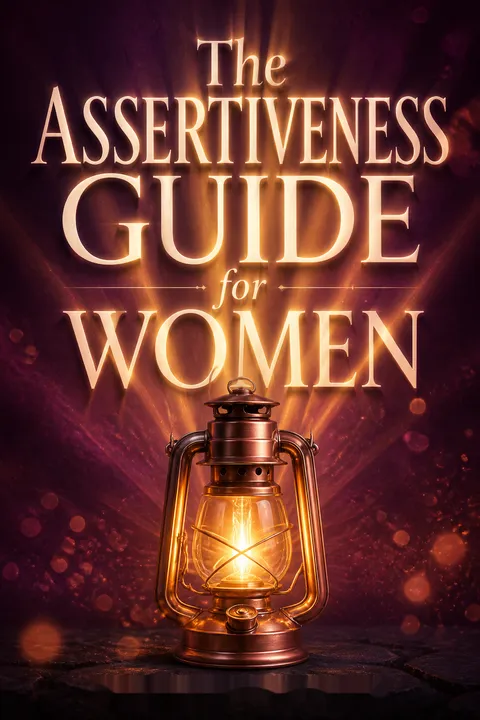


Key Takeaways
Assertiveness means expressing difference without severing connection
Difference is the point. Julie de Azevedo Hanks defines assertiveness as expressing feelings, thoughts, needs, and wants clearly, while respecting other people’s rights and experiences. It is not bluntness, volume, or winning an argument. It is the willingness to let someone important know where your experience differs from theirs.
Silence can hide desire. Anna, a working mother who spent years accommodating others, could not answer a therapist’s question about what she wanted for her own life. Her uncertainty illustrates how chronic self-silencing can obscure not only a person’s voice, but also access to her preferences. Hanks’s approach moves from understanding relationship patterns, to recognizing inner signals, calming intense emotions, speaking clearly, and making room for another perspective. The goal is honest connection, not control over the other person’s response.
What's distinctive is the book's refusal to define success as simply getting one's way. Assertiveness is framed as a relational capacity: holding onto a sense of self while remaining curious about someone else's. That resembles good-faith negotiation, where each party can state interests without treating disagreement as betrayal. The frame also needs a safety condition. In relationships marked by coercion or retaliation, greater clarity may not produce greater connection, and self-protection can matter more than dialogue.
Treat childhood relationship habits as clues, not life sentences
Old patterns travel. Attachment theory describes how early relationships can shape expectations about whether others will respond, whether closeness feels safe, and how emotions are managed. Hanks outlines three broad adult styles: anxious, often marked by fear of abandonment; avoidant, often marked by discomfort with emotional closeness; and secure, marked by comfort with both connection and independence. She cites child research in which roughly 60 percent were categorized as secure, and about 20 percent each as anxious or avoidant, while cautioning that styles can change.
Ella connects the dots. With a critical mother and conflict-filled home, Ella learned to tune out painful exchanges and try harder to please. She repeated that pattern with her husband, avoiding conversations about sex and hurt. Recognizing the pattern helped her name fear and loneliness and speak more openly. Their relationship improved, though conflict did not disappear.
The model is useful because it turns confusing reactions into understandable strategies. Clinging or withdrawing can be read as attempts to manage insecurity, rather than fixed defects of character. Still, attachment categories are broad maps, not diagnoses, and a person may respond differently across relationships or circumstances. Ella's story is most persuasive as an invitation to investigate patterns, not as proof that childhood alone explains adult behavior. Present conditions, culture, and a partner's conduct also matter.
Stay distinct from loved ones without turning difference into a contest
Connection and individuality coexist. Hanks calls the capacity to remain oneself while emotionally close to others differentiation. When it is low, people can struggle to tell whose feelings or expectations are driving a decision. A family might punish a daughter for choosing a career that departs from its expectations, or silence discussion of a parent's addiction to preserve the family image.
Change the organizing metaphor. The book contrasts a ladder, where worth depends on outranking others, with a field, where people can connect without making one person's view the winner. Hanks also asks readers to replace forced choices between self and other with the possibility that both perspectives can matter. Her own example is hiring help at work and at home after recognizing that exhaustion was not simply a personal failure.
This perspective usefully connects individual communication to family and cultural systems. A request can challenge an entire group's unspoken rules, which helps explain why even a small disagreement may provoke a large reaction. The same insight applies at work, where rank and gender expectations influence whose needs are treated as legitimate. Yet a more cooperative mindset cannot by itself redistribute money, authority, or care work. Individual skills can help expose inequity, but they cannot replace structural change.
Name the vulnerable feeling beneath the anger before you speak
Feelings carry information. Hanks treats emotions as bodily signals that can point toward what a person values, wants, or needs. She distinguishes a primary emotion, the more vulnerable feeling at the heart of an experience, from a secondary emotion that is more visible and may protect against that vulnerability. A parent's anger at a child running into the street, for instance, may cover fear for the child's safety.
Macy's messy room reveals the layer beneath. Hanks initially scolded her daughter about clutter, then recognized that her irritation was covering fear that she was failing as a parent. She apologized and explained what was underneath her reaction. The conversation became more connecting, and Macy later cleaned her room. Hanks also recommends distinguishing feelings from thoughts and from needs or wants, so a request can be specific rather than tangled.
Separating an emotion from the interpretation attached to it is a practical form of emotional literacy. Anger can signal a violated limit, but it does not automatically establish that someone intended harm or deserves blame. Naming a more vulnerable feeling may invite empathy, as it did in the family example, while also making the speaker's actual concern easier to understand. The method should not imply that anger is merely a disguise. Sometimes anger is the clearest and most appropriate response.
Calm your nervous system enough to choose your response
Pause before the conversation. Hanks presents mindfulness as noticing thoughts, feelings, and bodily sensations without immediately judging or acting on them. Her other self-soothing tools include self-compassion, examining shame, and questioning whether an assumption is fact or interpretation. In dialectical behavior therapy, wise mind means responding from a point where emotional information and deliberate reasoning can both be considered.
Sandra practices the pause. Exhausted by a neighbor's loud television, she imagined confronting him angrily and noticed her body becoming tense. She took breaths, acknowledged why she was upset, and then made a direct, calm request. Her neighbor lowered the volume. The pause did not erase the anger; it helped her act on the need for sleep without turning a solvable problem into a fight.
A pause creates a small gap between feeling threatened and acting as if danger is certain. That gap can preserve options, especially when a relationship matters and a first reaction is likely to escalate conflict. Self-compassion also makes emotional regulation less punitive: distress is noticed, rather than treated as evidence of weakness. However, calmness is not a measure of whether a concern is valid. People can speak forcefully and still be right, and a soothing technique should not become a demand that the less powerful person stay pleasant.
Replace appeasement and attack with clear, curious communication
Three stances show the choices. Hanks uses the Doormat for appeasing or withholding one's position, the Sword for attacking or protecting oneself through hostility, and the Lantern for expressing a view while staying open to another's. People may use all three, but one can become a habitual response. A chronically ill mother, for example, kept meeting every request from her children until resentment built; learning to express limits helped her move away from appeasement.
Start without accusation. A Lantern approach includes a calm opening, owning one's perspective, and listening for the other person's. Hanks draws on the idea of a soft start-up: raise a difficult subject without leading with blame. Empathy means trying to understand the other person's experience and communicating that understanding. It does not require agreement or surrender.
The metaphors make patterns easy to notice in real time. The Doormat and Sword can look opposite, yet both may protect against vulnerability: one by retreating, the other by pushing people away. The Lantern offers a more flexible alternative because it includes both self-respect and receptivity. Its effectiveness depends on reciprocity, though. Curiosity is a strength in a good-faith exchange, but it should not become extra emotional labor imposed on someone whose boundary is being repeatedly ignored.
Use resentment as a signal to inspect your boundaries
A boundary marks responsibility. Hanks compares boundaries to a fence: one that is too weak lets others overstep, while a wall with no opening blocks closeness. A healthy boundary lets someone decide what they will accept, what they will share, and what action they will take. Saying no is an especially direct way to communicate that a request does not work for them.
Resentment can reveal the mismatch. Helen felt guilty about limiting the time she spent supporting her lonely mother, yet also resented the burden. Hanks treats that resentment as information: Helen could care about her mother without taking responsibility for her mother's entire social life or happiness. She could set limits while remaining a loving daughter. Boundaries also work both ways: respecting another person's time, space, and decisions is part of the same practice.
The distinction between care and responsibility is crucial in families where one person has become the default helper. Resentment can expose an arrangement that has been called generosity but no longer feels freely chosen. It is a useful signal, not a verdict: fatigue, grief, and unmet expectations can also produce resentment, so the underlying situation deserves examination before a boundary is set. A boundary is strongest when it describes the speaker's own action, not an attempt to control another adult.
Describe observable behavior, then make a specific request
Turn insight into a conversation. Hanks's OSCAR tool guides a speaker from noticing observable events, through sorting feelings and thoughts, to stating an impact, inviting the other person's perspective, and making a direct request. Its companion sentence structure links an emotion to a specific behavior and the meaning the speaker has made of it. The purpose is clarity, not a guaranteed yes.
Specificity reduces guesswork. Sara wanted her parents to give fewer expensive gifts to her children. Rather than making a vague complaint, she explained the concern and asked for a clear limit on how often gifts should be given. Hanks also recommends choosing a suitable time, speaking privately, and asking whether the other person is available to talk. A concise reason can help the listener understand the request without burying it in a long defense.
The tool's sequence helps prevent a common error: presenting an interpretation as if it were an observable fact. Saying what happened, explaining its impact, and then asking for a concrete change gives the other person something specific to answer. This resembles effective problem-solving in teams, where a complaint becomes actionable only when the desired change is defined. Still, a script cannot neutralize every power imbalance or guarantee that a listener responds fairly. Its value is in making the speaker's position legible.
Practise the words, and enforce limits when words are ignored
Repetition builds fluency. Hanks compares learning a new communication habit to learning an instrument: practice makes a deliberate response more familiar. The aim is not perfect delivery. It is becoming more able to state a limit and follow through when needed. Requests do not obligate another person to comply, and saying no does not require an elaborate defense.
Some situations require action. Melanie had repeatedly asked her mother not to criticize Melanie's father or Melanie in front of Melanie's son. When the comments continued and upset the child, Melanie reduced visits and stopped leaving her son alone with his grandmother. This illustrates a key limit of communication advice: sometimes protecting a boundary means changing access or ending contact. When there is a risk of retaliation or harm, safety takes precedence over attempting a direct conversation.
This ending keeps assertiveness grounded in behavior rather than eloquence. A boundary that is stated but never acted on may not change an established pattern, while a proportionate consequence clarifies what the speaker will do to protect a child or themselves. Melanie's choice is specific to repeated conduct and should not be turned into a universal prescription for family conflict. The relevant test is not whether a relationship can be preserved at any cost, but whether contact can continue without ongoing harm.
Analysis
The book's central achievement is to recast assertiveness from a speaking trick into a developmental and relational practice. The speaker must notice what is happening internally, understand the protective pattern at work, regulate enough to choose words, and tolerate the fact that another person may remain different. That sequence explains why a polished script alone often fails: people may not know what they want, may fear the relational cost of stating it, or may be too activated to speak as intended.
The focus on women adds an important social layer. People praised for being accommodating can learn to experience self-advocacy as selfishness, even when the accommodation is draining them. Yet a self-help framework risks making an institutional problem sound like an individual skills deficit. Better communication cannot guarantee equal pay, fair caregiving arrangements, or safety from coercion. The book acknowledges this context, though its practical center remains individual change. Readers should hold both truths at once: develop skills where choice exists, and recognize when the surrounding system is the obstacle.
The attachment model is most useful as a prompt for reflection, not a classification system. A person can withdraw with one relative, seek reassurance from a partner, and communicate confidently at work. Labels can clarify habits, but overidentification can turn a flexible pattern into a fixed identity. Similarly, the Lantern is an admirable ideal, not an obligation to stay empathic during mistreatment. Understanding another person's perspective does not cancel the need for protection.
Taken together, the book offers a nuanced account of agency: one cannot choose another person's response, but one can become more legible to oneself, state a preference, and decide what to do if the response is dismissive. Its strongest practical lesson is that connection built on self-erasure is not secure connection. Honest difference, paired with respect for both people's boundaries, gives relationships a better chance of being genuine.
Review Summary
The Assertiveness Guide for Women receives mostly positive reviews for its insights on assertiveness, attachment styles, and emotional awareness. Readers appreciate the practical exercises and examples, though some feel the title is misleading as it focuses more on self-reflection than assertiveness techniques. Many find it helpful for improving communication and setting boundaries. Some criticize the lack of career-focused advice and limited examples of assertive actions. Overall, reviewers value the book's emphasis on understanding oneself as a foundation for assertiveness.
People Also Read









Glossary
Five Skills of Assertiveness
A sequence for self-expressionHanks's five-part model describes assertiveness as more than speaking clearly. It combines reflection on relationship patterns, awareness of inner experience, the ability to calm oneself, clear expression backed by action, and openness to another person's perspective. The associated benefits are greater clarity, confidence, calmness, connection, and compassion.
Differentiation
Selfhood within connectionDifferentiation is the ability to maintain a distinct sense of self while remaining emotionally connected to other people. It includes recognizing which thoughts and feelings are one's own, expressing differences, and responding thoughtfully rather than simply conforming or reacting. Hanks treats assertiveness as one way of expressing individuality without abandoning connection.
Attachment style
A relationship templateAn attachment style is a pattern of expectations and emotional responses shaped partly by early relationships with caregivers. Hanks discusses anxious, avoidant, and secure styles. These patterns can influence comfort with closeness, emotional awareness, and willingness to speak up. They are tendencies, not fixed identities, and may shift through reflection and experience.
The Strange Situation
A child attachment observationThe Strange Situation is a structured research procedure associated with Mary Ainsworth's work. A young child and caregiver experience brief separations and reunions while observers note the child's responses. Hanks uses the resulting attachment categories to introduce secure, anxious, and avoidant patterns, while applying those broad ideas to adult relationships.
Doormat, Sword, and Lantern
Three communication stancesThese metaphors describe three ways of responding in relationships. The Doormat yields or withholds a position to avoid conflict. The Sword attacks or protects through hostility, including indirect hostility. The Lantern represents expressing one's own experience clearly while remaining open to the other person's perspective. People can use different stances in different situations.
Lantern stance
Assertive, receptive communicationThe Lantern stance is Hanks's image for assertive communication that combines self-respect with interest in another person's experience. A person states feelings, thoughts, needs, or limits without trying to dominate, and makes room for a different view without surrendering their own. It integrates emotional awareness, self-regulation, expression, and empathy.
OSCAR
A conversation planning toolOSCAR is Hanks's mnemonic for organizing assertive conversations. It guides a person to notice the situation, sort internal reactions, communicate the impact, ask about the other person's perspective, and make a direct request. The sequence encourages factual description and specificity, while recognizing that a clear request does not guarantee agreement.
Wise mind
Emotion and reason integratedWise mind is a concept from dialectical behavior therapy that Hanks uses to describe a response informed by both emotion and deliberate reasoning. It differs from acting entirely on an intense feeling or dismissing feelings in favor of logic alone. The aim is to acknowledge emotional information while choosing a considered course of action.
Attachment wounds
Sensitive relational sore spotsAttachment wounds are painful areas in adult relationships that develop from unmet emotional needs, harmful patterns, or traumatic experiences. They may arise from a single event or from subtle, repeated experiences, such as persistent criticism or emotional unavailability. When triggered, these vulnerabilities can shape how a person interprets and responds to present interactions.
Shame resilience
Moving through shameShame resilience is a set of practices Hanks draws from Brené Brown's work. It involves recognizing shame and its triggers, placing the experience in a wider human context, seeking support from trusted people, and sharing the experience with someone likely to respond with empathy. The purpose is to reduce shame's power to isolate or silence.
FAQ
What's "The Assertiveness Guide for Women" about?
- Focus on Assertiveness: The book is a comprehensive guide for women on how to communicate their needs, set healthy boundaries, and transform their relationships through assertiveness.
- Empowerment and Self-Expression: It emphasizes the importance of self-expression and provides strategies to overcome obstacles that hinder assertive communication.
- Emotional Awareness: The book integrates emotional awareness, understanding, and confidence to help women express their truest selves.
- Practical Tools: It offers practical exercises and tools to help women find their authentic voice and improve their interpersonal relationships.
Why should I read "The Assertiveness Guide for Women"?
- Empowerment for Women: The book is specifically designed to empower women by providing them with the tools to assert themselves in various aspects of life.
- Improved Relationships: By learning assertiveness skills, readers can transform their relationships, making them healthier and more fulfilling.
- Overcoming Barriers: It addresses common barriers women face in being assertive, such as fear of disconnection and societal expectations.
- Personal Growth: The book encourages self-reflection and personal growth, helping women understand their attachment styles and emotional patterns.
What are the key takeaways of "The Assertiveness Guide for Women"?
- Five Skills of Assertiveness: The book outlines five key skills: self-reflection, self-awareness, self-soothing, self-expression, and self-expansion.
- Attachment Styles: Understanding one's attachment style is crucial for developing assertiveness and improving relationships.
- Emotional Management: The book emphasizes the importance of emotional awareness and management as a foundation for assertive communication.
- Setting Boundaries: It provides strategies for setting and maintaining healthy boundaries in personal and professional relationships.
How does Julie de Azevedo Hanks define assertiveness in the book?
- Clear Communication: Assertiveness is defined as a way of communicating that is clear, confident, and self-assured.
- Expression of Self: It involves expressing thoughts, feelings, needs, and wants without infringing on the rights of others.
- Courage to Express Difference: Assertiveness is about having the courage to express differences while maintaining connections with others.
- Five Skills Framework: The book breaks down assertiveness into five skills: self-reflection, self-awareness, self-soothing, self-expression, and self-expansion.
What are the Five Skills of Assertiveness mentioned in the book?
- Self-Reflection: Understanding one's attachment style and relationship patterns to gain clarity.
- Self-Awareness: Being aware of one's feelings, thoughts, needs, and wants to build confidence.
- Self-Soothing: Managing intense emotions to maintain calmness and clarity in communication.
- Self-Expression: Clearly communicating one's feelings and needs to strengthen connections.
- Self-Expansion: Being open to others' perspectives and growing through relationships to develop compassion.
How does the book address attachment styles?
- Three Attachment Styles: The book identifies three main attachment styles: secure, anxious, and avoidant.
- Impact on Relationships: Understanding one's attachment style helps in recognizing how it affects communication and relationships.
- Path to Secure Attachment: The book provides strategies to move towards a more secure attachment style for healthier relationships.
- Integration with Assertiveness: Attachment styles are linked to assertiveness skills, influencing how one expresses themselves and sets boundaries.
What strategies does the book offer for setting healthy boundaries?
- Recognizing Resentment: The book suggests using feelings of resentment as a cue to set or reinforce boundaries.
- Saying No: It emphasizes the importance of reclaiming the ability to say no as a fundamental boundary.
- Direct Communication: The book provides phrases and strategies for making clear and direct requests.
- Respecting Others' Boundaries: It also highlights the importance of being aware and respectful of others' boundaries.
How does the book suggest managing emotions for assertiveness?
- Mindfulness Practices: The book recommends mindfulness as a way to become more aware of emotions and manage them effectively.
- Wise Mind Concept: It introduces the concept of the "wise mind," which integrates emotions and rational thoughts for balanced decision-making.
- Self-Compassion: Practicing self-compassion is encouraged to soothe oneself and manage difficult emotions.
- Shame Resilience: The book provides strategies for developing resilience against shame, which can hinder assertiveness.
What are the communication stances described in the book?
- Doormat Stance: Characterized by passivity and people-pleasing, often leading to being overlooked or taken advantage of.
- Sword Stance: Involves aggressive or defensive communication, often pushing others away.
- Lantern Stance: Represents assertive communication, balancing self-expression with openness to others' perspectives.
- Transitioning Stances: The book offers guidance on moving from Doormat or Sword stances to the Lantern stance for healthier interactions.
What is the OSCAR method for assertive communication?
- Observe: Notice the situation without judgment, focusing on facts rather than interpretations.
- Sort: Distinguish between thoughts and feelings to gain clarity on one's response.
- Compassionate Communication: Use the Lantern stance to express oneself while holding space for others' experiences.
- Ask Questions: Invite the other person to share their perspective to foster understanding.
- Request: Make direct and clear requests, using phrases that encourage cooperation and respect.
What are the best quotes from "The Assertiveness Guide for Women" and what do they mean?
- "Assertiveness is about the courage to express difference." This quote highlights the essence of assertiveness as expressing one's unique perspective while maintaining connections.
- "Being the ‘best you can be’ is really only possible when you are deeply connected to another." It emphasizes the importance of relationships in personal growth and fulfillment.
- "Splendid isolation is for planets, not people." This quote underscores the human need for connection and the role of assertiveness in fostering meaningful relationships.
- "The past is important in informing your present so you can change your future." It reflects the book's focus on understanding one's history to improve current and future relationships.
How does the book integrate self-awareness and empathy in assertiveness?
- Emotional Awareness: The book emphasizes the importance of being aware of one's emotions as a foundation for empathy and assertiveness.
- Empathy Development: It provides strategies for developing empathy, which is crucial for understanding others' perspectives and fostering connection.
- Assertive Communication: Self-awareness and empathy are integrated into assertive communication, allowing for clear expression and mutual understanding.
- Relational Growth: The book highlights how self-awareness and empathy contribute to personal and relational growth, leading to healthier interactions.
Download PDF
Download EPUB
.epub digital book format is ideal for reading ebooks on phones, tablets, and e-readers.








