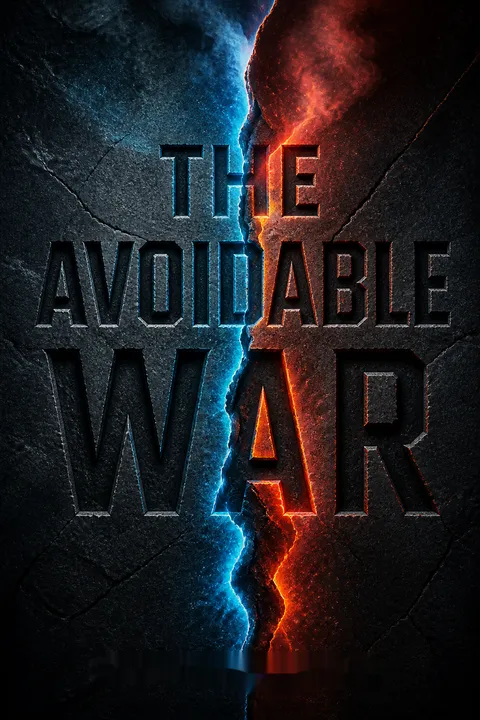


Key Takeaways
Treat great-power war as a political failure, not history's appointment.
History warns, but does not command. Kevin Rudd opens with the First World War, arguing that leaders' decisions in 1914 turned a crisis into mass slaughter. The Second World War's even greater toll showed how decisions made after one conflict can help set the conditions for another. Yet a rising power does not make war inevitable. Graham Allison's study of sixteen historical contests between rising and established powers found that about one quarter ended without war. Rudd stresses that Thucydides's famous account of Athens and Sparta may imply that war was probable, not predetermined.
Avoid both panic and surrender. Rudd rejects the idea that peace requires yielding every principle, as the Munich agreement with Hitler illustrates. His challenge is to preserve peace while defending freedom and core interests. The 2020s are dangerous, but political choices still matter.
The argument distinguishes structural pressure from fate. A shifting balance of power can make leaders more anxious and mistakes more costly, but it does not make their choices automatic. That distinction matters because claims of inevitability can become self-fulfilling: if officials expect war, they may treat restraint as weakness and interpret every move as hostile. The history Rudd invokes is a warning against complacency, not a forecast. His comparison with appeasement also usefully rejects a false choice between peace and principle, although deciding which interests justify risk remains the hardest judgment.
Do not confuse economic integration with agreement about political destiny.
The opening meant different things. The modern relationship repeatedly swung between suspicion and hope. In 1919, Chinese leaders and students expected Woodrow Wilson's promise of self-determination to help return German-held Shandong to China. Instead, the Versailles settlement awarded the territory to Japan, helping fuel protest and political radicalization. Much later, diplomatic normalization served China's practical needs for trade, technology, and security, while many Americans hoped economic opening would eventually liberalize China's politics.
A shared deal, separate purposes. Beijing largely treated the relationship as a way to build national strength. Washington often expected it to transform China's political system as well. China's WTO entry and rapid growth deepened economic ties, but did not erase that basic divergence. Rudd argues that, as economic, strategic, and multilateral cooperation weakened, the old relationship lost the supports that had kept it stable.
This history explains why a commercial success can coexist with strategic disappointment. A partnership is brittle when each side quietly assumes the other has accepted a different end point. The Versailles example also shows that memories of past betrayal can shape how later assurances are received. Such memories deserve attention, but they should not become an all-purpose license to treat every present action as proof of permanent hostility. Historical understanding is most useful when it clarifies a rival's fears without turning those fears into unquestionable facts.
Model how Beijing and Washington interpret moves, not just what they declare.
Intent is filtered through suspicion. Beijing sees US arms sales to Taiwan, technology restrictions, and regional alliances as efforts to contain China's rise. Washington points to China's island-building in the South China Sea, cyber operations, and economic practices as evidence that reassuring language does not match behavior. Each side believes the other uses diplomacy to disguise its real aims. Rudd calls this a deep trust deficit, not a problem that courteous summit statements can simply repair.
Read signals in context. Chinese leaders may see a US military exercise as preparation for intervention; American officials may see a Chinese patrol as another attempt to normalize control over disputed waters. Rudd argues that policy makers must understand how language and actions register within the other country's politics, institutions, and history. Public statements are imperfect evidence, but ignoring them entirely can leave observers constructing intentions from worst-case assumptions alone.
This is a practical account of the security dilemma: actions taken to feel safer can make the other side feel less safe, prompting countermeasures that confirm the original fear. The book's emphasis on interpretation helps explain why factual agreement alone may not settle disputes. Still, understanding another government's perceptions is not the same as accepting its account of events. Strategic literacy should improve prediction and communication, while independent assessment of observable behavior guards against mistaking empathy for endorsement.
Start with regime survival to understand Xi's wider ambitions.
The circles begin at home. Rudd's framework, the ten concentric circles of interest, organizes Xi Jinping's priorities from the closest to the most global. At the center are the Communist Party's continued rule and Xi's own authority. The next concerns include national unity, especially Taiwan, then economic prosperity, environmental sustainability, military strength, and relations with neighboring states. Further outward lie China's maritime periphery, its westward reach through the Belt and Road Initiative, influence in the developing world, and a more China-friendly global order.
A map, not a party document. Rudd says this ordering is his synthesis of years of conversations, observation, and study, not an official Chinese list. It helps explain why a foreign-policy issue may also be a domestic legitimacy issue: Taiwan, for instance, is connected to the party's claim to have completed national unification. Xi has also strengthened party control, ideology, and nationalism, treating regime security as the condition for pursuing every other priority.
The framework's chief strength is explanatory compression. It shows why disputes over territory, technology, or international rules can carry meaning beyond their immediate material value: they may be read as tests of the party's authority. That is a useful corrective to analyses that treat states as unitary actors pursuing only wealth or military advantage. The framework can also make policy look more coherent than it is. A leader's priorities do not eliminate internal disagreement, institutional incentives, or the possibility of miscalculation.
Xi's economic security drive may weaken the growth that sustains his rule.
Control competes with dynamism. Xi's New Development Concept prioritizes national self-reliance, a stronger role for domestic demand, and common prosperity, meaning a more equal distribution of gains. The shift reflects real concerns about inequality, dependence on foreign technology, and vulnerability to US restrictions. But it also gives the state and party greater direction over private companies. After China's 2015 stock-market collapse, when the Shanghai Composite fell 32 percent in less than three weeks, Xi became more skeptical of market-led reform.
The private sector matters. Vice Premier Liu He described private businesses as responsible for 90 percent of new employment, 80 percent of urban development, and 70 percent of technological innovation. Rudd sees a basic contradiction: Xi wants growth and jobs to support the party's legitimacy, yet tighter political control could discourage the businesses that generate them. The policy's success depends on whether security and redistribution can be pursued without suppressing investment and productivity.
The tension is not simply state versus market. Redistribution and social stability can support a durable economy, especially where concentrated gains undermine public confidence. The risk is that unpredictable intervention makes firms less willing to invest, innovate, or hire, weakening the very base that funds social goals. Rudd's analysis identifies that feedback loop well, but the outcome is not settled by ideology alone. The important test is whether policy produces broadly shared, sustained improvements in living standards rather than merely demonstrating state control.
Keep Taiwan's status quo from becoming a test of national credibility.
Taiwan is central to Beijing. The Communist Party treats unification as unfinished business, while Taiwan has developed a democratic political identity and many residents reject Beijing's proposed arrangement. The 2019 crackdown in Hong Kong damaged the credibility of the one country, two systems formula in Taiwan. After Taiwan's president Tsai Ing-wen won reelection in 2020, Beijing intensified pressure, including military activity near the island and efforts to restrict its international space.
Washington faces a delicate balance. The United States recognizes Beijing diplomatically while maintaining unofficial relations and defensive support for Taiwan under the Taiwan Relations Act. Its policy of strategic ambiguity leaves uncertain whether it would intervene militarily, aiming both to deter an attack and to discourage a unilateral move toward formal independence. Rudd warns that this arrangement can become unstable if leaders treat each signal as a challenge to national honor or resolve. He does not regard conflict as inevitable, but sees Taiwan as the most dangerous potential flashpoint.
Taiwan is a collision point between competing definitions of legitimacy: Beijing's claim to national unity, Taiwan's democratic self-government, and Washington's credibility with partners. Deterrence can preserve a status quo, but it can also become fragile when each side uses demonstrations of resolve for domestic audiences. Strategic ambiguity is therefore not a substitute for careful crisis communication. The framework also needs to take Taiwan's own political agency seriously, rather than treating the island merely as an object of US-China bargaining.
Measure competition beyond battleships: markets, alliances, and rules matter.
Influence travels through many channels. Xi's strategy extends beyond China's immediate borders. The Belt and Road Initiative had funded about 2,600 projects across one hundred countries by 2021, according to Rudd. China also seeks influence in existing international institutions while creating new ones. Its economic ties can encourage governments to accommodate Beijing, while disputes over Taiwan, the South China Sea, or human rights can push them toward Washington and its partners.
The regional balance is shifting. China's military modernization includes stronger naval, missile, cyber, and space capabilities, while the United States relies partly on its regional alliances. The revived Quad, linking the United States, Japan, India, and Australia, became a more serious source of coordination after a deadly 2020 border clash between India and China. Rudd's wider point is that power is built through economic access, technology, diplomacy, institutions, and military capacity together, not through troop counts alone.
This broader view avoids reducing rivalry to a contest of weapons. Development finance, technical standards, and diplomatic coalitions can shape what choices other governments believe they have. The same tools can also deliver useful infrastructure or public goods, so their effects cannot be judged solely by the sponsor's strategic intent. Rudd's account rightly highlights China's persistence and America's past neglect of alternatives. Yet the presence of a Chinese project or institution does not automatically mean its participants have become clients; local governments retain interests and bargaining power of their own.
Build guardrails that verify behavior instead of demanding trust.
Competition needs boundaries. Rudd's proposed managed strategic competition accepts that the United States and China will continue to compete, but argues they should agree on rules to reduce the chance of war. It has three parts: identify redlines whose breach could trigger escalation; define areas where rivalry is expected; and protect areas where cooperation serves both sides. Taiwan, maritime encounters, and cyberattacks on critical infrastructure are possible subjects for guardrails. Economic and technological competition would continue, while climate action, financial stability, and nuclear nonproliferation could remain areas for cooperation.
Verification replaces faith. Rudd argues that agreements should rely on each country's ability to monitor compliance, not on restored strategic trust. Senior officials with responsibility for the whole relationship would negotiate and manage disputes. Such a framework could not prevent every deliberate attack or guarantee peace. Its purpose would be to clarify expectations and give leaders a channel to investigate an incident before responding in ways that might escalate it.
The proposal's strength is its refusal to make goodwill a precondition for risk reduction. Verification can make limited commitments more credible even when political trust is absent. The difficult question is how to define a violation when the parties disagree over sovereignty, attribution, or what counts as a military act. Guardrails also require leaders to tolerate ambiguity long enough to establish facts. The framework is not a settlement of the rivalry; it is an effort to keep rivalry from turning a local incident into a systemic catastrophe.
Make America's alternative valuable enough that partners need not choose China.
Deterrence needs domestic strength. Rudd argues that the United States cannot sustain a China strategy through military pressure alone. It needs economic investment, innovation, education, infrastructure, and a stronger social contract at home. Abroad, it needs durable alliances and meaningful trade, investment, and development options. Asking other countries to reject China's market without offering comparable economic opportunities is unlikely to hold them close. Reengaging with institutions such as the United Nations, the World Trade Organization, and the G20 is part of restoring American influence.
Rivalry can leave room for cooperation. The author identifies climate change, financial stability, pandemic response, and nuclear proliferation as issues where US and Chinese interests overlap. Managed competition would allow each side to defend its system and compete for international support without trying to impose its model by force. The larger aim is not to end disagreement, but to preserve enough stability for both countries to build strength and address problems that neither can solve alone.
This closing argument treats legitimacy and material capability as connected. An alliance is more resilient when partners see tangible benefits in cooperation, and a political model is more persuasive when it delivers for people at home. That makes domestic renewal part of foreign policy, not a distraction from it. The challenge is political: trade openness and public investment can create uneven costs, so leaders must address who gains and who bears adjustment. Without that attention, a strategy designed to compete abroad can lose support at home.
Analysis
Rudd's central contribution is to shift the question from whether Washington or Beijing is morally right to whether their rivalry can be organized so that competition does not become war. He presents a causal chain: historical grievances and incompatible political systems produce distrust; distrust encourages worst-case interpretations; Xi's concentration of power and the changing military balance make those interpretations consequential; Taiwan and maritime disputes provide plausible points of contact. The book is strongest when it shows how domestic legitimacy turns external disputes into tests of leadership. Taiwan is not merely a piece of strategic geography, and US alliance credibility is not merely a military calculation. Each issue is embedded in national narratives that constrain compromise.
The ten-circle framework and the managed-competition proposal perform complementary jobs. The first helps explain Chinese priorities from regime survival outward. The second asks how the two governments might coexist despite disagreement over those priorities. Its most useful insight is that cooperation and rivalry need not be treated as mutually exclusive. A relationship can contain verifiable limits on dangerous conduct, intense competition in technology and diplomacy, and collaboration on shared threats.
The proposal's unresolved problem is political, not simply technical. Verification can reveal that an action occurred, but it cannot always determine whether that action crossed a contested redline or what response is proportionate. Nor can officials guarantee that domestic audiences will accept restraint after a crisis. A workable framework would therefore need procedures for attribution, consultation, and de-escalation, not only monitoring. It would also need to include Taiwan and affected regional states in ways that respect their agency, even though the core bargain would be bilateral.
Rudd's argument is neither a call for renewed faith in engagement nor a blueprint for victory. It is a warning that strategic competition without limits gives leaders too few safe choices under pressure. The book's realist answer is modest but important: preserve deterrence, make commitments observable, and keep channels open before the emergency arrives.
Review Summary
The Avoidable War receives mostly positive reviews for its insightful analysis of US-China relations and Xi Jinping's worldview. Readers appreciate Rudd's expertise and balanced perspective, though some find the writing dense. The book is praised for its historical context and strategic framework, but criticized for overlooking certain issues. Many reviewers find it informative and timely, while others disagree with some of Rudd's conclusions. Overall, it's considered a valuable resource for understanding current geopolitical tensions between the US and China.
People Also Read






Glossary
Thucydides's Trap
Rising power conflict riskA pattern in which the rise of one power creates fear in an established power, raising the risk of conflict. Rudd discusses the idea through Graham Allison's historical analysis, but rejects treating war as inevitable. The concept is useful as a warning about structural pressure, not as a law that removes leaders' agency.
Ten concentric circles of interest
Xi's layered priority mapRudd's framework for organizing Xi Jinping's priorities from domestic survival outward to global influence. The innermost concerns are party rule and Xi's authority, followed by national unity, prosperity, the environment, and military strength. The outer circles address neighbors, maritime strategy, the Belt and Road Initiative, developing-world influence, and the global order. It is Rudd's synthesis, not an official Chinese document.
Managed strategic competition
Competition bounded by rulesRudd's proposal for managing US-China rivalry without assuming trust or expecting the two countries to stop competing. It combines agreed redlines to reduce escalation risks, areas where competition can proceed, and fields where cooperation benefits both sides. Commitments would depend on monitoring and verification, with senior officials responsible for addressing disputes.
New Development Concept
Xi's security-focused economic strategyXi Jinping's framework for guiding China's economy amid internal and external risks. Rudd describes three main priorities: greater national self-reliance, a larger role for domestic demand alongside international trade, and common prosperity through a more equitable distribution of gains. The concept gives greater weight to security, political control, and social balance than to rapid market-led growth.
Gray-zone activities
Pressure below open warfareActions that advance a state's claims or strategic position without crossing the clear threshold of conventional armed conflict. In Rudd's account, examples include using coast guard forces, maritime militias, and other nominally nonmilitary assets to pressure rivals in disputed waters. Their incremental character can alter conditions while making a decisive response difficult.
Marxist-nationalist
Marxist rule, nationalist appealRudd's description of Xi Jinping's political approach. Marxist-Leninist ideology supplies party discipline and a rationale for one-party rule, while nationalism appeals to popular pride in China's history and revival. The combination links the Communist Party's political legitimacy to claims about national strength, unity, and resistance to foreign pressure.
FAQ
What’s The Avoidable War by Kevin Rudd about?
- Escalating US-China rivalry: The book examines the growing strategic competition between the United States and China under Xi Jinping, focusing on the risk of catastrophic conflict.
- Comprehensive analysis: It covers historical, political, economic, and ideological factors shaping the relationship, including China’s internal politics and America’s evolving response.
- Framework for peace: Rudd proposes a “managed strategic competition” framework to prevent war while allowing both powers to compete and cooperate where possible.
- Scenarios and solutions: The book presents detailed scenarios for the future of US-China relations, emphasizing the urgent need for strategic clarity and mutual understanding.
Why should I read The Avoidable War by Kevin Rudd?
- Expert perspective: Kevin Rudd, a former Australian prime minister and fluent Mandarin speaker, offers unique insider insights into both Chinese and American strategic thinking.
- Timely and relevant: The book addresses one of the most pressing geopolitical challenges of the 21st century, providing context for current events and policy debates.
- Balanced and pragmatic: Rudd avoids alarmism, instead offering a nuanced, realistic approach to managing US-China competition and avoiding war.
- Essential for policymakers and citizens: The analysis is valuable for anyone interested in global security, international relations, or the future of US-China dynamics.
What are the key takeaways from The Avoidable War by Kevin Rudd?
- China’s assertive shift: Under Xi Jinping, China has moved from a defensive to an activist global posture, seeking to reshape international institutions and norms.
- US strategic awakening: The US has shifted from engagement to open strategic competition, with bipartisan support for a tougher stance on China.
- Managed competition is vital: Rudd argues that only a framework of managed strategic competition can prevent catastrophic conflict and allow for peaceful coexistence.
- Multiple possible futures: The book outlines ten scenarios for US-China relations, ranging from peaceful coexistence to major armed conflict, highlighting the stakes involved.
How does Kevin Rudd define “managed strategic competition” in The Avoidable War?
- Framework for rivalry: Managed strategic competition is a structured approach where the US and China accept rivalry in certain domains while cooperating in others.
- Redlines and rules: It requires both sides to recognize each other’s strategic redlines (such as Taiwan), agree on rules to prevent accidental war, and establish verification mechanisms.
- Channeling competition: The framework channels rivalry into deterrence and non-lethal domains like economics and technology, reducing the risk of escalation.
- Cooperation on global issues: It also creates space for collaboration on shared challenges like climate change, arms control, and financial stability.
What is the “Thucydides’s Trap” and how does it relate to US-China relations in The Avoidable War?
- Historical pattern: Thucydides’s Trap refers to the tendency for war to break out when a rising power threatens to displace an established power, as seen in the Peloponnesian War.
- US-China application: Rudd explains that the US-China relationship exhibits many features of this dynamic, with China’s rise challenging US dominance and creating structural stress.
- War is not inevitable: While the logic suggests a high risk of conflict, Rudd argues that war can be avoided through strategic management and mutual understanding.
- Framework relevance: The concept underpins the need for managed strategic competition to prevent falling into this historical trap.
How does The Avoidable War by Kevin Rudd describe Xi Jinping’s worldview and leadership style?
- Ten concentric circles: Rudd organizes Xi’s priorities into ten circles, from personal power and party survival to global ambitions and reshaping the international order.
- Marxist-nationalist fusion: Xi’s ideology blends Marxist-Leninist principles with strong Chinese nationalism, aiming to restore China’s historical greatness.
- Centralized control: Xi has consolidated power through anti-corruption campaigns, ideological control, and purges, leaving no credible challengers.
- Strategic ambition: He seeks to make China a global superpower, with Taiwan’s reunification and technological leadership as core objectives.
What are the main sources of distrust between the US and China according to The Avoidable War by Kevin Rudd?
- Historical grievances: Both countries harbor deep suspicions rooted in past betrayals, ideological hostility, and conflicting national narratives.
- Strategic behavior: The US doubts China’s peaceful intentions, citing military expansion and cyberattacks, while China views US actions as containment and interference.
- Cultural and ideological gaps: Linguistic, cultural, and political differences exacerbate misunderstandings, with each side interpreting the other’s actions through a lens of suspicion.
- Mutual misperceptions: These factors create a cycle of distrust that complicates efforts to manage competition and avoid conflict.
How does The Avoidable War by Kevin Rudd explain the centrality of Taiwan in US-China relations?
- Core political issue: Taiwan is described as the “holy grail” of Chinese Communist Party politics and a fundamental obstacle in US-China relations.
- US strategic ambiguity: The US supplies Taiwan with defensive arms and maintains a policy of ambiguity, committing to respond to non-peaceful changes in Taiwan’s status.
- Escalating tensions: Xi Jinping’s leadership has hardened China’s stance, accelerating military modernization aimed at Taiwan and rejecting “one country, two systems.”
- Potential flashpoint: The risk of military conflict over Taiwan is identified as the most likely trigger for a catastrophic US-China war.
What are the key elements of China’s economic strategy under Xi Jinping in The Avoidable War?
- Self-reliance focus: Xi prioritizes national self-reliance, especially in technology and economic resilience, to shield China from external pressures and sanctions.
- State over market: Markets are seen as tools for national power but are subordinate to party and state control, marking a shift from Deng Xiaoping’s reforms.
- Dual-circulation model: The strategy emphasizes boosting domestic consumption while maintaining selective global engagement.
- Response to US pressure: Trade wars and technology restrictions have accelerated efforts in indigenous innovation, particularly in semiconductors and AI.
How does The Avoidable War by Kevin Rudd describe China’s military modernization and regional ambitions?
- PLA transformation: Xi has reformed the People’s Liberation Army into a high-tech force capable of joint operations and power projection beyond China’s borders.
- Naval expansion: The PLA Navy is prioritized, with a focus on “open seas protection” and anti-access/area denial capabilities.
- New military branches: The creation of the Rocket Force and Strategic Support Force integrates nuclear, cyber, space, and electronic warfare.
- Accelerated timeline: Xi has advanced the goal of a world-class military to 2027, reflecting ambitions to influence Taiwan and regional dynamics.
What role do technology and standards-setting play in US-China competition according to The Avoidable War by Kevin Rudd?
- 5G and digital leadership: China leads in 5G technology and exports infrastructure through the Digital Silk Road, raising US security concerns.
- Global standards battle: China aims to set global standards in AI, telecommunications, and biotech, using proposals like “New IP” to promote state-controlled internet models.
- US pushback: The US seeks to maintain technological dominance and prevent Chinese control over critical infrastructure and standards.
- Strategic importance: Standards-setting is identified as a key battleground for long-term influence in the global order.
What are the main scenarios for the future of US-China relations outlined in The Avoidable War by Kevin Rudd?
- Ten possible futures: Rudd presents scenarios ranging from peaceful coexistence to major armed conflict, including limited wars, stalemates, and economic decoupling.
- Conflict over Taiwan: Several scenarios involve military escalation over Taiwan, the South China Sea, or other regional flashpoints.
- Best and worst cases: The optimal outcome is managed competition without war, while the worst involves economic collapse, political instability, or military defeat.
- Emphasis on prevention: The scenarios underscore the unpredictability and catastrophic potential of unmanaged rivalry, reinforcing the need for strategic frameworks.
Download PDF
Download EPUB
.epub digital book format is ideal for reading ebooks on phones, tablets, and e-readers.








