

Key Takeaways
Treat Asia as a connected megaregion, not a synonym for China
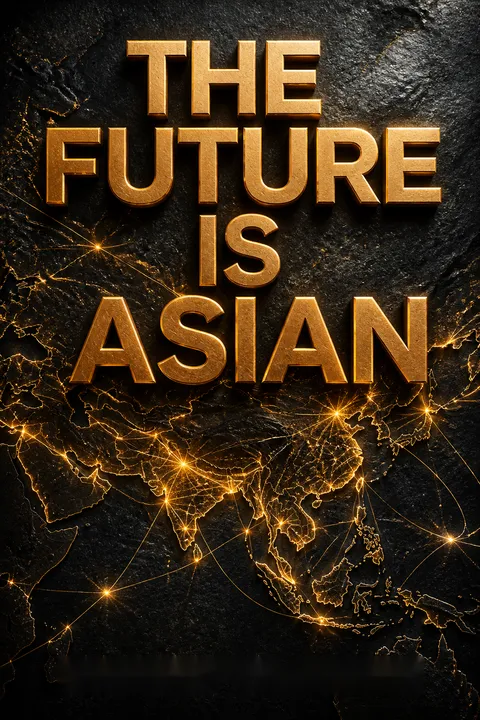
The map is bigger. Khanna defines Asia as a vast region stretching from the Mediterranean and Red Seas to the Pacific, encompassing 53 countries and nearly 5 billion people. It includes West Asia, Central Asia, South Asia, East Asia, Southeast Asia, Russia, and Australia. In the book’s 2019 snapshot, the region represented about half of global GDP and roughly two-thirds of economic growth. China matters enormously, but it is only one part of this geography.
Connection changes the picture. The 2017 Belt and Road summit in Beijing brought together 68 countries, representing two-thirds of the world’s population and half its economy. For Khanna, it signaled that Asia was building links across regions, not merely celebrating China’s rise. The argument starts with a change of scale: see the network, not just its largest node.
What's striking is how a map can shape political imagination. If Asia is treated as a set of distant subregions, their growing trade and shared infrastructure look like isolated developments. A wider map reveals how decisions in the Gulf, India, and China can affect the same supply chains. Network analysis offers a useful distinction: connectivity does not automatically create shared identity or trust. Khanna’s geographic reframing is persuasive as a way to notice relationships, but the scale also risks making an immensely diverse region sound more unified than its people or governments feel.
Read world history through Asia’s old networks, not only Western contact
Asia was connected early. Khanna’s historical account follows trade, migration, conquest, and religious exchange from Mesopotamia and the Indus Valley to China, Japan, and Southeast Asia. Silk Road merchants carried goods and ideas; Buddhism moved from India through Central Asia into East Asia; maritime trade linked Indian ports with Southeast Asian kingdoms. These were not side stories waiting for European arrival. They were central routes of commerce and learning.
Empire was never one-way. Before the Industrial Revolution, China, India, and Japan together generated more economic output than several major Western economies combined, according to the historical estimates cited in the book. European power later grew through industrialization and empire, while Asia’s divisions made outside domination easier. The lesson is not that the West was irrelevant, but that histories become distorted when Asia appears only when Europeans encounter it.
This approach resembles global history, which studies regions as mutually shaping one another rather than as sealed national stories. It corrects a common textbook bias: treating Asian inventions and empires as background until they enter a European narrative. The emphasis on exchange also complicates simple stories of cultural purity. Yet a counter-narrative can overcorrect if it substitutes a single Asian center for a Western one. The strongest version of Khanna’s point is methodological: ask who traded, translated, migrated, and borrowed across boundaries, and whose perspective has been left out.
Expect an Asian system, not a unified Asian superpower
A system means interdependence. Khanna uses the term for countries connected by trade, diplomacy, infrastructure, institutions, and security relationships. Asia is building such links through bodies including ASEAN, the Asian Infrastructure Investment Bank, and the Regional Comprehensive Economic Partnership. Unlike the European Union, this emerging system has no common parliament, currency, or central authority. Coordination is looser and more practical than constitutional.
Rivalry can coexist with cooperation. China, India, and Japan compete, and Asian states maintain serious territorial and security disputes. At the same time, they trade, invest, conduct diplomacy, and form overlapping partnerships. Khanna argues that Asia’s long history is multipolar: powerful states face resistance from neighbors and rarely command the whole region. The likely outcome, in his view, is not one Asian empire, but a crowded order in which countries bargain and hedge.
The distinction between a region and a system is useful because it shifts attention from borders to repeated interaction. In international-relations theory, interdependence can raise the cost of conflict without eliminating it, which fits Khanna’s picture better than either a harmonious bloc or inevitable war. His emphasis on multipolarity also cautions against reducing Asia to a US-China contest. The limitation is that institutions and trade do not guarantee restraint; they may also distribute leverage unevenly. A system is a description of dense relationships, not proof that its members can resolve disputes fairly.
Build connectivity without mistaking Chinese investment for automatic control
Infrastructure changes choices. The Belt and Road Initiative, or BRI, is China’s large program of financing and building roads, railways, ports, pipelines, and other links across Asia and beyond. Khanna presents it as an accelerator of regional development, backed by Chinese capital and institutions such as the Asian Infrastructure Investment Bank. It can connect landlocked countries to markets and give governments new options for trade and investment.
Partners retain agency. The book describes countries renegotiating projects, rejecting particular terms, or welcoming competing investors from India, Japan, Turkey, and South Korea. In this account, Chinese first-mover investment can make a place more visible to other financiers rather than securing Beijing’s loyalty. But infrastructure also creates debt and strategic dependence, and the benefits may be uneven. BRI’s outcomes depend on local bargaining, project quality, and whether growth can support repayment.
Infrastructure is not politically neutral: a railway can lower transport costs while also redirecting trade and creating long-lived dependencies. Khanna’s strongest insight is that recipient governments are not passive pieces on a Chinese chessboard. Political economy adds an important test: who bears the debt, who owns the asset, who gets the contracts, and who can change the terms? The book’s optimism about competing investment is plausible, but competition alone does not protect citizens. Transparent procurement and credible debt assessment determine whether connectivity expands local options or merely changes who holds leverage.
Follow Asia’s growth into younger markets, not just its aging giants
Growth arrives in waves. Khanna traces modern Asian expansion from postwar Japan and South Korea, to greater China, and then toward South and Southeast Asia. In the book’s account, the emerging growth zone from Pakistan through Indonesia contains about 2.5 billion people, while Turkey, Saudi Arabia, and Iran add another large population center. As China’s growth slows and its population ages, younger economies are gaining manufacturing, investment, and consumption.
Regional trade cushions shocks. The book reports that intra-Asian trade rose from 29 percent of the region’s total trade in 2009 to 57 percent in 2016. Japanese, Korean, and Chinese firms invest in younger economies, moving production while opening new customer markets. Khanna calls this additive growth: the next wave does not simply replace the previous one. The opportunity is broad, but prosperity remains uneven across countries and within them.
The generational lens improves on the habit of reading Asia through China’s GDP alone. Demography, wages, and investment patterns help explain why supply chains shift toward Vietnam, India, and Indonesia even as older industrial centers remain powerful. This is also a reminder that regional growth is relational: aging economies supply capital and technology, while younger ones provide labor and expanding markets. Still, population size is not a forecast of prosperity. Education, health, infrastructure, and institutions determine whether a demographic advantage becomes productive work or unmet expectation.
Watch Asian firms turn scale into local technology and financial systems
Late development can leap ahead. Khanna describes countries adopting newer systems without first building every older version. Mobile banking can spread before branch networks; digital identification can link people to services; online marketplaces can connect small firms to customers. India’s Aadhaar identity system and China’s mobile payment platforms illustrate how digital tools are being used at enormous scale. In Indonesia, Go-Jek grew from motorcycle transport into a broader logistics and payment service.
Innovation is regional. Asian firms learn from one another and adapt products to local languages, prices, habits, and regulations. The book’s examples include Chinese payment platforms expanding through partnerships and Asian ride-hailing firms displacing Uber in several markets. These are not simply copies of Silicon Valley. They show how local knowledge and a large customer base can create different business models. But fast adoption raises questions about privacy, competition, and access.
The idea of leapfrogging is valuable when it directs attention to what a technology enables, rather than whether a country followed the historical path of richer economies. Large user bases can produce rapid feedback and make low-cost services viable. Yet scale also concentrates power: an app that handles payments, identity, and commerce may become essential infrastructure without the accountability expected of a public utility. The key question is not whether the technology is innovative, but who controls the data, who can opt out, and whether the gains reach people beyond already connected urban users.
Judge governments by delivery, but never confuse efficiency with consent
Technocracy prizes problem-solving. Khanna defines technocratic government as expert-led, long-term planning aimed at practical results. Singapore is his central example: officials use performance measures, scenario planning, professional civil servants, and public feedback to manage housing, transport, education, and other services. Its model combines open markets with strong state involvement, public consultation, and a capable administrative system.
Competence is not enough. The book argues that elections alone do not ensure effective government, while good administration can improve daily life. It also describes Singapore’s constrained political competition and debates over civil liberties. Khanna’s case is therefore not simply that less democracy is better. It is that public input and state capacity need to work together, and that governments must be able to correct mistakes. A polished plan matters less than reliable services, fair access, and meaningful ways for citizens to challenge power.
This is a useful distinction between the machinery of representation and the capacity to implement policy. Public administration research has long treated competent civil services as essential to turning rights and budgets into actual services. Singapore shows how feedback systems and professional expertise can improve execution. The harder issue is accountability: if leaders define success through their own metrics, efficiency can conceal excluded voices or coercion. Performance should therefore be judged alongside independent oversight, political rights, and distribution. Delivery builds trust, but trust cannot substitute indefinitely for the ability to contest decisions.
See Asianization as an added layer, not a civilizational takeover
Influence travels both ways. Khanna uses Asianization to describe the growing presence of Asian economies, people, institutions, technologies, and cultural products in global life. The examples range from Asian investment and migration to Bollywood films, Korean pop, Japanese design, and Asian food. The process also runs inward: Asian societies absorb Western languages, business practices, and technologies while adapting them to local conditions.
Cultures accumulate. The book argues that Asian influence is more like an additional layer than a wholesale replacement of European or American influence. Students, workers, tourists, and artists carry ideas across borders, while mixed families and multilingual cities make identities less fixed. This does not mean a common Asian identity has arrived. Khanna portrays Asia as a cultural sponge: connected and increasingly familiar to itself, yet too diverse to speak with one voice.
The layered model is more convincing than a winner-takes-all account of cultural power. Cultural studies often treats influence as translation: a borrowed form changes as it enters a new setting, as with localized food or music. That framing also recognizes ordinary people as participants, not just governments and corporations. Still, the word Asianization can blur whose culture is spreading and who profits from it. Cultural circulation may coexist with exclusion, labor exploitation, or unequal media ownership. Hybridity is real, but it is not automatically equal or consensual.
Track Africa and Latin America as partners in Asia’s expanding network
The map extends outward. Khanna follows Asia’s growing relationships with Africa and Latin America through commodity trade, infrastructure investment, finance, and migration. In Africa, Chinese projects have helped build ports and railways, while Indian, Japanese, and other Asian firms also seek opportunities. Across the Pacific, Latin American countries export food and minerals to Asian markets and attract investment in energy, transport, and industry.
Local bargaining still matters. The book presents these connections as more than a replay of Western empire: governments can negotiate among competing investors and use new infrastructure to expand trade. But the author does not erase risks such as debt, corruption, environmental damage, or dependence on commodity exports. The strategic question for recipient countries is whether foreign capital builds productive capacity, skills, and local firms, or leaves them with liabilities and few alternatives.
Khanna’s strongest contribution here is to make developing regions actors in their own right. Competition among outside investors can improve a government’s bargaining position, but only when it has the expertise and institutions to evaluate deals. Development economics distinguishes investment volume from structural transformation: a new port matters most when local firms can use it to diversify production and employment. The caution is especially important because infrastructure benefits are visible immediately, while debt and environmental costs may surface over years. Strategic choice requires public scrutiny, not merely a menu of foreign suitors.
Demand Asian-led growth deliver public goods without hiding its costs
Power is changing shape. Khanna describes a multipolar world in which the United States, Europe, and Asia each provide different forms of influence. Asian-led infrastructure, investment, trade, and technology increasingly shape global rules and daily life. The book argues that Asia is not simply replacing the West: ideas and institutions from different regions are mixing into a more diverse order.
Public benefits need safeguards. Roads, ports, power grids, digital services, and clean-energy technologies can help countries participate in wider markets. They can also carry costs: debt, pollution, surveillance, and unequal access. Khanna’s central challenge is to build shared systems without assuming that growth alone makes them legitimate. The practical test is whether projects improve people’s lives while preserving local choice, protecting the environment, and giving affected communities a voice.
The public-goods lens sharpens the book’s argument about global leadership. A road or power grid can benefit users well beyond the country that financed it, unlike a military alliance designed around narrower commitments. But calling infrastructure a public good should not settle the question of its value: access, affordability, ecological damage, and control still matter. The most durable global order is not merely multipolar in who funds it. It is plural in who sets priorities and accountable for how costs and gains are distributed.
Analysis
The book’s most useful move is not its prediction that Asia will dominate, but its insistence that the unit of analysis is changing. China is not an isolated challenger to the United States. It is embedded in dense relationships linking energy producers, manufacturing centers, financial hubs, labor markets, and consumer populations. This shifts geopolitical thinking from a ladder of national rankings to a map of overlapping networks. It also explains why the book gives infrastructure, trade, migration, and institutions as much attention as military power.
That framework is stronger as a description of integration than as a forecast of shared purpose. Trade can create mutual stakes, but those stakes are distributed unequally and can intensify competition over strategic chokepoints, debt, data, and territory. Likewise, a region can be economically connected without possessing a common political identity. Khanna acknowledges diversity and rivalry, yet his expansive definition of Asia sometimes turns geographical inclusion into an implied coherence. The category is useful precisely when it remains a question, not an answer.
The book also makes a persuasive case for taking Asian governance models seriously without treating their popularity or efficiency as proof of legitimacy. Singapore’s administrative capacity and infrastructure planning are concrete strengths. They do not settle how much political contestation citizens should have, or who is excluded from a government’s definition of social order. The same distinction applies to growth: rising trade, new cities, and digital access are outcomes to examine, not synonyms for inclusive welfare.
Finally, the book’s statistics and forecasts belong to its 2019 moment. They illuminate a structural argument, but exact rankings and projections are not timeless. The durable takeaway is methodological: assess power through networks, ask who gains agency from connection, and judge institutions by both what they deliver and what they permit people to contest. Asianization is best understood as a contested rebalancing and cultural layering, not a clean handover from one civilization to another.
Review Summary
The Future Is Asian receives mixed reviews. Many praise its comprehensive overview of Asia's rising influence, historical context, and future potential. Readers appreciate the author's insights into Asian governance models and economic developments. However, some criticize the book for being overly optimistic about China and technocracy, lacking depth on certain topics, and having a disorganized structure. Despite these critiques, many find it an eye-opening read that challenges Western perspectives and provides valuable information on Asia's growing global importance.
People Also Read








Glossary
Asianization
Asia’s growing global influenceThe book’s term for the spread of Asian economic weight, institutions, people, technologies, and cultural influence across the world. It describes a cumulative process rather than a wholesale replacement of Western influence. Asianization can mean investment and trade, but also migration, education, media, food, and the adaptation of Asian governance and business practices.
Asian system
Interdependent regional relationshipsA regional network in which countries interact through trade, investment, diplomacy, security relationships, institutions, infrastructure, and cultural exchange. In Khanna’s account, Asia is becoming a system rather than merely a geographic expanse. Its members remain sovereign and often compete, but their repeated interactions make their choices increasingly interdependent.
Belt and Road Initiative
China’s global infrastructure programChina’s program of financing and building infrastructure and commercial links across Asia and beyond. Projects include transport routes, ports, pipelines, energy systems, and digital connections. Khanna presents the initiative as a major driver of regional connectivity, while emphasizing that recipient countries can negotiate, reject, or reshape projects and that debt and unequal leverage remain important risks.
Open regionalism
Regional integration with global linksAn approach in which countries deepen economic ties within their region while continuing to trade and cooperate with the rest of the world. Khanna contrasts this with closed blocs. Asian economies can coordinate supply chains and agreements among themselves without abandoning wider global markets or partnerships.
Neomercantilism
State-backed commercial expansionAn economic approach in which governments actively support domestic firms, industries, exports, and strategic investments rather than relying on unrestricted markets alone. In the book, Asian governments use tools such as industrial policy, state-owned companies, protected sectors, and public finance to pursue national development and compete internationally.
Technocracy
Expert-led practical governanceA system of government that relies on professional expertise, evidence, long-term planning, and administrative competence to solve public problems. Khanna’s example is Singapore, where civil servants use planning, performance measures, and public feedback to guide policy. The term concerns governing capacity, not a guarantee of democratic rights or public accountability.
Inclusive Development Index
Broader measure of national progressA measure cited in the book that assesses development using more than total economic output. It includes factors such as income, poverty, inequality, employment, life expectancy, household savings, and environmental intensity. Its purpose is to compare whether economic growth is improving living conditions and spreading gains, rather than simply enlarging GDP.
Second-mover advantage
Adopting newer systems directlyThe possibility that a country developing later can skip older technologies or institutions and adopt newer ones at once. The book’s examples include mobile banking spreading before extensive branch networks and renewable energy expanding without first building the same fossil-fuel infrastructure as earlier industrializers. The advantage depends on access, skills, and effective implementation.
Geopolitical jujitsu
Using rivals’ momentum against themKhanna’s analogy for Asian states responding to stronger powers through flexible partnerships, strategic hedging, and defensive positioning rather than fixed blocs. Countries may cooperate with one power in one area while balancing it elsewhere. The aim is to avoid being forced into a binary alignment and to make an opponent’s overreach costly.
Afroeurasia
Connected Africa, Europe, and AsiaA historical and geographic frame for the interconnected landmasses of Africa, Europe, and Asia, especially the networks linked by the Indian Ocean and long-distance trade. Khanna uses it to describe renewed African and Asian commercial ties as a return to older patterns of exchange, rather than an entirely new relationship created by contemporary investment.
FAQ
What’s The Future Is Asian by Parag Khanna about?
- Comprehensive analysis of Asia’s rise: The book explores Asia’s resurgence as the dominant force shaping the 21st century, covering economic, political, cultural, and governance dimensions.
- Asia as a megaregion: Khanna defines Asia broadly, stretching from the Mediterranean to the Pacific, and emphasizes its diversity and interconnectedness.
- Historical and contemporary context: The narrative traces Asia’s historical centrality, the disruptions of colonialism, and its current re-integration and influence on global affairs.
- Multipolar and multicultural focus: The book stresses that Asia is not a monolith but a complex, multipolar region with diverse civilizations and systems.
Why should I read The Future Is Asian by Parag Khanna?
- Challenges Western-centric narratives: The book offers an inside-out perspective on Asia, helping readers understand why Asia is now the world’s largest economic and demographic force.
- Nuanced geopolitical analysis: Khanna provides insight into Asia’s multipolarity, the roles of major powers, and the mechanisms driving regional integration.
- Governance and future trends: Readers gain valuable lessons on technocratic governance, economic models, and how Asia’s rise will shape global markets and international relations.
- Essential for global understanding: The book is recommended for policymakers, business leaders, and anyone interested in the future world order.
What are the key takeaways from The Future Is Asian by Parag Khanna?
- Asia’s central role: Asia is becoming the dominant economic, political, and cultural force of the 21st century, surpassing Western influence.
- Multipolar and diverse: The region is characterized by multiple powers, civilizational diversity, and a pragmatic approach to integration and cooperation.
- Technocracy and governance: Asian countries often favor technocratic, meritocratic governance models that emphasize stability, long-term planning, and data-driven policy.
- Global impact: Asia’s rise is reshaping global norms, trade, technology, and culture, leading to a hybrid global order.
How does Parag Khanna define “Asia” and its diversity in The Future Is Asian?
- Asia as a vast megaregion: Khanna defines Asia as stretching from the Mediterranean and Red Seas to the Pacific Ocean, encompassing 53 countries and nearly 5 billion people.
- Cultural and ethnic mosaic: The region includes a wide range of ethnicities, languages, religions, and economic statuses, from wealthy city-states to developing nations.
- Civilizational complexity: Asia is home to Hindu, Buddhist, Sinic, Islamic, Japanese, and Orthodox cultural zones, each with distinct identities and interests.
- Critique of Western labels: The book challenges terms like “Far East” or “Middle East,” advocating for more precise geographic and cultural terminology.
What is the main theme of The Future Is Asian by Parag Khanna?
- Asia’s rising influence: The central theme is Asia’s emergence as the world’s dominant economic, political, and cultural force.
- Asianization process: The book details how Asian countries are integrating through trade, infrastructure, and diplomacy, building a regional strategic culture.
- Shift in global power: Khanna emphasizes the decline of US influence in Asia and the rise of Asian countries’ collective resilience and cooperation.
How does The Future Is Asian by Parag Khanna describe Asia’s economic growth and integration?
- Three waves of growth: The book identifies postwar Japan and South Korea, the rise of Greater China, and the current acceleration in South and Southeast Asia as key growth waves.
- Additive and complementary model: These waves build on each other, creating a larger, more integrated Asian economic system with increasing intra-Asian trade and investment.
- Demographic drivers: Young populations in countries like India and Indonesia complement aging societies, fueling sustained economic expansion.
What is the Belt and Road Initiative (BRI) and its significance in The Future Is Asian by Parag Khanna?
- Transformative infrastructure project: The BRI is a massive Chinese-led initiative to connect Asia, Europe, and Africa through trade corridors, ports, and railways.
- Symbol of Asian leadership: Khanna presents BRI as the most significant diplomatic project of the 21st century, marking Asia’s return to global leadership.
- Complex regional dynamics: While often seen as a tool of Chinese hegemony, the BRI accelerates modernization and competition, with many Asian countries participating willingly and balancing China’s influence.
How does Parag Khanna characterize Asian capitalism and economic models in The Future Is Asian?
- State-directed capitalism: Many Asian countries blend market openness with strong state involvement, using industrial policies and state-owned enterprises to guide growth.
- Family businesses and conglomerates: Family-run conglomerates and state-backed companies dominate many sectors, reflecting a mix of capitalism and community values.
- Investment-led growth: Asia prioritizes investment in infrastructure, technology, and industry, often defying Western economic dogma that favors consumption-led growth.
What are the key differences between Western and Asian worldviews according to The Future Is Asian by Parag Khanna?
- Order and pragmatism: Asians prioritize regional autonomy, technocratic governance, and social cohesion, contrasting with Western liberal democratic ideals.
- Multipolar approach: Asia’s multipolarity and pragmatic alliances differ from Western-led global governance models.
- Economic and political priorities: Asian societies emphasize inclusive growth and state guidance, often balancing democratic impulses with technocratic efficiency.
How does The Future Is Asian by Parag Khanna explain Asian technocracy and governance models?
- Meritocratic governance: Asian technocracies, like Singapore and China, prioritize expertise, long-term planning, and data-driven policy-making.
- Self-correcting systems: These governments adapt policies based on public feedback and scenario planning, ensuring stability and responsiveness.
- Contrast with Western democracy: Khanna argues that technocracy can deliver consistent national performance, avoiding the gridlock and short-termism of electoral politics.
What role do migration and diaspora play in Asia’s future according to The Future Is Asian by Parag Khanna?
- Intra-Asian migration: Asia is both the largest source and destination of migrants, with millions moving within the region for work and opportunity.
- Global diaspora influence: Asian communities abroad contribute economically, culturally, and politically, strengthening ties back to Asia.
- Evolving identities: Intermarriage and multiculturalism are reshaping Asian societies, fostering a more inclusive, pan-Asian consciousness.
How does The Future Is Asian by Parag Khanna describe Asia’s cultural renaissance and global influence?
- Revival and fusion: Asia is experiencing a resurgence in arts, literature, music, and cuisine, blending ancient heritage with modern innovation.
- Global cultural exports: Asian pop culture, film, and philosophies are gaining worldwide popularity, influencing entertainment, fashion, and lifestyle trends.
- Soft power and identity: Asian countries invest in cultural diplomacy and branding, using their cultural products and philosophies to enhance global influence.
About the Author
Other books by Parag Khanna

Download PDF
Download EPUB
.epub digital book format is ideal for reading ebooks on phones, tablets, and e-readers.








