

Plot Summary
A Body at Gossington
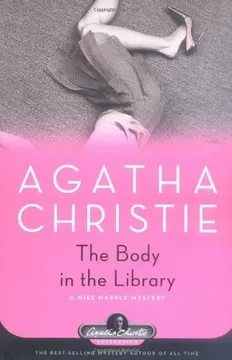
A housemaid finds a young woman strangled on the library rug at Gossington Hall, home to Colonel Arthur Bantry and his wife, Dolly. Arthur doubts the report until he sees the body: a heavily made-up blonde in a glittering dress, utterly out of place among the family's worn chairs and old books.
Dolly calls her friend Miss Marple, not simply for comfort but because she wants to understand how the stranger reached her house. The police begin their work, while Dolly and Miss Marple notice how young the victim looks beneath her theatrical appearance. Before they have any answers, village gossip turns the discovery into an accusation against Arthur, and the couple's familiar home becomes a public spectacle.
The first shock is not only the body but its placement. A private room associated with habit and respectability becomes a stage on which the village can project its suspicions. Dolly's brisk curiosity gives her agency, but it also exposes the danger of treating murder as entertainment: her investigation is driven by affection for Arthur and fear of what rumor will do to him. Miss Marple's attention to the girl's youth counters the spectacle of costume and makeup. Before anyone knows the victim's name, the story asks readers to see a person where the setting and gossip invite them to see a scandal.
The Blonde Who Wasn't
Colonel Melchett, the county chief constable, follows a village lead to Basil Blake, a film-studio worker whose parties have brought disapproval and gossip to the neighborhood. Basil mocks the inquiry until Dinah Lee arrives, a platinum blonde who is very much alive and furious with him.
Her appearance rules out the woman in the library as Basil's known companion. A report from a nearby police force then gives the victim a name: Ruby Keene, an eighteen-year-old dancer missing from the Majestic Hotel in Danemouth.
Ruby's cousin, Josephine Turner, known as Josie, confirms her identity and recounts that Ruby disappeared after dancing. Josie admits she delayed reporting the absence because she expected Ruby to return and feared trouble for the hotel.
The first apparent solution collapses because resemblance is not identity. Basil's girlfriend fits the village's ready-made image of a glamorous stranger, but her arrival alive forces the investigation beyond local gossip. Ruby's identification shifts the case from the Bantrys' library to the hotel, where work, reputation, and private attachments shape what witnesses are willing to say. Josie's hesitation is plausible rather than conclusive: protecting her position explains her delay, but her anger at Ruby's disappearance leaves an unanswered question. The book steadily distinguishes what people see from what they know, and what they know from what they choose to disclose.
Ruby's Last Dance
At the Majestic, the manager describes Ruby as a quiet young dancer who had become a favorite of wealthy guest Conway Jefferson. Josie says Ruby was last seen dancing with George Bartlett, a hesitant young hotel guest, before she went upstairs and failed to appear for her next performance.
Raymond Starr, Ruby's dance partner, recalls that Josie was alarmed when Ruby missed the midnight number and privately suspected she might be with Basil Blake.
Conway's daughter-in-law, Adelaide Jefferson, and son-in-law, Mark Gaskell, say Ruby had spent much of the evening with their family before returning to the ballroom. Their accounts place them at a bridge table during the disappearance, but each offers a different reading of Ruby's influence over Conway.
The hotel creates a crowded field of partial knowledge. Bartlett remembers little, Raymond notices Josie's concern, and the Jefferson household has both access to Ruby and reasons to dislike her. None of these fragments proves guilt, yet their differences matter: embarrassment, professional self-interest, and family loyalty all shape testimony. The bridge table appears to offer an ordinary timeline, while the missed dance suggests a deliberate absence. Ruby's role as entertainer also makes her visible without making her understood. People know her costumes, routines, and usefulness to the hotel, but the question of whom she trusted remains concealed.
The Adoption Fortune
Conway Jefferson explains that Ruby's cheerful company had eased the loneliness left by an air crash that killed his wife, son, and daughter and left him without the use of his legs. He had begun legal steps to adopt her and recently changed his will to place fifty thousand pounds in trust for her.
His remaining estate would go to Adelaide and Mark, who are not his blood relatives and have already received much of their inheritance. The police learn that both are under financial pressure, especially Mark, a gambler. Yet their bridge-game alibi appears to cover the likely time of Ruby's death. Conway sees his attachment as generosity; Miss Marple suspects that grief and family strain made him vulnerable to Ruby's attention.
The bequest turns affection into a material fact without reducing it to mere greed. Conway's generosity is sincere, but it grows from a specific wound: he has built a life in which his dead family remains emotionally present, while the surviving household has begun to seek room for change. Ruby's attention gives him a renewed sense of purpose, and the will makes that private attachment consequential for everyone around him. Miss Marple's suspicion is less a verdict than a refusal to idealize motives. The same act can be compassionate to Conway and threatening to relatives who feel their futures are being rewritten.
The Quarry's Second Victim
Police find a car burned out at a quarry near Danemouth, with a girl's body inside. A shoe and a button from a Girl Guide uniform point them toward Pamela Reeves, a sixteen-year-old who failed to return from a rally. The car belongs to George Bartlett, who had only just reported that he could not find it and could not say when he had last seen it.
Investigators connect Pamela's route home to a footpath passing the Majestic and wonder whether she witnessed something connected to Ruby's disappearance. The new death deepens the danger and complicates the case: the police now have two victims, a missing vehicle, and no clear motive linking them.
The second body changes the case from a murder in a country house into a pattern that may be continuing. Pamela's uniform, the burned car, and Bartlett's evasive uncertainty offer tangible links, but they do not yet explain how the deaths connect. The police understandably treat the physical clues as identification, showing how evidence can be accurate in detail yet misleading in its overall story. Miss Marple's immediate interest in the possibility of a witness points to a different kind of reasoning: not a dramatic leap, but attention to who might have crossed whose path. The danger now includes a living community still unaware of what the killer may do next.
The False Screen Test
At Superintendent Harper's request, Miss Marple questions the Girl Guides who knew Pamela. She notices that Florence Small relaxes too quickly after her interview and calls her back.
Florence then admits Pamela was not going shopping: a man claiming to be a film producer had promised her a screen test in Danemouth and urged her to keep the meeting secret. Pamela had confided the plan to Florence before the rally, then walked toward the hotel after claiming she would visit a shop.
Miss Marple recognizes the lure as a calculated exploitation of a teenager's ambition. Meanwhile, she questions the accepted account of Ruby's movements, noticing that the library victim's short nails and worn dress do not fit the story of a young woman preparing for a rendezvous.
Miss Marple's method combines close observation with social knowledge. She detects Florence's concealed information in the small shift of her behavior, then gives the girl a way to tell the truth without being treated as a suspect. The false screen test reveals how a familiar fantasy can function as a weapon: Pamela is not careless so much as carefully encouraged to believe she has been singled out. At the same time, the nails and dress resist the police's tidy account of Ruby changing to meet someone. Miss Marple's insights arise from noticing discrepancies between a person's supposed intentions and the ordinary choices those intentions would produce.
The Wrong Body's Journey
Miss Marple visits Basil and Dinah at their cottage just as police suspicion closes in. Dinah reveals that she and Basil are married, not an unmarried couple as the village assumes. Basil, frightened after a drunken night, admits he found a dead young woman on his hearth and carried her to the Bantrys' library as a spiteful prank against Arthur.
He believed the woman was Ruby, though he had not killed her. His confession explains why the body reached Gossington, but not who killed her. Miss Marple also sees that the corpse's nails do not match the explanation that Ruby had broken one and clipped the others. Basil's mistake has distorted the crime scene, and Dinah's hidden marriage prompts Marple to investigate other concealed marriages.
Basil's confession separates two acts that the police had fused: killing and moving a body. His attempt to punish Arthur with a grotesque joke makes him culpable in the body's placement, but not in the murder. That distinction is morally and evidentially important, because panic can produce behavior that looks like guilt while obscuring the original crime. Dinah's secret marriage further unsettles the village's confidence in appearances. Miss Marple follows the implication outward: if one couple has hidden a legal bond behind a public performance, another may have done the same. The case's central problem is no longer simply who had access, but whose public identity has been staged.
The Needle Before Dawn
After checking marriage records, Miss Marple gives Sir Henry Clithering information that changes how the police view the Jefferson circle. To test her conclusion, she arranges for Conway to announce that he will make a new will.
The announcement threatens anyone relying on his existing arrangements, so Harper places the household under watch. Mark leaves for London and establishes an alibi, but during the night Josie enters Conway's room carrying a hypodermic syringe containing digitalis.
Before she can inject him, police seize her hand. The attempted killing confirms that Ruby's death and Pamela's death were not isolated crimes, and that Conway himself remains in immediate danger. The investigation shifts from inference to a physical arrest.
The staged announcement turns a financial motive into a testable prediction. Miss Marple does not rely on a confession or wait for the police to infer character from demeanor; she creates a situation in which the suspected plan must either be abandoned or carried forward. The needle makes the threat intimate and calculated, while the supposed medical vulnerability of Conway could have disguised murder as natural death. Mark's London alibi shows the conspirators adapting their roles, but Josie's attempt exposes the plan's dependence on timing and trust. The trap succeeds because it treats motive as behavior under pressure, not merely as a story told after the fact.
Two Girls, Two Graves
Miss Marple explains that the library victim was Pamela, disguised as Ruby by Mark and Josie; Basil found her in his cottage and moved her without knowing the truth. Ruby was drugged and killed separately, then dressed in Pamela's Guide clothes and placed in Bartlett's car, which Josie burned at the quarry.
The false film test brought Pamela within reach, while the costume and swapped bodies created a false timeline and pointed suspicion toward Basil. Josie and Mark were secretly married, a fact uncovered through marriage records, and had planned to benefit from Ruby's removal.
Conway changes his will again, leaving Adelaide ten thousand pounds and the rest to Peter. Adelaide plans to marry Hugo McLean, and Arthur and Dolly can face their neighbors with the truth.
The final explanation makes the novel's most memorable object, the body in the library, a deliberately unreliable answer. The disguise works because everyone accepts the expected identity before testing it against the victim's body: bitten nails and distinctive teeth contradict the assumption that the corpse is Ruby. The plot's intricate mechanics are also a study in social performance. Costumes, a screen test, a secret marriage, and Basil's prank each create an identity that others mistake for truth. Conway's new will and Adelaide's decision to marry mark a quieter resolution: the living are allowed futures not dictated by the dead, while Peter becomes the person Conway chooses to provide for.
Analysis
The novel's central puzzle is also a critique of how quickly people turn appearances into explanations. A blonde in a library seems to confirm a stock scandal; a body in a Girl Guide uniform seems to settle a second identity; Basil's insolent manner appears to fit the role of a killer. Each impression is plausible, and each is incomplete. Miss Marple's method is to test these narratives against small material facts and ordinary human behavior. The bitten nails matter because they contradict the story attached to the body, while Florence's momentary relaxation reveals a secret that formal questioning fails to uncover.
Money provides the plot's pressure, but grief gives it emotional depth. Conway's generosity grows from bereavement and loneliness, while Adelaide and Mark struggle to live beyond the identities assigned to them by the dead. Their different responses show that remembrance can comfort and confine at once. Ruby becomes the focus of Conway's longing because he sees in her a renewal of family life, not simply because of who she is. The resulting conflict is not a simple contest between virtue and greed; it is a collision between genuine need, entitlement, and the power to define another person's future.
The substituted bodies make this social theme literal. Costume, makeup, a false audition, and a hidden marriage all manipulate the identities others accept. Yet the elaborate scheme is vulnerable to details its authors cannot fully control, and to the impulsive intervention of Basil, whose petty prank accidentally disrupts the intended pattern. The resolution restores moral distinctions that appearances had blurred: Basil moved a body but did not kill; Conway's dependents had motives but not the same roles; and the victims were individuals rather than props in a financial design. By giving Peter the larger inheritance and welcoming Adelaide's marriage, Conway finally permits the living to shape a future not organized around preserving his grief.
Review Summary
The Body in the Library is a classic Miss Marple mystery that delights readers with its clever plot and charming characters. Many praise Christie's ingenious storytelling, keeping them guessing until the end. The novel's cozy village setting and humorous moments add to its appeal. While some find Miss Marple's limited presence disappointing, others appreciate her shrewd observations. Readers enjoy the intricate mystery and Christie's ability to weave red herrings throughout. Overall, it's considered an entertaining and satisfying entry in the Miss Marple series.
People Also Read

Characters
Jane Marple
Village-trained observerMiss Marple is an elderly village resident whose gentle manners conceal an exacting understanding of how people protect their interests. She compares unfamiliar crimes with the small deceptions and ambitions she has observed in St Mary Mead, not because she thinks every person behaves identically, but because ordinary motives recur in different settings. Her attention falls on details others dismiss: a witness's momentary ease, a garment unsuited to its supposed purpose, or a physical feature that conflicts with an accepted identity. She is patient with frightened people and skeptical of confident accounts. Her modest social position often leads others to underestimate her, giving her room to listen without appearing threatening.
Dolly Bantry
Restless host and allyDolly is Arthur Bantry's lively, outspoken wife and Miss Marple's close friend. She responds to the crime with an uneasy mixture of curiosity and practical concern, then becomes increasingly determined to protect Arthur from the village's insinuations. Her blunt questions can be indiscreet, but they also open conversations that more guarded people avoid. Dolly is attentive to the emotional costs of gossip and knows her husband's quiet temperament well enough to anticipate how public suspicion will affect him.
Arthur Bantry
A decent man under suspicionArthur is the retired military man who owns Gossington Hall with Dolly. He is practical, reserved, and uncomfortable with spectacle, so the discovery in his library leaves him bewildered as well as exposed. His friendship with Conway Jefferson and his standing in the village make the rumors especially damaging. Arthur's instinct is to withdraw when people misjudge him, while Dolly pushes toward confrontation and investigation. Their contrasting responses show the strain a public accusation can place on a long marriage.
Josephine Turner
Ruby's capable cousinKnown professionally as Josie, Josephine Turner is Ruby Keene's cousin and a dance and bridge hostess at the Majestic Hotel. She is practical, socially skilled, and attentive to the fragile economics of hotel work. Her job requires her to manage guests' moods while protecting her own position, and she tends to approach problems in terms of what can be handled immediately. Josie has known Ruby for years, but the younger woman's professional opportunity creates a new and complicated closeness between them. Her brisk competence makes her useful to the people around her, while her careful attention to money and reputation suggests a woman accustomed to securing her own footing.
Ruby Keene
Young hotel dancerRuby is an eighteen-year-old professional dancer who has moved from modest theatrical engagements to work at the fashionable Majestic. She is cheerful, talkative, and inexperienced in some ways, though she understands how appearance and charm can improve her prospects. Her bright hair, elaborate makeup, and stage clothes make her conspicuous, but the people who describe her often reduce her to those surfaces. Conway Jefferson responds to her youthful company, while others see her as an opportunist or an intruder. Ruby's ambition is ordinary and understandable: she wants a better life than the uncertain one available to a young performer.
Conway Jefferson
Grieving hotel patriarchConway Jefferson is a wealthy, forceful man living with the lasting injuries of an air crash that killed his wife, son, and daughter. Though he uses a wheelchair, he remains energetic, business-minded, and determined not to be treated as helpless. He is generous with money and likes to gather young people around him, partly because their company restores a sense of movement to his life. His closeness to his daughter-in-law and son-in-law is bound up with his refusal to let his dead children become wholly past tense. That devotion is sincere, but his strong personality can leave those around him little room to define their own lives.
Adelaide Jefferson
A widow finding roomAdelaide, called Addie, is Conway Jefferson's daughter-in-law and Peter Carmody's mother. She is warm, composed, and widely liked, with a habit of listening carefully before she speaks. For years she has lived within the family identity formed by her marriage to Conway's son, while concealing financial difficulties connected to her late husband's failed investments. She is devoted to Peter but also longs to be recognized as a person with desires beyond widowhood and family duty. Her inner conflict is quiet, shaped by gratitude, grief, and the wish to begin again.
Mark Gaskell
Charming, indebted son-in-lawMark is the husband of Conway's late daughter, Rosamund, and lives within Conway's household. He is attractive, candid, and socially confident, but his gambling has left him in serious financial difficulty. Mark resents Conway's control even while benefiting from his generosity, and he speaks freely enough to reveal tensions others would prefer to hide. His grief for Rosamund coexists with a desire for independence and new pleasures. This mixture of charm, debt, and impatience makes him difficult for the police and the reader to assess.
Pamela Reeves
Ambitious Girl GuidePamela is a sixteen-year-old Girl Guide from a rural community, where trips into town are rare and the prospect of a theatrical career feels dazzling. She acts in school plays and is remembered by her companions as self-possessed, with an ability to keep excitement from showing. Her interest in films reflects a teenager's wish to be recognized for a talent she has only begun to explore. Pamela's trust in a stranger grows from the promise that someone has noticed her potential, a vulnerability that makes her story especially painful.
Basil Blake
Defiant studio workerBasil works in set decoration at a film studio and lives in a modern cottage that attracts village attention. He dresses flamboyantly, hosts noisy parties, and meets disapproval with deliberate insolence. His quarrelsome public manner hides a more complicated history, including service in air-raid work and serious injuries sustained while rescuing others. Basil dislikes Arthur Bantry and enjoys provoking the older man, but his bravado does not mean he understands the consequences of his own impulsive actions.
Dinah Lee
Basil's glamorous companionDinah is a platinum-blonde young woman who arrives at Basil's cottage in the aftermath of a quarrel. She is outspoken, self-assured, and accustomed to attracting attention through her appearance and forceful manner. Her relationship with Basil is passionate and argumentative, and she does not accept his attempts to dictate how she behaves. Dinah knows more about the private life she shares with Basil than the village does, but she is also quick to defend him when others judge him by reputation.
Sir Henry Clithering
Retired police authoritySir Henry is a former commissioner of Scotland Yard and a longtime friend of Conway Jefferson. His professional experience makes him a valuable interpreter between Miss Marple's observations and the police investigation. He respects her skill even when her reasoning seems unconventional, and he is willing to take practical steps on her behalf. His retirement gives him freedom to assist privately, though he remains conscious of the boundaries between an experienced investigator and an official inquiry.
Superintendent Harper
Measured hotel investigatorHarper is the superintendent leading the Danemouth inquiry. He is calm, methodical, and attentive to the limits of what each witness can know. Unlike Inspector Slack, he gives people time to speak and understands that family relationships and financial arrangements may matter as much as physical evidence. He recognizes Miss Marple's practical insight and asks her to help question the Girl Guides, while continuing to test her suggestions against police procedure.
Colonel Melchett
County chief constableMelchett is the chief constable responsible for the investigation at Gossington and an old acquaintance of Arthur Bantry. He is blunt, energetic, and alert to the possibility that social standing might distort an inquiry. His friendship with Arthur does not prevent him from considering the Bantrys as possible suspects, and his irritation with Basil Blake is balanced by a desire to discover facts. He works alongside Harper as the case crosses county boundaries.
George Bartlett
Nervous hotel guestBartlett is a young guest at the Majestic who dances with Ruby and owns the car used in the investigation. He is hesitant and vague when questioned, with an uncertain memory that makes him look more suspicious than reassuring. His awkwardness may reflect weakness rather than malice, but he cannot give the police a dependable account of his vehicle or movements.
Raymond Starr
Dancer and tennis professionalRaymond is the Majestic's dance and tennis professional and Ruby's performance partner. He is graceful, attractive, and skilled at making guests feel attended to, though the seasonal work leaves him restless. Born into a Devonshire family that has lost its estate, he has learned to sell polish and sociability as practical assets. He presents himself as cynical about money and class, but his quick judgments about other people reveal ideals he may not wish to admit.
Peter Carmody
Conway's eager young companionPeter is Adelaide's son from her first marriage and Conway's much-loved young companion. He reads detective stories, collects odd souvenirs, and approaches the mystery with a schoolboy's appetite for clues and excitement. His confidence and curiosity make him an amusing observer of adult behavior, though he does not always understand the gravity of what he has seen.
Hugo McLean
Adelaide's devoted friendHugo is an old friend of Adelaide's who has remained devoted to her for years. He arrives at the Majestic after receiving her urgent message and watches over her with steady concern. His reserve contrasts with Mark's talkativeness, and his affection is patient rather than possessive. He represents a possible future that Adelaide has long hesitated to consider.
Edwards
Jefferson's observant valetEdwards is Conway Jefferson's valet and the person who sees his private exhaustion as well as his public strength. Discreet and perceptive, he understands the household's emotional habits and the master's changing moods. His loyalty does not prevent him from speaking candidly to Sir Henry when the investigation requires a clearer picture of Conway's relationships.
Inspector Slack
Relentless local investigatorSlack is an energetic inspector who favors brisk questioning and rapid conclusions. He works tirelessly through hotel rooms, staff statements, and missing-person reports, though his manner often makes witnesses defensive. His thoroughness supplies the case with important facts, even as Miss Marple's more patient reading of behavior repeatedly redirects his assumptions.
Plot Devices
The exchanged identities
Turns appearance into evidenceThe two dead girls are dressed and positioned so the police initially assign each body the other's identity. Pamela is made to look like Ruby in Basil's cottage, then moved to Gossington by Basil, who assumes she is Ruby. Ruby is later dressed in Pamela's Girl Guide clothes and left in Bartlett's car. The exchange creates a false timeline, directs suspicion toward Basil, and obscures the real sequence of killings. Miss Marple challenges the identification by comparing physical details, including the library victim's bitten nails and teeth, with what witnesses say about Ruby.
The false film audition
Exploits a teenager's ambitionA man presents himself as a film producer and promises Pamela a screen test in Danemouth. He makes the opportunity sound plausible, warns her not to expect success, and encourages secrecy until the test is complete. Pamela's desire to act makes the offer difficult to resist, and she tells only Florence Small before leaving the Girl Guide rally. The story shows how the promise of recognition can be used to isolate a young person and draw her into danger.
Conway's changing will
Makes affection financially dangerousConway's decision to provide for Ruby gives his attachment a concrete financial consequence. The proposed fifty-thousand-pound trust threatens the expectations of Adelaide and Mark, while Ruby's death would change who benefits from his estate. Later, the announcement of another will becomes a test: it pressures anyone relying on the existing arrangements to act before Conway can complete the change. The will therefore functions both as motive and as a way to expose a plan through the choices it provokes.
Bartlett's burned car
Destroys evidence, creates suspicionJosie uses Bartlett's car to carry a body to the quarry and sets it alight. The fire is intended to erase traces of the murder and conceal the body's identity, but the vehicle's ownership draws police attention back to Bartlett and the Majestic. The burned car initially appears to confirm the wrong story about which girl died there. Its apparent simplicity hides the deliberate movement of bodies between locations.
The marriage register
Reveals a hidden allianceMiss Marple learns that Basil and Dinah are legally married despite letting the village believe otherwise. Their private status prompts her to consider that another relationship may also be concealed. By checking marriage records, she finds a connection among people who otherwise appear to have separate motives and social roles. The register turns a minor village secret into a lead, illustrating how official records can expose the gap between public appearances and private arrangements.
Miss Marple Series








About the Author
Other books by Agatha Christie







Download PDF
Download EPUB
.epub digital book format is ideal for reading ebooks on phones, tablets, and e-readers.








