


Plot Summary
The Andover Warning
Hastings returns from South America to find Hercule Poirot enjoying a retirement he never quite manages to keep. Their reunion turns serious when Poirot shows him a printed letter warning that something will happen in Andover on June 21. Scotland Yard and local police dismiss it as a hoax, but Poirot suspects the writer means murder.
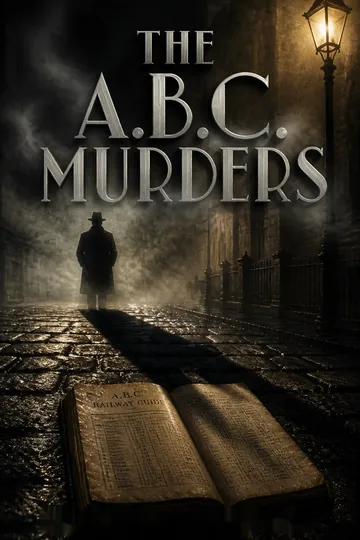
The warning seems to have passed harmlessly until the next day, when shopkeeper Alice Ascher is found struck dead behind her counter. Her estranged husband, Franz, is an easy suspect: he drinks, has threatened her, and was nearby. Yet Poirot notices a railway guide left open in the shop, an object that turns one apparently domestic killing into the beginning of a larger puzzle.
The story begins by making Poirot's unease more reliable than official certainty, but not yet sufficient to solve anything. His retirement, his reunion with Hastings, and the police's routine dismissal establish a familiar world of professional habits before the letter disrupts it. Alice's murder initially appears to fit a legible domestic script: an abusive husband, a vulnerable wife, a likely motive. The railway guide interrupts that script. It is a physical object that does not belong to the simple explanation, and its placement invites interpretation without yet making its meaning clear. The opening's suspense comes from a gap between what seems obvious and what Poirot senses has been arranged.
The Guide Beside Alice
Poirot and Hastings examine the shop and learn that the guide is an A.B.C. railway timetable, carefully wiped of fingerprints. Alice's niece, Mary Drower, confirms her aunt endured Franz's harassment but says Alice was not afraid of him.
Neighbours and witnesses offer gossip rather than a reliable sighting of the killer, while the men who entered the shop near the time of death cannot explain the guide. Poirot reasons that a killer who wanted to leave no trace would not have handled it barehanded.
The first crime therefore looks staged to attract attention. Before the police can settle on an answer, a second letter arrives, naming Bexhill and July 25. Poirot recognizes the threat as a continuing series, and the authorities prepare for another killing.
The timetable changes the investigation from a search for a familiar motive into a reading of deliberate signs. Poirot treats the absence of fingerprints not as absence of evidence but as evidence of intention: someone wanted the object noticed and had taken care to make it untraceable. The interviews also show how easily communities turn uncertainty into a story, especially when Franz's cruelty supplies a ready-made culprit. Mary offers a more complicated account of Alice, whose endurance did not mean helplessness. The next warning expands the danger beyond Andover and gives the investigators a destination but no victim. Information increases, yet their ability to act remains limited.
Bexhill's White Dress
Despite the police conference and precautions, Elizabeth Barnard, known as Betty, is found strangled on the Bexhill beach with an A.B.C. guide beneath her. Betty was a young waitress, and her death draws far more public attention than Alice Ascher's.
Her sister Megan rejects the polished picture of a blameless victim: Betty enjoyed flirtation and concealed outings from Donald Fraser, her jealous, tightly controlled fiancé. Donald admits he searched for Betty after believing she had lied about her plans, then returned home without finding her.
His anger and past threats make him look suspicious, but the warning letter points toward an unknown killer. Poirot questions why the murderer has chosen unrelated victims and why he is so eager to advertise each crime.
Betty's murder brings private emotion into a case designed to look impersonal. Megan's account refuses the convenient sanctification of the dead: Betty could be loved and foolish at once, while Donald could be devoted and frightening. That complexity matters because the police's need for a motive makes intimate relationships look like evidence. The A.B.C. signature appears to explain the murders through a system, but Poirot notices that the victims do not share an obvious personal connection. Publicity becomes part of the crime's machinery, whether the killer seeks notoriety or is using notoriety for some other purpose. The case now asks not only who killed Betty, but who benefits from the public's belief in a pattern.
Churston Arrives Too Late
The third warning names Churston for August 30, but a mistake in Poirot's address delays the letter until the appointed night. By then Sir Carmichael Clarke, a wealthy retired throat specialist and collector, has been found dead after his customary evening walk, another A.B.C. beside him.
His brother Franklin is present at the house, along with Thora Grey, Sir Carmichael's secretary, and his gravely ill wife. The police arrive too late to prevent the murder and now face a high-profile victim whose death may bring Franklin an inheritance.
In brief scenes outside Hastings's account, a timid hosiery salesman named Alexander Bonaparte Cust travels through the same coastal region and reads reports of the killings, though no one connects him to them yet.
The delayed letter makes the killer's method feel almost invulnerable: even a warning can fail through a minor clerical error. Churston also shifts the social scale of the victims, from a poor shopkeeper and a waitress to a wealthy man with a public reputation. That contrast weakens any simple theory of victim selection and puts inheritance into view without resolving its importance. The separate scenes of Cust create a second register of suspense. Hastings narrates investigation, while Cust's anxious movements expose a vulnerable life that the investigators have not yet understood. The reader is encouraged to connect the strands, but not told whether their apparent convergence is meaningful.
Stockings Across the Counties
Franklin proposes a Special Legion of relatives and people close to the victims, with Poirot guiding their inquiries. As they compare memories, small details begin to return.
Mary recalls the cheap stockings her aunt kept; Betty's mother had bought her a pair from a door-to-door seller; and Lady Clarke remembers Thora speaking with a shabby stranger at Combeside on the morning Sir Carmichael died. Thora first forgot the encounter, then recalls that the visitor sold stockings.
Poirot connects the seller's visits to all three locations and sees a possible route for someone who could inspect each victim's surroundings without attracting notice. A fourth letter names Doncaster for September 11, the day of the St. Leger race, promising an enormous crowd and a difficult search.
The Special Legion turns grief into a method of inquiry, but its most useful work is not formal detection. People recover details because they talk across relationships and revisit ordinary days. The stockings are valuable precisely because they seemed too mundane to remember: a purchase, a caller at the door, a familiar commercial nuisance. Poirot's insight depends on treating low-status, everyday activity as a possible disguise rather than background. The group also contains unresolved personal tensions, especially around Thora and Franklin, which complicate the trust needed for collaboration. The race-day warning raises the stakes just as their investigation gains its first concrete thread.
The St Leger Murder
Poirot warns the group that Doncaster's St. Leger crowd will make surveillance difficult, but the authorities and Special Legion spread through the town and racecourse anyway. On the afternoon of September 11, a man is found stabbed in a cinema with an A.B.C. guide near his body. The victim is George Earlsfield, a barber, not the schoolmaster Roger Downes, whom police suspect was the intended target because he sat nearby and resembled him.
Witnesses remember little: one invents a vivid description, while the commissionaire can only confirm the discovery. At the Black Swan, chambermaid Mary Stroud reports seeing a lodger wash what looked like blood from his sleeve. He had said he was a hosiery salesman, and he has vanished.
Doncaster exposes the weakness in the investigators' assumption that a public warning gives them control. The crowd provides cover, and the apparent mismatch between Earlsfield and Downes makes the alphabet look either imperfect or deliberately misleading. Witness testimony is shown as unstable: people supply confident details that their actual observations cannot support. Against this noise, Mary Stroud's practical account carries weight because it is tied to a concrete task and a specific room. Her report turns the traveling salesman from a recurring memory into a person the police can pursue. Yet the mistaken-target theory leaves a central question open: whether the killer's errors are real or manufactured.
The Suspect Disappears
Police trace the missing lodger to Alexander Bonaparte Cust, a traveling salesman whose initials match the signature on the room register. Tom Hartigan tells Scotland Yard that Cust had visited Bexhill and the Churston area around earlier murders, and Lily Marbury confirms that he left for Doncaster despite telling his landlady he was going elsewhere.
At Cust's lodgings, Inspector Crome finds hosiery, unused A.B.C. guides, matching letter paper, and a knife hidden behind a hall stand. But Cust receives a warning call, slips away before police arrive, and later wanders into the Andover police station exhausted and faint. The evidence appears overwhelming, though his fragility and missing time leave Poirot uneasy.
Cust's ordinariness becomes the strongest evidence against him and the reason the case seems to close. His initials, travel, stock, paper, and knife form a compelling material chain, while his memory problems offer a ready psychological explanation. But the chain is almost too complete: each object seems to answer a question the investigation had only just learned to ask. The warning call also shows how quickly a suspect can move once someone knows the police are coming. Cust's collapse in Andover recalls the first crime's setting and gives the pursuit a grim circularity, yet his vulnerability makes certainty feel ethically dangerous as well as logically premature.
An Alibi Holds
Cust is committed for trial, but a witness named Strange insists he played dominoes with Cust in Eastbourne on the night Betty was killed. The timing appears to make Cust's presence on the Bexhill beach impossible, and Strange is too confident to dismiss as a casual mistake.
Poirot refuses to treat the other evidence as a complete solution. He returns to the victims' relatives and tests what they remember with questions about apparently unrelated matters.
Franklin's answer establishes that he was in London when one of the letters was posted; Thora and Megan reveal their own guarded feelings about Sir Carmichael and the truth. Poirot then visits Cust privately, hears of his troubled childhood and war injury, and learns that Cust believes he committed the crimes without understanding why.
The alibi breaks the apparent unity of the case at exactly the point when the police have begun to mistake accumulation for explanation. Poirot's refusal to stop at a prosecutable suspect reflects his distinction between identifying a person and understanding a crime. His questions also work as social experiments: seemingly trivial prompts reveal what each person protects, remembers, or cannot admit. Cust's account makes him psychologically legible as a suggestible and wounded man, but his conviction that he is guilty is not proof. The gap between subjective certainty and factual responsibility becomes the central problem, demanding that Poirot examine how the evidence was produced.
The Brother in the Pattern
Poirot concludes that Cust's alibi is genuine and that the letters were not the work of a madman but a sane person's imitation of one. He identifies Franklin Clarke as the architect of the series: Franklin feared that Sir Carmichael might marry Thora after Lady Clarke died, endangering the inheritance Franklin expected.
He recruited the suggestible Cust by inventing a hosiery job, supplying guides and letters, and exploiting Cust's epilepsy and self-doubt. Franklin killed Alice and Sir Carmichael himself, and killed Betty before the announced date.
At Doncaster he stabbed Earlsfield, planted the guide, and placed blood and the knife on Cust to make the supposed serial killer appear caught. Poirot's evidence and reasoning expose the scheme, and police arrest Franklin.
The revelation does not merely replace one culprit with another; it changes the meaning of every clue. The alphabet was a spectacle designed to conceal a conventional motive, and the publicity that seemed to feed a killer's vanity instead diverted attention from inheritance. Cust's apparent contradictions, including his guilt and his innocence, arise because Franklin built a false identity around him and Cust accepted it. Poirot's final solution depends on reading both personalities and physical evidence, especially the delayed letter and the manufactured trail. The case's deepest deception is not that a madman evaded detection, but that investigators accepted a story whose theatrical neatness obscured the human motive underneath.
No Fox in a Box
When Franklin realizes Poirot has cornered him, he tries to shoot himself, but Poirot's accomplice has secretly unloaded the pistol. Detectives take Franklin away alive to face the consequences of his crimes.
Thora's expectation of marrying into the Clarke family is ended, while Megan and Donald move toward a relationship no longer burdened by suspicion over Betty's murder. Cust, freed from the belief that he is a homicidal killer, visits Poirot to thank him.
Poirot encourages him to use the sudden public interest in his story to earn money, and Cust hopes to give Lily Marbury a wedding present. Hastings and Poirot return, at least briefly, to their old partnership, with the case's human survivors no longer trapped inside Franklin's invented pattern.
The ending separates justice from spectacle. Franklin's failed suicide denies him control over the final image of his story, while Cust's release from false guilt restores the possibility of an ordinary future. The romantic resolution between Megan and Donald does not erase Betty; it acknowledges that grief can coexist with renewed attachment. Cust's plans for publicity echo the fame that the murderer engineered, but now notoriety may support rather than destroy a life. Poirot's victory is therefore measured not only by arrest, but by returning agency to people whom the false A.B.C. narrative had reduced to suspects, victims, or props.
Analysis
The novel's central trick is not simply the alphabetical sequence. It is the way a convincing pattern can become a substitute for asking who needs that pattern to exist. The A.B.C. guides and warning letters encourage the police, press, and public to imagine an eccentric killer acting for notoriety. That explanation is attractive because it turns unrelated deaths into a system, and systems feel more manageable than private motives. Poirot's work consists of resisting that comfort. He treats the pattern as evidence of a mind at work, not as the mind's own transparent account of itself.
The contrast between Cust and Franklin gives the mystery its psychological force. Cust's illness, self-doubt, and social invisibility make him easy to cast as a monster, especially once objects associated with the murders gather around him. Franklin, by contrast, possesses the confidence and social ease that help him pass as a responsible organizer. The novel therefore exposes a weakness in judging character by performance: distress can look like guilt, while composure can look like innocence. Poirot's insistence on motive restores a distinction between a person who believes a story about himself and the person who constructed that story for him.
The investigation also depends on ordinary people remembering ordinary things. A pair of stockings, a caller at a door, a misplaced letter, and a late train matter because they are not dramatic when they occur. The Special Legion makes memory communal, allowing details discarded as trivial to acquire meaning beside one another. At the same time, grief is not treated as a clean moral credential. Betty's faults do not make her deserving of death, and Donald's jealousy does not by itself prove murder. The novel's final lesson is epistemic as much as moral: coherent patterns can mislead, but careful attention to motive, circumstance, and the limits of one's own certainty can expose the person hidden behind them.
Review Summary
The A.B.C. Murders is highly praised by readers as one of Christie's best works, featuring Hercule Poirot and Captain Hastings investigating a series of alphabetical murders. Readers appreciate the complex plot, psychological exploration, and Christie's ability to surprise even seasoned mystery fans. The book's unique narrative style, combining first and third-person perspectives, adds depth to the story. While some found the ending slightly far-fetched, most consider it a clever and entertaining read, showcasing Christie's mastery of the mystery genre.
People Also Read


Characters
Hercule Poirot
The pattern readerA celebrated Belgian private detective who has nominally retired to cultivate marrows, Poirot accepts only cases that engage his mind. He values orderly reasoning, close attention to human behavior, and the small inconsistencies that other investigators overlook. His partnership with Hastings gives him both companionship and a useful counterpoint: Hastings prefers visible action, while Poirot trusts reflection and conversation. The anonymous letters unsettle him because they seem to turn crime into a public contest. He approaches the case by studying not only what happened, but why someone would need the crimes to look as they do.
Arthur Hastings
Poirot's loyal witnessHastings, a former army officer and Poirot's old friend, returns from his ranch in South America and becomes the narrator of most of the investigation. He is affectionate, energetic, and often impatient with Poirot's preference for thought over action. His instinct is to imagine dramatic crimes and obvious clues, yet his straightforward observations can cut through complications that cleverer minds have built. Hastings also notices the emotional lives surrounding the murders, sometimes more readily than Poirot. His companionship gives the story warmth and a human measure for the increasingly abstract puzzle.
Alexander Bonaparte Cust
The overlooked salesmanCust is a timid, stooping traveling salesman whose awkward manner makes him easy to overlook and easy to underestimate. A war injury, epileptic seizures, headaches, and gaps in memory have left him uncertain of his own actions. He struggles with the feeling that other people consider him foolish, even when he does not experience himself that way. His bombastic given names contrast painfully with his quiet life, and his attempts to earn a living make him dependent on circumstances he cannot control. Cust's chapters offer a view of the case from inside a vulnerable and confused mind.
Franklin Clarke
The worldly younger brotherFranklin is Sir Carmichael Clarke's younger brother, recently returned from travel in the East. He is physically confident, socially fluent, and quick to organize people when a crisis demands action. His easy manner contrasts with Donald Fraser's reserve, and he often presents himself as a practical man with a generous sense of responsibility. Franklin is devoted to his family name and accustomed to looking ahead, traits that can read as either admirable competence or restless ambition. His relationship with Thora Grey and his place in the Clarke household make him an important presence in the investigation.
Megan Barnard
Betty's clear-eyed sisterMegan is Betty's older sister, a typist whose dark, angular appearance and blunt manner make her difficult to ignore. She loved Betty without idealizing her, and she can describe her sister's flirtations and errors even while grieving her. Megan values candor and is suspicious of comforting stories that erase inconvenient facts. Her fierce intelligence sometimes comes out as skepticism, particularly when Poirot's methods sound grander than their practical results. Beneath her self-command is a strong capacity for loyalty and compassion, which becomes visible when she recognizes that other people are grieving in ways unlike her own.
Donald Fraser
The grieving fiancéDonald is Betty Barnard's fiancé, a red-haired clerk whose quiet self-control can give way to intense jealousy and anger. He loves Betty but struggles with her wish to enjoy attention and outings beyond their relationship. His difficulty expressing hurt turns ordinary disagreements into frightening confrontations, and he is painfully aware that his temper could make him look guilty. After Betty's death, grief and self-reproach repeatedly pull him toward silence. His bond with Megan begins in shared loss, but it is complicated by his memories of Betty and his fear of betraying her.
Thora Grey
The Clarke secretaryThora is Sir Carmichael Clarke's efficient secretary, known for her striking fair coloring and composed manner. She has worked closely with Sir Carmichael on his correspondence and Chinese art collection, and she understands the rhythms of life at Combeside. Thora is observant and capable, though she does not always recognize which ordinary encounters may matter later. Her position in the household makes her attentive to the emotional strain surrounding Sir Carmichael's illness and Lady Clarke's distrust. She also draws the interest of Franklin, which creates a quiet tension within the group.
Mary Drower
Alice's devoted nieceMary is Alice Ascher's niece, a young parlourmaid who grew up close to her aunt and knows the hardships of Alice's marriage. She grieves openly but remains practical, willing to help Poirot and the police rather than retreat from the case. Her familiarity with the Andover neighborhood gives her a different kind of access from official investigators. Mary is modest and observant, and her sympathy for other victims' families helps form the emotional basis of Poirot's Special Legion.
Chief Inspector Japp
Poirot's police allyJapp is a Scotland Yard inspector who has known Poirot for years. He is sociable, direct, and more inclined to trust routine police work than Poirot's private forebodings. His teasing manner can irritate Hastings, but he respects Poirot's experience and works alongside him when the investigation becomes serious. Japp represents the practical resources of the police, while also recognizing that a case can remain unresolved even after a suspect is in custody.
Inspector Crome
The confident investigatorCrome is the younger Scotland Yard inspector assigned to lead much of the A.B.C. investigation. Educated and self-assured, he takes pride in understanding criminal psychology and sometimes treats Poirot as an outdated rival. He organizes extensive searches, publicity, and surveillance, and his work produces important evidence. Crome's confidence can narrow his view when a theory seems to fit, but he is diligent and willing to pursue a lead even when its source is unconventional.
Sir Carmichael Clarke
The collector at CombesideSir Carmichael is a retired throat specialist, a wealthy collector of Chinese art, and Franklin's elder brother. His passion for his collection gives structure to his life as he worries about his wife's serious illness. He relies on Thora Grey's taste and efficiency, and their close working relationship is a source of tension in the household. His habitual evening walks and private life at Combeside become important to the investigation.
Lady Clarke
The ailing household witnessLady Clarke is Sir Carmichael's wife, gravely ill and often dulled by pain and medication. Her illness limits her energy, but it does not make her observations worthless. She distrusts Thora Grey and recalls an encounter at Combeside that others have overlooked. Her perspective complicates the household's more sympathetic accounts of Thora and reminds Poirot that frailty and clear perception can coexist.
Alice Ascher
The Andover shopkeeperAlice is an older shopkeeper in Andover, independent and sharp-tongued despite a long, difficult marriage to Franz Ascher. She supports herself through a small tobacconist and newsagent shop and gives her estranged husband money to keep him away. Her history is pieced together through Mary Drower and neighbors, revealing a woman who endured hardship without becoming passive.
Elizabeth Betty Barnard
The Bexhill waitressBetty is a young waitress at the Ginger Cat cafe and Megan's younger sister. She enjoys dancing, flirtation, and the attention of men, while Donald Fraser wants a more exclusive commitment. Megan understands both Betty's charm and her carelessness, refusing to reduce her to either a perfect victim or a fool. Her complicated relationships make her personal life central to the investigators' attempts to understand the Bexhill crime.
Franz Ascher
Alice's estranged husbandFranz is Alice Ascher's German husband, separated from her for years and weakened by drink. He has depended on Alice for money and has made threats that leave him an obvious focus for suspicion. His public behavior is unstable, shifting between bluster, self-pity, and fear. His history with Alice illustrates why the first crime appears to have a ready-made explanation.
Dr. Thompson
The criminal psychologistDr. Thompson is an alienist consulted by the police about the psychology of serial crime. He offers accessible explanations of delusion, obsession, and the desire for public recognition, while warning that a mentally ill offender may still act according to an internal logic. His ideas help shape the authorities' response, although Poirot insists that psychological labels cannot replace a specific motive.
Inspector Glen
The Andover investigatorGlen is the local inspector who investigates Alice Ascher's death before Scotland Yard becomes more deeply involved. He is methodical and candid about the weaknesses in the evidence against Franz, and he recognizes that the A.B.C. guide makes the crime unlike an ordinary local case.
Milly Higley
Betty's cafe coworkerMilly works alongside Betty at the Ginger Cat cafe. She is talkative, excitable, and not especially close to Betty, but she notices the social currents around the cafe. Her knowledge of Betty's work and acquaintances later gives the investigators a useful perspective.
Tom Hartigan
The observant lodger's friendTom is Lily Marbury's boyfriend, a sociable young man who notices Cust's odd travel plans and recalls them when news of the Doncaster murder appears. He is not a trained investigator, but his attention to dates and ordinary conversation gives Scotland Yard a lead it might otherwise miss.
Lily Marbury
Cust's kind landlady's daughterLily lives with her mother, who rents a room to Cust, and is warm toward the awkward lodger. Her interest in him is compassionate rather than suspicious, and she remembers details about his journeys. Her kindness and curiosity become important as Cust's behavior grows harder to explain.
Roger Downes
The schoolmaster at DoncasterDownes is a schoolmaster attending the cinema in Doncaster. His resemblance to another man in the audience leads police to consider whether he was connected to the stabbing. His presence makes the confusion surrounding the fourth crime more consequential.
George Earlsfield
The Doncaster cinema patronEarlsfield is a barber who attends a Doncaster cinema on race day. His ordinary evening becomes central to the police inquiry after a witness discovers him in his seat. The circumstances around him make the investigators question whether the intended victim was someone else.
Mary Stroud
The hotel chambermaidMary works at the Black Swan in Doncaster and brings hot water to guests' rooms. Her report of a lodger washing a stained sleeve is concrete and specific, unlike many of the vague descriptions offered to the police. She is nervous about giving evidence but does so with her employer's encouragement.
Plot Devices
The A.B.C. guides
A conspicuous calling cardAn open A.B.C. railway timetable is left at each crime scene. Its pages and destinations suggest that the victims and locations belong to an alphabetical sequence, while its wiped surface frustrates ordinary fingerprint work. The guides make the crimes legible as a public pattern and draw both police and newspapers toward the same interpretation. Poirot treats their deliberate placement as evidence in itself, asking not only what they signify but why a killer would want investigators to notice them.
The warning letters
A clock for the policePrinted letters warn Poirot of the place and date of each coming crime. They create urgency, expose the limits of police preparation, and let the sender stage the investigation as a contest. A misdirected envelope delays one warning, while later letters increase the public's attention and make the authorities mobilize on a larger scale. Their recipient matters as much as their contents, and Poirot eventually reexamines the choice of addressee as a clue to the entire design.
The hosiery route
A disguise for reconnaissanceReports of a door-to-door stocking seller surface at the homes and businesses near several murders. The encounters seem too ordinary to retain in memory, which is why they emerge only when relatives compare recollections. The salesman can approach people, inspect streets, and move between towns without appearing unusual. The recurring sales calls turn a mundane commercial detail into a possible link between otherwise unrelated crime scenes.
The Special Legion
Memory pooled through griefFranklin Clarke gathers relatives and associates of the victims into an informal group under Poirot's guidance. Their purpose is to compare what each remembers from the days surrounding the crimes. The group brings together people who would not otherwise meet, including Megan Barnard, Donald Fraser, Mary Drower, and Thora Grey. Their conversations recover overlooked details, expose personal tensions, and give Poirot access to the unguarded memories that official interviews have missed.
Cust's interludes
A second view of fearChapters outside Hastings's first-person narration follow Cust through boarding rooms, trains, cinemas, and streets. These scenes let the reader observe his isolation and growing anxiety while the investigators remain focused on physical clues. The shift in viewpoint creates dramatic uncertainty: Cust appears connected to the crimes, but his confused reactions make the nature of that connection difficult to judge. His perspective also gives emotional weight to the danger of mistaking a person's fear and suggestibility for proof.
FAQ
Synopsis & Basic Details
What is The A.B.C. Murders about?
- Alphabetical killer taunts Poirot: A serial killer, calling himself A.B.C., sends letters to Poirot, detailing when and where he will strike next, challenging the detective to stop him. The murders follow an alphabetical pattern, targeting victims whose names and locations begin with successive letters.
- Poirot races against time: Poirot, along with his friend Captain Hastings and Chief Inspector Japp, must decipher the clues and anticipate the killer's next move to prevent further deaths. The pressure mounts as the crimes become more audacious and the public grows increasingly fearful.
- Unraveling a complex web: As Poirot investigates, he uncovers a web of deceit, hidden motives, and psychological complexities surrounding the victims and suspects. He must use his "little grey cells" to identify the true killer and understand the twisted logic behind the alphabetical murders.
Why should I read The A.B.C. Murders?
- Classic Christie puzzle: The novel offers a classic Agatha Christie mystery with a clever and intricate plot that keeps readers guessing until the very end. The alphabetical pattern adds a unique and compelling element to the whodunit formula.
- Poirot's intellectual prowess: Readers can enjoy witnessing Hercule Poirot's brilliant deductive reasoning and psychological insights as he unravels the complex case. His eccentric personality and unique methods make him a captivating and memorable detective.
- Exploration of criminal psychology: The novel delves into the mind of a serial killer, exploring themes of madness, ego, and the desire for notoriety. It offers a glimpse into the twisted logic and motivations that drive such individuals to commit heinous crimes.
What is the background of The A.B.C. Murders?
- Interwar England setting: The novel is set in 1930s England, a period marked by economic depression and social change. This backdrop provides a sense of realism and reflects the anxieties of the time, which are heightened by the presence of a seemingly random serial killer.
- Impact of World War I: The lingering effects of World War I are subtly present, influencing the characters and their motivations. The war is mentioned as a potential cause for mental instability, adding a layer of psychological depth to the story.
- Emergence of forensic science: While not heavily emphasized, the novel reflects the growing interest in forensic science and criminal psychology during the interwar period. The police investigation incorporates elements of fingerprinting and psychological profiling, showcasing the evolving methods of crime detection.
What are the most memorable quotes in The A.B.C. Murders?
- "Overlooking the obvious": Poirot states, "It is your destiny to stand beside me and prevent me from committing the unforgivable error," highlighting Hastings' role as a sounding board and a check against Poirot's own potential blind spots. This quote underscores the importance of considering all possibilities, even the seemingly simple ones.
- "Madman is a very dangerous thing": Poirot's early assessment of the A.B.C. letter, "A madman, mon ami, is to be taken seriously. A madman is a very dangerous thing," foreshadows the escalating violence and unpredictable nature of the killer. It emphasizes the need to take even seemingly irrational threats seriously.
- "Crime is terribly revealing": Poirot observes, "Crime is terribly revealing. Try and vary your methods as you will your tastes, your habits, your attitude of mind, and your soul is revealed by your actions," emphasizing the idea that a criminal's actions inevitably betray their true nature. This quote highlights Poirot's focus on understanding the psychology of the killer.
What writing style, narrative choices, and literary techniques does Agatha Christie use?
- First-person narration (Hastings): The story is primarily told from Captain Hastings' point of view, providing a limited perspective that creates suspense and allows Christie to misdirect the reader. Hastings's naivete and occasional misinterpretations add to the mystery and humor.
- Red herrings and misdirection: Christie masterfully employs red herrings and misdirection to mislead the reader and create a complex web of suspects. Seemingly important clues turn out to be irrelevant, while subtle details hold the key to the solution.
- Clues and deductions: Christie provides the reader with all the necessary clues to solve the mystery, challenging them to follow Poirot's deductive reasoning and identify the true killer. The focus on logic and observation is a hallmark of the Golden Age of detective fiction.
Hidden Details & Subtle Connections
What are some minor details that add significant meaning?
- Hair dye and vanity: Poirot's use of hair dye, "REVIVIT," is initially presented as a humorous detail, but it subtly foreshadows the theme of deception and the lengths people will go to maintain appearances. It also highlights Poirot's own vanity and attention to detail, traits that are crucial to his success as a detective.
- Strawberries and lettuce: Hastings's choice of strawberries at the greengrocer's, contrasted with Poirot's preference for a practical lettuce, reveals their contrasting personalities and approaches to observation. It underscores Hastings's tendency to be impulsive and easily distracted, while Poirot is always focused on logic and efficiency.
- The Green Oasis novel: The paperbacked novel, The Green Oasis, found in Alice Ascher's bedroom, seems like a throwaway detail, but it subtly hints at the victim's desire for escape and a better life. It adds a layer of pathos to her character and underscores the tragedy of her murder.
What are some subtle foreshadowing and callbacks?
- Poirot's fear of overlooking the obvious: Early in the novel, Poirot expresses his fear of "overlooking the obvious," foreshadowing the importance of seemingly simple details in solving the case. This statement also highlights Poirot's humility and awareness of his own fallibility.
- Hastings's menu of crime: Hastings's humorous "menu" of crime, including a "curiously twisted dagger" and a "blunt instrument," foreshadows the different murder methods used by the killer throughout the story. It also reveals Hastings's melodramatic imagination and his fascination with sensational crimes.
- The "magnanimous murderer": Poirot's repeated references to the "magnanimous murderer" foreshadow the revelation that the killer is deliberately diverting suspicion from others. This subtle foreshadowing hints at the complex motivations and psychological manipulations at play in the case.
What are some unexpected character connections?
- Thora Grey and Franklin Clarke: The close relationship between Thora Grey and Franklin Clarke, initially presented as a professional partnership, gradually reveals a deeper emotional connection. This connection adds a layer of complexity to their characters and raises questions about their potential motives.
- Mary Drower and Megan Barnard: The unlikely alliance between Mary Drower and Megan Barnard, stemming from their shared grief and determination to find the killer, highlights the power of human connection in the face of tragedy. Their collaboration provides valuable insights and perspectives that aid Poirot's investigation.
- Cust and the palm reader: Cust's encounter with the palm reader, who foretells his fame and violent death, is a seemingly random event that adds a layer of fatalism to his character. It also underscores the power of suggestion and the influence of external forces on his already fragile psyche.
Who are the most significant supporting characters?
- Inspector Crome: As a representative of Scotland Yard, Inspector Crome provides a contrast to Poirot's methods and highlights the tension between traditional policing and psychological deduction. His initial skepticism towards Poirot's theories underscores the challenges faced by the detective in pursuing unconventional leads.
- Dr. Thompson: As the alienist, Dr. Thompson offers insights into the mind of the killer and provides a scientific perspective on the case. His expertise in criminal psychology helps Poirot understand the motivations and behaviors of the murderer.
- Mrs. Fowler: As the nosy neighbor of Alice Ascher, Mrs. Fowler provides valuable information about the victim's life and the events leading up to her murder. Her gossipy nature and keen observations offer a glimpse into the social dynamics of the community and the potential for overlooked details.
Psychological, Emotional, & Relational Analysis
What are some unspoken motivations of the characters?
- Franklin Clarke's envy: Beyond the desire for wealth, Franklin Clarke's unspoken motivation stems from a deep-seated envy of his brother's success and happiness. This envy fuels his resentment and ultimately drives him to commit murder.
- Thora Grey's ambition: Thora Grey's unspoken ambition to improve her social standing and secure a comfortable future influences her actions and relationships. Her desire for a better life may have made her vulnerable to manipulation or suspicion.
- Megan Barnard's guilt: Megan Barnard's unspoken guilt over her strained relationship with her sister and her inability to prevent her death motivates her relentless pursuit of the truth. She seeks to atone for her perceived failures by bringing the killer to justice.
What psychological complexities do the characters exhibit?
- Alexander Bonaparte Cust's suggestibility: Cust's psychological complexity lies in his extreme suggestibility and fragile sense of self. His epilepsy and history of blackouts make him vulnerable to manipulation and lead him to believe he is capable of committing the murders.
- Franklin Clarke's charm and ruthlessness: Franklin Clarke's psychological complexity stems from his ability to present a charming and affable facade while harboring a ruthless and calculating mind. This duality allows him to deceive those around him and carry out his murderous plans undetected.
- Donald Fraser's bottled-up emotions: Donald Fraser's psychological complexity lies in his tendency to suppress his emotions and internalize his jealousy and anger. This bottled-up nature makes him prone to explosive outbursts and raises questions about his potential for violence.
What are the major emotional turning points?
- Poirot's receipt of the first letter: The receipt of the first letter marks a major emotional turning point for Poirot, as he grapples with the challenge and the potential for failure. The letter ignites his competitive spirit and sets him on a path to confront the killer.
- The discovery of Betty Barnard's body: The discovery of Betty Barnard's body marks a major emotional turning point for Donald Fraser, as he confronts the reality of her death and the possibility that he may have contributed to it. The event triggers a wave of grief, guilt, and suspicion.
- Poirot's realization of the truth: Poirot's realization that Franklin Clarke is the true killer marks a major emotional turning point, as he confronts the betrayal and the devastating consequences of Clarke's actions. The revelation underscores the importance of trusting one's instincts and pursuing the truth, no matter how painful.
How do relationship dynamics evolve?
- Poirot and Hastings: The relationship between Poirot and Hastings evolves throughout the novel, with Hastings increasingly relying on Poirot's judgment and recognizing his brilliance. Their friendship is tested by the challenges of the case, but ultimately strengthened by their shared pursuit of justice.
- Megan Barnard and Donald Fraser: The relationship between Megan Barnard and Donald Fraser evolves from suspicion and mistrust to a tentative connection based on shared grief and a desire for healing. Their evolving dynamic suggests the possibility of finding love and solace in the aftermath of tragedy.
- Franklin Clarke and Thora Grey: The relationship between Franklin Clarke and Thora Grey evolves from a professional partnership to a more intimate connection, raising questions about their potential involvement in the murders. Their dynamic highlights the complexities of human relationships and the potential for deception and betrayal.
Interpretation & Debate
Which parts of the story remain ambiguous or open-ended?
- The extent of Cust's awareness: The degree to which Cust was consciously aware of his actions remains ambiguous. While he confesses to committing the murders, it is unclear whether he fully understood the nature of his crimes or was simply a pawn in Clarke's game.
- Thora Grey's true feelings: Thora Grey's true feelings for Sir Carmichael Clarke and Franklin Clarke remain open to interpretation. Her motives and loyalties are never fully revealed, leaving the reader to speculate about her potential involvement in the events.
- The future of Megan and Donald: The future of Megan Barnard and Donald Fraser's relationship is left open-ended. While they find solace in each other's company, it is uncertain whether their shared grief will lead to a lasting connection or simply a temporary bond.
What are some debatable, controversial scenes or moments in The A.B.C. Murders?
- Poirot's treatment of suspects: Poirot's methods of interrogation, particularly his manipulation of suspects' emotions and his use of deception, can be seen as ethically questionable. Some readers may debate whether his ends justify his means.
- The focus on class and social status: The novel's portrayal of different social classes and the emphasis on the victims' backgrounds can be seen as reflecting the social biases of the time. Some readers may debate whether these elements contribute to or detract from the story's overall message.
- The ending's reliance on coincidence: The ending's reliance on a series of coincidences, such as the misaddressed letter and the mistaken identity in the cinema, can be seen as a weakness in the plot. Some readers may debate whether these coincidences are too convenient and detract from the story's realism.
The A.B.C. Murders Ending Explained: How It Ends & What It Means
- Clarke's motive revealed: The ending reveals that Franklin Clarke's primary motive was to inherit his brother's fortune, with the alphabetical murders serving as a smokescreen to divert suspicion. This revelation underscores the themes of greed and ambition that drive the killer's actions.
- Cust as a scapegoat: The ending clarifies that Alexander Bonaparte Cust was a pawn in Clarke's game, manipulated into believing he was the killer due to his epilepsy and suggestibility. This highlights the themes of psychological manipulation and the exploitation of vulnerable individuals.
- Justice and closure: The ending provides a sense of justice and closure, as Clarke is apprehended and Cust is exonerated. However, the novel also leaves the reader with a lingering sense of unease, as it explores the dark depths of human nature and the potential for evil to exist beneath a seemingly normal facade.
Hercule Poirot Series

























About the Author
Other books by Agatha Christie




Download PDF
Download EPUB
.epub digital book format is ideal for reading ebooks on phones, tablets, and e-readers.








