

Key Takeaways
Pitch the book's reader value, not the labor behind your research.
Publication is a different task. A dissertation explains and defends research to specialists. A proposal persuades an editor that a book will make a worthwhile contribution and reach readers. Its main package usually includes a prospectus, an author CV, and sample writing. The prospectus presents the book's argument, audience, comparable titles, chapter plan, and practical details such as length and images.
Editors build the bridge. Acquisitions editors recruit projects, guide them through internal decisions, and advocate for them to peer reviewers, staff, and sometimes a faculty board. A scholarly book can cost $30,000 to $50,000 to produce, so the publisher needs a clear case for investing. The proposal helps editors explain both the book's intellectual value and why readers will want it.
What's striking is that the proposal translates one project across several audiences. A scholar sees an argument; a marketer needs a recognizable reader; a press committee needs reasons to commit resources. This resembles a design brief: it does not replace the finished work, but helps different collaborators understand what it is meant to do. The translation is valuable, but it can also expose a tension. Marketability is not the same as scholarly worth, and a subject with a small audience may still matter greatly. A strong pitch makes readership legible without pretending sales alone determine a book's importance.
Choose a press as a partner, not merely as a prestigious name.
Fit starts with the list. Build an initial set of presses by finding recent books related to your topic or readership. Your bibliography is one source, but book reviews, field awards, course syllabi, conferences, and colleagues' publications can reveal other candidates. Recent titles matter because editorial programs and staff change over time.
Evaluate the working relationship. Look beyond subject coverage. Consider how a press designs and prices books, whether it promotes authors, whether its staff treats authors respectfully, and whether its publishing record reflects the communities it writes about. Then write a short, press-specific explanation of why your project belongs there. A refusal based on fit may save time: a publisher without relevant expertise or a route to your readers may not serve the book well, however impressive its name.
This approach treats publisher selection as due diligence rather than a prestige contest. In organizational life, fit often determines whether a promising idea receives the attention and resources needed to succeed. Asking how a press treats authors and whom it publishes also makes power visible, especially for scholars who are routinely presumed less credible. A checklist cannot correct entrenched inequities, and a public mission statement is not proof of fair practice. Still, asking authors about their experience and examining a press's recent roster gives writers evidence beyond reputation.
Give the book one argument readers can carry beyond its case study.
A topic is not a contribution. A book about birding, media, or a historical archive still needs to explain what its evidence changes in the reader's understanding. The central thesis should make a claim about relationships, not merely announce what the author examines. In Elizabeth Cherry's proposal for a study of birders, the key claim is that birders learn a distinctive way of seeing wildlife and ecosystems, which helps explain their conservation activity.
Make the idea portable. State the thesis in a paragraph, then compress it into a concise one-liner that can introduce the project in conversation or publicity. Keep one main argument in charge; subordinate supporting claims to it. A book that promises several unrelated contributions may leave readers unsure what to remember. A clear thesis also helps an editor see how each chapter can serve the whole.
A strong thesis functions like a handle: it lets readers carry a complex study into other settings. That portability is one reason a focused case can speak beyond its immediate subject. The concept of the naturalist gaze, for example, helps explain why observations of birds can connect everyday attention to environmental advocacy. Yet portability should not become a demand that every project make universal claims. A carefully bounded argument can be more credible than a sweeping one. The practical test is whether the thesis explains the evidence without flattening differences among the people, places, or cases the book studies.
Name real readers, then use comparable books to show they exist.
Define the audience concretely. Scholarly books may be aimed at researchers, students and instructors, practitioners, or readers outside academia. Choose the most important one or two groups and describe them specifically. Instead of claiming that everyone will care, identify fields, courses, professional communities, or public-interest groups likely to use the book. Evidence might include invitations to speak, course adoption, conference activity, or organizations already engaging with the subject.
Use comps as market evidence. Comparable titles are recent books that appeal to similar readers, not a miniature literature review. For each, identify its publisher and publication year, describe its broad appeal, and explain what your book adds. Jennifer McClearen's proposal, for instance, situated her study of female fighters alongside books on sports media, while distinguishing its focus on gender and labor. The aim is to show complementarity, not to disparage other authors.
Audience definition is both a writing decision and a distribution problem. Naming a reader helps shape the book's explanations, examples, and level of assumed knowledge; naming a market helps a publisher decide how to reach that reader. Comparable titles make the claim testable by showing that adjacent conversations already attract attention. But the exercise can overvalue what publishers can easily count. Interdisciplinary books, emerging fields, and work from marginalized scholars may lack obvious precedents precisely because publishing has not served those audiences well. Comps should clarify opportunity, not become a veto on intellectual novelty.
Make every chapter advance the argument, not merely report research.
The overview sells the whole. A project description can begin with an arresting example, then explain the thesis, stakes, relevant scholarly conversation, evidence, broad structure, and intended readers. It should not become a chapter-by-chapter inventory or a long defense of methods. The proposal needs to show what the findings mean, not only how the author gathered them.
The chapter plan proves the design. Give each chapter a distinct claim, the evidence supporting it, and its role in the book's overall argument. Explain how the sequence builds understanding. A chapter that supplies background without a takeaway may be better integrated into the introduction or a substantive chapter. Likewise, an introduction and conclusion should frame and synthesize the book rather than hide essential evidence that appears nowhere else.
The chapter plan is a miniature model of the reader's experience. Each section supplies enough information to make the next step intelligible, much like a well-designed lesson or a coherent narrative. This structure also helps authors detect when a manuscript is a collection of related studies rather than one book-length argument. The risk is mistaking uniformity for coherence: not every chapter needs identical length or a rigid formula. What matters is that each part has a defensible purpose and that the transitions make the book's intellectual movement visible.
Use clear prose and concrete credentials to establish your authority.
Let the author appear. A proposal should sound like a knowledgeable person explaining an important project, not like a dissertation written to ward off every possible critic. Dense jargon, unexplained acronyms, excessive quotations, passive constructions, and hedging can obscure the author's own claims. Plain language does not mean simplistic thinking; define necessary specialist terms and make the actors and consequences clear.
Show relevant authority. An author biography and CV can highlight degrees, research experience, publications, teaching, talks, awards, media appearances, and professional networks connected to the book. This is an author platform: the author's existing ability to attract attention and reach potential readers, not necessarily a huge following. Be candid about prior publication, including dissertation origins, and explain how the book has been reshaped. State manuscript length, image needs, and a realistic completion date.
Clear prose is a form of hospitality: it lowers the cost of entering an unfamiliar subject without concealing its complexity. The same principle applies to credentials. Evidence of relevant work is more useful than relying on institutional prestige as a proxy for expertise. That distinction matters in a system where scholars do not receive equal presumptions of competence. At the same time, accessibility should not be confused with removing specialized thought. The goal is to make key concepts learnable and the argument followable, while preserving the precision that makes the scholarship valuable.
Treat editor contact as mutual evaluation, then submit strategically.
Start a conversation. An initial email or meeting can briefly describe the project and ask whether it fits the editor's list. Use the exchange to learn how the press handles peer review, timelines, production, promotion, and author support. The editor is assessing the project, but the author is also deciding whether this is a respectful, knowledgeable collaborator. A personal connection can help open a door, but it is not a prerequisite for consideration.
Manage submissions openly. Follow each press's instructions and send only requested materials. Authors can often approach several presses before peer review, but should disclose simultaneous submissions and respect any request for temporary exclusivity. A small, prioritized batch is easier to manage than sending the proposal everywhere at once. Tailor each version to explain that press's specific fit, and follow up courteously when a response is overdue.
The mutual-evaluation frame corrects a familiar imbalance: authors may treat editors as judges whose approval must be won at any cost. In reality, publication is a multi-year working relationship, so an editor's listening, clarity, and respect are relevant evidence. Strategic submissions also preserve some author choice in a process that can otherwise feel opaque. Transparency matters because editors invest labor before a contract exists. Still, not every author has equal access to meetings, introductions, or time for extensive outreach. A good proposal process should not make social polish a hidden substitute for scholarly merit.
Answer peer review with a revision plan, not a courtroom defense.
Reports are input, not verdicts. Peer reviewers assess the project's contribution, evidence, audience, and authorial fit, but their opinions do not alone decide a book's fate. Reports may conflict or contain suggestions that do not serve the author's purpose. If the editor invites a response, that invitation often means the project still has an advocate.
Show how the book improves. Group comments into major themes, such as sharpening the argument, adding evidence, improving structure, or clarifying terms. For each theme, summarize the concern and propose a concrete response. If reviewers disagree, explain the reasoning behind the chosen solution and address the underlying problem where possible. The aim is not to prove reviewers wrong. It is to show the editor and decision-makers that the author can make a credible revision. Read the contract carefully, too, since its deadlines and conditions are binding.
This method turns peer review from a referendum on the author's worth into a negotiation over the manuscript's strengths and weaknesses. The distinction is psychologically useful and institutionally practical: a specific revision plan gives decision-makers something they can evaluate. It also creates room to reject advice without dismissing the reviewer. The process remains imperfect, since reviewers can misunderstand a project or reproduce bias. Respectful response does not require compliance with harmful or irrelevant recommendations. Authors need an editor willing to distinguish substantive critique from prejudice and to support a fair review process.
Publication ends only when production and promotion reach readers.
The manuscript becomes a product. After approval, authors may need to obtain permissions, prepare files to the press's specifications, review copy edits and proofs, and arrange an index. Publishers may request changes to the title or cover, using their knowledge of readers and sales channels. Authors should ask questions, explain concerns, and remember that production decisions affect how readers encounter the book.
Promotion is shared work. An author questionnaire gathers material for descriptions, endorsements, course adoption, media outreach, and award submissions. The publicist coordinates a plan, but the author can identify relevant journals, conferences, organizations, podcasts, bookstores, and professional networks. Promotion need not mean doing every activity. Choose routes that fit the audience and the author's strengths, coordinate with the publicist, and start planning before the manuscript is finished.
The book's journey does not stop at intellectual completion. Distribution, metadata, indexing, pricing, and publicity shape whether a potential reader can find and use the work. This makes promotion part of scholarly communication, not merely self-advertising. Yet authors should not be expected to compensate for a publisher's limited resources through endless unpaid labor. A useful plan divides responsibilities clearly and targets readers rather than chasing visibility everywhere. The strongest promotion is often specific: helping instructors see where a book fits, or connecting its subject to communities already invested in the issue.
Analysis
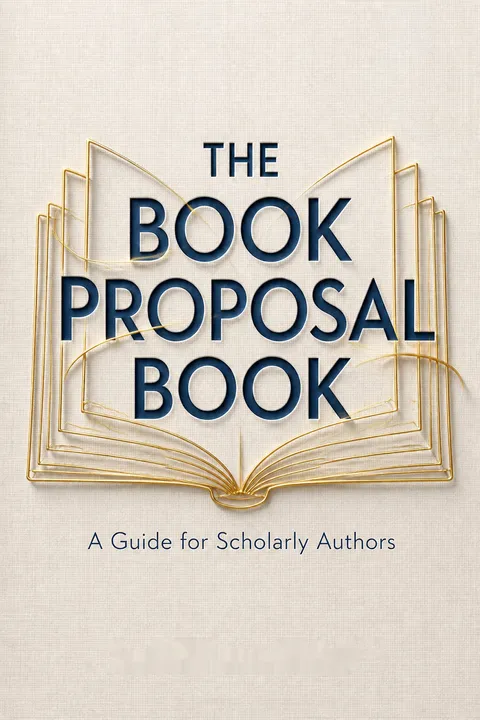
Portwood-Stacer turns a largely tacit professional process into a sequence of manageable decisions. The book's deepest organizing principle is not the proposal document itself, but the movement from research to readers. Press selection, thesis development, audience definition, chapter design, editor contact, peer review, production, and promotion are treated as connected parts of that movement. This makes the guide useful before a manuscript is complete: the proposal is presented as a diagnostic tool that can reveal an unfocused argument or an implausible audience claim while revision is still possible.
Its strongest contribution is the insistence that scholarly credibility and reader appeal are not opposing goals. A focused argument, accessible explanation, and specific audience can help a book travel beyond the narrow circle of specialists without diluting its intellectual content. The practical examples make this legible: a study of birding becomes an account of how people learn to perceive ecological interdependence, while a study of women in mixed martial arts links representation to labor conditions. In both cases, the proposal's task is to surface the explanatory idea, not simply list the research materials.
The guide also offers a valuable account of author agency. Editors are not portrayed as enemies, but neither are they treated as unquestionable authorities. Authors are encouraged to investigate a press, assess its treatment of writers, ask about its processes, and choose among options where possible. That framing is especially significant given the book's recognition that academic and publishing institutions distribute credibility unevenly.
A tension remains. The language of market fit can help a project find its readers, but it can also privilege familiar subjects, established networks, and easily counted demand. The guide's advice to identify audiences and comparable books is most powerful when used to explain a project's pathway to readers, not to prove that every valuable idea already has a market precedent. Its practical promise is modest but consequential: demystify the rules that can be learned, preserve room to challenge the rules that should not be mistaken for merit, and help scholars make better-informed publishing choices.
People Also Read





Glossary
Prospectus
Book-project pitchThe central document in a book proposal package. It presents the proposed book's working title, argument, intended readers, comparable titles, chapter plan, author qualifications, and practical details such as length and manuscript status. Editors use it to assess the project's contribution, fit, and potential readership.
Comparable titles
Similar audience booksRecently published books that help a press estimate the audience, positioning, and potential sales of a proposed book. Authors describe what readers value in these books and explain how the new project complements or differs from them. Comparable titles are not a literature review and should not be used simply to criticize other scholarship.
Author platform
Reach to potential readersAn author's existing capacity to attract attention to a book and connect it with likely readers. For a scholarly author, this may include recognition in a field, conference activity, publications, teaching, public talks, media appearances, or relevant professional networks. It does not require celebrity or a massive social media following.
Crossover book
Academic and public readershipA scholarly book designed to reach beyond its core academic audience to readers outside the academy. Its subject and style must interest a more specific public readership, such as people concerned with wildlife or sports, rather than an undefined general audience. Authors strengthen the case by showing how they can reach those readers.
Subvention
Funding for publication costsFinancial support that helps cover expenses associated with producing a book, such as image permissions, color printing, or other production needs. Funds may come from a university, department, scholarly organization, grant, or another source. Authors can tell a publisher about secured or potential support when describing the project's production requirements.
Advance contract
Contract before full manuscriptA publishing agreement offered after review of a proposal and sample writing, before the complete manuscript is submitted. At scholarly presses, it is generally a binding commitment to publish if the author meets the agreed requirements and the finished manuscript receives any stipulated approval. Its conditions and deadline should be checked in the contract.
Author questionnaire
Promotion-planning formA publisher's form that gathers information for marketing and publicity. It may ask about the book's readers, courses, comparable works, possible endorsers, relevant media outlets, events, and awards. Authors can prepare early by collecting audience and promotion information while developing the proposal.
Reader reports
Expert manuscript evaluationsWritten assessments produced by scholars asked to review a book proposal, sample chapters, or full manuscript. Reports address such matters as contribution, evidence, structure, audience, and the author's qualifications. The editor uses them in deciding whether to proceed, request revisions, or decline the project; the author may be asked to provide a revision plan.
Download PDF
Download EPUB
.epub digital book format is ideal for reading ebooks on phones, tablets, and e-readers.








