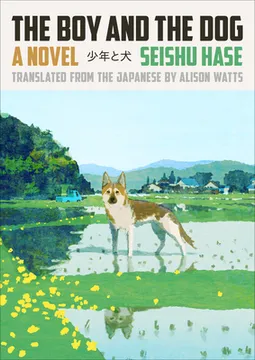


Plot Summary
A Stray at the Ashtray
Six months after earthquake, tsunami, and nuclear disaster have wrecked the coast, Kazumasa Nakagaki finds a gaunt dog waiting alone outside a convenience store. Its collar names it Tamon, but gives no address or telephone number. Kazumasa feeds it, learns that no owner has come looking, and takes it into his car before the cashier can call Public Health.
The choice is small, but it changes the shape of his days. His seafood factory has collapsed, his car was crushed, and he now drives deliveries for Numaguchi, a former schoolmate involved in stolen goods. At home, Tamon eats eagerly and accepts Kazumasa’s touch. When Kazumasa turns south, the dog remains alert, as if some distant place still holds his attention.
The first rescue is not framed as a grand act of virtue. Kazumasa is hungry for security himself, and his decision follows a practical fear that the authorities may take Tamon away. That modest motive matters: care begins before he knows what the dog means to him. The disaster has stripped both of them of familiar structures, leaving a car, a collar, and a meal as the first terms of trust. Tamon’s unexplained southern orientation gives the encounter a quiet forward pull. Even while Kazumasa imagines a new companion, the dog’s attention suggests that this household is a stop, not an ending.
A Guardian for Mother
Kazumasa’s sister, Mayumi, is caring for their mother, whose dementia worsened after the family spent time in an evacuation shelter. When he brings Tamon to the family home, their mother mistakes the dog for Kaito, the pet she loved as a child, and insists on taking him for a walk. She no longer reliably recognizes her own children, but Tamon’s steady presence lets her laugh and move safely outdoors.
He stops her at the edge of a road before a truck passes. Mayumi admits how badly their mother has declined and how little money remains. Seeing the relief Tamon brings, Kazumasa decides he must earn more, even if that means accepting the dangerous driving work Numaguchi has offered.
The walk turns Tamon from a private comfort into a member of a strained family system. The mother’s recognition is false in its facts, but real in its emotional effect: affection and confidence return to her for a little while. Kazumasa and Mayumi must hold both truths at once, which is why the scene feels tender rather than simply reassuring. Tamon’s intervention at the road also gives Kazumasa a model of protection based on attention, not authority. Yet the family’s fragile happiness sharpens the financial pressure. Gratitude becomes a motive for risk, setting up the moral compromise that follows.
The Million-Yen Temptation
Kazumasa drives Miguel and two accomplices away from a jewelry-store robbery, then watches the crime on television and understands that he is no longer merely delivering goods. The payment could ease Mayumi’s burden, so he hides the source of the money and gives her some under the cover story of pachinko winnings.
During a later getaway, Miguel offers a million yen for Tamon, believing the dog brings luck. Kazumasa hesitates because the money could help his family, but refuses to sell him. At the coast, Kazumasa even unclips Tamon’s leash and lets him choose whether to continue south. Tamon returns to his side. Kazumasa accepts one final driving job, intending to leave crime behind afterward.
Kazumasa’s refusal marks a change in what he counts as family. At first, he takes Tamon in partly because the dog is useful and because his sister needs help; now he recognizes that the bond cannot be reduced to a price, even one large enough to solve immediate problems. His deception toward Mayumi shows that his care remains entangled with shame. The coast scene is especially important because he does not claim ownership as a moral right. He offers Tamon an exit, then accepts the dog’s decision. This freely renewed attachment makes the next danger more consequential.
The Ambush Takes Tamon
On Kazumasa’s final job, Tamon turns toward the gang’s condominium instead of south and begins to growl. Men armed with pipes and bats surround the car. Kazumasa swerves to escape and collides with a van; when he wakes, injured on the road, Miguel is dragging Tamon away by the leash.
Tamon tries to reach Kazumasa, but Miguel carries him off, and Kazumasa dies before he can follow. Miguel escapes the attackers with the stolen cash and assumes Tamon has no living family to return to. His decision begins a new leg of the dog’s journey, while Kazumasa’s death leaves Mayumi without the brother who had quietly tried to help her.
Tamon’s warning arrives too late to prevent violence, but it changes the emotional meaning of the ambush: the dog senses a threat before the humans do. Kazumasa’s final act is not a completed rescue but an unsuccessful effort to reach Tamon, making separation the immediate consequence of his loyalty. Miguel’s assumption that he can simply replace the dead driver reveals how survival has taught him to treat attachment as adaptable. The scene transfers the dog into a new life without granting either man a clean moral victory. A crime organized around money becomes, for Tamon, another abrupt loss of a human home.
Miguel’s Borrowed Guardian
While escaping toward Niigata, Miguel remembers his childhood with Shogun, a stray dog who helped him and his sister Angela survive after their parents were killed. When Shogun later died, Miguel learned to expect loss and kept moving through a life of theft. He retrieves the robbery money hidden in an abandoned Fukushima seafood plant, then travels with Tamon through the disaster zone.
Iranian truck driver Hami recognizes that Tamon continually faces south and urges Miguel to consider the dog’s own family. Hami’s kindness also lets Miguel imagine a life beyond crime. At a roadside stop, Miguel finally removes the leash and sends Tamon toward the person he longs to find, giving up both his would-be companion and his idea of luck.
Miguel’s memories explain why he wants Tamon, but they do not excuse his attempt to keep him. Shogun once made survival collaborative, then became inseparable from Miguel’s guilt over his parents and his sister’s hardship. The dog he seeks now is both a substitute for that lost bond and a charm against the deaths he believes follow him. Hami interrupts this private superstition by treating Tamon’s direction as meaningful in its own right. Releasing the dog is Miguel’s first concrete act that places another being’s attachment above his own fear. It does not erase his past, but it breaks one repetition of it.
Clint Enters the House
In Toyama, trail runner Taiki Nakayama finds Tamon on Mount Ushidake after the dog’s barking warns him about a bear. He brings the dirty, underfed animal home to his wife, Sae, who bathes and feeds him while Taiki leaves for work. Sae names him Clint after a childhood dog; Taiki calls him Tomba.
Their disagreement is minor compared with the larger imbalance in their marriage: Sae runs an online farm and craft business while Taiki devotes himself to mountain sports and leaves most household labor to her. Tamon’s calm companionship gives Sae relief from her isolation. When Taiki notices how exhausted she is, the dog’s presence nudges him to begin taking the morning walk, though he still struggles to share the work fully.
The different names are not merely a comic household detail. Each spouse tries to fit Tamon into a private history, while the dog responds to both without choosing between them. Sae’s care is practiced and intimate, but it also repeats the arrangement that has exhausted her: she absorbs the work others leave behind. Taiki’s decision to walk the dog suggests that he can notice a problem when its consequences become tangible, though insight does not yet equal sustained change. Tamon functions here less as a cure than as a new point of contact. His presence makes the couple’s imbalance harder to ignore.
The Scree Slope
Taiki takes Tamon up Mount Ushidake for a run and removes the leash when the dog keeps pace. On a steep scree ridge, Taiki’s thigh cramps; he loses his footing and falls from the cliff. Rescuers later find his body and spot Tamon staring down from the slope, but the dog runs off before they can catch him.
Sae is relieved that Tamon is alive, even as she recognizes how completely her feelings for her husband have changed. After Taiki’s funeral, she explains his absence as the collapse of a pack and decides to take over her elderly neighbor Sumi’s rice field, keeping herself occupied while she grieves. She also agrees to consider another dog, while Tamon continues westward.
The fall does not resolve the marriage so much as make its unspoken ending irreversible. Sae’s earlier resentment becomes a source of guilt, but the text does not make her thoughts responsible for Taiki’s accident. Her grief is complicated by a revealing priority: she fears for Tamon more sharply than she can mourn the husband she has already emotionally lost. Calling the household a pack gives her a language for separation that avoids turning the dog into property. Tamon’s disappearance is not framed as betrayal. It is another departure toward an attachment Sae cannot identify, and her decision to keep working becomes a way to endure the absence.
Leo at the Forest Road
In winter, Miwa Suga is driving through the mountains after killing Haruya, the gambling addict who took her prostitution earnings and left her with debt. She has buried his body in a suitcase and intends to leave town. On the road she finds Tamon wounded in the thigh, likely by a wild boar.
Rather than abandon him or call for help and expose herself, she covers her car seat and carries him to an emergency veterinarian. A microchip identifies the dog as Tamon, owned in Iwate, but no owner can be reached. Miwa takes him home, names him Leo, and finds that caring for him gives her a rare sense of safety. His presence reconnects her with memories of her grandfather and his hunting dog.
Miwa’s rescue begins at the precise point where self-preservation might have made her drive on. The dog’s need forces a choice that is not legally safe, yet it is emotionally clarifying: she acts without asking what she can gain. Her new attachment does not cleanse the murder or undo the exploitation that preceded it. Instead, it gives her a relationship in which touch is not purchased and attention is not a demand. The memory of her grandfather’s dog reveals that this capacity for trust has a history. Leo becomes a witness to the person Miwa still wants to be, not proof that her past can be escaped.
The Suitcase Beneath the Pines
As Leo recovers, Miwa learns that Haruya had won nearly a million yen and hidden it from her after years of using her earnings to service his debts. Her memory of stabbing him returns while she is with a client; when the man resembles Haruya, she attacks him and flees. Kimura, Haruya’s associate, threatens to tell police about bloodstained plastic in her car unless she pays.
Miwa borrows money, returns it to her employer, and decides to surrender rather than keep running. Before doing so, she drives Leo west, feeds him, and attaches a note identifying him as Tamon and asking whoever finds him to help him continue toward his family. She releases him in the forest and watches him disappear.
Miwa’s crisis is not a neat conversion from criminality to innocence. Her attack on the client shows how trauma and buried rage can erupt into new harm, while her decision to surrender accepts responsibility without pretending the past can be repaired. The note is the clearest expression of her changed relationship to Leo: she names his real identity and directs future strangers to respect a bond she cannot fulfill. Letting him go costs her the one source of comfort she has found, but keeping him would make love another form of possession. Her act of care is therefore inseparable from relinquishment.
Noritsune’s Last Shelter
In rural Shimane, retired hunter Yaichi Katano finds Tamon in his garden and nearly mistakes him for a boar. He feeds and washes the exhausted dog, gives him the temporary name Noritsune, and gradually lets him into the house. A microchip points to Iwate, but no owner answers. Yaichi is living with pancreatic cancer and has refused treatment, determined not to repeat the suffering his wife endured in hospital.
Tamon’s company eases his pain and loneliness. When Yaichi admits his illness to Isao, an old hunting companion, Isao insists that he tell his daughter Misako. Their difficult call brings Misako and her daughter Kinu to visit. Yaichi also asks Isao to take Tamon toward Kyushu when he is gone.
Yaichi’s refusal of treatment is shaped by a specific memory of his wife’s final year, not simply by stoicism. He wants to restore the choice he believes he failed to protect for her. Yet his silence toward Misako repeats the same pattern of emotional withdrawal. Tamon’s presence does not magically reconcile father and daughter; rather, the dog’s dependence gives Yaichi a reason to make the call he has avoided. Asking Isao to continue Tamon’s journey also turns care into a practical obligation. For once, Yaichi plans beyond his own death, acknowledging that affection must include what happens after he is gone.
The Hunter’s Final Shot
When a wounded bear terrorizes the village, the hunting club’s inexperienced efforts fail and leave another hunter badly hurt. Though cancer has weakened him, Yaichi takes his rifle and Tamon into the mountains to help bring the bear down safely. He reaches the pond where the bear drinks and waits in position, but a visiting hunter mistakes him for the animal and shoots him.
Tamon howls and stays beside Yaichi as he dies. Before the hunt, Yaichi had entrusted Isao with the task of taking Tamon toward Kyushu, the direction the dog has been following. The last journey is therefore left in other hands, while Tamon loses another person he has kept company through loneliness.
Yaichi returns to the mountain not because he has recovered his former strength, but because the village faces a danger his experience may help contain. His death by mistaken identity is brutally ironic: a hunter who spent his life distinguishing animal signs is killed by a man who cannot read the scene. Yet the event is not presented as simple punishment. Yaichi has already repaired one breach by contacting Misako and arranging for Tamon’s future. The dog’s vigil gives his death a witness, answering his fear of dying alone without suggesting that companionship can prevent death. It can only change what dying feels like.
The Boy Remembers
In Kumamoto, farmer Toru Uchimura finds a starving, injured dog and takes him to a veterinarian. The microchip identifies him as Tamon, owned by Kazuko Deguchi in Kamaishi; Toru learns that Kazuko died in the tsunami and adopts him. Tamon’s immediate warmth toward Toru’s son, Hikaru, surprises the family.
Hikaru has been silent since surviving the 2011 disaster, but begins speaking Tamon’s name and eventually leaves the house to walk with him. A photograph prompts Toru’s old friend to investigate. Retired fisherman Shigeo recalls Tamon meeting Hikaru as a puppy in a Kamaishi park, then returning after the tsunami to search for him. Toru realizes the dog has crossed Japan toward the boy he loved.
The discovery reframes Tamon’s journey without making it merely a supernatural puzzle. Shigeo’s remembered scenes provide a human record of attachment: two children, one boy and one puppy, formed a bond before disaster split their lives. Hikaru’s recovery is not caused by a magical cure so much as made possible by a familiar presence he can approach without speech. The revelation also turns distance into a measure of sustained attention. Toru and Sachiko must accept that their son’s inner life held an entire relationship they had not known how to read. Tamon’s arrival joins private memory to a family’s present need.
Tamon Beneath the Roof
Five years after the tsunami, a powerful earthquake strikes Kumamoto. Toru takes Sachiko and Hikaru to shelter, then brings them home when the first tremors ease. During a more violent aftershock, the house collapses. Tamon throws himself over Hikaru, shielding him from falling debris. Firefighters pull the boy out alive, but a wooden splinter has fatally injured the dog, and the powerless veterinary clinic cannot operate.
Toru agrees to euthanasia after learning that Hikaru is unharmed. He and Sachiko tell their son the truth. Hikaru insists that Tamon remains inside him and speaks at unusual length, grieving without retreating into silence. The family buries Tamon, carrying his protection forward as memory rather than denying his death.
The second disaster echoes the first, but the family is no longer trapped in the same helplessness. Toru acts, Sachiko supports him, and Hikaru can name both his fear and his loss. Tamon’s final protection is an unmistakable physical act, yet its deepest consequence is psychological: Hikaru can now hold grief without disappearing into it. His claim that the dog remains within him is not a denial of death; he understands that he cannot hug Tamon again. The parents’ choice to tell the truth respects that distinction. The story makes remembrance a form of continuing attachment, not a substitute for the body that is gone.
Mayumi Recognizes Tamon
Months after Tamon’s death, Toru receives a message from Mayumi Nakagaki, Kazumasa’s sister. She has seen his post about the dog and recognizes the distinctive eyes, mixed breed, and unusual name. Her brother had kept Tamon for a short time before dying in an accident.
Mayumi’s message closes a circle that began outside a convenience store in disaster-struck Sendai: Tamon had not simply wandered through separate lives, but carried the trace of each home with him. Toru begins replying, with more of the dog’s route still to be recovered from those who met him. The final connection gives Mayumi a way to hear that her brother’s kindness continued to matter after his death.
The message does not restore Kazumasa or explain every mile Tamon traveled. Its value lies in recognition: a stranger’s account returns the dog to a family memory that might otherwise have remained unspoken. The book closes its chain of temporary guardians by showing that care leaves evidence in other people, even when the caregiver believes his contribution is small. Mayumi’s recognition also complicates the idea of a single rightful home. Tamon belonged to Kazumasa, to Hikaru, and to those who sheltered him, but none of them could own the whole journey. Connection persists as testimony passed between survivors.
Analysis
The novel’s central design is a journey told through temporary households. Tamon is not simply a symbol of goodness; he is an animal with a persistent direction, while the humans around him repeatedly mistake their own needs for the whole story. Kazumasa needs money, Miguel wants protection from bad luck, Sae wants tenderness, Miwa wants a way back to herself, and Yaichi wants not to die alone. Tamon accepts their care without surrendering the attachment that keeps him moving. That difference between receiving love and being possessed by it gives the book its ethical center.
The disasters of 2011 and 2016 are not distant backdrops. They displace people, destroy livelihoods, intensify illness and trauma, and alter what families can ask of one another. The novel resists treating recovery as a simple return to normal. Mayumi’s caregiving, Hikaru’s silence, Yaichi’s refusal of treatment, and Sae’s marital exhaustion all show suffering continuing after the news cameras have moved on. Tamon’s appearances bring relief, but never erase material damage or grief.
The book also contrasts two kinds of inheritance. People inherit guilt, fear, and unfinished obligations from those who came before; Tamon carries memories of attachment through movement. His changing names suggest that humans make relationships legible by placing them in familiar terms, while his direction keeps exceeding those definitions. The final message from Mayumi completes the structure without closing every question. Kazumasa’s kindness is recognized after his death, and Tamon’s journey becomes a record of how brief acts of care can outlive the people who perform them. The novel’s answer is neither that love conquers loss nor that loss cancels love. Rather, care matters because it accompanies the vulnerable through a stretch of road, even when it cannot keep them forever.
Review Summary
Reviews for The Boy and the Dog are generally positive, averaging 4.02/5. Readers praise its emotional depth, spare Japanese writing style, and the moving portrayal of the bond between dogs and humans. The story follows a dog named Tamon journeying through post-tsunami Japan, connecting with lonely, struggling individuals. Common criticisms include structural repetitiveness, as each chapter follows a similar formula, and overly simple prose. Many readers report crying at the ending, with dog lovers particularly moved by Tamon's unwavering loyalty.
People Also Read








Characters
Tamon
The wandering guardianA shepherd and Japanese-breed mix with a strong will, careful manners, and an uncanny ability to orient himself toward the place he seeks. Tamon rarely demands affection, yet he notices distress and responds with steady physical presence. People who meet him give him different names, revealing as much about their own memories as about the dog. His loyalty is not simple obedience: he accepts care, builds trust, and continues to hold an attachment beyond the household he currently inhabits. Tamon’s journey links people damaged by disaster, illness, guilt, or loneliness. He brings comfort without promising that comfort will last, and his persistent movement gives the novel its central question: what does it mean to care for someone whose path is not yours?
Kazumasa Nakagaki
The struggling brotherA laid-off seafood worker who drives for a crooked former schoolmate to support himself and ease the burden on his sister. Kazumasa is neither naturally criminal nor comfortably virtuous; economic collapse narrows his choices, and his willingness to lie reflects both shame and a wish to protect his family from worry. He initially treats Tamon as an unexpected responsibility, then discovers that the dog’s presence makes him more attentive to his mother and sister. Kazumasa’s defining tension is between the urgent usefulness of money and the obligations created by love. His compassion is imperfect, but it becomes concrete in the choices he makes when care asks more of him than sentiment.
Mayumi Nakagaki
The exhausted caregiverKazumasa’s older sister, Mayumi has given up her apartment to care for their mother after the tsunami worsens the older woman’s dementia. She is practical and loving, but the work leaves her depleted and financially exposed. Mayumi tries not to burden Kazumasa, even as she needs his help, and her fatigue makes the family’s limits visible. She values responsibility over dramatic gestures and worries that her brother may be taking dangerous shortcuts. Her care for their mother is not presented as effortless devotion; it is labor that costs her time, health, and independence.
Miguel
The haunted thiefA skilled foreign thief whose childhood in extreme poverty taught him to survive by scavenging, stealing, and expecting betrayal. Miguel has a deep attachment to the stray dog Shogun, who once helped him and his sister Angela endure the death of their parents. That history makes him both hungry for family and afraid that anyone close to him will die. He treats Tamon as a guardian against bad luck, but beneath the superstition is a genuine longing for a companion who will stay. Miguel’s intelligence and tenderness coexist with the habits of a criminal life. His inner conflict is not whether he wants to change, but whether he can accept care without trying to possess it.
Hami
The generous truckerAn Iranian truck driver who gives Miguel and Tamon a ride toward Niigata. Hami is perceptive without being self-righteous: he recognizes that Miguel is carrying stolen money, but his concern centers on the dog and the direction Tamon keeps facing. His own memories of being found by a family dog give him a grounded understanding of canine loyalty. Hami offers food, conversation, and the possibility of brotherhood without demanding trust in return. He serves as a brief but important example of kindness that does not confuse compassion with approval.
Taiki Nakayama
The restless runnerA cheerful, energetic sportsman who organizes his life around movement, first through competitive skiing and later through trail running and ski mountaineering. An old injury ended his hopes of elite skiing, and the mountains gave him a new way to pursue the intensity he misses. Taiki is friendly and generous, but his impulse to follow whatever excites him often leaves practical work to Sae. He knows she is unhappy and wants to improve, yet he struggles to translate concern into consistent help. His character explores the gap between being a good-natured person and being a reliable partner.
Sae
The overburdened makerTaiki’s wife, Sae grows organic vegetables and makes stained-glass ornaments for an online business that supports their household. Her competence keeps their life functioning, but it also allows Taiki to avoid responsibilities he should share. Sae is patient and observant, with a long memory for the compromises that have accumulated in their marriage. Tamon’s calm presence gives her comfort without asking her to perform happiness, and she responds to him with the attentive care she wishes Taiki would offer. Sae’s conflict is not a lack of feeling but the painful recognition that affection cannot indefinitely compensate for unequal labor.
Sumi Fujita
The blunt neighborAn elderly farmer who teaches Sae how to grow vegetables and refuses to disguise her opinions about Taiki. Sumi sees the imbalance in the marriage clearly and warns Sae that patience has a cost. She also offers Sae the care of her rice field, giving her a practical way to remain active and connected to the land. Her bluntness can sound severe, but it grows from years of watching women carry work that men leave undone.
Miwa Suga
The woman seeking escapeA young sex worker whose relationship with the gambler Haruya has drawn her away from her family and deeper into debt. Miwa separates mind from body to endure work she does not want, but that coping strategy cannot protect her from rage, fear, or memory. She is not innocent of harm, and she knows it; her capacity for care appears in the choices she makes when Tamon needs help. Her childhood memories of her grandfather’s hunting dog reveal an older version of herself, one capable of uncomplicated attachment. Miwa’s struggle is to distinguish escape from repair and to accept that taking responsibility may be the only honest way forward.
Yaichi Katano
The solitary hunterA retired hunter and farmer, Yaichi is proud of his skill and more comfortable in the mountains than in conversation with his family. He believes his wife suffered partly because he failed to stand up for her, and he carries that guilt into his own refusal of cancer treatment. His self-reliance has become a defense against intimacy: he assumes his daughter would rather not hear from him. Tamon’s companionship exposes how much loneliness remains beneath his gruffness. Yaichi’s bond with the dog asks him to act beyond his own death, while his history as a hunter gives the mountain scenes a practical knowledge that is later tested.
Misako
The estranged daughterYaichi’s only child, Misako carries anger toward her father for the way he treated her mother and for his long absence from family life. Her sternness is not indifference; she wants the truth about his illness and refuses to be excluded from decisions that affect her. The difficult relationship between them contains both resentment and attachment. Misako’s willingness to visit reflects a complicated form of care, one that does not require her to pretend that the past has been forgiven.
Isao Tamura
The old hunting friendYaichi’s longtime acquaintance and fellow member of the local hunting community. Isao is more conciliatory than Yaichi, though he is entangled in the club politics Yaichi distrusts. He brings news of the bear and eventually learns the truth about Yaichi’s illness. Isao’s insistence that Yaichi contact Misako turns friendship into a necessary challenge, while his promise to help with Tamon’s future gives him a responsibility beyond the hunt.
Toru Uchimura
The protective fatherA former fisherman who moved his family from tsunami-damaged Kamaishi to rural Kumamoto after his son became terrified of the sea. Toru and Sachiko have worked to rebuild a livelihood through farming, but he carries the memory of fleeing the waves with Hikaru in his arms. He is practical and protective, sometimes uncertain about how to reach a child who cannot speak. Tamon’s arrival restores hope, but Toru does not mistake hope for a cure. His choices during the later earthquake show him learning to protect his family without letting past disaster dictate every action.
Sachiko
The steady motherToru’s wife and Hikaru’s mother, Sachiko shares the work of rebuilding their family after the tsunami and their son’s silence. She is attentive to practical needs, from veterinary costs to Hikaru’s fear, but she also recognizes the emotional importance of Tamon’s bond with him. Sachiko supports Toru while challenging his assumptions, and she insists that honesty matters even when the truth may hurt their son. Her steadiness helps turn a crisis into something the family can face together.
Hikaru
The silent boyToru and Sachiko’s young son, Hikaru stops speaking and smiling after surviving the tsunami as a toddler. Drawing becomes his main way of expressing what he cannot put into words. His parents seek help, but he remains difficult to reach, especially when reminded of the sea. Hikaru’s connection with Tamon gives him a safe focus for attention and affection; the dog does not force speech or demand explanations. Hikaru’s experience emphasizes that trauma may preserve its own private memories even when adults cannot interpret them. He is observant, sensitive, and capable of a resilience that appears gradually rather than on command.
Kazuko Deguchi
Tamon’s first ownerA woman from Kamaishi who raises Tamon from puppyhood and takes him to a neighborhood park. Her affection for him is clear in the care she gives and in the name she chooses, inspired by a guardian deity. Through the recollections of people who knew her, Kazuko becomes part of Tamon’s lost home and the history that links him to Hikaru.
Haruya
The gambling dependentMiwa’s gambling-addicted partner, Haruya repeatedly turns to her for money and uses her earnings to pursue his own debts and bets. His charm and apologies keep her entangled, while his selfishness steadily narrows her options. He represents the intimate form of exploitation that Miwa has learned to endure, and his choices become the source of the crisis she cannot continue to ignore.
Kimura
The debt collectorA handsome associate of Haruya who uses intimidation and gossip to pressure Miwa for money. Kimura knows enough about Haruya’s disappearance to make Miwa fear exposure, and he treats her vulnerability as leverage. His smooth presentation contrasts with his coercive behavior.
Angela
Miguel’s surviving sisterMiguel’s older sister, Angela shares his childhood poverty and helps him survive after their parents are killed. Their closeness gives Miguel a reason to keep working and a future he hopes to make safer. She is also part of his grief over the life he lost, and his wish to return to her informs his desire to leave crime behind.
Shigeo Tanaka
The keeper of memoriesA retired fisherman who remembers Tamon and Hikaru meeting in a Kamaishi park before the tsunami. His recollections give Toru evidence of the bond that began when the dog was a puppy. Shigeo’s testimony matters because he noticed and remembered an attachment that the busy adults around the children did not fully understand.
Plot Devices
Tamon’s changing names
A mirror for each householdPeople rename Tamon according to their own histories: his mother calls him Kaito, Miguel remembers Shogun, Taiki chooses Tomba, Sae prefers Clint, Miwa calls him Leo, and Yaichi registers him as Noritsune. The names mark different attempts to make a displaced dog feel familiar. They also reveal what each person needs: childhood comfort, luck, companionship, or a renewed sense of family. Tamon answers to all of them, but the repeated renaming never erases his original name or his continuing search. The device lets the novel show attachment as mutual without suggesting that every human bond is identical.
The southern bearing
A compass made of longingTamon repeatedly faces toward the direction of the person he is seeking, even when the people beside him cannot understand what lies there. The bearing helps structure the book’s linked encounters and gives the dog’s movement a visible purpose before the humans know his history. As his route shifts across the country, the direction becomes a sign that companionship has not replaced his earlier attachments. Its force comes from restraint: Tamon cannot explain his aim, so ordinary gestures, pauses, and turns carry the information.
The microchip
A record beneath the skinThe microchip supplies Tamon’s registered name and the address of his first owner when veterinarians scan him. It gives Toru a factual starting point for tracing the dog’s past, but it cannot explain how Tamon crossed Japan or why he remains intent on finding Hikaru. That gap between data and lived experience is important: official identification can establish where a dog belongs on paper, while memories and testimony reveal the relationships that shaped him. The chip turns an apparent stray into a creature with a recoverable history, without making that history complete.
The chain of caretakers
A route through damaged livesThe novel follows Tamon through a sequence of people who shelter him briefly, each facing a different form of loss. Kazumasa, Miguel, Taiki and Sae, Miwa, Yaichi, and the Uchimuras do not form one continuous human plot; Tamon’s passage connects their separate dilemmas. Each episode changes the meaning of care, from financial sacrifice to release, from companionship to protection and grief. The chain also reflects the displacement caused by disaster. Homes are lost, families are divided, and strangers temporarily become responsible for one another. The structure makes Tamon both the traveler and the thread binding these lives together.
Download PDF
Download EPUB
.epub digital book format is ideal for reading ebooks on phones, tablets, and e-readers.








