

Key Takeaways
Treat inequality as a psychological environment, not merely a gap in income.
Status changes the experience. On a flight, even passengers who can afford a ticket react to visible rank. A study of millions of flights found that coach air-rage incidents were nearly four times as likely when a first-class cabin was present. Boarding coach passengers past seated first-class travelers also doubled the risk. The passengers’ incomes had not changed. The status contrast had become harder to ignore.
The same dynamic reaches land. Payne’s central claim is that inequality can make people feel poorer and behave differently even when their own resources stay constant. It shapes comparisons, decisions, health, politics, and relationships. Inequality is therefore more than a statistic about how money is divided. It is a social setting people continually interpret.
The airplane example makes an abstract distribution visible as a sequence of small humiliations: who boards first, who waits, and who is made to pass whom. That helps explain why average income alone can miss a society’s social climate. Still, visible rank is not the whole story. Material shortages, discrimination, and insecure housing can harm people directly, regardless of comparison. The book’s strongest framing holds both points together: absolute deprivation matters, and relative position can intensify insecurity across income groups.
Define enough deliberately, before your neighbors keep moving the finish line.
Status is partly perceived. The Status Ladder is a ten-rung scale people use to place themselves relative to others by income, education, and job prestige. Those objective markers explain only about 20 percent of people’s self-ratings. Payne remembers learning this in a school lunch line: when a new cashier asked him to pay for a free lunch, he suddenly saw differences in clothes, accents, and status that had not changed overnight.
Comparison sets the standard. In a study of more than 5,000 Americans, 92 percent chose a more equal, Swedish-style wealth distribution when asked to select a society without knowing their future place in it. Their preferred arrangement differed sharply from the real U.S. distribution. The comparison point, not just the bank balance, helps define what feels fair and sufficient.
The lunch-line story shows how status can arrive as an interpretation, not a new financial fact. This resembles reference dependence in decision science: people assess outcomes against a shifting baseline rather than an absolute scale. The implication is useful, but not that people should simply stop wanting more. Upward comparisons can teach and motivate when the model is attainable. The practical question is whether a comparison clarifies a goal or quietly turns another person’s advantage into proof of personal failure.
When tomorrow feels unsafe, people gamble for what they need today.
Scarcity reshapes the time horizon. A fast strategy is an evolved response to harsh, uncertain conditions: prioritize immediate returns because the future may not arrive. Its counterpart, a slow strategy, invests in longer-term survival and payoff when life seems stable. Payne’s brother Jason worked strenuous jobs, borrowed heavily to open a repair shop, then turned to meth production after the business failed. The apparent shortcut brought prison, not security.
Need changes risk. In one experiment, people told they had less money than comparable peers preferred immediate rewards and gambled more often. When offered a choice involving $20, 88 percent of those made to feel poor chose to gamble, compared with 60 percent of those made to feel relatively rich. Inequality can raise perceived need, making risky choices seem like a route to a necessary windfall.
This account replaces a simple story about defective character with a model of behavior responding to expected futures. That is a valuable correction: decisions that look reckless from a secure position may be attempts to escape an urgent shortfall. The evolutionary language should not be mistaken for destiny, however. A laboratory prompt is not a lifetime of poverty, and people facing scarcity still vary in their choices. The framework is most useful when it guides better options, such as reliable income and access to credit, rather than excuses harmful conduct.
Take social rank seriously as a health exposure, not a personality flaw.
Health follows the ladder. In a long-running study of British civil servants, each step lower in workplace rank was associated with higher mortality, even though participants had jobs and benefits. People’s own Status Ladder ratings predicted health better than their occupational rank. Research comparing developed countries and U.S. states also found links between greater inequality and shorter lives, beyond average income alone.
Stress makes the link physical. The stress response rapidly reallocates bodily resources for immediate threats. In a study involving social evaluation, participants’ inflammation rose, especially among those who felt lower in status. Persistent stress can burden systems involved in blood sugar, blood pressure, and immunity. Unhealthy behavior also contributes to the inequality-health relationship, but the book estimates it explains only about one third of the association.
The body’s response to social evaluation offers a plausible bridge between a social ranking and biological risk. It also cautions against treating health as the sum of private lifestyle choices. Yet population-level links between inequality and health do not identify one mechanism or prove that the same effect applies everywhere. Housing, health care, pollution, and policy can vary alongside inequality. The strongest conclusion is not that status alone makes people ill, but that social rank can become one consequential exposure among several.
When control disappears, the mind invents patterns, plots, and protectors.
Uncertainty invites meaning. Pareidolia is the tendency to perceive a meaningful image or pattern in ambiguous material, such as seeing a face in a cloud or food. In experiments, people made to feel powerless were about three times more likely to report a hidden image in random visual noise than people made to feel in control.
Stories can restore order. Payne connects this search for pattern to conspiracy theories, belief in a just world, and religious faith. In one classic experiment, observers who believed an innocent woman would continue receiving painful shocks judged her more harshly, apparently preserving the sense that suffering must be deserved. Research cited in the book also finds stronger religious belief in places marked by more hardship and inequality. These findings describe psychological functions, not proof that any particular belief is true or false.
Meaning-making is not simply a cognitive defect. Detecting a real pattern quickly can be protective, and shared religious or moral narratives can give people community as well as comfort. The danger appears when the need for control outruns the evidence, making an unfalsifiable plot feel safer than uncertainty. A useful response is neither ridicule nor automatic acceptance. It is to ask what need a belief meets, then evaluate its factual claims separately from its emotional or communal value.
Status gaps turn political opponents into people who seem irrational or dangerous.
Politics responds to context. The book describes liberalism and conservatism as partly different emphases: change and equality on one side, tradition and social order on the other. These are tendencies, not airtight personality types. In experiments, people given feedback that they ranked above peers became less supportive of redistribution than those told they ranked below them. Higher-status participants who disagreed with another player were also more likely to judge that person incompetent or biased.
Distance hardens judgment. The book pairs these experiments with evidence that political polarization and income inequality rose together over recent decades. It argues that widening gaps can make disagreements about policy feel like contests over whose understanding of reality counts. When opponents appear foolish or malicious rather than reasonable, compromise becomes harder to imagine.
This account shifts attention from political labels to the conditions that make some arguments feel threatening. It connects status psychology with motivated reasoning: people tend to interpret evidence in ways that protect identity and position. But the overlap between inequality and polarization does not establish that one caused the other; party institutions, media, and geography may also matter. The insight remains valuable at the level of conversation: disagreement is easier to examine when status threat is reduced and opponents are not treated as failed versions of oneself.
Treat racial bias as a status-shaped system, not only a bad intention.
Bias can operate without endorsement. In a job-application field experiment, equally qualified white applicants received callbacks about twice as often as Black applicants. In Payne’s timed computer task, participants were more likely to mistake a harmless tool for a gun after seeing a Black face, even when they knew the images were unrelated. Such implicit bias describes automatic associations that can shape judgment without conscious approval.
Inequality reinforces the divide. The book reports that white families held about thirteen times the wealth of Black families in 2013, and that racial gaps persisted despite educational gains. Experiments also found that feeling economically disadvantaged or occupying a powerful role could heighten racial bias. The relationship runs both ways: racial stereotypes can make support for assistance to poor families weaker, even though recipients are racially diverse.
Separating intention from effect improves the analysis without erasing responsibility. A person may sincerely reject prejudice and still act on learned associations, especially under time pressure. That makes procedures, training, and institutional checks important complements to good intentions. At the same time, implicit-bias tests do not reveal every person’s character or explain every disparity. Structural evidence, individual accountability, and careful attention to specific decisions are needed together, rather than turning either bias or innocence into a blanket assumption.
Fair pay protects teamwork better than ever-wider prizes motivate stars.
Workers compare rewards. In a study of University of California employees, learning that one earned less than departmental peers reduced job satisfaction and increased interest in leaving. Learning about above-average pay did not produce a matching boost in satisfaction. Research on baseball and football teams similarly found that greater salary gaps were associated with worse team performance, while inequality could improve results in individual competitions such as golf or racing.
Fairness shapes effort. Employees do not necessarily expect identical pay. They judge whether rewards seem proportionate to contribution and whether the process is fair. In one factory study, theft rose when workers received an unexplained pay cut, but barely increased when managers explained the financial need and shared the reduction. Pay gaps can motivate individual effort, yet in collaborative work they can also weaken trust and cooperation.
The distinction between team and solo performance prevents a simplistic verdict on incentives. Unequal rewards may sharpen individual competition where outputs are separable, but most organizations depend on contributions that are interdependent and difficult to measure. Fairness is therefore operational, not merely sentimental: it affects whether people share information and coordinate effort. Transparency alone is not a cure, since disclosure can expose perceived injustice without fixing it. Clear criteria, credible explanations, and shared sacrifice matter alongside the size of the pay gap.
Flatten the ladder and choose comparisons that serve your actual goals.
Change the setting and the lens. Payne argues for reducing inequality as a public-health strategy, not eliminating every difference in reward. Greater inequality is associated with less upward mobility, while a housing-voucher experiment found that children moved from high-poverty neighborhoods earned 31 percent more in their mid-twenties than a control group. For individuals, controlled comparison means noticing when comparison is shaping dissatisfaction and choosing a useful reference point: a realistic role model, one’s own past, or a reminder of what is already secure.
Reconnect with personal values. Brief writing exercises about personally important values reduced status-goods preferences and stress in studies cited by the book. In school studies, values exercises reduced the Black-white achievement gap by 40 percent. These practices can interrupt status pressure, but they complement rather than replace changes to unequal institutions and opportunities.
The two-level remedy is the book’s most practical conclusion: improve the social conditions that generate insecurity, while developing habits that keep comparison from defining every desire. Moving neighborhoods is not an option available to everyone, and small psychological exercises cannot repair unequal schools or wages. Their value is more modest and still meaningful: they can create breathing room for action. Policy and personal perspective work best as complements, especially when people have real choices and support rather than being asked to think their way out of structural barriers.
Analysis
The book’s distinctive contribution is to treat inequality as an environment that changes perception and behavior, not just as an accounting description of who owns what. Its narrative moves from a child’s sudden awareness in a lunch line to experimental evidence about risk, health, belief, politics, race, and work. That movement gives the argument human scale: a macroeconomic pattern becomes consequential through judgments about status, safety, fairness, and control.
The causal case is strongest where experiments manipulate relative standing or power and observe immediate changes in risk preference, evaluation, or perception. Those studies establish that context can alter behavior, challenging explanations that locate every outcome in fixed character. The broader claims about state-level inequality, health, religion, and polarization rely more heavily on correlations. Such patterns are informative, but they cannot alone distinguish inequality’s effects from policy, history, segregation, or other factors that travel with it. The book sometimes moves quickly from plausible mechanism to population-wide interpretation, so readers should treat these claims as explanatory evidence, not final proof.
The argument also resists a false choice between agency and structure. People make consequential decisions, yet those decisions respond to the options, expectations, and risks their surroundings create. This is a useful bridge between psychology and political economy: interventions can target both the distribution of resources and the situations in which people decide. The closing advice about comparison and values is sensible as personal practice, but it should not be confused with a substitute for institutional change. Overall, the book’s enduring insight is that extreme inequality can make ordinary human instincts costly. Reforming the ladder changes the conditions; understanding the mind helps explain why those conditions matter.
Review Summary
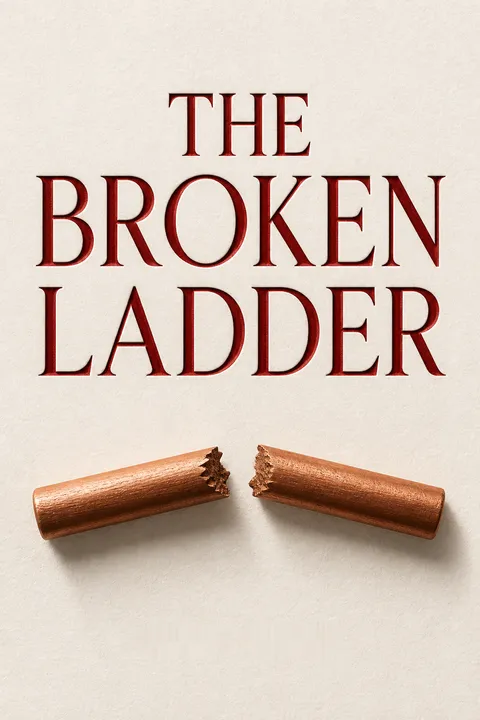
The Broken Ladder examines how inequality affects society and individuals. Reviewers praise its compelling arguments, research, and accessible writing. The book explores how perceived inequality impacts decision-making, health, politics, and workplace dynamics. Many found it thought-provoking and insightful, highlighting the psychological effects of feeling "less than" others. Some criticize its U.S.-centric focus and repetitiveness. Overall, readers appreciate the book's unique perspective on inequality as a public health issue and its practical suggestions for coping with societal disparities.
People Also Read




Glossary
Status Ladder
perceived social rankA ten-rung scale used to measure how people judge their own standing relative to others. The imagined ranking combines money, education, and occupational prestige, but a person’s placement is only weakly explained by those objective markers. Payne uses it to show why subjective feelings of status can predict attitudes and well-being beyond income alone.
relative deprivation
felt shortfall versus peersThe sense of being worse off than relevant comparison others, even when a person’s absolute conditions have not changed. In the workplace research discussed by Payne, soldiers’ satisfaction depended partly on how they compared with people in similar roles. The term captures why rank and fairness can matter as much as a position’s material rewards.
fast strategy
prioritize immediate returnsA life-history response associated with harsh, uncertain conditions. When the future seems risky or short, immediate rewards and earlier reproduction can be more adaptive than delayed investment. Payne applies this framework to human decisions as well as animal behavior, arguing that perceived insecurity can encourage short-term choices without implying that people consciously calculate an evolutionary plan.
nothing to lose theory
need increases risk takingThe proposed pattern that organisms become more willing to choose high-risk, high-reward options when their needs are urgent. Payne illustrates it with bumblebees choosing variable nectar sources when deprived, and with people gambling more after being made to feel relatively poor. The theory distinguishes meeting a pressing need from maximizing expected monetary value.
fundamental attribution error
underweight situational causesA common judgment error in which observers explain another person’s behavior mainly through character or beliefs while neglecting the situation that constrained the behavior. In the classic speech experiment described by Payne, listeners attributed a position to a speaker even when researchers had assigned it. The concept challenges character-only explanations of poverty and conduct.
pareidolia
finding patterns in noiseThe tendency to perceive a meaningful form, especially a familiar image such as a face, in ambiguous or random material. Payne uses examples such as religious images seen in food and experiments where feelings of powerlessness increased reports of hidden patterns in visual noise. The term describes perception, not whether a perceived image has spiritual significance.
ideological toolbox
context-sensitive political beliefsThe idea that people draw on different political principles depending on what is salient in a particular situation, rather than applying one perfectly consistent ideology to every judgment. Recent thoughts about merit, hardship, or threat can make different arguments accessible. The concept helps explain why political attitudes can shift with context without being wholly insincere.
implicit bias
automatic social associationAn association that can influence perception or behavior without being consciously endorsed. Payne’s weapon-identification experiment found that participants under time pressure were more likely to mistake a harmless object for a gun after seeing a Black face. The concept distinguishes automatic influence from explicit prejudice, while leaving open questions of responsibility and institutional remedy.
veil of ignorance
choose without knowing rankJohn Rawls’s thought experiment asks people to choose principles for society without knowing what position they themselves will occupy. Because a chooser might end up rich or poor, strong or vulnerable, the exercise aims to limit self-interest and reveal which arrangements people consider fair. Payne discusses a study in which most American participants chose a more equal distribution under this condition.
Lake Wobegon effect
overrate oneself against averageThe widespread tendency to rate oneself above average on valued abilities or virtues. The name comes from a fictional town where everyone is said to be above average. Payne describes studies in which accident-involved drivers, students, convicted offenders, and professors all rated themselves favorably, illustrating how self-assessment can be distorted.
Easterlin paradox
growth without lasting happinessThe observed pattern that rising income within a country can accompany greater well-being up to a point, while long-term economic growth does not reliably raise average happiness. Payne connects this pattern to adaptation and unevenly shared gains: people adjust to higher personal income, while gains concentrated at the top can increase perceived distance and dissatisfaction.
Gatsby curve
inequality limits mobilityThe relationship between greater income inequality and lower intergenerational economic mobility. In places where the distance between income levels is larger, children’s economic prospects tend to be more strongly tied to their parents’ position. Payne uses the curve to challenge the assumption that greater inequality automatically creates more opportunity to rise.
stress response
body’s crisis mobilizationA coordinated bodily reaction that mobilizes energy and prepares a person to respond to a perceived threat or opportunity. Hormones such as adrenaline and cortisol help redirect resources toward immediate action. The response is useful in short crises, but prolonged activation can disrupt maintenance and regulation, contributing to health risks discussed in the book.
FAQ
What's The Broken Ladder about?
- Explores inequality's impact: The Broken Ladder by Keith Payne examines how economic inequality affects our thoughts, behaviors, and overall well-being.
- Subjective status focus: It emphasizes the importance of subjective perceptions of social status and how these perceptions influence mental and physical health.
- Interconnected themes: The book connects themes like social comparison, health disparities, and political polarization, showing how inequality affects various life aspects.
Why should I read The Broken Ladder?
- Understanding modern challenges: The book provides insights into the psychological and social ramifications of living in an unequal society.
- Practical implications: Readers can learn how feelings of relative wealth or poverty affect decisions and interactions, leading to more informed choices.
- Engaging narrative: Keith Payne combines personal anecdotes, research findings, and storytelling to make complex social science accessible.
What are the key takeaways of The Broken Ladder?
- Inequality affects behavior: Inequality can lead to shortsightedness, risky behavior, and poor decision-making as people prioritize immediate gratification.
- Subjective perceptions matter: Perceptions of social status can profoundly affect health, happiness, and life outcomes, often more than actual income.
- Political implications: Feelings of inequality contribute to political polarization, with people dismissing opposing views as irrational.
What are the best quotes from The Broken Ladder and what do they mean?
- “Inequality makes people feel poor...”: This quote illustrates how relative comparisons distort self-perception and behavior.
- “Feeling poor subtracts as many years...”: It highlights the significant health impacts of perceived inequality, suggesting mental states have physical consequences.
- “When the rich get richer...”: This underscores the psychological effects of inequality, emphasizing that relative wealth influences societal well-being.
How does The Broken Ladder define inequality?
- Economic disparity: Inequality is defined as the uneven distribution of wealth and resources, leading to differences in opportunities and outcomes.
- Subjective experience: The book discusses inequality in terms of subjective social status, affecting mental and physical health.
- Cultural and social dimensions: Payne explores how inequality influences relationships, trust, and community cohesion.
How does The Broken Ladder relate to health outcomes?
- Health disparities: Economic inequality correlates with poorer health outcomes, including higher rates of chronic diseases.
- Stress and behavior: Feelings of inequality lead to stress, affecting health behaviors like diet and exercise.
- Subjective status and health: Perceptions of social status can be more predictive of health than actual income.
What role does social comparison play in The Broken Ladder?
- Inevitability of comparison: Humans naturally compare themselves to others, leading to feelings of inadequacy in unequal societies.
- Impact on decision-making: Social comparisons influence choices, leading to prioritizing immediate rewards over long-term benefits.
- Psychological consequences: Constant comparisons erode trust and social cohesion, increasing anxiety and stress.
How does The Broken Ladder address political polarization?
- Inequality and partisanship: Rising inequality contributes to increased political polarization, with secure individuals dismissing others' concerns.
- Perception of opponents: Feelings of superiority lead to viewing political opponents as incompetent, making compromise difficult.
- Historical context: The book connects contemporary political dynamics to historical trends, suggesting inequality grows political divides.
What specific methods does Keith Payne suggest to address inequality?
- Policy recommendations: Payne advocates for raising the minimum wage, expanding education access, and implementing progressive taxation.
- Community engagement: Encourages initiatives that foster inclusivity and support for disadvantaged groups.
- Awareness and education: Increasing public awareness about inequality impacts can empower advocacy for change.
How does The Broken Ladder relate stress to economic status?
- Biological response to stress: Lower economic status links to higher stress hormones, leading to health issues.
- Social comparison and stress: Social comparisons exacerbate stress, particularly for those in lower economic positions.
- Long-term health consequences: Chronic stress from low status can result in serious health problems like heart disease.
How does The Broken Ladder address the intersection of race and economic inequality?
- Racial disparities: Racial inequality intertwines with economic disparities, affecting access to resources.
- Psychological effects: Racial minorities experience compounded stress from economic and racial inequalities.
- Call for equity: Advocates for policies addressing both economic and racial inequalities simultaneously.
What solutions or advice does The Broken Ladder offer?
- Awareness of perceptions: Encourages awareness of social status perceptions and their influence on behavior.
- Fostering empathy: Advocates for empathy across socioeconomic divides to bridge gaps.
- Policy implications: Implies addressing inequality at individual and systemic levels for healthier societies.
Download PDF
Download EPUB
.epub digital book format is ideal for reading ebooks on phones, tablets, and e-readers.








