

Plot Summary
The Empty Portfolio
Twenty-four-year-old Zelda Rossi arrives in Manhattan hoping publishers will take her graphic novel, Mother, May I?, a revenge story shaped by the abduction of her younger sister, Rosemary. Three editors reject it, though one assistant, Iris Hannover, urges her to revise the story and bring it back. Before Zelda can begin, her hostel roommate steals her suitcase and art supplies.
With little money left and no place to work, Zelda plans to return to Las Vegas. At an Italian bistro, the smell of food brings back her family and the grief she has spent years avoiding. Outside, she meets Beckett Copeland, a bike messenger and busboy who shares a cigarette with her, then escorts her safely back to the hostel.
A Room For Two
The next day, Zelda discovers her Las Vegas roommate has rented out her room. Rather than give up on New York, she returns to the bistro and asks Beckett to share his tiny Brooklyn studio. He refuses until she reveals how little she has and he admits he is short on rent.
Then he tells her he is on parole for armed robbery: during the break-in, the homeowner suffered a fatal heart attack. Beckett still holds himself responsible. Zelda believes his remorse, and he agrees to take her in for a few weeks. She buys an air mattress, accepts a breakfast shift found through Darlene, Beckett's friend and coworker, and begins rebuilding her working life beside him.
The Story's Missing Heart
At dinner with Beckett's parole officer, Roy Goodwin, and Roy's wife, Mary, talk of family triggers Zelda's first severe panic attack in years. Beckett gets her outside and helps her regain control. Later, they tell each other what they have hidden: Zelda saw Rosemary abducted when she was fourteen and has blamed herself ever since; Beckett joined the robbery hoping to improve life for his dying grandfather, then watched the crime destroy another family.
He reads Mother, May I? and sees that its avenging heroine, Kira, has no one to challenge her certainty that killing is justice. Zelda asks Beckett to collaborate. His suggestion of a future traveler who can question Kira gives the story the emotional conflict the publisher wanted.
The State Line
As Zelda and Beckett reshape the comic, their cramped home grows warmer with Christmas lights, a small tree, and a gift from their neighbor, Mrs. Santino. Zelda calls her mother in Philadelphia and decides she must try to visit for Christmas. She asks Beckett to accompany her because his presence steadies her, but his parole forbids leaving New York without thirty days' notice.
At Rockefeller Center, he takes her skating; both fall repeatedly, then lie on the ice beneath the lit tree, sharing a rare moment of ease. Zelda invites him again. He wants to go but refuses, distressed that his conviction has made the decision for him. His withdrawal leaves Zelda to face the visit alone.
The Red Balloon
Zelda travels to Philadelphia and reunites with her parents and extended Italian family. At Christmas dinner, the crowded room and Rosemary's absence overwhelm her; she flees to the den in a panic. Her elderly Aunt Lucille, usually dismissed as eccentric, comforts her with an image of Rosemary safe in a dreamlike theater, carrying her favorite red balloon.
Zelda leaves the next day rather than remain through Christmas, but she calls Beckett from home, and he guides her back to the memory of the Rockefeller tree until she can breathe. She returns to Brooklyn on Christmas Day, shaken but relieved to be beside him. Beckett abandons his friends' gathering, brings home Chinese food, and spends the evening with her.
The New Year's Interruption
At home, Beckett gives Zelda a snow globe, and she gives him a Frank Sinatra Christmas record tied to his memories of his grandfather. They dance together, but neither acts on the attraction building between them. At a New Year's party, Beckett and Zelda finally kiss, then slip into an office where their intimacy becomes physical.
They are interrupted when guests call for help: Darlene has collapsed in a bathroom. Beckett and his friend Wes find a pulse and carry her into the hall, where paramedics revive her with naloxone and take her to the hospital. Zelda joins Beckett in the freezing night, and later warms his hands when he returns home without a coat. Their fear for Darlene makes their own need for closeness impossible to dismiss.
A Life Held Together
At the hospital, Zelda and Beckett learn Darlene is physically stable but may face stricter parole or jail after relapsing. Zelda comforts her and gives her a portrait drawn from a happy moment, helping Darlene see herself as more than her addiction.
Darlene's boyfriend, Kyle, arrives and explains that their breakup was a quarrel, not abandonment; she lets him stay. Back in Brooklyn, Beckett and Zelda admit they are frightened of happiness but want to try a relationship. They become lovers and continue finishing Mother, May I?
Their bond deepens as Zelda prepares for a meeting with BlackStar Publishing. Beckett remains determined not to let his criminal record damage her chance, even as both begin to imagine a future built around their shared work.
The Price of Publication
BlackStar's editors admire the revised comic and offer both artists contracts, but an application asks about felony convictions. After Beckett discloses his record, the publisher offers Zelda a contract alone and proposes buying out his share.
Beckett urges her to accept, insisting the story belongs to her. She refuses to decide without him. The next morning, a car runs a red light in front of Beckett's bicycle. He avoids being crushed, but his bike is wrecked and his ankle is badly sprained.
While Zelda tends to him, her mother calls with news that Gordon James, the man who abducted Rosemary, is scheduled for execution that Friday. Zelda decides to return to Philadelphia, carrying the unresolved choice about the book and the long-awaited confrontation with her sister's killer.
The Door She Leaves
Zelda travels with her parents and relatives to the prison where Gordon James is to be executed. Aunt Lucille waits outside the viewing room, praying and reminding Zelda of the red balloon she imagined Rosemary holding.
Inside, Zelda sees her younger self in the glass, still believing she should have stopped the abduction. As guards bring James in, she realizes that forgiveness is not something he can give her; she must release the fourteen-year-old she has condemned. She leaves before witnessing the execution and runs into the parking lot.
Beckett, who has broken parole despite his injured ankle, is waiting outside. He holds her while she grieves and tells her he loves her. Zelda returns that love, choosing the living bond between them over the spectacle she had expected to bring closure.
Letters Answered
On the journey back to New York, Zelda sees Mrs. Johannsen, the widow of the man who died during Beckett's robbery. Beckett meets her at the Plaza Hotel with Roy, his parole officer, and learns she has read every letter he sent over three years. She admits she remains haunted by the robbery too, then forgives Beckett and gives him her blessing to seek happiness with Zelda.
Iris Hannover offers a new route: freelance contracts through a smaller imprint she will run, with no exclusion based on Beckett's record. The couple accepts. At Beckett's birthday dinner, Roy and Mary give him adoption papers, asking him to become their son. Beckett accepts, gaining the family he lost when his parents abandoned him.
Mercy Rewrites Time
With a contract secured, Zelda and Beckett return to the comic's unfinished ending. Kira has spared a would-be child predator and sent him to prison rather than killing him. Zelda imagines that the mercy begins a chain of small changes: the man reforms, his story discourages others from violence, and the ripple eventually reaches the person who would have murdered Kira's daughter.
In the future, Kira lives as a nurse, embraces her daughter, and no longer remembers the Butterfly Project or Ryder. Beckett recognizes that Zelda has found the story's heart: mercy cannot undo the past, but it can alter what follows. The comic gives its heroine a life beyond vengeance, while Zelda and Beckett finish the work together.
Epilogue
One year later, Zelda and Beckett live in a warmer Brooklyn apartment, and Mother, May I? has been published to strong reviews. They return to Philadelphia for Christmas with Roy, Mary, and Mrs. Santino.
Zelda gives her mother a painting of herself and Rosemary as children, each holding a balloon in her favorite color. The family can speak of Rosemary with love as well as grief. Outside, Beckett proposes with a ring decorated with tiny butterflies, and Zelda accepts.
The epilogue does not erase loss or pretend that the family has reached a clean ending. Zelda's painting offers her mother a new image to carry, while the shared Christmas gathering makes grief part of family life rather than the force that empties it. Beckett's proposal completes the book's movement from improvised shelter to chosen home, but the butterfly ring also returns to the comic's central logic: small acts can redirect a life. The final yes echoes Zelda's original decision to ask for a room, turning dependence, risk, and mutual care into the conditions for a future neither character could have planned alone.
Analysis
The novel makes guilt persuasive by showing how it disguises itself as loyalty. Zelda believes that blaming herself keeps Rosemary close; Beckett treats a lifetime of deprivation as the proper payment for a crime whose consequences he cannot reverse. Their parallel stories do not make their losses identical, but they let each recognize the other's self-punishment without claiming to cure it. Their shared comic becomes a controlled space for trying out a difficult alternative: Kira can spare a predator, and the future can still change.
The book's most important acts are small and material. Beckett escorts a stranger home, gives away food, and makes room in a cramped studio. Zelda cooks, draws Darlene as she sees her, and eventually asks for help. These gestures build trust more convincingly than declarations alone because they repeatedly cost time, pride, comfort, or safety. The Butterfly Project's theory of cascading effects thus becomes the book's social ethic: kindness cannot undo harm, but it can change what harm produces next.
Forgiveness is presented as permission to live, not a verdict that the past was harmless. Zelda does not need to watch James die in order to honor Rosemary, and Beckett does not need Evelyn's response to prove that the robbery mattered. Yet her forgiveness gives him something he could not grant himself. The conclusion refuses a clean separation between pain and happiness. Family life still contains absence, relapse remains a danger, and parole has consequences. What changes is the protagonists' willingness to face uncertainty together, making intimacy not an escape from accountability but a reason to keep choosing a future.
Review Summary
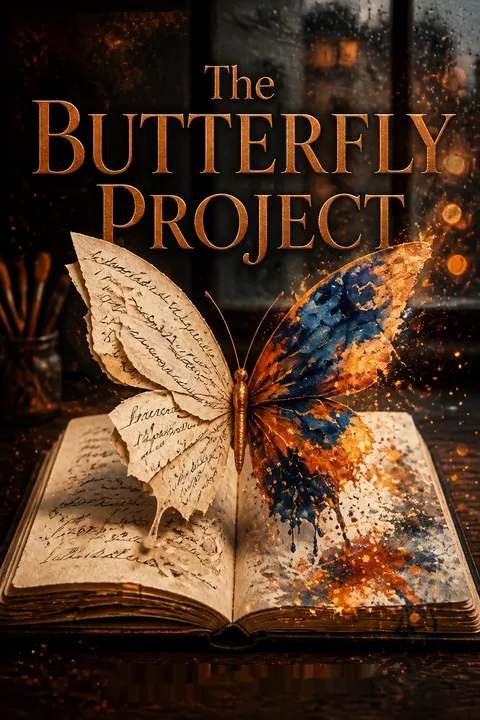
The Butterfly Project is a highly-rated romance novel about two broken souls finding healing and love. Readers praise the well-developed characters, emotional depth, and themes of forgiveness and second chances. The slow-burn romance between Zelda and Beckett is described as beautiful and heartwarming. Many reviewers consider it their favorite book by the author, noting its unique storyline and powerful message. While a few found it slow-paced, most were deeply moved by the characters' journeys and the overall hopeful tone of the story.
People Also Read




Characters
Zelda Rossi
Artist seeking a way forwardZelda is a twenty-four-year-old artist and former tattooist whose graphic novel grows from the trauma of witnessing her younger sister Rosemary's abduction. She is resourceful, observant, and quick with sarcasm, but treats self-reliance as protection against grief and disappointment. Panic attacks and years of estrangement from her Philadelphia family reveal the cost of that defense. Her work gives her a way to shape pain, though at first she mistakes vengeance for the only honest response to it. Beckett's steadiness and creative insight invite her to risk collaboration and emotional trust without diminishing her independence.
Beckett Copeland
Messenger carrying old guiltBeckett is a Brooklyn bike messenger and busboy, raised by his grandfather after his parents abandoned him. He is disciplined, generous, and attentive to people in need, yet measures himself by the harm caused when he joined an armed robbery that ended in a homeowner's death. Parole and a felony record shape his choices, while his letters to the victim's widow reveal a private effort to face responsibility. Beckett writes with more feeling than he allows himself to speak. Working on Zelda's comic lets him use that sensitivity creatively and challenges his belief that a past mistake disqualifies him from a future.
Darlene
Beckett's loyal, vulnerable friendDarlene waits tables at Giovanni's and is Beckett's closest friend. Warm, irreverent, and exuberant, she befriends Zelda quickly and helps her find a Manhattan job. Her history with addiction complicates that brightness, and her recovery is vulnerable to loneliness and heartbreak. She recognizes Beckett's kindness and encourages Zelda to see the affection between them, while also needing the same patience and care she freely offers others.
Roy Goodwin
Parole officer turned father figureRoy is Beckett's parole officer, a former FBI agent whose warmth does not soften his respect for rules. He checks Beckett's home and choices, but also offers practical concern, companionship, and a place at his family's table. His care is not simple leniency: he believes accountability and human connection can coexist. Roy sees Beckett's isolation clearly and tries to help him imagine a life larger than the sentence attached to his record.
Mary Goodwin
Roy's generous, steady wifeMary is Roy's affectionate wife and an openhearted presence in Beckett's life. She welcomes Zelda without pressing her to explain herself, and she treats Beckett with the ease of family. Her kindness gives the couple a model of care that is ordinary and sustained, rather than dramatic or transactional.
Evelyn Johannsen
The robbery victim's widowEvelyn Johannsen is the widow of the man who died during Beckett's robbery. Beckett's monthly letters make her an unseen but consequential presence in his life. Her own grief is complicated by the memory of the crime and by the young man whose guilt she witnessed. She represents the moral reality Beckett cannot reduce to a legal sentence or private remorse.
Rosemary Rossi
Zelda's absent younger sisterRosemary is Zelda's younger sister, abducted at nine while Zelda was present. Though absent from the story's present, she remains vivid through Zelda's memories of childhood, family rituals, and the red balloon she loved. Zelda's graphic novel begins as an attempt to honor her and answer the helplessness of that day.
Aunt Lucille
Family's unlikely comforterAunt Lucille is Zelda's elderly relative, known in the family for eccentric stories and rambling speech. Beneath that reputation is a perceptive woman who understands how memory can comfort as well as wound. Her image of Rosemary safe with a red balloon offers Zelda an alternative to imagining her sister only through the violence of her disappearance.
Lydia Rossi
Zelda's grieving motherLydia is Zelda's mother, an interior designer who has kept the family home and Rosemary's room intact while continuing to change the rest of the house. She approaches Zelda gently, aware that reunion can trigger panic, yet keeps reaching out. Her love is persistent without demanding that her daughter recover on a schedule.
Paul Rossi
Zelda's steadfast fatherPaul is Zelda's father and Lydia's partner. He remains part of the close, noisy Rossi family and welcomes Zelda home without forcing her into her old bedroom or demanding explanations. His quiet support gives her room to participate at her own pace.
Iris Hannover
Editor who sees potentialIris is an assistant at BlackStar Publishing who recognizes the promise in Zelda's art even when her first pitch is rejected. She gives Zelda a concrete revision challenge and continues advocating for the project. Her belief is not empty encouragement; she asks for emotional depth and helps create a path for the finished work.
Theo Fletcher
Zelda's Vegas mentorTheo is Zelda's former boss at a Las Vegas tattoo shop and one of the few people she trusts from her life there. His own experience of pursuing a business gives Zelda practical, grounded advice when she faces a difficult professional choice.
Wes Young
Beckett's observant best friendWes works with Beckett as a bike messenger and notices how Zelda changes his mood. Loyal and direct, he supports Beckett through both the accident and the crisis surrounding Darlene. He is also willing to tell Zelda what Beckett cannot yet admit about his feelings.
Nigel Brooks
Beckett's irreverent coworkerNigel is an Australian bike messenger and part of Beckett's circle of friends. His teasing and loud humor ease tense gatherings, while his loyalty becomes clearest when Beckett needs practical help.
Mrs. Santino
Reclusive neighbor with a soft spotMrs. Santino is Beckett's elderly neighbor, who rarely leaves her apartment and communicates mostly through abrupt gestures. Beckett brings her food, and her guarded acceptance becomes a quiet measure of the care he offers without asking for recognition.
Kyle Hayes
Darlene's new romantic interestKyle is the man Darlene begins seeing after meeting him at Giovanni's. His relationship with her unsettles Beckett, who worries about her vulnerability, while Zelda sees that Darlene is capable of wanting closeness despite the risks.
Gordon James
The man who abducted RosemaryGordon James is the man who confessed to abducting and killing Rosemary. His scheduled execution brings Zelda's long-delayed confrontation with the event that has shaped her guilt, her estrangement, and the story she draws.
Plot Devices
Mother, May I?
A comic within the storyZelda's graphic novel follows Kira, an agent in a future where time travelers try to prevent recorded crimes. Kira specializes in stopping child predators and initially kills them, driven by the loss of her own daughter. Beckett's contribution is to give her a challenger, Ryder, whose own guilt makes him question whether vengeance can heal anyone. The comic externalizes Zelda's grief while allowing her and Beckett to test moral choices at a safe artistic distance. Its evolving ending parallels their movement from self-punishment toward mercy and possibility.
The Butterfly Project
Small causes, distant consequencesWithin Zelda's comic, the Butterfly Project sends agents into the past to prevent crimes and hopes that removing suffering will improve the future. Its time-travel system is imperfect, making each intervention uncertain rather than a simple repair. The concept gives Zelda a way to dramatize how one event can alter many lives, while the story's collaborative development applies the same principle to ordinary choices: a room offered, a story revised, or a moment of mercy can create consequences beyond anyone's intention.
Beckett's letters
A private record of remorseBeckett writes monthly to Evelyn Johannsen, the widow of the man who died during the robbery. The letters let him acknowledge the event without asking her to absolve him, and they expose how his guilt has become a permanent identity. Because he does not know whether she reads them, the correspondence also holds his hope and fear in suspension. It becomes a way to measure whether responsibility must mean endless self-denial, or whether a person can face the past and still accept a future.
The red balloon
A gentler image of memoryThe red balloon is linked to Rosemary's favorite color and to Aunt Lucille's imagined refuge for children. It offers Zelda an image of her sister that is not confined to the abduction, and later helps her separate love for Rosemary from the belief that she must keep suffering to prove that love. The image does not erase what happened or promise a supernatural answer. It gives Zelda and her family a different memory to hold alongside the painful one.
About the Author






Download PDF
Download EPUB
.epub digital book format is ideal for reading ebooks on phones, tablets, and e-readers.








