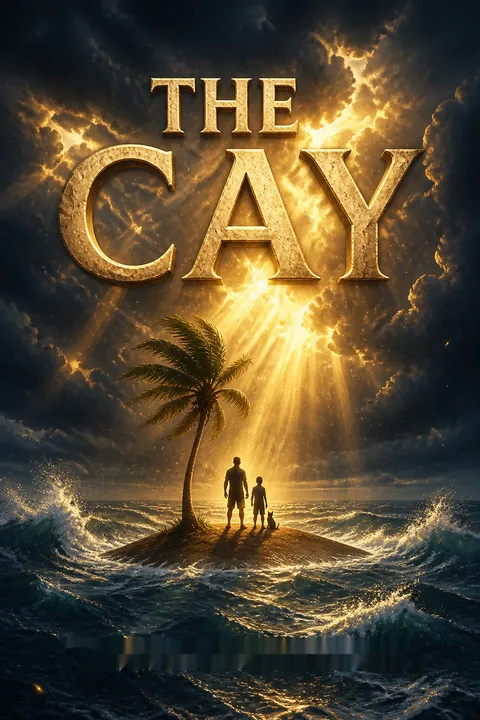


Plot Summary
U-Boats Reach Curaçao
When German submarines attack nearby refineries and tankers in 1942, eleven-year-old Phillip Enright is thrilled by the war until he sees a British tanker explode outside Willemstad. His father, an American refinery expert, stays to support the oil industry; his mother, Grace, wants to return to Virginia.
As ships stop sailing and supplies dwindle, Grace secures passage for herself and Phillip aboard the S.S. Hato. Phillip begs to remain with his father, but the decision is made. He leaves his Dutch friend Henrik behind and sails toward Miami, watching his father wave from the Curaçao shore.
Phillip first experiences war as spectacle, something that might make him heroic in front of Henrik. The burning tanker replaces that fantasy with the sight of ordinary people and essential ships being destroyed. His parents’ conflict gives the danger a domestic shape: his father accepts obligation, while Grace seeks safety and home. Phillip’s forced departure is not merely a change of location. It separates him from the parent he trusts and begins the journey that will test his assumptions about courage, dependence, and belonging.
The Hato Goes Under
Two days after leaving Panama, a torpedo tears into the Hato. A second blast throws Phillip into the sea, and he wakes on a life raft beside Timothy, an elderly Black deckhand, and Stew Cat. Timothy has pulled him from the water, but cannot tell him whether Grace survived.
He rations their water and food while Phillip resents his authority and clings to the belief that help is coming. A head injury, worsened by looking into the sun, leaves Phillip blind. Timothy hears an aircraft and lights a makeshift torch, but it passes without finding them. When he spots land, he chooses the shore over waiting at sea, carrying Phillip ashore on his back.
The wreck strips Phillip of family, sight, and control almost at once. His first response is to treat Timothy’s caution as an insult, because accepting the old man’s judgment would mean admitting how dependent he has become. Timothy’s practical care is not sentimental: he limits water, shields Phillip from the sun, and chooses land despite uncertainty. Their unequal knowledge creates friction, but it also establishes the central survival bond. Phillip must learn to trust actions before he can revise the prejudice shaping his view of Timothy.
A Cay Without Rescue
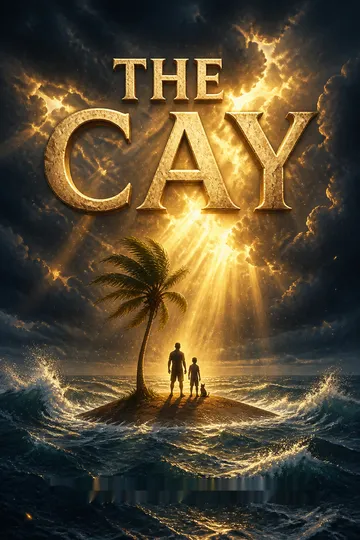
On the small, waterless cay, Timothy builds a palm hut, stores their supplies, and arranges rocks on the beach to spell a signal. He suspects they may be trapped inside the dangerous Devil’s Mouth, where passing ships are unlikely. Phillip depends on him but remains angry when Timothy leaves him alone or insists he work despite his blindness.
During an argument over weaving a sleeping mat, Phillip insults Timothy; Timothy slaps him, then returns to the task. Phillip recognizes that Timothy is teaching him skills he will need, and asks to be treated as a friend. When rain fills their catchment, they share stories about their families and childhoods.
The island makes racial distance impossible to maintain as an abstraction. Phillip’s insults echo what he has absorbed from his mother, yet Timothy answers him as a demanding caregiver rather than as a symbol. The slap marks a boundary, while the return to work prevents the conflict from becoming a simple moral lesson. Phillip’s request for friendship matters because it follows effort and embarrassment. Their new intimacy grows through shared labor, not sudden enlightenment, and the rain gives them a rare resource around which to speak honestly.
Phillip Learns the Reef
With no aircraft or schooner appearing, Timothy’s fear turns toward superstition. He suspects Stew Cat is an evil spirit, takes the cat away, and carves a wooden likeness to ward off danger before bringing the real cat back. Later, malaria leaves Timothy feverish and confused; Phillip follows him into the shallows and drags him from the water.
Knowing Timothy may fall ill again, he teaches Phillip to fish with hooks fashioned from salvaged metal. Phillip catches food alone, maps the cay by touch, and finally climbs a palm for coconuts. Each success makes him less dependent, while his growing trust lets him see Timothy’s instruction as preparation rather than rejection.
Phillip’s competence develops through a reversal of care: the boy who once needed Timothy to ration a cup of water now saves him from drowning. That action does not erase their differences, but it changes their practical relationship. Timothy’s superstition reveals that his confidence has limits, especially after prolonged isolation. Phillip’s fishing and climb answer a different fear: whether he can survive without sight. The skills are material, but their psychological force lies in converting helplessness into chosen action.
The Hurricane Takes Timothy
A July storm approaches, and Timothy secures the water keg, supplies, and rope to a palm tree before the hurricane strikes. The hut disappears, waves climb the cay, and Timothy ties Phillip to the trunk while shielding him with his own body. After the storm passes, Timothy is cold and unresponsive; Phillip frees him from the rope and discovers he is dead.
Still blind, Phillip digs a grave and buries him, then gathers the surviving supplies and begins rebuilding camp. Timothy had hidden fishing poles where the storm could not wash them away. Phillip finds them, recognizing that the old man prepared him for this loneliness even while he hoped they would be rescued.
The storm turns Timothy’s lessons into an inheritance. His body protects Phillip, while the carefully stored fishing gear gives the boy a means to live after that protection is gone. Phillip’s grief arrives through work: freeing Timothy, digging, sorting debris, and locating the tools. These acts do not make loss manageable, but they prevent it from becoming paralysis. Blindness, once experienced as a sealed darkness, now also limits what Phillip must witness, while touch gives him a way to continue caring for the island and its dead.
Smoke Brings the Destroyer
Alone with Stew Cat, Phillip rebuilds his shelter and signal fire. A plane once passes without stopping, so he realizes the thin smoke is hard to distinguish and feeds oily sea-grape branches to the flames. When explosions sound offshore in August, he raises a dark column of smoke. The plane circles low, then radios a nearby destroyer, whose crew reaches the cay.
Phillip is taken to Panama, where his parents reunite with him; Grace has returned to Curaçao after he was reported missing. Surgery later restores his sight. Back in Curaçao, Phillip feels closer to the island’s Black community and remembers Timothy, hoping one day to find the unnamed cay and his grave.
Rescue comes only after Phillip interprets failure and changes his signal. The first plane’s departure could have confirmed his despair; instead, he studies the problem and uses what he knows about the island’s plants. This is the clearest proof that Timothy’s teaching has become Phillip’s own judgment. His restored sight does not return him to his former innocence. The final wish to find Timothy’s grave preserves a bond that neither distance nor recovery can undo, while his changed relationship with Curaçao’s Black residents shows how the cay has altered what he notices and values.
Analysis
The Cay makes survival inseparable from learning how to perceive other people. Phillip begins by trusting inherited categories: his mother’s prejudice, his boyish belief that adventure is exciting, and his assumption that sight is necessary for competence. The wreck dismantles those certainties. Timothy’s knowledge is embodied in routines, tools, and judgments learned at sea, while Phillip’s formal schooling becomes useful in unexpected ways, from spelling a beach signal to understanding the island’s formation. Their partnership is neither effortless nor equal in the same way at every moment. Phillip first receives care, then offers it, and finally acts on lessons Timothy cannot deliver for him. The island narrows their world but also makes their differences harder to use as excuses for distance. Phillip’s later wish to find Timothy’s grave turns memory into an obligation: he wants to return not as the boy who was rescued, but as someone capable of recognizing what the rescue demanded from both of them.
Review Summary
The Cay is a beloved young adult novel about friendship, survival, and overcoming prejudice. Most readers praise its powerful storytelling, character development, and themes of racial understanding. The book resonates with many who read it as children. While some find parts dated or problematic by modern standards, most appreciate its message of looking beyond skin color. Readers enjoy the adventure elements and emotional impact. The audiobook version receives particular praise for bringing Timothy's accent to life. Overall, it remains an impactful, thought-provoking read for many.
People Also Read



Characters
Phillip Enright
Sheltered boy turned survivorPhillip is an eleven-year-old American boy raised in Curaçao, curious about war and confident in the social assumptions of his home. He loves his father and resents being sent away with Grace. At first, he mistakes dependence for humiliation and carries his mother’s racial prejudice into his relationship with Timothy. His habits of observation, once directed toward ships and forts, become essential as he learns to navigate by sound and touch. Phillip’s development centers on responsibility: he gradually learns to contribute, judge people by their actions, and act without waiting for someone else to take charge.
Timothy
Seasoned island sailorTimothy is an elderly sailor from St. Thomas who has spent much of his life at sea. He is physically imposing, resourceful, and blunt about the work survival requires. His practical knowledge covers weather, reefs, fishing, and shelter, though he has no formal education and sometimes relies on superstition. Timothy treats Phillip firmly rather than indulging his fear or prejudice, while offering care through concrete acts. He is both a teacher and a companion, and his patient preparation helps Phillip discover capacities the boy did not know he possessed.
Grace Enright
Protective, homesick motherGrace is Phillip’s American mother. Nervous about the danger and homesick for Virginia, she presses to leave Curaçao with her son. Her racial attitudes shape Phillip’s early assumptions, while her protective impulses coexist with a strained marriage and fear of war.
Phillip Enright's father
Duty-bound refinery expertPhillip’s father is an American refinery specialist who remains in Curaçao to support wartime fuel production. He is patient with his son’s questions and committed to his work, though that commitment keeps him away from home and deepens the family’s disagreements.
Henrik van Boven
Phillip's Dutch friendHenrik is Phillip’s serious, official-sounding childhood friend in Curaçao. Their games and arguments reflect the boys’ different national loyalties during wartime.
Stew Cat
Raft's quiet companionStew Cat is the ship’s cat who ends up with Phillip and Timothy. His presence offers warmth and companionship, and his movements become a familiar part of Phillip’s sound-filled world.
Plot Devices
The life raft
A fragile survival baseThe raft carries Phillip, Timothy, Stew Cat, and their limited water and food after the Hato sinks. Its supplies force Timothy to ration carefully, and its uncertain drift brings the survivors to land.
Timothy's survival lessons
Preparation through daily workShelter-making, fishing, a cane, and routes marked across the reef help Phillip learn to live without relying on sight. These practical lessons also prepare him to take responsibility when Timothy cannot guide him.
The signal fire
A plea visible from aboveThe fire and stone message give the castaways a way to attract passing aircraft. After a plane misses the first signal, Phillip uses oily sea-grape branches to make darker smoke that can be seen more clearly.
FAQ
Synopsis & Basic Details
What is The Cay about?
- Survival Against Odds: The Cay is a gripping tale of survival as transformation set during World War II, following Phillip Enright, a young American boy living in Curaçao, whose life is upended when German U-boats attack Caribbean shipping. His mother, fearful for their safety, decides they must return to the United States.
- Shipwreck and Unlikely Companions: During their voyage, their ship, the S.S. Hato, is torpedoed, leaving Phillip stranded on a life raft. He awakens to find himself alone with Timothy, an elderly Black West Indian sailor, and Stew Cat, the ship's feline companion, adrift in the vast, dangerous Caribbean Sea.
- Journey of Transformation: The story chronicles Phillip's physical and emotional journey as he grapples with blindness caused by the shipwreck, his ingrained racial prejudices, and the harsh realities of survival. It explores the evolving relationship between Phillip and Timothy as they navigate the challenges of the open sea and a desolate island.
Why should I read The Cay?
- Profound Coming-of-Age Story: Readers should engage with The Cay for its powerful depiction of a young boy's transformation from a prejudiced, dependent child to a self-reliant, empathetic young man, forced by extreme circumstances to shed his biases and grow. Phillip's journey highlights the universal themes of resilience and personal growth in the face of adversity.
- Timeless Exploration of Prejudice: The novel offers a poignant and accessible examination of racial prejudice, showing how Phillip's initial disdain for Timothy, influenced by his mother, slowly erodes through shared hardship and Timothy's unwavering kindness. It underscores the idea that true understanding comes from seeing beyond superficial differences.
- Gripping Survival Narrative: Beyond its thematic depth, The Cay is a thrilling adventure story, detailing the ingenious methods Timothy and Phillip employ to survive on a deserted island. The vivid descriptions of their struggles against nature, including a devastating hurricane, make for a compelling and unforgettable read.
What is the background of The Cay?
- WWII Caribbean Setting: The story is set in the Dutch West Indies (Curaçao, Aruba) during World War II, specifically 1942, a period when German U-boats actively targeted Allied shipping, particularly oil tankers, in the Caribbean. This historical context provides the initial catalyst for Phillip's journey and the constant threat of danger.
- Racial and Cultural Dynamics: The narrative is deeply rooted in the racial and cultural landscape of the 1940s Caribbean, reflecting the prevalent prejudices of the time. Phillip's mother's discomfort with the diverse population of Curaçao and her explicit racial biases ("They are not the same as you, Phillip. They are different and they live differently.") directly influence Phillip's initial perception of Timothy.
- Author's Dedication and Intent: Theodore Taylor dedicated the book "To Dr. King's dream, which can only come true if the very young know and understand." This dedication explicitly frames the novel as a tool for fostering racial understanding and empathy in young readers, connecting the historical setting to a broader civil rights message.
What are the most memorable quotes in The Cay?
- "Young bahss, you 'ave always been my friend.": This quote, spoken by Timothy in Chapter Nine after Phillip expresses a desire for friendship, marks a pivotal moment in their relationship. It reveals Timothy's consistent, unconditional affection and acceptance of Phillip, highlighting the depth of his character and the true nature of their bond, transcending Phillip's earlier prejudice.
- "I true don' know, Phill-eep, but I true tink beneath d'skin is all d'same.": Timothy's simple yet profound response in Chapter Ten to Phillip's question about different skin colors encapsulates the novel's central theme of racial equality. It's a powerful statement that directly counters Phillip's ingrained prejudices, delivered with a wisdom that resonates more deeply than any formal lesson.
- "You see, Phill-eep, you do not need d'eye now. You 'ave done widout d'eye what I couldn't do wid my whole body.": Uttered by Timothy in Chapter Thirteen after Phillip successfully climbs a palm tree, this quote signifies Phillip's profound transformation and newfound self-reliance. It emphasizes that his blindness, initially a disability, has become a catalyst for developing other senses and inner strength, a testament to Timothy's mentorship.
What writing style, narrative choices, and literary techniques does Theodore Taylor use?
- First-Person Perspective & Sensory Detail: Taylor employs a first-person narrative from Phillip's perspective, allowing readers direct access to his evolving thoughts and emotions. This choice becomes particularly impactful after Phillip's blindness, as the narrative shifts to rich sensory descriptions, immersing the reader in his world of touch, sound, and smell, as seen when he describes the rain: "It peppered in bursts against the frond roof, and I could hear the drips as it leaked through."
- Simple, Direct Language with Calypso Dialect: The prose is generally straightforward and accessible, reflecting a young boy's voice, yet it is punctuated by the distinctive, musical calypso dialect of Timothy. This linguistic contrast not only enriches the cultural texture of the story but also subtly highlights the initial communication barrier and eventual bond between the two characters.
- Symbolism and Foreshadowing: Taylor skillfully uses symbolism, such as the cay representing both isolation and a crucible for growth, and Phillip's blindness as a metaphor for his initial prejudice. Subtle foreshadowing, like Phillip's father inspecting lifeboats on the Hato or Timothy's early mention of "malar," builds tension and prepares the reader for future challenges, deepening the narrative's impact.
Hidden Details & Subtle Connections
What are some minor details that add significant meaning?
- Mother's Fear of Flying: Phillip's mother's adamant refusal to fly ("You know I won't fly. I'd be frightened to death to fly.") in Chapter Two, despite the greater danger of sea travel during wartime, subtly highlights her deep-seated anxieties and her desire for control, which ultimately leads them into the very danger she sought to avoid. This detail underscores the irony of their predicament and her limited perspective on safety.
- Timothy's "One Name": When Phillip asks Timothy for his last name in Chapter Three, Timothy replies, "I 'ave but one name. 'Tis Timothy." This seemingly minor detail emphasizes Timothy's humble origins and lack of formal lineage, contrasting with Phillip's own privileged background and family name. It subtly reinforces Timothy's connection to a more ancient, less documented history, and his identity as a man of the sea rather than of a specific place or family.
- The "Devil's Mouth" Geography: Timothy's description of their location as potentially being in the "Debil's Mout'" in Chapter Seven, a U-shaped area with "sharp coral banks on either side," is more than just a geographical detail. It symbolizes the perilous, inescapable nature of their situation, a "mouth" that has swallowed them, and foreshadows the extreme difficulty of rescue, making their eventual survival even more miraculous.
What are some subtle foreshadowing and callbacks?
- Father's Lifeboat Inspection: In Chapter Two, as Phillip and his mother board the S.S. Hato, Phillip's father, despite saying the Germans wouldn't waste a torpedo on "this old tub," is seen "looking over the lifeboats" and inspecting "the fire hoses." This quiet act of caution subtly foreshadows the impending torpedo attack and the critical role lifeboats will play in Phillip's survival.
- Timothy's Malaria History: Early in their time on the cay, Timothy mentions his past struggles with "malar" (malaria) in Chapter Twelve, stating, "I got malar agin, Phill-eep. 'Twill go away, but fetch some wattah." This seemingly casual remark foreshadows his later, debilitating bout with the illness, which ultimately weakens him and contributes to his death during the hurricane, making his sacrifice even more poignant.
- Phillip's Mother's Oil Smell Complaint: In Chapter One, Phillip recalls his mother's dislike for Curaçao, often complaining "about the smell of gas and oil whenever the trade winds died down." This seemingly trivial detail subtly connects to the very industry (oil refining) that makes Curaçao a target in the war, and later, the "black and oily smoke" Phillip learns to create from sea grape in Chapter Eighteen, which ultimately leads to his rescue.
What are some unexpected character connections?
- Stew Cat as a Jumbi Bridge: Stew Cat, initially just a pet, becomes a focal point for Timothy's superstition about "jumbi" (evil spirits) in Chapter Eleven, leading him to temporarily remove the cat from the island. This unexpected connection between the cat and Timothy's cultural beliefs forces Phillip to confront the limits of his own rational worldview and the depth of Timothy's spiritual understanding, highlighting their cultural divide and eventual acceptance.
- Phillip's Father's Quiet Strength vs. Timothy's Overt Guidance: While Phillip's father is described as a "figure of stability and quiet strength" who "always answered my questions" in Chapter One, his wartime duties often keep him distant. Timothy, in contrast, becomes an immediate, hands-on mentor, providing constant, often stern, guidance. This unexpected parallel in their roles as protectors and teachers, despite their vastly different backgrounds, underscores the universal qualities of fatherhood that Phillip experiences.
- Phillip's Mother's Prejudice and Timothy's Distrust: Phillip's mother's explicit prejudice against Black people ("They are not the same as you, Phillip. They are different and they live differently.") in Chapter Three is mirrored, albeit more subtly, by Timothy's own admission in Chapter Ten: "I don' like some white people my own self, but 'twould be outrageous if I didn' like any o' dem." This connection reveals that prejudice is not one-sided and sets the stage for their mutual journey toward understanding and acceptance.
Who are the most significant supporting characters?
- Stew Cat: Emotional Anchor and Catalyst for Superstition: Beyond being a mere companion, Stew Cat serves as a vital emotional anchor for Phillip, especially after Timothy's death, providing comfort and a sense of continuity. His presence also acts as a catalyst for Timothy's "jumbi" superstition in Chapter Eleven, which, while initially frightening to Phillip, ultimately reveals Timothy's deep cultural beliefs and his desperate attempts to protect them.
- Phillip's Parents: Architects of His Initial Worldview: Phillip's mother, Grace, with her "anxious, protective, prejudiced" nature, and his father, Phillip Sr., with his "distant, principled, duty-bound" demeanor, are crucial in shaping Phillip's initial worldview. Their contrasting attitudes towards Curaçao, the war, and racial diversity directly inform Phillip's early biases and his sense of security, setting the stage for his profound transformation on the cay.
- Henrik van Boven: The Lost Innocence of Childhood: Henrik, Phillip's Dutch friend in Curaçao, represents the carefree innocence and social norms that Phillip leaves behind. Their shared games and Henrik's more open attitude towards the island's Black population ("Henrik, who'd grown up in Curaçao with them, couldn't understand why my mother felt this way" in Chapter Three) highlight Phillip's own sheltered upbringing and the stark contrast with the harsh realities he faces on the cay.
Psychological, Emotional, & Relational Analysis
What are some unspoken motivations of the characters?
- Timothy's Selfless Duty: Timothy's unwavering commitment to Phillip's survival and education, even at great personal cost, is driven by an unspoken sense of duty and perhaps a deep-seated need to nurture. His statement, "Here I'm all you got," in Chapter Eight, reveals his understanding of his indispensable role, motivating him to push Phillip towards independence, knowing his own time is limited.
- Phillip's Mother's Fear of the Unknown: Grace Enright's intense desire to leave Curaçao and her prejudice against the local Black population are rooted in an unspoken fear of the unfamiliar and a loss of control over her environment. Her longing for "nice and safe in Virginia" (Chapter One) reflects a psychological need for predictability and a homogenous social order, which she projects onto racial differences.
- Phillip's Anger as a Shield: Phillip's initial outbursts of anger and resentment towards Timothy, particularly after losing his sight ("I began hitting him and I remember him saying, 'If dat will make you bettah, go 'ead.'"), serve as an unspoken coping mechanism for his overwhelming fear, helplessness, and grief. This anger is a psychological defense against the terrifying reality of his situation, allowing him to externalize his internal turmoil.
What psychological complexities do the characters exhibit?
- Phillip's Rapid Maturation and Identity Shift: Phillip exhibits the psychological complexity of a child forced into premature adulthood. His journey involves grappling with intense fear, anger, and self-pity, followed by a gradual acceptance of his blindness and a profound shift in identity from a privileged boy to a resilient survivor. This is evident when he realizes, "I was learning to do things all over again, by touch and feel" (Chapter Thirteen), signifying a complete re-wiring of his perception and self-concept.
- Timothy's Blend of Wisdom, Superstition, and Pragmatism: Timothy is a complex character who embodies ancient wisdom and practical survival skills, yet also holds deep-seated superstitions, such as his belief in "jumbi." This blend highlights a mind that navigates both the tangible world of survival and the intangible realm of spiritual belief, demonstrating a holistic approach to life that Phillip initially struggles to comprehend but eventually respects.
- The Psychological Impact of Blindness: Phillip's blindness is not merely a physical ailment but a profound psychological challenge that forces him to re-evaluate his entire world. His initial terror and frustration ("I'm blind, I'm blind") evolve into a heightened awareness of his other senses, leading to a richer, more nuanced understanding of his surroundings and a deeper connection to Timothy, who becomes his "eyes."
What are the major emotional turning points?
- The Sinking of the Hato and Separation: The torpedoing of the S.S. Hato in Chapter Three and Phillip's subsequent separation from his mother is the initial, traumatic emotional turning point, shattering his sense of security and forcing him into an unknown, terrifying reality. This event marks the abrupt end of his childhood innocence and the beginning of his struggle for survival.
- Timothy's Slap and Phillip's Realization: In Chapter Nine, Timothy's unexpected slap after Phillip insults him ("You ugly black man! I won't do it! You're stupid, you can't even spell.") is a shocking emotional turning point. It forces Phillip to confront his own prejudice and the depth of Timothy's care, leading to his heartfelt declaration, "I want to be your friend," and the request to be called "Phill-eep," signifying a profound shift in their relationship.
- Timothy's Death and Phillip's Forced Independence: Timothy's death during the hurricane in Chapter Fifteen is the ultimate emotional turning point, leaving Phillip "blind and alone on a forgotten cay." This loss, while devastating, forces Phillip to fully embrace the self-reliance Timothy had painstakingly taught him, transforming his grief into a powerful motivation for survival and honoring his mentor's legacy.
How do relationship dynamics evolve?
- From Prejudice to Paternal Bond: The relationship between Phillip and Timothy evolves dramatically from initial racial prejudice and resentment on Phillip's part ("I began to dislike Timothy" in Chapter Three) to a deep, paternal bond of mutual respect and love. Timothy's patient teaching and unwavering care gradually break down Phillip's barriers, culminating in Phillip's realization that Timothy "felt neither white nor black" (Chapter Ten).
- Phillip's Shifting Family Dynamics: Phillip's relationship with his parents, initially characterized by his mother's overprotectiveness and his father's distant authority, undergoes a profound shift. After his ordeal, Phillip returns with a new maturity and perspective, finding his parents "struggle to understand what he has endured" (Chapter Nineteen), highlighting the chasm created by his transformative experience and his newfound independence.
- Stew Cat as a Constant Companion: Stew Cat's role evolves from a mere ship's pet to a crucial emotional support system for Phillip, especially after Timothy's death. The cat's consistent presence provides comfort and a tangible connection to his past, becoming a silent witness to Phillip's journey and a symbol of enduring companionship in isolation.
Interpretation & Debate
Which parts of the story remain ambiguous or open-ended?
- The Mother's True Fate and Understanding: While Phillip's mother is reunited with him at the end, the narrative leaves ambiguous the full extent of her ordeal after the shipwreck and whether she truly understands the depth of Phillip's transformation. Phillip notes, "I had the feeling that neither of them really understood what had happened on our cay" (Chapter Nineteen), suggesting her internal journey remains largely untold and her prejudices potentially unresolved.
- The Long-Term Impact of Phillip's Blindness: Although Phillip's sight is restored, the story leaves open how his period of blindness permanently altered his perception of the world. His statement, "Maybe I won't know it by sight, but when I go ashore and close my eyes, I'll know this was our own cay" (Chapter Nineteen), suggests a lasting reliance on his other senses and an internal "vision" that transcends physical sight, the full implications of which are left for the reader to ponder.
- The Nature of Timothy's "Jumbi" Belief: Timothy's belief in the "jumbi" (evil spirit) and his actions towards Stew Cat in Chapter Eleven remain somewhat ambiguous. It's unclear whether this was a genuine, deeply held superstition, a desperate attempt to control their dire circumstances
The Cay Series
Download PDF
Download EPUB
.epub digital book format is ideal for reading ebooks on phones, tablets, and e-readers.








