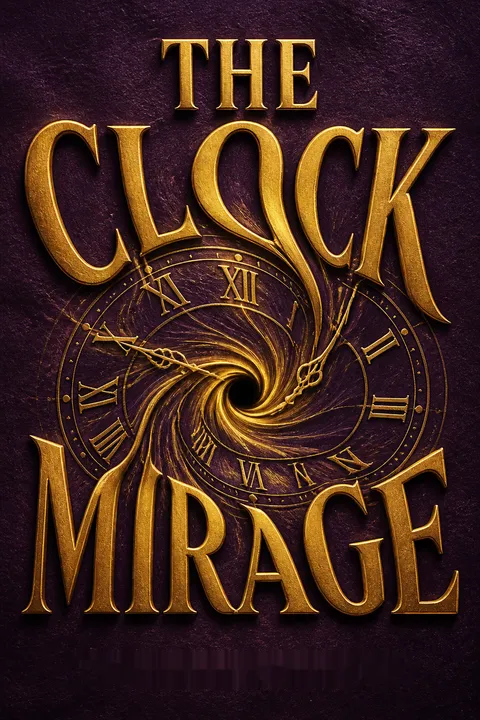


Key Takeaways
Treat clock time as a useful map, not the territory of lived time
Time has several meanings. In ordinary life, time is the schedule that coordinates meals, work, travel, and appointments. In physics, it is a variable linked to motion and measurement. In the body, it is experienced through memory, attention, and biological rhythms. These meanings overlap, but they are not interchangeable. A clock can tell a community when to meet without explaining what time is, or why a prisoner's days may feel endless while a guard's shift passes routinely.
The book's central claim is that time is best understood as a family of measures and experiences, not one hidden substance flowing identically everywhere. Clocks help organize human life and scientific inquiry, while living bodies supply a personal sense of duration.
What's useful about this distinction is that it prevents a category error: a precise measurement does not automatically explain the thing being measured. Temperature readings coordinate laboratories and kitchens, but they do not capture every experience of warmth. Likewise, clock time can be objectively shared while duration remains personal. The distinction also has limits. Social schedules and biological rhythms are not merely separate layers; shift work, deadlines, and lighting can reshape bodily routines. The strongest reading is therefore not that time is unreal, but that different questions require different kinds of timekeeping.
Every clock counts a changing process, not time in the abstract
A clock needs something countable. A sundial tracks a shadow, a water clock tracks flowing water, and a mechanical clock uses an escapement to divide motion into regular steps. Modern atomic clocks count the oscillations of cesium atoms. Each device translates a repeated or accumulating event into a readable measure; none grabs time directly.
That distinction matters even when the measurement is extraordinarily fine. At the 1998 Winter Olympics, Picabo Street beat Michaela Dorfmeister in a super-G race by one hundredth of a second. The clock recorded the difference, but separate runs happened under changing conditions, so the digits could not settle whether the narrow margin represented a meaningful difference in performance. Measurement can be exact while the interpretation remains debatable.
This is a useful lesson in metrology, the study of measurement: every instrument depends on an operational definition, a specified procedure for turning an idea into a reading. That does not make a measurement arbitrary. It makes its meaning conditional on the method and purpose. In sport, a timing rule can decide a medal without proving that one athlete was decisively better. The same distinction matters in science, where precision, accuracy, and significance are different qualities. A clock's authority comes from reliable agreement about what it counts, not from access to metaphysical time.
Remember that calendars and time zones are conventions with real consequences
Local noon once ruled. Before standard time, towns set clocks by the sun, so noon in New York differed from noon in Boston. As railways connected cities and timetables became difficult to coordinate, that local system became impractical. In 1883, North American railroads adopted standardized time zones, replacing many local readings with a shared system. The change was a social decision, but it reorganized everyday life.
Even familiar cycles are not inevitable. The seven-day week may be associated with religious tradition and the moon's roughly four weekly phases, but nature does not require exactly seven days. The day itself is tied to Earth's rotation, which is gradually slowing under tidal effects. Calendars and clocks make shared plans possible; they also teach people to experience agreed units as if they were natural facts.
Standard time is a vivid example of infrastructure becoming invisible. Once a community coordinates around a convention, the convention feels like part of the world rather than a negotiated tool. This pattern appears in money, legal boundaries, and measurement systems: human agreement creates practical reality without changing the underlying physical world. The history also complicates the idea that standardization is simply progress. It makes coordination easier, but it transfers authority from local rhythms to institutions and timetables. The question is not whether conventions are real, but who sets them and whose needs they serve.
Use Zeno's paradoxes to question models, not deny motion
The arrow seems impossible. Zeno's famous argument says that an arrow occupies a particular position at any instant; if it is simply in that position, it appears motionless. A related puzzle says that Achilles must first reach every point where a tortoise has been, dividing the chase into endlessly smaller stages. Yet arrows fly and runners overtake tortoises. The puzzles expose a gap between an abstract description and lived motion.
Mathematics handles infinitely many divisions by showing that their total can have a finite value. That resolves the calculation, but the book asks whether a calculation fully explains continuous experience. Real matter is also built from discrete physical processes, while mathematical number lines contain no immediate next point. The paradoxes are valuable because they reveal what a model assumes, not because they overturn everyday evidence.
Zeno's puzzles remain productive because they distinguish a successful prediction from a complete explanation. Calculus can correctly calculate an arrow's position without showing that nature literally consists of a smoothly painted number line. Conversely, physical discreteness does not by itself prove that time comes in indivisible units. This is a good case for methodological restraint: mathematical models, observations, and interpretations answer related but distinct questions. The book's emphasis on that gap invites curiosity, though its suggestion that mathematics cannot explain motion should be read carefully. Mathematics may not settle what motion feels like, but it can explain many of its measurable relations.
Relativity removes a universal present, not the reality of measurement
Clocks disagree for physical reasons. Newton treated absolute time as a uniform background independent of observers. Einstein's relativity instead links measurements of space and time to motion and gravity. Because light travels at the same speed for all observers, clocks moving relative to one another need not agree about durations or whether distant events happen simultaneously. In a 1971 experiment, atomic clocks carried on aircraft returned with differences from clocks kept on the ground.
The Kelly twins make the principle personal: Scott spent 342 days aboard the International Space Station and, by the book's account, accumulated about 8.6 milliseconds less elapsed time than his Earth-bound twin, Mark. That is not a jump through time. It is a small, measurable difference between clocks following different paths through space-time.
Relativity asks readers to separate the intuitively familiar present from the operational rules used to compare distant events. That separation can feel like a threat to reality, but it is closer to a refinement of what counts as a shared measurement. A useful analogy is perspective in space: different observers can describe a scene differently without the scene becoming imaginary. The analogy has limits because time is not simply another visual angle. Human aging, biological change, and clock readings also operate at different explanatory levels. The Kelly example is compelling precisely because the relativistic difference is real yet too small to define ordinary experience.
Read felt duration through memory, attention, and routine
The same hour can feel unlike itself. The author contrasts an Olympic racer attending to a split-second finish with an assembly-line worker repeating one tiny task for twelve hours a day. Dejian Zeng, studying conditions in an iPhone factory, spent his shifts fastening a speaker screw to each phone. Repetition made the work feel mentally blank and time seem nearly stopped. Prisoners describe another distortion: routines can make time feel fixed in the present, while uncertainty and isolation can stretch it painfully.
Aging adds another puzzle. A year becomes a smaller fraction of a longer life, but that simple ratio does not explain the whole experience. Familiar routines leave fewer distinctive memories; novelty and attention can make a period seem fuller in retrospect. The book treats perceived speed as a mixture of memory, activity, and bodily change, not a change in clock seconds.
This account connects subjective time to memory's role in constructing a life story. A duration with few memorable landmarks may feel short in retrospect even if it felt tedious while happening. That difference explains why boredom and remembered brevity can coexist. It also suggests a practical question: are people seeking more time, or more distinguishable experiences within the time available? The book is appropriately cautious about aging, since its explanations range from routine to brain chemistry and are not a single settled mechanism. That caution matters: a memorable psychological pattern should not be mistaken for one universal biological cause.
Your body's clocks coordinate cells with the planet's daily cycle
The body keeps many times. A circadian rhythm is a roughly twenty-four-hour biological cycle that influences sleep, temperature, hormones, and other functions. The suprachiasmatic nucleus, or SCN, is a small brain region that helps coordinate these rhythms, receiving light information through signals from the eyes. It acts alongside clocks in organs and individual cells, so the body is not governed by one simple internal stopwatch.
Research on fruit flies helped identify a molecular feedback loop: proteins build up, suppress further production, then break down so the cycle can begin again. Related clock mechanisms occur in mammals. The book's image of a clock inside the body is therefore not just metaphorical. Biological timing is distributed across cells and tissues, with the SCN helping synchronize their activity.
The distributed-clock picture resembles a network more than a central command post. A coordinator can align many local processes without controlling every detail, much as a shared protocol lets independent computers exchange information. This helps explain why bodily rhythms can be robust yet vulnerable to disruption. It also discourages a simplistic split between mind and body: sleep, alertness, and felt duration emerge from interacting processes. Still, a biological rhythm is not identical to conscious time perception. Finding a clock mechanism in cells explains timing functions; it does not by itself answer what it feels like to experience an hour.
Protect biological timing when work and travel disrupt light and sleep
Environment helps set the rhythm. A zeitgeber is an external cue that helps synchronize an organism's internal cycles with its surroundings. Light is a powerful cue for humans, while regular sleep, meals, and activity also help organize daily rhythms. Crossing time zones quickly can leave bodily processes out of step with local time. Astronauts aboard the ISS, by contrast, followed a schedule based on Greenwich Mean Time, using controlled lighting rather than the station's repeated passage between Earth day and night.
The book also describes risks associated with long-term night work. Research discussed by the author links disrupted light-dark cycles with changes in sleep and health, including a reported association between extended night-shift work and breast cancer outcomes. The practical lesson is not that every schedule can be made natural, but that work hours, light exposure, and sleep routines can affect the body's coordination.
The key implication extends beyond personal sleep habits to the design of workplaces. A worker cannot simply will a circadian system into alignment with rotating shifts, just as an airline passenger cannot instantly reset the body's timing after crossing several zones. Lighting, scheduling, and recovery time are therefore matters of occupational health, not merely individual discipline. At the same time, the reported association between night work and health outcomes should not be treated as proof that one factor alone causes disease. Circadian disruption is a serious lens for risk, but specific effects depend on exposure, duration, and individual circumstances.
Let other planets remind you that human time is locally calibrated
A day is not universal. The book imagines life on Proxima Centauri b, an exoplanet orbiting a nearby red dwarf star. Its year lasts about 11.2 Earth days, and the planet may be tidally locked, leaving one side facing its star and the other in darkness. Any organisms there would encounter a different pattern of light, seasons, and environmental cues, so their biological rhythms might not resemble ours.
They could still organize events, measure durations, and make calendars, but their units and embodied sense of a day would arise from their own world. The thought experiment returns the argument to Earth: human clocks are convenient measures shaped by our planet, while body rhythms are adapted to its cycles. Neither should be mistaken for a universal template for every possible life.
The exoplanet example makes a useful distinction between converting units and sharing an experience. A duration can be translated mathematically between planetary calendars, but that translation cannot guarantee that two species feel a musical beat, a season, or a lifetime in the same way. This is a form of embodied measurement: the observer is part of the system that gives a unit practical meaning. The idea is speculative because the book has no evidence about life on Proxima Centauri b. Its value is conceptual, showing how easily an Earth-based standard can masquerade as a cosmic one.
Analysis
The book's strength is its refusal to treat time as a single problem with a single disciplinary answer. It moves from shadows, water clocks, and railway schedules to Zeno, Newton, Einstein, memory, and cellular rhythms. That sequence matters: it shows how practical needs generate measurement systems, how physics revises their assumptions, and how human experience remains stubbornly different from either. The interviews give abstract claims a human scale. A prisoner without a release date and a worker fastening one screw per phone do not merely illustrate boredom; they reveal how agency, novelty, and expectation shape experienced duration.
The central argument is most persuasive when it distinguishes clock readings, relativistic time, and biological timing without declaring any one of them false. Its weakest moments arise when those levels are drawn too close together. Circadian clocks regulate bodily processes, but they do not yet provide a complete account of conscious temporal experience. Similarly, a correlation between aging, cellular repair, and felt acceleration does not establish that one causes the other. The book sometimes leans toward a unified bodily explanation while also acknowledging that perception depends on many overlapping mechanisms. That tension is productive rather than fatal. The word time bundles together measurement, sequence, duration, memory, and expectation. The book's title points to the danger of mistaking a representation for the thing represented, but a clock is not simply a deception: it is a reliable instrument within a defined system. Relativity does not make clocks useless, and subjective duration does not make public schedules arbitrary in practice. The more precise conclusion is pluralist: different clocks answer different questions, and the experience of time emerges from their interaction with bodies, environments, and shared institutions. The reader gains less a final definition than a disciplined habit of asking which time is under discussion, what is being measured, and whose experience the measurement leaves out.
Review Summary
People Also Read






Glossary
circadian rhythm
roughly daily biological cycleA biological rhythm that runs on an approximately twenty-four-hour cycle and influences functions such as sleep, body temperature, and hormonal activity. In humans, circadian rhythms are coordinated in part by the brain's suprachiasmatic nucleus and adjusted by environmental cues, especially light. They persist as internal processes, even though external conditions help synchronize them.
suprachiasmatic nucleus
brain's rhythm coordinatorA paired group of nuclei in the hypothalamus that helps coordinate circadian rhythms in mammals. It receives light-related information through pathways connected to the retina and influences daily patterns across the body. The SCN is often described as a master pacemaker, but it coordinates with clocks in organs and cells rather than replacing them.
zeitgeber
external timing cueAn environmental signal that helps synchronize an organism's internal rhythms with its surroundings. Light is a major zeitgeber for humans, while sleep schedules, meals, activity, and other cues can also influence bodily timing. These signals help align internal cycles with the day-night pattern, but they do not make every person's rhythms identical.
closed timelike curve
loop through space-timeA theoretical path through space-time that returns to an earlier point in time as well as to a location on the path. Certain mathematical treatments of relativity allow such curves, which inspire discussions of time travel. Their mathematical possibility does not establish that a usable time machine can exist, and physical constraints may prevent them.
time dilation
different elapsed clock timesA difference in elapsed time measured by clocks following different paths or experiencing different gravitational conditions. In relativity, motion and gravity affect clock comparisons, so observers may not agree on how much time passed between events. The effect has been measured with precise clocks, though under ordinary human conditions it is usually extremely small.
specious present
experienced span of nowA term for the psychologically experienced present, which has some duration rather than being a perfectly thin instant. The experience can include a brief retention of what just happened and an anticipation of what is about to happen. This helps explain how consciousness can experience events as continuous even though the strict mathematical present has no breadth.
psychochronometry
model of felt timeThe book's term for a model associated with Paul Janet, proposing that a given interval feels shorter as a person's life grows longer. On this account, one year forms a smaller proportion of a sixty-year-old's life than of a six-year-old's. The book presents the model as plausible but too simple to explain time perception on its own.
Download PDF
Download EPUB
.epub digital book format is ideal for reading ebooks on phones, tablets, and e-readers.








