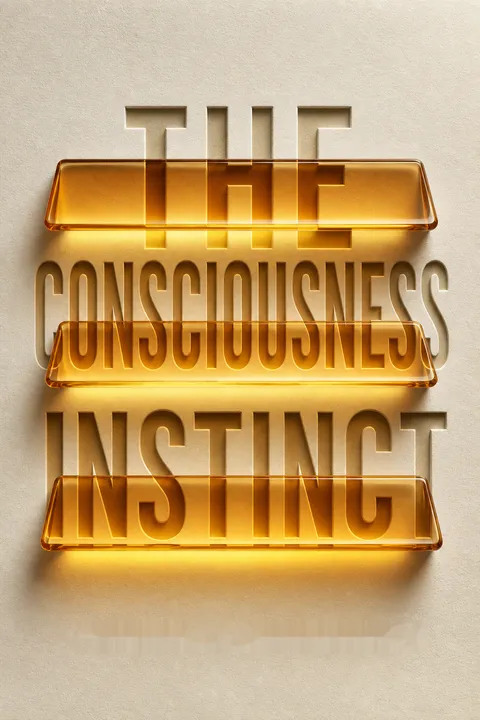


Key Takeaways
Stop searching for a consciousness headquarters; split brains show experience can divide.
A revealing disconnection. In split-brain surgery, doctors cut the large bundle of fibers connecting the brain’s hemispheres to control severe epilepsy. Afterward, the speaking left hemisphere could report what it saw on the right, but not what appeared on the left. The right hemisphere could still respond to left-side images through the patient’s left hand. Each half retained some abilities and information the other lacked, without reporting that anything was missing.
Experience has many sources. Gazzaniga takes this as evidence against one central brain site that generates all consciousness. Local circuits produce particular capacities and their associated experiences. If a circuit is disconnected or damaged, its contribution may disappear while other forms of experience continue. The proposal shifts the question from where consciousness sits to how many processing systems contribute to what a person experiences.
What's striking is that split-brain findings resemble a distributed system whose components can operate independently, rather than a single executive issuing every command. That analogy helps explain why a person can remain capable while losing access to particular information. But performance and report are indirect evidence about subjective experience: a hemisphere unable to speak may still experience something, yet its experience cannot be assessed by ordinary verbal questioning. The case strongly challenges a single-center theory, while leaving open how to identify and compare consciousness across disconnected systems.
Treat the brain as specialized local circuits, not one seamless machine.
Damage reveals design. A module is a specialized, often localized network of neurons that performs a particular job. Damage to the right parietal region can cause spatial neglect: a person may ignore the left side of a plate, a page, or even imagined scenery. In extinction, the left-side information can be noticed when presented alone, but gets overlooked when competing information appears on the right. The signal still reaches the brain, yet does not shape reported experience.
Local work saves resources. A brain with many specialized circuits can process different kinds of information at once. As brains grow, connecting every neuron to every other would demand immense space and energy. Short local connections, with a smaller number of longer links between distant areas, support both specialization and communication. Damage can therefore erase one ability without shutting down the whole mind.
This account connects neuroscience to fault-tolerant engineering: systems built from partly independent components can continue operating when one component fails. It also clarifies why a single behavior rarely reveals a single brain location, since useful tasks depend on connected circuits. The analogy has limits. Brains are not assembled from interchangeable parts, and a circuit’s role can shift with development, learning, and context. Modularity is best treated as an organizing principle, not a claim that every mental skill has a neat, isolated address.
Model brain layers as translations, not a single chain of command.
Architecture shapes function. In a layered architecture, each layer processes information using its own rules, called protocols, and passes a usable result to neighboring layers. Lower-level details are hidden from higher layers unless they are needed. This differs from a simple sequence in which one step must finish before the next begins. Many layers and modules can work in parallel, with selected information exchanged across their boundaries.
Constraints create flexibility. The Boeing 777 example makes the logic concrete: seat designers work to shared measurements, not by mastering every detail of the engines or flight controls. The result is a replaceable component that can vary within limits. Biological systems use comparable arrangements. Their layers support efficient operation and make local changes possible, but each safeguard introduces vulnerabilities elsewhere. The architecture is robust under some disruptions, not invulnerable to all of them.
Layering offers a useful bridge between neuroscience and engineering because it focuses attention on interfaces, not just parts. In software, stable interfaces let one component change without forcing a rewrite of the whole system; the same question about interfaces matters in biology. Yet the analogy should remain a guide, not a literal blueprint. Neural layers are not always cleanly separable, and the rules governing their interactions are not fully known. The framework is valuable precisely because it identifies a research problem, rather than pretending that the architecture has already been mapped.
Read brain injury as a map of altered experience, not automatic proof of unconsciousness.
Awareness can persist. People with Alzheimer’s may lose memory, recognition, and familiar personality traits yet continue to respond socially and feel confusion, anger, or fear. In locked-in syndrome, damage to the brainstem’s movement pathways can leave someone fully aware but almost entirely unable to move or speak. Jean-Dominique Bauby communicated by blinking and composed a book one letter at a time. His case shows how badly outward movement can misrepresent inner awareness.
The boundary matters. Some extensive brainstem damage can produce coma because much of the brain no longer functions. But localized injuries often remove particular capacities rather than consciousness altogether. This distinction matters in clinical care: lack of speech or movement is not reliable proof of absent experience. Gazzaniga’s model treats consciousness as resilient because many circuits can contribute, even when the resulting experience is profoundly changed.
The clinical lesson has an ethical edge: uncertainty about awareness should not be resolved by treating silence as evidence of an empty mind. This resonates with research on disorders of consciousness, where brain activity can sometimes reveal responsiveness that behavior alone misses. At the same time, survival of some capacities does not establish that every patient has the same quality or range of experience. Careful assessment needs multiple signals, repeated over time, and humility about what any test can establish. The book’s strongest contribution here is to make that uncertainty consequential.
Separate raw feeling from the cortex’s richer interpretations of it.
Feeling may be basic. Jaak Panksepp argues that subcortical circuits support basic emotional experiences, including seeking, fear, rage, lust, care, grief, and play. Research described in the book reports that children born with little or no cerebral cortex can show alertness, pleasure, distress, and responses to familiar adults. Rats without a cortex can still display motivated behavior, such as eating, mating, and play. These cases suggest that some forms of experience do not require sophisticated thought.
Cognition adds detail. The cortex supplies richer capacities, such as language, memory, and reflection, which can transform the contents of experience without being the only source of feeling. Researchers disagree about whether subcortical activity itself produces subjective feelings or whether the cortex must interpret it. Gazzaniga’s layered account can accommodate either view, while emphasizing that both levels contribute to ordinary human experience.
The distinction between affect and interpretation resembles a useful separation in psychology: a bodily or emotional response can occur before a person can explain what it means. It also has practical value, since a being that cannot describe pain may still respond to it. The caution is that similar behavior does not prove identical inner experience. Decorticated animals and children with severe developmental conditions cannot settle that question by observation alone. The strongest version of the argument is modest: cortical sophistication is not a safe prerequisite for taking possible feeling seriously.
Use complementarity to frame mind and brain, but do not mistake analogy for proof.
Two descriptions, one system. In physics, complementarity refers to cases where different descriptions of a system reveal features that cannot be captured in one account at once. Light, for example, shows wave-like or particle-like behavior depending on how it is measured. Gazzaniga draws on this idea to reconsider the gap between objective neural activity and subjective experience. The proposal is not that mind and brain are separate substances, but that a single living system may require distinct descriptions of its physical processes and its experienced meaning.
History warns against easy answers. Descartes separated mind from body because he could not explain their interaction. Later materialists often treated the brain as a machine whose parts would eventually explain experience. The book argues that both moves oversimplify. Complementarity offers a way to acknowledge limits in description, but it does not itself explain how neurons produce a particular feeling.
This is a productive change in question: instead of demanding that subjective language collapse into a list of physical events, it asks what each level of description can explain. Similar pluralism appears in other sciences, where molecular and organism-level accounts answer different questions about the same system. Still, quantum complementarity does not establish that consciousness depends on quantum effects, and the analogy cannot do that work by itself. Its value is philosophical and methodological: it warns against assuming that one vocabulary must exhaust every feature of a complex living process.
Life depends on symbols that guide matter without behaving like physical laws.
Instructions need interpretation. DNA is physical material, but its sequence also carries symbolic information. The sequence does not resemble the proteins it helps specify. RNA molecules help connect DNA codons to amino acids through the genetic code, a system of correspondences that is not simply dictated by the physical likeness of the parts. The book uses this to distinguish physical laws, which are universal and inescapable, from biological rules and codes, which can be contingent and changeable.
Replication closes a loop. Semiotic closure describes the interdependence of a living system’s symbols, their interpretation, and the processes that build and maintain the system. DNA needs proteins and other machinery to be read and copied, while that machinery is itself produced through processes guided by genetic information. Gazzaniga proposes that this symbol-and-matter relationship helps explain how living systems differ from inanimate objects.
The distinction between code and material implementation is familiar in information science: a message can be physically embodied while its meaning depends on a convention or interpreter. In biology, however, the interpreter is not an outside reader but part of the living system. This makes the account conceptually rich, though the claim that such coding bridges the mind-brain gap remains a hypothesis, not a demonstrated mechanism. The framework’s immediate strength is to show why a parts list alone cannot explain an organism: the relations among information, construction, and ongoing maintenance matter too.
Treat consciousness as competing moments of processing, stitched together by time.
Many processes, one stream. Gazzaniga’s bubble metaphor describes conscious events as the results of different modules surfacing in succession. A bright bird may occupy attention, then a sound, then a sudden pain. The brain’s activity is not literally a single continuous film; the apparent flow arises as distinct processes become prominent in turn. In split-brain patients, the hemispheres can differ in how they perceive causality or judge another person’s intentions, revealing that different systems contribute different contents.
Memory and feeling differ. A remembered event can carry information about how it felt, but recalling it does not reproduce the original feeling. Current emotion can color the memory, much as a soundtrack changes the mood of a scene. Attention and competition help determine which information becomes prominent, while the sequence of moments gives experience its apparent continuity.
The model connects with research on attention and temporal integration: the mind handles far more input than can occupy focal awareness, so selection is unavoidable. It also offers a clear account of why experience feels continuous despite changing contents. A remaining question is what selects the winning process and how the sense of continuity is maintained. Calling the events bubbles describes the pattern vividly, but it does not by itself specify the control mechanisms. The metaphor is most useful as a challenge to the assumption that a seamless feeling requires a single seamless neural event.
See consciousness as an evolved instinct, not a human-only supernatural gift.
A built-in capacity. Gazzaniga calls consciousness an instinct: an inborn biological capacity, not a skill that must first be learned. Following William James, he treats instincts as structures linked to native ways of acting. Simple systems can operate independently, then combine into more elaborate sequences. A hungry animal, for instance, may seek, approach, capture, and eat; each stage recruits different capacities. The resulting stream of feeling and action can look like one unified mental act.
Inheritance does not settle agency. This account places consciousness on an evolutionary continuum and allows animal experience to differ according to the circuits each species possesses. The book points to research identifying many distinct behavior-related networks in flies as an example of flexible combinations. Gazzaniga also argues that mental processes can influence behavior, so describing consciousness biologically need not make people mere reflex machines. His stronger claim that artificial systems cannot reproduce personal consciousness remains speculative.
Thinking of consciousness as evolved machinery can loosen the assumption that only human language or self-reflection counts as experience. It also fits evolutionary biology’s emphasis on inherited capacities that are modified by development and learning. But the instinct label risks becoming too broad: without clear tests, it can name a phenomenon rather than explain it. Likewise, the contrast between biological symbols and deterministic computing does not prove that artificial consciousness is impossible. The durable insight is narrower and stronger: conscious life is continuous with biology, while its forms vary with an organism’s capacities.
Analysis
The book’s most persuasive move is not its proposed solution to consciousness, but its change of scale. Instead of searching for a neural command center, Gazzaniga starts with dissociations: a brain lesion removes one capacity while leaving other forms of awareness intact, and split-brain surgery separates information streams without producing an obvious collapse of the person. These cases make modularity a strong explanatory constraint. Any adequate theory must explain how a brain can lose contents of experience without losing every capacity for experience.
The layered architecture then supplies a plausible organizational vocabulary. It connects local specialization, energy limits, parallel processing, and resilience without pretending that a map of brain regions automatically explains lived experience. The book’s historical survey reinforces this lesson: from Descartes onward, theories repeatedly confuse a compelling metaphor with a mechanism. A machine analogy, an immaterial soul, and a single consciousness center each simplify one part of the problem while leaving the relations among levels unresolved.
The most ambitious step is the appeal to complementarity and biological symbolism. Pattee’s account of symbols, codes, and living systems suggests that organisms cannot be fully described as matter alone, because their material structures also function within rule-governed informational systems. This is a fertile framework for asking how objective processes relate to subjective organization. It is not, however, a completed bridge from neurons to experience. The analogy between quantum and biological description does not demonstrate that consciousness is quantum, nor does semiotic closure specify how a particular neural event becomes a particular feeling.
The bubbling model is best understood as a research orientation: conscious life may be assembled from multiple, changing processes rather than generated by one unified mechanism. Its strength is compatibility with neurological evidence. Its weakness is that it leaves selection, integration, and subjective presence partly unexplained. The book therefore offers a compelling architecture for the puzzle, not a final answer. That distinction makes its proposal more useful, not less: it turns mystery into a set of tractable questions about organization, interfaces, and biological history.
Review Summary
The Consciousness Instinct explores the nature of consciousness through neuroscience, quantum physics, and philosophy. Gazzaniga presents a modular view of brain function, arguing consciousness emerges from interconnected neural networks rather than a single location. While some readers found the historical overview and quantum explanations challenging, many praised Gazzaniga's accessible writing and fascinating insights from split-brain studies. The book offers a thought-provoking perspective on the mind-body problem, suggesting consciousness may be an instinct rooted in the fundamentals of life itself.
People Also Read








Glossary
module
specialized neural circuitA module is a specialized, often localized network of neurons that performs a particular function. Modules can process information relatively independently, while communicating with related networks when more complex tasks require coordination. The term helps explain why damage to one brain area can impair a specific ability without eliminating all other forms of thought or awareness.
layered architecture
organized processing layersA layered architecture organizes a complex system into levels of processing. Each layer follows its own protocols, works with information from neighboring layers, and hides lower-level details that are not needed for its task. In Gazzaniga’s account, this design allows brain systems to operate in parallel, adapt locally, and continue functioning when some components fail.
complementarity
paired descriptions of one systemComplementarity is the idea that a single system may require distinct, non-interchangeable descriptions to account for its properties. In physics, wave and particle descriptions of light depend on how it is measured. Gazzaniga applies the broader principle to living systems, arguing that physical processes and subjective or symbolic descriptions may both be necessary without implying two separate substances.
epistemic cut
observer-object distinctionThe epistemic cut is the separation between the knower and what is known, or between an event and the symbolic record made of it. In Howard Pattee’s account, measurement and description introduce a distinction that cannot be erased simply by listing physical events. Gazzaniga uses this idea to frame the difference between neural processes and a subject’s experience of them.
semiotic closure
closed symbol-building loopSemiotic closure is the interdependence of symbols, the processes that interpret them, and the material processes that construct a living system. Genetic information guides the production of machinery that reads and copies that information, while the machinery itself depends on the information. The loop helps define how a self-replicating living system maintains its organization.
consciousness instinct
inborn capacity for experienceThe consciousness instinct is Gazzaniga’s proposal that consciousness is an evolved biological capacity organisms come equipped with, rather than a uniquely human faculty acquired through learning. It is not one discrete brain structure. Instead, conscious experience arises through combinations of inborn capacities and memories, whose contents vary with the modules and organization of each organism.
bubble metaphor
successive conscious eventsThe bubble metaphor describes conscious experience as a succession of events produced by different neural modules or groups of modules. Each event becomes prominent for a moment, then gives way to another. Their sequence creates the impression of a continuous stream, while parallel processing and changing attention determine which contents become prominent.
small-world architecture
local clusters with distant shortcutsSmall-world architecture combines tightly connected local clusters with a smaller number of links between distant parts of a network. This arrangement can support specialized processing while keeping communication across the system relatively efficient. Gazzaniga uses it to explain how brain modules can work locally yet remain connected enough to coordinate behavior.
Neural correlates of consciousness
neural events linked to experienceNeural correlates of consciousness are the neuronal events and mechanisms associated with a particular conscious percept. Identifying a correlate can help distinguish conscious from nonconscious processing and constrain theories of brain function. It does not, by itself, explain why a neural pattern is accompanied by a particular subjective experience.
FAQ
What's The Consciousness Instinct about?
- Exploration of Consciousness: The book investigates how the brain produces the mind and conscious experience, using neurological disorders as a lens to understand consciousness mechanisms.
- Instinctual Nature: Gazzaniga argues that consciousness is an instinct, similar to survival, present in many organisms, challenging the view of it as a unique human trait.
- Interdisciplinary Approach: It combines insights from neurology, psychology, philosophy, and biology to provide a comprehensive understanding of consciousness.
Why should I read The Consciousness Instinct?
- Insightful Perspective: Gazzaniga offers a fresh viewpoint, suggesting consciousness is a complex instinct, reshaping how readers think about their conscious experiences.
- Engaging Case Studies: The book includes intriguing case studies from neurological wards, making scientific concepts relatable and understandable.
- Thought-Provoking Questions: It raises fundamental questions about the mind-brain relationship, encouraging deeper philosophical inquiries about human existence.
What are the key takeaways of The Consciousness Instinct?
- Consciousness as an Instinct: Gazzaniga argues that consciousness is an evolved instinct, broadening the understanding beyond human uniqueness.
- Modular Brain Architecture: The brain operates through a modular architecture, allowing resilience in conscious experience even when parts are damaged.
- Integration of Knowledge: An interdisciplinary approach is crucial for advancing the science of consciousness, combining insights from various fields.
How does Gazzaniga define consciousness in The Consciousness Instinct?
- Consciousness as a Process: It is described as a process emerging from the interaction of various brain modules, offering a dynamic understanding.
- Subjective Experience: Consciousness involves subjective experiences shaped by the brain's architecture and module interactions.
- Integration of Instincts: It is a complex instinct integrating cognitive functions, allowing for a rich tapestry of experiences.
What role do neurological disorders play in understanding consciousness in The Consciousness Instinct?
- Case Studies as Illustrations: Neurological disorders illustrate how disruptions in brain function affect consciousness, providing evidence for the modular brain theory.
- Persistence of Consciousness: Consciousness often persists despite significant brain damage, suggesting it is a resilient property of the brain.
- Insights into Brain Function: Examining disorders sheds light on the underlying mechanisms of brain function, aiding understanding of consciousness generation.
How does Gazzaniga explain the modular architecture of the brain?
- Independent Processing Units: The brain is composed of independent modules, each responsible for specific cognitive functions, allowing efficient processing.
- Communication Between Modules: Modules communicate to create a cohesive conscious experience, essential for integrating information from different domains.
- Evolutionary Advantage: This architecture provides evolutionary advantages, enabling specialization and adaptability to changing environments.
What is the significance of the term "consciousness instinct" in The Consciousness Instinct?
- Reframing Consciousness: It reframes consciousness as an evolved trait, not a unique human characteristic, opening new research avenues.
- Broad Applicability: Many organisms possess some form of consciousness instinct, challenging human exceptionalism and encouraging an inclusive view.
- Instinctual Basis: Emphasizes biological roots and evolution's role in shaping conscious experience, crucial for understanding consciousness mechanisms.
How does The Consciousness Instinct address the mind-body problem?
- Dualism vs. Materialism: Gazzaniga integrates both perspectives, suggesting consciousness arises from brain module interactions, not as a separate entity.
- Consciousness as a Property: It is a property of local brain circuits, challenging the idea of localization to a specific area, emphasizing distributed nature.
- Implications for Understanding: This modularity framework helps understand how mental states arise from physical processes, advancing consciousness science.
What future directions does Gazzaniga suggest for consciousness research in The Consciousness Instinct?
- Interdisciplinary Collaboration: Emphasizes combining insights from neuroscience, psychology, philosophy, and biology for a comprehensive understanding.
- Focus on Modular Interactions: Future research should explore how brain modules interact to produce conscious experience, providing valuable insights.
- Exploration of New Technologies: Encourages using advanced imaging techniques and computational models to uncover consciousness complexities.
How does the concept of complementarity relate to consciousness in The Consciousness Instinct?
- Dual Nature of Consciousness: Complementarity posits consciousness has both physical and symbolic aspects, essential for understanding its emergence.
- Interconnected Processes: Physical brain processes and symbolic representations are interconnected, requiring consideration of both for understanding.
- Bridging the Gap: It helps bridge the gap between objective brain processes and subjective experiences, exploring their interaction in consciousness.
What insights does The Consciousness Instinct provide about brain injuries and consciousness?
- Case Studies: Illustrates how consciousness can be affected by brain injuries, showing that specific functions may be impaired while consciousness remains.
- Diverse Experiences: Different injuries lead to diverse conscious experiences, such as unique behaviors in split-brain patients.
- Understanding Resilience: Reveals consciousness resilience, suggesting it is not solely dependent on specific brain regions, informing rehabilitation approaches.
What implications does The Consciousness Instinct have for artificial intelligence (AI)?
- Limitations of AI: Current AI models cannot replicate human consciousness due to their deterministic nature, lacking complex interactions.
- Symbolic Processing: Highlights the importance of symbolic processing in consciousness, which AI lacks, suggesting true consciousness requires more.
- Future of AI Research: Encourages rethinking AI development goals, focusing on understanding human cognition's unique aspects rather than mimicking consciousness.
About the Author
Other books by Michael S. Gazzaniga


Download PDF
Download EPUB
.epub digital book format is ideal for reading ebooks on phones, tablets, and e-readers.








