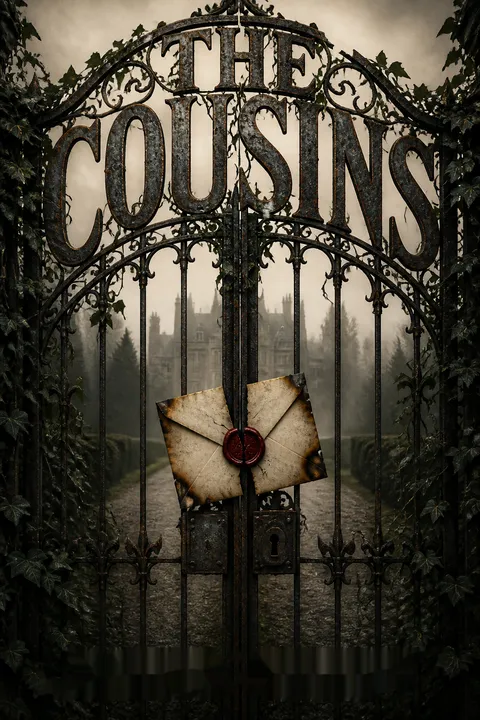


Plot Summary
An Invitation from Mildred
Seventeen-year-old Milly Story-Takahashi1 has never met her maternal grandmother, Mildred Story,9 who severed contact with all four of her children decades earlier. So when Milly's mother,6 Allison,6 produces an invitation for Milly1 and her cousins to spend the summer working at the family resort on Gull Cove Island, Milly1 suspects a bid to win back an inheritance.
Allison6 admits she hopes the invitation might repair her relationship with her mother.9 Milly1 resents being recruited for that purpose, but Allison6 offers her a treasured diamond necklace if she goes. The bargain lands where affection has not: Milly1 agrees, hoping to understand the grandmother-shaped absence in her mother's6 life and wanting the heirloom she has long admired.
The invitation arrives as a family gesture already contaminated by money. Allison's longing is real, but she cannot separate it from the possibility of regaining status, and Milly recognizes the bargain beneath the sentiment. Her decision is therefore neither simple obedience nor pure greed. The necklace gives a visible price to a deeper hope: that her mother might choose to give something freely. The summer begins with three generations wanting connection but lacking the language, or trust, to ask for it directly.
Welcome to Gull Cove
Milly1 travels with Aubrey,2 her athletic cousin from Oregon, and a boy introducing himself as their cousin Jonah.3 On Gull Cove Island, local doctor Fred Baxter13 mistakes Milly1 for Allison6 and warns that she should not have returned, an unsettling greeting the cousins cannot explain. At the resort, hospitality chief Carson Fine brings their grandmother9 to meet them.
Mildred9 appears startled by their arrival, then sends them to staff housing and promises a later conversation. Her reaction is too genuine to dismiss: someone invited them, but the woman they believe is Mildred9 did not know they were coming. She soon leaves the island for Boston, leaving the cousins to work at her resort without answers or much contact from their supposed host.
The island's polished welcome does not resolve the family's history; it makes the uncertainty public. Dr. Baxter's mistake turns resemblance into a clue, while Mildred's surprise undermines the invitation's central promise. The cousins have been summoned into a story whose author is unclear. That disorientation also binds them: Milly's suspicion, Aubrey's hope, and Jonah's practiced hostility are different responses to the same absence. Their first task becomes not simply meeting their grandmother, but deciding which adults are telling them the truth.
Shrimp Exposes the Substitute
Mildred's9 lawyer, Donald Camden,12 invites the cousins to lunch and offers them better-paid work on a Boston film set, a convenient way to clear them from the resort. Milly1 and Aubrey2 suspect he is trying to remove them, and Milly1 refuses the offer. Later, she watches the boy calling himself Jonah3 eat shrimp without the allergic reaction she remembers from childhood.
She steals his wallet and finds identification for Jonah North,3 a Providence teen. Jonah North3 admits that the real Jonah, called JT,4 paid him to take his place so JT4 could attend science camp. North3 also resents JT's father,8 Anders Story,8 whose bad financial advice helped ruin North's3 parents. Milly1 tells Aubrey2 the truth but keeps the substitution secret from the adults.
The impersonation converts the cousins' inherited family mystery into a present moral choice. North is not merely deceiving them for convenience: he carries a grievance against the Storys, while JT's plan reflects the privilege of treating another person's summer as a purchasable solution. Milly's decision to keep the secret is an early act of judgment. She sees that exposure might satisfy rules without repairing anything, and chooses to gather context before handing control back to the adults who have already failed them.
Aubrey Breaks Her Silence
Aubrey's boyfriend,18 Thomas,18 grows distant just as her father,7 Adam,7 leaves her mother17 for Aubrey's longtime swim coach,19 who is pregnant. When Adam7 calls Aubrey2 passive and blames her for failing to secure Mildred's9 attention, Aubrey2 finally confronts him with what he has done.
She tells Milly1 the truth, including her own guilt at having introduced her father7 and coach.19 Milly1 recognizes how deeply Aubrey2 has mistaken pleasing others for being loved, and the cousins compare their parents' damage rather than hiding it.
A photograph of Adam7 with Mildred9 at a local bakery, and Adam's7 strange fixation on nearby Cutty Beach, give Aubrey2 another reason to ask questions. She and Milly1 decide to accept Hazel Baxter-Clement's14 interview request and investigate the Story past themselves.
Aubrey's outburst marks a shift from absorbing other people's choices to naming their consequences. Her guilt comes from a familiar distortion: because she introduced the adults, she feels responsible for their betrayal. Milly's blunt, imperfect support helps her distinguish closeness from culpability. The investigation grows naturally from this personal break. Aubrey no longer seeks family history as an abstract puzzle; she wants to test the stories her father tells and understand why a family that prizes its legacy keeps leaving its younger members to manage the wreckage.
Hazel Opens the Family File
Hazel,14 a Boston University student studying Gull Cove's old families, interviews Milly,1 Aubrey,2 and their supposed cousin Jonah3 at her home. She repeats local rumors about the Story siblings, including a lurid claim about Allison6 that enrages the cousins. Fred Baxter,13 Hazel's grandfather13 and the family's former doctor, interrupts the conversation by feigning confusion, then studies Jonah3 and remarks that he does not resemble Anders.8
The cousins leave with the sense that Fred13 knows more than his granddaughter's14 research can uncover. His reaction also gives Milly1 a reason to pursue another lead: the resort bartender, Chaz,5 may know Edward Franklin, the former hiring coordinator who arranged their summer jobs.
Hazel's interview shows how a community turns missing facts into stories, often at the expense of the people those stories describe. Fred's interruption matters because it is an action that breaks the gossip's momentum, not a confirmation of it. His apparent confusion may conceal alertness, making the family's supposed authority figure another unreliable surface. The scene also sharpens the cousins' method: they must distinguish public rumor from evidence, while noticing the moments when someone with firsthand knowledge tries to stop a conversation.
Archer Sings Himself Back
At a bar, Milly1 recognizes Chaz,5 the resort bartender, as her mother's youngest brother,5 Archer,5 when he joins an old cover band in the family's signature song. Archer5 explains that he arranged their invitation through Edward Franklin because he hoped Mildred9 might meet her grandchildren and soften toward her children. He had kept his identity hidden, then panicked when the island newspaper exposed his return.
Archer5 insists he wanted connection, not a share of the fortune. Before the cousins can decide what to make of his deception, a letter arrives from Fred Baxter13 asking Archer5 to meet and promising long-delayed truths. Archer5 is too overwhelmed to go. The next morning, the newspaper reports that Fred13 has drowned behind his home.
Archer's deception is gentler in motive than North's, but it still denies the cousins informed choice. His longing has become a plan carried out through other people, which repeats the family's habit of substituting management for honest contact. The letter briefly offers a route out of that pattern, then Fred's death closes it. Archer's failure to answer is not framed as malice, but it has consequences: the cousins inherit a mystery whose one promising witness can no longer explain himself.
The Funeral and the Film
After Fred's13 death, the cousins attend a brunch at Catmint House. Mildred9 questions Aubrey2 and the boy she believes is Jonah3 about Adam7 and Anders,8 while barely acknowledging Milly.1 Milly1 wanders inside and overhears Mildred's assistant,10 Theresa Ryan,10 discussing a call with Donald Camden.12
At Fred's13 funeral, Aubrey2 and Jonah3 search the library's microfilm for the year the Story siblings were disinherited. They find a report that Kayla Dugas,15 an old girlfriend of Anders,15 died in a car crash near Cutty Beach in 1997, with Fred13 listed as the attending doctor.
The timing links Kayla's15 death to the family rupture, but the article offers no explanation. Aubrey's father7 has written about a similar beach, and she begins to suspect that his silence is not accidental.
The evidence is suggestive rather than conclusive, which is precisely why it unsettles the cousins. A public record fixes Kayla's death near the date of the disinheritance, yet the official account leaves motives and relationships outside its frame. Milly's overheard call places Theresa and Donald in active coordination; Aubrey's attention to Cutty Beach connects a newspaper item to her father's private unease. Their investigation is beginning to replace inherited explanations with questions anchored in documents and observable behavior.
The Gala Turns Public
At Mildred's9 Summer Gala, Milly1 drinks too much while feeling sidelined, then kisses Jonah North3 on a balcony. Donald Camden12 and the guests catch them, and the apparent cousinly romance becomes the evening's spectacle. Before Milly1 can explain, Anders8 arrives with JT4 and exposes the substitution.
He claims Archer5 tricked the cousins into coming and casts North3 as a fraud, while hiding JT's4 role in the exchange. Aubrey2 confirms that North3 had been paid, unintentionally lending Anders8 credibility.
Security removes North,3 and Donald12 sends Milly1 and Aubrey2 back to the dorms. Humiliated and hurt, Milly1 believes North3 used their trust to attack her family. Archer5 later finds North3 and apologizes for his own deception, but North's3 silence about Anders8 leaves the cousins' loyalties fractured.
The gala weaponizes appearances: a kiss looks like incest, a borrowed identity looks like the only lie, and a partial confession appears to validate Anders's larger account. Milly's intoxication makes her vulnerable at exactly the moment her private feelings become public evidence. Aubrey tells the truth about one piece while lacking the context to challenge the rest. The scene exposes a family skill at controlling narrative, and shows how easily honesty can be made to serve a dishonest speaker.
One Birthmark Missing
After the gala, Hazel14 brings Archer5 a letter from Fred describing a grave injustice and an old autopsy report for Kayla. It lists lorazepam, a sedative absent from the copy her family received. Aubrey2 meets Mildred9 alone, asks about Kayla,15 and spills coffee on her grandmother's9 hand. The birthmark shared by Aubrey2 and the real Mildred9 is missing.
Before leaving Catmint House, Aubrey2 steals the gate card and sends Archer5 a warning that there was no birthmark. The next morning, Hazel14 brings Fred's medical file: Mildred had the same potentially fatal heart condition as her husband. Milly1 connects the clues and suspects the woman at Catmint House is an impostor. Aubrey2 has already gone back to investigate.
The mystery turns on a small bodily fact that family myth could not erase. The missing mark carries more weight than resemblance or manners because it is specific, inherited, and directly observed. Meanwhile, the altered autopsy and the medical report make the conspiracy materially legible: records have been changed, and a diagnosis may explain the sudden severing of family ties. Aubrey's warning is brief because she has moved from interpretation to action, leaving the others to understand the danger as she enters it.
Catmint House in Flames
Inside Catmint House, Aubrey2 is caught by the woman posing as Mildred,10 who holds her at gunpoint. Archer5 arrives, and the woman reveals she is Theresa Ryan;10 her sister Paula11 had impersonated Theresa, while the real Mildred9 died naturally decades earlier.
Theresa10 says her son Matt16 was killed when Anders8 sent him into Cutty Beach's dangerous water with a false claim that Kayla15 needed help. Adam7 watched without stopping him. Allison6 later learned the truth but stayed silent after a pregnancy and miscarriage. Kayla15 told Theresa,10 then sought help; Donald12 drugged Kayla15 and arranged the crash that killed her.
Donald12 and Fred13 helped sustain the impersonation, and Fred's13 efforts to confess ended with his suspicious death. Paula11 sets the house alight. Aubrey2 tackles Theresa,10 then escapes with Archer,5 who carries the injured woman out before she dies from smoke inhalation.
The revelation replaces a single family secret with a chain of choices, each protected by silence, money, or loyalty. Theresa's grief explains her motive but does not excuse the deaths or the attempted killing of Aubrey. Adam's failure to intervene becomes the moral hinge: he did not cause Matt's drowning in the same way Anders did, yet his inaction helped the lie survive. Archer's decision to carry Theresa from the fire refuses the family's old logic of abandoning whoever is inconvenient, even when the person saved has done terrible harm.
After the Story Fortune
The fire destroys Catmint House and its uninsured collection. Investigators find that Theresa10 and Donald12 spent the Story fortune over the years, leaving the family properties in foreclosure and little money to divide. Donald12 is arrested, while Paula11 escapes.
Adam7 and Anders8 deny responsibility for Matt's16 death, and public outrage gives them consequences their family history rarely imposed. Allison6 returns to Gull Cove and begins speaking honestly with Archer5 about her silence and guilt. Archer5 chooses rehabilitation rather than another retreat into drinking.
Aubrey2 prepares to return to Oregon, newly determined to resume swimming and build a life beyond her father's7 approval. Milly1 and Aubrey2 leave the island still connected, while Milly1 faces the possibility that the family name will bring no fortune, only the choices they make next.
The collapse of the estate denies the cousins the inheritance their parents imagined, but it also removes the financial prize that distorted every relationship. The surviving adults do not receive equal justice: Donald faces arrest, while Adam and Anders remain publicly unrepentant. The younger generation's progress is smaller and more credible. Allison begins to speak, Archer accepts treatment, and Aubrey reclaims swimming as her own. The novel measures repair not by restored wealth or perfect reconciliation, but by whether people stop assigning the next generation their unfinished debts.
Epilogue
Months later, Jonah3 and Milly1 are together at Empire Billiards, where his parents have managed to keep the family business open and rehired Enzo. Aubrey2 joins their video call with her infant half-brother, Aedan, and is considering a swimming scholarship at Brown. Archer5 is sober and painting houses on Gull Cove Island.
The Story estate has yielded little for the siblings, but Milly1 and Jonah3 are making plans to see each other. Then Jonah3 receives a postcard signed by Paula,11 the escaped accomplice. She expresses no hostility toward the cousins but warns him to keep his parents away from Anders's8 new business venture.
The epilogue refuses a neat restoration. The family fortune is gone, the guilty adults have not all faced legal consequences, and Paula remains beyond reach. Yet the younger characters have made forms of security that money once promised but could not provide: Jonah's parents preserve their business, Aubrey chooses a future in swimming, and Archer sustains sobriety through work and community. Paula's postcard keeps the mystery's danger alive, but its warning also shows that the cousins' bonds have become meaningful to someone outside the family. Their future is not inherited intact; it must be built.
Analysis
The novel's central mystery is not simply who is lying, but how a family can make lying seem like loyalty. The Story siblings inherited wealth and a rule of family solidarity, yet those privileges also let them turn silence into protection. Adam's7 failure to stop Anders,8 Allison's6 concealment of what she learned, and the younger cousins' initial willingness to trust family explanations show different versions of the same pressure: preserving the group can feel safer than naming harm. The plot makes that pressure tangible through documents, altered records, and a missing birthmark. Truth emerges not from a single brilliant confession, but from the cousins comparing observations that adults have kept separate. The impostors also complicate the idea of family resemblance. A surname and a face can be copied, while care is demonstrated through choices: Archer's5 attempt to reconnect, Aubrey's2 refusal to abandon him, and Milly's1 growing loyalty to people rather than status. The final loss of the estate prevents reconciliation from becoming a financial reward. It also exposes how thoroughly inherited money shaped the older generation's moral world. The cousins do not repair every relationship or secure complete justice. Instead, they begin to refuse inherited scripts: Aubrey2 challenges her father's7 authority, Milly1 learns to ask for affection without bargaining, and Jonah3 has to confront the difference between accountability and revenge. Their future remains uncertain, but it belongs more fully to them than the family fortune ever did.
Review Summary
The Cousins received mixed reviews, with many praising its addictive writing and plot twists. Readers enjoyed the family drama, beach setting, and well-developed characters. Some found it less thrilling than McManus's previous works, criticizing predictable elements and a slow start. The final twist was divisive, with some finding it far-fetched. Overall, fans of YA mysteries appreciated the book's entertainment value, even if it didn't quite meet the high expectations set by the author's earlier novels.
People Also Read





Characters
Milly Story-Takahashi
The watchful granddaughterAllison's6 seventeen-year-old daughter, Milly is observant, stylish, quick-witted, and impatient with evasions. Her mother6 often makes affection feel conditional, so Milly protects herself with sarcasm and tests people before trusting them. She is drawn to her estranged grandmother partly through the necklace she hopes to inherit, but also because she wants to understand the emotional absence that shaped Allison6. Milly's sharp eye turns everyday details into evidence, while her loyalty grows beyond the family members whose approval she once sought. Her relationship with Aubrey2 becomes an important counterweight to her difficult bond with her mother6.
Aubrey Story
The reluctant truth seekerAdam's7 seventeen-year-old daughter, Aubrey is a competitive swimmer who has built her identity around being agreeable, dependable, and easy to love. Her warmth makes her a natural bridge between cousins, though it can leave her vulnerable to people who expect her to accommodate them. She wants her family to be whole and initially gives her father7 more trust than he has earned. As the island's history presses against her own, she becomes more willing to confront painful facts and act without waiting for permission. Swimming, family loyalty, and her uncertain sense of self all shape her choices.
Jonah North
The borrowed cousinA resourceful teenager from Providence, Jonah North is practical, guarded, and unusually skilled at reading people. Financial strain has made him alert to the advantages other families take for granted, while his pride makes it hard for him to ask for help. He enters the summer with a reason to distrust the Story name and uses humor and irritation to keep others at a distance. Beneath that armor, he is protective and capable of genuine tenderness. Pool, work, and family obligation offer him ways to measure himself beyond money, though he does not always know when resentment is making his decisions for him.
Jonah Theodore Story
The absent Story cousinUsually called JT, Jonah Theodore Story is Anders's8 academically gifted son. He wants to attend a competitive science camp and is willing to arrange a substitute for the family summer job rather than surrender that opportunity. His choices suggest a young person accustomed to solving problems privately, even when those solutions create new risks for others. He is more comfortable with achievement than family intimacy, and his relationship with his father8 is strained by control and competing ambitions.
Archer Story
The wayward uncleThe youngest of the Story siblings, Archer is warm, funny, and deeply attached to the idea of family, but his alcoholism has made him unreliable. He remembers childhood closeness with affection and wants to repair relationships that have been broken for years. Rather than approaching his mother9 directly, he engineers the cousins' visit, revealing both his longing and his tendency to avoid difficult conversations. Archer is unusually willing to see goodness in people, sometimes at the cost of sound judgment. His bond with Aubrey2 offers a gentler kind of family connection than she has with her father7.
Allison Story
The guarded motherMilly's mother1 and one of the four Story siblings, Allison is polished, ambitious, and emotionally reserved. She learned to keep grief and fear private, and her distance from Milly1 reflects habits formed long before her daughter could understand them. As a young woman, she struggled to reconcile family loyalty with the harm her brothers caused. Allison's need for control can make her seem cold, but she is also capable of fierce love and professional independence. Her relationship with Milly1 is shaped by what she cannot yet say as much as by what she does.
Adam Story
The fallen golden boyAubrey's father2, Adam was the eldest Story sibling and the family's celebrated athlete. He remains charming and self-assured, and expects others to recognize the potential he believes he possesses. His talent and charisma once drew people toward him, but they also helped shield him from scrutiny. As a father, he can be emotionally withholding and quick to blame others. Aubrey's2 memories of his approval sit uneasily beside the disappointing choices she discovers, making her effort to define herself apart from him central to her growth.
Anders Story
The calculating brotherAnders is the sharp, combative Story brother and JT's father4. He prizes intelligence and self-interest, often treating relationships as contests he should control. His strained history with his siblings and his volatile romances have made him a source of both family tension and local gossip. Anders can be persuasive when he wants an audience, but his confidence is often a way to avoid accountability. His son's4 independence and his own ambition are in constant conflict.
Mildred Story
The absent matriarchThe wealthy owner of Gull Cove Resort, Mildred is known publicly as an elegant recluse and patron of local artists. Her estrangement from her children has shaped the lives of the next generation, even though most of them have never met her. To Milly1, she represents both a possible source of belonging and a formidable source of judgment. Stories about Mildred vary sharply depending on who tells them, making her difficult to understand from a distance. Her legacy is defined as much by the family she excluded as by the fortune she built.
Theresa Ryan
The longtime assistantTheresa has worked closely with the Story family for years and is known as a capable, loyal assistant. She is practical where Mildred9 is ceremonious, and her steady presence has made her seem like one of the few people who can reach the reclusive matriarch. Theresa's history with her son16 and with Gull Cove Island's residents gives her a personal stake in the family's past. She is accustomed to managing other people's needs, though the role she plays in the family is more complicated than it first appears.
Paula Donahue
Theresa's elusive sisterPaula is Theresa's sister10, a private woman who has spent much of her life outside the Story family's circle. Her connection to Theresa10 makes her a largely unseen part of the island's history. She has little public profile, and few people know what she wants or what she is capable of doing.
Donald Camden
The family gatekeeperA longtime lawyer to the Story family, Donald is polished, discreet, and skilled at controlling access. For years he has delivered the family's decisions without offering the reasons behind them. He understands the power of reputation and knows how to make a generous offer sound like a favor. His loyalty appears to belong to Mildred9, though his own interests are difficult to read. To the younger Storys, he is the human face of a door that has remained locked.
Dr. Fred Baxter
The old family doctorFred Baxter was the Story family's doctor and a familiar figure in the island community. His early dementia sometimes clouds his attention, but his connections to the family reach back to the parents' youth. He is also Hazel's grandfather14, and his changing moments of clarity leave her protective and worried. Fred's long memory places him near events the younger generation is only beginning to investigate.
Hazel Baxter-Clement
The island researcherA history student and Fred Baxter's granddaughter13, Hazel is curious, enthusiastic, and eager to understand Gull Cove's old families. Her academic project brings her into contact with the Story cousins, whom she approaches both as research subjects and potential friends. Hazel's interest in local history sometimes leads her to repeat rumors too casually, but she is willing to reconsider what she thinks she knows. Her care for her grandfather13 gives her investigation a personal dimension.
Kayla Dugas
The island's lost girlfriendKayla was a local young woman who dated Anders8 on and off and moved through the Story siblings' privileged world without being absorbed by it. Independent and difficult to impress, she held her own in relationships shaped by status and competition. Her connections to Anders8 and Matt16 make her a lasting presence in the island's memories, even years after her life was cut short.
Matt Ryan
The assistant's sonTheresa's son10, Matt was a local young man who worked with flowers and had a relaxed, sociable manner. His relationships connected him to both Allison6 and Kayla15, drawing him into the orbit of the Story siblings. Matt's easy familiarity with island residents contrasts with the guarded world of the wealthy family.
Megan Story
Aubrey's steady motherAubrey's mother2 is a nurse who offers her daughter a more dependable source of care than Adam7 does. She is practical and hardworking, and their relationship gives Aubrey2 a model of love that does not depend on status or achievement. Megan's own difficult marriage influences the choices Aubrey2 must make about where home will be.
Thomas
A familiar first boyfriendThomas has dated Aubrey2 since middle school. Their long relationship feels comfortable to her, but he often gives her less attention than she gives him. His distance during the summer helps Aubrey2 notice how much of their bond has been built on habit rather than mutual care.
Coach Matson
Aubrey's swim coachAubrey's2 longtime swimming coach, Matson is a figure Aubrey2 admires and once hoped to emulate. Her close connection to Aubrey's family2 makes the discovery of adult betrayals especially destabilizing for the young swimmer.
Oona
Kayla's devoted sisterOona owns Kayla's Boutique and remembers the Story siblings from their youth. Her affection for her late sister15 makes her a careful keeper of local memory. She shares what she knows without pretending to have all the answers, and her observations help the cousins connect the island's old relationships to present clues.
Efram
Jonah's openhearted roommateA friendly fellow Towhee at the resort, Efram repeatedly invites Jonah3 into social life without demanding that he accept. His easy companionship offers a contrast to Jonah's3 guarded habits and helps make the dorm feel less isolating.
Plot Devices
The Resort Invitation
A doorway into family historyThe invitation appears to be Mildred's9 attempt to meet her grandchildren, but the cousins' arrival shows that its source and purpose are uncertain. Donald's12 offer to move them to a film set makes it look like an effort to remove them, while Archer5 later reveals that he arranged the visit through the hiring coordinator. The letter therefore functions as the story's inciting mystery and as a test of how the younger generation responds to adult manipulation. It also joins inheritance to intimacy: each cousin must ask whether the trip offers a relationship, money, or merely another family scheme.
Borrowed Identities
A mask that redirects suspicionTwo substitutions shape the cousins' understanding of the island. Jonah North3 takes JT Story's4 place at the resort, hiding his own connection to the family's financial scandal. Elsewhere, an adult's assumed identity has allowed the Story household to operate without the estranged children recognizing the deception. These impersonations make resemblance and expectation unreliable forms of evidence. The first is uncovered through a remembered shellfish allergy; the second through the missing birthmark, old medical records, and the exclusion that kept the family from comparing faces closely.
The Patek Watch
An heirloom carrying divided timeMilly wears her grandfather's broken watch, which stopped at three o'clock and came to her through the family line. It does not solve the mystery, but it gives the estrangement a daily physical presence: she carries an heirloom from a grandmother who has never welcomed her. The watch's inscription about love sits uneasily beside the family's long refusal to speak. Its failure to keep time also echoes how the adults remain fixed in an old rupture while the cousins try to uncover what happened and decide what they want to inherit emotionally.
The Hidden Records
Paper trails against family rumorHazel's14 newspaper microfilm, Fred Baxter's13 letters, Kayla's15 altered autopsy report, and the medical file about Mildred's9 heart condition let the cousins move from rumor to evidence. Each document is incomplete on its own. The newspaper records Kayla's15 crash without its cause; the autopsy contains a sedative missing from another copy; Fred's13 note signals a confession he never delivers; and the diagnosis changes how the apparent family rupture can be understood. Together, the records reveal how official accounts can be shaped by people with money, access, and a reason to keep others uninformed.
FAQ
Synopsis & Basic Details
What is The Cousins about?
- Estranged cousins summoned mysteriously: Milly, Aubrey, and Jonah, who barely know each other, receive an unexpected invitation from their wealthy, reclusive grandmother, Mildred Story, to spend the summer working at her resort on Gull Cove Island, decades after she disinherited their parents with a cryptic note saying, "You know what you did."
- Unraveling a family mystery: Driven by their parents' hopes for reconciliation and their own curiosity, the cousins reluctantly accept, only to find their grandmother absent and the island steeped in rumors about the Story family's past, leading them to uncover a complex web of secrets, lies, and hidden identities.
- Confronting a dark legacy: As they navigate their strange summer jobs and the island's social dynamics, the cousins must piece together the truth behind their parents' exile and their grandmother's reclusiveness, ultimately revealing a shocking impostor plot and the tragic events that shattered the Story family twenty-four years ago.
Why should I read The Cousins?
- Intriguing multi-generational mystery: The novel expertly weaves together past and present secrets, exploring how the choices of one generation profoundly impact the next, keeping you guessing until the final revelations.
- Complex, relatable teenage protagonists: Milly, Aubrey, and Jonah are distinct characters grappling with their own family issues and insecurities, whose evolving relationships and individual journeys add emotional depth to the suspenseful plot.
- Atmospheric setting and layered secrets: Gull Cove Island itself becomes a character, a seemingly idyllic backdrop hiding a dark history and a community obsessed with the Story family's downfall, creating a compelling sense of place and hidden danger.
What is the background of The Cousins?
- Legacy of old New England wealth: The Story family's history is tied to early American colonists (Mayflower descendant) and fortunes made in whaling and real estate on a secluded Massachusetts island, establishing a backdrop of inherited privilege and historical significance.
- Decades-long family estrangement: The central conflict stems from Mildred Story's unexplained decision twenty-four years prior to cut off her four adult children ("The Four As") with a single, accusatory sentence, creating a deep rift that has shaped the cousins' lives.
- Island community steeped in gossip: Gull Cove Island functions as a microcosm where the Story family's past is public knowledge and constant speculation, highlighting the pressures of living under scrutiny and the difficulty of escaping history.
What are the most memorable quotes in The Cousins?
- "You know what you did.": This single, chilling sentence from Mildred's original letter to her children encapsulates the central mystery and the decades of unresolved guilt and confusion that haunt the Story family.
- "Family first, always.": This quote, etched on Abraham Story's gravestone and repeated by various characters, serves as a poignant and ironic motif, highlighting the hypocrisy and failures of the Story family to live up to this ideal.
- "The Story estate is gone.": This stark declaration at the end reveals the ultimate fate of the family fortune, underscoring the theme that wealth and status are fleeting compared to the lasting impact of secrets and relationships.
What writing style, narrative choices, and literary techniques does Karen M. McManus use?
- Multi-POV Narrative Structure: The story is told through the distinct voices of Milly, Aubrey, and Jonah, allowing readers direct access to their thoughts, feelings, and individual discoveries, building suspense and providing varied insights into the unfolding mystery.
- Integration of historical documents and flashbacks: The narrative incorporates elements like old letters, news articles, and flashback chapters from the parents' youth, gradually revealing layers of the past and connecting historical events to the present-day mystery.
- Foreshadowing and Red Herrings: McManus employs careful hints about future reveals (e.g., character quirks, seemingly minor details) alongside misdirections (e.g., focusing suspicion on Mildred's cruelty or the cousins' motives) to maintain suspense and surprise the reader.
Hidden Details & Subtle Connections
What are some minor details that add significant meaning?
- Mildred's unblemished hand: Aubrey's observation that the woman posing as Mildred lacks the distinctive port-wine birthmark that the real Mildred and Aubrey share is the crucial physical clue that unravels the impostor plot, highlighting the importance of inherited traits and physical identity.
- The specific location of Cutty Beach: The recurring mention of Cutty Beach, particularly its connection to Adam Story's novel ("That's where it all started to go wrong") and later revealed as the site of Matt Ryan's death, subtly links seemingly disparate tragedies and foreshadows the dark events of the past.
- Theresa Ryan's unexpected traits: Small details like Theresa's supposed dislike of baseball (contradicting her past as a Yankees fan) and her sister Paula's seemingly unremarkable life before disappearing hint that the woman the cousins meet is not who she claims to be and that the deception is elaborate.
What are some subtle foreshadowing and callbacks?
- Dr. Baxter's agitated reaction: The elderly Dr. Baxter's distress upon seeing Milly (mistaking her for Allison) and his cryptic comments about Adam ("Could've changed it all with a word") foreshadow the deep, unresolved trauma tied to the Story parents and hint at Dr. Baxter's own complicity.
- The "Africa" song: The Toto song "Africa," mentioned as Allison's favorite and later performed by Uncle Archer's band, serves as a nostalgic callback to the parents' youth and inadvertently reveals Archer's presence on the island, highlighting how elements of the past resurface unexpectedly.
- The recurring phrase "Family first, always": This quote, associated with the deceased patriarch Abraham Story, is repeated throughout the novel, ironically foreshadowing the ways family members betray and fail each other, ultimately leading to the family's destruction.
What are some unexpected character connections?
- Archer Story's relationship with Edward Franklin: The revelation that Uncle Archer was romantically involved with Edward Franklin, the resort's summer hire coordinator, explains how Archer was able to orchestrate the cousins' invitation under Mildred's name, adding a personal layer to his motivations.
- Kayla Dugas's connection to Theresa Ryan: The discovery that Kayla, Anders's ex-girlfriend who died tragically, confided in Theresa Ryan shortly before her death links the two seemingly separate tragedies (Kayla's death and Matt Ryan's death) and points towards Theresa's central role in the mystery.
- Dr. Baxter's financial ties to Donald Camden: The letter revealing Dr. Baxter's gambling debts and Donald Camden's offer to make them "go away" in exchange for his cooperation exposes the lawyer's manipulation and Dr. Baxter's motive for participating in the impostor scheme, connecting their fates to the Story fortune.
Who are the most significant supporting characters?
- Uncle Archer Story: Despite his struggles with addiction, Archer is the catalyst for the cousins' arrival and the eventual unraveling of the truth; his genuine desire for family connection and his redemptive actions make him a pivotal figure in breaking the cycle of Story dysfunction.
- Theresa Ryan (the Impostor): As the woman posing as Mildred, Theresa is the central antagonist whose decades-long deception and vengeful motives drive the main plot, embodying the corrosive power of unresolved grief and the lengths people will go to for revenge and wealth.
- Donald Camden: Mildred's lawyer, Donald is the calculating enabler of the impostor scheme, motivated by greed and control; his actions highlight the corruption surrounding the Story fortune and serve as a foil to the cousins' search for truth.
Psychological, Emotional, & Relational Analysis
What are some unspoken motivations of the characters?
- Milly's craving for validation: Beneath her sharp exterior and focus on inheritance, Milly deeply yearns for acceptance and connection, particularly from her estranged grandmother and her emotionally distant mother, driving her initial pursuit of the Story legacy.
- Aubrey's need for stability and belonging: Haunted by her parents' crumbling marriage and her father's betrayal, Aubrey seeks a sense of security and genuine connection, making her vulnerable to Mildred's attention and fiercely loyal to her newfound cousins.
- Jonah North's desire for justice and recognition: While initially motivated by revenge against Anders Story for his family's financial ruin, Jonah also seeks a sense of agency and worth outside of his family's struggles, which complicates his impersonation and leads to unexpected emotional attachments.
What psychological complexities do the characters exhibit?
- The impostor's fractured psyche: Theresa Ryan's decades-long performance as Mildred, fueled by grief and vengeance for her son's death, reveals a deep psychological break, blurring the lines between her true identity and the persona she created to control the Story family and fortune.
- Parental patterns of avoidance and self-absorption: Allison's emotional distance, Adam's self-centeredness and inability to take responsibility, and Anders's manipulative cruelty all stem from unresolved trauma and privilege, showcasing how the original Story siblings struggled with emotional maturity and accountability.
- The cousins' inherited trauma responses: Milly's cynicism and defensiveness, Aubrey's people-pleasing tendencies and anxiety, and Jonah's initial prickliness and anger can be interpreted as coping mechanisms developed in response to their parents' dysfunction and the weight of the family's secrets.
What are the major emotional turning points?
- The fake Jonah reveal: Milly's discovery of Jonah North's true identity forces the cousins to confront deception within their own ranks, shifting their focus from external mystery to internal trust and solidifying their bond as they decide to protect his secret.
- Aubrey's confrontation with her father: Aubrey's angry phone call to her father, exposing her knowledge of his affair and calling out his passive behavior, marks a significant emotional turning point where she begins to break free from his influence and assert her own feelings.
- The Summer Gala chaos: The public humiliation at the gala, triggered by Milly and Jonah's kiss and Anders's dramatic reveal, shatters the remaining illusions about the Story family and forces the cousins to face the full extent of the deception and their own involvement.
How do relationship dynamics evolve?
- Cousins bonding through shared experience: Milly, Aubrey, and Jonah, initially strangers brought together by circumstance, develop a deep bond of trust and loyalty as they navigate the island's secrets and support each other through personal crises, forming a chosen family unit.
- Shifting power dynamics with the impostor: The cousins' relationship with the woman they believe is Mildred evolves from hopeful anticipation to suspicion, then fear, as they realize she is not their grandmother and is actively working against them, culminating in a dangerous confrontation.
- Reconciliation and understanding with Uncle Archer: The cousins' relationship with Uncle Archer transforms from distant curiosity to genuine affection and understanding as he reveals his past struggles and motivations, becoming a source of support and a link to a more authentic version of their family history.
Interpretation & Debate
Which parts of the story remain ambiguous or open-ended?
- The full extent of Adam and Anders's knowledge: While Anders is clearly implicated in Matt Ryan's death and Adam is present, the precise level of their active participation versus passive negligence remains somewhat open to interpretation, leaving room to debate their individual culpability.
- Paula Donahue's fate and resources: Theresa's sister, Paula, escapes after setting the fire at Catmint House, and her whereabouts and whether she has access to any of the stolen Story fortune are left unresolved, creating a lingering sense of unfinished justice.
- Dr. Baxter's final intentions: Dr. Baxter's letter to Archer and the inclusion of Kayla's autopsy report suggest he intended to confess or reveal something significant before his death, but whether his actions were a clear attempt to expose the truth or a product of his dementia remains debatable.
What are some debatable, controversial scenes or moments in The Cousins?
- Milly and Jonah's kiss at the Gala: The scene where Milly and Jonah, believed to be cousins, kiss publicly is intentionally provocative and sparks outrage within the narrative, prompting readers to consider the social taboo and the dramatic irony of their true relationship.
- Jonah North's outburst at the Gala: Jonah's decision to lash out at the woman he believes is Mildred and publicly accuse Anders, despite knowing it will expose him and harm Milly and Aubrey, is a controversial moment that highlights the destructive nature of his revenge motive versus his developing loyalty to the cousins.
- Aubrey's decision to confront the impostor alone: Aubrey's choice to return to Catmint House by herself to seek confirmation about the birthmark is debatable in terms of safety and strategy, raising questions about her impulsiveness versus her determination to uncover the truth.
The Cousins Ending Explained: How It Ends & What It Means
- The Impostor Plot Exposed & Resolved: The woman posing as Mildred is revealed to be Theresa Ryan, the former assistant, who orchestrated the decades-long deception with Donald Camden and others to control the Story fortune and seek revenge for her son Matt's death, which she blamed on the Story siblings; Theresa dies in the fire she ordered her sister Paula to set at Catmint House to destroy evidence, while Donald is arrested. This resolves the central mystery of Mildred's disappearance and the cousins' invitation, revealing the depth of the fraud and the tragic motives behind it.
- The Story Fortune is Gone: The investigation reveals that Theresa, Donald, and their accomplices squandered the vast Story estate over twenty-four years; the remaining assets and uninsured valuables are destroyed in the fire. This signifies the literal end of the Story family's immense wealth and privilege, underscoring the theme that material inheritance is fleeting and ultimately less important than the human cost of the secrets and betrayals.
- Cousins Forge a New Legacy: Milly, Aubrey, and Jonah, bonded by their shared traumatic experience and the unraveling of their family's dark history, choose to maintain their connection and move forward, supporting each other as they pursue their own paths free from the weight of the lost fortune and the toxic family patterns. The ending suggests that while the past cannot be fully escaped (Adam and Anders face public scrutiny but largely avoid legal consequences, Paula escapes), the cousins have the resilience and self-awareness to build healthier relationships and define their own future, creating a new, more authentic "Story" legacy.
About the Author
Other books by Karen M. McManus






Download PDF
Download EPUB
.epub digital book format is ideal for reading ebooks on phones, tablets, and e-readers.








