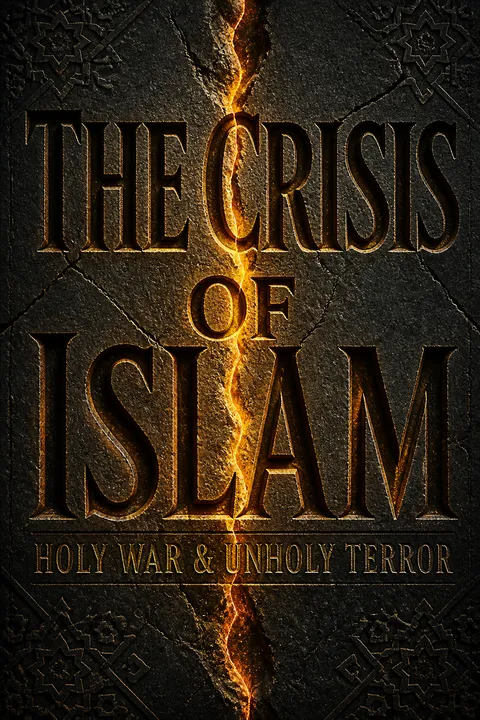


Key Takeaways
Read Muslim political anger through history, not only today's headlines
The past stays present. The book opens with Osama bin Laden invoking more than eighty years of Muslim humiliation. The date points to the Ottoman defeat in 1918 and the end of the last great Muslim empire. In 1924, Turkey abolished the caliphate, a centuries-old symbol of Sunni political unity. For militants, these events represent more than a change of government: they mark the loss of communal power and identity.
History supplies political shorthand. During the Iran-Iraq war, both sides invoked seventh-century battles, adapting their meaning to modern national and religious arguments. Such references can illuminate what an audience hears, but they can also simplify the past. The book's point is not that all Muslims share one historical memory, but that political arguments in the region often draw force from history that outsiders may not recognize.
Collective memory is not a passive archive. It gives groups a vocabulary for naming injury, continuity, and belonging, and it can make distant events feel immediate. That helps explain why a policy can be interpreted through a much older story than its designers intended. The useful caution is that memory is selective: leaders choose which episodes to emphasize, and different communities remember the same event differently. Reading historical references carefully is more revealing than treating them as proof of a single, unified Muslim viewpoint.
Treat Islam as faith and political inheritance, not a single bloc
Religion and rule intertwined. Muhammad led a religious community and governed a state. In the author's account, this history left Islam without the same institutional divide between church and state that shaped much of Christian Europe. The shari'a, or Islamic law, addresses public authority as well as personal conduct. The ulema are learned interpreters of religious law, not priests in a church hierarchy.
Unity has limits. The Organization of the Islamic Conference, founded in 1969, eventually brought together 57 member states. Its shared religious identity did not prevent members Iraq and Iran from fighting an eight-year war, nor did the organization effectively resolve it. The book asks readers to take religious identity seriously without mistaking it for political agreement. Muslim societies differ in language, ethnicity, sect, state institutions, and interpretation of religious authority.
Identity can operate at more than one scale. A person may feel part of a religious community while also identifying with a nation, region, or political movement; those allegiances can reinforce or compete with one another. This makes religion politically consequential without making it an all-purpose explanation. The author's comparison with Christian history is illuminating, though the contrast can appear too neat if treated as a fixed civilizational rule. Institutions and political circumstances shape how religious ideas enter public life.
Separate jihad's legal tradition from terrorists' selective claims
The term has several meanings. Jihad comes from a word for striving or effort. It can describe moral struggle, but classical legal writing often treated it as armed conflict. Jurists distinguished offensive warfare, considered a duty of the community, from defensive warfare, which could become an individual duty. Bin Laden invoked that latter principle to justify attacks, but his interpretation was not the only Muslim reading.
Law also set limits. The book describes rules protecting women and children, requiring fair treatment of prisoners, and honoring agreements. It argues that random attacks on civilians and suicide attacks have no support in the classical legal tradition it surveys. These rules did not guarantee humane conduct in every war, and Muslims have interpreted texts differently. But religious language alone cannot establish that a violent movement represents Islam as a whole.
A tradition's rules and a movement's behavior are different kinds of evidence. Legal principles can constrain violence, but they can also be selectively cited, bypassed, or reinterpreted by people who want to authorize it. That distinction matters beyond religion: political actors routinely borrow the legitimacy of institutions while discarding their limits. The strongest reading avoids both shortcuts, neither treating violent groups as the natural expression of Islam nor assuming that a tradition's formal rules automatically control what its adherents do.
See how remembered defeats recast foreign presence as sacred war
A historical map shapes conflict. Classical Muslim jurists described the world through the House of Islam, where Muslim rule and law prevailed, and the House of War, the territories outside it. The framework expressed an ideal of expanding Islamic authority, though actual rulers also made truces and practical alliances. It should not be mistaken for the outlook of every Muslim today.
Old conflicts acquire new meanings. The Crusades drew limited attention in much medieval Muslim writing, according to the book. Interest rose in the nineteenth century, when European accounts helped recast them as an early version of Western imperialism. Bin Laden similarly described American forces in Arabia as a renewed foreign incursion. The location mattered: Saudi Arabia contains Islam's two holiest cities, while Baghdad had been the caliphate's capital for centuries.
The same military presence can be described as protection, occupation, or sacrilege, depending on the historical and moral map used to interpret it. The book's account shows why material explanations alone may fail to predict the force of a response. At the same time, inherited categories are not destiny. Political leaders decide when to activate them, and ordinary people may reject their use. Understanding a militant's frame helps explain recruitment and rhetoric; it does not validate either.
Address humiliation and failed governance, not only policy disputes
Grievance has several layers. Bin Laden's 1998 declaration focused on American forces in Arabia, the treatment of Iraq, and Jerusalem. But the book argues that hostility often reaches beyond particular policies to a rejection of what America represents. Sayyid Qutb, an Egyptian Islamist who visited the United States from 1948 to 1950, described American life as materialistic and morally threatening. His writings helped shape later Islamist critiques of both Western influence and Muslim rulers who adopted it.
Specific grievances still matter. The 1953 overthrow of Iran's prime minister, Mohammad Mosaddeq, and American support for regional rulers fed suspicion that Washington intervened for its own advantage. Yet, in the author's account, ending particular forms of Western rule did not erase broader resentment. That persistence suggests that grievances, perceived cultural threat, political frustration, and local repression can reinforce one another.
A useful diagnosis distinguishes a complaint about a decision from a worldview that treats an entire society as corrupt or hostile. The first may be addressed through policy; the second requires attention to the institutions and identities that make it persuasive. Still, a civilizational explanation can obscure concrete responsibility if it is used to excuse bad policy or local repression. The more complete account keeps both levels in view: material actions create grievances, while narratives determine how those grievances are connected and amplified.
Stop shielding autocrats if democracy is the stated standard
Support can look like hypocrisy. The book points to the 1991 Iraqi uprising: after the United States encouraged rebellion against Saddam Hussein, it did not protect Kurdish and Shi'a insurgents when government forces crushed them. In Syria, the 1982 assault on Hama killed an estimated 10,000 to 25,000 people, yet the event drew little sustained Western response. The author contrasts this with the attention given to the massacre at Sabra and Shatila.
Elections pose a real dilemma. Algeria's military canceled the 1992 election after the Islamic Salvation Front appeared likely to win. Western governments largely accepted the resulting regime. Islamist movements may use elections to gain power while rejecting political pluralism afterward, but tolerating dictatorship also denies citizens a voice and fuels distrust. The book's challenge is not to ignore that risk, but to stop treating repression as an acceptable substitute for democratic development.
Foreign policy credibility is built through repeated choices, not declared principles. When outside powers condemn abuses selectively, local audiences can reasonably suspect that strategic convenience matters more than human rights. Yet an election alone cannot settle the question of democratic legitimacy: a majority may win office and then restrict the rights that make future competition possible. A serious standard must defend both meaningful participation and constraints on power, rather than using either authoritarian stability or electoral victory as a complete answer.
Make stagnation and blocked politics part of the security analysis
Frustration has structural sources. The book describes low productivity, high population growth, unemployment, and weak education as pressures on many Muslim-majority societies. A 2002 Arab Human Development Report noted that Arab countries translated about 330 books a year, roughly one-fifth of Greece's annual total. It also put the combined GDP of Arab countries below Spain's. These are historical figures from the book's publication period, not current measurements.
Opposition needs places to meet. Where governments suppress parties and civic groups, mosques can provide a recurring network for religious opposition that the state cannot fully control. The book argues that repression can therefore weaken alternatives while helping Islamist movements organize. Economic distress does not automatically produce extremism, and poverty alone cannot explain terrorism. But stagnant opportunities and closed political systems make appeals to a different order more compelling.
Security analysis often focuses on violent acts because they are visible and urgent. This section widens the lens to the conditions that shape political choice: work, education, institutions, and the ability to organize. Those conditions are not simple predictors of violence, but ignoring them can produce policies that manage symptoms while leaving grievances intact. The book's statistics are a snapshot from 2002, and aggregate comparisons conceal differences among countries. Their value lies in the question they raise, not in treating one measure as a complete diagnosis.
Follow oil wealth to understand Wahhabism's expanded influence
A local movement gained state power. Muhammad ibn Abd al-Wahhab began a religious reform movement in eighteenth-century Arabia, seeking to restore what he regarded as Islam's original purity. Its alliance with the House of Saud joined religious doctrine to political and military power. The Saudi state later gained control of the Hijaz and Islam's two holiest cities.
Oil widened its reach. A 1933 agreement with Standard Oil of California began a major American role in Saudi oil development. Oil production rose from 21.3 million barrels in 1945 to more than 2.5 billion in 1975. The resulting wealth gave Saudi institutions and religious teachers resources to support schools and religious education abroad. The author's argument is that money and access helped spread Wahhabi teaching, not that every Saudi institution or Muslim movement shared it.
Ideas travel through institutions, funding, and repeated contact, not only through argument. This case links a religious movement's reach to state power and resource wealth, an important corrective to explanations that treat belief as self-propagating. But funding influence is not the same as controlling every recipient. Local teachers, communities, and political contexts shape what is accepted. The distinction guards against turning a plausible account of institutional expansion into a claim that one doctrine caused all later extremism.
Track how political failure turns civilian terror into spectacle
Terrorism changed its audience. Earlier nationalist groups often attacked officials or infrastructure to pressure an imperial power to leave. By contrast, the newer terrorism described in the book deliberately targets civilians and uses mass media to spread fear and attract attention. The PLO's hijackings and attacks drew headlines, but did not achieve its stated political goal in Palestine. After independence brought new domestic tyrannies, religious movements offered another language of resistance.
The differences still matter. The book distinguishes Al-Qaida's subversive militancy, Saudi state-backed conservatism, and Iran's institutionalized revolutionary rule. It also emphasizes that most Muslims are not fundamentalists, and most fundamentalists are not terrorists. Classical Islamic law condemned suicide, and the author finds no religious or legal justification for the indiscriminate killing of civilians on September 11. Political explanation is not moral excuse.
Media spectacle changes the strategic value of violence. An attack can fail militarily yet succeed at dominating attention, provoking retaliation, and persuading audiences that a larger conflict is underway. That logic helps explain why civilian targets are chosen, but it should not obscure the agency of perpetrators or the suffering of victims. The careful distinction among religious identity, radical politics, and terrorism also improves analysis: broad labels may feel decisive, while actually blurring the different motives and institutions that require different responses.
Analysis
The book's central achievement is to make political violence intelligible without treating it as either an inexplicable eruption or the inevitable expression of Islam. It connects militant arguments to a historical vocabulary of lost sovereignty, religious authority, foreign intervention, and frustrated modernization. Its account is particularly useful when it shows how the same event can carry different meanings: an American military presence can be understood by one audience as security and by another as desecration or domination. That gap between intention and reception is a practical lesson for diplomacy as well as historical interpretation.
The argument is strongest when it distinguishes movements and doctrines. It separates classical legal discussions of jihad from contemporary attacks on civilians, and it differentiates popular radicalism from state-sponsored religious politics. It also takes seriously the damage caused when Western governments support authoritarian allies while invoking democratic principles. These distinctions resist the easy equation of Islam with terrorism, even as the book analyzes the religious language used by militants.
Its broad civilizational framing also needs care. A focus on Islam's political inheritance can make diverse societies appear more unified than they are, and can give historical continuity more explanatory weight than changing local conditions. The book recognizes variation, but its sweeping comparisons sometimes risk turning tendencies into general rules. Its economic and demographic statistics are specific to the early 2000s, so they should be read as evidence of the moment it describes, not as present-day indicators.
The most durable conclusion is methodological: study the interaction of ideas, institutions, and incentives. Religious narratives can make a grievance meaningful, state repression can narrow nonviolent alternatives, and foreign policy can deepen distrust. None of these factors alone explains terrorism. A useful account must hold them together while refusing to confuse explanation with endorsement.
Review Summary
People Also Read



Glossary
Jihad
Striving in God's pathAn Arabic term rooted in the idea of effort or striving. It can refer to moral and spiritual effort, as well as armed struggle. Classical Muslim jurists discussed military jihad as a legal obligation, distinguishing community duties in offensive war from the individual duty that could apply in defensive war. The term's meaning depends on historical context and interpretation.
House of Islam and House of War
Traditional territorial categoriesA classical juristic way of describing the world according to whether Muslim governments and Islamic law held authority. The House of Islam referred to territories under Muslim rule; the House of War referred to territories outside it. The categories expressed a theory of relations between Muslim and non-Muslim powers, but rulers also made truces and practical agreements.
Shari'a
Islamic religious lawThe body of Islamic law and guidance that the book describes as addressing religious, social, and political life. It includes rules concerning authority, the duties of rulers and subjects, and relations among communities, as well as personal conduct. Its interpretation has historically involved learned scholars, and its application has varied across states, periods, and legal traditions.
Ulema
Scholars of Islamic lawThe ulema are learned Muslim scholars whose authority derives from religious education and expertise, especially in interpreting Islamic law. The book compares them loosely with clergy but stresses that classical Islam has no priesthood or church hierarchy equivalent to those in Christianity. Their standing and relationship to political rulers have varied across time and place.
Wahhabism
Saudi-linked reform movementA religious reform movement associated with the eighteenth-century theologian Muhammad ibn Abd al-Wahhab. It called for a return to what its adherents understood as authentic early Islam and rejected later practices they considered innovations. Its political alliance with the House of Saud, followed by Saudi state power and oil wealth, helped spread its teachings beyond Arabia.
Fatwa
Islamic legal opinionA legal opinion or ruling on a question of Islamic law, issued by a qualified jurisconsult known as a mufti. A fatwa is not inherently a death sentence or an order to kill. The book uses the term's ordinary legal meaning to explain why Ayatollah Khomeini's call against Salman Rushdie represented a highly contested and unusual political use of the form.
Takfir
Declaring another Muslim apostateThe act of judging a professing Muslim to have abandoned Islam. The book notes that extremist movements widened the use of this concept, applying it to rulers and other Muslims they considered to have adopted un-Islamic laws or practices. Such a judgment could be used to portray political opponents as apostates rather than fellow Muslims.
Jahiliyya
Age of pre-Islamic ignoranceA term traditionally used for the period of paganism in Arabia before the rise of Islam. Islamist thinker Sayyid Qutb applied it to modern societies, including Muslim states whose rulers he believed had abandoned God's law. This reinterpretation cast contemporary political systems as a return to ignorance and helped justify the need for radical social change.
Dhimma
Protected minority statusA legal arrangement under which Jewish and Christian communities living under Muslim rule received protection and a measure of autonomy in their internal affairs. In the account presented here, this status also imposed disabilities, including a poll tax on adult men. The book characterizes it as unequal status that could nevertheless offer protections unavailable to minorities elsewhere in the same historical periods.
About the Author
Other books by Bernard Lewis
Download PDF
Download EPUB
.epub digital book format is ideal for reading ebooks on phones, tablets, and e-readers.








