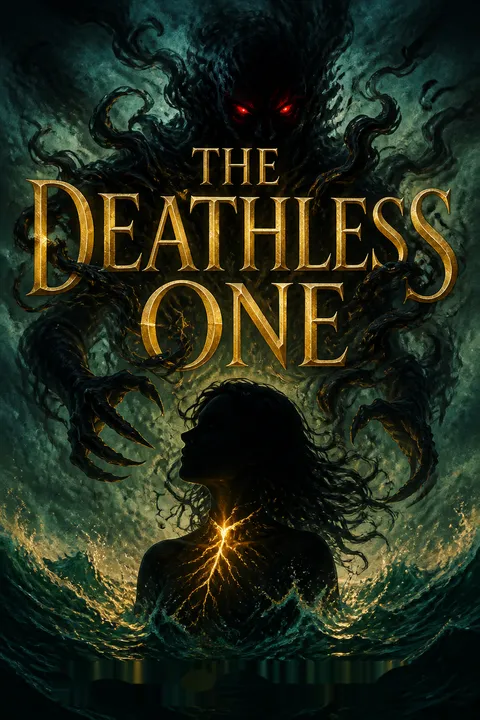


Plot Summary
A Wedding Becomes Coup
Princess Jessamine Harmsworth of Inverholm has agreed to marry Leon Bishop, ruler of Orenda, because her kingdom is being ravaged by a plague and her mother can no longer keep it afloat. On her wedding day, she is still secretly researching witchcraft for a cure. When infected people break into the courtyard, Jessamine orders guards to contain them rather than kill them.
Leon uses her admission of magical study to denounce her, then reveals that his forces have taken the castle. Her mother, Queen Rhiannon, is killed before Jessamine, and Leon cuts Jessamine’s throat and throws her over the sea cliff. As she falls, she recognizes the wedding was a trap, not a rescue for her people.
Jessamine’s first decisive act is choosing the infected people’s lives over the ceremony’s appearance of order. Leon turns that choice into evidence against her, showing how easily a ruler can weaponize public fear when a population already blames witches for its suffering. The coup also exposes the limits of Jessamine’s inherited authority: she has been trained to perform sovereignty, but not to recognize the machinery working against her. Rhiannon’s death severs Jessamine’s last source of guidance at the moment she most needs it. Her fall is therefore political and intimate at once, the abrupt loss of a kingdom and of the person who made it feel like home.
The Sea Gives Her Back
In the realm between life and death, the Deathless One finds Jessamine’s body and recognizes that she is a rare gravesinger, a witch able to call a god into the living world. He restores her life but withholds most of her soul and a future in which they share a throne. Jessamine accepts his terms in her grief, promising to reclaim her kingdom and rebuild it in his name.
She wakes in Inverholm’s sewer system, her throat closed by a silvered scar and her eyes turned black. Two scavengers, Anders and his son Pike, mistake her for an infected woman. Jessamine gives Pike her engagement ring for help, invents the name Alyssa, then flees when she fears the pair may betray her.
The bargain is made in a condition of extreme vulnerability, so its apparent consent is deliberately unstable. Jessamine’s promise comes from the immediate need to survive and avenge her mother, while the god’s offer is shaped by his own need for release. Neither can yet know what the words will cost. Her scar makes that unequal contract visible on her body, a mark both of rescue and of ownership. In the sewer, the princess becomes an anonymous, endangered woman among the people her court had failed to see. Her first response is not command but caution, a survival skill she never needed inside the castle.
Sybil's Shoreline Shelter
Jessamine spends weeks hiding in Inverholm’s streets, stealing scraps and learning that the queen has been dead for a month. At the shore, she meets Sybil, an ancient witch who offers her food and shelter. Sybil confirms that the scar marks the Deathless One’s touch and recounts how witches sacrificed him in an earlier attempt to stop the plague.
Their spell failed, and the kingdom later blamed witches for the sickness and hunted them. Jessamine also dreams of the dead gravesingers, who warn her to take power from the god, though she does not understand their purpose. The Deathless One creates a shadowy kitten to ease her nightmares. Jessamine names the familiar Nyx and begins to find fragile safety in Sybil’s ruined manor.
Sybil’s account overturns the official history without replacing it with a clean alternative. The witches did sacrifice their god, but the plague began earlier, and their failure became a convenient story for those seeking someone to punish. Jessamine’s curiosity about witchcraft now has personal stakes: the knowledge she sought as a princess may be the only means to understand the disease and her own survival. The ancestors’ warning complicates the Deathless One’s promise, making guidance itself contested. Nyx provides a quieter counterweight. The familiar offers comfort without demanding allegiance, something Jessamine has rarely experienced in relationships shaped by rank and obligation.
The Gatekeeper's Memory
Sybil tells Jessamine that she must summon the Deathless One, but Jessamine alters the ritual to force a conversation before granting him a body. His presence proves more physical than she expected, and she refuses to let him define her identity or make choices for her.
Later, she agrees to let him guide her through her wedding memories, hoping to see what she missed. He shows her that the infected entered through a gate opened by Benji, a page who had served her mother.
Jessamine had dismissed him as harmless and overlooked his place in the coup. The god helps her confront the failure of her own assumptions, then destroys Leon’s image inside the memory as a warning. Jessamine leaves with a name to pursue and a sharper suspicion of her court.
Memory becomes an investigative tool, but not an objective archive. Jessamine can revisit what she witnessed, yet the crucial discovery comes from noticing a figure she had mentally classified as insignificant. The scene exposes a social blind spot: people at the bottom of the castle’s hierarchy can alter the fate of the throne, while those above them barely register their presence. The Deathless One’s intervention is both useful and coercive, since he controls the passage through her recollections and can turn a memory into a threat. Jessamine’s insistence on setting limits is therefore not a distraction from the plot. It is her first attempt to make knowledge serve her rather than another person’s agenda.
Benji's Stolen Treasures
Jessamine and Sybil reach the Owl’s Nest, where Benji is sleeping among stolen royal clothing, jewels, and Queen Rhiannon’s signet ring. Jessamine confronts him, but he denies helping Leon. When he tries to stab her, her wound seals with black magic instead of bleeding.
The Deathless One urges her to take Benji’s memories, and Jessamine gives in, pulling them from him and discovering that Callum Quen, her mother’s head of guard and her childhood protector, paid him to open the gates. The spell kills Benji, leaving Jessamine horrified by what her anger has done. She takes the Deathless One’s black grimoire from Benji’s trunk and retreats with Sybil, carrying both evidence and guilt.
Benji’s betrayal hurts because Jessamine’s memory of him is not false; he was once a vulnerable boy who received shelter from the royal household. Yet that history does not erase his choice to help the coup. Jessamine’s use of magic gives her access to the truth, but the cost is immediate and irreversible. She cannot preserve her self-image as a ruler who protects everyone simply by regretting the violence. The death also changes the relationship between her and the Deathless One. He sees ruthlessness as necessary; she experiences its consequences as intimate and moral. The grimoire becomes a physical remainder of the scene, a clue whose danger she does not yet understand.
A God Recovers His Name
As Jessamine withdraws from the world, the Deathless One’s black book becomes an unexpected bridge between them. When he approaches it, its writing appears and then vanishes under Jessamine’s gaze, leaving a journal-like blankness.
He identifies the sigil on its cover as his own name: Elric Hellebore. Jessamine speaks that name and touches his face, and the shadows recede enough for her to see his scars and features clearly. Their attraction surfaces, but Sybil’s arrival interrupts their near kiss.
Soon after, Elric and Jessamine revisit Benji’s memories to learn why Callum betrayed them. They discover that Callum and Rhiannon loved each other in secret. The revelation makes the betrayal harder to explain, and Jessamine decides she must confront the man who raised her.
A name restores personhood where a title has concealed it. Elric has survived by becoming an image of inevitability, but Jessamine’s use of his forgotten name briefly returns him to the human self beneath the god. Their physical closeness grows out of recognition rather than trust alone, which makes its interruption consequential instead of merely romantic. The memory of Rhiannon and Callum similarly refuses an easy moral division: affection existed alongside political betrayal. Jessamine must pursue the truth without relying on the familiar categories of loving parent and treacherous enemy. The scene also deepens the book’s central tension: intimacy can reveal a person, but it does not guarantee that person will choose well.
Hope Written in Soot
Jessamine leaves Sybil’s manor for the Factory District, where she sees how little the royal household understood of ordinary life. A bartender refuses her a room unless she submits to him, while local women explain that the dead princess had represented a measure of protection. Jessamine writes on a filthy wall that she is alive, using her family’s butterfly symbol.
The message briefly stirs a crowd, but fear of Leon’s reprisals disperses it. She writes another message and asks about Callum. Men who recognize her as a witch attack her, leaving a knife wound that kills her. Elric reaches her too late to prevent the second death. He finds her again in his realm, repairs her injuries with his magic, and she vows never to sacrifice him.
The wall messages are an experiment in political communication: Jessamine tests whether a symbol and a claim can restore collective courage. The crowd’s short-lived hope shows that people have not forgotten her family, but fear has trained them to retreat as soon as the cost becomes visible. Her attempt to find Callum directly makes her vulnerable, and the attackers’ violence repeats the lesson that public authority offers little protection once she is outside the palace. Her second death changes the bargain with Elric. By witnessing the history of his suffering and refusing to sacrifice him, she makes a promise that turns their connection from a convenient exchange toward an ethical commitment.
The Angel Learns Flight
After recovering, Jessamine asks Elric to teach her how to control magic without killing anyone. Their lessons stall until he recognizes that she is not a conventional ritual witch: as a gravesinger, she must draw on his power and shape it through her own intent.
With Elric’s hands on her shoulders, she gives life to a stone angel and releases it into the sky. She also restores a dead flower, discovering that his magic can create as well as destroy.
Their growing intimacy makes each lesson more potent, and they kiss, though Elric remains trapped in his shadow realm. Jessamine later enters that realm deliberately to comfort him; their first full sexual encounter occurs there, but she refuses to resurrect him before she knows what he would do with her kingdom.
The angel’s flight gives Jessamine a model of power distinct from the revenge she has already enacted. Her magic can release rather than dominate, and the spell succeeds when she imagines freedom rather than control. This does not erase the death of Benji or make violence harmless; it expands the range of choices available to her. Elric’s role in the lesson is also intimate and hazardous, because his power flows through their bond. Jessamine’s refusal to resurrect him remains an act of political judgment, even as desire grows. The story resists the idea that romantic closeness should dissolve caution: she can want Elric and still require an account of the danger he represents.
The Butcher's Hidden Fortress
Jessamine and Elric trace rumors of the Butcher, the feared leader of the Iron Knuckles, to a barricaded section of the Factory District. Jessamine walks past its guards by naming Callum Quen and declaring herself a witch; the man who previously stabbed her recognizes her and retreats in fear.
Callum emerges and welcomes her with the old tenderness he once used when raising her. In his fortified headquarters, he admits that he helped Leon’s coup, but his confession is not simple cruelty: he built the Iron Knuckles to protect people and has been infected for months.
He stole a page from Elric’s grimoire, using a stasis spell to delay the plague. Callum wants the complete book because it contains a cure, and he intends to control who receives it.
Callum’s reveal turns Jessamine’s search for a villain into a confrontation with compromised care. He helped raise her and loved Rhiannon, yet he chose his own survival and political power over their lives. His infection gives that choice urgency without excusing it. The Butcher’s fortress also embodies the failures of the official state: an outlaw organization has created order where the crown’s institutions abandoned people. Jessamine’s claim of witchcraft, once a liability Leon used against her, now becomes a source of authority. But Callum’s possession of a torn grimoire page and his knowledge of a cure show that the plague’s mystery is entangled with private knowledge and deliberate withholding.
A Sacrifice in Secret
Callum imprisons Jessamine and traps Elric with runes that keep the god from reaching her. When Sybil uses rain magic to break Jessamine out, the two women search the Iron Knuckles’ buildings for Elric, only to be captured again. Callum has prepared an altar and a ritual drawn from the completed grimoire.
He plans to sacrifice Jessamine and drain Sybil’s remaining magic, then bind Elric to himself and use the god to control the kingdom. Jessamine refuses to cooperate, but Callum’s men strip and bind her on the altar while Sybil is forced to watch. Callum begins the rite, and the spell severs Jessamine’s connection to Elric. His planned cure and rescue become a bid to turn both women’s bodies and power into instruments of his rule.
Callum’s ritual compresses the novel’s conflicts into one scene: a cure withheld for leverage, a god treated as property, and women’s bodies treated as expendable means. His claimed desire to save the kingdom cannot be separated from his demand to control it. Jessamine’s helplessness echoes the wedding, but now she understands the mechanism and refuses to mistake coercion for protection. Sybil’s presence matters because she is not merely a teacher or helper; she is another woman whose power is being seized. The interruption of the bond between Jessamine and Elric makes the ritual emotionally as well as magically dangerous. Callum can exploit the very connection that gave Jessamine a second life.
Jessamine Calls the God
Callum stabs Jessamine as the final offering, but her fading breath reaches Elric even through the broken bond. He arrives in the ritual room, newly visible, yet cannot stop the knife or undo the spell. Sybil identifies Jessamine as his chosen witch, and Jessamine, barely alive, summons him herself.
Elric answers her call, restores her body, and rejects Callum’s attempted claim. He attacks the Butcher and his men, but Jessamine stops him from killing Callum outright. Instead, she asks Elric to extract the memories tied to Callum’s fear.
She learns that Leon discovered Callum’s infection and used the threat of a cure to secure his betrayal. Jessamine leaves Callum alive but emptied of those memories, then orders the Iron Knuckles responsible for her torment killed.
The climax turns on whose voice can summon power. Callum possesses the ritual text and the altar, but Jessamine’s own act of calling Elric supersedes his effort to bind the god. Her survival is no longer merely something Elric grants her; it is a choice she makes at the threshold of death. Yet she also refuses to let his revenge dictate the punishment. Removing Callum’s memories of fear is a precise, psychologically tailored sentence, aimed at the force that drove his betrayal while leaving him aware of what he did. Jessamine’s mercy is not softness: she authorizes lethal force against the men who attacked her, but sets the terms herself.
A God Walks Free
With Callum defeated, Jessamine and Sybil leave the Iron Knuckles’ compound while Elric is finally alive in a physical body. Jessamine does not immediately return to the throne; she takes time to feel the open air and the strength of her newly awakened magic. At the cliff above the sea, she and Elric renew their alliance and consummate it in the shadow of her former home.
The political work remains unfinished: Leon still rules Inverholm, and the plague still threatens its people. Jessamine has taken Callum’s memories and found the next lead, her cousin Fortuna Beaumont, a theater owner known as the Poppet Keeper. Fortuna was close to Leon and may know who arranged the coup. The book closes with Jessamine and Elric preparing to pursue her.
The ending grants Jessamine and Elric a real, embodied intimacy, but it does not confuse that emotional culmination with political resolution. Their sexual union follows Elric’s resurrection, yet Jessamine’s original obligation to her people remains active. The cliff returns her to the site of her first death, now transformed from a place of helplessness into a vantage point from which she can imagine reclaiming the castle. That change is significant, but not final: Leon remains in power, the plague remains unexplained, and the book’s last clue sends the pair toward another player in the court’s corruption. The close therefore offers a new partnership and an unfinished campaign, not a restored kingdom.
Analysis
The novel makes political legitimacy a matter of perception as much as inheritance. Jessamine begins with a title, a palace, and the confidence that the people around her are loyal; she loses all three because she has been trained to see the court’s version of the kingdom rather than the lives unfolding below it. Her return through the sewers and her later walks through the Water and Factory Districts are not merely hardships. They are a belated education in the social world her rule was supposed to protect.
Witchcraft offers a counter-language to that official order. The state calls it corruption, yet the history Sybil reveals shows that the witch hunt followed the failure of a desperate attempt to stop the plague. Power is never morally clean in this story: Jessamine uses Elric’s magic to kill Benji, then chooses to remove Callum’s memories rather than simply let Elric destroy him. Her growth lies not in becoming harmless, but in accepting responsibility for what she chooses to do with force.
Elric’s bond with Jessamine complicates the romance through a history of exploitation. He expects witches to use him and has built an identity around being feared, but Jessamine’s attention to his name and past challenges that identity. Still, affection does not erase the unequal stakes of their bargain. She must decide whether his return is compatible with her duty to Inverholm, while he must confront the possibility that being loved is different from being needed.
The ending deliberately refuses a neat restoration. Callum is defeated, Elric is embodied, and Jessamine has claimed a new form of agency, but Leon remains in power and the plague’s cause is unknown. The book’s political argument is therefore unfinished by design: one ruler’s fall cannot repair a kingdom whose institutions have concealed suffering for generations. Jessamine’s next task is not simply to take the throne, but to learn what kind of authority can face the truth without turning another person into its sacrifice.
Review Summary
People Also Read

Characters
Jessamine Harmsworth
The returned princessJessamine is the heir to Inverholm, raised to embody poise, kindness, and public duty. Her curiosity about forbidden witchcraft begins as an effort to understand the plague, but it also reveals how little authority she has been allowed over her own life. She is observant and compassionate, though her sheltered upbringing has made her slow to see the people and political arrangements beyond the palace. Under pressure, she discovers an anger she had been trained to suppress. Her central struggle is not simply whether to reclaim her throne, but how to exercise power without becoming the kind of ruler who treats other people as expendable.
Elric Hellebore
The deathless patronKnown as the Deathless One, Elric is the last living god in a world that believes the gods are gone. He has been bound to the realm between life and death for centuries, and his dealings with witches have taught him to expect exploitation. His power is immense, but his isolation has left him unfamiliar with trust that is not part of a bargain. He can be cruel, possessive, and deliberately provocative, yet he is also capable of protection and tenderness. His connection to Jessamine unsettles the role he has built for himself as an instrument of vengeance, forcing him to confront the difference between being wanted for his power and being recognized as a person.
Sybil
The surviving witchSybil is an elderly witch who has survived by hiding in the ruins of her coven’s former home. She carries firsthand knowledge of the old gods and the plague’s concealed history, but years of isolation have made her wary of the outside world. Practical, blunt, and skilled in hearth magic, she gives Jessamine shelter and teaches her what she can. Sybil’s loyalty is not uncomplicated devotion; she has learned to preserve herself even when larger causes demand sacrifice. Her bond with Jessamine grows through ordinary acts of care, especially food, shelter, and instruction, offering a model of female solidarity distinct from the bargains that surround Elric.
Callum Quen
The trusted guardianCallum has been Jessamine’s protector and surrogate father since her childhood, serving as head of the royal guard and standing close to Queen Rhiannon. He is capable, disciplined, and accustomed to surviving through calculated choices. His history in the Factory District gives him a practical understanding of power beyond the palace, while his years at court place him inside the family he serves. He is a figure of divided loyalties: affection, ambition, fear, and responsibility can all pull at him at once. To Jessamine, the difficulty is that his familiar gestures and old tenderness do not tell her what he truly believes.
Leon Bishop
The Orendan royal fiancéLeon is the ruler of Orenda and Jessamine’s politically arranged fiancé. He presents himself as a solution to Inverholm’s crisis, bringing the wealth and military force his kingdom appears to offer. Beneath that public suitability lies a colder understanding of power, one shaped by the belief that fear can be turned into political advantage. Leon’s relationship with Jessamine is rooted in diplomacy rather than affection, and his presence tests her ability to distinguish a promise of stability from a plan to dominate.
Rhiannon Harmsworth
The embattled queenRhiannon is Jessamine’s mother and the reigning queen of Inverholm. She has governed alone for decades after her husband’s death, carrying the practical burden of a kingdom weakened by disease and dwindling resources. To Jessamine, she is a source of love, counsel, and an almost unquestioned model of competence. Her political choices are made under pressure, with incomplete information and few good options. Rhiannon’s public authority and private tenderness shape Jessamine’s idea of leadership, even as her daughter gradually learns that a beloved parent can be as vulnerable to deception as anyone else.
Benji
The palace pageboyBenji is a young page who grew up with little security before finding work and shelter in the royal household. Jessamine remembers his small kindnesses and sees him as nearly a member of the family, which makes his place in the political crisis difficult for her to accept. He understands the value of what the palace can offer, but his position also leaves him exposed to temptation and resentment. Benji’s story asks whether kindness received creates lasting loyalty, and whether a person’s dependence on powerful patrons can ever be mistaken for genuine allegiance.
Fortuna Beaumont
The courtly theater ownerFortuna is Jessamine’s cousin, a noblewoman who also owns a theater and entertains wealthy patrons. She moves between family respectability and the less formal world of performance, where influence can be exercised through access, gossip, and spectacle. Jessamine has struggled to understand her cousin’s hostility and the extent of her connections. Fortuna represents the court’s social machinery beyond official offices: a person may shape political events not by holding a title of power, but by knowing who meets, what they want, and what they are willing to conceal.
Nyx
The shadow familiarNyx is a strange, oversized shadow kitten created by Elric and given to Jessamine as a familiar. The creature has scales, a long tail, and a fierce appetite, but behaves with the affectionate ease of an ordinary cat. Nyx gives Jessamine warmth and company during a period when she is frightened, hungry, and newly alone. More than a magical tool, the familiar offers a form of companionship that does not ask her to perform as a princess or bargain for protection.
Anders
The sewer scavengerAnders is a scavenger who finds Jessamine in the sewer with his son, Pike. Suspicious and blunt, he is willing to help only in exchange for payment, reflecting the precarious economy of people surviving outside the palace’s protection.
Pike
The wary young scavengerPike is Anders’s son, a child who helps lead Jessamine out of the sewer. He is curious, sharp-eyed, and suspicious of the black mark associated with the Deathless One. Jessamine pays him with her engagement ring.
Plot Devices
The gravesinger bond
A dangerous channel to powerA gravesinger is a rare kind of witch able to connect directly to a patron god. Jessamine’s bond with Elric lets her summon him, enter his shadow realm, draw on his magic, and sometimes perceive him when others cannot. Their connection grows through use and through emotion, making power and intimacy difficult to separate. The bond gives Jessamine abilities she could not reach alone, but it also creates a genuine risk that she will become dependent on Elric or be drawn into his agenda. It is the story’s main mechanism for turning a political survivor into an active magical force.
The black grimoire
A book hiding lethal knowledgeThe black-bound book found among Benji’s stolen possessions belongs to Elric and contains spells connected to gods, immortality, binding, and the plague. Its writing disappears when Jessamine reads it, and a torn-out page has already given Callum access to a stasis spell. The book links the personal mystery of Elric’s past with the political struggle over who can control the disease and its cure. It also makes knowledge materially dangerous: possession is not enough, because the book responds to its owner and can be altered by violence.
The magical plague
A crisis built on hidden causesThe plague turns the infected into swollen, pustule-covered dangers who are shunned, confined, or killed. Inverholm’s official story blames witches, but Sybil reveals that the disease appeared before the gods died and before the witches’ sacrifice. Elric later senses magic rather than a conventional illness in the infected, suggesting that the sickness is a magical malady. The disease drives the marriage agreement, Leon’s seizure of power, and Callum’s search for Elric’s grimoire. Its origin and cure remain unresolved at the book’s close, keeping the political plot larger than Jessamine’s immediate revenge.
The death-marked scar
A visible tie to ElricAfter Elric restores Jessamine, a silvered scar circles her throat where Leon cut her. It marks her connection to the Deathless One and remains visible as she returns to life. The scar helps other witches recognize that Elric has touched her, while its changing, magical quality reminds Jessamine that her survival is not ordinary. It is both a bodily record of violence and a sign of a bond she did not fully understand when she agreed to Elric’s bargain. Later deaths deepen the pattern of scars and reinforce the cost of being repeatedly returned.
Memory as evidence
Revisiting the overlooked pastElric can guide Jessamine through her own memories and enter the memories of others. The method allows her to spot Benji at the gate and later learn that Callum hired him, while also exposing the private history between Rhiannon and Callum. Jessamine eventually uses the same power to take memories from Benji and Callum. Memory is not treated as a neutral record: it is shaped by what a person noticed, what they overlooked, and what they fear. The device advances the investigation while forcing Jessamine to face the moral consequences of using another person’s mind as a source of truth.
Download PDF
Download EPUB
.epub digital book format is ideal for reading ebooks on phones, tablets, and e-readers.








