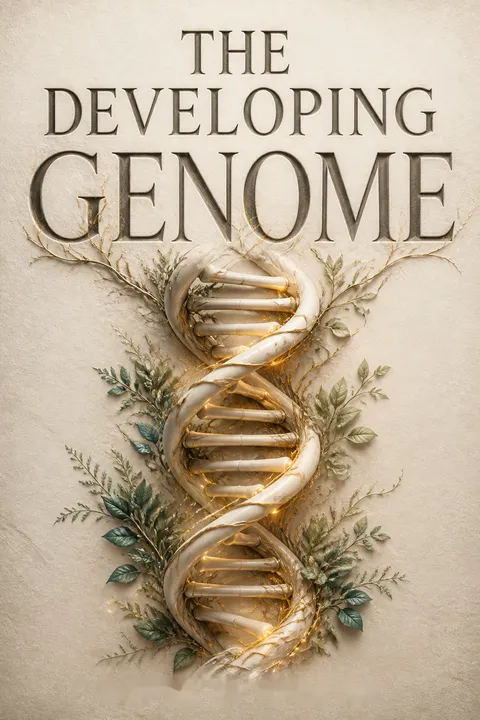


Key Takeaways
Treat traits as outcomes of lives, not DNA verdicts.
Context changes outcomes. In 1587, the Roanoke Colony vanished during a drought later identified as the worst in the region in 800 years. The colonists were often blamed, but their circumstances mattered; so did the fact that nearby Jamestown survived a severe drought. The point is not that environment always outweighs biology, but that neither alone explains an outcome. Traits arise through interactions between inherited biology and the settings in which development unfolds.
Genes indicate risk. BRCA1 illustrates the distinction. Some variants raise breast cancer risk, but do not make cancer inevitable. Genetic information can guide decisions, yet it cannot specify exactly what will happen to an individual.
What's useful here is the correction to a common reasoning error: people often explain an outcome by the visible person and overlook the conditions acting on them. The same error distorts judgments about health, talent, and behavior. Still, context is not a universal excuse or a substitute for individual differences. The strongest explanation asks how a person's biology and circumstances combine, and which evidence supports each part. That approach also makes risk estimates easier to interpret: a probability is information for a decision, not a prediction of one person's fate.
Ask what a gene is doing, not merely whether it is present.
A gene is not a blueprint. In this book, a gene means DNA sequence used to help make a protein, though biologists do not agree on one definitive gene concept. DNA is not read as a simple instruction for a single trait. Cells regulate when and how its information is used, and RNA processing can assemble the same DNA material into different products in different contexts.
One sequence, varied outputs. Alternative RNA splicing is the editing of an RNA copy by removing some sections and joining others. The resulting versions can produce molecules with different, sometimes opposing, functions. This helps explain why the same inherited DNA can support different cell types and responses, and why finding a gene associated with a trait does not prove that it determines the trait.
This shifts attention from genetic possession to biological activity. It also warns against treating a statistical association, such as a gene variant appearing more often in people with a condition, as a complete causal account. Molecular biology increasingly describes genes as components in regulated networks, not standalone commands. That perspective makes prediction harder, but it makes explanation more realistic. A useful question is not simply, Which gene is involved? It is, Under what conditions does this sequence contribute to which process, in which cells, and with what consequences?
Understand epigenetic marks as controls, not destiny switches.
Marks shape access. Epigenetics, as used here, concerns processes that regulate gene activity without changing DNA sequence. DNA methylation usually makes a region less accessible for reading, while histone acetylation often loosens the packaging around DNA and supports gene activity. Histones are proteins that DNA winds around inside chromosomes. These marks help explain how cells with essentially the same genome become neurons, skin cells, or other specialized types.
Not simple on or off. X-chromosome inactivation is one example: cells in female mammals silence one of their two X chromosomes, helping balance gene activity. In calico cats, random silencing in different cell groups produces patches of fur color. The visible pattern shows how an epigenetic process can shape a trait, but its effect depends on which DNA region and cell are involved.
The mechanism is powerful because it connects the genome to both cellular development and environmental response. It also resists a false binary: methylation is not universally harmful, nor is acetylation universally beneficial. Their effects depend on location and biological context. This is a broader lesson in systems biology: a molecular change only acquires meaning within the network it alters. The calico example makes the principle unusually visible, while also reminding readers that most epigenetic effects are less dramatic and cannot be inferred from appearance alone.
Early care can tune stress biology without sealing a child's future.
Rat care changed stress responses. In studies led by Michael Meaney and Moshe Szyf, mother rats varied in how often they licked and groomed their pups. Offspring receiving more care grew into adults with calmer stress responses. Cross-fostering helped show that the caregiving experience, not simply inherited differences between biological mothers, was important.
A biological pathway emerged. In the hippocampus, pups receiving less care developed more DNA methylation near a gene involved in producing glucocorticoid receptors. With fewer of these receptors, the brain was less responsive to cortisol, making it harder to shut down the stress response after a threat. Human studies of abuse and brain tissue found related patterns, but those findings are observational and do not establish that the same pathway explains every person's experience.
This research gives a mechanism to a familiar observation: early relationships can shape later reactions. Its strength is the chain of evidence, from a controlled caregiving difference to molecular changes and adult behavior. Its limits matter just as much. Rat mothering is not a direct model of the variety of human caregiving, and a biological correlate in people does not prove a single cause. The evidence supports taking early care seriously, not labeling children as permanently damaged or assuming one nurturing experience guarantees lifelong resilience.
Treat prenatal nutrition as an influence, not a forecast.
Early conditions can leave traces. The Dutch Hungerwinter of 1944 to 1945 offered researchers a rare natural comparison: famine eased abruptly, so people were exposed at different stages of pregnancy. Those exposed early in gestation showed higher rates of some later health problems, including obesity. Decades afterward, researchers also found methylation differences in some DNA regions. These human findings are important, but they cannot by themselves prove the marks caused the health outcomes.
Mouse studies show a mechanism. In agouti mice, a mother's diet rich in methyl-donating nutrients made offspring more likely to develop brownish, healthier coats than yellow, more disease-prone coats. The diet affected methylation near a gene involved in coat color and other traits. This demonstrates how nutrition can influence development, not that a particular supplement guarantees a human outcome.
The developmental origins of health and disease perspective adds time to the usual picture of health: conditions before birth can be relevant decades later. That matters for prenatal care and public health, especially where food insecurity is widespread. But translating animal results into human prescriptions requires restraint. Diet affects many biological systems at once, and human health is shaped by postnatal conditions as well. The most defensible implication is to improve access to adequate nutrition, not to promise that a nutrient, supplement, or maternal choice can program a child toward a predetermined future.
Adult experience can reshape memory-related biology, too.
Memory changes the brain. Eric Kandel's studies of the sea slug Aplysia showed that repeated stimulation can produce longer-lasting behavioral changes that require new proteins. That finding linked memory to gene activity. Research in mammals has since found that memory formation involves epigenetic processes, including changes to histones in the hippocampus, a brain region important for forming memories.
Animal results invite hope and caution. In mice with neurodegeneration, exposure to an enriched environment or treatment with certain drugs that affect histone regulation helped restore access to memories that had seemed lost. These are experimental findings in animals, not established treatments for human dementia. The research nevertheless shows that memory systems are not merely fixed records. Their activity remains linked to experience and to biological processes that can change.
Memory research makes epigenetics relevant beyond fetal development and early caregiving. It suggests that learning involves physical changes in the brain, which helps bridge psychological descriptions and molecular explanations. Yet a recovered response in a mouse does not show that a human autobiographical memory can be restored in the same way. Nor does improving one memory task guarantee broad cognitive benefit. The value of the work is mechanistic and exploratory: it identifies potential intervention points while making clear how much testing is required before laboratory results become clinical guidance.
Families transmit environments and behaviors, not just chromosomes.
Some inheritance is learned. A Japanese monkey's potato-washing behavior spread through its troop and persisted among descendants for generations. No special DNA transmission was needed; young monkeys observed and learned from others. Human food preferences can also develop through early exposure, including flavors encountered in the womb or through breast milk.
Care can reproduce itself. In rat studies, daughters raised by mothers that licked and groomed frequently were more likely to provide the same care to their own pups. Their experiences were linked to changes in estrogen-receptor activity in the brain, which helped shape later maternal behavior. Here, a pattern passes across generations through behavior and experience, not because the same epigenetic mark travels in the egg or sperm.
This broadens inheritance from a transfer of material to the reliable recreation of traits across generations. Social learning, caregiving, and shared environments can sustain family patterns even when no molecule carries a direct record of them. That distinction is essential: a behavior recurring in descendants is not automatically proof of germline epigenetic inheritance. It is also encouraging, because patterns reproduced through experience can be interrupted by changing the experiences and relationships that maintain them.
Treat inherited epigenetic effects as real, rare, and evidence-dependent.
Some marks cross generations. Normally, many epigenetic marks are erased during reproduction and early development. Yet studies of mice with the agouti viable yellow allele found that methylation patterns near the gene could persist through eggs or sperm and influence descendants' coat colors. This is called transgenerational epigenetic inheritance via the gametes. It has been demonstrated in some cases, but the book emphasizes that it is likely uncommon.
Human evidence is tentative. Records from Överkalix, Sweden, linked food availability during a grandparent's childhood growth period with health outcomes in grandchildren, with some effects differing by sex and paternal lineage. These historical associations are intriguing, but do not establish the molecular mechanism or rule out other explanations. Human transgenerational claims therefore deserve more caution than controlled animal experiments.
The important distinction is between three claims: an ancestor's experience affects descendants directly, a family reproduces a pattern through behavior, or an epigenetic state passes through the germline. These are not interchangeable. Keeping them separate improves both scientific rigor and public understanding. The animal findings make germline transmission plausible, while the human historical studies suggest questions worth pursuing. Neither supports the sweeping claim that people inherit detailed memories or that ancestral experience determines a descendant's traits.
Use epigenetics to deepen explanations, not sell certainty.
The field has limits. Many studies in people are correlational, and methylation measured in blood may not match methylation in the brain. Animal experiments can establish mechanisms under controlled conditions, but cannot alone prove that the same causal pathway operates in human populations. Epigenetic marks also do not act independently: their effects depend on the DNA region, cell type, and surrounding conditions.
Promising is not proven. Researchers have explored drugs that alter DNA methylation or histone activity, as well as enriched environments and dietary factors. Some treatments improve memory or stress-related behavior in animals, and a few epigenetic drugs have medical uses. But broad, nonspecific changes can produce unwanted effects. Claims that diet or positive thinking can prevent autism or cure serious illness go beyond the evidence described here.
The book's most useful practical message is methodological as much as personal: avoid fatalism, but avoid miracle claims too. Epigenetics makes biological change more intelligible; it does not make complex traits easy to control. In medicine and policy, the key questions are causal: which exposure changes which process, in which tissue, and with what benefit or harm? A balanced response supports basic research, humane environments, and sound public health while resisting both genetic determinism and the newer temptation to treat epigenetic language as a cure-all.
Analysis
The book's central achievement is not the discovery that experience matters. Developmental psychologists and biologists had argued that for decades. Its contribution is to make that claim molecularly legible: caregiving, nutrition, stress, and learning can alter the regulation of DNA, and altered regulation can influence behavior and physiology. The rat maternal-care studies are the clearest narrative example because they connect an observable experience to methylation, receptor production, stress regulation, and adult behavior. The account makes a complex biological process concrete without pretending that the molecular details are simple.
The most important conceptual move is to replace a nature-versus-nurture contest with a developmental explanation. Genes are not blueprints that operate independently of their surroundings, and experience is not an outside force acting on a passive body. Biological systems and environments shape one another over time. This framing has ethical value: it discourages fatalism about children, health, and behavior while acknowledging that development is responsive to conditions.
The book also benefits from its repeated cautions. Evidence varies sharply by method. Controlled experiments in rodents can support causal mechanisms within those models; human studies of famine, abuse, social class, and methylation often show associations, not proof of a causal chain. Tissue matters, because blood is not brain. And epigenetic inheritance through the germline is a narrower claim than the broader fact that families pass on habits, caregiving practices, and environments. Separating these levels prevents the exciting idea of inherited epigenetic effects from becoming an all-purpose explanation.
One tension remains: the book's expansive definition of inheritance usefully highlights non-genetic routes of continuity, but it can blur important distinctions if applied carelessly. A behavior learned from a parent and a methylation pattern transmitted in sperm are both intergenerational phenomena, yet their mechanisms and evolutionary implications differ. The best reading preserves the book's interactionist insight while demanding mechanism-specific evidence. Epigenetics is not a replacement for genetics or psychology. It is one layer in an account of how organisms develop within histories, bodies, and environments.
Review Summary
The Developing Genome received mostly positive reviews, with readers praising its accessible explanation of epigenetics and its implications for understanding human development and health. Reviewers appreciated the book's clear structure, engaging writing style, and ability to convey complex scientific concepts to a general audience. Some found it repetitive or lacking groundbreaking discoveries, but overall, it was considered a valuable introduction to behavioral epigenetics. The book's exploration of how genes interact with the environment resonated with many readers.
People Also Read






Glossary
Behavioral epigenetics
experience and gene regulationA field that studies how epigenetic processes relate to psychological activity, including behavior, emotion, learning, memory, and mental health. It also investigates how experiences can influence gene regulation in cells involved in these processes. The term describes a research focus, not a claim that behavior is controlled by epigenetic marks alone.
Epigenetic marks
chemical gene regulatorsChemical modifications associated with DNA or the proteins around which DNA is packaged. They can influence whether particular DNA regions are accessible for gene activity without changing the DNA sequence itself. Their effects depend on where the marks occur, which cell contains them, and the surrounding molecular context.
Epigenome
cell's regulatory marksThe collection of epigenetic features associated with the genome in a cell or organism. Unlike the DNA sequence, epigenetic patterns can differ among cell types and can change in response to development and some experiences. The epigenome helps regulate which genetic information is used, but does not independently determine an organism's traits.
DNA methylation
DNA chemical modificationA process in which methyl groups attach to particular DNA bases, especially cytosine. Methylation in regulatory regions often reduces access to a gene and lowers its expression, though the outcome is not universal. DNA methylation can be stable, yet some patterns change during development or in response to particular conditions.
Histone acetylation
chromatin-opening modificationThe attachment of acetyl groups to histone proteins, around which DNA is packaged. Histone acetylation is often associated with a more open chromatin structure, making nearby DNA easier for transcription machinery to access. Its effects depend on the histone and location involved, and it works alongside other regulatory processes.
Alternative RNA splicing
one transcript, varied productsA process that edits an RNA copy of DNA by removing selected sections and joining others. Different editing patterns can produce distinct RNA products from the same DNA region, sometimes leading to proteins with different functions. This is one reason a DNA segment cannot always be assigned a single, context-independent outcome.
Developmental origins of health and disease
early conditions shape later riskA research framework, often abbreviated DOHaD, examining how conditions during early development, including before birth, relate to health and disease later in life. It emphasizes developmental plasticity and lasting effects of early environments. Such effects generally influence risk rather than making a later outcome inevitable.
Hypothalamic-pituitary-adrenal axis
body's stress-response pathwayThe HPA axis is a coordinated system involving the hypothalamus, pituitary gland, and adrenal glands. In response to stress, signals from the brain lead the adrenal glands to release hormones such as cortisol. Feedback signals help reduce the response when a threat passes. Its regulation is influenced by neural, hormonal, and experiential factors.
Genomic imprinting
parent-specific gene silencingAn epigenetic process that marks certain regions of chromosomes according to whether they came from the mother or father. The mark can silence or alter expression of the affected region, so the parental origin of a chromosome matters. Imprinting helps explain why abnormalities in corresponding maternal and paternal regions can produce different disorders.
Developmental systems theory
many resources build traitsA perspective on development and evolution that treats traits as products of interacting resources rather than as outputs of genes alone. Resources can include DNA, cellular materials, nutrition, parental behavior, social practices, and features of the physical environment. Traits recur across generations when relevant developmental resources are reliably supplied.
Transgenerational epigenetic inheritance via the gametes
epigenetic marks pass through reproductionThe transmission through sperm or eggs of epigenetic information that affects descendants without altering DNA sequence. Many marks are normally reset during reproduction and early development, so this form of inheritance appears limited rather than universal. Evidence from some animal studies supports it, while human claims remain more difficult to establish.
Weismann barrier
proposed germline boundaryA concept describing the separation between germ cells, which give rise to sperm or eggs, and somatic cells, which make up the rest of the body. In its traditional form, it holds that changes acquired in ordinary body cells cannot affect inherited material in the germline. Epigenetic inheritance complicates, but does not erase, this distinction.
Agouti viable yellow allele
methylation-sensitive mouse variantA mouse DNA variant, abbreviated Avy, associated with a range of coat colors and health outcomes. Its expression is influenced by methylation near the gene: less methylation is associated with yellow coats and higher risk of obesity and disease, while more methylation is associated with darker coats and healthier outcomes. Maternal diet can influence this methylation in offspring.
Download PDF
Download EPUB
.epub digital book format is ideal for reading ebooks on phones, tablets, and e-readers.








