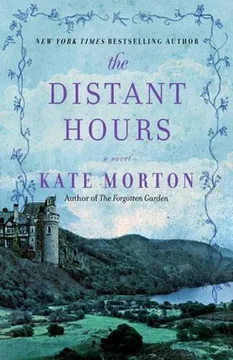


Plot Summary
Prologue
A young girl4 wakes in the tower of a castle as a man rises from the mud-filled moat below. The Mud Man climbs the stone wall, and the girl4 first sees a monster, then a beautiful, sorrowful young face.
She unlocks the window and lets him in. The image belongs to Raymond Blythe’s7 famous novel, but its storm, castle, and frightened girl4 also cast a shadow over the real history that follows.
The prologue makes the novel’s central uncertainty immediate: is the Mud Man a story, a memory, or a crime returning in altered form? The girl’s movement from fear to welcome turns the Gothic threat into a human encounter, while the castle’s apparent protection feels as ambiguous as its locked windows. Later events recast this scene without making it less uncanny. Fiction does not merely decorate the past here. It gives its survivors a language for experiences they cannot safely name.
The Letter From 1941
In 1992, Edie Burchill1 is thirty, newly single, and living alone in a flat she can barely afford. A redirected letter from 1941 arrives for her mother, Meredith,2 and its return address, Milderhurst Castle, makes Meredith2 break down. She says she once stayed there as an evacuee and was chosen by the youngest Blythe daughter,5 Juniper,5 but dismisses the letter as unimportant.
Edie1 knows the reaction is not ordinary, yet accepts her mother’s2 explanation and returns to her own worries. Months later, while lost on a country road, Edie1 finds a sign to Milderhurst and remembers standing at its gates with Meredith2 as a child. Her mother2 had said they had come too late, then hurried her away.
The letter does more than unlock a wartime memory. It exposes how little Edie knows about a mother she has treated as a fixed, sensible presence rather than a person with a past. Meredith’s denial and Edie’s willingness to accept it reveal a family habit of emotional concealment: each protects the other from discomfort by withholding the very information that might bring them closer. Edie’s breakup also matters. Her unsettled present makes her unusually receptive to a history that offers a different kind of lost love.
Milderhurst Opens Again
In Milderhurst village, Edie1 discovers that Raymond Blythe,7 author of the book that made her a lifelong reader, lived at the castle with his three daughters.3 She persuades the local bed-and-breakfast owner16 to arrange a visit, then enters Milderhurst with Percy Blythe,3 the severe eldest sister.
Saffy,4 Percy’s3 softer twin, welcomes her; Juniper5 sits apart, dishevelled and withdrawn. During the tour, Percy3 shows Edie1 the attic nursery, its hidden passage, and the filled-in moat. Later, Edie1 finds Juniper5 alone in an old dress.
Juniper5 believes she is awaiting her fiancé, Thomas Cavill,6 and suddenly calls Edie1 Meredith,2 asking why she failed to help. Edie1 hides the exchange from the sisters,3 but leaves convinced her mother’s2 history is tied to Juniper’s5 heartbreak.
The castle works on Edie through both evidence and imagination. She arrives as a reader who has already absorbed its fictional version, so each physical detail seems to confirm a story she knows. But the house also resists being reduced to literary atmosphere: its residents have needs, limits, and private fears. Juniper’s confusion gives Edie her first concrete clue, while her silence in front of the sisters repeats Meredith’s evasiveness. Edie enters seeking her mother’s past and finds herself implicated in a story whose boundaries she cannot yet see.
The Teacher in the Letters
Back in London, Edie1 finally asks Meredith2 about Juniper,5 but her mother2 denies returning to Milderhurst with her as a child. Edie’s1 outspoken Aunt Rita9 supplies a less guarded history: Meredith2 loved her year in Kent, resisted coming home, and secretly met her former teacher, Thomas Cavill.6 Rita9 once saw them kissing in a park.
She gives Edie1 their late mother’s box of Meredith’s2 wartime letters, which Edie1 reads without permission. The news lands just as Edie’s1 father suffers a heart attack. At the hospital, Meredith2 and Edie1 share their first real comfort, and Edie1 admits that she and Jamie have separated. Meredith2 invites her back to the family home, but their larger conversation about the letters remains unresolved.
Rita’s account unsettles Edie’s image of Meredith as a woman untouched by romantic risk. It also creates a painful moral parallel: Edie seeks intimacy with her mother by violating her privacy, then feels the guilt of having learned what she wanted to know. The hospital changes the stakes. Her father’s fragile health makes their guarded relationship feel less like a puzzle to solve than a bond they might lose time to repair. Edie’s return home is therefore both practical and emotional, an opening made possible by crisis.
A Brother Still Missing
After Edie1 gives Meredith2 the letters, her mother2 admits that she did return to Milderhurst as a child and loved Juniper,5 her first close friend. She shares Juniper’s lost 1941 letter, which praised a story Meredith2 had written and said something had happened at the castle.
Meredith2 had sent Juniper5 a manuscript and waited decades without knowing whether it arrived. Edie1 reads the old letters and learns how the castle gave her mother2 confidence to imagine a life in writing.
Searching for Thomas Cavill,6 Edie1 finds his elderly brother Theo8 in a Putney care home. Theo8 says Tom6 disappeared during the war after being wounded, then was branded a deserter when an unexplained letter claimed he had eloped. Theo8 never believed it. No later record of Tom6 exists.
The letters shift the mystery from romance as gossip to romance as a history of interrupted communication. Meredith’s lost manuscript and Juniper’s delayed reply echo the larger silence surrounding Tom, but they also show what written words can preserve: proof that Meredith once imagined a different future. Theo adds a human cost to the mystery. Tom is not merely a missing name in a wartime file; his absence has shaped a brother’s life. Edie’s investigation now owes something to the living as well as to her curiosity.
The Evacuee and the Heiress
In 1939, twelve-year-old Meredith Baker2 is evacuated from London with her brother and sister. After her siblings are placed elsewhere, Juniper,5 then seventeen, chooses Meredith2 from the remaining children and takes her to Milderhurst.
Meredith2 studies with Saffy,4 reads in the castle library, and becomes Juniper’s5 first real friend. The sisters’3 father, Raymond,7 is a celebrated writer, but he is also increasingly troubled by his own mind. When Meredith’s2 teacher, Tom Cavill,6 visits to check on his pupils, he finds Juniper5 swimming alone in the estate pool.
Their first exchange is awkward and brief, yet each remains curious about the other. Meredith’s2 parents later try to bring her home; she runs into the woods rather than leave, and Percy3 lets her stay.
Meredith’s choice to remain at the castle is an early act of self-definition. In London she feels misplaced; with Juniper and Saffy, her attention to books and language is treated as a capacity rather than an oddity. Juniper’s decision to choose her, in turn, reveals a rare tenderness beneath her solitary habits. Tom’s first meeting with Juniper begins as an ordinary visit to an evacuee, yet the pool places him within the Blythes’ private world. The scene joins the book’s two kinds of discovery: finding a home and finding a person.
A Proposal in Wartime
After Tom6 returns from Dunkirk wounded and emotionally altered by combat, he meets Juniper5 again through Meredith2 in London. Their attraction becomes a secret relationship, and Tom6 proposes. Juniper5 accepts, though she knows her father’s will threatens to take Milderhurst from Percy if she marries.
She asks Saffy4 to alter their dead mother’s dress and plans to bring Tom6 home to meet her sisters.3 Meanwhile, Percy3 discovers that Lucy Middleton,10 the castle’s longtime housekeeper, is marrying clockmaker Harry Rogers.13
Percy’s3 private love for Lucy10 makes the news a fresh wound. Saffy4 also receives a chance to leave for London, but Percy3 blocks it, insisting the family needs her. On October 29, Juniper5 and Tom6 are due at a special dinner, while the storm gathers over the castle.
Love in this family is repeatedly measured against obligation. Juniper wants to marry Tom but fears the cost to Percy; Saffy dreams of leaving but feels responsible for Juniper; Percy protects the household even when protection means denying her own desire. The wartime setting intensifies these choices, but it does not create them. The sisters have long been shaped by Raymond’s expectations and the castle’s demands. Their private romances reveal that duty is not a neutral virtue here. It is a structure that distributes freedom unevenly.
The Notebook's Warning
In 1992, a publisher asks Edie1 to write an introduction for a new edition of The True History of the Mud Man, after Percy3 rejects the original writer and requests Edie1 by name.
At Milderhurst, Saffy4 tells Edie1 that Juniper5 waited through a storm for Tom,6 who never arrived; afterward Juniper5 stopped writing and became increasingly lost in the past. Percy3 forbids Edie1 from interviewing Juniper.5 Saffy4 nevertheless directs Edie1 to Raymond’s7 notebooks in the muniment room.
There Edie1 finds a private letter accusing Raymond7 of taking another person’s story for the Mud Man. Percy3 later insists the book is her father’s7 work, then admits she wrote the warning herself. She has brought Edie1 to the castle for a different reason: to hear a family secret.
The novel’s two investigations now converge. Edie has come to document an author’s creative process, but the archive instead raises a question of ethical ownership: who has the right to turn another person’s experience into art? Percy’s letter makes the Mud Man’s origin look like a literary scandal, while Saffy’s account frames Tom’s absence as a family wound. Percy’s insistence on controlling access is not simply hostility to outsiders. She is choosing which version of the past can be spoken, and by whom.
A Nightmare Takes Shape
Alone with Edie1 in the tower, Percy3 explains that their mother, Muriel, loved architect Oliver Sykes.12 Raymond7 discovered them together, and a fight in the library ended with a lamp igniting Muriel’s dress. Raymond7 saved his wife but left Sykes12 in the burning room; afterward, Sykes12 was presumed consumed by the fire.
As a child, Saffy4 glimpsed a charred man emerging from the moat and developed a recurring nightmare. When Percy3 was away ill, Saffy4 told Raymond7 the dream. He used it to create the Mud Man, then felt guilty as he recognized the dream’s real source. Percy3 says she herself killed Tom6 by accident during the storm and hid his body. She asks Edie1 to record the deaths, not expose the family’s full story.
The Mud Man is revealed as a chain of transformed harm. Raymond’s violence becomes Saffy’s nightmare, then a beloved novel, while the real victim remains unrecorded. Art offers Raymond a way back from creative emptiness, but it also lets him convert damage into something he can control. Percy’s account complicates that inheritance: she presents herself as both perpetrator and protector. Her demand for accurate death records suggests that secrecy has limits, even for someone who has spent a lifetime defending it.
Blood Beneath the Window
A storm traps Edie1 at the castle overnight. Juniper5 appears in her room, still wearing the dress she associates with the night Tom6 was due, and gives Edie1 a box containing a manuscript by Meredith.2 Juniper5 remembers blood on her clothes but cannot recall what happened. Edie1 connects Juniper’s memory gaps, an earlier violent incident, and the missing fiancé, and suspects Juniper5 killed Tom.6
She keeps that suspicion to herself. In the morning, Percy3 repeats that Tom’s6 death was an accident and watches Edie1 for signs that Juniper5 has spoken. Edie1 reassures her. Meredith2 arrives at the farmhouse, and mother and daughter begin speaking honestly about the past, including Meredith’s2 abandoned ambition to become a journalist.
Juniper’s confession is emotionally vivid but factually incomplete. Her fragmented memory tempts Edie to treat guilt as proof, especially because Juniper fears becoming like her father. Yet Edie’s response is compassion rather than interrogation. That choice matters: she has learned how damaging it is to extract private history without consent. At the same time, her silence leaves the central mystery open. The manuscript she carries from Juniper to Meredith becomes a gentler form of truth, a gift that restores a lost connection without demanding an explanation.
The Wrench in the Dark
The final account returns to the stormy night of 1941. Tom6 arrives late, carrying jam for Juniper,5 but finds the front door unanswered and climbs the castle wall to reach a lit window. Saffy,4 asleep after taking one of Raymond’s7 pills, dreams again of the Mud Man at the attic window. Seeing Tom6 covered in mud, she mistakes him for the nightmare and strikes him with a wrench.
He falls into the water around the castle and dies. Percy3 finds him, then buries him in the pets’ graveyard and hides his belongings. She sends Tom’s6 family a false account of his disappearance, shielding Saffy4 and preserving the sisters’3 life together. Juniper5 wakes with blood on her clothes and a broken memory, believing the horror belongs to her.
The fatal blow is not a simple act of malice. Saffy’s childhood fear, Raymond’s stolen use of her nightmare, the storm, and the Mud Man’s image all converge until fiction dictates what she sees at the window. That does not erase the harm, but it clarifies its mechanism. Percy’s concealment then converts one accident into decades of managed silence. Her protective instinct preserves her sisters’ immediate safety while denying Tom’s family the truth and leaving Juniper trapped inside an invented guilt.
The Castle Becomes Ash
After Edie1 returns to the farmhouse, she wakes to see Milderhurst burning. The three sisters3 die inside, and the fire echoes the blaze that killed their mother. Edie1 tells the investigating inspector where to search: beneath the old moat for Oliver Sykes,12 and in the pets’ graveyard for Thomas Cavill.6 Their remains are found, allowing Theo8 to learn what became of his brother.6
Edie1 refuses to write the Mud Man introduction or reveal the sisters’3 full confession, honoring Percy’s3 request to treat it as family history. She gives Meredith2 Juniper’s5 manuscript, and her mother2 speaks openly about her lost ambitions and begins writing again. Edie1 leaves with grief, but also with a less guarded bond to the woman whose past started her search.2
The fire destroys the physical archive but cannot erase the facts that Edie carries out of the castle. She chooses a narrow form of justice: restoring names and burial places to two men, while withholding the intimate story that explains the deaths. This is not a perfect resolution. Theo receives an answer, but the Cavill family never learns the full truth; the sisters’ histories remain partly sealed. Edie’s reunion with Meredith offers a counterweight. Where the castle’s secrets isolated its inhabitants, shared writing gives mother and daughter a way to meet in the present.
Epilogue
In 1993, Edie1 lives in a renovated attic flat and works at Billing & Brown. Meredith2 visits with a bound copy of the book she has finally written, eager for Edie1 to read it before anyone else. The two women head out together, Meredith2 on her way to a writing class and Edie1 to see Theo.8
Edie1 glimpses a man and woman close together on the sunny windowsill, then sees only the light. She lets herself imagine that the flat holds traces of a couple who were happy there. The attic, once a place of confinement and fear, has become a room where writing can begin again.
The ending does not restore the Blythe family or solve every mystery. Instead, it transfers the novel’s fragile legacy of writing to Meredith and Edie. Meredith’s manuscript answers her earlier lost story with a beginning she chooses for herself, while Edie supports rather than directs her mother’s creative life. The possible ghosts are left deliberately uncertain; unlike the castle’s haunting, this vision offers no demand or threat. The attic’s change of use quietly reverses its old function. A room associated with hidden histories becomes a place for a future that is still being written.
Analysis
The Distant Hours treats memory as an inheritance that can be edited, misfiled, or passed on in the wrong form. Meredith’s2 letters survive, but their most important reply arrives fifty years late; Tom’s6 family receives a false account; and Raymond7 turns Saffy’s4 nightmare into a novel without understanding its source. These failures are not simply mysteries to solve. They show how families protect one another by controlling what can be known, then discover that concealment has its own casualties.
The three Blythe sisters3 embody different responses to constraint. Percy3 converts fear into management, defending the castle and her sisters through action. Saffy4 converts care into service, repeatedly setting aside her own ambitions. Juniper5 resists being shaped by family expectations, yet is vulnerable to experiences she cannot remember. Their traits are not clean virtues or flaws. Protection can become control, compassion can become self-erasure, and independence can leave a person without the support needed to understand herself.
The Mud Man links artistic creation to moral responsibility. Raymond’s7 book gives a private terror public form, preserving it while also distorting its origin. Edie1 faces a related choice when she learns the truth: publication might satisfy scholarly curiosity, but it would violate the trust Percy3 placed in her. She chooses a narrower obligation, correcting the record of two missing men while leaving the sisters’3 intimate history undisclosed. The novel does not make this choice perfectly clean. Theo8 receives the truth of Tom’s6 fate but not the full circumstances, and the public legend of Raymond7 remains intact.
Against the castle’s inheritance of silence, writing offers a more generous possibility. Meredith2 once abandoned her ambition after a failure that felt like proof she did not belong. With Edie’s1 encouragement, she begins again. Their relationship changes not because every past wound is explained, but because each woman risks sharing something unfinished. The book’s final hope is modest and earned: stories can preserve people, but they should not be mistaken for the whole truth, and a future can begin when someone is finally invited to write in her own name.
Review Summary
Reviews for The Distant Hours are deeply divided. Fans of Kate Morton praise her lush, atmospheric prose, masterful dual-timeline storytelling, and intricately layered plot involving the mysterious Blythe sisters and wartime secrets. Many found it compelling and emotionally resonant. However, critics argue the novel suffers from excessive description, slow pacing, and insufficient character development, leaving them frustrated after investing hundreds of pages. Compared unfavorably to Morton's earlier works, detractors felt the eventual revelations didn't justify the journey, while admirers considered the dark, Gothic atmosphere and surprising ending deeply rewarding.
People Also Read


Characters
Edie Burchill
The reluctant family historianEdie is a thirty-year-old editor, devoted reader, and imaginative observer whose first instinct is to enter life through books. Newly separated from Jamie and uncertain where she belongs, she is drawn to the Blythes3 by her mother’s2 unexplained reaction to a wartime letter. Edie is persistent but not naturally confrontational; she sometimes mistakes access for intimacy and must learn that uncovering a truth does not automatically entitle her to publish it. Her bond with Meredith2 is shaped by long silence, mutual embarrassment, and genuine affection. As narrator, Edie is candid about her own errors, which makes her a searching witness rather than an all-knowing one.
Meredith Burchill
The guarded daughterBorn Meredith Baker, she is Edie’s1 mother and was evacuated from London to Milderhurst as a child. Practical, tidy, and sparing with personal disclosures, she appears to have little in common with her bookish daughter. Yet Meredith once found friendship, encouragement, and a sense of possibility at the castle. She is a careful keeper of painful memories, not because she feels nothing, but because feeling them openly has long seemed unsafe. Her early wish to write and her attachment to Juniper5 reveal a more adventurous self beneath her disciplined adult manner.
Persephone Blythe
The castle's determined guardianCalled Percy by her sisters4, she is the eldest Blythe twin and the practical force behind Milderhurst’s survival. She values duty, competence, and continuity, and has little patience for sentiment that cannot be put to use. Her love for the castle is inseparable from her loyalty to her sisters4 and to the family history held within its walls. Percy is capable of tenderness, though she expresses it through vigilance and action rather than confession. Her severe manner conceals a private emotional life and a deep fear that the people and place she protects may not endure.
Seraphina Blythe
The thwarted storytellerKnown as Saffy, she is Percy’s3 twin and Juniper’s5 older sister. A writer, seamstress, and generous caretaker, she notices beauty where others see only wartime scarcity or household work. Saffy longs for a life beyond Milderhurst, especially in London, but her tenderness makes her highly responsive to the needs of her sisters3. She is more emotionally open than Percy3 yet can also conceal her wishes rather than risk conflict. Her creativity and her role as a family caregiver are both sources of meaning, and both can become forms of confinement.
Juniper Blythe
The castle's brilliant youngestJuniper is Raymond Blythe’s7 youngest daughter, a gifted writer with a magnetic, unconventional presence. She is fiercely curious about the world beyond Milderhurst, despite having been raised under close family protection. Juniper experiences episodes of lost time and sees visitors others cannot see, experiences that her family interprets in conflicting ways. She is deeply attached to Percy3 and Saffy4, but resists being treated as fragile or predetermined. Her longing for independence and intimacy exists alongside a fear that she may inherit the troubling parts of her family’s nature.
Thomas Cavill
The teacher who inspiresTom is a London teacher who values books, clear observation, and the possibility that education can enlarge a child’s life. He encourages Meredith’s2 writing and treats her intelligence as something worth cultivating. His service in the war changes his confidence and leaves him emotionally unsettled, though he remains generous toward the people he loves. Tom is drawn to Juniper’s5 singularity, which unsettles his orderly expectations. His relationship with her grows from a brief meeting at Milderhurst into a bond shaped by attraction, secrecy, and the difficulty of making a shared future during wartime.
Raymond Blythe
The celebrated castle authorRaymond is a successful writer whose famous Mud Man novel draws heavily on the castle and its family history. He is an affectionate father who delights in his daughters’3 minds, but he also believes artistic talent must be protected from ordinary obligations. His stories about ancestors and the castle give his children a powerful sense of belonging. As he grows older, his thinking becomes troubled, and his confidence in the family’s literary inheritance sits uneasily beside his fears, grief, and insistence on controlling his daughters’ futures.
Theo Cavill
The brother who keeps searchingTheo is Tom’s6 elderly brother, living in a Putney care home when Edie1 finds him. He has spent decades seeking an answer to Tom’s6 wartime disappearance and resents the official assumption that his brother deserted. His memories are imperfect, but his loyalty is steady. Theo’s grief shows how a missing person can remain present in a family through habits of waiting, checking records, and telling the same stories.
Rita
The outspoken older sisterRita is Meredith’s2 elder sister and Edie’s1 aunt. Warm, brash, and much more willing than Meredith2 to recount family history, she has long carried resentment about Meredith’s2 attachment to Milderhurst. Rita’s candour helps Edie1 uncover the connection between Meredith2 and Tom6, though her account is shaped by her own sense of having been left behind. She represents a more talkative, communal family culture than the reserved household Edie1 grew up in.
Lucy Middleton
The longtime castle housekeeperLucy works at Milderhurst for many years and becomes a trusted presence in the Blythes’3 daily life. She is capable, discreet, and loyal, but her own hopes and affections do not always fit the boundaries of her position. Her relationship with the sisters3 illustrates how class, service, and intimacy overlap inside a household where everyone depends on the same place.
Herbert Billing
Edie's generous publisherHerbert is Edie’s1 employer, mentor, and close friend at Billing & Brown. He is grieving the death of his business partner when Edie1 helps keep the small publishing house alive. His warmth and practical generosity give Edie1 a place to stay after her breakup. He respects books as living companions and encourages Edie’s1 curiosity without trying to control what she discovers.
Oliver Sykes
The castle's inventive architectSykes is an architect who works on Milderhurst’s grounds and designs its circular pool and improved moat. His work makes him part of the castle’s physical history, while his creative independence distinguishes him from the rigid social order around the Blythes3. In the story, his architectural legacy connects the estate’s beauty to the secrets hidden beneath it.
Harry Rogers
The patient clock repairerHarry repairs clocks at Milderhurst and becomes close to Lucy Middleton10. Modest and steady, he represents the ordinary domestic future that Lucy10 hopes to build amid wartime uncertainty.
Matthew de Courcy
Saffy's early sweetheartMatthew is Saffy’s4 youthful love and an emblem of the life she once imagined beyond Milderhurst. His presence in her memories reveals how long she has carried private hopes alongside her practical duties.
Adam Gilbert
The displaced biographerAdam is the researcher first hired to prepare the Mud Man introduction. His careful interview transcripts provide Edie1 with a foundation for her own work, and his later return connects the literary investigation to the loss of Milderhurst.
Marilyn Bird
The castle's village guideMrs Bird runs the farmhouse bed-and-breakfast and once led tours of Milderhurst. Friendly, observant, and fond of village stories, she helps Edie1 reach the castle and supplies details about its past. Her own family history gives her a personal stake in the Blythes’3 world.
Plot Devices
The 1941 Letter
A delayed message returnsA letter written by Juniper5 to Meredith2 is lost for decades after a postman fails to deliver it. When it finally reaches Meredith2 in 1992, it reopens the friendship she believed had ended in abandonment and alerts Edie1 to a history her mother2 has hidden. Other wartime letters and Tom’s6 supposed elopement note deepen the pattern: written records can preserve affection, but they can also distort it when important context is missing.
The Mud Man
A nightmare becomes a storyRaymond Blythe’s7 celebrated novel supplies the images through which the family understands old fear: a man rising from the moat and climbing toward a girl in the attic. The story begins as fiction, but its imagery is rooted in Saffy’s4 childhood experience of violence and later shapes what she sees in a storm. The Mud Man therefore works both as literary inheritance and as a dangerous filter, blurring remembered events with the stories built around them.
The Hidden Passages
The castle keeps secretsNarrow passages run through Milderhurst, linking rooms and allowing children to move unseen. The sisters3 call the unexplained sounds within them caretakers, giving the castle’s noises a family mythology. The passages also embody the household’s habits: people can remain physically close while concealing what they know from one another. They make the building feel alive without proving that anything supernatural is present.
Juniper's Lost Time
Memory leaves gapsJuniper5 sometimes loses time after intense or traumatic events and cannot remember what she has done. The episodes make her vulnerable to other people’s interpretations and allow her sisters3 to hide painful facts from her. They also misdirect Edie1, who mistakes Juniper’s5 guilt and fragmentary memories for proof of responsibility. The device turns memory into a contested space: absence is real, but it does not tell the observer what happened inside it.
The Blythe Inheritance
Duty controls the futureRaymond’s7 will makes Juniper’s5 marriage a threat to Percy’s3 future at Milderhurst, because the castle would pass to the Catholic Church if Juniper5 married. This condition intensifies the sisters’3 existing conflicts over protection, independence, and belonging. It gives Percy3 a practical reason to fear Juniper’s5 engagement, while also revealing how their father7 tried to shape his daughters’3 lives long after he could no longer direct them himself.
About the Author

Download PDF
Download EPUB
.epub digital book format is ideal for reading ebooks on phones, tablets, and e-readers.








