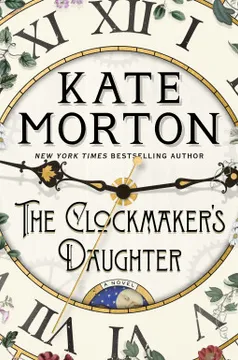


Plot Summary
Prologue
The voice belongs to a woman who remembers everything,1 though she can no longer leave Birchwood Manor. She recalls arriving there in a summer of painting and picnics, then watches the household unravel after two secrets surface and a gun is fired.
Edward Radcliffe3 leaves, the others follow, and she remains inside the house. Her memories move between love, fear, and the people who later visit her rooms. The house is not simply where the tragedy happened. It is where the story, and the woman who tells it,1 have been waiting.
The opening gives the house a consciousness before it gives the reader the facts. Its narrator knows the shape of the catastrophe but withholds its causes, turning suspense into an act of memory rather than investigation alone. Her insistence that the crime was human complicates the supernatural atmosphere: the house may feel haunted, but human choices created its central wound. The prologue also establishes a tension between leaving and remaining. Edward can flee the place, while the narrator is bound to it, making Birchwood both refuge and prison before its history is explained.
The Satchel Under the Desk
In 2017, Elodie Winslow2 works among the papers of the Victorian reformer James Stratton,10 preferring the orderly company of archives to the social demands gathering around her wedding.
A forgotten box from 1966 gives her more than office supplies: inside a fine old satchel lie a sketchbook, a silver-framed portrait, and a fragment of an urgent love letter. The sketch shows a river house with eight chimneys and a celestial weathervane. Elodie2 recognizes it from a frightening, beloved bedtime story her mother12 used to tell.
She slips the sketchbook out of the archive, then searches the pages for its maker. The drawing turns her private childhood refuge into a real place, and her decision to investigate begins pulling her away from wedding plans.
Elodie's first transgression is small in physical scale but large in psychological meaning. She removes an object from the archive precisely because its orderly classification cannot contain her personal recognition. The sketch does not merely interest her as evidence; it appears to join her mother's storytelling to a material past. Her attraction to the artifact also exposes a contradiction in her profession: she protects the dead from careless handling, yet feels that this object has selected her. The story begins when private memory becomes a claim on public history.
A Face Tip Knows
Elodie2 traces the satchel's silver hallmarks to Edward Radcliffe,3 a painter whose career collapsed after a young woman was killed. Her friend Pippa11 recognizes the portrait's aesthetic style and connects Radcliffe3 to the elusive Magenta Brotherhood.
At home, Elodie2 presses her great-uncle Tip8 about the house in the sketch. Tip8 admits that it is Birchwood Manor, where he lived as a child during the war, and says he heard the family story from a friend there. When Elodie2 shows him the portrait, his expression changes, but he denies knowing the woman.
Meanwhile, Elodie2 feels increasingly trapped by her engagement to Alastair14 and his mother's14 plans. The artifact now links her family to Radcliffe,3 while Tip's8 guarded reaction suggests the photograph carries a more intimate history.
The second clue is a human response rather than a document. Tip's denial is informative because it is visibly strained, yet Elodie cannot compel him to explain what he remembers. Her archival method meets the limits of family loyalty: people do not behave like records, and silence may itself be a form of protection. At the same time, wedding pressure gives her investigation emotional urgency. She is not simply curious about a Victorian mystery; she is beginning to question the future others have arranged for her, even as she tries to prove that her childhood story has a factual source.
The Clockmaker's Child
Birdie Bell1 grows up beside the Thames with her clockmaker father, who teaches her to read mechanisms, landscapes, and the movement of light. After Birdie's mother1 dies, her father loses work and falls into debt under the influence of Jeremiah, an old associate. He promises to take Birdie1 to America, but during a winter of mudlarking she becomes dangerously ill.
While feverish, she hears Jeremiah persuade her father to leave without her. Birdie1 wakes in the care of Mrs Mack,19 who runs a crowded household above a Covent Garden bird shop and tells her that her father will send for her. The promise gives Birdie1 something to survive on, but the sudden abandonment leaves her without a secure home or a reliable account of her own past.
Birdie's early world is built from two forms of instruction: her father's mechanical explanations and the stories he uses to make poverty bearable. His faith in invention cannot protect him from grief, debt, or Jeremiah's opportunism. Birdie's illness makes her separation especially formative because she cannot participate in the decision or verify what she hears. The promise of reunion becomes a psychological scaffold, allowing her to endure Mrs Mack's household while also postponing recognition of loss. The clockmaker's daughter learns early that the mechanism beneath a reassuring face may be broken.
A Window and a Coin
At Mrs Mack's,19 Birdie1 learns that every child must earn their keep. Lily Millington, a quick-witted older girl, teaches her how to navigate Covent Garden and warns her to hide her true identity from workhouse officials. Mrs Mack19 dresses Birdie1 as a respectable little girl so she can steal from gentlemen who offer to help her.
During one escape from a policeman, Birdie1 climbs onto a roof and slips through an open window into the bedroom of a sick boy. He calls himself Joe,9 gives her food, and shows her a spinning card trick. Birdie1 returns to him, and their friendship grows across years of visits. He listens to her stories without shame and helps her recognize the difference between survival and the roles imposed on her.
Joe's room offers Birdie an unusual kind of safety: she can be seen without being assessed for profit. Their bond is built around reciprocal attention. Birdie brings him knowledge of the streets beyond his window, while Joe gives her a place where her curiosity and intelligence matter more than her usefulness. The trick he teaches her also anticipates the social skill she needs outside: people see what they expect, and disguise can become protection. Yet Birdie does not become merely a product of Mrs Mack's schemes. Joe's recognition preserves an inner self that her performed identities cannot erase.
The Painter's Muse
As Birdie1 approaches adulthood, Mrs Mack19 worries that the street work is becoming dangerous and Martin20 begins watching her with possessive attention. At the Theatre Royal, Edward Radcliffe3 mistakes her for the subject he has been searching for and asks to paint her.
Birdie1 gives him the name Lily Millington, and Mrs Mack19 arranges a performance of respectability so Edward3 and his mother will believe she comes from a proper family. The arrangement brings Birdie1 to Edward's3 studio, where his concentration and artistic ambition draw her into a world she has never known.
She sits for La Belle, then learns at the exhibition that Edward3 is engaged to Frances Brown.21 Hurt by the concealment, she turns to Joe,9 who helps her recognize that she has fallen in love.
The portrait makes Birdie visible in a way that is both liberating and dangerous. Edward's attention gives her a sense of worth, but it also risks turning her into an image fashioned for other people's approval. Her false name begins as a practical defense, then becomes part of a fragile social performance involving Mrs Mack and Edward's mother. The revelation of Fanny's engagement exposes Birdie's vulnerability to information withheld by someone she trusts. Joe's insight matters because he does not tell Birdie what to feel; he gives her language for what she has already discovered.
Summer at Birchwood
Edward3 returns to Birdie1 at dawn and offers to pay Mrs Mack19 more for a new painting. He calls Birdie1 his muse and proposes that they leave for America together, where they will search for her father.
Before that journey, he invites his sister Lucy,4 artist friends Felix and Adele Bernard,23 and rival painter Thurston Holmes22 to spend a summer at Birchwood Manor. Birdie1 gives Edward3 the leather satchel that will carry his sketchbook; he gives her travel tickets and a clock.
Lucy,4 thirteen and eager for knowledge, explores the house while Edward3 works. The group paints, debates photography, and shares the river country. But Fanny21 remains Edward's3 official fiancée, Thurston22 resents Edward's3 growing success, and Martin20 knows about the Blue pendant.
Birchwood initially seems to offer a temporary world outside the pressures of London, but its guests carry their unresolved obligations with them. Edward and Birdie's travel plans make their intimacy future-facing, while his undisclosed engagement leaves that future ethically unstable. The satchel and clock turn affection into objects that can outlast the summer, and Lucy's presence gives the house a witness whose curiosity will later matter. Thurston's envy and Martin's knowledge create distinct threats: one seeks power through social manipulation, the other through theft. The summer's beauty does not prevent conflict; it concentrates it.
The Locked Priest Hole
Lucy4 discovers old plans showing that Birchwood contains hidden priest holes and secretly tests both entrances. During a storm, she overhears Edward3 and Birdie1 sharing an intimacy, then later learns that Fanny21 has arrived despite the broken engagement.
The next day, Fanny21 insists on joining Felix's23 staged photograph, and Lucy4 runs back to the house, feeling excluded. There she finds the Radcliffe Blue in Edward's3 satchel and tries it on. Martin20 enters, demands the jewel and tickets, and threatens Birdie.1
Lucy4 strikes him with Thurston's22 rifle, then hides Birdie1 in the stairwell chamber and retreats into a second concealed space. Fanny21 is shot during the confusion. Birdie1 cannot find the hidden latch, and the others leave her trapped inside the house's walls.
The disaster grows from Lucy's understandable but consequential need to matter. Her discovery of the priest holes gives her a private competence, yet she uses that knowledge in panic without understanding the cost of sealing Birdie away. The jewel intensifies the conflict because it is at once a family inheritance, an artistic prop, and a prize for Martin. Fanny's arrival brings the concealed romance into the same room as its public consequences. The house's architecture, designed to protect people, becomes an instrument of isolation. The novel's central tragedy is not a supernatural punishment but an accumulation of human misreadings.
Lucy Keeps the Secret
After the police investigation, Lucy4 accepts their claim that Birdie1 helped Martin20 steal the diamond and flee to America. Years later, at sixteen, she finds the Blue pendant hidden in the pocket of the dress she wore at Birchwood.
She understands that Birdie1 could not have taken it, but keeps silent, fearing that the truth would expose her own role and undo Edward's3 grief. When Lucy4 inherits the manor in 1882, she opens the stairwell chamber and finds Birdie's1 remains.
She orders a small lead-lined coffin, places the bones, Birdie's1 dress, the priest-hole plans, and an account of her identity inside, then buries it beneath a young Japanese maple. She throws the diamond into the Thames, choosing concealment over the painful possibility of correcting the record.
Lucy converts private guilt into a carefully engineered archive. Her choice to bury the bones and documents is not simple cruelty; she believes that preserving the official story may spare Edward further suffering and protect the house's future. Yet her reasoning also protects Lucy from public responsibility. The sealed coffin embodies a moral contradiction: she preserves evidence while making it inaccessible. The river receives the jewel, but not the whole truth. Lucy's silence demonstrates how a false account can survive without a single deliberate villain, sustained instead by shame, grief, and the wish to prevent further damage.
Ada Finds the Blue
In 1899, eight-year-old Ada Lovegrove6 is left at Lucy Radcliffe's4 school after her parents bring her from Bombay and depart without warning. She resists the school, endures taunts from older pupils Charlotte Rogers and May Hawkins, and secretly rescues a kitten called Bili from a boy drowning unwanted animals.
During a picnic, Charlotte and May take Ada6 in a boat and threaten the kitten; Ada6 falls into the Thames. May also enters the water and drowns, while Ada6 reaches the riverbed and sees a blue glimmer.
She survives by clutching the Radcliffe Blue, believing it has protected her. Ada6 remains shaped by Birchwood's stories and natural history walks, later becoming an archaeologist. The stone joins another child's life to the house's unfinished history.
Ada's abandonment repeats Birdie's childhood wound in a new social setting, but Ada responds with open defiance rather than adaptation to an exploitative household. Her rescue of Bili shows how she reacts when authority is used to excuse cruelty. The boat incident turns that moral clarity into physical danger, and the Blue's recovery merges empirical discovery with a child's need to believe she has been protected. Ada's future interest in archaeology grows naturally from her habit of treating objects as clues. The story does not ask readers to choose between magic and evidence; it shows how both can organize a life.
Leonard Returns to Earth
After the First World War, Leonard Gilbert16 returns from France carrying the death of his brother Tom17 and the guilt of having slept with Tom's17 fiancée, Kitty,18 before Tom17 died. Their grief binds them, though it cannot restore trust or happiness.
Leonard16 eventually takes a research residency at Birchwood Manor to study Edward Radcliffe.3 He interviews the elderly Lucy,4 who tells him about Edward's3 childhood fear of a pursuing presence and his deep love for Birdie.1
Leonard16 sees Juliet Wright,7 a married journalist who has wandered into the garden, but they barely speak. Their brief encounter stays with both of them. Later, Juliet7 begins a correspondence with Leonard,16 and their letters become a private companionship shaped by shared loss and the house they each remember.
Leonard's research begins as scholarship but becomes a way to give form to experiences he cannot resolve directly. His guilt about Tom and Kitty makes him sensitive to the difference between a public account and a private truth, which is why Lucy's testimony matters. Yet Leonard does not escape grief by discovering the past; he learns to live beside it. His first encounter with Juliet is nearly wordless, but the shared pull of Birchwood creates a durable connection. Their letters provide intimacy without demanding the social performance that both find difficult.
Evacuees at Birchwood
In 1940, a bomb destroys Juliet Wright's7 London home while her husband Alan is away with the army. She takes Bea, Red,24 and five-year-old Tip8 to Birchwood Manor, where the children begin to recover in the countryside. Juliet7 writes a newspaper column about village life and meets Ada,6 now an archaeologist visiting her old school.
Tip8 speaks of Birdie,1 a red-haired woman in a white dress1 whom Juliet7 cannot see. After Alan is killed, Tip8 reveals that he knows his father will not return; Juliet7 stops hiding the truth from herself and assures him they will endure. Ada6 gives Tip8 the Blue, the stone she found in the river, and tells him to keep it safe. The inherited charm becomes a comfort for a child facing grief.
Juliet's move is practical, but Birchwood offers more than shelter: it gives her children a landscape in which fear can be approached through play, stories, and routines. Her writing converts ordinary village details into work and a public voice, preserving her identity beyond motherhood. Tip's conversations with Birdie challenge Juliet's commitment to rational explanation, yet the imagined companion helps him articulate what adults have withheld. Ada's gift links generations through a material object that functions psychologically as reassurance. In this section, protection is less a guarantee against loss than a way to continue living after it.
A Coin Comes Home
In 1962, Juliet7 drives back to Birchwood Manor, decades after her first stay and twenty-two years after Alan's death. She has kept Leonard's16 letters through the years, though the two have never met again in person since his 1928 residency. Before their planned meeting, Juliet7 visits the village and learns that the old pub has changed hands.
A descendant of a retired policeman shows her an unfinished portrait of Birdie,1 recovered from an attic among old papers. The woman's face carries a familiarity Juliet7 cannot place. Juliet7 reaches the manor with a tuppence in her pocket, the coin Leonard16 once lost and she found in the old boat. Her return makes a small object the means of closing a long correspondence in person.
Juliet's return is an act of choosing contact after years in which memory has remained safer than meeting. The coin is not valuable in a market sense; its importance comes from the chain of care and recognition it records. The portrait introduces Birdie into Juliet's later life without making her identity clear, showing how historical traces can survive in households that do not understand their significance. The scene also refuses a conventional romantic resolution. What matters is not a new beginning promised by time, but the willingness to approach someone whose letters have already become part of one's life.
Lauren's Last Photograph
In 1992, cellist Lauren Adler12 visits her uncle Tip8 before traveling toward Birchwood Manor. She tells him that she is pregnant by an American violinist she loves, while planning to marry Winston,13 Elodie's father,13 a close friend who knows the truth and accepts her.
Days later, photographer Caroline25 takes a candid picture of Lauren12 with the violinist during their drive back from a concert in Bath. Both die in the car accident on the way to London.
In 2017, Pippa11 gives Elodie2 Caroline's25 unpublished photograph, revealing a private tenderness absent from the public image of Lauren12 as a celebrated performer. Tip8 later passes Elodie2 his mother's7 wartime articles. These discoveries make Elodie2 reconsider the grief her father13 has carried and the history she thought she understood.
Lauren's story distinguishes love from the social categories meant to contain it. Her marriage to Winston is not presented as a simple deception: he understands her attachment and chooses a relationship grounded in friendship and care. Elodie, however, inherits the emotional consequences without inheriting the context. Caroline's photograph gives her a private image that complicates celebrity and bereavement, while Tip's papers extend the family record beyond official obituaries. The revelation matters because it loosens Elodie's tendency to treat loyalty as a demand for a single, uncomplicated version of the past.
Jack Follows the Map
In 2017, Jack Rolands5 arrives at Birchwood under instructions from Rosalind Wheeler, Ada's6 granddaughter, who believes the Radcliffe Blue was left on the estate. A former detective, Jack5 is also trying to regain contact with his twin daughters after years apart from their mother,15 Sarah.15
His guilt began when his brother Ben drowned saving him as a child and deepened after Jack's5 risky police work helped end his marriage. He searches the woods and river without finding the stone, then meets Elodie,2 who has come to investigate her family's link to the house.
She shows him the letter hidden behind Birdie's1 portrait, addressed to Joe,9 and Jack5 recognizes that the initials and image connect Birdie1 to James Stratton.10 Their separate searches become one investigation.
Jack and Elodie arrive at Birchwood with different versions of the same problem: both believe that one decisive act might repair an old loss. Jack's search for the Blue is commissioned labor, but his longing to see his daughters is personal and harder to control. Elodie approaches through documents and family memory, while Jack trusts physical traces and direct observation. Their recognition of Birdie's connection to Joe gives them a shared question that neither could solve alone. The developing trust between them is not a cure for grief; it is a new form of attention that makes each willing to tell more of the truth.
The Storm Reveals the Tree
Elodie2 and Jack5 compare Caroline's25 photograph with the manor grounds and realize the picture was taken in an ivy-covered corner of the village churchyard, not in Birchwood's garden. Standing there, Elodie2 finally sees her mother12 as a person distinct from the legend she has inherited.
She recognizes that she has been avoiding risk and choice, while Jack5 admits how Ben's death shaped his need to rescue everyone. The two return to Birchwood as rain breaks over the house and spend the storm talking through their losses.
Elodie2 acknowledges that she does not love Alastair14 and cannot marry simply because the arrangements are complete. At dawn, the Japanese maple has fallen, exposing a glint in its roots. They postpone digging until after breakfast.
The photograph's location does not reveal what Lauren thought, but it gives Elodie something more useful: a place from which to stop treating her mother as an ideal she must either imitate or resent. Jack's confession similarly shifts him from rescuer to participant in grief. Their intimacy grows through disclosure rather than through a promise of future happiness. The fallen tree turns the house's buried history into a visible possibility, but the delay before excavation is important. Emotional recognition precedes possession of the jewel; the characters must first decide what they are willing to face.
The Blue Beneath the Roots
After breakfast, Jack5 and Elodie2 dig beneath the uprooted maple and find the blue diamond. Its recovery completes the passage from Lucy's4 hidden guilt through the river, Ada's6 rescue, and Tip's8 childhood keeping. The find does not settle every modern wound: Jack's5 next chance with his daughters remains uncertain, and Elodie2 still has to speak honestly with her father.13
But she no longer accepts the wedding as an obligation, and she chooses to return to London ready to face Winston's13 grief and her mother's12 complicated history. Jack5 and Elodie2 leave the clearing together, while the unseen Birdie1 remains in the house by choice. Birchwood's mystery closes materially, yet its stories continue to shape the living.
The diamond's recovery is a solution to the material mystery, not a magical reversal of loss. It cannot return Fanny, Birdie, Ben, or Lauren, and it does not guarantee Jack reconciliation with his daughters. Its real narrative function is to expose how one object can carry incompatible meanings across generations: theft, guilt, rescue, inheritance, and comfort. Elodie's growth lies in choosing truth over a polished wedding script, while Jack must accept that care does not entitle him to forgiveness. The ending grants the house its own continuity, preserving memory without pretending that memory restores what time has taken.
Epilogue
Birdie1 remains at Birchwood Manor, not because she is waiting to be released but because she belongs to the place Edward3 loved. She remembers the visitors who have come through its rooms, including the children who could sense her and the adults who arrived carrying grief.
Jack5 and Elodie2 leave, but the house keeps their presence alongside the older lives held in its walls. Birdie1 understands that the stories passed between people can outlast jewels and official records. She will wait for the next visitor, and perhaps tell the tale again.
The ending rejects the familiar idea that a ghost must desire escape. Birdie defines belonging not as a claim on the living but as an intimate relation to the house's materials, rhythms, and remembered occupants. Her choice reframes haunting as continuity rather than punishment. The narrative also returns authority to the person history misrepresented: Birdie can now tell her own story, though she cannot correct every record or recover every relationship. Storytelling becomes a modest form of justice, keeping people legible without pretending that remembrance can undo their suffering.
Analysis
The Clockmaker's Daughter treats history as an argument among evidence, memory, and the stories people need in order to continue. Birchwood Manor stores objects and impressions, but those traces do not interpret themselves. Lucy,4 Leonard,16 Elodie,2 and Tip8 each inherit partial records and must decide whether a compelling explanation is also a just one. The novel is especially alert to the moral danger of certainty: the police turn Birdie1 into a convenient criminal, Lucy4 protects that version because it spares her from confession, and Elodie2 initially treats family loyalty as a reason not to ask questions. Correction arrives slowly, through a photograph, a letter, a remembered story, and the return of a buried object.
The repeated pattern of abandonment gives the historical strands emotional coherence without making them identical. Birdie1 is left by her father, Ada6 by her parents, Juliet7 by war and bereavement, Leonard16 by the death of his brother,17 and Jack5 by the consequences of his own choices. Their losses produce different adaptations. Some people become useful, some retreat into work, some invent companions, and some become custodians of objects. The book neither romanticizes grief nor treats it as a problem solved by revelation. The recovered diamond cannot restore the dead or guarantee reconciliation; its value lies in correcting a false history and connecting people who otherwise would have remained strangers.
The house's supernatural dimension works through attention rather than spectacle. Birdie1 can be perceived most readily by children and by adults willing to acknowledge vulnerability. That pattern suggests not that children possess a more reliable account of reality, but that they have not yet learned to suppress what unsettles them. Stories and charms become practical forms of care, especially when adults cannot offer certainty. The novel's deepest claim is therefore modest: memory cannot reverse loss, but a truthful story can alter what the living do with it. By listening across generations, Elodie2 and Jack5 become less governed by inherited guilt and more capable of choosing their next actions.
Review Summary
Reviews of The Clockmaker's Daughter are largely positive, averaging 3.75/5. Readers consistently praise Morton's lyrical, atmospheric prose and rich historical detail. The novel's multiple timelines and large cast of characters spanning 150 years are frequently cited as both its greatest strength and weakness — some readers found the complexity rewarding, while others felt confused and disconnected. The gothic setting of Birchwood Manor resonated strongly with most. Common criticisms include slow pacing, an anticlimactic ending, and excessive length, though many still highly recommend it, particularly to existing Morton fans.
People Also Read







Characters
Birdie Bell
The clockmaker's daughterBirdie grows up with a father who teaches her about clocks, light, and the world beyond their modest home. After losing that security, she learns to read people quickly and to adapt her identity to dangerous circumstances. Her curiosity is not a luxury but a survival tool, and her skill at noticing what others overlook makes her both resourceful and vulnerable. Birdie wants affection without having to perform for it, yet she is drawn to people whose attention makes her feel visible. Her story explores the difference between a self freely chosen and a role imposed by poverty, class, and other people's needs.
Elodie Winslow
The archive's reluctant detectiveElodie is an archivist who feels at home among old letters and objects, where marks can be examined without the unpredictability of social life. She is observant, careful, and deeply loyal to her family, but her preference for order can make her mistake silence for certainty. Her mother's12 fame has left Elodie feeling overshadowed by a person she barely remembers, while her father's13 grief has made her cautious about asking difficult questions. Elodie's investigation gives her a way to approach these inherited silences indirectly. She is driven less by ambition than by the need to know what a family's objects preserve and what they leave out.
Edward Radcliffe
The impassioned painterEdward is a gifted artist whose intensity can persuade others to share his enthusiasms. He sees beauty in expression and character, not merely in polished appearance, and his paintings attempt to transfer that vision to whoever looks at them. His talent is matched by impulsiveness: he follows inspiration without always reckoning with the people his choices affect. The abandonment he experienced in childhood deepens his attachment to home and to the people who make him feel understood. Edward's emotional life and artistic life are difficult to separate, which gives his work its force and leaves him exposed to loss.
Lucy Radcliffe
The inquisitive younger sisterLucy is intellectually hungry in a world that expects girls to value manners over knowledge. She is close to Edward3, whose encouragement confirms that her questions deserve serious answers. Scientific observation and natural history give her a framework for making sense of unfamiliar places, though her confidence can falter when social situations make her feel childish or excluded. Lucy is loyal and capable, but she wants to matter to the people she loves. That need can make her act too quickly, especially when she believes she is protecting someone. Her character joins curiosity with the moral burden of responsibility.
Jack Rolands
The searching former detectiveJack is a practical, physically capable former detective who trusts observation and action more readily than emotional conversation. He carries the memory of a childhood catastrophe involving his brother and has spent much of adulthood trying to be useful enough to balance that history. The same rescuing instinct that made him effective at work strained his marriage and complicates his efforts to reconnect with his daughters. Jack's work at Birchwood begins as a paid search, but the house brings him into contact with people whose losses resemble his own. Beneath his blunt manner is a man trying to learn when helping means listening rather than intervening.
Ada Lovegrove
The stubborn young naturalistAda is an energetic, questioning child raised in Bombay, where her beloved aaya Shashi gives her stories, affection, and a sense of home. Sent to an English school without preparation, she resists the expectation that she should become compliant and genteel. Ada's sharp sense of fairness makes her protective of those with less power, and her interest in fossils and natural history turns collecting into a lifelong way of understanding the past. She is not immune to fear or loneliness, but she meets both with imagination and stubborn courage. As an adult, she carries Birchwood's history into her work as an archaeologist.
Juliet Wright
The journalist and motherJuliet is a London journalist whose wit and independence survive even when war uproots her family. She resists being reduced to a grieving wife or a mother whose work must stop, and writing gives her a way to observe people without surrendering her own perspective. Her affection for Birchwood is tied to a formative encounter with the house and to the family life she builds there. Juliet is resourceful, sometimes worried to the point of concealment, yet she tries to offer her children honesty and steadiness. Her connection with Leonard16 grows through letters, where both can speak more freely than they manage in person.
Tip
The keeper of family wondersTip is Elodie's great-uncle2 and the youngest child in Juliet's7 family. Quiet, inward, and fascinated by stones and small objects, he often notices what more outgoing people miss. His imagination gives him a companion in Birdie1, while the move to Birchwood provides him with a landscape full of things to collect and stories to absorb. As an adult, Tip becomes an inventive maker whose gifts are personal rather than showy. He protects family memories carefully, sometimes by withholding them, and his habit of passing treasured objects to younger relatives gives the past a tangible route into the future.
Pale Joe
Birdie's sheltered confidantJoe is a frail, bookish boy from a wealthy household who spends much of his youth confined to bed. He is curious about the lives beyond his window and treats Birdie's1 stories as serious knowledge rather than entertainment. Their friendship crosses class boundaries because each offers what the other lacks: Birdie1 brings streetwise experience, while Joe provides safety and patient attention. He is gentle without being naïve, and his interest in illusion reflects a mind drawn to how appearances can be altered.
James Stratton
The reformer with a secretJames Stratton is a prosperous Victorian businessman who devotes much of his life to social reform. His private papers reveal a reflective, compassionate man whose relationships are less straightforward than his public reputation suggests. He values practical improvements to people's lives and is willing to use his standing to make them possible. His childhood bond with Birdie1 gives his later commitments an intimate foundation, though he keeps much of his personal history out of his journals. Elodie's2 care for his archive reflects the tension between preserving a life and respecting its privacy.
Pippa
Elodie's candid old friendPippa is Elodie's closest childhood friend2, a fashion designer with quick opinions, restless energy, and a talent for making things by hand. She moves easily through artistic and social settings that exhaust Elodie2, but their differences make the friendship complementary rather than shallow. Pippa pushes Elodie2 to examine choices she prefers to avoid, while offering practical help with the wedding and the historical mystery. Her directness can feel intrusive, yet it comes from attention to what Elodie2 is not saying.
Lauren Adler
The celebrated cellistLauren is Elodie's mother2, a celebrated cellist whose performances make her seem almost larger than life to those who never knew her privately. She is passionate, talented, and capable of deep attachment, but her life does not fit a simple public narrative of fame and family. Her relationship with Winston13 is grounded in friendship and care, while her artistic life brings her into other intense bonds. Elodie2 inherits Lauren's image before she inherits a fuller understanding of her choices, making the difference between celebrity and person central to their connection.
Winston Winslow
Elodie's devoted fatherWinston is a musician and teacher who raises Elodie2 after her mother's12 death. He loves Lauren12 deeply and preserves her recordings and photographs, sometimes hoping that memory can keep her close for their daughter2. His patience and warmth make him a reliable parent, but grief also shapes what he can discuss and what he leaves unsaid. Winston values music as a source of empathy, and his gentleness contrasts with the controlled expectations of Elodie's fiancé's14 family.
Alastair
The polished fiancéAlastair is Elodie's2 successful fiancé, a confident man accustomed to a carefully organized life and a family whose preferences carry weight. He can be charming and generous, but he often assumes that practical comfort and social approval should settle questions of compatibility. His relationship with Elodie2 exposes how easily a person can agree to a future without feeling at home in it. He is not defined by malice; rather, he is limited by the belief that a good arrangement must also be a good emotional fit.
Sarah
Jack's guarded former partnerSarah is Jack's former wife5 and the mother of their twin daughters. She has experienced the cost of Jack's5 impulsive rescues and is protective of the children, wary of promises unsupported by changed behavior. Her caution is grounded in history rather than simple resentment. Sarah represents the fact that Jack's5 desire to return cannot by itself repair the trust his choices damaged.
Leonard Gilbert
The war-haunted scholarLeonard is an Oxford researcher and veteran who comes to Birchwood to study Edward Radcliffe3. He is thoughtful and socially reserved, carrying the loss of his brother Tom17 and the guilt of a complicated bond with Kitty18. Walking and historical research help him regain a sense of physical and intellectual belonging. Leonard is drawn to the people behind public records, but his own grief makes him cautious about what can be known or repaired.
Tom
Leonard's beloved brotherTom is Leonard's younger brother16, outgoing, physically bold, and beloved by those around him. His ease contrasts with Leonard's16 inward nature, but their bond is close and formative. Tom's confidence shapes Leonard's16 memories of childhood and his adult understanding of courage, rivalry, and responsibility.
Kitty
The friend bound to LeonardKitty is a longtime friend of Leonard16 and Tom17, practical and emotionally perceptive beneath a dry wit. She shares Leonard's16 wartime grief but is not simply an extension of it; she wants work, movement, and a life of her own. Her relationship with Leonard16 is complicated by loyalty to Tom17 and by what the two survivors cannot easily say.
Mrs Mack
The ingenious street operatorMrs Mack runs the household above the bird shop and builds schemes around the talents of the children in her care. She is harsh, calculating, and capable of genuine attachment, though care in her world is tangled with control and profit. She sees Birdie's1 intelligence and turns it into a means of earning money, teaching her how appearances can be used to manipulate the powerful.
Martin
Mrs Mack's watchful sonMartin is Mrs Mack's son19, a shrewd opportunist who adapts to the demands of their household and its criminal schemes. He is observant and calculating, but his attention to Birdie1 becomes threatening rather than protective. Martin understands how to exploit a situation and is willing to use force when persuasion fails.
Frances Brown
Edward's society fiancéeFrances, known as Fanny, is the daughter of a wealthy industrialist and Edward's3 publicly recognized fiancée. She is shaped by the expectations of her class and family, yet she is not merely a decorative obstacle in Edward's3 life. Her presence forces the artists to confront the difference between private desire and public commitment.
Thurston Holmes
The jealous fellow artistThurston is a talented painter and a member of Edward's3 artistic circle. He is charismatic, competitive, and attentive to status, enjoying the influence that comes from being close to a rising artist. His vanity makes him skilled at presenting self-interest as friendship. Thurston's social intelligence gives him power over how other people understand events.
Felix and Adele Bernard
The experimental art pairFelix and Adele are artists who share Birchwood with Edward3 and the others. Felix experiments with early photography and sees the camera as a new way to preserve events. Adele is a model and photographer in her own right, ambitious and sensitive to the artistic judgments of the men around her.
Bea and Red
Juliet's spirited older childrenBea is Juliet's7 observant, increasingly independent daughter, while Red is her lively, impulsive son. Both bring energy and friction to the family's stay at Birchwood. Their different temperaments reflect Juliet's7 challenge in caring for three children while carrying her own grief.
Caroline
The photographer who preservesCaroline is Pippa's mentor11, a photographer and filmmaker with a strong instinct for beauty in unposed moments. Her decision to keep a candid image private gives Elodie2 access to a more personal view of her mother12. Caroline's restraint shows that preserving an image is also an ethical choice about when not to publish.
Plot Devices
Birchwood Manor
A house that remembersBirchwood Manor gathers several lives across generations, from Edward's3 artistic summer to Lucy's4 school, Juliet's7 wartime refuge, and Elodie's2 investigation. Its hidden chambers, warm stair landing, river boundary, and shifting use as home, school, museum, and shelter make the building an active force in the plot. The house preserves physical evidence, but its meaning changes according to who enters it. Its apparent haunting is tied to Birdie's1 presence and to the stories residents tell about safety, loss, and belonging. Birchwood is both the mystery's location and its archive, retaining traces that formal records have distorted or missed.
The Radcliffe Blue
A jewel passed through timeThe rare blue diamond begins as a Radcliffe family heirloom and becomes a prop in Edward's3 planned painting. It is caught up in the confusion surrounding Fanny's21 death, then moves from Lucy's4 concealment into the river, where Ada6 finds it while nearly drowning. Ada6 later gives the stone to Tip8 as a protective charm, and it remains tied to family memory until Jack's5 search brings it back into view. Its changing meaning is more important than its monetary value: inheritance, accusation, guilt, rescue, and reassurance all gather around the same object.
Letters and Archives
Paper trails reopen livesThe novel's letters, diaries, photographs, and catalogued belongings allow the living to reconstruct people who left incomplete accounts. Elodie's2 archive work links Stratton10 to Radcliffe3, while Birdie's1 hidden letter clarifies a friendship obscured by her public identity. Leonard's16 scholarship and Juliet's7 columns preserve other kinds of testimony, often shaped by what their authors could not say directly. These records are never neutral: some omit, some mislead, and some are protected from view. Their physical survival gives Elodie2 a way into the mystery, but interpretation still requires attention to motive, context, and silence.
The Priest Holes
Shelter becomes confinementBirchwood's hidden chambers were built to conceal people from danger during a period of religious persecution. Lucy4 discovers their mechanisms and treats them as a source of knowledge and adventure. During the summer crisis, however, she uses one chamber to hide Birdie1 and seals her inside without realizing that she cannot open it from within. A second chamber protects Lucy4 from the immediate violence. The same architecture therefore produces opposite outcomes: safety for one character and fatal isolation for another. The hiding places embody the novel's recurring question of whether protection can become another form of harm.
Stories and Charms
Memory carried by childrenStories travel from Birdie1 to Tip8, from Tip8 to Lauren12, and from Lauren12 to Elodie2, preserving Birchwood's identity even when the people telling them do not know their origins. The tale of the enchanted house gives children a way to approach fear and loneliness, while the Blue and Tip's8 charm box make protection tangible. These devices blur invention and history without making them identical. The story changes as it passes between listeners, but its emotional truth survives: a child can feel less alone when someone offers a narrative that gives danger a shape and leaves room for courage.
About the Author



Download PDF
Download EPUB
.epub digital book format is ideal for reading ebooks on phones, tablets, and e-readers.








