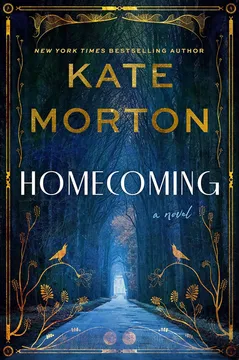


Plot Summary
Prologue
In 1959, Isabel Turner4 climbs a ladder to hang New Year bunting at Halcyon, the grand South Australian home where she has lived for fourteen years. A stranger approaches carrying a parcel, and her first impulse is to keep him from the house.
The narrative then returns to Christmas Eve, when shopkeeper and horseman Percy Summers5 rides home through the heat and discovers Isabel4 and three of her children12 motionless beside their picnic. Ants cross one child’s wrist. The baby’s hanging crib is empty. Percy5 rides for help, not knowing that the missing infant15 will bind his family to the tragedy for decades.
The prologue makes a domestic ritual feel precarious before explaining why. Isabel’s unease around the stranger frames Halcyon as a house where ordinary acts carry hidden histories, while Percy’s discovery gives the mystery its stark physical fact: three children and their mother are dead, but the baby is missing. The shift between New Year’s Day and Christmas Eve asks the reader to hold two kinds of uncertainty at once, the immediate puzzle of the empty crib and the older question of what Isabel feared. The domestic landscape is not merely a setting; it is the archive in which the family’s secrets will be stored.
London Loses Its Footing
In London, freelance journalist Jess Turner-Bridges1 is waiting to hear whether an editor will buy her idea for a history series. Her work has dried up, her former partner Matt has moved on, and the mortgage on their house is becoming hard to manage. Then a call from Sydney reports that her formidable grandmother, Nora,3 has fallen, struck her head, and been hospitalized.
Jess1 had expected bad news about her estranged mother, Polly,2 not Nora.3 The doctor warns that Nora’s3 age and condition make delay unwise. Jess1 abandons the magazine awards she had planned to attend, secures a flight with the money she can manage, and leaves for Australia with no return ticket. Family need interrupts the collapse of her professional confidence.
Jess’s departure is driven by responsibility, but the call also gives her a reason to stop performing competence in London. The failed pitch and financial pressure have made her life feel provisional, yet she has hidden that from Nora, partly to protect her and partly to preserve her own image as a self-sufficient granddaughter. Returning home therefore begins as an act of care complicated by shame. The urgency of the doctor’s warning strips away Jess’s careful calculations: she cannot keep postponing intimacy until her work, relationship, or finances are in better order. The book makes the journey home a response to vulnerability, not nostalgia.
Darling House Without Nora
Jess1 arrives at Darling House, the Sydney home where Nora3 raised her, and finds its familiar rooms waiting without their usual center. At the hospital, Nora3 is in intensive care after a heart episode. When she wakes, she mistakes Jess1 for someone else, speaks of missing her, and pleads about pages and a man taking a baby.
Patrick, Nora’s3 carer, had already told Jess1 that she had become distracted, revisited memories of her brother,7 and said she would not let him take her baby.2 The references make little sense beside Nora’s3 ordinary life, but they unsettle Jess1 enough to begin searching. She also learns that Nora3 had climbed toward the attic before her fall, though she had never gone there in the past.
The hospital scene gives Jess a mystery in the very language of intimacy. Nora’s confusion is medically plausible, but the repeated references to a baby and a man connect to anxieties that Jess has never been invited to examine. The attic matters because it is both a forbidden childhood refuge and a physical repository for family history. Nora’s body has become frail, yet her words retain the force of a private alarm. Jess’s response is characteristically investigative: rather than accept uncertainty as illness alone, she searches for the specific past that might have broken into the present. Her care for Nora becomes inseparable from her need to know.
The Turner Family Tragedy
At Darling House, Jess1 searches for Halcyon and her great-uncle Thomas Turner.7 She finds reports of a 1959 Christmas Eve tragedy in Tambilla, South Australia: Thomas’s7 wife, Isabel,4 and three children12 were found dead after a picnic, while their infant daughter15 Thea15 vanished.
A coroner later treated the deaths as a murder-suicide and accepted that Isabel4 had poisoned the family, though the poison was never identified. Thomas7 was overseas and never returned to Australia.
Jess1 recognizes the names from a photograph and understands that Nora’s3 beloved brother7 had another family whose existence she had kept from Jess.1 The story is not an abstract family scandal: it is the missing history behind Nora’s3 terror, her hospital references, and the letter from a South Australian solicitor.
Jess’s search changes family history from an inheritance of anecdotes into a public record of violence. The official account supplies a clean explanation, a guilty mother and a missing child, but its certainty contrasts with the gaps Jess immediately notices: an unidentified poison, a missing infant, and Nora’s silence. The discovery also revises Jess’s understanding of her grandmother’s reserve. Nora may have withheld the story to protect her, but protection has the effect of controlling what a descendant is permitted to know. From this point, Jess is investigating both a crime and the family’s management of its memory.
Nora Was at Halcyon
Nora’s3 longtime housekeeper, Mrs. Robinson,17 initially resists discussing the past, then confirms that Nora3 was at Halcyon when the Turners4 died. She had traveled south to stay with her sister-in-law during a difficult pregnancy.
The shock of the deaths brought on labor, and Nora3 gave birth to Polly2 on Christmas Eve. Mrs. Robinson17 explains that Nora3 and Isabel4 had been close since Thomas7 brought his English bride4 home, and Nora3 had loved the children12 as her own nieces and nephew.
She also says Nora3 felt responsible for failing to notice Isabel’s4 distress. The revelation makes Jess1 understand why her grandmother3 might have guarded the tragedy so fiercely, but it deepens the mystery of why a South Australian lawyer had recently written to Nora3 about Thea.15
Mrs. Robinson’s account gives the tragedy a bodily consequence: the news did not remain outside the family but precipitated Polly’s birth. Nora’s grief and motherhood were joined from the first day of Polly’s life, creating a bond that may explain both her devotion and her fear of loss. Yet the explanation is also incomplete. Mrs. Robinson knows Nora’s emotional history, not necessarily the facts Nora concealed from her. Her loyalty offers Jess a human context without resolving the case. The section shows how family stories survive through caretakers and friends, but also how each teller’s affection determines which parts are emphasized or left unspoken.
A Book Beside Nora
Searching Nora’s3 bedroom, Jess1 finds a hidden copy of As If They Were Asleep, the nonfiction book Daniel Miller8 wrote about the Turner case. Its detailed scenes portray Isabel’s4 isolation, the children’s12 strained moods, and the investigation led by Sergeant Peter Duke.18
Miller8 describes evidence that pointed toward poison, including rat bait, a deadly plant sample, and sleeping tablets supplied by farm manager Henrik Drumming.11 Nora3 wakes briefly and grows distressed, but Jess1 cannot get a clear explanation from her.
On December 12, while Jess1 is away from the house, Nora3 dies in hospital. Jess1 returns to Darling House in shock, postpones the article she had been struggling to write, and reads Miller’s account because it keeps Nora3 present while offering a path into the mystery she left behind.
Miller’s book becomes both evidence and surrogate company. Jess reads it to recover a Nora who can still act and speak, but the account also demonstrates how a journalist’s authority can turn uncertain events into a persuasive story. The police investigation has a chain of suggestive clues without a scientifically established poison, while the coroner’s conclusion rests heavily on testimony about Isabel’s state of mind. Nora’s death ends Jess’s hope of asking the source directly. The book thus changes function: it is no longer a document to consult with its subject nearby, but an inherited narrative Jess must question for herself.
Two Women Share a Secret
Polly2 flies down from Brisbane after learning that Nora3 has died. She and Jess1 have been distant for years, and their reunion is awkward despite their shared grief. Polly2 reveals that Nora3 told her about Halcyon when Polly2 was pregnant with Jess,1 after Polly2 became engaged to visiting American student Jonathan James.20
Nora3 feared that the Turner scandal would damage his powerful family, so Polly2 ended the relationship without telling him the real reason. She later discovered that Richard Bridges,21 the man she had assumed was her father, was not biologically related to her.
When Polly2 gives Jess1 her copy of Miller’s book, Jess1 realizes her mother2 knew the family secret all along and accuses her of abandoning them both. Polly2 offers no defense strong enough to stop Jess1 from walking away.
The conflict between Jess and Polly is not simply a daughter’s resentment meeting a mother’s regret. Both have been shaped by Nora’s conviction that secrecy can protect the people she loves. Polly’s silence about Halcyon repeats Nora’s decision, while Jess experiences that repetition as another abandonment. Their different memories also matter: Nora told Polly a story that determined whom she could love, but Polly did not tell Jess what she had learned. The scene exposes how protective narratives become inherited restraints. Jess’s anger is justified, yet it also revives the childhood wound that makes any omission feel like proof that she was unwanted.
Polly’s Borrowed Beginning
Nancy Davis,24 Daniel Miller’s8 niece and executor, sends Polly2 a cassette Miller8 had preserved with instructions that it should reach Nora’s daughter.2 A letter explains that it contains a private conversation recorded after Miller’s8 1979 return to Australia.
On the tape, Nora3 tells him that her own premature baby died soon after birth. Days later, she found an infant15 in Isabel’s4 rose garden, hungry but alive, and took her inside. She kept the child, named her Polly,2 and returned to Sydney without telling anyone the truth.
Nora3 argues that she gave the girl the loving home she needed, but her decision erased Thea Turner’s15 identity and left Percy Summers5 believing the baby had died. Jess1 and Polly2 listen together, discovering that their family bond rests on both love and an act of concealment.
Nora’s confession refuses an easy division between rescue and theft. She gives a vulnerable baby a home, but she also makes an irreversible choice on the child’s behalf and silences everyone who might have shared responsibility for her care. The emotional force comes from the convergence of two facts: Polly was deeply loved, and Polly was deprived of her own history. Jess must now distinguish the reality of their attachment from the false account that organized it. The cassette also reveals Miller’s ethical unease. He preserved the truth for the person whose life it would change, but left her to discover it only after the people involved could no longer answer.
The Baby Reappears
Jess1 tracks down Marcus Summers,9 now a lawyer in Adelaide, after finding his letter among Nora’s3 discarded papers. He admits that the letter’s supposed client was a pretext. His father, Percy,5 had tried for years to tell Nora3 that Thea15 was not taken by wild dogs.
As a boy, Marcus9 returned to Halcyon after the picnic and found the infant15 still in her crib. He carried her home in his delivery sling and placed her with his mother, Meg.6 Percy5 later learned what had happened and tried to return the child to Halcyon so Nora3 might find her.
When he came back, the crib was empty. Nora3 had discovered Thea,15 but neither Percy5 nor Marcus9 knew that she had kept her. Marcus9 has spent a lifetime carrying guilt for diverting his father at a crucial moment.
The story of the empty crib turns on a series of good intentions that do not communicate with one another. Marcus seeks help from his mother; Meg protects a child; Percy tries to restore the infant to a safer place; Nora silently claims her. Each action is understandable in isolation, yet together they create decades of false belief. Marcus’s legal career becomes a response to an event he could not undo, an effort to repair damage through later acts of justice. The novel treats guilt as a form of distorted stewardship: people keep carrying responsibility even when they do not possess the whole story.
The Attic Holds More
At a meeting with Nora’s3 solicitor, Leo Friedman,22 Jess1 learns that Nora3 left a specific instruction: destroy a traveling case hidden behind a bookcase in the attic, without opening it. Jess1 recognizes the case’s name as belonging to Isabel’s4 French mother and decides Polly2 has a right to see what it contains.
Inside are objects from the Turner children’s12 lives: Evie’s14 nature notebook, Matilda’s13 music and saxophone, John’s12 cricket keepsake, baby clothes, netsukes, and Isabel’s4 broken teacup.
Beneath them lies Isabel’s 1959 journal, including loose pages Nora3 had removed. Jess1 understands that Nora3 climbed the attic stairs before her fall to deal with something in this case. Instead of destroying the inheritance as requested, Jess1 carries the evidence downstairs to share with Polly.2
The attic converts a childhood setting of refuge into a chamber of deliberate memory. Nora’s instruction asserts a right to privacy, but the case contains objects that belong to Isabel’s children as well as to Nora’s grief. Jess’s choice to open it is not a simple triumph over a controlling elder; it is an ethical decision about whose history Nora had the right to suppress. The possessions resist the official narrative because they are ordinary, personal, and specific. They restore the Turners as children with particular interests rather than as victims arranged around a crime scene.
Isabel Planned to Leave
Isabel’s missing journal pages reveal that she was having an affair with Henrik Drumming,11 the farm manager, and believed he was Thea’s15 father. She had consulted a solicitor about passports and planned to take all four children12 back to England, away from her husband and the life she felt trapped inside.
The entries describe neither a plan to die nor a wish to kill her children.12 One page says Isabel4 intended to give her treasured netsuke rabbit to Becky Baker,16 who loved the baby.
Jess1 and Polly2 also find an unsigned note threatening to expose Isabel’s4 relationship with another woman’s husband.11 The pages explain why Nora3 might have hidden them, but they undermine the neat public picture of Isabel4 as a mother who had decided to end her family’s lives.
Isabel’s journal restores her agency while complicating any attempt to absolve or condemn her. Her plan to leave is concrete, involving passports, a solicitor, and the children; it contradicts the inference that her question to Reverend Lawson about leaving her children meant death. At the same time, the affair and anonymous threat reveal pressures that the official story reduced to homesickness and illness. Nora’s excision of the pages was an act of narrative editing: she wanted Miller to see Isabel as she remembered her. The preserved pages show that memory can be loving and still distort the person it claims to defend.
The Case Against Isabel
Miller’s8 notes show how the investigation gathered force. Sergeant Duke18 found barbital in Isabel’s4 room, a plant sample in Matilda’s,13 and empty bottles of thallium rat poison in the house. The medical examiner could confirm poisoning but identify no toxin.
Reverend Lawson19 reported Isabel’s4 question about leaving her children, and Nora3 later told Miller8 she had once seen Isabel4 lowering a cushion toward baby Thea.15 Miller8 passed that claim to Duke,18 giving police their most damaging evidence of prior intent.
The coroner eventually treated the deaths as murder-suicide, although the formal inquest remained unresolved. Jess1 now knows Nora3 had suffered her own frightening episode while caring for an infant years later, which casts a troubling shadow over her memory of Isabel4 without proving what she saw.
The case demonstrates how evidence acquires weight through the character of its witnesses. A bottle, a journal, and an intimate recollection do not carry the same certainty, yet the community’s desire for an answer lets them converge into a persuasive verdict. Nora’s statement is especially powerful because she knew Isabel well and had no apparent reason to invent a charge. The later parallel with her own crisis does not settle the question, but it makes recollection morally unstable: a witness may misremember, project, or conceal without consciously lying. The novel asks readers to resist treating confidence as proof.
The Wren Finds Polly
In 1989, Polly2 wanders into Tambilla and meets Kurt Summers,10 who still tends the grounds at Halcyon because he loved Matilda Turner13 as a boy. Kurt10 invites her to dinner with his family and his elderly father, Percy.5 When Percy5 notices a small wooden fairy wren hanging from Polly’s2 necklace, he recognizes the carving he bought for Isabel on the day he discovered the dead family.
Polly2 had found it near the water hole. The object confirms what Percy5 had long suspected: the baby he returned to Halcyon survived and grew up as Nora’s daughter.2 He does not tell Polly2 the full truth then, but their meeting links her to the place and people from whom she was separated. The wren carries a lost history into her adult life.
The wren is an intimate object, not a legal document, and its evidentiary force depends on Percy’s memory. Its return links love, loss, and mistaken responsibility without repairing them. Percy’s recognition is almost unbearably late: he sees the infant he once tried to save, but she has already built a life under another name. Polly, meanwhile, receives a piece of her history without knowing its full significance. The episode shows how objects can outlast the explanations attached to them. Their meaning changes as different people handle them, making the wren a small, mobile archive of a family’s broken chain.
Meg’s Christmas Fish Paste
Years after the tragedy, Percy5 learns from his son Marcus9 that the boy had discovered his father’s affair with Isabel4 and written the warning found among her belongings. Marcus,9 jealous and furious, once caught a pufferfish intending to punish Isabel,4 but Meg6 took it from him.
Near the end of her life, Meg’s6 confused recollections finally make sense to Percy:5 she had made a special batch of fish paste for Isabel,4 using the puffer’s toxin, and expected Isabel4 to eat it herself. Isabel4 shared the food at the picnic, and her children12 died with her. Meg’s6 act turns the murder-suicide verdict inside out. She had concealed her role, helped Nora3 after the birth, and let Percy5 carry the belief that his return of the baby had failed.
Meg’s motive grows from a private injury, not a grand design. She loves Percy, recognizes his attachment to Isabel, and responds to betrayal by preparing a punishment aimed at one person. The domestic form of the poison matters: a familiar food made by a trusted shopkeeper becomes the vehicle of a crime whose unintended victims are children. Her later kindness toward Nora does not cancel the deaths, just as her violence does not erase her lifelong generosity. The novel refuses to turn Meg into a monster or a martyr. Her contradictory actions show how ordinary caretaking can coexist with destructive resentment.
Polly Claims Her Story
After hearing Nora’s3 confession and learning that she is Thea Turner,15 Polly2 begins to reconsider a life shaped by Nora’s3 fear and certainty. She had once discovered Richard Bridges,21 the man Nora3 named as her father, and learned by DNA testing that he was not.
Years earlier, Nora’s3 insistence that Isabel’s4 scandal would harm Jonathan James’s20 family had made Polly2 end their engagement; Jonathan20 was Jess’s1 father, though Jess1 has grown up without knowing him.
Polly2 also tells Jess1 that Nora3 had stopped her from harming baby Jess1 during a postpartum crisis, a parallel that makes Nora’s3 accusation against Isabel4 harder to accept at face value. Polly’s2 account of the past does not erase her long separation from Jess,1 but she finally begins to name how fear, shame, and Nora’s3 influence shaped it.
Polly’s history shows that secrecy is not inherited as information alone; it is inherited as a way of organizing the self. Nora’s fear of losing a child became a tight form of care, while Polly’s own vulnerability made separation seem both necessary and shameful. The revelation about Jonathan gives Jess a biological father, but it does not instantly create a relationship or undo the lost years between mother and daughter. Polly’s value lies in speaking imperfectly and belatedly, rather than offering a polished defense. Her candor begins to replace the family’s habit of protecting love by withholding facts.
Walking Back to Halcyon
In the present, Jess1 and Polly2 travel to Tambilla and arrange to enter Halcyon on Christmas Eve. Jess1 wants to investigate the solicitor Isabel4 consulted and revisit the evidence surrounding the poison; Polly2 wants to face the place where she began.
They walk through the neglected house and garden, then head toward the creek together. Jess1 has decided to write a more searching piece about home, belonging, and the people erased by a false account. Polly2 has begun to tell Jess1 about Jonathan20 and about the childhood moments only she remembers.
Jess1 recalls the crabs on the beach and recognizes that her mother2 once rescued her, even if the memory belonged differently to each of them. Their shared walk does not repair the past, but it gives them a present they choose together.
The ending does not promise that truth will make a family whole. Jess and Polly still carry different memories, and the story of Nora’s love remains inseparable from her deception. What changes is their willingness to meet the past without assigning one another a fixed role: abandoned child, fragile mother, perfect grandmother. Returning to Halcyon together transforms the site from a sealed crime scene into a place they can approach by choice. Jess’s new writing project extends that choice outward, challenging the stories that turned Isabel into a single monstrous act and Polly into someone else’s possession.
Epilogue
In August 1960, Sergeant Peter Duke18 returns to Halcyon and finds its rooms empty, its garden pruned back for winter. He sees Henrik Drumming11 tending a pile of leaves and later passes visitors who have come to stare at the infamous house.
Duke18 still does not know what poison killed the Turners,4 and Thea’s15 body has not been found. He leaves with the case unresolved, carrying the family in memory even as Tambilla begins to move on.
The epilogue offers no solution, only the ordinary passage of time around an unresolved crime. Duke sees the house as both evidence and spectacle: a place where a family lived, and a destination for strangers hungry to look at tragedy. Henrik’s work among the leaves suggests an attachment to Halcyon that persists after its inhabitants are gone. The unresolved questions are structural, not accidental. They leave room for later generations to inherit partial evidence and mistaken conclusions. The quiet departure also underlines the difference between public closure and private memory: the investigation may fade from the town’s daily life, but Duke cannot simply put the family away.
Analysis
Homecoming treats family history as an active force: people do not merely inherit facts, they inherit the silences, protections, and distortions through which those facts were carried. Nora’s3 devotion to Polly2 is genuine, but her decision to keep Thea15 and rename her converts protection into possession. The consequence reaches beyond identity. It determines which father Polly2 believes she has, which love she permits herself, and how Jess1 understands her mother’s2 distance.
The novel also tests the seductions of a complete explanation. The 1959 investigation has physical clues but no identified toxin, while community testimony turns suspicion into a plausible story about Isabel.4 Miller’s book strengthens that story through vivid reconstruction. The recovered journal reverses its moral shape, and Percy’s5 memories finally expose Meg’s6 revenge as the source of the poisoned picnic. Yet the late revelations do not grant perfect certainty. Nora’s3 claim that she saw Isabel4 threaten Thea15 remains troubling, especially beside Nora’s3 later crisis with baby Jess.1 The text leaves readers to consider whether memory can be sincere and still misleading.
Objects carry what people cannot safely say. The journal pages, cassette, trunk, and wooden wren move between generations, each holding a different fragment of the same event. Their evidentiary value is inseparable from their emotional history: Percy’s5 wren is both a clue and a love token; Isabel’s4 keepsakes are proof that her children12 had particular lives, not merely a collective role in a crime.
Jess’s1 return does not resolve grief by discovering a single correct family story. Instead, she and Polly2 begin to speak without Nora’s3 authority mediating every memory. Their shared visit to Halcyon offers a small but consequential alternative to inherited silence. Home, the novel suggests, is not guaranteed by blood, place, or a flawless account. It is made through the difficult practice of telling the truth while allowing love and accountability to remain in the same room.
Review Summary
Reviews for Homecoming are largely positive, averaging 4.05 out of 5 stars. Many readers praise Kate Morton's lush, atmospheric prose and her ability to weave dual timelines into a compelling generational mystery set in Australia. Fans appreciate the vivid descriptions, complex characters, and satisfying reveals. However, some critics find the book overly long, with slow pacing and a predictable mystery. The "book-within-a-book" device divides readers, with some finding it clever and others finding it lazy or confusing.
People Also Read








Characters
Jess Turner-Bridges
The searching granddaughterJess is a London-based journalist whose curiosity is both her professional instrument and her private compulsion. She approaches houses, family histories, and conversations as if each contains a story waiting to be assembled. Her life has recently narrowed under job insecurity, a mortgage, and the end of a relationship, but she dislikes appearing in need, especially to Nora3. Jess is capable of tenderness and fierce loyalty, yet her investigative confidence can make other people’s vulnerability feel like evidence to be pursued. Her relationship with Polly2 carries old resentment and unfamiliar gaps. She wants a coherent account of where she belongs, though her reporting instincts gradually teach her that a person can be honest without possessing a complete or uncontested truth.
Polly Turner-Bridges
The mother kept at distancePolly is quiet, observant, and easily overwhelmed by pressure, but that sensitivity is not the same as weakness. She notices small beauties and remembers details that more forceful people overlook. Her life has been shaped by Nora’s3 watchfulness and by a longing to know her own origins, yet she has often responded to fear by retreating rather than confronting it. As Jess’s1 mother, Polly carries love mixed with shame about the years they spent apart. She can struggle to explain herself, especially when she believes any explanation will sound like an excuse. Her inwardness gives her a rich private life, but it has also made silence seem safer than risking another person’s judgment.
Nora Turner-Bridges
The formidable family keeperNora is decisive, ambitious, socially gifted, and deeply attached to the people and places she calls her own. She builds a successful life from limited resources and treats care as an active duty, not a sentiment. Her certainty can steady others, but it can also crowd out their independent choices. Nora believes that a good parent protects a child from harm, and that belief gives her enormous devotion as well as a tendency to manage what others are allowed to know. She values houses as containers of memory and resists easy dismissal of the past, even as she can selectively shape the stories told about it. Her loyalty is real, but it does not guarantee that her judgments are fair.
Isabel Turner
The English wife at HalcyonIsabel is an English transplant, a scientifically minded woman raised by naturalists and shaped by wartime service. She values routine, competence, and careful observation, habits that help her manage a large household in unfamiliar country. Her reserve can be mistaken for contentment, while her intelligence and strong will make her difficult to reduce to the role others expect of her. She loves her children12 and cares about their distinct personalities, but motherhood and distance from her old home place strains on her sense of self. Isabel is alert to the gap between the life she imagined and the one she inhabits. Her private journals give her a voice beyond the judgments made by neighbors and investigators.
Percy Summers
The bookish country shopkeeperPercy is a patient, observant man whose early illness left him with a lasting inwardness and a lifelong refuge in books. He knows the Hills by touch and habit, and his attention to birds, trails, and weather makes him a trusted local presence. He is devoted to his wife6 and sons10, but he also carries private longings for travel, literature, and a life beyond the family shop. Percy often expresses care through practical acts rather than emotional speech, especially when his sons10 are distressed. His sense of duty is strong, sometimes stronger than his willingness to challenge the choices that define his life. He sees how fragile ordinary security can be, yet keeps trying to protect those he loves.
Meg Summers
Tambilla’s generous shopkeeperMeg is capable, energetic, and woven into the daily life of Tambilla through her grocery shop, cooking, and care for neighbors. A childhood marked by violence has made her wary of instability and deeply committed to keeping her family close. She has a practical generosity: she remembers what people need and quietly supplies it. Meg’s public warmth can conceal emotions she does not know how to express directly, especially when loyalty and resentment pull in opposite directions. She takes pride in being useful and in making a home feel secure. Her strongest attachments are also her most vulnerable points, and she can mistake control for protection when fear or hurt overwhelms her judgment.
Thomas Turner
The charismatic absent husbandThomas is a charming Australian adventurer whose enthusiasm can make an improbable plan sound inevitable. His war service, business ventures, and appetite for new schemes carry him repeatedly away from home. He is generous in flashes and capable of inspiring affection, but his self-confidence can make him inattentive to the people who depend on him. Thomas sees possibility where others see risk, and he is drawn to grand gestures, especially houses and projects that promise a new life. His family experiences his charisma differently: to outsiders it is magnetic, while to those left behind it can feel like an absence with a persuasive face.
Daniel Miller
The reporter who becomes keeperDaniel Miller is an American journalist who comes to Tambilla while grieving his brother and searching for a more meaningful kind of reporting. He prefers attentive conversation to rigid interrogation and tries to understand people as more than evidence. His nonfiction approach uses scene and imagined interiority, making his book compelling while raising questions about the boundary between empathy and invention. Nora3 becomes one of his most important sources and a genuine friend. Miller’s care for his subjects does not free him from the consequences of what he publishes or what he chooses to keep private.
Marcus Summers
The lawyer carrying old guiltMarcus is Percy5 and Meg’s6 younger son, a passionate boy who grows into a lawyer committed to helping people with little power. As a child he is quick to feel insulted or displaced, especially when family bonds seem threatened. He has a strong moral instinct, though it can become rigid when he is hurt. The Turner tragedy shapes his understanding of responsibility and justice. As an adult, Marcus remains willing to revisit painful events because he believes the truth matters even when it arrives too late to repair the damage.
Kurt Summers
The firstborn with quiet griefKurt is Percy5 and Meg’s6 thoughtful elder son, a strong student with a calm, private manner. He is serious about his feelings and reluctant to discuss them before he has made sense of them himself. His friendship and young attachment to Matilda13 place him close to the Turner family4, while his father’s hopes for university create expectations he is still trying to understand. Kurt’s steadiness contrasts with Marcus’s9 intensity, but both sons are shaped by the family’s close loyalties and the demands placed on them.
Henrik Drumming
Halcyon’s reserved farm managerHenrik is a practical, restrained man who understands the land and the needs of Halcyon. His reserve is partly temperament and partly the result of private sorrow; he is not comfortable turning grief into public conversation. He works faithfully and is valued for his skill, but he notices more than he says. His long familiarity with the Turners4 gives him a perspective that differs from the town’s gossip. Henrik’s care tends to take the form of labor, reliability, and small acts performed without asking for recognition.
John Turner
The eager Turner sonJohn is a lively, imaginative boy who loves his family and wants to be useful. His curiosity often leads him into other people’s business, though his motives are more affectionate than calculating. He is unsettled by changes among his siblings and friendships, and he tends to understand adult conflict through the stories he has heard. John admires his father7 and wants to keep his family together, which makes him vulnerable to simplistic advice from peers. His camera project grows from a child’s earnest attempt to influence the future.
Matilda Turner
The ambitious eldest daughterMatilda is intelligent, musically gifted, and impatient with the limits placed on girls and young women. She is eager to leave childhood behind and has plans that extend far beyond Halcyon. Her confidence can read as sharpness, especially to younger siblings, but beneath it she is dealing with adult choices before she feels ready. Matilda is close to her family even when she resents their expectations. Her relationship with Kurt10 gives her a private source of comfort and pressure.
Evie Turner
The self-directed young naturalistEvie is an independent, observant child who would rather study plants, fungi, and animals than follow ordinary rules of play. She asks precise questions and is comfortable alone, qualities adults sometimes mistake for oddness. Her curiosity is practical as well as imaginative: she records what she sees and trusts the natural world to provide more wonder than invented stories. Evie’s closeness to the bush gives her a special relationship with the land around Halcyon.
Thea Turner
The youngest Turner childThea is the infant daughter of Isabel4 and Thomas7, born just weeks before the family’s Christmas picnic. She is too young to speak or choose her circumstances, yet her presence draws powerful hopes and fears from the adults around her. Her smallness makes her easy to treat as a symbol of innocence, but she is also a particular child whose individual identity matters. The adults’ competing claims over her future reveal the difference between loving a child and deciding what is best without her voice.
Becky Baker
The devoted young nursemaidBecky is a shy, hardworking young woman who finds purpose in helping the Turner4 household, especially with the new baby15. She is slower with schoolwork than some people, but she observes carefully and often understands more than others assume. Her loyalty to Isabel4 and affection for the children12 make her vulnerable to grief and misunderstanding. Becky’s quiet competence is often overlooked because the town sees her through the limits of her education rather than the precision of her attention.
Mrs. Robinson
Nora’s steadfast housekeeperMrs. Robinson has worked in Nora’s3 household since she was young and regards her employer as both friend and benefactor. Nora3 once gave her responsibility and stability when she needed them, and she repays that trust with loyalty. She knows the family’s routines and emotional history, but she is cautious about disclosing private matters. Her testimony helps Jess1 understand the past while reminding her that care can require discretion as well as truth.
Peter Duke
The methodical city detectiveSergeant Peter Duke is an experienced investigator called from Adelaide to lead the Turner inquiry. He is methodical, patient, and alert to the human pressures surrounding a crime, but he must build a case from incomplete forensic evidence and divided testimony. Duke takes the deaths of children12 personally while maintaining professional discipline. His instincts guide his questions, though instinct cannot substitute for proof.
Reverend Ned Lawson
The town’s private confidantReverend Lawson is a minister who values language, pastoral listening, and the private trust of his parishioners. He is also an aspiring writer, which makes him sensitive to the stories people tell when they are afraid. His pastoral role places him in a difficult position when an intimate conversation becomes relevant to a criminal investigation. He wants to offer humane guidance, but he cannot always foresee how his advice will be interpreted.
Jonathan James
The visiting literature scholarJonathan is an American doctoral student whose literary lecture opens a new intellectual world for young Polly2. He is thoughtful, articulate, and drawn to the relationship between civilization and the wild. His brief connection with Polly2 becomes an important part of her private history, though their future is shaped by pressures outside their control.
Richard Bridges
Polly’s former legal fatherRichard is Nora’s3 former husband and the man Polly2 initially believes to be her biological father. He is a practical, comparatively conventional presence in the family history. His own understanding of the marriage and of Polly’s2 origins is incomplete, illustrating how people can share a life while holding different versions of its most consequential events.
Leo Friedman
Nora’s trusted solicitorLeo is Nora’s3 longtime solicitor and a familiar, trusted presence at Darling House. He handles her estate with respect for her carefully stated wishes. His role is small but consequential: through him, Nora’s3 final request sends Jess1 back into the attic and toward a history Nora3 intended to keep sealed.
Eliza Drumming
Henrik’s absent wifeEliza is Henrik’s11 wife, living for long periods in institutional care. Her illness shapes Henrik’s11 routines and the private grief he carries. Though largely absent from the action, she represents the long obligations that bind people to lives they may not have chosen.
Nancy Davis
Miller’s archival gatekeeperNancy is Daniel Miller’s8 niece and the executor of his estate. She respects her uncle’s work and safeguards his notebooks, recordings, and instructions. Her willingness to share documents gives Jess1 access to evidence that the published book could not contain, while her care with the material reflects the responsibilities of preserving another person’s story.
Plot Devices
As If They Were Asleep
The published version of historyDaniel Miller’s8 book recounts the Turner4 deaths through interviews, investigation, and scenes shaped by a nonfiction novelist’s methods. Jess1 initially treats it as a reliable guide to the past, then discovers that its confident portrait depends on incomplete testimony and concealed evidence. Miller’s8 notebooks, cassette, and later addendum reveal how his relationship with Nora3 affected what he learned and what he published. The book is both an investigative tool and a source of distortion: its craft makes people vivid, but its narrative coherence can make uncertain conclusions feel settled.
The Missing Journal Pages
A life edited into evidenceIsabel’s4 journal records her private feelings and practical plans, while several entries have been torn out and kept separately. Their absence becomes a clue in the original investigation and, decades later, a physical puzzle for Jess1. The recovered pages disclose Isabel’s4 relationship with Henrik11, her intention to take the children12 to England, and her plan to give Becky16 a treasured rabbit. They complicate the official account and expose Nora’s3 role in curating what Miller8 and the police could know.
The Empty Wicker Crib
The mystery that changes a lifeThe infant’s15 absence from the picnic site begins the search and keeps the Turner case open long after the deaths are explained. Percy5 assumes dogs took the child, Marcus9 knows he found her alive, and Nora’s3 later actions create a private truth that none of them fully shares. The crib’s changing meaning connects the crime investigation to Polly’s2 identity and to the costs of decisions made in panic. It is the novel’s central image of a life carried away from its first family.
The Wooden Fairy Wren
A keepsake that carries proofPercy5 buys the carved wren for Isabel4 and loses it during the confusion surrounding the picnic. Years later, Polly2 finds it near the water hole and wears it as a pendant. Percy5 recognizes the carving at dinner, making the object a private link between the missing child15 and the woman before him. The wren binds affection, guilt, and identity through touch rather than official records. Its meaning changes each time it passes into another person’s hands.
The Cassette in Trust
A voice preserved for laterMiller8 records an interview with Nora3 in 1979 and stores the cassette with instructions for her descendants. The first recorded conversation appears ordinary, but a separate private section contains Nora’s3 account of the infant15 and her own decision to keep her. Miller’s8 letter explains why he withheld the recording during Nora’s3 life: the truth belonged most directly to Polly2. The tape lets a dead woman speak in her own voice, but it does not make her account neutral or complete.
About the Author

Download PDF
Download EPUB
.epub digital book format is ideal for reading ebooks on phones, tablets, and e-readers.








