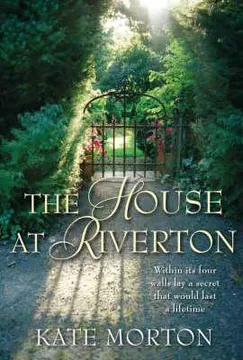


Plot Summary
Prologue
At ninety-eight, Grace Bradley1 wakes from a dream of Riverton in 1924, where Hannah Hartford2 appears in a muddy wedding dress beside a dead hound. A letter from Ursula Ryan,10 a young filmmaker researching the Hartford sisters and poet Robbie Hunter,4 has disturbed the silence Grace1 kept for decades.
She first refuses to help, then accepts Ursula’s10 invitation to visit the recreated house. The set brings the past within reach, and Grace1 begins making recordings for her absent grandson, Marcus,11 before memory can slip away again.
The opening makes memory both the engine of the story and its danger. Grace is not simply recalling events; her dream shows how guilt has rearranged them into images she cannot control. Ursula’s film offers a public version of the past, while Grace’s tapes promise a private correction. That tension establishes the novel’s central question: who gets to tell a life once its witnesses are nearly gone? Grace’s age intensifies the stakes, but her choice to speak is an act of agency, not merely recollection.
A Maid Enters the Triangle
In June 1914, Grace Reeves1 leaves her ailing mother’s9 cottage to work at Riverton, where the strict servants’ hierarchy teaches her to be quiet and grateful. She finds refuge in the neglected nursery and its books, then discovers Hannah,2 Emmeline,3 and David7 rehearsing a play. When their tutor searches for the children, Grace1 lies that she saw them by the lake, protecting them from punishment.
The siblings welcome her after she keeps their secret. Grace1 also learns about their private invention, the Game: a richly recorded fantasy with three players and strict rules. For a girl who has never had brothers or sisters, their closeness is a world she can observe but cannot quite enter.
Grace’s first act of loyalty is small, but it alters her place in the house. She breaks the rules of service not through open rebellion but through a lie that protects the children, and the reward is intimacy without equality. The Game gives the siblings a private language and Grace a way to study belonging from its edge. Its three-player rule also establishes a fragile structure: affection can shift, but exclusion is built into the design.
A Recital Meets the War
At the family recital, Hannah2 turns a biblical scene into a pointed satire of her father’s8 unequal rules for sons and daughters. The performance unsettles the adults, then draws laughter from Frederick, Hannah’s father,8 and reveals the affection beneath their clashes. Soon the household hears that Britain is at war.
David7 speaks of joining the fighting, while Grace1 grows close to Alfred Steeple,6 a young footman later shamed in the village for not enlisting. Alfred6 finally signs up, and Nancy16 takes railway work, leaving Grace1 with new responsibilities upstairs. In private, Hannah2 begins secretarial lessons, imagining a life beyond Riverton. The war opens paths for some and closes others, even before anyone knows its cost.
The recital makes political inequality visible inside a family performance: Hannah can expose the rule but cannot yet escape it. War then disrupts the house’s established order, creating work and mobility for servants while drawing David toward the masculine ideal he has been taught to admire. Grace’s growing responsibilities place her closer to the daughters, but not outside the class system. Each character meets history through a different permission: Hannah studies for independence, Alfred enlists, and Grace inherits the labor others leave behind.
The Fourth Player
David7 brings his Eton friend Robbie Hunter4 to Riverton for Christmas in 1915, disrupting the Game’s rule that only three may play. Hannah2 resents the intrusion, while Emmeline3 is won over after Robbie4 tends her injured wrist when she falls from the library Christmas tree. David7 and Robbie4 later enlist together, carrying the siblings’ childhood world toward the real war.
David7 dies in France, and the Major, David’s7 uncle, is killed soon after; Lord Ashbury dies days later. Jemima, the Major’s widow, gives birth to a daughter, Gytha, so Frederick8 inherits the estate. The losses leave the Hartfords grieving and alter the succession, while Robbie4 returns from war carrying experiences the family cannot yet understand.
Robbie’s entrance changes more than the Game’s membership. He becomes the first outsider to redirect the siblings’ affections, especially Emmeline’s, while his bond with David links childhood fantasy to the war’s real dangers. The deaths dismantle the family’s expected future: inheritance passes through catastrophe rather than choice. The daughter’s birth brings life without restoring the line everyone expected, and Frederick’s new position is shadowed by losses he cannot reverse.
A Marriage Becomes an Escape
After the war, Hannah2 returns to Riverton determined to work and make her own way, but her father’s8 business is failing and the family’s future feels precarious. Her grandmother14 and Lady Clementine want a secure match. Teddy Luxton,5 the banker’s son, wins Hannah’s2 attention when he retrieves her locket from a river during a ride.
She accepts him less from sweeping passion than from a belief that marriage will take her beyond a life of confinement. They marry in 1919 and move to London, where Teddy’s5 social position offers travel and access. Yet he expects a conventional wife, while Hannah2 wants work, politics, and a life she has chosen for herself.
Hannah’s marriage is neither simple coercion nor uncomplicated romance. She makes a strategic choice with limited options, treating marriage as a vehicle for movement while Teddy assumes it will secure familiar domestic roles. Their mutual misreading is present from the start: Teddy offers access but not the kind of independence Hannah seeks. The recovered locket turns into a hinge between childhood and adulthood, yet the journey it enables depends on a bargain neither spouse fully understands.
Emmeline's Dangerous Film
In London, Hannah’s2 hope of working is repeatedly blocked by family expectations, while Emmeline3 chases glamour and admiration. At seventeen, Emmeline3 disappears with Philippe, a married French filmmaker who has promised her a future in the movies. Hannah2 finds her at his studio, where Emmeline3 has been dressed for a sexualized film and believes they will marry.
Hannah2 threatens to expose Philippe and brings her sister home. The rescue costs Grace1 an eagerly anticipated evening with Alfred,6 who leaves after Mrs Tibbit falsely tells him Grace1 will not return. Hannah2 later gives Grace1 a shorthand note thanking her and calling her more like a sister than a servant. Grace1 cannot read it, so she seeks help from Lucy Starling.18
The rescue exposes the difference between Emmeline’s romantic scripts and the power Philippe actually holds. Hannah can recognize the danger because she sees the age and status imbalance; Emmeline experiences the same situation as a promise of being chosen. Grace’s sacrifice is quieter: she loses a private chance at happiness while strengthening her bond with Hannah. The coded note offers intimacy, but its unreadable form also dramatizes how close Grace may stand to Hannah while remaining shut out of what she means.
The Choice Grace Cannot Undo
When Grace’s mother9 dies, Grace1 returns to Saffron Green and finds Alfred6 waiting at the funeral. He tells her that he had visited her mother9 and heard that she once loved a man whose family and obligations made a future impossible. As Grace1 recalls her mother’s9 affection for Frederick8 and the resemblance between herself and a servant in an old family photograph, she privately concludes Frederick8 may be her father and Hannah2 her half-sister.
Alfred6 asks Grace1 to marry him and leave service for a new business in Ipswich. She refuses, believing Hannah2 needs her and remembering the promise she made. She keeps her suspicion to herself, sacrificing a possible shared life rather than risk breaking the bond she has chosen.
Grace’s deduction gives a hidden emotional logic to the loyalty she has already built. It is not confirmed, and that uncertainty matters: she chooses Hannah not on proof of blood but on the relationship created through years of service and trust. Alfred offers a future outside the house, but his proposal requires Grace to abandon the person who has become her chosen family. Her decision echoes Hannah’s own constrained choices, though Grace experiences duty as devotion rather than a route to freedom.
David's Token Returns
After Grace1 leaves for her mother’s9 funeral, Robbie4 appears at Hannah’s2 London home with the tiny book David7 entrusted to him before dying. Its return reconnects Hannah2 to the brother whose loss she has never managed to absorb. Robbie,4 now a published poet, listens closely to the life she has built and sees the sadness beneath her polished manner.
Their conversations draw them together, first through David’s7 memory and then through a shared appetite for books, travel, and escape. Hannah’s2 marriage to Teddy5 remains outwardly intact, but Robbie4 becomes the person with whom she can speak freely. The book, once a piece of the siblings’ Game, opens a private world that their adult lives cannot safely contain.
The returned book functions as both memorial and invitation. Robbie arrives carrying David’s trust, so intimacy with him begins under the sign of grief rather than simple attraction. Hannah can speak about the brother she lost without translating her pain for someone who has not shared it. Yet the old Game’s artifacts now support a secret adult relationship. What once made childhood imaginative freedom becomes a model for evasion, and the boundary between play and consequence starts to thin.
The Barge Behind the Marriage
Hannah2 and Robbie4 begin meeting secretly aboard his Thames barge, using Emmeline’s3 invitations and unpredictable parties as cover. Emmeline3 believes Robbie4 may love her, while Hannah2 avoids correcting her because the misunderstanding keeps the lovers near one another.
Their private refuge cannot erase Robbie’s4 war trauma: he wakes from a nightmare choking Hannah,2 and later a crowded New Year celebration triggers a violent assault on a stranger. Hannah2 sees that his tenderness and danger occupy the same body, yet she keeps planning an escape with him.
Deborah13 discovers the affair and threatens to expose it, tying Hannah’s2 private life to Teddy’s5 business and political prospects. As the family returns to Riverton, secrecy becomes a condition of survival.
The barge gives the lovers a space outside the roles imposed by marriage and class, but it cannot make them free of history. Robbie’s trauma breaks into their intimacy without warning, and Hannah responds by protecting him rather than reconsidering the danger. Emmeline’s mistaken hope supplies cover at a moral cost: Hannah allows her sister to be hurt by a fiction that benefits her. Deborah’s threat makes private desire a public liability, revealing how reputations and money police women’s choices.
Lanterns Over the Lake
In 1924, Hannah2 and Teddy5 return to Riverton after Frederick’s8 death. Teddy5 renovates the neglected estate and plans a midsummer party, while Hannah2 secretly prepares to leave with Robbie.4 She gives Grace1 her locket, concealing inside it a key to money set aside for her, and leaves two notes for Grace1 and Emmeline.3
The note addressed to Grace1 is in shorthand; the other is meant to be found the next day and make Hannah’s2 absence look like suicide. Hannah’s2 nervousness is mistaken for party jitters, and Grace,1 unaware of the full plan, eventually discovers the letters after the celebration has begun. She reads the second note and runs to find Emmeline3 before the sisters reach the lake.
The party is designed as a spectacle of renewal, but Hannah uses its noise and crowds to hide an exit. Her locket transfers practical means as well as affection, making Grace part of the plan without giving her the full key to it. The staged suicide note turns the language of tragedy into camouflage. Grace’s discovery changes the night from a private escape into an emergency, while the sisters’ arrival threatens to collapse the careful distance Hannah has maintained.
The Shot No One Reports
Grace1 reaches the lake with Emmeline,3 who has found a gun in the coat she borrowed from Harry. There they discover Hannah2 and Robbie4 preparing to leave, and Emmeline3 realizes her sister has concealed the affair and their plan. When Emmeline3 raises the gun, fireworks and party noise overwhelm Robbie,4 triggering his war panic. He urges Hannah2 to shoot Emmeline,3 then lunges for the weapon.
Hannah2 fires first and kills Robbie.4 Emmeline3 and Grace1 help preserve the public story that he shot himself; Hannah2 disappears, and no body is found in the lake. The official account turns the sisters into witnesses to a poet’s suicide, while Hannah’s2 letter reveals she intended to vanish and had prepared Grace1 to begin a life of her own.
The climax converts every earlier ambiguity into irreversible action. Robbie’s trauma explains the panic but does not excuse his threat; Hannah must choose between the man she loves and the sister he endangers. The gun, introduced as Emmeline’s borrowed protection, becomes the instrument that ends the lovers’ escape. The cover story protects the survivors but also manufactures the legend that the film and public will inherit. Hannah’s letter complicates Grace’s role: she was not merely a witness, but a participant trusted with the means of escape.
Riverton Opens Again
In old age, Grace1 returns to Riverton with Ursula10 and sees the house remade as a tourist attraction. The familiar rooms now hold placards, bright lights, and visitors who know the public story but not what Grace1 witnessed. Ursula’s10 film reconstructs the night as a suicide, and Grace1 recognizes how easily a compelling image can replace the truth.
Back at Heathview, her grandson Marcus11 returns after months away, grieving his wife21 and blaming himself. He sits with Grace,1 listens to her earlier recordings, and begins considering a book about her life. Grace1 dies after they watch Ursula’s10 film together, leaving one final tape for Marcus11 to hear later.
The return to Riverton stages the difference between preserving a building and recovering a life. The visitors can inspect objects but cannot perceive the private histories attached to them. Ursula’s film is sincere yet mistaken, showing that research and empathy do not guarantee truth. Grace’s tapes answer that failure through testimony, while Marcus’s return completes a family circuit: the person who once received stories as a child is now ready to carry them forward.
Epilogue
After Grace’s1 death, her final recording gives the reader the account she could not place in Ursula’s10 film. Marcus11 has the tape, though Grace1 asked him to wait until later.
Its hidden history replaces the tidy suicide legend with the events at the lake and leaves him with a new subject beyond his mystery novels. The story ends not by proving every suspicion about Grace’s1 parentage, but by showing what her silence protected, what it cost, and why she finally chose to speak.
The ending separates private truth from public closure. The official story is not overturned by a courtroom revelation; it is corrected through a recording entrusted to one listener. That modest channel suits the novel’s view of history as partial and intimate, shaped by who survives and who is willing to testify. Grace cannot repair every relationship or verify every inference, but she can give Marcus a truer inheritance than the family legend. The final act of care is narrative: she helps him return to life by returning him to stories.
Analysis
The House at Riverton treats history as a social arrangement: some people command the room, some serve in it, and some are left to remember what the official story excludes. Grace’s1 position downstairs gives her an unusually broad view of the household, but class rules also restrict what she can say and what her observations can mean. Her later work as an archaeologist grows from the same impulse that made her watch the Hartfords: she wants to recover lives from traces that appear ordinary until someone asks the right question.
The novel’s strongest contrast is between performance and private feeling. Riverton stages family recitals, formal dinners, photographs, political gatherings, and finally a party whose cheerful surface masks an escape plan. Hannah’s2 life is similarly staged. She appears to possess privilege, yet her father,8 husband,5 and in-laws treat her independence as negotiable. Emmeline3 seeks freedom through glamour and romantic attention; Hannah2 seeks it through work, travel, and finally disappearance. Grace1 seeks belonging through service, then must learn that loyalty can also be a choice with a cost. The Game provides the book’s structural metaphor without reducing its characters to pieces. Its three-player rule helps explain the siblings’ early intimacy, but adulthood breaks the triangle through war, marriage, and unequal desire. The old rules cannot contain what the characters become. Robbie’s4 trauma further unsettles the romance: love offers Hannah2 closeness, not a cure for the violence he carries home.
Finally, the novel distinguishes truth from certainty. Grace’s1 account corrects the celebrated suicide story, but her own theory about her parentage remains an inference. Ursula’s10 film, the photographs, the police account, and Grace’s tapes each preserve a different slice. The book’s lesson is not that memory supplies a perfect record. It is that silence also creates history, and that testimony, however incomplete, can return moral complexity to people reduced to legends.
Review Summary
Reviews for The House at Riverton are largely positive, averaging 3.95/5. Many readers praise Morton's atmospheric, immersive writing, rich historical detail, and compelling exploration of class, secrets, and loyalty in early twentieth-century England. The dual timeline structure and shocking ending are frequently highlighted as strengths. Common criticisms include slow pacing, overly repetitive foreshadowing, flat characterization due to Grace's narrative distance, and underdeveloped plot threads. Comparisons to Downton Abbey are frequent. Some note it feels weaker than Morton's later novels, while others find it a captivating debut worthy of recommendation.
People Also Read





Characters
Grace Bradley
The listening witnessGrace begins as a poor, bookish fourteen-year-old who believes gratitude and obedience are the price of security. Service at Riverton teaches her to notice what powerful people conceal, and her affection for Hannah2 gradually becomes more than professional loyalty. As an adult, she builds a life through study and archaeology, yet carries the house’s secrets with her. Her first-person account is precise about remembered scenes and uncertain about what she could not know, making her an unusually self-aware witness. The central tension in Grace is between her hunger for an independent life and her need to belong to someone; she turns observation into both a vocation and a way to love.
Hannah Hartford
The restless eldest sisterHannah is clever, politically curious, and impatient with the narrow future prescribed for an aristocratic daughter. Her wit and theatrical imagination make her formidable, but they also let her disguise fear as confidence. She loves her siblings fiercely and resists being reduced to a dutiful wife, yet she makes choices that bind her to other people’s expectations. Hannah is drawn to books, history, and travel because they offer forms of life beyond the family estate. Her closest relationships are with Emmeline3, David7, and Grace1, though each asks something different of her. She is a character who wants freedom but is repeatedly forced to choose whom she will protect.
Emmeline Hartford
The adored younger sisterEmmeline is charming, beautiful, and hungry for romance, attention, and the glitter of adult society. As the youngest sibling, she is accustomed to being indulged and sometimes mistakes admiration for lasting devotion. Her vivacity can look like frivolity, but she is perceptive about family affection and acutely sensitive to being left behind. Emmeline loves Hannah2 and David7 while also wanting a life not defined by their decisions. Her attraction to performance, parties, and film reflects a desire to be seen on her own terms. Beneath the practiced glamour is a young woman whose confidence depends on being chosen, and whose loyalty can become fierce when that assurance is threatened.
Robbie Hunter
The wounded poetRobbie is a gifted poet and the son of a newly titled family, but neither privilege nor education gives him a secure place in the world. His mother’s death and estrangement from his father leave him wary of family bonds. At Riverton, he becomes close to David7 and unsettles Hannah2 and Emmeline3 in different ways. His attraction to art, travel, and unconventional people distinguishes him from the conventional men around the Hartfords. The war leaves him carrying experiences he struggles to describe, and his sensitivity exists alongside volatility. Robbie’s appeal lies partly in his capacity to see people sharply, but his suffering makes intimacy unpredictable rather than automatically redemptive.
Theodore Luxton
The well-meaning husbandTeddy is handsome, sociable, and more moderate than his forceful father, though he remains shaped by the business and political world that raised him. He values stability, family reputation, and practical success, and he expects marriage to fit within those structures. His kindness is real, but so is his limited imagination about what Hannah2 wants. He admires her spirit while assuming it can coexist with the conventional role he offers her. Teddy is not a simple villain or a perfect match: he tries to provide security and opportunity, yet often mistakes material access for freedom. His relationship with Hannah2 is built on affection, compromise, and fundamental misunderstandings.
Alfred Steeple
The devoted footmanAlfred is a warm, capable young footman whose humor helps draw Grace1 out of her reserve. His enlistment comes from a desire to serve, but the war changes his relationship to work, memory, and ordinary life. He struggles to communicate what he has experienced and resists being treated as fragile. His connection with Grace1 is tender but repeatedly strained by timing, silence, and the different futures they imagine. Alfred represents the cost of returning to a household that expects a soldier to resume his former self.
David Hartford
The restless brotherDavid is the Hartford siblings’ only brother, a teasing and affectionate presence who shares Hannah’s2 adventurous imagination. He understands the Game as a common territory for the three children and often mediates between his sisters. His desire to make his own decisions brings him into conflict with his father8, whose expectations place David on a conventional path. His friendship with Robbie4 introduces a new loyalty into the family’s close triangle.
Frederick Hartford
The erratic family patriarchFrederick is Hannah2, Emmeline3, and David’s7 father, an inventive man whose business ventures repeatedly test his family’s patience and finances. Unlike his stern mother14, he is affectionate toward his children and shares Hannah’s2 stubbornness and appetite for new ideas. His warmth does not make him easy to understand: failures and grief accumulate behind his humor, while his authority over his daughters remains real. Frederick embodies the gap between a person’s private hopes and the role inherited from family.
Grace's mother
The guarded former servantGrace’s unnamed mother is a former Riverton servant who raises her daughter1 in poverty while taking in sewing. Her chronic pain and reserve make affection difficult to read, and she gives Grace1 practical warnings rather than easy comfort. She keeps much of her history from her daughter1, leaving Grace1 to interpret scattered remarks and old photographs. Her life reflects the lasting consequences of a woman losing her place in service.
Ursula Ryan
The filmmaker seeking truthUrsula is a young filmmaker whose family stories inspire her effort to reconstruct the Hartford sisters’ past. She approaches Grace1 with curiosity and genuine respect, but must also shape incomplete evidence into a film. Her work forces Grace1 to revisit memories she has long avoided. Ursula’s own responsibilities as a mother make her receptive to Grace’s1 regrets, and their conversations become a friendship rather than a simple research interview.
Marcus McCourt
Grace's absent grandsonMarcus is Grace’s1 grandson and a successful writer of mystery novels. He shares her appetite for stories and investigation, but grief makes him withdraw from the people who care about him. Grace’s recordings are meant for him, joining her past to his work and giving him a reason to listen again. His bond with her is affectionate, built through childhood questions and the stories she told.
Ruth Bradley McCourt
Grace's dutiful daughterRuth is Grace’s1 daughter and Marcus’s11 mother. Punctual, practical, and concerned for her elderly mother1, she finds Grace’s1 return to the past unsettling. Their relationship carries decades of difference in temperament and expectation. Ruth values security and propriety, while Grace1 has lived a less conventional life. Her concern for Marcus11 gives her a point of connection with Grace1 even when neither knows how to speak easily.
Deborah Luxton
The calculating sister-in-lawDeborah is Teddy’s5 stylish, ambitious sister, skilled at reading social rooms and arranging people to suit her purposes. She works in fashion and values influence, money, and the family’s public standing. Her confidence makes her entertaining company, but she can turn affection into leverage when she believes the family is threatened. Deborah’s sharpness reflects the Luxton world’s conviction that reputation is a form of power.
Lady Violet
The guardian of conventionLady Violet is the Hartford matriarch, devoted to family rank, social ritual, and the continuation of the Ashbury line. She can be gracious and generous, but her expectations leave little room for Hannah’s2 ambitions. She regards marriage and suitable conduct as safeguards against disorder. Her influence is strongest when she makes convention appear to be common sense.
Mr Hamilton
The exacting butlerMr Hamilton runs Riverton’s staff with formal discipline and a deep belief in service, hierarchy, and loyalty to the family. He treats order as a moral responsibility, not merely a job. His authority shapes Grace’s1 earliest understanding of duty, while his pride in the household makes social change feel like a personal loss.
Nancy
The sharp senior maidNancy supervises Grace1 when she first arrives at Riverton. Exacting and sharp-tongued, she understands the house’s unwritten rules and expects younger servants to learn them quickly. Her practical intelligence is often hidden beneath scolding, and wartime work outside the manor broadens her view of what a woman can do.
Mrs Townsend
The servants' hall anchorMrs Townsend is Riverton’s cook, a generous and formidable presence who sustains the household through both its grand dinners and wartime shortages. She watches over Grace1 and remembers the family with affection, though her loyalty to the house remains strong. Food is her language of care and competence.
Lucy Starling
The shorthand confidanteLucy Starling works as Frederick’s8 secretary and later uses her knowledge of shorthand to help Grace1 decipher Hannah’s2 private note. Her quiet competence places her between the servants’ world and the family’s business. She is discreet, observant, and kind without prying.
Sylvia
Grace's attentive carerSylvia cares for Grace1 at Heathview and brings her letters, tea, and company. Her lively interest in romance and everyday gossip contrasts with Grace’s1 long silences. She helps Grace1 meet Ursula10 and supports the older woman’s desire to revisit Riverton.
John
Grace's brief husbandJohn is Ruth’s12 father, a handsome public servant Grace1 meets in London. Their marriage begins after an unexpected pregnancy and belongs to a later, very different period of Grace’s1 life. He is part of the family history that Grace1 shares cautiously with Ursula10.
Rebecca
Marcus's beloved wifeRebecca is Marcus’s11 wife and a central presence in the grief that separates him from Grace1 and Ruth12. Though she appears mainly through their memories, her relationship with Marcus11 shapes the emotional circumstances in which Grace1 begins recording her story.
Plot Devices
The Game
Childhood's secret worldHannah2, David7, and Emmeline3 build an elaborate fantasy world, record adventures in tiny books, and enforce a rule that only three people may play. The Game gives the siblings a shared language for escape and a way to negotiate closeness without speaking plainly. Grace1 first encounters it as an observer and later recognizes how its habits of secrecy and role-playing echo the adults’ choices. Its rules are not magical, but they shape how the characters understand loyalty, exclusion, and the possibility of leaving one life for another.
The Locket and Book
A portable hidden historyHannah’s2 locket carries a miniature book from the siblings’ Game and later becomes a container for a practical key. It links childhood memory to adult plans, making an intimate keepsake useful in the world beyond Riverton. Its repeated passage between characters marks trust: David7 sends a book back through Robbie4, while Hannah2 gives Grace1 the locket before the party. The object gathers several layers of meaning, from sibling loyalty to escape, and its hidden contents help reveal how much of the night Grace1 was never meant to understand.
Grace's Recordings
A private counter-historyIn old age, Grace1 dictates recordings for Marcus11 because she may not live long enough to tell him the story in person. The tapes preserve memories that official reports and Ursula’s10 film cannot supply, including Grace’s1 own uncertainties and responsibilities. Their form matters: unlike a polished memoir, they sound like one person trying to reach another before time runs out. Grace’s1 last recording also allows the narrative to correct the public account without pretending that every mystery, especially the truth of her parentage, can be proved.
Photographs and Scrapbooks
Evidence with missing contextFamily photographs and Lady Violet’s14 scrapbook preserve carefully arranged images of Riverton’s household across generations. They let Grace1 compare faces, notice resemblance, and glimpse how public records flatten private lives into names and dates. Yet a photograph cannot explain what its subjects conceal or what happened after the shutter closed. Ursula’s10 film repeats this problem in moving images: a convincing reconstruction can still get the central event wrong. The device keeps asking whether visual evidence reveals truth or merely gives later viewers a persuasive surface.
The Lake and Icarus
Beauty beside dangerThe lake and its Icarus fountain recur as places where the characters test boundaries, remember childhood, and approach decisions they cannot easily undo. Its carved figure of a fallen boy gives the estate a permanent image of rescue arriving too late, while the water itself appears calm enough to invite concealment. The landscape changes little even as the people around it age or disappear. At the climax, the lake becomes the scene the public associates with Robbie Hunter4, although that familiar interpretation conceals the decisive act Grace1 witnessed.
About the Author



Download PDF
Download EPUB
.epub digital book format is ideal for reading ebooks on phones, tablets, and e-readers.








