Plot Summary
Mercy's Edge
Fie, now chief of her Crow band, is called to deliver mercy to a dying Peacock girl, Niemi, who once betrayed Crows to their deaths. The act is fraught with tension, as Fie is forced to confront the cycle of violence and prejudice that defines her world. The Sinner's Plague, which only Crows can survive, marks Niemi for death, and Fie's role as executioner is both a burden and a shield. The encounter is a microcosm of Sabor's caste cruelty, and Fie's struggle to maintain her humanity while wielding power over life and death. The chapter sets the tone: mercy is never easy, and the world is poised on the edge of change, with Fie at its center.
Oaths and Ashes
Fie's band is on the move, haunted by the death of the king and the threat of Queen Rhusana's rise. Fie's father, Pa, prepares to retire as a shrine-keeper, leaving Fie to lead alone. The Crows' ancient oath to protect the royal line is in question, as Fie wonders if her efforts to save Prince Jasimir were enough. The world is shifting: the king's death is blamed on the Crows, and Rhusana's machinations threaten to plunge Sabor into chaos. Fie's sense of duty wars with her longing for safety and belonging, and the ashes of the past weigh heavily on her as she faces an uncertain future.
The Queen's Gambit
As the Crows travel, Rhusana blames them for the king's death, using the plague as a political weapon. The queen's manipulation of public fear isolates the Crows, turning towns against them and making every road a potential trap. Fie's band is forced to navigate a landscape of suspicion and violence, relying on their wits and the protection of Hawk soldiers. The queen's gambit is clear: unite the nation against a common enemy, and the Crows are the scapegoat. Fie must decide whether to fight, flee, or find a new way to survive as the noose tightens.
Teeth for Fire
Fie's band reaches a Crow shrine, where she is confronted by Little Witness, a dead god reborn as a child. Little Witness reveals that the Crows once had a Birthright—a power of their own—but it was stolen. To reclaim it, Fie must keep her oath to the prince. Fie is forced to give up precious Phoenix teeth, the source of her fire magic, to aid other Crows. The encounter is a test of faith and leadership, as Fie grapples with the limits of power, the cost of safety, and the hunger for something more. The seeds of revolution are sown in the ashes of sacrifice.
The Dead God's Secret
At the shrine, Fie learns that the Crows' Birthright was stolen by the powerful castes, and that only by fulfilling her ancient oath can she hope to reclaim it. The dead god's cryptic guidance forces Fie to confront her own doubts and failures. The Crows' suffering is not divine punishment, but the result of theft and betrayal. Fie's journey becomes not just about survival, but about justice and restoration. The secret of the dead god is both a burden and a beacon, driving Fie toward a destiny she does not yet understand.
Plague and Betrayal
As the plague spreads, Fie's band is betrayed by another Crow chief, Drudge, who steals their Phoenix teeth out of desperation. The theft leaves Fie vulnerable, and the band must face the world with only their wits and dwindling resources. The betrayal is a bitter lesson in the corrosive power of fear and scarcity. Fie's leadership is tested as she struggles to protect her own, even as the world turns against them. The chapter is a crucible of loss, forcing Fie to confront the limits of trust and the necessity of hard choices.
The Ash Harvest
The Crows answer a beacon in Karostei, a town already lost to the plague. Fie and other Crow bands must perform an "ash harvest," granting mercy to the dying and burning the town to prevent the spread. The work is grueling and traumatic, as Fie is forced to kill children and watch hope die. The arrival of skin-ghasts—monsters made from the dead by Rhusana's magic—turns tragedy into horror. Fie's last Phoenix tooth is spent in a desperate defense, and the arrival of Tavin, her lost love, brings both rescue and new complications. The ash harvest is a reckoning with the cost of mercy and the price of survival.
The Birthright Stolen
Fie's journey leads her to the heart of the palace, where she learns the full truth of the Crows' stolen Birthright. Ambra, the legendary queen, was once a Crow god who gave up her crown and joined the Crows, but the Phoenixes stole her power and buried her in the Well of Grace. Fie is Ambra reborn, and her destiny is to reclaim what was lost. The revelation is both liberation and burden, as Fie must decide whether to seize the crown or fulfill her oath by giving it up. The stolen Birthright is the key to the Crows' future—and Sabor's salvation.
The Palace Burns
Rhusana's coronation is a spectacle of power and illusion, but Fie and her allies disrupt it with fire and truth. The palace becomes a battleground as the plague, skin-ghasts, and the Crows' magic converge. Tavin's secret loyalty is revealed, and the cost of sacrifice becomes clear. The burning of the palace is both an ending and a beginning, as the old order is consumed and the possibility of something new rises from the ashes. Fie's leadership, love, and courage are tested to the breaking point.
The Well of Grace
With Tavin dying of the plague, Fie carries him to the Well of Grace—the grave of the Eater of Bones, the Crow god of rebirth. In the depths, Fie calls on the power of twelve teeth, invoking the full Birthright of the Crows. The well becomes a crucible of memory, pain, and transformation, as Fie confronts her past lives, her failures, and her deepest desires. The act of mercy is both a sacrifice and a reclamation, as Fie claims the power to save not just Tavin, but all who are worthy.
Mercy's Price
The act of true mercy unleashes a flood of fire and water, purging the palace of plague and evil. The skin-ghasts are destroyed, the sinners are healed, and the palace is reduced to ash. Fie's power is both blessing and burden, as she must decide who is worthy of mercy and who must pay the price. Rhusana's end is brutal and fitting, as she is devoured by the very beast she sought to control. The price of mercy is high, but it is the foundation of a new world.
The Crow's Birthright
With the palace destroyed and the old order broken, Fie and her allies must decide what comes next. Jasimir, recognizing the need for change, abdicates the throne in favor of a council representing all castes. The Crows' Birthright is restored, and their role as healers and judges is recognized. Fie and Tavin choose the road, leading the Crows into a future where mercy is power and justice is possible. The chapter is a meditation on leadership, sacrifice, and the hope that rises from ruin.
The End of Kings
Jasimir's abdication marks the end of the Phoenix dynasty and the beginning of a new era. The council is formed, and the castes are given a voice in their own governance. The Crows are no longer outcasts, but the keepers of mercy and the guardians of the Covenant. Fie's journey from executioner to savior is complete, and the world is remade in the image of justice and compassion. The end of kings is not the end of struggle, but the start of something better.
The Floodgates Open
The act of true mercy at the Well of Grace opens the floodgates of power, healing, and change. The boundaries between castes, gods, and mortals blur, and the world is swept by a tide of transformation. The Crows' Birthright is no longer a secret, but a force for good. The flood is both destruction and renewal, washing away the old and making way for the new. Fie's legacy is not just survival, but the promise of a world where mercy is the greatest strength.
The Eater of Bones
Fie's connection to the Eater of Bones is revealed in full, as she becomes the living embodiment of the Crow god's power. The story of the gods, the Covenant, and the cycle of death and rebirth is woven into Fie's own journey. The Eater of Bones is not just a figure of fear, but the source of hope and healing. Fie's acceptance of her role is both an act of humility and defiance, as she claims the right to shape her own destiny and the fate of her people.
Ashes to Rise
The story ends with Fie and Tavin leading the Crows from the ruins of the palace, the world remade by fire and mercy. The council is formed, the castes are united, and the promise of a better future glimmers on the horizon. Fie's journey is not over, but she walks the road with hope, love, and the knowledge that even from ashes, something beautiful can rise. The final note is one of resilience, courage, and the enduring power of mercy.
Characters
Fie
Fie is the chief of her Crow band, a young woman forged by loss, prejudice, and the burden of leadership. Her journey is one of transformation: from executioner to savior, from outcast to the living embodiment of the Crow god's mercy. Fie's relationships—with her father, her band, Tavin, and Jasimir—are marked by fierce loyalty and deep wounds. Psychologically, she is driven by a hunger for justice, a longing for belonging, and a refusal to accept the world's cruelty as fate. Her development is a crucible of sacrifice, as she learns that true power lies not in fire or fear, but in the courage to show mercy, even when it costs her everything.
Tavin
Tavin is a Hawk prince, bodyguard, and Fie's lover, torn between duty and desire. Outwardly charming and brave, he is haunted by trauma and the scars of abuse. His journey is one of self-sacrifice: he infiltrates Rhusana's regime, risking everything to undermine her from within. Tavin's love for Fie is both his strength and his vulnerability, as he struggles to reconcile the demands of love, loyalty, and survival. Psychologically, he is marked by guilt, a need to protect others at his own expense, and a desperate hope for redemption. His transformation into a Crow is both literal and symbolic, as he chooses the road of mercy over the throne of power.
Jasimir
Jasimir is the last true heir to the Phoenix throne, a young man shaped by loss, principle, and the weight of expectation. His relationship with Fie and Tavin is complex: he is both friend and symbol, a bridge between castes and a catalyst for change. Psychologically, Jasimir is driven by a desire to do right, even when it means giving up power. His abdication in favor of a council is an act of humility and vision, marking the end of monarchy and the birth of a new order. Jasimir's arc is one of growth, as he learns that true leadership is not about crowns, but about service and sacrifice.
Pa (Cur)
Pa is Fie's father and the former chief of their band, a figure of strength, wisdom, and quiet sorrow. His role is to guide Fie, pass on the old ways, and remind her of the cost of leadership. Psychologically, Pa is marked by loss and resilience, having survived the worst the world can offer. His decision to retire as a shrine-keeper is both an act of faith and a passing of the torch. Pa's belief in mercy, community, and the power of stories shapes Fie's journey and the fate of the Crows.
Queen Rhusana
Rhusana is the Swan Queen, a witch with the power to control minds and create monsters from the dead. Her rise to power is built on fear, scapegoating, and the exploitation of the plague. Psychologically, Rhusana is driven by a hunger for belonging and control, shaped by her own marginalization as a child of two castes. Her relationship to Fie is that of nemesis and dark mirror: both are outsiders seeking to change the world, but Rhusana chooses domination over mercy. Her downfall is a cautionary tale about the cost of unchecked ambition and the dangers of sacrificing others for one's own safety.
Little Witness
Little Witness is a Crow god reborn as a child, the guardian of the Crows' lost Birthright. She is both guide and judge, offering cryptic wisdom and hard truths. Psychologically, she embodies the weight of history, the pain of failure, and the hope of redemption. Her relationship to Fie is that of mentor and challenger, pushing Fie to confront her own doubts and embrace her destiny. Little Witness's role is to remind the living that the past is never truly gone, and that the road to justice is paved with memory and sacrifice.
Khoda
Khoda is a Black Swan agent, Hawk soldier, and reluctant ally. His role is to gather intelligence, manipulate events, and ensure the survival of the nation. Psychologically, Khoda is marked by cynicism, loyalty, and a hidden longing for connection. His relationship to Fie and Jasimir is fraught with mistrust and grudging respect. Over time, Khoda's pragmatism is tempered by empathy, and he is forced to confront the limits of calculation in the face of true courage and love.
Jade
Jade is an older Crow chief, a survivor of countless roads and losses. Her role is to support Fie, offer hard-earned wisdom, and remind the band of the importance of community. Psychologically, Jade is marked by resilience, humor, and a deep sense of duty. Her presence is a stabilizing force, grounding Fie in the traditions and values of the Crows.
Wretch
Wretch is a senior member of Fie's band, a figure of tough love and practical wisdom. Her role is to care for the younger Crows, challenge Fie when needed, and embody the spirit of survival. Psychologically, Wretch is marked by loss, humor, and a fierce protectiveness. She is the band's conscience and comfort, reminding Fie that leadership is not a solitary burden.
Barf (the cat)
Barf is a stray cat adopted by Fie, a symbol of resilience, unpredictability, and the small joys that persist even in hardship. Her presence is both comic relief and a subtle guide, often warning of danger or signaling change. Psychologically, Barf represents the untamable spirit of the Crows and the hope that endures in the face of despair.
Plot Devices
The Sinner's Plague
The Sinner's Plague is the central plot device, a disease that only Crows can survive and that marks its victims for death. It is used by the powerful to scapegoat and control, but also serves as a metaphor for the rot at the heart of Sabor's society. The plague's spread, manipulation, and ultimate cure drive the narrative, forcing characters to confront the cost of mercy, the limits of power, and the need for systemic change.
Teeth and Birthrights
Teeth are both literal and symbolic: they are the source of the Crows' magic, the currency of mercy, and the key to the lost Birthright. The ability to call on the powers of other castes through teeth is a metaphor for stolen inheritance and the hunger for justice. The restoration of the Crows' Birthright is the narrative's central quest, tying together themes of loss, reclamation, and the right to self-determination.
Oaths and the Covenant
Oaths—personal, communal, and divine—are the backbone of the story. The Covenant, the ancient agreement between gods and mortals, is both a source of power and a chain of obligation. Fie's journey is shaped by the tension between keeping and breaking oaths, and the realization that true freedom comes not from power, but from the courage to choose mercy over vengeance.
Narrative Structure and Foreshadowing
The narrative is structured around cycles: of life and death, of oppression and resistance, of failure and redemption. Flashbacks, visions, and the memories of gods and mortals alike foreshadow the climax, as Fie's personal journey mirrors the history of her people. The use of prophecy, dreams, and the repetition of key phrases ("Welcome to our roads") creates a sense of inevitability and resonance, drawing the reader toward the story's transformative conclusion.
The Well of Grace
The Well of Grace is both a literal and symbolic underworld, the grave of the Eater of Bones and the crucible of Fie's transformation. The descent into the well is a classic hero's journey motif, representing death, sacrifice, and the possibility of renewal. The well's power to restore teeth, memories, and mercy is the key to breaking the cycle of suffering and reclaiming the Crows' rightful place in the world.
Analysis
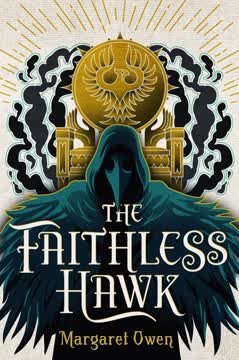
Margaret Owen's The Faithless Hawk is a searing meditation on power, mercy, and the cost of justice in a world built on systemic cruelty. Through Fie's journey, the novel interrogates the nature of leadership, the dangers of scapegoating, and the possibility of redemption. The Crows, long cast as outcasts and executioners, are revealed as the true keepers of mercy—a power stolen from them by those who feared its strength. The narrative's use of teeth, oaths, and the plague as plot devices is both inventive and deeply symbolic, weaving together themes of inheritance, trauma, and the hunger for something better. The story's emotional arc is one of loss, sacrifice, and hard-won hope: Fie's willingness to pay the price for mercy, even when it means giving up love, safety, or power, is a radical act of courage. The novel's conclusion—burning the palace, ending the monarchy, and forging a new order from the ashes—offers a vision of justice rooted not in vengeance, but in the transformative power of compassion. In a world where the old ways have failed, The Faithless Hawk insists that true strength lies in the courage to choose mercy, again and again, no matter the cost.
Last updated:
Review Summary
The Faithless Hawk receives overwhelmingly positive reviews with a 4.3/5 rating. Readers praise the found family dynamics, LGBTQ+ representation, humor, and especially the abundance of cats. Many note it's darker than the first book with improved worldbuilding, deeper exploration of the magic system, and satisfying character development for Fie, Tavin, and Jasimir. Some readers recommend rereading The Merciful Crow first due to the immediate continuation. Common criticisms include a slow beginning and predictable plot points. The villain Rhusana and the duology's conclusion receive particular acclaim, with readers emotional about the romance and political intrigue.