

Plot Summary
The Stone Wants More
Beneath his compound, Lars, the Unseelie Demon King, guards three of the four Treasures of Tuatha Dé Danann. The Stone of Fáil presses at his mind, offering invulnerability and the return of Aisling, the woman whose loss still governs his choices.
Lars believes a larger war is approaching and wants the missing Cauldron of Dagda to counter the Stone’s influence. His prisoner, Fionna Cathbad, a powerful Druid and former leader of the resistance, knows where it may be hidden.
She refuses to help, distrustful of a king who allowed Druids to be slaughtered. Meanwhile, Seelie Queen Kennedy keeps demanding access to her imprisoned sister. Lars must extract the cauldron’s location before fear for his kingdom, and the Stone’s own appetite, overtake his judgment.
The opening gives Lars’s political ambition an intimate engine: he is not merely collecting weapons, he is trying to correct a life shaped by choosing power over Aisling. The Stone knows that grief and offers not only strength but a repaired family, making temptation psychologically precise. Fionna’s captivity, meanwhile, reverses the usual fantasy hierarchy: the king commands the room, but the knowledge he needs belongs to the woman he has imprisoned. Their conflict begins as a contest over control, yet both are already driven by the same dread, that power may destroy the people it is meant to protect.
Piper Behind Glass
When Fionna continues resisting, Lars’s investigators uncover the secret she has kept from both fae and enemies: a daughter named Piper, now five and living with adoptive parents near Dublin. Lars’s men find the child in danger.
Her adoptive family has mistaken her emerging Druid visions for possession and tried to beat the supposed evil out of her. Lars brings Piper to his compound and shows Fionna her through a one-way window, alongside Olwyn, the elderly woman who raised her.
Fionna agrees to a binding that prevents her from using magic against Lars and his household, in exchange for Piper’s safety and a chance to see her. She also asks Lars to release Kennedy from his binding. When Piper identifies herself by the name Fionna once intended to give her, Fionna understands her child’s power is already awakening.
Piper’s appearance transforms the conflict from a debate about political ethics into a test of Fionna’s most private responsibility. Fionna had relinquished motherhood in the name of protection, but the adoption she arranged has exposed Piper to exactly the danger she feared. Lars exploits that vulnerability, yet his intervention also rescues the child from abuse, complicating any simple division between captor and protector. Piper’s chosen name suggests an inner continuity that survives separation. The scene forces Fionna to confront an uncomfortable distinction: loving a child and making a protective choice are not the same as being present for her.
Olwyn's Last Evening
Lars allows Fionna a short visit with Olwyn, who has lived far beyond her natural span because Fionna’s magic kept her alive. Olwyn tells her that she is ready to go, and Fionna finally releases the spell sustaining her.
The loss leaves Fionna grieving just as Travil reports that strighoul are attacking the compound. Lars returns to find the attackers outside, while Marguerite and Nic shelter Piper. The assault is beaten back, but the invaders leave olive branches arranged as a message.
Lars recognizes the leaves as a deliberate reference to Greece, his birthplace. Fionna insists she did not summon the strighoul, and Lars cannot yet prove otherwise. With the threat unresolved, he takes her to Prague, where she claims the cauldron is hidden.
Olwyn’s death strips Fionna of the refuge that made her feel less alone, while the attack turns private grief into immediate danger. Her decision to end the life-extending spell is an act of love that also requires surrendering control, a sharp contrast with Lars’s instinct to preserve, possess, and command. The olive branches make the siege personal for Lars, signaling that an enemy knows his history rather than merely his political position. Fionna’s lie about Prague is therefore more than stalling. It is the last space she can still control, even as the child and the assault narrow her choices.
Prague's Empty Relic
At Prague Castle, Fionna guides Lars and his guards into the treasury, where a ceremonial cauldron appears to be the missing treasure. She has studied the security system and helps them enter, but Lars quickly recognizes that the object is only a decoy.
Strighoul burst through the building’s glass roof and wound Goran and Travil with poisoned goblin-metal arrows. Fionna heals them enough to move, then leads the group through a concealed passage and out through the city’s tunnels.
Lars sends his injured guards home on his plane, but stays behind with Fionna. Forced to admit the truth, she explains that the real cauldron has been lost for decades and that she only suspected it might be in Prague. Lars still needs her, so he orders a blood ritual to locate it.
The false relic exposes how easily desire can mistake an image of power for power itself. Lars is willing to risk a raid because he wants the cauldron, while Fionna has turned his impatience into a brief tactical advantage. Yet the attack makes their dependence tangible: her magic keeps his closest men alive, and his decision to remain with her leaves him exposed. Their alliance is not trust but necessity, and each act of cooperation carries a cost. The scene also shifts the search from extraction to discovery. Since neither of them knows where the real treasure is, they must now rely on Fionna’s inherited magic rather than Lars’s authority.
Blood Points North
In a rented Prague flat, Fionna performs a blood ritual that links her to the cauldron through her family line. Lars cuts Druid symbols into her arms and uses her blood to complete the rite; its magic brings them both close to losing control. The vision shows a river, a cave, death, and the Scottish Highlands. Fionna identifies Glencoe as the place to search.
Soon afterward, Lars sees what appear to be Aisling and his twin brother, Devlin, on the Charles Bridge. Their images vanish into the fog, leaving him unsure whether he is losing his mind. On the journey north, Fionna counters his threats and eventually helps him face the truth: the larger war he fears may come from his own worsening instability.
The ritual turns knowledge into bodily risk. Fionna’s lineage can open a path to the treasure, but accessing that inheritance means letting Lars mark her body and handle the power that sustains her. Their involuntary desire complicates a relationship founded on coercion without erasing the coercion itself. Lars’s visions add a second uncertainty: are the dead returning, or is his fear of becoming like his family distorting what he sees? Fionna’s insight reframes the hunt. He is not only seeking a weapon against an external enemy; he is trying to forestall the possibility that his own mind and power will make him one.
The King Breaks Cover
In Edinburgh, Lars follows another apparent glimpse of Aisling and Devlin into the city’s underground passages. Fionna finds him disoriented and frightened, and he reveals that he once loved Aisling but chose the throne. She later tells him she gave Piper up partly to pursue power and revenge, not only to protect her. Their confessions do not erase their history, but they recognize the same bargain in each other.
At their lodging, they clash with magic, nearly cross into sex, then retreat to a pub, where Lars admits he failed to stop the persecution of Druids and apologizes for his inaction. The next morning, they leave for the Highlands with less certainty about one another’s motives, but a real, if fragile, willingness to cooperate.
This turning point converts mutual accusation into recognition without prematurely resolving either character’s guilt. Fionna and Lars have both dressed self-interest in the language of duty: he pursued kingship, she pursued revenge, and each gave up intimacy while claiming a larger cause. Their disclosures matter because they are costly admissions, not declarations of innocence. Lars’s apology is especially significant: he names the harm of passivity, not only the harm of direct violence. Still, confession does not grant absolution. The pair remain politically opposed and emotionally volatile, but they now have enough shared knowledge to choose collaboration rather than merely endure it.
A Riddle in Ossian's Cave
Fionna and Lars travel into the Highlands and climb to Ossian’s Cave, where a protective spell drives them back from the entrance. Fionna breaks it and discovers two long-hidden occupants: Kevin, a cantankerous leprechaun, and Gerry, the sock puppet he treats as a companion. They cannot name the cauldron’s location, but they know a riddle left by the Druid who concealed it.
Its clues about descending where red water flows prompt Fionna to reach for a buried memory. The spell nearly injures her, but she recalls that her childhood mentor, Uncle Isaac, used to tell her the riddle. She identifies Finnich Glen, also called the Devil’s Pulpit, as the next destination. On the way down, Lars and Fionna’s near-kiss is interrupted by Margo.
The cave’s comic pair briefly punctures the story’s increasingly grave atmosphere, but their odd companionship also broadens its moral world. Kevin and Gerry matter despite their low status, and Fionna treats them as people rather than tools. The riddle turns childhood memory into practical knowledge, linking Fionna’s present competence to the stories she once received from Isaac. That inheritance is not a simple gift: recovering it hurts, and the cauldron’s trail is guarded by layers of memory and magic. The interrupted near-kiss likewise shows that attraction is no longer merely a ritual side effect. It is becoming a choice both characters hesitate to make.
The Uncle in the Mist
Margo confronts Lars in the Highlands and admits she wants the Stone of Fáil. She is accompanied by Stavros, Lars’s uncle, who reveals that he survived in a prison built by Lars’s father and has spent years rebuilding his power. Stavros also claims responsibility for the apparitions that have tormented Lars, taking the forms of Aisling and Devlin.
He and Margo bring strighoul into the fight. Fionna unleashes black magic, compelling some of the attackers to defend her and leaving Stavros unconscious, though not dead. The effort nearly kills her, and Lars uses his own magic to keep her alive. They resume the search, but Stavros has made clear that he wants the throne and that the treasure hunt has led them into a family war.
Stavros’s return makes Lars’s private terror politically legible: the apparitions were engineered, but the fear they exploited was real. The revelation does not simply clear Lars of madness; it exposes how his grief and guilt made him vulnerable to manipulation. Fionna’s victory demonstrates formidable agency, yet black magic exacts a bodily price, so power never functions as a clean solution. Their survival depends on reciprocal care, not rank. By making the old royal conflict immediate, Stavros also challenges Lars’s belief that control can be secured through collecting enough force. The very hunt intended to prevent disaster has brought the rival who may trigger it.
The Cauldron's Price
At Finnich Glen, a supernatural bond between Fionna and Lars lets them sense the hidden cave. Inside, Fionna encounters an image of Uncle Isaac, who explains that he concealed the cauldron for her and foresaw that she would die protecting it. The treasure is waiting for her bloodline. When Fionna enters the pool beneath it, the cauldron drains her life.
Lars refuses to abandon her and cuts his own wrist, joining their blood so he can reach her through the cauldron’s barrier. The surge breaks the cauldron’s power and throws them to the surface. Fionna revives, and Lars’s act makes clear that the treasure no longer outranks the person he loves. The cauldron, however, is left lifeless, and Stavros remains a threat.
The prophecy frames self-sacrifice as inherited obligation, but Lars’s intervention disrupts its solitary logic. Fionna believes her life must be spent to keep the cauldron from dangerous hands; Lars answers by making survival a shared risk. His act is not a simple rescue, since joining their blood places his own life in the balance and destroys the object he once sought. The scene marks a decisive change in his values: protection is no longer an abstract duty to a kingdom, but care for a particular person. Yet the broken cauldron creates a new danger. Love saves Fionna while removing the very safeguard that may have been designed to limit the Stone.
The King Loses His Crown
Stavros tracks them to the cave and brings Margo and the captive Kevin. He kills Kevin, then attacks Fionna and Lars. Fionna’s magic incapacitates Margo, but Stavros can now overpower her and draw on the royal power he is taking from Lars. When Lars attacks, Stavros nearly kills him. Fionna drives Travil’s stolen knife into Stavros’s eye and uses magic to snap his neck, buying time rather than ending his life.
The cost leaves her and Lars barely conscious. Strighoul ambush them outside, but Goran and Travil arrive with reinforcements and drive the attackers off. Back at the compound, the recovered guards discover Sofia, Lars’s secretary, attempting to reach the lower levels. Her spying explains how Stavros kept finding them.
The battle strips away the protections both protagonists relied on. Lars’s royal force can be used against him, while Fionna’s magic can interrupt Stavros but cannot permanently defeat him. Her knife strike is significant because it is improvised, bodily, and dependent on a weapon she stole earlier, not on some new power arriving at the last moment. Kevin’s death makes the political hierarchy’s violence concrete: Stavros considers lesser beings disposable, while Fionna has treated them as allies. The rescue by Goran and Travil shows Lars’s network still matters even after his power collapses. Sofia’s betrayal also reveals that surveillance, not destiny, helped the enemy close in.
Piper Comes Home
Back at Lars’s compound, Fionna meets Piper face to face for the first time since giving her up. Piper recognizes her as her mother and approaches carefully, while Marguerite and Nic provide the warmth and safety Fionna hoped her daughter would have. Lars lets Fionna begin rebuilding their relationship, but insists she take Piper and the household members he can spare away from the coming confrontation.
He plans to face Stavros because the law requires a challenger to fight for the throne. Fionna asks him to leave with them, but he refuses. They spend one night together, now with tenderness as well as desire, knowing it may be their farewell. The next day, Fionna wakes alone, while Lars makes his way toward the vault and the Stone.
Piper’s reunion gives Fionna something she had treated as unreachable, but the joy arrives alongside the knowledge that she may soon lose Lars. The child’s willingness to approach her offers a beginning, not a clean erasure of the years apart. Lars’s insistence that Fionna leave repeats his protective instinct, yet it also denies her the equal partnership she has claimed throughout the story. Their night together acknowledges love without resolving that conflict. In this way, intimacy becomes a temporary shelter rather than a solution. The quiet morning is especially consequential: Fionna believes separation is still a choice they are making together, while Lars has already moved toward a more dangerous decision.
The Stone Claims Lars
In the vault, Lars opens the Stone of Fáil’s compartment and yields to its promise of enough power to defeat Stavros. Fionna tries to hold him back, but the Stone overwhelms him and blasts her across the room. Lars leaves after breaking Goran’s neck and knocking Nik unconscious. Fionna uses black magic to bring Goran back, then finds Piper and Marguerite safe.
She realizes that Lars is no longer acting freely, but catches a brief vision of him through the Stone’s influence and senses that he remains inside. Instead of fleeing with Piper, she resolves to pursue him and destroy the Treasures before the Stone can use them. The book ends with Lars’s kingship and identity both compromised, while Fionna turns from captive to rescuer.
Lars’s fall is the consequence of the very strategy he pursued from the beginning: he tries to secure enough power to prevent a catastrophe and instead hands himself to the force he hoped to control. The violence against Goran and Nik shows that possession is not merely an inward struggle; it immediately endangers the household built around him. Fionna’s resurrection of Goran extends her willingness to violate natural limits, but it also makes her responsible for choosing what risks are justified. Her final vow reverses their earlier roles. She is no longer the person whose knowledge Lars extracts. She is the agent who must reach him and decide whether the treasures can be destroyed.
Epilogue
Inside Lars’s body, the Stone of Fáil explains that it has used him to gather the other treasures and that the cauldron was meant to restrain it. By breaking the cauldron, Lars removed the force that could have checked the Stone.
It now commands a group of altered human-fae beings based on Dr. Rapava’s experiments and plans to capture their mother, Zoey Daniels. Lars remains trapped beneath the Stone’s control as it leads its new followers toward a wider campaign. The King’s fall is therefore not the end of the conflict but the Stone’s first open move toward ruling the world.
The epilogue overturns the apparent meaning of the climax. Lars believed that sacrificing the cauldron for Fionna was an act of love, but the Stone reveals that the cauldron was not simply a rival treasure. It was a limit on its power. The tragedy is not that Lars cared too much, but that he acted without understanding the system he was trying to master. His body becomes both the instrument of the Stone’s freedom and the prison of his remaining self. The new hybrid followers widen the story’s conflict from royal succession to engineered domination, leaving Fionna’s promised pursuit with an enemy already in motion.
Analysis
The novel makes power attractive by showing why its characters need it. Lars seeks the treasures because he fears a war and suspects his own mind may fail him. Fionna uses magic to defend a persecuted people and protect her daughter. Neither motive is trivial, yet both characters repeatedly risk turning care into control. Lars binds Fionna and uses Piper as leverage; Fionna accepts separation from her child while telling herself that safety is enough. Their choices are morally distinct from Stavros’s domination, but the story does not allow good intentions to erase harm.
The romance develops through repeated reversals of authority. Lars begins as captor and Fionna as captive, but her knowledge, magic, and refusal to submit make him confront the limits of his rule. Their attraction does not instantly purify the coercive start. Instead, intimacy becomes meaningful when each begins to disclose the cost of earlier decisions and to act for the other without securing ownership in return. The blood bond dramatizes that shift while also making it dangerous: emotional connection is powerful, but it cannot substitute for judgment.
The treasures embody a political problem as much as a magical one. A ruler may gather force to prevent disorder, yet the accumulation itself creates a greater risk. The cauldron’s destruction is therefore both an act of love and a catastrophic miscalculation. Lars chooses Fionna over an object he believes necessary, only to discover that the object may have been the restraint on the Stone. The ending refuses an easy moral lesson that love conquers power. Love changes what Lars is willing to sacrifice, but it does not automatically make the consequences safe.
Fionna’s story, meanwhile, is about refusing the identity of perpetual sacrifice. She has been a daughter who lost her parents, a leader who spent herself for a cause, and a mother who believed distance could protect her child. Her return to Piper begins a more difficult form of responsibility: remaining present, accepting imperfect repair, and continuing to fight without treating her own life as expendable. The cliffhanger leaves that effort under pressure, with Lars’s body lost to the Stone and Fionna choosing pursuit over retreat.
Review Summary
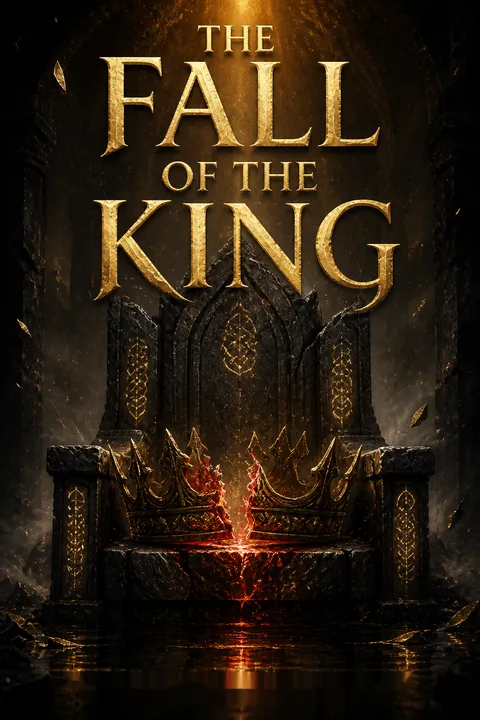
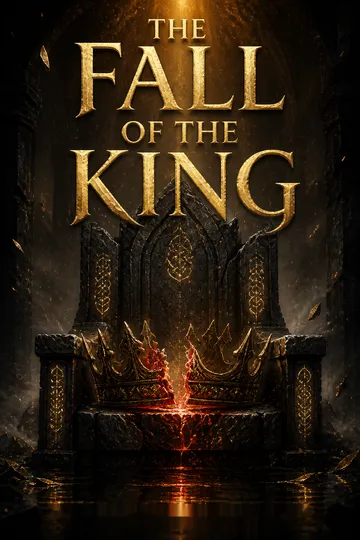
The Fall of the King receives high praise from readers for its captivating story, complex characters, and intense romance. Fans appreciate the dual POV of Lars and Fionna, their sizzling chemistry, and the book's fast-paced plot. Many readers express excitement for the next installment, noting the cliffhanger ending. Some reviewers mention the shift from previous main characters but ultimately enjoy the new perspectives. The book is lauded for its world-building, action, and emotional depth, with several readers finishing it quickly due to its engaging nature.
People Also Read
Characters
Fionna Cathbad
The defiant DruidFionna is a formidable Druid, trained by hardship to distrust fae power and meet threats with intelligence, magic, and force. Her years leading the Druid resistance have made her disciplined and guarded, but also accustomed to treating her own needs as expendable. She is deeply loyal to the people she considers hers, especially the child she gave up and the woman who raised her. Fionna’s sharp humor and willingness to challenge Lars keep their relationship from settling into a simple captor and captive dynamic. Beneath her combativeness is a person who fears repeating the abandonment she experienced herself, and who must learn that responsibility does not require facing every danger alone.
Lars
The grieving demon kingLars rules the Unseelie fae with a practiced command that conceals a private history of grief, guilt, and difficult choices. He believes order and power are necessary to protect his people, but his search for the ancient treasures reveals how easily protection can become possession. The losses of Aisling and Devlin have shaped his reluctance to trust, while the people he shelters in his compound suggest a quieter desire for family. Fionna challenges both his authority and his habits of emotional restraint. His attraction to her unsettles him because she sees the man beneath the crown and refuses to treat his title as proof that he is right.
Piper
Fionna's perceptive daughterPiper is Fionna’s young daughter, separated from her mother while growing up in an adoptive home. Her unusual insight and emerging Druid abilities make adults misread her, even as she watches them with striking care. She is cautious around unfamiliar people, but responds to safety and affection when they are offered consistently. Piper represents the possibility of a family Fionna thought she had sacrificed beyond repair. Her presence also forces Lars to confront the consequences of using a child as leverage, even when he believes he is protecting her.
Kennedy Johnson
The Seelie QueenKennedy is Fionna’s younger sister and the Seelie Queen, responsible for a kingdom still unsettled by war and distrust. Her wish to reach Fionna grows from a family bond that survived years of separation, though she also understands the danger of revealing what her sister knows. Kennedy’s political position requires her to weigh private loyalty against public safety. Her relationship with Fionna gives the story a second model of sisterhood, one shaped less by shared hardship than by the painful distance that their different lives have created.
Olwyn
Fionna's steadfast guardianOlwyn raised Fionna in rural Ireland, offering the affection and practical toughness that shaped her long before she became a resistance leader. Old, sharp-minded, and deeply loving, she gave Fionna a home after the dangers of her childhood had separated her from her parents. Fionna’s magic has prolonged Olwyn’s life, reflecting how difficult it is for her to accept another loss. Olwyn’s guidance helps Fionna understand that love can require letting go, not only fighting to keep someone close.
Goran
Lars's loyal protectorGoran is Lars’s trusted second-in-command, a powerful fighter whose loyalty began after Lars rescued him from enslavement. His devotion is not merely obedience: he watches Lars closely and is willing to challenge him when his safety or judgment is at stake. Goran also becomes a gentle presence around Piper, revealing the protective instincts beneath his imposing appearance. He serves as a measure of the personal bonds Lars has built, even while insisting that kingship must come before individual comfort.
Travil
The hard-edged guardTravil is a disciplined warrior in Lars’s household, suspicious of Fionna and quick to treat her as a threat. His history with her includes close calls that explain his hostility, but he remains committed to protecting Lars and the people under his care. He is practical under pressure, willing to carry injured companions and act decisively when plans fail. His terse manner conceals a serious understanding of what loyalty demands.
Marguerite
The household's warm centerMarguerite has cared for Lars since he was young and occupies a rare place of trust in his household. Her cooking, affection, and blunt refusal to be intimidated make her a source of stability amid political danger. She welcomes Piper without hesitation and treats Fionna with warmth despite their difficult circumstances. Marguerite’s care shows that family can be made through daily acts of feeding, sheltering, and staying.
Nic
The recovering incubusNic is an incubus Lars rescued from a brutal sex den and drug addiction. He has worked through severe trauma with the help of healers and speech therapists, though the damage of his past remains part of him. His missing eye has not diminished his confidence or appeal. Nic is affectionate with Piper and adds humor and tenderness to the household, while his recovery reflects Lars’s impulse to give shelter to people who have been discarded.
Stavros
Lars's royal-family rivalStavros is Lars’s uncle, a powerful demon whose claim to royal authority is rooted in an older generation’s struggle over the throne. He is theatrical, manipulative, and convinced that hierarchy gives the powerful the right to command everyone beneath them. His confidence makes him dangerous, but it also exposes a deep investment in being recognized as the rightful ruler. He represents the version of kingship Lars fears becoming: authority maintained through domination rather than responsibility.
Aisling
Lars's defining lost loveAisling is a powerful figure in Lars’s past, a woman whose courage and independence drew him into a love he could not reconcile with his ambition. Their relationship challenged the political boundaries between Seelie and Unseelie fae, while his choices left him with lasting regret. Though she is absent from the present action, her memory shapes Lars’s ideas about intimacy, failure, and what cannot be repaired.
Devlin
Lars's twin brotherDevlin is Lars’s twin and once his closest companion. Their bond was shaped by shared upbringing and the different burdens of royal life, but rivalry and grief complicated their loyalty to one another. Devlin’s history forces Lars to question what power has cost his family and whether he has mistaken endurance for strength.
Ember
Lars's beloved young relativeEmber is a young relative of Lars whose distinctive appearance reflects both fae and demon ancestry. She matters deeply to him, and her presence has stirred memories of Aisling and of the family life he once imagined. Independent and powerful, she has a place in Lars’s household even when distance keeps them apart.
Margo
The ambitious Romanian faeMargo is a wealthy, poised Romanian fae who moves easily through elite social circles and has a history of attraction to Lars. Her confidence can resemble flirtation, but she is attentive to power and opportunity. She is difficult to read because she keeps her motives polished and her emotions under control. Her presence tests Lars’s distrust and Fionna’s instinct for threats.
Kevin
The irascible leprechaunKevin is a stubborn leprechaun who has spent years hidden in a cave with Gerry. He is suspicious of visitors, protective of his home, and quick to complain, but he is not simply a comic figure or a source of clues. His insistence on being treated with respect reflects the contempt lesser fae often face from the powerful.
Gerry
Kevin's sock companionGerry is a sock puppet that Kevin treats as a distinct companion. Cheerful, flirtatious, and more diplomatic than Kevin, Gerry helps the hidden pair communicate with visitors and offers an absurd counterpoint to the story’s violence.
Isaac
Fionna's Druid mentorIsaac was a Druid close to Fionna’s family and a formative presence in her childhood. He brought her stories, riddles, and a sense of connection to a much older tradition. His influence helps Fionna understand that her inheritance includes more than power: it also carries obligations and knowledge entrusted across generations.
Sofia
Lars's capable secretarySofia is a raccoon shifter who serves as Lars’s secretary. Her organizational skill and ability to gather information make her effective in a household where business and security are inseparable. She is observant, ambitious, and more capable than Lars initially gives her credit for.
Rez
Lars's former confidanteRez was Lars’s close assistant and lover before leaving his household for a relationship of her own. Intelligent and exceptionally capable, she understood his habits and business needs better than anyone who followed her. Her departure sharpened Lars’s loneliness and showed that loyalty cannot be demanded as payment for care.
Zoey Daniels
The Stone's past adversaryZoey Daniels is a human turned fae whose unusual strength and resilience made her a target of the Stone of Fáil. Lars respects her because she survived powers that had overwhelmed rulers before her. Her experience connects the current struggle to the Stone’s earlier history.
Plot Devices
The Four Treasures
Ancient power with a priceThe Treasures of Tuatha Dé Danann are ancient objects created by Druids for fae rulers. The Sword of Nuada and Spear of Lug take on the intent of whoever holds them, while the Stone of Fáil and Cauldron of Dagda possess their own desires. Lars has gathered three treasures and searches for the fourth because he believes their power can help him face an approaching threat. Fionna’s family history makes her essential to locating and handling the cauldron. The treasures turn political ambition into a material danger: possessing them can protect a kingdom, but gathering them also risks empowering forces no ruler can reliably control.
The Stone of Fáil
Temptation that takes controlThe Stone is not a neutral weapon. It speaks into the desires of those near it, promising Lars power, relief from regret, and the return of the family he lost. Its influence is strong enough to challenge his self-control even before he touches it. The Stone’s appeal works because it offers a cure shaped exactly to its target: Lars wants to prevent a coming disaster, but also longs to undo his past choices. In the ending, that temptation becomes possession, and the Stone uses Lars’s body and gathered treasures to pursue its own plan. The object transforms the book’s conflict from a search for power into a struggle over who gets to wield the seeker.
Druid Blood Magic
Knowledge paid for in painFionna’s magic draws on the earth and on her Druid lineage, but powerful spells consume her strength and can injure or kill her. She uses a blood ritual to find the cauldron, memory magic to recover Isaac’s riddle, and black magic to control opponents in battle. Her visions provide fragments rather than convenient answers, leaving her to interpret clues through memory and knowledge. The magic repeatedly makes power inseparable from responsibility: Fionna can protect others by spending herself, but doing so risks making her another casualty of the conflict. The cost also distinguishes her from Lars, whose royal power often appears effortless until it is taken from him.
The Cauldron of Dagda
A hidden counterweightThe Cauldron is the missing treasure Lars believes can balance the Stone of Fáil. Fionna’s family connection allows a blood ritual to point toward it, while Isaac’s old riddle leads her and Lars to the Scottish Highlands. Its hiding place is protected by layered magic and tied to Fionna’s ancestry. The cauldron’s role is more complicated than either protagonist initially understands. Fionna is drawn to it as its intended protector, while Lars sees it as a safeguard against his own instability and the coming war. Its destruction changes the balance of power and allows the Stone to act with far fewer restraints.
The Unseelie Throne
Power bound by royal lawThe Unseelie throne is governed by a law that recognizes a single rightful king and requires a challenger to face him. Lars’s authority gives him immense magical strength, but the same system makes his claim vulnerable when Stavros returns to contest it. As Stavros drains Lars’s royal power, the political succession becomes a bodily struggle, leaving Lars with less protection than his title once gave him. The law also shapes Fionna’s choices: she cannot simply persuade Lars to flee when he believes he must answer the challenge. The throne device exposes the danger of a system in which legitimacy is determined by force, even when the ruler’s intentions are protective.
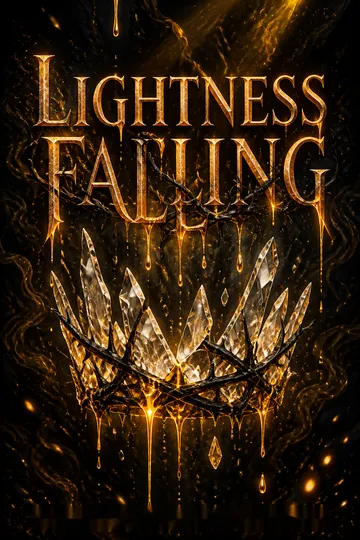
Lightness Saga Series

About the Author




Download PDF
Download EPUB
.epub digital book format is ideal for reading ebooks on phones, tablets, and e-readers.








