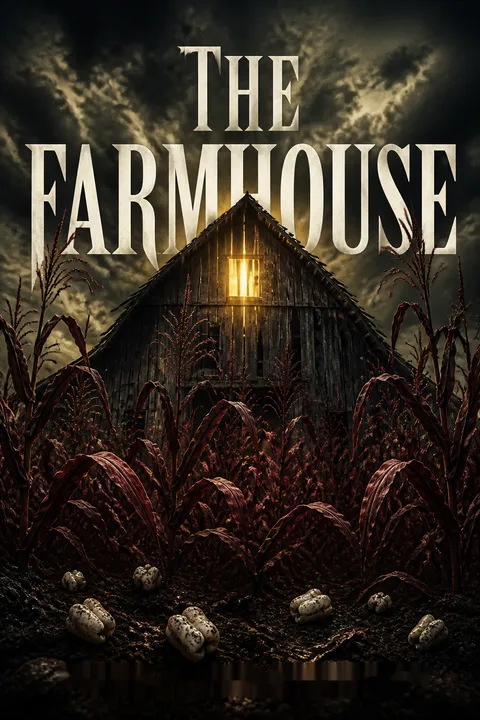


Plot Summary
California to Cornfields
Emily Hauk, a graphic designer, and her husband, Josh, arrive at their new Nebraska farmhouse after leaving San Francisco. Emily hopes the open fields and quiet will help her recover from the death of her mother, Penelope, six months earlier. The couple has leased the farmland back to the farmers who worked it, keeping the house for themselves.
They unload their bed before a storm, celebrate with champagne, and begin planning how to make the stark rooms feel like home. Josh is affectionate and practical; Emily is eager to build a life that feels entirely their own. Beneath her excitement, though, she knows the move is also an escape from her mother's belongings and the grief attached to them.
The farmhouse is both a chosen refuge and an avoidance strategy. Emily's longing for space is sincere, but she hopes geography can do emotional work that grief will not permit her to skip. The contrast between her bright, carefully designed rooms and the unkempt barn quietly establishes two competing ideas of home: a place she can shape, and a history she has inherited without understanding. Josh's steady affection gives the move the feel of a shared renewal, while Emily's private awareness of flight plants a strain beneath their optimism.
The Barn Won't Stay Put
Emily takes up long runs through the fields to manage her grief, but her tracker records wildly inconsistent travel times to the nearby barn. On one run, the farmhouse seems impossibly distant, then snaps back into view. Before dawn, she spots a light in the barn's hayloft and wakes Josh, but it has gone dark by the time he looks.
Days later, Stevie Nicks plays outside the house, drawing Emily barefoot toward the barn. The music and loft light vanish just before she reaches it, and she falls on the gravel. Josh hears nothing and treats the episode as a scare caused by exhaustion. Emily begins checking the barn every night, no longer sure that rural quiet means she is alone.
Emily's running log turns private unease into an attempted record: numbers should make a slippery experience legible. Instead, the changing distances undermine her trust in measurement as much as in memory. The song is especially intimate because music is the inheritance she shares with Penelope, so the disturbance enters through grief rather than through a stranger's face. Josh's failure to witness it is not proof that Emily is wrong, but it makes the marriage a second place where her account has no corroboration.
Cluckingham and the Loft
Emily orders five hens, and Josh builds their coop, a project that briefly gives them an easy shared pleasure. On a run, Emily hides in the corn while two farmhands argue with Ray, the head farmer. She finds a broken teal hair clip in the dirt afterward, an unsettling sign that someone else has been in the fields.
When the hens arrive, Emily takes packing waste toward the barn and meets Tyler Jorgensen, a young worker whose resentment toward the farm's ownership unnerves her. After Josh leaves town, Emily enters the loft despite warnings about its unsafe floor. She finds old family photographs, rotten clothes, and a light fixture with a cord shaped like a noose, then falls through a weak board and cuts her leg.
The chickens give Emily a practical role in the landscape, but the farm refuses to remain an uncomplicated domestic project. The hair clip makes the fields feel inhabited by someone whose presence has been erased, while Tyler's bitterness hints that the property means more to its workers than Emily understands. Her loft search is an act of agency, but it also exposes the cost of trying to solve fear alone. The mold-damaged photographs literalize the way a family's history can survive in fragments while its people become difficult to recognize.
Bridget's Name at Breakfast
Seeking coffee after injuring her leg, Emily stops at the Diamond R truck stop and meets waitress Hattie and local veterans Ernie and Frank. They recognize her as the new owner of the Belkin farm and reveal that fifteen-year-old Bridget Belkin has been missing for three years. Bridget's mother, Alice, died after falling from the barn loft, though locals disagree about whether it was an accident.
Back home, Emily sees a farmhand leave the barn with a shovel and a duffel bag. She later finds a fresh Polaroid of a crying teenage girl beneath buckets in the barn. The picture is not Bridget, but its presence makes the old tragedy feel current. Emily searches for Bridget's records and calls Josh, who brushes off her concerns.
The truck stop reverses Emily's fantasy of privacy: in a small town, her address gives her an identity before she has made any local ties. Hattie's ordinary warmth sits beside the veterans' unease, making community knowledge feel both protective and withheld. The Polaroid changes the barn from a container of old memories into a place where a recent young woman may have been frightened. Emily's growing need to investigate is not only curiosity; it is a response to the possibility that silence is still sheltering someone.
Alice's Face in Glass
Emily learns that Alice Belkin's death was officially ruled an accidental fall, while police blotter entries show years of domestic disturbances at the farmhouse. As she studies a photograph of Alice and Bridget, Alice's face appears behind Emily in a reflection, then disappears.
A cold voice warns Emily about trusting Josh. Soon afterward, Emily returns to the barn and hides as Tyler arrives with a knife, a shovel, and a tarp covering something that moves. A hand wearing a silver ring reaches from beneath it before Tyler drives away.
Emily calls the sheriff, but deputies find an empty truck and dismiss her report as a possible hunting misunderstanding. Josh returns and comforts her, yet still doubts what she saw. Emily realizes that reassurance without belief leaves her isolated.
The haunting exploits the gap between an experience and evidence that other people will accept. Alice's warning might be supernatural, psychological, or both, but its practical effect is to sharpen Emily's attention to the social network around the farm. The deputies' hunting explanation is plausible enough to close the inquiry and convenient enough to protect the status quo. Josh's care is real, but his tendency to translate Emily's fear into symptoms reproduces the same dismissal in a more intimate form.
Screams Beneath the Corn
A scream wakes Emily in the night, and she runs outside expecting to find someone in danger. The barn seems to shift closer, then recedes; a voice urges her to watch the people around her. Josh cannot hear the cries. When a red pickup arrives with farmhands and a truck bed full of young boys, one worker explains that foxes make cries like a person in distress.
Emily finds a silver ring in the dirt, matching the one she saw beneath Tyler's tarp, but Josh accepts the workers' explanation. After he leaves again, Emily takes the ring to the Hastings library. Librarian Courtney helps her trace the Belkins through newspaper archives and property records, revealing generations of domestic calls and connections between the farm's families.
The false comfort of a tidy explanation collides with an object that Emily can hold. The ring gives her a material anchor, while the fox story demonstrates how an explanation can be reasonable and still incomplete. Courtney offers a different kind of response from Josh's: she asks questions and helps Emily investigate without first deciding what Emily can be trusted to perceive. The archive also widens the story beyond one missing girl, suggesting that the farm's private violence has repeatedly been treated as local noise.
Teeth Follow Emily West
After Emily describes finding human teeth on the porch, Josh urges her to visit San Francisco, settle Penelope's estate, and get a break from Nebraska. In California, Emily sees the farmhouse through the distance she once wanted: she misses her mother, but the Midwestern home already feels like her own.
A photograph Josh sends of the chicken coop contains a pale object that looks like a tooth. Searching local reports, Emily finds Kinsey McAllen, a fifteen-year-old missing girl last seen leaving a Walmart with a young man.
Emily returns early, hoping Josh will confirm what is in the image. He has cleaned the coop and insists he found nothing. His denial makes the question between them larger than the tooth: whether he is willing to trust her account.
The trip distinguishes grief from homesickness. Emily still feels the pull of Penelope's world, but she no longer mistakes that pull for a wish to return to it. The tooth in Josh's photograph is a small, unstable piece of evidence that turns distance into helplessness: Emily can see a possible danger but cannot inspect it herself. Josh's silence intensifies her isolation, because the missing object matters less than his choice to withhold what he saw.
Nick Knocks After Dark
Back at the farmhouse, Emily finds no tooth in the coop, but discovers scratch marks on its door. That night Nick Ditmer comes to explain that the farm crew has rearranged equipment in the barn. Josh answers coldly and says the workers should not come to the house except in an emergency. Nick also mentions Emily's earlier call to the sheriff, showing that the farmhands know she reported them.
After Nick leaves, Emily asks Josh directly about the pale object in the coop photograph. He first denies seeing anything, then recognizes that it resembles a tooth. He still treats the barn and the workers as harmless. Alice's unseen voice tells Emily not to tell him more, leaving her caught between her marriage and her growing suspicion.
Nick's polite explanation carries more menace because it reveals an informal system of rules and observation that Emily was never told about. Josh's protectiveness takes on a controlling edge when he manages access to the house and speaks for her. The dispute is not simply about whether a tooth existed; it concerns who gets to define the facts of their shared home. Alice's warning complicates Emily's loyalty, making secrecy feel both dangerous and, perhaps, necessary.
Bridget's Last Night Replayed
After another night of distressing cries, Emily follows Alice's presence into the barn. She sees a teenage Bridget bound to a chair on a tarp while Nick argues with her about leaving the farm. Bridget describes the violence and control that have trapped her there; Nick takes a hammer from his truck and kills her. Emily tries to intervene, but Alice restrains her and urges her to escape.
Josh reaches the barn moments later, yet sees only an empty building and an agitated wife. Emily searches the floor after he leaves and finds a human tooth lodged in a gap between the boards. She brings it to Josh, who finally accepts it is real, and contacts Sheriff Wilson. The sheriff collects the tooth but initially minimizes its significance.
The vision gives Emily the event the community's records withheld, but witnessing is not the same as being able to intervene. Alice's restraint forces Emily to confront the limits of rescue, even as it leaves her with the burden of knowing. Josh's arrival creates an especially painful split: he is physically present but cannot perceive what she has seen. The tooth moves the story from testimony toward forensics, though the sheriff's caution shows that evidence still needs an institution willing to act.
Bridget's Tooth, Tyler's Hammer
The sheriff later confirms that the tooth matches Bridget's dental records, though he still suggests it may be old. Emily's chicken camera captures Nick and Tyler trying to open the coop and throwing mud toward the house.
She then follows the red pickup into the fields and finds a hammer hidden in a storage compartment. Ray catches her and urges her to leave before the young men return. Sheriff Wilson reports that the tooth belongs to Bridget, but still offers no urgent protection.
That night, Emily follows another cry into a field, digs into the earth, and uncovers teeth before collapsing. At the hospital, doctors find insecticide exposure from food grown near the barn and explain that it can cause hallucinations and confusion. The physical evidence remains unexplained.
The story now holds two kinds of proof in tension: toxic exposure offers a credible account of some visions, while the tooth and the hammer refuse to dissolve into symptoms. Emily's camera and trespass into the truck show her adapting from private observation to deliberate evidence gathering. Ray's warning suggests he understands the danger but has not stopped it. The hospital diagnosis does not simply invalidate Emily; it complicates how she must distinguish embodied perception from external fact.
Bones Behind the Boards
After several weeks away from the farm's produce, Emily's most intense visions subside, but the barn still seems to change position. She and Josh begin renovating it, hoping fresh paint and repairs can reclaim the structure. When they find black mold spreading behind the inner boards, they remove the damaged wood.
Behind the wall lies a mummified body with long hair and a small gold cross. Emily recognizes Bridget. Josh calls the sheriff, and a forensic team arrives to document the remains and search the barn. The discovery confirms that Bridget was not simply a runaway, and it gives the investigation a physical crime scene that Emily's earlier reports never secured.
The renovation begins as an attempt to beautify and control the space, but it becomes an excavation of what the family and authorities had concealed. Mold, once associated with decay and hallucination, now marks a real hiding place. Emily's insistence on opening the wall is a turning point from suspicion to public proof. Josh finally acts on what she has found, though the confirmation arrives only after months in which she carried the danger largely alone.
The Cornfield's Buried Names
With Bridget's body recovered, Sheriff Wilson orders a full forensic search of the barn and surrounding fields. Emily recounts the tarp, the teeth, and the hammer, and the investigators begin treating her earlier reports as leads rather than delusions.
They find additional teeth and bodies buried beneath the crops, identifying Bridget, Kinsey McAllen, Adeline Wallace, and Maryanne Parde. The hammer from Tyler's truck contains evidence linked to the victims.
Nick confesses that family members pressured him to stop Bridget from leaving, while Tyler selected the other women because they, too, wanted to escape. Both cousins are arrested. The investigation exposes a pattern the community had repeatedly explained away as disappearances, family trouble, or ordinary farm life.
The cornfields shift from a symbol of openness into a landscape that concealed the people the town failed to protect. The victims' names restore individuality to cases that had been reduced to missing-person notices and rumors. Nick's claim that he acted under family pressure does not erase his agency; Tyler's choices reveal a separate, deliberate violence. The community's silence is not the same as direct guilt, but its habits of dismissal gave the crimes room to continue.
The Farm Emily Keeps
As deputies investigate the farm, Josh urges Emily to leave Nebraska and forget what happened. She refuses, while he withdraws from the windows and the evidence outside. Their conflict exposes the deeper damage: Josh's comfort often came with disbelief, and Emily cannot return to the old trust simply because the crimes are now confirmed.
He leaves for a work trip and eventually moves to Omaha; their divorce proceeds. Emily stays, ends the Belkins' farming lease, and brings in farmers with no family connection to them. She adds goats and hens, then resumes running across the fields. The barn no longer shifts after Bridget's body is removed, and Alice's voice falls silent. Emily's home becomes a refuge on terms she has chosen.
The resolution refuses to treat solving the murders as a cure for every wound. Emily has regained physical safety and control over the property, but the marriage has been altered by the long period in which her knowledge was treated as a symptom. Josh's departure is painful, yet it also ends a relationship in which care and authority had become difficult to separate. Emily's choice to remain transforms the farm from inherited trauma into a place she actively governs.
Analysis
The novel makes credibility a form of suspense. Emily's perception is compromised in ways the plot eventually names: grief disrupts sleep, and pesticide exposure can produce hallucinations and confusion. Yet the crimes are not products of her mind. The reader must hold both facts at once, resisting the easy choice between dismissing Emily as unreliable and treating every sensation as supernatural proof. That uncertainty recreates the social bind she faces: she has to make a persuasive case while the people around her use her distress as a reason not to listen.
The farm's beauty sharpens the horror rather than softening it. Corn grows food and conceals bodies; the farmhouse promises shelter while records reveal generations of violence; the barn is simultaneously a decaying workplace, a possible supernatural presence, and a crime scene. The setting's productive surface depends on labor and inheritance, but those same structures can make loyalty to land more valuable than the freedom of the people raised there. Nick's stated obligation to family does not excuse his actions, and Tyler's pursuit of women who want to leave shows how the farm's violence extends beyond one household.
Emily's grief for Penelope gives her a private language of music, memory, and adventure. The haunting draws on that language, making her mother's songs feel both comforting and invasive. Her move does not erase grief; it changes the conditions under which she can live with it. Likewise, solving the murders does not restore her marriage. Josh's love is genuine, but repeated disbelief damages the trust that love was meant to protect. Emily's decision to remain on the farm is therefore not a triumph of fearlessness. It is a choice to define home through accountability, practical control, and the right to take her own knowledge seriously.
Review Summary
The Farmhouse receives mixed reviews, with an average rating of 3.35/5. Readers praise its atmospheric and eerie rural setting, creepy tension, and ghostly elements. Many find the slow-burn pacing and protagonist's isolation effective, though some feel it drags. The gaslighting plotline and unreliable narrator aspect divide opinions. Several reviewers note potential in the author's writing but suggest tighter editing could have improved the story. The ending garners both satisfaction and disappointment, with some finding it rushed or underwhelming.
People Also Read




Characters
Emily Hauk
The grieving investigatorA graphic designer and devoted runner, Emily moves from San Francisco to Nebraska with her husband while still raw from her mother's death. She notices visual and sensory details, records her runs, and instinctively searches for patterns, habits that make her attentive but also vulnerable to spiraling when answers are withheld. Emily wants a fresh life without surrendering her connection to Penelope or her own judgment. Her need for solitude is genuine, not evidence that she wants to be isolated from everyone. As the farm's history presses in, she must decide when to trust her instincts, when to seek corroboration, and how much of herself she can share with people who doubt her.
Josh Hauk
The practical husbandEmily's husband is a technology salesperson who is affectionate, competent with home repairs, and strongly oriented toward explanations that can be tested. He wants their move to provide stability and a shared future, and his instinct is to calm Emily by offering practical solutions. That impulse becomes complicated when reassurance turns into minimizing what she reports. Josh is not indifferent to Emily's suffering; he is afraid for her and tries to protect her, but his confidence in reason makes it difficult for him to accept experiences he cannot verify. His relationship with Emily rests on real tenderness and a need to learn the difference between supporting someone and deciding what they must be feeling.
Penelope Wagers
The absent music-makerEmily's late mother was a music producer and columnist whose dramatic style, sharp humor, and appetite for adventure shaped Emily's childhood. She prized stories, music, and personal freedom, while giving her daughter a durable sense of being loved. Penelope's possessions and favorite songs make grief tangible for Emily, who is trying to honor her mother without remaining inside the life they shared. Her remembered advice is not always comforting; sometimes it sharpens the question of what courage should look like when Emily is frightened and alone.
Alice Belkin
The farm's troubled matriarchA former resident of the farmhouse and Bridget's mother, Alice is remembered through photographs, local accounts, and the traces she left on the property. The community's conflicting explanations of her family's troubles make her difficult to understand from a distance. Her story connects the farm's private life to its public reputation, and the strange impressions Emily associates with her force the new owner to investigate what the town has chosen to leave unresolved.
Bridget Belkin
The missing farm girlA teenager, athlete, and member of the Belkin family, Bridget disappeared from the local community three years before Emily arrived. Newspaper photographs show a lively young woman with a competitive streak, while the stories around her disappearance are incomplete and contradictory. Her absence becomes the question that draws Emily into the farm's history. Bridget represents a young person trying to imagine a life beyond the roles her family and community have assigned her.
Nick Ditmer
The dutiful young cousinA young farmhand, Nick initially appears deferential and focused on the practical demands of fieldwork. He is closely tied to the Belkin family and to the expectations that shape life on the farm. His formal manners contrast with Tyler's more openly confrontational manner, making Nick difficult for Emily to read. He embodies the pressure to treat loyalty and inherited obligation as more important than individual choice.
Tyler Jorgensen
The resentful farmhandA young worker on Ray's crew, Tyler carries himself with a confidence that can tip into hostility. He speaks as though the farm's ownership and legacy remain unsettled, and he is often seen around the barn and fields. Emily notices his evasiveness and his easy familiarity with the other young workers, but she has little context for understanding the family and social loyalties behind his behavior.
Ray Clausen
The guarded head farmerRay manages the farm operations and supervises the workers who continue cultivating the land after the house is sold. He is practical, reserved, and more comfortable discussing equipment than personal history. His long connection to the property gives him knowledge Emily lacks, but he does not volunteer everything he knows. His care for the farm and its people is genuine, though his caution leaves Emily uncertain about what he is willing to confront.
Courtney
The archive-minded librarianA Hastings librarian with a talent for genealogy and local research, Courtney helps Emily navigate old newspapers, property records, and family connections. She is curious, quick to investigate, and willing to take Emily's questions seriously without requiring her to prove herself first. Courtney becomes one of Emily's few local allies, offering practical help as well as a model of how to listen without prematurely deciding what is true.
Randy Wilson
The skeptical sheriffThe county sheriff responds to Emily's reports and weighs her claims against what his deputies can verify. He is experienced in a small community where family ties and ordinary explanations shape how incidents are understood. His initial skepticism slows Emily's search for help, while his later attention shows the importance of investigators taking evidence seriously even when a witness's account seems unusual.
Hattie
The local waitressA waitress at the Diamond R truck stop, Hattie is warm, direct, and well connected to the town's everyday life. She helps Emily understand that the Belkin name carries a history locals already know, though she cannot resolve the family's mysteries.
Ernie
The veteran with local loreA regular at the Diamond R, Ernie belongs to the local VFW crowd and knows the community's long memory. He is wary of gossip that might reopen painful events, but he gives Emily the first clear account of Bridget's disappearance and Alice's fall.
Frank
The blunt local regularFrank shares the truck-stop table with Ernie and offers an unvarnished version of local history. His bluntness makes the conversation uncomfortable, but it helps Emily see how much of the Belkin story is already known and disputed around town.
Serena
Emily's distant friendEmily's longtime friend from San Francisco, Serena has built a settled family life that differs from Emily's new rural routine. Their reunion offers genuine affection and a glimpse of the friendships Emily left behind, while also revealing how differently the two women now understand home and belonging.
Kinsey McAllen
The missing local teenagerKinsey is a fifteen-year-old from the region whose disappearance appears in a local news report while Emily is away in California. The few public details about her make her another vulnerable young person at risk of being dismissed as a runaway rather than actively searched for.
Adeline Wallace
A name among the missingAdeline is one of the women whose fate becomes part of the wider investigation into the farm. Her name, like those of the other victims, matters because the public record had failed to keep her absence visible.
Maryanne Parde
A name among the missingMaryanne is another woman connected to the investigation. Her case broadens Emily's understanding of the danger beyond one family and underscores how easily women can disappear from a community's attention.
Plot Devices
The shifting barn
A moving measure of dreadEmily times and counts her runs to the barn, recording distances that vary from minutes to mere seconds. The changing measurements make her question whether the building is moving, whether her perception is failing, or whether some force on the farm is distorting her sense of space. The barn's apparent motion also mirrors the way a buried history keeps pressing into Emily's new life. Its movement stops after Bridget's body is removed, although the novel does not provide a single explanation for every uncanny event.
Alice's apparitions
Warnings from the pastEmily experiences cold air, disembodied voices, reflections, and visions associated with Alice Belkin. These disturbances direct her attention toward the barn, the farmhands, and the people in danger there. Their reliability remains uncertain because Emily has also been exposed to insecticides capable of causing auditory hallucinations and confusion. The apparitions function both as a possible supernatural guide and as the story's way of making violence that was ignored in life impossible to ignore in the present.
The running log
A record of perceptionEmily's running notes begin as a training journal for a virtual marathon, tracking distance, heart rate, and time. As the barn's position seems to change, the entries become an evidence log that Emily can compare against her memory. The device gives her a disciplined way to test what she experiences, but it cannot persuade other people on its own. Its ordinary fitness details also preserve Emily's effort to keep living while fear and grief disrupt her routine.
The teeth and hammer
Material proof of violenceA silver ring, scattered teeth, a tooth in the barn floor, and a hammer hidden in a pickup gradually connect Emily's private fears to evidence investigators can test. Each object appears in a different context, so no single discovery resolves the case. The tooth is matched to Bridget, while the hammer points toward the farmhands and the buried remains. These objects expose how the town's explanations have failed to account for missing women.
Pesticide exposure
A partial rational explanationBerries growing near the barn and produce from Emily's garden may have been contaminated by insecticides stored and used by the farm crew. Doctors explain that exposure can cause auditory hallucinations, confusion, and emotional instability, offering a medical account for some of Emily's experiences. The diagnosis complicates rather than cancels the mystery: it does not account for the tooth, the bodies, or the evidence recovered from the farm. This leaves the story's supernatural dimension unresolved without making the crimes unreal.
Download PDF
Download EPUB
.epub digital book format is ideal for reading ebooks on phones, tablets, and e-readers.








