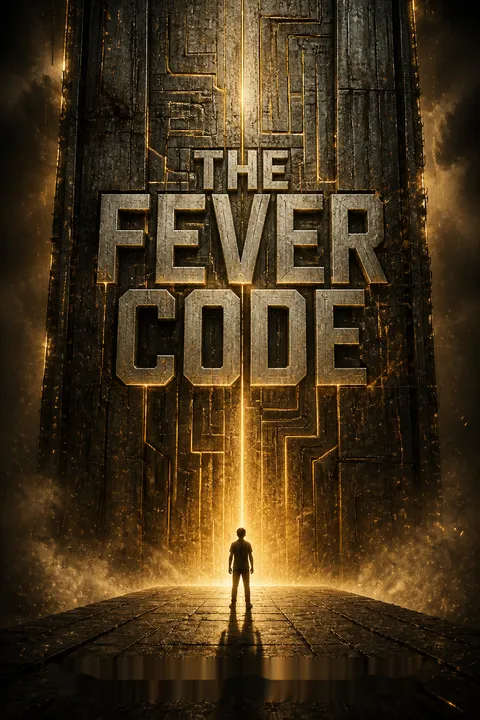


Plot Summary
Prologue
During the Flare’s collapse of ordinary life, young Newt and his little sister Lizzy find a rare moment of wonder when snow falls through their overheated city. WICKED agents soon break into their home, demanding Lizzy.
Newt’s parents fight to stop them, but the agents shoot both adults and take the children. The boy who will become Newt leaves with his sister and the memory of his parents’ deaths, carrying a promise to protect Lizzy into a world already stripped of safety.
Newt’s origin makes family the book’s first measure of what catastrophe destroys. The snowfall offers beauty without security: even a miraculous change in weather cannot protect the children from organized violence. WICKED arrives not as rescue but as an armed institution that decides which child it wants and treats the family’s resistance as an obstacle. Newt’s later attachment to Lizzy is therefore not incidental sentiment. It is a survival bond formed in the instant that protection fails, and it gives his loyalty to friends and his grief over separation a history older than the maze.
A Name Paid in Pain
Taken from his mother before age five, Thomas clings to his birth name, Stephen, and refuses to answer when WICKED staff call him Thomas. Randall Spilker, the man assigned to bring him into the program, implants a device that floods the child’s body with pain whenever he resists.
Thomas finally gives in aloud, but privately repeats his old name, afraid that surrendering it means losing himself. At the facility, tests and lessons replace family and ordinary childhood. Scientists measure his body and brain; teachers drill him in history, logic, and problem-solving. He is told he is immune to the Flare, but no one explains what WICKED intends to do with that fact.
The renaming is more than an institutional label: it is the first experiment in whether a child’s selfhood can be separated from his consent. Thomas’s inward repetition preserves a private boundary, but WICKED makes the cost of holding it physically unbearable. His eventual compliance demonstrates how coercion can manufacture apparent cooperation without producing trust. The facility then turns this injured child into a curriculum and a set of measurements. His intelligence is recognized, yet recognition arrives in the same structure that has already shown it will punish him for asserting his own identity.
Christmas and the Killzone
On Christmas, Chancellor Kevin Anderson summons Thomas and explains that the facility is WICKED, the World In Catastrophe Killzone Experiment Department. Anderson’s hope is to cure the Flare, which destroys the brain and turns infected people into Cranks. He admits the work may demand terrible costs, then tells Thomas that his intelligence and immunity make him valuable.
Thomas wants purpose and the freedom promised by a larger role, so he agrees to help. Dr. Ava Paige becomes his regular physician, reassuring him that the tests serve the search for a cure. Yet Thomas remains isolated from other children, including Teresa, the girl in the room beside his. The promise of belonging is postponed for another year.
Anderson recruits through a genuine wound: his longing to recover the world of family, food, and ordinary holidays. That grief gives WICKED’s mission emotional credibility, while his insistence on cost makes the institution’s moral bargain visible from the start. Thomas is not persuaded by abstract doctrine alone. He wants access, company, and a life beyond his locked room. Paige’s kindness helps make that bargain feel personal rather than bureaucratic. The arrangement is psychologically effective because care and control arrive together, leaving Thomas unsure whether gratitude is freely felt or carefully cultivated.
The Implant Between Them
WICKED implants a monitoring device in Thomas’s brain after he sees Minho, another boy, emerge from surgery warning that the procedure hurts. Thomas tries to stop the nurses from taking Teresa, the neighboring girl, and is knocked down before he can reach her. After their recovery, WICKED finally lets the two children meet.
Teresa and Thomas quickly discover they share deep headaches and strange sensations around the implants. Teresa suspects the devices can be activated through thought. She experiments until she reaches Thomas telepathically, then teaches him how to locate the mental interface and answer. The connection gives them companionship beyond WICKED’s rooms, but it also makes their minds another place the institution can study.
The implant embodies the book’s central ambiguity: the same technology that enables intimacy also makes consciousness available to external measurement. Teresa’s insight turns a procedure imposed on both children into a tool they can use on their own terms. Their telepathy offers genuine closeness, but not a private refuge in any absolute sense, since WICKED benefits from their enhanced coordination. Their friendship therefore develops inside a compromised space. It is meaningful precisely because they create agency within a system designed to observe and direct them.
A Maze Beneath WICKED
WICKED shows Thomas and Teresa an enormous underground cavern where two mazes are being built, then assigns the gifted pair to help design them. That night, Newt brings them to a hidden gathering place and introduces them to Alby and Minho, boys from Group A. The group explores WICKED’s labs and facilities, finding strange experiments and discovering Group B, where girls live in barracks.
Newt shows Thomas his sleeping sister, Lizzy, whom WICKED has renamed Sonya; the siblings cannot openly acknowledge their relationship. Thomas’s secret life begins to feel richer than his sanctioned one. He and Teresa now have friends, but their discoveries show that WICKED’s careful isolation has divided families as well as subjects.
The maze’s construction recruits Thomas and Teresa into WICKED’s project before they understand its human cost. Their nighttime exploration reverses the official arrangement: the children, rather than the adults, assemble a map of the institution. Newt’s view of Lizzy through a window condenses the violence of that separation into one intimate image. WICKED can preserve the sister physically nearby while forbidding the relationship that makes her family. Thomas’s friendships begin as rebellion against enforced loneliness, but they also supply the moral attachments that later make passive participation impossible.
The Crank Pit Lesson
After the friends sneak outside the WICKED complex, Randall catches them and sends them into a fenced passage beside the Crank pits. The infected surge against the barriers, exposing the human wreckage Thomas had only heard about. A former WICKED founder, John Michael, appears there infected and pleads for a cure. When he attacks Minho, Alby and Minho fight him off.
Randall then shoots John Michael at the man’s own request, insisting that the children have seen what the Flare can do. The experience leaves Thomas shaken but more committed to the cure. It also leaves him with a disturbing lesson: WICKED uses real suffering to teach obedience, then presents that suffering as proof that its methods are justified.
The pit scene turns WICKED’s moral argument into a spectacle staged for children. The Cranks are not distant evidence in a report; their reaching bodies make illness immediate, while John Michael’s articulate plea briefly restores an individual face to the mass. His death complicates Thomas’s belief in the institution without erasing the urgency of its goal. Randall’s demonstration works by binding terror to the promise of safety. Thomas’s resulting commitment is sincere, but it is also shaped by an environment that makes alternatives seem either cruel or impossible.
Minho's Escape Becomes a Trap
Months later, Thomas and Teresa use Teresa’s access to camera systems to reconnect with their friends. They welcome Chuck, a frightened new boy, and Thomas grows protective of him. Minho, however, still wants to escape. With Gally’s help, he prepares a route out, but WICKED catches the plan before the group can leave.
Randall forces Thomas to watch as a Griever, a biomechanical creature built for the maze, is released beside Minho. Thomas begs for the demonstration to stop and threatens to withdraw his help; Randall pauses the creature just before it can strike. Minho survives, but the punishment breaks much of his confidence and ends his escape plans. Thomas learns that WICKED will weaponize friendship as well as fear.
Minho’s failed escape exposes the difference between being physically protected and being free. WICKED does not merely prevent departure; it turns Thomas’s attachment to Minho into an instrument for disciplining the group. The Griever’s engineered body makes violence look like research, while Thomas’s plea supplies WICKED with data about empathy. Chuck’s arrival deepens Thomas’s protective instincts, making obedience increasingly costly. Minho’s retreat from rebellion shows how punishment can reshape behavior without resolving the grievance that produced it.
The Glade Takes Their Memories
As construction nears completion, Thomas helps finish the maze’s false sky and illusion systems, while WICKED names him and Teresa elite candidates. When the first boys are prepared for insertion, Thomas’s friends learn that he will remain outside the maze. They accuse him of helping WICKED prepare their confinement.
Thomas tries to answer, but an implant mechanism takes control of his speech and makes him apologize without meaning to. The next day he watches the boys enter the Glade, where the Swipe procedure has stripped their personal memories. Alby, Newt, and Minho can barely recognize one another. Thomas, left in the observation room, sees the experiment’s first success as the destruction of the relationships he helped form.
Thomas’s involuntary apology marks a decisive breach between intention and action. WICKED can now use his body to perform loyalty even when his judgment rejects it. His friends’ anger is rational: they see a privileged insider helping build the place that will imprison them. The memory Swipe then magnifies the betrayal by removing the shared past that might have helped them trust one another. Thomas becomes both witness and implicated designer, a position that makes guilt unavoidable but does not yet give him the power to intervene.
George's First Sting
From the observation room, Thomas watches the Gladers begin organizing their new home. Soon George returns from the maze in agony, saying a creature stung him. Alby initially strikes him, then the group finds a syringe labeled serum and uses it in desperation. George briefly revives, identifies the attacker as a Griever, and turns violently on another boy.
Alby kills him with a sharpened wooden shaft. Thomas confronts WICKED, and Dr. Paige admits the Griever injected a mutated form of the Flare designed to reveal how immune brains respond. The serum is unfinished, and the death was not intended. The explanation offers a scientific reason for the disaster, but no comfort for the Gladers who had to survive it.
George’s death reveals the experiment’s danger not as an announced possibility but as an irreversible mistake. The improvised serum briefly appears to restore hope, then the violence that follows turns rescue into catastrophe. Alby’s killing of George is an act of protection, but it also makes the Gladers responsible for the consequences of WICKED’s design. Paige’s disclosure is unusually direct, yet the research rationale still treats a child’s death as usable evidence. Thomas’s confrontation signals a shift from curiosity toward moral scrutiny.
WICKED's Original Sin
Thomas steals a research tablet and finds classified records showing that the Post-Flares Coalition deliberately released the virus as a population-control measure. John Michael helped authorize the plan, which became the catastrophe WICKED now claims it must cure.
Teresa had heard rumors but had chosen not to tell Thomas, arguing that the present emergency mattered more than old decisions. Months later, Randall appears outside, visibly infected. Dr. Paige suspects senior staff have concealed positive tests and discovers that Chancellor Anderson’s reports are false.
She finds nineteen infected employees hidden in Sector D and calls for a Purge before the disease spreads through the complex. Thomas enters the operation knowing that WICKED’s mission began in a crime, not in the innocent pursuit of salvation.
The records fracture WICKED’s founding narrative by making the institution both response to disaster and heir to its cause. Teresa’s silence reveals a different survival strategy: she protects the future by refusing to dwell on culpability. Thomas instead treats memory as necessary evidence, consistent with his training in problem-solving. The outbreak makes the argument practical. WICKED’s leaders are not only morally compromised; they are hiding a threat that could destroy the refuge they administer. The Purge follows from both genuine containment needs and the institution’s longstanding habit of deciding whose lives count.
The Purge Takes Its Toll
Paige sends Thomas, Teresa, Aris, and Rachel into Sector D with lethal syringes and weapons, telling them the infected staff are too far gone to save. Thomas finds Anderson alive but delirious, his body ravaged and his fingers mutilated. He injects the former chancellor himself. The four teenagers then move room to room, killing the remaining infected.
When Dr. Leavitt attacks Teresa, Thomas shoots him to free her. By the end, all nineteen infected staff are dead, but Thomas is left with the knowledge that he helped execute them. Paige takes command of WICKED. The operation protects the complex from contagion, while making Thomas and the other young survivors participants in the same ruthless logic they have feared.
The Purge forces the abstract calculation of sacrifice into Thomas’s hands. Anderson’s condition makes the argument for mercy painfully difficult to separate from the argument for killing, while the attack on Teresa turns violence into immediate self-defense. The group’s survival depends on action, but necessity does not remove moral residue. Thomas’s participation is neither triumphant nor cleansing; it changes his sense of himself. Paige’s ascent also converts an emergency measure into a transfer of institutional power, leaving the teenagers unsure whether they have contained a crisis or strengthened the system that produced it.
Newt Falls, WICKED Rewrites
After the Purge, Thomas withdraws into the observation room and watches Newt’s despair from afar. Newt eventually climbs a maze wall and jumps, breaking his leg before the Gladers bring him back to the Glade.
Thomas also discovers that Paige has circulated fabricated memos in his and Anderson’s names, presenting the Purge as a necessary act and smoothing over the truth. When Thomas confronts her, she calls the documents a way to unify the staff around WICKED’s mission.
Later, Paige introduces Jorge and Brenda and prepares an expedition to the Scorch, a devastated region where Cranks gather. The plan suggests the trials will continue beyond the maze, while Thomas’s growing distrust makes the institution’s promises of an eventual cure feel increasingly hollow.
Newt’s fall makes the maze’s psychological damage visible through a body that cannot climb out and a community unable to restore what was lost. Thomas watches rather than intervenes, repeating the helplessness that has defined his role as observer. Paige’s forged memos extend that helplessness into history: she does not merely control subjects but edits the record of what the institution has done. The Scorch expedition then widens the horizon of danger. WICKED’s capacity to continue is clearer than its ability to finish.
The Scorch Has Another Purpose
On a WICKED expedition to the Scorch, Thomas learns from Brenda that the Gladers are meant to face a second phase of trials there. He sees the ruined landscape and understands that the long-range monitoring tests are preparation for moving his friends into another danger. Returning through a Flat Trans, he asks Teresa to help rescue them.
She agrees, and together they persuade Paige to insert the elite candidates into the maze with their memories intact. Before that can happen, Randall, now far past the Gone, ambushes Thomas in the forest and kills a guard. Thomas fights back with a Launcher and kills Randall. The encounter convinces him that the Flare will outlast WICKED’s promises, and he commits to getting his friends out.
The Scorch revelation converts Thomas’s unease into a concrete ethical choice. WICKED’s tests are not approaching completion; they are expanding, and the Gladers are being carried forward as material for another phase. Randall’s attack gives this institutional danger a bodily form, but killing him does not solve the larger problem. Thomas’s despair about the cure becomes the catalyst for action rather than resignation. His plan depends on Teresa’s cooperation and on using the very elite status that has separated him from his friends.
One Last Swipe
Thomas and Teresa plan to enter Group A’s maze with their memories intact, gather the Gladers, reach hidden weapons, and escape; Aris and Rachel are to follow a similar plan in Group B. Paige approves their insertion after Thomas argues that observers inside the maze will generate valuable data. On the morning Thomas is to enter, Paige gives him drugged tea.
As he loses control, she admits that she infected Anderson and the senior staff to prevent them from ending the trials. Thomas realizes she will still use him, then watches his memories dissolve in a Swipe. The epilogue’s records show Teresa’s loyalty to WICKED and her intention to enter the next day with her memory intact, leaving Thomas to rise alone in the Box.
The final reversal makes trust itself the last experimental variable. Thomas secures the condition he believes essential to rescue, but Paige controls the procedure and turns his confidence into vulnerability. Her confession confirms that WICKED’s continuation depends not only on coercion but on engineered crises and selective disclosure. The memory loss is a second childhood rupture: Thomas has prepared to return to his friends, yet the person entering the Glade cannot remember why they matter. Teresa’s stated loyalty in the epilogue complicates their intimacy without resolving her motives, preserving the tension between private attachment and institutional allegiance.
Epilogue
Two WICKED memoranda frame Thomas’s insertion as the culmination of years of preparation. Paige thanks the staff and presents the elite candidates as proof that the trials can continue.
Teresa’s own message says she will enter the following day, keep her role secret, and remain loyal to WICKED. She plans to carry forward the three-word message she first encountered near the Crank pits, hoping it will endure in the Gladers’ minds even after their memories are stripped away.
The closing documents replace emotional certainty with competing institutional accounts. Paige writes as a leader consolidating the project; Teresa writes as a participant who interprets sacrifice as service and intends to hide that commitment from the other children. Her private statement sits uneasily beside Thomas’s plan to rescue them, making their bond both intimate and politically unstable. The recurring message from the Crank pits becomes a portable belief, capable of surviving memory loss because it has been planted as ritual. The ending offers no cure or escape, only the machinery of the next experiment beginning again.
Analysis
The novel’s central conflict is not simply whether WICKED can find a cure. It is whether a rescue project can preserve the humanity it claims to save while turning children into instruments. The organization’s case is powerful because its danger is real: the Flare devastates minds, families, and entire communities. Its moral failure lies in treating urgency as permission to withhold truth, erase memory, inflict pain, and redefine consent as cooperation.
Thomas’s development follows the slow collapse of his confidence in WICKED’s explanation. He begins by wanting his suffering to matter, and his intelligence makes him useful to the very systems that constrain him. Friendship changes the scale of his judgment. Newt’s attachment to Lizzy, Minho’s insistence on freedom, Chuck’s dependence, and the Gladers’ confusion after the Swipe become evidence that cannot be reduced to data. Thomas does not reject the cure because he stops caring about the world. He rebels because he recognizes that saving humanity while disregarding actual human beings is a contradiction, not a solution.
The book also treats memory as an ethical resource. Thomas’s refusal to forget his original name, his investigation of the virus’s history, and his observation of the Gladers all resist WICKED’s preferred story. By contrast, the Swipe makes a controlled population easier to study partly by removing the relationships that would help them interpret their captivity. The final betrayal is therefore not only the loss of Thomas’s memories. It is the deliberate severing of the knowledge and attachments that made his resistance possible. The ending leaves the cure unresolved and places the next stage of the conflict inside a boy who no longer remembers why he must fight.
Review Summary
The Fever Code received mostly positive reviews, with readers praising the backstory and character development. Many appreciated the insights into WICKED's origins and the maze's construction. Fans enjoyed reuniting with beloved characters and learning about their pasts. Some found the first half slow-paced but were captivated by the ending. Critics noted plot holes and questioned the scientific logic. Overall, readers felt it was a satisfying addition to the series, answering many lingering questions while also raising new ones.
People Also Read








Characters
Thomas
The remembering subjectThomas is an intelligent, observant boy taken from his family and raised inside WICKED’s research complex. He resists the loss of his birth identity, then accepts the organization’s promise that his work might help save humanity. His need for friendship makes him especially responsive to Teresa, Newt, Minho, Alby, and Chuck, while his habit of studying puzzles makes him alert to gaps in WICKED’s explanations. He is neither naturally cynical nor easily satisfied by slogans. Thomas wants to believe that suffering has a purpose, but he keeps testing that belief against what the people around him endure.
Teresa
The mind-linked allyTeresa is a highly capable young survivor whose intelligence, confidence, and computer skills distinguish her within WICKED’s program. Her implant gives her a mental connection with Thomas, creating a form of closeness that words and physical distance cannot easily limit. She often thinks strategically, focusing on outcomes and the scale of the Flare crisis, while Thomas is more troubled by the immediate cost to individuals. Her history before WICKED is painful, and her commitment to the cure grows from having seen the disease at close range. She is both Thomas’s closest companion and a person whose loyalties remain difficult to read.
Newt
The loyal older brotherNewt is a steady, perceptive boy whose humor softens the harshness of life among the subjects. He forms a close bond with Thomas and the other boys, often balancing their impulsiveness with practical judgment. His deepest attachment is to his younger sister Lizzy, separated from him by WICKED and given the new name Sonya. Newt’s memories of family shape his understanding of loyalty, loss, and what makes a life worth protecting. He is emotionally open in ways that do not diminish his courage, and his care for others gives the group a sense of kinship inside an institution that keeps trying to divide them.
Chuck
The youngest confidantChuck arrives at WICKED frightened, homesick, and unsure what the adults will do to him. Thomas recognizes his loneliness and becomes a protective older-brother figure. Chuck is funny, curious, and more observant than the group’s teasing suggests; his questions often expose how little the children truly understand about their situation. He gives Thomas a reason to keep showing up in the observation room and a glimpse of the ordinary affection that the institution has taken from them. Chuck’s eagerness to belong makes him vulnerable, but it also brings warmth into the lives of older children worn down by testing.
Ava Paige
WICKED's caring strategistDr. Paige is Thomas’s physician and the WICKED adult he trusts most. She offers practical reassurance, brings him books and treats, and often speaks to him with more warmth than the other staff. At the same time, she is a committed researcher who believes the Flare crisis demands extraordinary measures. Her care is genuine, but it does not prevent her from serving an institution that treats children as research subjects. Paige’s defining tension is the attempt to reconcile personal attachment with a mission she considers larger than any one life.
Minho
The restless escape plannerMinho is a sharp, energetic boy with a dry sense of humor and a fierce resistance to confinement. He is practical enough to plan carefully, but freedom matters to him even when escape seems dangerous. His friendship with Alby and Newt rests on shared experience, and his willingness to challenge WICKED brings conflict into the group. He distrusts explanations that ask the children to accept their captivity as a privilege. His skepticism provides a counterweight to Thomas’s hope that the experiments might eventually justify themselves.
Alby
Group A's guarded leaderAlby leads the boys of Group A with blunt authority, shaped by the need to keep children alive in a place where few rules are explained. He can be harsh when fear threatens the group, but his protectiveness is practical rather than performative. He welcomes new boys cautiously and expects them to learn the Glade’s routines. Thomas sees in Alby a leader who has adapted to uncertainty without mistaking adaptation for freedom.
Gally
The wary groundskeeperGally is a tense, wary boy who works around WICKED’s grounds and knows parts of the facility others do not. He helps Minho prepare an escape route, but his guarded manner and brittle pride make him difficult for the group to trust. Gally’s role reflects how captivity can turn cooperation into suspicion: even among children seeking the same freedom, each new ally carries risks the others cannot easily assess.
Randall Spilker
The punishing handlerRandall is one of the WICKED staff members who directly enforces the program’s demands. He forces Thomas to accept his new name through an implanted pain device, then later oversees punishments meant to keep the children compliant. His manner can shift between stern professionalism and unsettling sympathy, making it difficult to know whether his remorse changes his actions. Through Randall, Thomas encounters the human face of a system that can inflict harm while describing it as necessary.
Kevin Anderson
The grieving chancellorAnderson leads WICKED with a deep personal longing to restore the family life and ordinary world lost to the Flare. He believes the cure is worth almost any cost, and he tries to draw Thomas into that conviction by connecting the work to shared grief. His speeches reveal both idealism and the danger of allowing an urgent goal to excuse every method. He sees WICKED’s mission as a defense against extinction, though his confidence in that mission is tested by the consequences of its choices.
Aris
The Group B eliteAris is one of the most capable young subjects in Group B and is selected, with Rachel, for WICKED’s elite program. He is perceptive and thoughtful, often weighing a decision in terms of how many lives it might save. His presence links Thomas and Teresa’s experience to the girls’ parallel maze group, while his willingness to take part in difficult work shows how the cure mission can appeal to thoughtful people as well as to obedient ones.
Rachel
The resolute Group B eliteRachel is an intelligent, composed member of Group B chosen for the elite program alongside Aris. She approaches hard decisions without pretending they are painless, and her dry assessment of WICKED’s moral reasoning shows that she sees the cost even when she accepts the task. Rachel’s perspective broadens the story beyond Thomas’s circle and reveals that the same institutional pressures shape both groups.
Lizzy, later Sonya
Newt's separated sisterLizzy is Newt’s younger sister, a brave child who helps her family endure the Flare’s early devastation. After WICKED takes her, it renames her Sonya and keeps her apart from Newt despite placing the siblings close to one another. She remains a central emotional presence in Newt’s life, embodying the family ties that institutional labels cannot simply erase.
John Michael
The infected founderJohn Michael helped shape the Post-Flares Coalition and played an important role in the organization that became WICKED. By the time Thomas encounters him, he is infected and facing the loss of his former influence. His presence connects the cure project to the earlier decisions that helped bring the catastrophe into being.
Plot Devices
The Flare
The crisis behind WICKEDThe Flare is a devastating virus that attacks the brain, progressing until infected people lose their judgment and become Cranks. WICKED recruits immune children to study why their brains withstand the disease. The virus drives the institution’s experiments, makes the Crank pits a constant threat, and gives leaders their strongest argument for extreme measures. The later revelation that the virus was deliberately released by the coalition that preceded WICKED makes the crisis not only a natural disaster but also the consequence of human policy.
Brain implants and the Swipe
Control disguised as measurementWICKED implants devices in the children’s brains to monitor their responses and support communication. Thomas and Teresa discover that the technology can carry thoughts between them. WICKED also uses it to influence behavior and to erase memories when subjects enter the maze. The same apparatus therefore enables intimacy, surveillance, and psychological control. Its different uses make the children’s minds both the object of the experiments and one of their few tools for resisting separation.
The maze and its Grievers
A controlled world of dangerWICKED constructs two enormous underground mazes with moving walls, a simulated sky, and optical illusions designed to shape the subjects’ experience. Biomechanical Grievers patrol the passages and inject an experimental serum that causes intense symptoms. The maze is presented as a test environment, but its architecture also creates isolation, uncertainty, and real danger. Thomas helps build its systems before his friends are sent inside, making the structure a product of his labor as well as the place he hopes to enter and escape.
Beetle-blade cameras
Surveillance with moving eyesSmall mechanical insects carrying cameras move through the WICKED complex and the Glade, recording the children’s behavior. Their feeds allow Thomas to observe his friends after they enter the maze, while Teresa learns to manipulate the security system’s recordings so the group can meet in secret. The beetle blades make privacy precarious and turn ordinary actions into research data. They also give Thomas an intimate but painful substitute for physical contact with the friends he cannot reach.
The Crank pits
A warning made humanThe Crank pits hold infected people who have wandered onto WICKED’s grounds, keeping them contained while providing material for research. Randall uses a visit to the pits to show the children what the Flare can do, and Thomas meets John Michael there. The scene makes WICKED’s threat concrete, but the pits also expose its habit of using suffering as instruction. They become an early model for the book’s larger ethical problem: whether the promise of preventing mass death can justify treating individuals as instruments.
The Maze Runner Series



About the Author

Download PDF
Download EPUB
.epub digital book format is ideal for reading ebooks on phones, tablets, and e-readers.








