

Plot Summary
The Argo II Descends
With the Argo II hovering over Camp Jupiter, Annabeth Chase tries to make a peaceful landing despite the ship’s weapons and the Roman god Terminus’s protests. She negotiates a loophole: the ship can remain above the city while the Greeks climb down unarmed. Then she sees Percy Jackson, her boyfriend, whom the goddess Hera sent away with his memories erased.
Their reunion turns joyful, then fierce when Annabeth throws him to the pavement and makes clear how deeply his disappearance hurt her. Roman praetor Reyna permits the meeting to continue, but the camp’s unease remains visible. Annabeth has Percy back, yet the Roman city is unfamiliar, the ship is a threat overhead, and a strange cold presence still shadows her.
The reunion gives Annabeth the emotional relief she has spent months denying herself, but the judo throw makes clear that reunion does not erase injury. She loves Percy and resents the helplessness his disappearance imposed on her. The diplomatic landing also turns private longing into a political problem: her need to reach Percy risks the fragile contact between two camps. The Argo II embodies that contradiction, arriving as both rescue and threat. Even before the larger danger becomes visible, Annabeth must manage fear by turning it into a plan.
Ella Names the Quest
At the welcome feast, Greeks and Romans exchange the stories that brought Percy and Jason Grace to their respective camps. They connect the prophecy of seven half-bloods to a mission against Gaea, the earth goddess, and her giants, whose open Doors of Death let defeated monsters return. Hazel Levesque reveals that her brother Nico di Angelo vanished while searching for those doors.
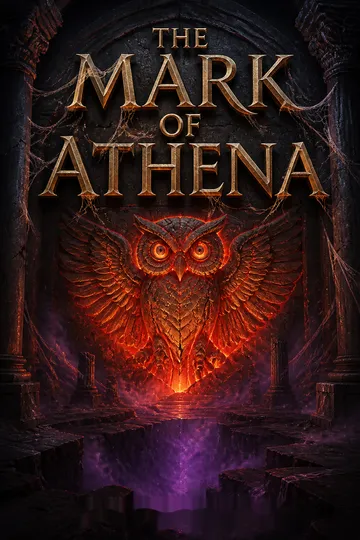
Then Ella, a harpy rescued by Percy, recites a second prophecy: it points to Annabeth, the Mark of Athena, twin giants, and an imprisoned figure tied to endless death. Annabeth recognizes the Mark as connected to a silver coin her mother gave her. Before Reyna can explain an old Roman legend about Athena, explosions rip through the forum.
The feast makes cooperation concrete: the seven are not an abstract prophecy but a group whose separate histories supply missing pieces. Ella’s involuntary recital gives Annabeth a personal burden within the larger mission, while Nico’s disappearance turns the quest into a rescue as well as a war. The interrupted conversation matters because knowledge is distributed unevenly. Reyna knows a history the Greeks lack, but the attack prevents a complete explanation. The story repeatedly makes partial understanding dangerous: the heroes must act before they can confidently interpret what they have heard.
A Peace Feast Burns
While Annabeth walks through New Rome with Reyna, the Argo II fires Greek fire into the city and the Senate House. Reyna believes the Greeks have betrayed her trust, though she can tell Annabeth did not know about the attack. Annabeth and Reyna return to find Romans fighting, artillery crews aiming at the ship, and Jason and Piper trapped in the crowd.
Percy uses water to hold back the mob; Hazel rides out on the magical horse Arion, and Frank Zhang transforms into a dragon to carry Jason and Piper to safety. On deck, Percy knocks Leo unconscious and stops the firing. Annabeth takes the helm and forces the damaged ship into the sky as Roman weapons close in.
The attack converts an already fragile political encounter into apparent proof of the hostility both camps fear. Leo’s actions are not a simple betrayal, but the Romans cannot see the unseen force controlling him, so consequences outrun intention. Annabeth’s leadership shifts from negotiating peace to ensuring survival, while Reyna’s judgment that Annabeth is truthful cannot undo the damage. The sequence also establishes that the seven survive through complementary abilities, not through any single hero’s command. Their escape preserves the quest but deepens the division it was meant to heal.
Nemesis Offers a Price
After the escape, Leo admits he fired the ballista but remembers being unable to control himself, overcome by the same unnatural cold Annabeth has felt. At the Great Salt Lake, Leo and Hazel search for materials to repair the ship and meet Nemesis, goddess of revenge. She explains that the Olympians are being split by their Greek and Roman identities and warns that Nico and Rome face destruction in six days.
Nemesis also tells Leo that his isolation will worsen, then offers a fortune cookie that can answer a future problem at a painful cost. Leo refuses the bargain aloud but keeps the cookie. Her warning gives the crew a deadline, while her offer plants a temptation Leo cannot yet understand.
Nemesis turns the heroes’ misfortune into a question of exchange: what can be gained, and what must be paid? Leo’s instinct is to reject help that might compromise his independence, yet he pockets the cookie, revealing how much he fears being unable to solve a crisis. Her prophecy about his isolation lands because it names a wound he already carries. The warning about Nico and Rome also sharpens the plot’s clock. Time pressure becomes emotional pressure, making later choices feel less like abstract tests than bargains made by frightened people.
Leo Steals the Mirror
On the island, Leo and Hazel find Echo, a nymph cursed to repeat other people’s words, and Narcissus, newly returned to life but trapped by his own reflection. A sheet of Celestial bronze lies beneath the pool, exactly what Leo needs to repair the Argo II. Hazel tries to make Narcissus understand that he has another chance to live, but he refuses to look away from himself.
Leo distracts him by loudly performing as a rival heartthrob, while Hazel uses her power over precious metals to draw the bronze from the water. The furious nymphs pursue them. Arion creates a blinding sandstorm, allowing Leo and Hazel to escape with the metal, while Echo stays behind, still determined to help Narcissus.
The encounter turns vanity and invisibility into sharply opposed forms of isolation. Narcissus can see only himself; Echo cannot speak in a voice of her own and is ignored by the crowd around him. Leo’s comic performance becomes useful because he understands how to redirect attention, a talent born partly from feeling overlooked himself. Hazel’s decision to leave Echo’s choice to her respects a kind of agency the cursed nymph rarely possesses. The bronze is won through teamwork, but the scene’s more intimate consequence is Leo’s recognition that being seen can matter even when it does not lead to romance.
The Wheat Turns Hostile
Following a vision in her dagger, Katoptris, Piper leads Percy and Jason to a highway marker near Topeka, where they meet Bacchus, the Roman form of the Greek god Dionysus. He identifies twin giants, Ephialtes and Otis, as enemies who may be waiting in Rome, then advises the heroes to seek Phorcys in Atlanta.
Before they can leave, Gaea possesses Percy and Jason through eidolons, spirits that seize living bodies, and forces them to fight. Piper uses charmspeak to halt the possessed boys and persuades the spirits to leave, then makes them swear never to possess the crew again. She and Hazel realize Leo’s earlier attack on New Rome came from the same kind of possession. The heroes now know their enemy can turn their own bodies into weapons.
Piper’s power is usually associated with attraction and persuasion, but here it becomes a tool for restoring consent. The eidolons make the body an occupied territory, exposing how easily strength can be detached from moral intention. Piper’s success depends on recognizing that the boys are not choosing violence, then addressing the spirits directly. This distinction protects the group from confusing culpability with harm. At the same time, the spirits’ vow offers only a bounded solution. Their wording leaves room for danger beyond the ship, and the heroes have learned that a promise can be technically honored while its spirit is evaded.
Phorcys Builds a Prison
At the Georgia Aquarium, Percy, Frank, and Coach Hedge follow the employee Kate into a hidden exhibit run by Phorcys and his sister Keto, ancient sea powers and parents of monsters. Percy finds sea spirits and creatures drugged and displayed for visitors, then discovers that Phorcys knows the seven have a bounty on them.
The sea god traps Percy and Frank inside a giant tank, but Percy breaks the glass with Frank’s help and escapes with Hedge. The experience shakes Percy, who cannot control the enchanted water and is reminded of his fear of suffocation. Before the trio flees Atlanta, Phorcys reveals that the twin giants are preparing a spectacle in Rome and mentions a map in Charleston. The clue gives the crew a destination.
The aquarium recasts captivity as entertainment: living beings become exhibits whose suffering is hidden behind glass and salesmanship. Percy’s anger at the imprisoned creatures is complicated by his own confinement, where his usual mastery of water fails. That failure makes his fear of suffocation more than a private weakness; it is a challenge to the identity on which he relies. Phorcys, meanwhile, treats information as another attraction to manipulate. The Charleston clue emerges not from a trusted alliance but from a captor’s boast, forcing Percy to extract usefulness from a place designed to strip him of agency.
The Mark Points Home
In Charleston, Jason, Leo, and Frank search the Civil War museum while Annabeth, Piper, and Hazel investigate a ghost in the Battery. The apparition proves to be Aphrodite, who explains that Greek and Roman conflict is bound to Athena’s stolen identity. She reveals that the Mark of Athena leads to the missing Athena Parthenos, a colossal statue that Roman demigods may have hidden, and directs Annabeth to a map at Fort Sumter.
Roman forces arrive before the girls can return to the ship. Annabeth finds the map concealed inside an old mortar and faces Reyna amid the battle. Reyna offers surrender as a way to restrain Octavian, but Annabeth chooses to continue the quest. Reyna lets her leave, though the camps remain on the brink of war.
Aphrodite’s revelation gives the Greek-Roman conflict a material center: an absent statue whose loss has been converted into inherited grievance. Annabeth’s quest is therefore not simply to retrieve an artifact but to discover whether a symbol can be returned without repeating the violence attached to it. Her exchange with Reyna shows the cost of that possibility. Reyna is not persuaded that peace is likely, yet she allows Annabeth to try because the alternative is mass destruction. Their decision is a fragile act of trust, made under force rather than comfort.
The Sea Takes Three
After Charleston, the Argo II sails into the Atlantic, but Keto’s giant sea monster, a skolopendra, tears at the ship and drags Leo, Hazel, and Frank underwater. The ichthyocentaurs, fish-centaur brothers of Chiron, rescue them and bring them to a hidden training community. During a memory Hazel shares with Leo, they see her childhood in New Orleans and meet Sammy, a boy who protected her from a bully.
The memory then reveals that Sammy lived into old age and became Leo’s great-grandfather. Hazel had loved him before her death and return to the present. Leo also learns Frank’s life is tied to a piece of firewood, explaining why his own flame power frightens Frank. The ichthyocentaurs send them back with warnings and help for the voyage.
The underwater detour links inherited history to present relationships without making the past a simple explanation. Leo is not Sammy, though Hazel’s recognition makes him feel like an imperfect continuation of someone she lost. That resemblance creates tenderness and discomfort at once. Frank’s secret reverses Leo’s assumptions about power: the shape-shifter’s strength carries a mortal vulnerability that Leo’s fire could trigger. Their rescue also broadens the world beyond the camps, but the fish-centaurs’ help is conditional and political. Cooperation, like identity, must be negotiated rather than presumed.
A Horn for Passage
At the Pillars of Hercules, the crew meets the immortal hero guarding the entrance to the Mediterranean. Resentful of Hera, Hercules refuses passage unless Jason and Piper bring him the remaining horn of Achelous, a river god he once injured. Achelous tries to drown them, then offers Piper a place beside him if she lets Jason die.
Piper frees Jason, cuts off Achelous’s horn, and escapes with it, shaken by the violence she was forced to use. Rather than give Hercules the trophy, she fills the transformed horn with food and buries him beneath it. Jason carries Piper back to the ship, and the crew launches into the ancient sea. Piper keeps the cornucopia, a reminder that strength need not justify cruelty.
Piper’s test is not merely whether she can defeat a stronger opponent. Hercules and Achelous both try to turn her into an object within their old grievance, one demanding a trophy, the other a replacement for a lost bride. Her decisive act is to refuse both scripts. She uses the horn’s abundance to incapacitate Hercules rather than kill him, changing a weapon of humiliation into a means of escape. The episode also unsettles Piper’s romantic idealism: loyalty to Jason matters, but she must act from her own judgment, not simply follow the expectations of powerful men.
Chrysaor Takes the Deck
As the Argo II crosses the Mediterranean, Chrysaor, a pirate and another son of Poseidon, boards with dolphin-like warriors and seizes the crew’s supplies. He reveals himself as Medusa’s other son, overshadowed by Pegasus, and plans to sell Piper and Annabeth to Circe while delivering Percy to Gaea’s followers.
Percy cannot beat Chrysaor alone, so he pretends that Dionysus is aboard and terrifies the pirates with the god’s favored drink, Diet Coke. Frank transforms into a dolphin, making the threat seem real, and the crew abandons ship. Percy and his friends sink the pirate vessel as an offering to Bacchus. The victory gives Percy back some confidence, but his defeat in swordplay leaves him aware of his limits.
Percy’s victory depends on interpretation rather than force. He reads the pirates’ fear, remembers the story behind their transformation, and turns a ridiculous prop into credible leverage. The bluff works because he abandons the expectation that a hero must win a direct contest. Chrysaor’s resentment at being eclipsed by Pegasus also mirrors Percy’s growing doubt about his own reputation: being called powerful does not make him invulnerable. Sinking the ship as tribute is both practical and relational, an attempt to make a god answer a need the heroes cannot meet alone.
Rome Splits the Seven
The Argo II reaches Rome with Nico’s deadline nearly spent. The seven divide their work: Hazel, Frank, and Leo search for Nico, while Percy and Annabeth follow the bronze map to the Tiber. There they meet Tiberinus, the river god, and Rhea Silvia, who confirms that Annabeth must descend alone to follow the Mark of Athena.
Tiberinus gives her a route beneath the city and warns that she must face a guardian without help. Percy walks with her as far as he can, then returns to reunite with the others. Annabeth enters the buried layers of Rome with her coin, dagger, and limited supplies. The quest’s emotional center changes from a reunited couple to Annabeth’s solitary test.
The group’s division forces each character to confront a different form of dependence. Percy must release Annabeth despite the months they have lost, while Annabeth accepts solitude not as proof that she needs nobody but as the condition imposed by the Mark. The city itself becomes a layered archive, where buried history physically underlies modern life. Tiberinus can guide her to the threshold but cannot guarantee what lies beyond it. That limit matters: the story presents inherited conflict as something no guide, god, or lover can resolve on another person’s behalf.
Annabeth Challenges Mithras
Following the Mark underground, Annabeth reaches a ruined Mithras shrine guarded by Roman ghosts who dismiss her as a Greek girl. The pater demands that she choose a lethal ordeal by fire or dagger. Annabeth studies the mosaics, rites, and cracked architecture, then convinces the ghosts that she understands their secrets and claims a third test: proving control over the stone.
She strikes a weakened capstone with her dagger, triggering the chamber’s collapse, and escapes through a bricked doorway as the shrine caves in. The fall breaks her ankle and traps her in another underground room. Using Bubble Wrap, leather straps, and broken boards, she makes a splint and crutch, then continues after the Mark instead of waiting for rescue.
Annabeth survives by reading a room more carefully than its guardians read her. The Mithras cult mistakes gender and ethnicity for evidence of inferiority; she turns their own symbols and architectural weaknesses against them. Her improvised splint shows that intelligence here is embodied labor, not just abstract calculation. The broken ankle narrows her options and raises the cost of every decision, but she continues because retreat would surrender both the quest and her claim to her mother’s inheritance. Her solitude is harsh, yet it also reveals a competence that does not depend on spectacular powers.
The Nymphs Flood Rome
While searching for Nico, Percy, Jason, and Piper enter an underground shrine to nine nymphs. The spirits have withered after their water source was cut off and now drain the heroes’ strength, filling the chamber with dark, poisonous water.
Percy cannot command it, and Jason’s attempt to summon lightning only worsens the flood. Piper remembers her father’s Cherokee flood story and realizes the cornucopia can answer their need if they give the spirits clean water freely.
She has Percy and Jason channel sea and storm into the horn, then adds her own strength. Fresh water overwhelms the poison and restores the nymphs. Grateful, their leader reveals a passage into the giants’ underground arena. The three choose the passage, despite knowing they are walking into a trap.
The shrine turns scarcity into a moral crisis: the nymphs’ suffering is real, but their revenge threatens to reproduce that suffering in others. Piper’s solution comes from a story that once troubled her as a child, now reinterpreted as a lesson about giving rather than bargaining. The cornucopia does not create abundance without cost; its power depends on the heroes’ willingness to offer what they have. Percy’s inability to control the water makes collaboration essential. Piper leads not by overpowering the others but by giving their different strengths a shared purpose.
Archimedes’ Machines Awaken
In the Pantheon, Hazel senses a tunnel to Nico, and Leo opens a hidden entrance to a workshop containing inventions by the Greek engineer Archimedes. Three eidolons attack through mechanical guardians, knocking Hazel and Frank unconscious and trapping Leo above them.
When the spirits threaten to kill his friends, Leo breaks Nemesis’s fortune cookie. Its strange instruction gives him the combination to a control sphere. He uses the machine to turn the workshop’s automatons against the eidolons and destroys their mechanical hosts, freeing Hazel and Frank.
The tunnel leads not to Nico but to a decoy, and Gaea appears in a mirror to announce that the crew has been separated. Leo melts the mirror and devises a way to escape through the earth with Hazel and Frank.
Leo’s success depends on trusting his knowledge of machines while accepting that technical competence alone is not enough. He breaks Nemesis’s cookie only when his friends’ lives are at stake, making the choice a measure of attachment rather than ambition. The answer itself is deliberately odd, fitting a world where ancient engineering and divine bargains resist clean rationality. Leo’s rescue of Hazel and Frank also answers the accusation that he cares more for machines than people. Yet the false lead to Nico shows that a local victory can still serve Gaea’s larger strategy.
Bacchus Enters the Arena
In the hypogeum beneath the Colosseum, Percy, Jason, and Piper find Nico alive but nearly suffocated in a bronze jar, sustained by pomegranate seeds. The twin giants Ephialtes and Otis prepare to turn Rome’s destruction into a public spectacle.
Percy and Jason attack, but the giants separate them with shifting walls, traps, and wild animals. At last they coordinate their powers, using water and wind to bring Otis down and Greek fire from the Argo II to badly injure Ephialtes.
Bacchus, persuaded by the Diet Coke tribute, joins the fight and destroys both giants. Nico explains that the Doors of Death open on both the mortal side and in Tartarus, so the team must close them simultaneously. The rescue succeeds, but the next task sounds nearly impossible.
The arena makes violence a performance, and Ephialtes treats the demigods as unwilling actors in a show staged for ghosts. Bacchus initially repeats that structure by demanding entertainment before he will help. Percy and Jason begin to break it when they stop competing as individual champions and coordinate their powers. Their partnership matters more than either one’s strength alone. Nico’s rescue changes the scale of the quest: the threat is not only Rome or the giants, but a passage that must be sealed from two realms. Victory solves the immediate trap while opening a more terrifying problem.
Arachne Weaves Her Trap
Deep beneath Rome, Annabeth reaches the Athena Parthenos, the missing statue she has followed across the city. Its guardian is Arachne, the weaver transformed into a monstrous spider, who intends to kill Annabeth and preserve her triumph in a tapestry.
Unable to fight with a broken ankle, Annabeth appeals to Arachne’s pride and promises to arrange an exhibition of her work on Mount Olympus. She uses Daedalus’s laptop to show Arachne a design for an enormous woven tube, then persuades her to unravel the statue’s webbing and build it from spider silk.
When Arachne crawls inside to inspect a supposed flaw, the tube tightens like an oversized Chinese handcuff. Annabeth has freed the statue’s surface, but Arachne’s thrashing destabilizes the cavern.
Annabeth wins by recognizing that Arachne’s deepest vulnerability is not physical but reputational. The spider wants public recognition more than immediate revenge, and Annabeth redirects that desire into a structure that confines her. This strategy resembles Annabeth’s own pride, which she has learned can narrow her judgment; she survives by studying another person’s vanity without confusing admiration with trust. The victory remains ethically uneasy. Arachne’s work is genuinely beautiful, and Annabeth uses a promise she never intends to keep. The book does not make cleverness morally pure; it presents it as a survival tool with emotional residue.
The Pit Claims Two
The Argo II blasts through the cavern roof to rescue Annabeth, and falling cars crush Arachne’s silk prison, sending the spider toward a pit that opens into Tartarus. The Athena Parthenos survives, but the shrine collapses around it. As the crew secures the statue, a strand of silk snags Annabeth and drags her over the edge.
Percy catches her, then refuses to release her when he realizes he cannot pull her back. He and Annabeth fall together into the darkness, asking Nico to lead the others to the far side of the Doors of Death. The remaining six load the statue aboard the Argo II. Nico believes Percy and Annabeth are still alive, so the crew sets course for Epirus, knowing the Roman army is moving toward Camp Half-Blood.
The ending converts the book’s central fear of separation into a devastatingly literal choice. Percy cannot save Annabeth without surrendering his own chance to remain aboveground, and he chooses shared danger over solitary survival. Their fall is not framed as a completed death, since Nico senses they may still live, but it removes them from the group and makes reunion uncertain. The statue offers the six a tangible achievement while the pair’s disappearance creates a new obligation. The story ends not with closure but with a changed map: the others must move forward while trusting that Percy and Annabeth can endure the realm no one returns from.
Analysis
The novel builds its conflict around two forms of inheritance: the stories and identities handed down by gods, and the obligations young demigods choose to accept. Greek and Roman camps have been taught to treat each other as enemies, while the gods themselves are divided by their competing cultural forms. The missing Athena Parthenos gives that abstract hostility a concrete object. Its recovery might repair a historical wound, but Annabeth’s path makes clear that symbols cannot create peace by themselves. Someone must decide what to do with the power a symbol carries.
Each member of the seven confronts a personal version of this problem. Percy discovers that loyalty is not the same as invulnerability. Piper turns persuasion into an act of care, then accepts the moral weight of choices made under pressure. Jason learns to share leadership among equals. Hazel’s past complicates her attachment to Leo, while Frank’s hidden vulnerability changes the meaning of his strength. Leo’s engineering saves lives, but his fear of being unnecessary tempts him toward a divine bargain. Annabeth’s defining challenge is not a lack of intelligence but the demand that she act without the powers and companions she usually trusts.
The novel is especially interested in the difference between intention and consequence. Leo is possessed, yet New Rome is still damaged. Reyna understands Annabeth’s sincerity, yet cannot simply erase the political reality of the attack. Arachne is dangerous, but her artistry and grievance are not imaginary. The heroes repeatedly face situations where a technically successful solution leaves emotional or ethical residue. That pattern resists the easy fantasy that good motives guarantee clean victories.
The ending brings these threads together without resolving them. The Athena Parthenos is recovered, Nico is saved, and the twin giants are defeated, but Percy and Annabeth fall into Tartarus. Their choice to remain together is both an act of devotion and the beginning of another perilous separation from their friends. The six remaining heroes must carry the statue, confront the Doors of Death, and protect a camp they cannot reach in time to reassure. Victory is real, but incomplete: the group has become more capable of trust just as it is physically divided.
Review Summary
The Mark of Athena receives mostly positive reviews, with readers praising its action-packed plot, character development, and humor. Many fans love the Percabeth relationship and Annabeth's central role. Some criticize pacing issues and the multiple POVs. The ending is widely considered heartbreaking but necessary for the story. Readers appreciate Riordan's blend of mythology and modern settings. While some find it less engaging than the original Percy Jackson series, most eagerly anticipate the next book due to the cliffhanger ending.
People Also Read




Characters
Annabeth Chase
Athena’s solo strategistAnnabeth is a Greek demigod, daughter of Athena, an architect, and one of the seven chosen for the quest against Gaea. She plans before acting and reads structures, people, and symbols with unusual precision. Under that discipline lies a deep fear of being abandoned or dismissed, rooted in a childhood in which adults did not believe her. Percy’s disappearance intensifies her need to protect the people she loves, while her conflict with Athena makes her question whether she can belong to her mother without obeying her anger. Annabeth’s ambition is not simply to be the smartest person in the room; she wants to build places where people can live safely. That practical imagination shapes both her leadership and her approach to danger.
Percy Jackson
The sea’s loyal championPercy is a Greek demigod and son of Poseidon, known for courage, irreverence, and an instinctive loyalty that often places friends before his own safety. He has recently recovered from the loss of his memories and separation from Annabeth, but his time among the Romans has also shown him a different kind of home. Percy is powerful in water and combat, yet he is unsettled by failures he cannot solve with strength, especially his growing fear of suffocation. He tends to measure his worth by whether he can protect others. His humor keeps danger from becoming solemn, but beneath it he is learning that leadership may require trusting friends to act without him.
Leo Valdez
The fire-built engineerLeo is a son of Hephaestus, a gifted inventor, and the builder and pilot of the Argo II. He is quick with jokes and quicker with tools, often filling silence because he expects people to overlook him. His mother died in a fire when he was young, and relatives blamed him, leaving him wary of intimacy and convinced that he is the extra member of any group. Leo’s skill is both a source of belonging and a refuge from relationships he cannot control. His humor can wound others, but it also lets him improvise under pressure. He wants his work to matter, and he is learning that loyalty requires caring for people as deliberately as he cares for machines.
Piper McLean
Aphrodite’s clear-voiced diplomatPiper is a daughter of Aphrodite, Jason’s girlfriend, and a member of the seven. Her charmspeak lets her persuade others, but she dislikes being reduced to beauty or romantic influence. Raised by a famous actor, she distrusts the performance of celebrity and often wonders whether her relationship with Jason is built on genuine knowledge or divine manipulation. Piper is sensitive to the feelings others conceal, including Reyna’s loneliness and Percy’s fear. She can hesitate when a choice risks someone she loves, yet she finds courage by turning empathy into action. Her arc centers on learning that persuasion is not control and that love can demand difficult judgment rather than simple reassurance.
Jason Grace
Jupiter’s disciplined sonJason is a Roman-raised son of Jupiter who has been living among the Greeks after Hera’s exchange of demigods. He is a capable leader, trained to value duty, order, and service to the group. His calmness can look like perfection, but he is carrying uncertainty about where he belongs and how much of his old Roman identity remains. His bond with Piper gives him warmth and emotional grounding, while his friendship with Percy tests his comfort with an equal rather than a subordinate. Jason’s instinct is to take responsibility for everyone, even when he does not know what action will help. He is learning that leadership can mean sharing authority and admitting doubt.
Hazel Levesque
Pluto’s metalsense riderHazel is a Roman daughter of Pluto, recently returned from the dead and welcomed at Camp Jupiter. She can sense and influence precious metals, and her loyalty to her brother Nico shapes many of her choices. Hazel carries the manners and memories of a girl raised in the 1940s, but she is not defined by nostalgia; she is observant, brave, and learning to claim a future after a life that ended too early. Her warmth makes others trust her, though old grief and guilt remain close beneath it. Hazel is especially attentive to the risks people hide, and she often becomes the emotional bridge between characters who are suspicious of one another.
Frank Zhang
Mars’s shape-shifting protectorFrank is a Roman son of Mars and a descendant of Poseidon, with the rare ability to change shape. He is broad, gentle, and self-conscious about being clumsy or underestimated, but his size and physical courage make him a natural protector. Frank’s relationship with Hazel is rooted in affection and mutual trust, though he can become insecure when Leo draws her attention. He dislikes confrontation and often softens conflict with patience, yet his power carries a private vulnerability that makes fire especially frightening to him. Frank’s strength is not just transformation into impressive animals; it is his willingness to take risks for friends while still admitting that fear exists.
Reyna Avila Ramírez-Arellano
Rome’s guarded praetorReyna is a Roman daughter of Bellona and the praetor responsible for Camp Jupiter. She leads with restraint, placing the security of her community above private longing. Jason’s return with Piper and Percy’s closeness with Annabeth expose how much she has had to suppress, but she refuses to let disappointment excuse careless leadership. Reyna is capable of suspicion because Rome has taught her that hospitality can be dangerous; she is also capable of recognizing truth when it appears. Her loneliness is intensified by the burden of making decisions for an entire community without a dependable partner in command.
Nico di Angelo
The missing son of HadesNico is a Greek son of Hades and Hazel’s younger half brother. He is reserved, guarded, and more comfortable among the dead than among most living people. His knowledge of both Greek and Roman demigod communities gives him a unique place in the conflict, but he has often carried that knowledge alone. Nico’s instinct to protect Hazel can make him secretive, even when sharing information would help others. His black sword and command of Underworld powers distinguish him, yet his deeper importance comes from what he knows about the Doors of Death and the danger surrounding them.
Coach Gleeson Hedge
The battle-ready chaperoneCoach Hedge is a satyr assigned to accompany the seven, though he behaves more like an excitable combat instructor than a careful guardian. He loves martial arts, carries a baseball bat, and greets danger with enthusiasm that can be useful or alarming. Beneath his bluster, he is loyal to the young demigods and takes their safety personally. Hedge is especially protective of Piper, whose father he has helped, and he offers the group a rough form of adult supervision. His comic impatience does not erase his courage when the crew needs someone to defend the ship.
Gaea
The waking Earth MotherGaea is the ancient earth goddess and mother of the giants, monsters, and other forces gathering against the Olympians. She works through dreams, possessed spirits, and the landscape itself, making the ground beneath the heroes feel unreliable. Gaea is patient rather than openly frantic; she prefers to manipulate fears and divisions until her enemies damage one another. Her interest in the seven is both tactical and sacrificial. She represents a threat that cannot be treated as a single monster waiting to be struck, because the earth itself is her domain.
Octavian
Rome’s ambitious augurOctavian is a Roman augur who interprets omens and uses public ritual to strengthen his political position. Thin, theatrical, and quick to take offense, he distrusts the Greeks and regards their warship as proof of hostile intent. His concern for Roman security is entangled with personal ambition, making him eager to turn uncertainty into a case for retaliation. Octavian is skilled at exploiting an audience’s fear, especially when leaders hesitate. He serves as a reminder that divine enemies do not need to invent every conflict; human and demigod rivalries can help them along.
Nemesis
The goddess of repaymentNemesis governs revenge and the balancing of fortune. Unlike many Olympians, she is not visibly divided between Greek and Roman identities, and she regards success without cost as an illusion. Her manner is provocative, inviting people to expose resentments they would rather conceal. Nemesis offers Leo help but attaches a price, turning every benefit into a test of what he values. She is neither a straightforward ally nor a simple antagonist; she pushes the heroes to consider whether justice means restoration, retaliation, or an exchange that leaves someone else paying.
Aphrodite
Love’s meddling interpreterAphrodite is Piper’s mother and the goddess of love, beauty, and desire. Her appearance shifts according to what those around her find compelling, and her attention can feel flattering one moment and invasive the next. She treats relationships as stories full of reversals, which frustrates Piper, who wants a steady life rather than romantic spectacle. In Charleston, Aphrodite gives Annabeth crucial context about Athena’s history and the missing statue. Her advice is useful but never emotionally neutral, since she enjoys drawing hidden feelings into the open.
Bacchus
The reluctant god of revelryBacchus is the Roman form of Dionysus, god of wine and revelry, and a former demigod who fought giants before becoming immortal. The split between his Greek and Roman identities leaves him irritable and confused, while his pride makes him reluctant to help without tribute. He values spectacle and has little patience for heroes who expect divine assistance automatically. Bacchus is comic in manner but formidable when he chooses to act. His relationship with the seven tests whether they can earn help without assuming that a god’s power guarantees generosity.
Hercules
The bitter gatekeeperHercules is the immortalized son of Zeus who guards the entrance to the ancient lands. Fame has not made him content; he carries anger toward Hera and resentment about how his heroic life was used. He expects visitors to complete a task before he permits passage, and he treats his past injuries as justification for harsh demands. Piper recognizes that his strength does not make his choices admirable. Hercules functions as a warning about what happens when a hero lets grievance become the organizing principle of his identity.
Arachne
The hidden master weaverArachne is a legendary weaver transformed into a spider after challenging Athena. She has spent ages guarding the Athena Parthenos and preserving the work that proves her extraordinary skill. Her pride is not empty vanity: she is genuinely talented and believes the gods suppressed her achievement. That conviction has hardened into revenge, making recognition more important to her than any ordinary life. Arachne’s story complicates the heroes’ easy assumptions about divine justice, since her punishment appears far more lasting than the offense that provoked it.
Echo
The unseen repeating nymphEcho is a nymph cursed to repeat the words of others, leaving her with little control over how she is heard. She remains attentive to people others dismiss and tries to help Narcissus despite his self-absorption. Her persistence makes her more than a figure of unrequited love: she is someone determined to act even when her voice cannot fully belong to her.
Ella
The harpy who remembersElla is a nervous harpy with an extraordinary memory for books, including ancient prophecies. She is easily overwhelmed and fears traveling by ship, but her knowledge makes her important to Percy and the quest. Tyson protects her, and she responds best to patient care rather than pressure.
Terminus
New Rome’s boundary godTerminus is the Roman god of boundaries and city limits. He is fussy about rules and quick to punish violations, but Annabeth persuades him to interpret his own laws precisely enough to permit the Greeks to land. His comic rigidity reflects the larger Roman concern with order and territory.
Phorcys
The sea’s showman captorPhorcys is an ancient sea god, son of Gaea and brother of Keto. He runs a hidden aquarium that turns dangerous creatures into spectacles and treats visitors as potential exhibits. Beneath his theatrical manner is resentment at being overlooked and exiled from the ocean. He is a source of information, but never a trustworthy guide.
Tiberinus
The Tiber’s old guideTiberinus is the god of the Tiber River and husband of Rhea Silvia. He has guided earlier children of Athena to the beginning of their search, though he cannot guarantee their safety. His form reflects Rome’s shifting cultural memory, and his knowledge makes him a useful guide whose help ends at the threshold of Annabeth’s true test.
Plot Devices
The Prophecy of Seven
A deadline and shared missionThe prophecies connect seven Greek and Roman demigods to the effort to stop Gaea and her giants. Ella’s remembered lines add Annabeth’s solitary Mark of Athena quest, the twin giants, and Nico’s role as the key to endless death. The prophecy motivates the crew to cooperate even when the camps distrust one another, while its compressed images force the heroes to interpret clues through action. Its function is both structural and psychological: it gives the group a destination, but its references to sacrifice and death make every apparent victory feel provisional.
The Mark of Athena
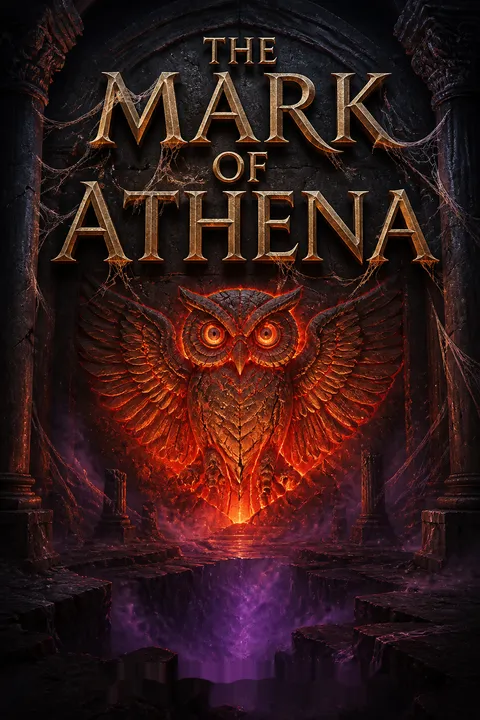
A trail through buried historyA silver Athenian coin given to Annabeth by Athena marks her as the one who must search for the missing Athena Parthenos. The red owl symbol appears along the route, directing her through Fort Sumter and into Rome’s underground layers. The Mark is private: Annabeth alone can reliably see its guidance, which makes the quest a literal and emotional test of solitude. It links an ancient theft to the present hostility between Greek and Roman demigods, and it turns Annabeth’s knowledge of architecture and history into tools for navigating a path no one else can take for her.
The Eidolons
Possession disguised as betrayalEidolons are possessing spirits that seize living bodies and drive their hosts to actions they may not choose. They make Leo appear to attack New Rome, then take control of Percy and Jason in Kansas. Their presence creates conflict because the victims’ friends initially see only the violence, not its cause. Piper’s charmspeak forces the spirits to reveal themselves and leave the crew, but the oath they swear is narrow enough that they later exploit other hosts. The device dramatizes how Gaea turns uncertainty into distrust and shows why the heroes must separate a person’s intent from the harm done through their body.
The Argo II
A mobile home under fireLeo’s enormous Greek warship can sail and fly, carries weapons, and serves as the seven demigods’ shared base. It makes the transcontinental quest possible, but its size and armament also make peaceful diplomacy difficult, especially at Camp Jupiter. Damage forces the crew to land for materials, while the ship’s design and Leo’s inventions repeatedly become part of their solutions. The Argo II is more than transport: it is a home assembled by Leo’s labor, a visible symbol of Greek power, and a test of whether the crew can protect something together without mistaking its machinery for a substitute for trust.
The Cornucopia
Abundance shaped by intentionPiper’s horn of plenty transforms her focus into food and drink, making it a powerful but emotionally responsive tool. She uses its abundance to bury Hercules rather than hand him Achelous’s horn, then later combines her own strength with Percy’s sea power and Jason’s storms to produce enough clean water to save them from the nymphs. The cornucopia does not function as an effortless supply of wishes. Its most consequential uses require Piper to concentrate on a clear purpose and, in the shrine, to give rather than hold back. It links care, sacrifice, and practical action without making generosity harmless.
FAQ
Synopsis & Basic Details
What is The Mark of Athena about?
- Demigods Unite, Face Prophecy: The Mark of Athena follows Greek and Roman demigods as they unite to fulfill a prophecy, facing internal conflicts and external threats from giants and the awakening earth goddess, Gaea.
- Quest for Ancient Artifact: The demigods embark on a quest to find the Athena Parthenos, a powerful statue that could unite their camps and help them defeat Gaea, while also seeking to close the Doors of Death.
- Personal and Global Stakes: The story intertwines personal struggles with the fate of the world, as characters grapple with their identities, relationships, and the weight of their responsibilities in the face of a looming war.
Why should I read The Mark of Athena?
- Intricate Plot and Mythology: The book seamlessly blends Greek and Roman mythology with a modern setting, creating a rich and engaging narrative that will appeal to fans of fantasy and adventure.
- Character Development and Relationships: The story delves into the complexities of the characters' relationships, exploring themes of trust, loyalty, and love, while also showcasing their individual growth and struggles.
- High-Stakes Action and Suspense: The book is filled with thrilling action sequences, unexpected twists, and a constant sense of danger, keeping readers on the edge of their seats as the demigods face seemingly insurmountable challenges.
What is the background of The Mark of Athena?
- Greek and Roman Mythology: The story draws heavily from Greek and Roman mythology, incorporating gods, monsters, and legends into a modern setting, exploring the differences and similarities between the two cultures.
- Demigod Camps and Conflicts: The book builds upon the established world of Camp Half-Blood (Greek) and Camp Jupiter (Roman), highlighting the historical tensions and cultural differences between the two demigod communities.
- Prophecy and Ancient Lands: The narrative is driven by the Prophecy of Seven, which foretells a great battle in the ancient lands of Greece and Rome, where the demigods must confront Gaea and her forces.
What are the most memorable quotes in The Mark of Athena?
- "Wisdom's daughter walks alone.": This quote, part of the prophecy, highlights Annabeth's solitary journey and the unique challenges she faces as a child of Athena, emphasizing her strategic mind and the burden she carries.
- "We're staying together. You're not getting away from me. Never again.": Percy's words to Annabeth before they fall into Tartarus showcase his unwavering loyalty and love, emphasizing the strength of their bond in the face of death.
- "I am called Nemesis in both Greek and Roman. I do not change, because revenge is universal.": This quote from the goddess Nemesis underscores the theme of revenge and its timeless nature, highlighting the universal human desire for retribution.
What writing style, narrative choices, and literary techniques does Rick Riordan use?
- Fast-Paced and Action-Oriented: Riordan employs a fast-paced writing style with frequent action sequences, keeping readers engaged and invested in the story's progression.
- Humorous and Witty Tone: The narrative is infused with humor and wit, often through the characters' internal monologues and dialogue, which helps to balance the darker themes and create a more accessible reading experience.
- Multiple Perspectives and Shifting POVs: The story is told from multiple points of view, allowing readers to gain insight into the thoughts and feelings of different characters, and creating a more complex and nuanced narrative.
Hidden Details & Subtle Connections
What are some minor details that add significant meaning?
- The Silver Drachma: The silver coin given to Annabeth by her mother, initially appearing as a subway token, foreshadows her solo quest and the burden of the Mark of Athena, connecting her personal journey to the larger conflict.
- The Pac-Man Wheels: Nemesis's motorcycle with Pac-Man-shaped wheels subtly alludes to the broken wheel symbol of Cabin 16 at Camp Half-Blood, hinting at Leo's connection to the goddess of revenge and his role as an outsider.
- The Color Purple: The recurring use of purple, especially in the clothing of Roman characters like Jason and Reyna, symbolizes their connection to the Roman camp and their internal conflicts between their Roman and Greek identities.
What are some subtle foreshadowing and callbacks?
- The Titanic Reference: Ella's comparison of the Argo II to the Titanic foreshadows the ship's eventual damage and the dangers the demigods will face on their journey, creating a sense of foreboding.
- The Broken Wheel: The symbol of the broken wheel above Cabin 16 at Camp Half-Blood foreshadows Leo's connection to Nemesis and his role as an outsider, hinting at his future struggles and the challenges he will face.
- The Nereid's Warning: The Nereid's warning to Percy about the dangers of the sea and the need to seek help from Chiron's brothers foreshadows the challenges they will face in the Mediterranean and the importance of their encounter with the ichthyocentaurs.
What are some unexpected character connections?
- Leo and Sammy: The revelation that Leo resembles Hazel's past love, Sammy, creates a complex emotional dynamic, highlighting the themes of fate and destiny, and adding a layer of tension to their interactions.
- Reyna and Annabeth: The shared history between Reyna and Annabeth, as former servants of Circe, creates a surprising connection between the two leaders, highlighting their shared experiences and the challenges they face as powerful women in a male-dominated world.
- Percy and Chrysaor: The revelation that Chrysaor is Percy's half-brother, the son of Poseidon and Medusa, adds a layer of complexity to their conflict, highlighting the theme of family and the challenges of overcoming one's heritage.
Who are the most significant supporting characters?
- Tyson the Cyclops: Percy's half-brother, Tyson, provides emotional support and comic relief, while also playing a crucial role in protecting Ella and helping the demigods. His loyalty and kindness highlight the importance of acceptance and friendship.
- Ella the Harpy: Ella's ability to memorize and recite prophecies, despite her high-strung nature, makes her a valuable asset to the demigods, while also adding a layer of mystery and intrigue to the narrative.
- Coach Hedge: The satyr chaperone, Coach Hedge, provides comic relief and a sense of stability, while also serving as a reminder of the importance of loyalty and protection. His love for fighting and his gruff demeanor often mask his genuine care for the demigods.
Psychological, Emotional, & Relational Analysis
What are some unspoken motivations of the characters?
- Annabeth's Fear of Failure: Annabeth's unspoken motivation is her fear of failing her mother and the weight of the Mark of Athena, which drives her to take on the quest alone, despite the risks.
- Jason's Desire for Acceptance: Jason's unspoken motivation is his desire to be accepted by both the Greek and Roman demigods, which leads him to try to bridge the gap between the two camps, even at the expense of his own well-being.
- Leo's Need for Belonging: Leo's unspoken motivation is his need to find a place where he belongs, which drives him to create the Argo II and seek validation from his friends, while also masking his insecurities with humor and bravado.
What psychological complexities do the characters exhibit?
- Annabeth's Internal Conflict: Annabeth exhibits a complex internal conflict between her loyalty to her mother and her love for Percy, as she struggles with the weight of her responsibilities and the fear of betraying her own values.
- Jason's Identity Crisis: Jason grapples with an identity crisis, torn between his Roman upbringing and his newfound Greek heritage, as he struggles to reconcile his past with his present and future.
- Leo's Insecurity and Self-Doubt: Leo exhibits a complex mix of bravado and insecurity, using humor to mask his self-doubt and his fear of being an outsider, while also struggling with the weight of his powers and his past.
What are the major emotional turning points?
- Annabeth and Percy's Reunion: The reunion between Annabeth and Percy is a major emotional turning point, highlighting the intensity of their feelings and the pain of their separation, while also setting the stage for the challenges they will face together.
- Leo's Betrayal: Leo's possession by an eidolon and his subsequent attack on Camp Jupiter is a major emotional turning point, highlighting his vulnerability and the dangers of Gaea's influence, while also testing the trust of his friends.
- The Fall into Tartarus: The fall of Percy and Annabeth into Tartarus is a major emotional turning point, highlighting the stakes of their quest and the depth of their love, while also leaving their friends to grapple with the loss and the daunting task of continuing without them.
How do relationship dynamics evolve?
- Annabeth and Percy's Bond: The relationship between Annabeth and Percy evolves from a romantic partnership to a deep, unbreakable bond, as they face the challenges of their quest and the threat of separation, highlighting their mutual respect and unwavering loyalty.
- Jason and Piper's Connection: The relationship between Jason and Piper is tested by the challenges of their quest and the presence of Reyna, as they learn to trust each other and navigate their feelings, highlighting the importance of communication and understanding.
- Leo, Hazel, and Frank's Triangle: The relationship between Leo, Hazel, and Frank is complicated by the revelation of Leo's connection to Sammy, as they grapple with their feelings and the challenges of their quest, highlighting the complexities of love and loyalty.
Interpretation & Debate
Which parts of the story remain ambiguous or open-ended?
- The Nature of the Mark of Athena: The exact nature of the Mark of Athena and its connection to the statue remains ambiguous, leaving readers to wonder about the true source of its power and the extent of its influence on Annabeth's journey.
- The Fate of the Gods: The extent of the gods' "schizophrenia" and their ability to help the demigods remains ambiguous, leaving readers to question the reliability of the Olympians and their role in the coming war.
- The True Nature of Tartarus: The true nature of Tartarus and the challenges that Percy and Annabeth will face there remain ambiguous, leaving readers to wonder about the horrors that await them and the possibility of their survival.
What are some debatable, controversial scenes or moments in The Mark of Athena?
- Leo's Actions at New Rome: Leo's possession and subsequent attack on New Rome is a controversial moment, raising questions about his trustworthiness and the extent to which he is responsible for his actions, sparking debate about free will and fate.
- Reyna's Decision to Let Annabeth Go: Reyna's decision to let Annabeth leave, despite the potential consequences for Camp Half-Blood, is a controversial moment, raising questions about her motivations and the extent to which she is willing to compromise her own camp's safety.
- Piper's Use of Charmspeak: Piper's use of charmspeak to manipulate others, even for good intentions, is a controversial element, raising questions about the ethics of her powers and the extent to which she is responsible for her actions.
The Mark of Athena Ending Explained: How It Ends & What It Means
- The Fall into Tartarus: The ending of The Mark of Athena sees Percy and Annabeth falling into Tartarus, a symbolic descent into the deepest part of the Underworld, representing the ultimate challenge and the need for them to rely on each other to survive.
- The Separation of the Demigods: The separation of Percy and Annabeth from the rest of the demigods highlights the challenges of their quest and the need for them to face their fears alone, while also emphasizing the importance of teamwork and trust.
- The Looming Threat of Gaea: The ending leaves the reader with a sense of foreboding, as the threat of Gaea's awakening looms large, and the demigods must prepare for the final battle, knowing that the fate of the world rests on their shoulders.
Camp Half-Blood Chronicles Series

About the Author
Other books by Rick Riordan


Download PDF
Download EPUB
.epub digital book format is ideal for reading ebooks on phones, tablets, and e-readers.








