

Plot Summary
A Flame for Alexa
Five years after David Rain disappeared in the Arctic, Zanna Martindale still marks the anniversary by writing to him. This year, she takes her young daughter, Alexa, to the shop window where a clay dragon keeps watch. She tells Alexa that her father once gave her an invisible dragon named G’lant, and places that unseen gift in the child’s hands.
Alexa accepts it without doubt. Snow begins to fall as if the gift has stirred something beyond the ordinary world. At home, Lucy Pennykettle remains convinced David is not dead, while Zanna is trying to give her daughter a life that does not depend on waiting for his return.
The gift turns grief into an inheritance. Zanna is not asking Alexa to solve the mystery of David; she is trying to pass on a memory without making the child responsible for it. Yet Alexa’s immediate acceptance and the sudden snow make that distinction unstable. In this family, imagination can become a form of perception, and love can carry information that adults have chosen to stop seeking. The scene also establishes the emotional divide between Zanna, who needs a livable account of loss, and Lucy, who sees acceptance as abandonment.
Lucy Sends a Warning
Lucy persuades Gwendolen, her mother Liz’s clay dragon, to copy the annual letter Zanna writes to David. The letter confirms what Lucy fears: Zanna is learning to live as if David is gone, while Lucy’s own grief still demands action. She finds an email from Tam Farrell, a journalist looking into David’s life, and offers him access to the story with a warning that mishandling it could be dangerous.
She also sends a single word, Oomara, from the Inuit legends tied to the Arctic. Her hope is that publicity will make enough people believe in David to help bring him back. Instead, she sets a reporter on a trail that leads into the family’s hidden world.
Lucy’s hacking is an act of care shaped by adolescent helplessness. Unable to persuade the adults to keep searching, she turns belief into a practical tactic: more witnesses, more attention, more chance of making David real again. But she also treats information as a lever without understanding who else can be moved by it. The letter exposes the difference between grief that seeks continuity and grief that seeks reversal. Tam’s arrival will test both, because journalism can make a private history visible, but visibility is not the same as rescue.
Fire Returns North
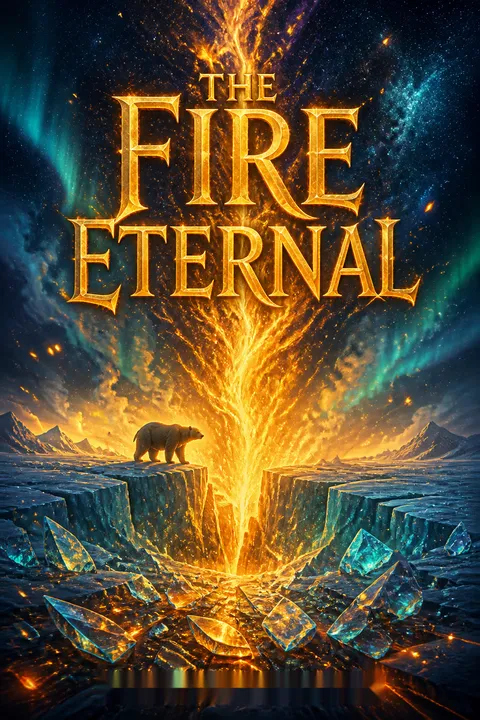
Far from Scrubbley, an uncanny storm leaves a polar bear standing on fractured ice, aware that the world around him is disappearing. Ingavar, once injured and diminished, has returned with blue eyes and command over snow and fire. He seeks the dying shaman Thoran, who recognizes him and gives up his remaining life force, strengthening Ingavar for the struggle ahead.
Ingavar appoints Avrel, a young bear with an inherited gift for memory and storytelling, as his Teller. He then finds Kailar, a fierce fighter poisoned by spilled oil, and burns the contamination away with white fire. Both bears pledge themselves to him. Ingavar warns them that the North is changing, and that bears and humans will have to face what is coming together.
The northern storyline translates ecological damage into bodily and cultural injury. Oil does not remain an abstract human mistake; it coats Kailar’s fur and threatens his life. Ingavar’s healing is powerful, but it depends on loyalty rather than conquest, since he insists that the danger cannot be defeated by fighting the Earth itself. Avrel and Kailar embody different capacities the mission needs: memory and force. Their uneasy partnership makes the coming crisis more than a contest between good and evil. It asks whether strength can learn to listen before the habitat that gives it meaning disappears.
The Poet at the Shop
Tam visits The Healing Touch, Zanna’s shop, posing as a customer interested in her remedies and clay dragons. His wit catches her off guard, but she refuses his invitation because she remains committed to David. He returns through a poetry reading, where his performance moves her despite her determination to keep her distance.
Tam also studies David’s book, White Fire, and notices the mark of Oomara on its cover and in Zanna’s life. Meanwhile, Lucy’s message has made him suspect that David’s disappearance is more than a human-interest story. He arranges a consultation at the shop, concealing that he is reporting for The National Endeavor. His attention is genuine, but his professional disguise gives Zanna reason to doubt it.
Tam’s appeal and his deception grow from the same habit: he enters situations by reading what people want and adjusting himself to it. The poetry makes his interest in Zanna feel personal, while his reporting makes that intimacy ethically compromised. Zanna, meanwhile, is not simply resisting romance; she is guarding a promise that has become part of her identity. Her attraction unsettles that self-protection, but Tam’s concealed purpose gives her caution real grounds. The scene makes trust a problem of mixed motives, not a simple choice between sincerity and deceit.
The Mark Bites Back
The household dragons investigate Tam and learn that he is gathering evidence about David. When Tam arrives for his consultation, Zanna uses two dragons to pin his hands down and pressures him to admit he is a journalist. A tipped oil lamp starts a fire, which Gretel, the potion-making dragon, extinguishes.
Tam insists he wants to expose the truth, but Zanna sees his secrecy as another betrayal and presses the mark of Oomara over his heart, leaving him unconscious and shaken. Lucy witnesses the confrontation and tries to stop Zanna. The next morning, Lucy slips away from home with Gwendolen, taking David’s old letter and heading to Tam’s newspaper office. Her attempt to recover her father now becomes a dangerous journey.
Zanna’s response is protective, but it is also an exercise of power that exceeds ordinary accountability. She has been deceived, yet her magic makes interrogation physically coercive, and Lucy sees both the injustice and the danger in that choice. The mark of Oomara complicates Tam’s position rather than resolving it: the symbol stands for moral division, but it cannot make a person’s motives pure. Lucy’s flight follows from the adults’ failure to agree on what protection means. She chooses action because the household’s competing certainties have left her no trusted route forward.
Blackburn’s Missing House
At The National Endeavor, Lucy asks Tam to help trace David. Gwendolen restores his memories by transferring Lucy’s experiences into his mind, including the recent confrontation with Zanna. Tam agrees to drive her to the address on David’s letter, 4 Thoushall Road in Blackburn. The journey brings them through violent weather and news of polar bears migrating north in alarming numbers.
At the address, they find no house, only a narrow strip of earth between two properties. A strange signal from Lucy’s phone draws snow into the shape of a squirrel, which she follows into a time rift. Zanna arrives and tries to enter after her, but Tam pushes past and vanishes into the opening instead.
The impossible address makes the search for David literal: the evidence points toward a place that ordinary geography cannot contain. Tam’s recovered memories turn him from an observer into a participant, while Lucy’s phone converts her private images into a doorway. The squirrel is effective bait because it joins her longing for David to familiar memories of rescuing animals. Tam’s decision to enter in Zanna’s place is a first act of responsibility that costs him control of his own investigation. Once the rift closes, none of the three can treat the mystery as merely a story.
The Eye Beneath Ice
Ingavar’s mission leads him and Avrel to Sedna, the sea goddess whose anger can deprive Arctic animals of prey. He combs her tangled hair and promises to restore her lost fingers if she retrieves the eye of Gawain, an ancient dragon. Sedna returns with the relic, but a flock of ravens attacks, led by the raven king who once took her as his wife.
Kailar arrives in time to help Avrel kill the bird-man, and the bears recover the eye. A second raven, Gwilanna, is freed from ice and recognizes Ingavar’s human form as David Rain. David explains that his body died in the Arctic, but his spirit joined with the bear and dragon forces there. He now serves the North in a new form.
The recovered eye binds the Arctic’s present emergency to its buried history. Sedna’s bargain is not a clean transaction: the fingers she wants carry the violence of her past, so Ingavar makes her choose between counterfeit restoration and a more difficult truth. David’s return likewise refuses a simple reversal of death. He is present, but not restored to the domestic life Zanna and Lucy remember. His transformation answers Lucy’s faith while exposing its limits: a person can survive as a force of care without being available as a partner or father. The scene makes rescue inseparable from change.
A Darkling Takes Shape
Tam reaches Farlowe Island and finds Lucy held by beings called the Ix, who control the monks through the bodies they inhabit. Their apparent leader uses Brother Bernard’s form to explain that Lucy has been taken for her unusual connection to dragons. Tam helps her escape the cell, but in the chapel the Ix trap them with visions of David’s death and the Arctic ice breaking apart.
They recapture Lucy and take her to a tower where obsidian, a volcanic glass once tested for dragon-making, has been prepared. The Ix threaten Tam’s life unless she creates a Darkling, an enemy designed to oppose dragons. Lucy shapes the creature from the stone, but secretly leaves its heart unfinished.
The Ix weaponize Lucy’s imagination by making creation compulsory. Her ability, normally associated with play and possibility, becomes a tool of coercion, while the chapel’s false visions exploit her most intimate fears. Yet she retains a narrow margin of agency: she makes the demanded form but withholds the element that would animate it. The incomplete heart is not a grand victory; it is a tactical refusal made under pressure. Tam’s presence matters because he remains a human witness whose survival can be bargained over, but the scene also shows that courage does not prevent capture or erase the costs of resistance.
The North Remembers
As David leads the bears toward the place where Gawain’s tear fell, he teaches Avrel about the ancient Premen, humans joined to thought-beings called the Fain, and the darker faction known as the Ix. Their old experiments created dragons, while the Ix now seek to breed destructive Darklings from human fear. The party encounters a mammoth, but Kailar sees it as a threatening black bear and attacks.
David restrains him and breaks the Ix influence that distorted his sight. He recognizes the mammoth as a thought-form created by Alexa, then sends Gwilanna back to guard the child. Avrel understands that their journey is drawing bears toward a gathering point, while the dragon eye carries the key to what lies beneath the ice.
The mythology expands the conflict without making it morally tidy. The Fain helped create dragons and human innovation, yet their legacy includes exploitation, abandoned hybrids, and a schism that the Ix now intends to turn into ecological catastrophe. Kailar’s misperception demonstrates how fear can be imposed from outside and then experienced as certainty. Alexa’s mammoth offers a counter-image: imagination can produce connection rather than a weapon. David’s decision to send Gwilanna home also links the cosmic struggle to domestic care. The North’s history is not an escape from human responsibility; it is the deeper context in which that responsibility operates.
Bears and Pilgrims Gather
David’s party reaches a place where Avrel sees the ice glow with green lines of power. He recovers a memory of Guinevere, the woman who carried Gawain’s tear, and understands how her fate helped shape the ice cap. Around them, bears gather in their thousands, while Ingavar prepares to use the dragon eye.
At the same time, people across the world begin converging on Scrubbley, drawn by a shared, unexplained impulse. Liz and Arthur watch the crowd grow around their home as the dragons respond to a distant disturbance. Gwilanna arrives with a rose petal from Liz and tells her that David is alive in the Arctic, while the Ix are preparing a conflict that could threaten both the North and the family.
The paired gatherings turn private belief into collective behavior. The bears assemble through inherited connection to the ice, while people arrive without understanding why they are being drawn to Scrubbley. Their presence is neither a conventional protest nor a conscious vote; it is a fragile form of shared attention. Liz’s response to Gwilanna is especially significant because she must revise her account of David without surrendering her judgment of the messenger. The scene links ecological crisis to social perception: what a community can notice together may matter, but crowds are also vulnerable to forces they cannot name.
Three Circles Break
At the Arctic gathering, David restores Gawain’s eye with Gollygosh’s help, then uses G’reth to link with a listener and locate the danger surrounding Lucy. Avrel shares the North’s history through the fire, joining the gathered bears in a common memory. On Farlowe, the Ix place Lucy’s heartless Darkling inside a circle of monks and use the chanting to build a channel for dark energy.
Tam resists their control long enough to break the circle, and the Ix lose their hold on the gathering. In Scrubbley, an Ix possessing Lucy wounds Liz with the obsidian blade and reaches for Alexa. Gwilanna and Gwendolen expose the invader, and Bonnington attacks it until it disappears.
The climax gives three different forms of resistance equal weight. David counters fragmentation by joining bear memory and human attention; Tam interrupts the Ix’s ritual through a small, physical refusal; and the family defeats the garden invasion through cooperation between a sibyl, a dragon, a child, and a shape-changing cat. Lucy’s missing heart turns out to be a crucial weakness in the weapon the Ix forced her to make. These victories are connected, but none is effortless or complete. The dark energy is disrupted rather than erased, and the family’s survival depends on noticing the places where fear has been made to look like reality.
A Price in Dragon Blood
With Liz gravely injured by obsidian, Gwilanna uses the recovered isoscele, a piece of Gawain, and the dragon’s blood within it to neutralize the poison. Gretel prepares a healing poultice, but Gwilanna warns that Liz’s pregnancy may still be at risk. Lucy, freed from the Ix, is left shaken by what happened and later admits how the island ordeal unfolded.
Tam eventually escapes Farlowe by boat, carrying new bear-like knowledge and a fierce sense of responsibility toward Lucy and Zanna. Gwilanna appears to have discarded the broken obsidian weapon, but secretly retrieves a fragment containing a spark of dark fire. The immediate invasion has failed, yet the danger has left a seed behind.
The rescue refuses the comfort of a clean ending. Liz survives the poison’s immediate assault, but her pregnancy remains uncertain, and Lucy’s return does not undo the terror or guilt she carries. Gwilanna’s useful intervention earns her a place in the family’s crisis without making her trustworthy; she helps save Liz while concealing the dark spark. Tam’s transformation, too, is less a reward than an obligation he did not seek. The section’s emotional movement is from relief to vigilance. Survival has been secured, but the family must now live with consequences that cannot be settled by a single act of courage.
Epilogue
In the weeks after the attack, Zanna takes over much of Liz’s household work while Liz recovers. Lucy withdraws into guilt, until Zanna tells her the truth about Gwillan’s fire tear and Lucy finally confesses what happened on Farlowe. Tam later arrives at the house, changed by his journey and intent on keeping his promise to help Lucy.
Then Liz sends Zanna and Alexa to the library gardens. Alexa runs ahead and leaps into David’s arms. Zanna, seeing him alive for the first time in five years, can only weep. Above them, a vast violet light fills the northern sky, and the world begins to see that dragons have returned.
The reunion gives Zanna and Alexa what the main conflict could not: a direct encounter with David, rather than a sign, a story, or a child’s drawing. Yet the scene does not erase the cost of his absence or return him to the role he once occupied. Alexa recognizes him through the imaginative bond adults have repeatedly tried to explain away, while Zanna must let the long uncertainty break open in tears. The violet light widens a family reunion into a planetary event. Private grief is not cured, but it is no longer asked to carry the whole truth alone.
Analysis
The Fire Eternal treats climate change as a crisis of attention as much as a crisis of temperature. The Arctic’s melting ice threatens bears materially, but the Ix exploit a second vulnerability: people can be persuaded that damage is inevitable, that concern is futile, and that fear is a natural response rather than something being cultivated. Against that manipulation, the novel sets acts of memory and connection. Avrel’s storytelling gives bears a shared history; David’s writing moves readers toward concern; Alexa’s drawings make imagination materially consequential; and Tam’s reporting can turn private knowledge into public action. None of these forms of attention is automatically virtuous. Journalism can exploit, memory can harden into denial, and imagination can be forced into weapon-making. The ethical question is what each person does with the power to shape another’s perception.
Grief provides the story’s intimate counterweight. Zanna’s effort to live with David’s absence and Lucy’s refusal to accept it are not opposing measures of love. They are different strategies for surviving an unresolved loss. Their conflict becomes most damaging when each mistakes the other’s coping method for betrayal. Alexa offers a third relation to absence: she does not argue herself into belief, but meets the unseen through play. Her openness is powerful precisely because it is not yet a theory or a demand.
The book’s many transformations, from bears to humans, dragons to thought-forms, and grief into inherited memory, resist a fixed boundary between physical and spiritual life. But transformation does not cancel responsibility. Ingavar needs allies, Tam must choose whether to act, and the family must decide whom to trust. The result is a fantasy in which ecological repair begins not with a lone savior, but with communities learning to perceive their interdependence before fear turns difference into a weapon.
Review Summary
The Fire Eternal received mixed reviews, with an average rating of 3.99 out of 5. Some readers praised the book's fantasy elements and character development, while others found it confusing and overly complex. Critics noted the shift from a children's dragon story to a more mature sci-fi narrative. Many felt the plot became convoluted and hard to follow. Some readers enjoyed the environmental themes and mystical aspects, while others disliked the new characters and plot directions. Overall, opinions were divided on whether the book successfully continued the series.
People Also Read
Characters
Alexa Martindale
Dreaming young creatorAlexa is Zanna and David’s young daughter. Curious, affectionate, and unselfconscious, she takes seriously what adults dismiss as pretend, from invisible dragons to fairies at the garden door. Her drawings show unusual precision, especially in the eyes of the dragon she calls G’lant. Alexa does not share Lucy’s urgency or Zanna’s guarded sorrow; she experiences the world through play, dreams, and direct attachment. That openness makes her a source of comfort to the family, but it also places her close to forces she cannot yet understand. She is not simply a symbol of innocence. Her imaginative acts have consequences, and the adults around her must learn how to protect her without diminishing her.
Henry Bacon
Skeptical neighbor and librarianHenry is the Pennykettles’ elderly neighbor, a librarian whose dry skepticism is softened by his affection for the family. He shares a fondness for books and poetry, though he prefers the familiar and is quick to challenge supernatural claims. His exchanges with Liz bring humor to the household’s more serious tensions. Henry also helps care for Alexa and offers a glimpse of ordinary community life surrounding the dragons and the strange events in Scrubbley.
Plot Devices
The Fire Eternal
Source of dragon lifeThe Fire Eternal is the creative force connected to dragonkind, the Earth, and the lives shaped by them. Its influence appears through dragon auma, white fire, and the powers that can animate or transform living beings. The story links access to this force with both protection and danger: characters seek to use it to strengthen the North and restore a dragon, while the Ix seek to exploit human fear to create dark fire. The Fire Eternal gives the fantasy its cosmological scale, but its effects remain tied to choices made by people, bears, and dragons.
The Eye of Gawain
Key to the northern powerGawain’s preserved eye is a dragon relic recovered from the Arctic sea floor. Ingavar asks Sedna to retrieve it, and the bears carry it toward a place where old lines of power meet. The eye can be restored and used as a focal point for a wider connection between dragons, bears, humans, and the Earth. It also attracts competing forces, making it both a tool for collective action and a target the Ix want to control.
Oomara’s mark
A bond with divided powerThe three-pronged mark associated with Oomara appears on Zanna and connects her to the old conflict between opposing forces. Tam notices it while investigating David, and Zanna later places its power on him during their confrontation. The mark does not decide whether its bearer is good or evil; instead, it places that person in contact with a struggle that can influence thought and action. Its presence explains why Tam can resist some of the Ix’s control and makes Zanna’s inherited abilities important to the human side of the crisis.
The time rift
Door through hidden placesA time rift links the empty address in Blackburn to another place, allowing Lucy to cross from an ordinary road into the danger on Farlowe Island. The rift is activated through thought, imagery, and unusual energy rather than conventional coordinates. Alexa’s drawings, Lucy’s phone, Gwendolen’s abilities, and a car battery all become relevant to understanding or reaching it. The device makes the story’s central problem physical: David’s history and the family’s search lead to a location that cannot be found by ordinary travel.
The obsidian Darkling
Weapon built from fearObsidian is volcanic glass once considered as a possible material for dragon bodies. The Ix force Lucy to shape it into a Darkling, a creature intended to oppose natural dragons. Lucy secretly withholds its heart, leaving the weapon incomplete. A separate fragment becomes a poisonous blade used in the attack on Liz, while a spark of dark fire remains connected to the broken stone. Obsidian therefore joins the Ix’s breeding scheme, Lucy’s resistance, and the family’s immediate danger in a single object.
Download PDF
Download EPUB
.epub digital book format is ideal for reading ebooks on phones, tablets, and e-readers.








