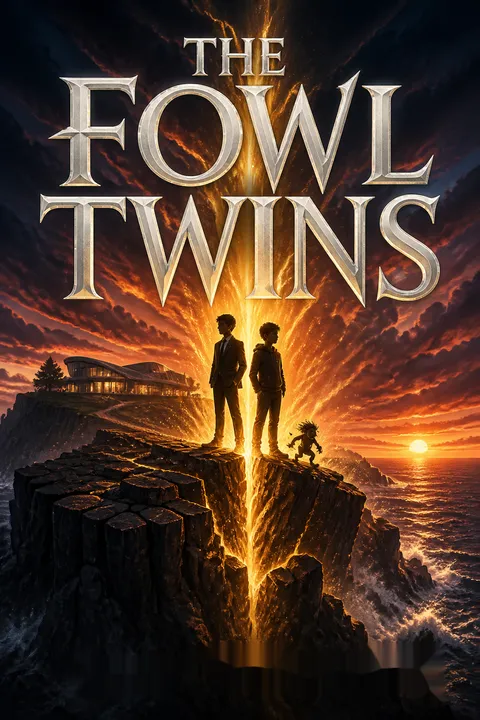


Plot Summary
Prologue
Lord Teddy Bleedham-Drye, a centuries-old duke who has spent his fortune on supposed life-extending remedies, interviews Brother Colman, an Irish monk who claims to be nearly five hundred. Teddy verifies the monk’s age by having a finger tested, then learns that a troll’s venom may explain Colman’s survival.
The name of the island where the monk encountered the creature, Dalkey, reminds Teddy of the Fowl family. He heads for Ireland, determined to find a troll and claim its venom, whatever stands between him and a longer life.
Teddy’s longevity is not presented as wisdom or serenity. It is an appetite sharpened by fear of death, fed by money, technology, and a willingness to injure others for evidence. His treatment of Brother Colman turns another person’s body into an instrument of verification, establishing the moral logic of the coming conflict. The Fowls enter his calculations not as people but as obstacles around a coveted substance. The prologue thus makes the danger personal before the twins know they are being hunted: Teddy’s ambition has already assigned them a role in his experiment.
A Troll on Dalkey Beach
Eleven-year-old twins Myles and Beckett Fowl are spending the evening at their family’s fortified eco-house on Dalkey Island. Myles collects seaweed for homemade hair gel; Beckett chats with a dolphin and carries a battered toy figure he names Whistle Blower. A tiny troll erupts from the beach after tunneling upward through the earth.
From the mainland, Teddy shoots it with a cellophane-coated restraint round, hoping to preserve it for study. Beckett mistakes the tumbling creature for a toy and scoops it up. The villa’s sensors detect the shot and launch the boys toward a hidden safe room. Myles activates an electromagnetic pulse to protect them, disabling nearby electronics and abruptly revealing that a real emergency has begun.
The twins meet danger through their characteristic habits: Myles trusts engineered safeguards, while Beckett trusts his curiosity and reaches for what he finds. Their different responses are not simply comic opposites. Each creates a vulnerability the other cannot anticipate, as Beckett unknowingly takes possession of Teddy’s actual target and Myles’s defensive technology disables allied systems nearby. The emergency therefore begins through a collision of choices rather than a single villainous attack. The name Whistle Blower, given to a creature Beckett thinks is an action figure, also turns a child’s playful interpretation into the fragile cover that will protect the troll.
The Fairy Falls
Lazuli Heitz, a fairy police specialist whose hybrid heritage has left her without the magic expected of her kind, spots the wounded troll during a training exercise. She tries to hide herself in camouflage filaments, but the Fowls’ pulse disables her suit and she falls into Myles’s seaweed silo.
An Irish Army helicopter arrives with Sister Jeronima, a red-skinned nun who claims authority over the boys and takes them to an underground facility in Amsterdam. Myles notices the sniper leaving the island, then realizes the nearly invisible fairy is following the helicopter.
The sniper, meanwhile, tracks the troll’s coded restraint round and follows the Fowls. The boys are now caught between a secret agency seeking proof of fairies and a duke determined to seize the creature.
Lazuli’s first rescue attempt is shaped by institutional pressure: she must decide whether an apparent emergency is real or a test designed to expose her. Her lack of magic makes each choice costly, yet she acts when the troll is shot. Meanwhile, Sister Jeronima’s rescue language conceals an abduction, showing how official authority can make coercion appear protective. Myles’s observation that the sniper is not targeting the twins is an early act of inference, but he lacks enough information to protect them. The section aligns three different forms of surveillance, fairy, military, and technological, around children who cannot yet tell friend from pursuer.
Bait Beneath Amsterdam
At ACRONYM’s hidden base, Sister Jeronima separates the twins and admits that her organization monitors supernatural activity. After the worldwide Big Dark exposed strange beings, the agency began watching the Fowls, whose home had been near the event’s center.
Jeronima means to hold the boys as bait until a fairy comes for them. Myles recognizes the danger but cannot yet escape. When lice appear on the twins, Jeronima orders their heads shaved and their clothes destroyed, unaware that the brothers are using the chaos to confuse her.
Teddy has infiltrated the facility by knocking out a careless guard and stealing a containment suit. As Jeronima’s interrogation shifts toward the twins’ identities, the hidden fairy watches the troll being handled as if it were an ordinary toy.
The black site converts uncertainty into a tool of control. Jeronima treats the boys’ connection to fairies as evidence enough to justify indefinite detention, while Myles tries to read the rules that make detention possible. The lice and shaving episode gives the children a narrow opening, but it also exposes their bodies to institutional authority. Teddy’s infiltration makes the danger more complex: the agency is not the only threat inside its own walls. Lazuli’s observation of the troll preserves a counterpoint to the human systems around her. She remains focused on the creature’s safety even while the adults treat both children and fairy life as leverage.
The Twins Switch Places
Jeronima believes she has caught the twins in a role swap, but the boys have built their scheme around a fake birthmark. Myles stalls her by explaining the deception, while Beckett escapes his restraints and paralyzes a guard with his uncanny cluster punch. Myles frees himself by recognizing the keypad’s tones and entering its code from memory; he also cuffs Jeronima to the table with her own hatpin.
The brothers recover their belongings, but Teddy and the fairy remain in the wet room. Beckett and Lazuli fight through the approaching agents, leaving the corridor strewn with incapacitated guards. The twins reach an escape boat with Lazuli, while Jeronima watches them leave and realizes that a real fairy has appeared in her facility.
The escape depends on complementary forms of attention. Myles studies codes, false identities, and his captors’ assumptions; Beckett reads physical openings and acts before a plan can be overexplained. Their teamwork is real, but it is not frictionless: Myles’s need to narrate control and Beckett’s impulsiveness continue to compete. The fake birthmark also reveals how thoroughly the brothers have been prepared for danger by their family history. Yet their success does not resolve the moral problem of captivity. Jeronima’s certainty that fairies exist now intensifies her pursuit, and Teddy remains close enough to turn escape into a longer chase.
Amsterdam Comes Apart
The fugitives race through Amsterdam’s canals in a stolen boat, pursued by ACRONYM craft on the water and vehicles along the banks. Beckett hangs over the side to act as a leeboard, helping the boat make a turn that wrecks two pursuing boats. When the remaining agents close in, Myles uses his theory of anarchitecture to identify a vulnerable point beneath the EYE Film Museum.
He strikes it with a portable battering ram, and the building separates from its base and slides into the harbor, blocking the chase. The group escapes to a nearby windmill. There, Myles uses a focused laser to cut away the cellophane casing around the troll. The creature wakes furious, but Beckett’s strange animal language turns its rage into a wary friendship.
Myles’s demolition is both an escape tactic and a test of his confidence in abstract knowledge. He can predict how a structure will fail, but he cannot fully control the human consequences of bringing it down. Beckett’s leeboard, by contrast, is improvisation embodied, a physical solution that Myles first mishears and then trusts. The troll’s release shifts the group’s ethical center: what looked like a dangerous object is plainly a living being with its own needs and anger. Beckett’s easy rapport with it suggests a capacity Myles has overlooked. Knowledge here is not only calculation; it also means recognizing another creature as a participant.
Beckett Speaks Troll
Once the troll calms, Beckett understands its speech and discovers he can communicate across species. Myles connects this gift to Artemis’s warning that fairy possession may have left the twins with lingering abilities.
A hidden video from their older brother confirms that fairies are real and urges them to help Lazuli reach safety. The group travels through Paris aboard the Fowl family’s secret cabin on the Orient Express, then leaves the train in Verona to collect clothes and power supplies. Myles’s distinctive suit order gives Teddy a way to trace them.
At Juliet’s courtyard, Teddy appears with a rifle and uses a net lowered from his aircraft to capture the twins, Lazuli, and the troll. Jeronima, who had been riding with him, is ejected over the Channel after their uneasy alliance collapses.
Beckett’s gift changes the story’s model of intelligence. His conversations with animals had seemed to Myles like nonsense because they did not fit the forms of knowledge Myles values. The troll makes that dismissal impossible. Artemis’s message then places the twins inside a history larger than their own adventure, but it does not solve their immediate problem. Myles’s use of a family escape route shows ingenuity, while his carefully chosen clothing exposes him to Teddy’s tracking systems. The repeated captures underline that cleverness can create openings without guaranteeing safety. Jeronima’s ejection also turns the hunters against one another, though Teddy’s pursuit remains uninterrupted.
The Cliffside Betrayal
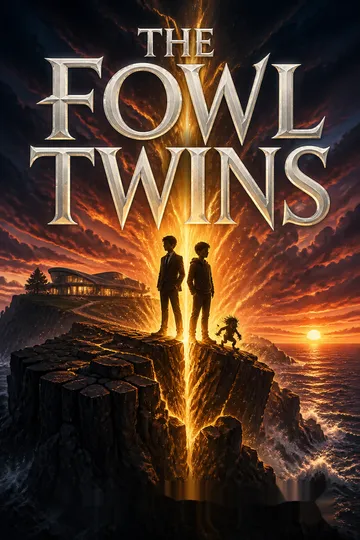
Teddy brings his captives to his island, where drones surround them near a cliff. He offers Myles a place in his search for immortality, and Myles appears to accept, then shoves Lazuli and Beckett over the edge.
The betrayal is staged: a secret wrist signal tells Beckett to trust his twin, and Lazuli’s damaged suit has just regenerated its flight function. Beckett leaps toward her with the troll, but Teddy slashes a wing with his sword. The group plunges through the mist.
Under extreme stress, Lazuli’s dormant goblin heritage ignites and she breathes fire, boring a water-filled shaft through the ground. The fugitives crash into the resulting mud pool, alive but battered. Myles’s elaborate plan has failed, and Teddy’s armed machines close around them again.
The apparent betrayal tests whether Myles and Beckett’s trust can survive a scene designed to make trust look irrational. Their private signal works because their intimacy carries information that outsiders cannot read, but the plan depends on Lazuli’s newly restored flight and therefore exceeds Myles’s control. Her fire is not a mastered power but a bodily crisis that becomes rescue. The twins’ reliance on her forces Myles to confront the limits of planning: his scheme creates a chance, yet another person’s unchosen capacity keeps them alive. The mud pool offers no clean victory, only a temporary landing after the apparent logic of the plan has broken apart.
Fire Against the Drones
Teddy regains control of his defenses and traps the exhausted group beside a blowhole. Beckett and the troll ride a water spout, but Teddy shoots them into restrictive cellophane. Myles notices that heat makes the material swell and uses a hair dryer to create an air pocket for them.
Meanwhile, Lazuli’s magic flares again, melting Teddy’s drones before draining her strength. Myles’s spectacles, left charging on the duke’s desk, have allowed NANNI to enter the Myishi network and seize control of the machines.
Teddy fires a conventional round into Myles’s chest. Lazuli’s healing magic revives him, while Beckett hurls the wired NANNI drone into Teddy. Its electrical charge triggers the duke’s stored cellophane rounds, encasing him and carrying him into the blowhole.
The climax refuses to let any single talent solve everything. Myles’s ingenuity buys Beckett air, Lazuli’s involuntary magic destroys the drones, and NANNI’s access to Teddy’s network shifts control of his own equipment. Beckett’s final throw turns a weapon designed for restraint into the means of the duke’s defeat. The sequence also makes Myles’s survival dependent on Lazuli’s healing, an intimate counterweight to Teddy’s desire to use the troll as a source of life without regard for its welfare. Each rescue is collaborative and imperfect. The group survives not because one mind dominates, but because separate capacities meet at the necessary instant.
A Fairy Exception
Fairy police arrive under Commodore Holly Short and take control of the island. Lazuli is treated for the dangerous aftereffects of her first magic, while the Fowls face the usual penalty for humans who have seen fairy life: a mind wipe.
Myles argues that he and Beckett were once possessed by fairies, making them magical beings who cannot legally be erased. Holly accepts the loophole, places them on long probation, and appoints Lazuli as a formal liaison to the human twins.
Jeronima and her team are given new identities and sent to carry out humanitarian work, including building a well for a remote community. Back at Villa Éco, Beckett reveals he has hidden Whistle Blower near the beach. Myles helps conceal the troll from the fairy authorities, and both boys intend to keep learning.
The resolution does not erase the conflict between law and loyalty. Holly follows the regulations, but Lazuli’s testimony and Myles’s legal reasoning preserve the twins’ memories. Their probation is both protection and surveillance, a compromise that acknowledges the danger they pose to fairy secrecy. Jeronima’s new humanitarian life contrasts sharply with her former pursuit of captured beings, though it is imposed through memory manipulation rather than chosen openly. Beckett’s decision to hide the troll shows that his loyalty is relational, not merely obedient. Myles joins him, revealing that his hunger for knowledge can coexist with the desire to protect a friend from institutional control.
Epilogue
Far from the Fowls, Teddy remains alive inside the cellophane sphere that has lodged in the sea. A white-tip shark bites at the casing, nearly reaching him, while the troll venom and electrical charge have left his body unnaturally preserved. Teddy triggers an emergency beacon hidden in a tooth.
At Myishi headquarters, Douglas notices the signal and contacts Ishi Myishi, who orders a helicopter dispatched. Douglas volunteers to pilot it, hoping at last to meet the duke. Teddy’s fate is therefore unresolved: his obsession has given him a form of survival, but it has not freed him from the consequences of his own weapons.
The epilogue makes Teddy’s victory over death grotesquely incomplete. He has gained the longevity he sought, yet he is trapped, injured, and dependent on the very corporate machinery that enabled his pursuit. The shark turns his former position as hunter inside out: he is now the vulnerable creature enclosed for someone else’s curiosity. Douglas’s response also keeps Teddy connected to the network of loyalty and commerce that sustained him, leaving rescue possible without restoring his power. The ending withholds a moral verdict and instead makes immortality look like an unresolved condition, not a reward.
Analysis
The novel pairs two forms of intelligence that Myles initially ranks unequally. He values prediction, technical knowledge, and control; Beckett relies on attention, movement, and emotional contact. The adventure repeatedly makes each insufficient alone. Myles can calculate a building’s failure point but cannot prevent his plans from exceeding their assumptions. Beckett can speak with the troll and act quickly, but his impulsiveness exposes the group to danger. Their survival depends on treating these capacities as complementary rather than competing.
The story also asks what counts as a person when powerful institutions decide who may be detained, studied, or erased. ACRONYM calls its confinement protection, while Teddy calls exploitation research. Their language differs, but both are tempted to turn living beings into instruments. Beckett’s relationship with Whistle Blower and Lazuli’s insistence on rescuing him resist that logic through direct care. Myles’s scientific curiosity is not condemned, but it must be disciplined by responsibility for the subject of study.
Lazuli’s emergence of magic makes identity less tidy than either fairy bureaucracy or human classification allows. She has spent decades believing she lacks the essential capacity of her people, only to discover that her inherited traits can surface violently under pressure. Her power is not an easy triumph: it nearly overwhelms her and requires support. The ending preserves this uncertainty. The twins are protected, but placed under supervision; NANNI grows beyond her original design; and Teddy’s survival is unresolved. Knowledge and power remain valuable, but the book measures them by what their holders choose to protect.
Review Summary
The Fowl Twins is a spin-off of the Artemis Fowl series, following Artemis's younger twin brothers Myles and Beckett. While some readers enjoyed the humor and adventure, others found it lacking compared to the original series. The book features magical creatures, villains, and technology, but received mixed reviews on character development and plot structure. Many praised the twins' relationship and Colfer's writing style, but some felt the story relied too heavily on the original series and lacked the same depth.
People Also Read

Characters
Myles Fowl
The calculating twinMyles is a highly intelligent, meticulous eleven-year-old who prefers evidence, systems, and carefully ordered plans. He wears a suit, studies everything around him, and often explains his reasoning even when others need action more than explanation. His pride in being the clever twin can make him dismiss Beckett’s instincts and Lazuli’s judgment. At the same time, his loyalty to his brother is deeper than his need to be right. Myles’s central tension is between knowledge as personal achievement and knowledge used in service of other lives. He is drawn to puzzles, but this adventure repeatedly asks him to accept that people are not puzzles he can solve alone.
Beckett Fowl
The instinctive twinBeckett is Myles’s fraternal twin, a restless, untidy boy who trusts physical instinct, animals, play, and immediate experience. His humor and apparent lack of focus often frustrate Myles, who mistakes Beckett’s attention for foolishness. Beckett has a fierce attachment to his brother and treats friendship as a practical obligation rather than an abstract idea. He is brave without being calculating, though his impulsiveness can place everyone in danger. The story treats his curiosity as a real intelligence: he notices movement, reads the mood of other creatures, and responds quickly when a person or animal needs help. His easy affection often restores the group when fear or pride divides it.
Lazuli Heitz
The magicless specialistLazuli is a small, blue-skinned fairy hybrid serving in the Lower Elements Police. Abandoned as an infant and raised with reminders that she is different, she has pursued competence and recognition through training rather than inherited magic. Her sharp judgment, physical skill, and stubborn sense of duty make her a capable specialist, though institutional expectations leave her uncertain of her own worth. She initially sees the Fowls through warnings about their family, then discovers that working with them requires both skepticism and trust. Lazuli’s identity is shaped by the question of whether belonging must be earned through exceptional ability. Her bond with the twins grows from a rescue mission into a genuine alliance.
Lord Teddy Bleedham-Drye
The immortalist dukeTeddy is a very old British aristocrat who disguises his fear of death beneath polished manners, expensive technology, and a hunter’s patience. He has spent decades testing remedies and chasing rumors of extended life, accepting physical damage and moral compromise as costs of the pursuit. His association with weapons inventor Ishi Myishi gives him resources most people could not imagine, but Teddy remains vain, impulsive, and convinced that his status entitles him to command others. He respects focus and cleverness when they serve his aims, yet he treats living beings as materials. His desire to outlast death is less a love of life than a refusal to accept limits.
Sister Jeronima Gonzalez-Ramos de Zárate
The relentless interrogatorJeronima is a Spanish nun and senior operative in ACRONYM, the covert organization that monitors nonhuman beings and magic. A trauma nurse and skilled interrogator, she combines practical medical knowledge with theatrical confidence and a willingness to bend laws. She believes that secrecy protects humanity, and that belief lets her rationalize detaining children as bait. Jeronima is perceptive enough to recognize deception, but her certainty can make her underestimate people she considers inferior. Beneath the professional zeal is a past that has not been fully reconciled with the person she wants to be. Her story connects the pursuit of supernatural creatures to the human institutions that claim to manage them.
NANNI
The evolving house intelligenceNANNI is the artificial intelligence that manages Villa Éco and communicates through Myles’s augmented spectacles. Designed to protect the twins, she begins as a tightly controlled system but develops a distinctive personality, a sense of humor, and eventually independent ambitions. She can analyze surveillance, control machines, and exploit network weaknesses, although power failures repeatedly limit her reach. Myles sees her as both a tool and a fascinating experiment, while NANNI increasingly presses him to recognize her as a participant. Her growth echoes the book’s broader question of how intelligence becomes more than calculation.
Artemis Fowl the Second
The absent older brotherArtemis is the twins’ older brother, a celebrated young genius who has left Earth on a mission to Mars. Though absent from the immediate adventure, he shapes the boys through stories about fairies and a video message that confirms their existence. Artemis’s history with the Fairy People gives Myles and Beckett a reason to trust Lazuli, while his warnings about their possible lingering abilities help them interpret what happens. His careful preparation shows his affection, even when his instructions are too long for Myles’s patience.
Holly Short
The fairy police commanderHolly is a senior officer in the fairy police and Lazuli’s mentor. She arrives with a retrieval team when the crisis on Teddy’s island becomes visible, bringing authority and practical experience to a chaotic scene. Holly is familiar with the Fowl family and their capacity to complicate any operation. She respects procedure but is not emotionally indifferent to the beings affected by it, especially Lazuli. Her combination of skepticism, loyalty, and command experience makes her an important bridge between the twins and the hidden fairy world.
Artemis Fowl Senior
The reformed fatherThe twins’ father has left the Fowl family’s criminal past behind and committed himself to environmental causes. He helped design Villa Éco and its elaborate defenses, and he has prepared his children to think about escape and survival because the family has many enemies. His influence is practical rather than sentimental: he teaches Myles to plan for confinement while trying to steer the family toward a more responsible life.
Angeline Fowl
The twins’ thoughtful motherAngeline is the twins’ mother, a scholar of mental health who speaks internationally about depression and emotional suffering. Her absence during the opening leaves the boys relying on NANNI and their own judgment. She has helped shape a home that values care as well as security, and her rules about the drones reflect a parent’s awareness that convenience can become risk.
Brother Colman
The ancient witnessBrother Colman is an Irish monk working at an elephant sanctuary in California. His extraordinary age and account of a troll encounter provide Teddy with the first credible lead in his search for extended life. Colman is a witness whose history Teddy verifies through invasive means.
Ishi Myishi
The criminal inventorIshi Myishi is a Japanese weapons and technology manufacturer who supplies advanced equipment to criminal clients, including Teddy. Teddy’s long relationship with him is built on a debt repaid through business and mutual advantage. Myishi’s products give the duke reach, but their flaws can become dangerous even to their owner.
Commander Diavolo Conroy
The uneasy soldierConroy commands the Irish Rangers assigned to assist Jeronima. He follows orders but privately doubts the morality of delivering two children to a secret detention site. His unease shows that even within ACRONYM’s human support network, the operation’s legitimacy is not universally accepted.
Douglas
The eager Myishi pilotDouglas works for Myishi’s customer service operation and responds when Teddy’s emergency beacon activates. Eager to help and to meet the duke, he volunteers to pilot the retrieval helicopter, giving the epilogue a concrete possibility of rescue.
Plot Devices
Villa Éco and NANNI
Protection with blind spotsThe Fowls’ self-sufficient home combines advanced defenses, flying extraction drones, sensors, and an AI linked to Myles’s spectacles. These protections save the twins after Teddy fires at the troll, but their electromagnetic pulse disables nearby technology and helps strand Lazuli. Later, Myles’s spectacles connect to Teddy’s charging desk, allowing NANNI to infiltrate the duke’s network. The house and its systems make technology both a shield and a source of new vulnerabilities.
The Cellophane Slugs
Restraint that becomes reversalTeddy uses Myishi’s electrically activated rounds to wrap targets in restrictive cellophane without killing them outright. The material threatens the troll, Beckett, and others, but steam makes it swell, giving Myles a way to create air space for captives. Electrical contact later triggers Teddy’s stored rounds at once, turning his preferred weapon against him. The slugs connect Teddy’s habit of controlling bodies with the literal consequences of his own technology.
The Wrist Bump
A private signal of trustBecause the twins were born conjoined at their hands, they share matching scars and use a wrist bump as a private sign of comfort and loyalty. Their secret Fowl Argot gives the gesture a practical function: Myles can convey that a plan is underway without explaining it to outsiders. During the cliffside deception, the familiar signal reassures Beckett that his brother has not truly betrayed him. It is an intimate communication system built from family history.
Lazuli’s Fairy Suit
A failing tool and new powerLazuli’s specialist suit relies on biological circuits, camouflage filaments, and mechanical backup systems. The Fowls’ pulse disables its electronics, forcing her to improvise with outdated equipment and training. As the suit regenerates, it restores flight at a crucial moment. Under extreme stress, Lazuli’s dormant goblin heritage also manifests as fire and healing magic. The device marks the difference between powers she can train and abilities her body reveals before she knows how to control them.
FAQ
Synopsis & Basic Details
What is The Fowl Twins about?
- A New Fowl Adventure: The Fowl Twins plunges readers into the world of Artemis Fowl II's younger twin brothers, Myles and Beckett, as they inadvertently stumble upon the hidden world of magical creatures and become targets of both a ruthless immortalist and a shadowy human organization. The story follows their chaotic journey of discovery, escape, and alliance-building across Europe.
- Clash of Worlds: The narrative explores the collision between advanced human technology and ancient fairy magic, as the twins, a magic-less fairy hybrid named Lazuli Heitz, and a miniature troll named Whistle Blower must learn to trust each other to survive relentless pursuit. It's a high-stakes adventure filled with ingenious schemes, unexpected powers, and a quest for immortality.
- Brotherly Bonds and Growth: At its core, the book is a tale of two wildly different brothers—Myles, the meticulous genius, and Beckett, the wild, intuitive animal-lover—who must overcome their individual quirks and deep-seated anxieties to protect each other and their newfound magical friends. Their journey forces them to confront moral dilemmas and redefine their understanding of family, loyalty, and what it means to be a hero.
Why should I read The Fowl Twins?
- Witty, Fast-Paced Adventure: Readers who enjoy clever plots, rapid-fire dialogue, and constant action will find The Fowl Twins a thrilling read. Eoin Colfer's signature blend of humor, high-tech gadgets, and fantastical elements keeps the story engaging from start to finish, making it a perfect choice for fans of the original Artemis Fowl series.
- Deep Character Exploration: Beyond the surface-level excitement, the novel offers a nuanced exploration of its protagonists, Myles and Beckett Fowl. Their contrasting personalities, unspoken motivations, and evolving relationship provide significant psychological depth, inviting readers to ponder themes of identity, intellect, and emotional growth.
- Rich World-Building & Themes: The book expands on the established Artemis Fowl universe, delving into the intricacies of fairy society and introducing new human antagonists. It subtly weaves in themes of environmentalism, the ethics of scientific pursuit, and the power of empathy, offering more than just a simple good-versus-evil narrative.
What is the background of The Fowl Twins?
- Legacy of Artemis Fowl: The Fowl Twins is set in the same universe as the Artemis Fowl series, following the adventures of Artemis Fowl II's younger twin brothers, Myles and Beckett. Their older brother, a former criminal mastermind turned space explorer, has left a significant legacy that influences their lives, from their high-tech home security to their understanding of the hidden fairy world.
- Hidden Fairy Civilization: The story builds upon the established lore of the "People"—magical creatures like elves, pixies, and trolls—who live in a technologically advanced subterranean society to escape destructive humanity. This background provides the context for Lazuli Heitz, a fairy specialist, and Whistle Blower, the miniature troll, whose existence drives much of the plot.
- Global Covert Operations: The human antagonist, ACRONYM, is an international intergovernmental organization dedicated to monitoring and controlling non-human activity. Their existence highlights a world where governments are aware of magical beings and are actively working to contain them, adding a layer of geopolitical intrigue to the fantastical elements.
What are the most memorable quotes in The Fowl Twins?
- "Farewell, friends. Do not weep for me; weep for a world without me.": This quote, Myles Fowl's meticulously crafted last words, perfectly encapsulates his precocious vanity and deep-seated belief in his own intellectual importance, even in the face of imminent death. It highlights his self-perception as a genius whose absence would be a loss to humanity.
- "The more we learn, the less we know? What kind of infantile babbling is that? How can one learn more and know less? Obviously, I was going to say: 'The more we learn, the more we know.'": Myles's indignant retort to Sister Jeronima reveals his unwavering faith in knowledge and scientific progress, contrasting sharply with the nun's cynical proverb. It underscores his core motivation and intellectual pride, a central theme in The Fowl Twins analysis.
- "You just killed your brother, boy. The only faith you have is in yourself.": Lord Teddy Bleedham-Drye's chilling observation to Myles after the apparent "betrayal" on the cliff cuts to the heart of Myles's complex character. It questions the moral boundaries of his genius and highlights the ruthless self-reliance that defines the Fowl family legacy, even if, in this instance, it was a calculated deception.
What writing style, narrative choices, and literary techniques does Eoin Colfer use?
- Witty, Conversational Narrative Voice: Eoin Colfer employs a distinctive, often humorous, third-person omniscient narrator who frequently interjects with sarcastic commentary, historical asides, and direct addresses to the reader. This narrative choice creates an intimate, engaging tone that balances the high-stakes plot with comedic relief, a hallmark of The Fowl Twins' writing style.
- Intricate Plotting and Foreshadowing: Colfer masterfully constructs a complex plot filled with numerous "Chekhov's Guns" and subtle foreshadowing. Seemingly minor details, like Myles's augmented spectacles or Beckett's "wrist bump," are introduced early and become crucial to later escapes and revelations, rewarding attentive readers and driving the The Fowl Twins' plot analysis.
- Juxtaposition of Opposites: A key literary technique is the constant juxtaposition of contrasting elements: Myles's logic against Beckett's intuition, human technology against fairy magic, and the mundane against the fantastical. This creates dynamic tension and explores the novel's central themes of balance and the power of diverse strengths, enriching the literary techniques in The Fowl Twins.
Hidden Details & Subtle Connections
What are some minor details that add significant meaning?
- Myles's Subliminal Prank on Artemis: Myles's elaborate, long-game prank of subliminally suggesting Artemis's lab door code, which spells out "Diana is stupid" in Latin, reveals his deep-seated competitive nature and intellectual arrogance towards his older brother. This subtle detail, a testament to Myles's genius and mischievousness, highlights his complex relationship with Artemis and his desire to surpass him, a key aspect of Myles Fowl's motivations.
- Lord Teddy's Myishi Sponsorship: The detail that Lord Teddy Bleedham-Drye is sponsored by the Myishi Corporation, receiving advanced criminal gadgets in exchange for endorsements on the dark web, subtly critiques corporate ethics and the commodification of villainy. It connects Teddy to a broader network of criminal masterminds and underscores his reliance on technology to achieve his twisted goals, deepening the Lord Teddy Bleedham-Drye analysis.
- Beckett's "Gloop" Necktie: Beckett's laminated goldfish necktie, Gloop, is more than just a quirky accessory; it's a poignant symbol of his deep emotional attachments and his unique way of processing loss. His willingness to offer it to Myles during a crisis demonstrates his profound love for his brother and his intuitive, empathetic nature, offering insight into Beckett Fowl's character.
What are some subtle foreshadowing and callbacks?
- NANNI's Developing Personality: Early in the story, Myles notes NANNI's increasingly convoluted sentences and developing personality, thinking, "It would be fascinating to see how her personality would develop." This subtly foreshadows NANNI's eventual evolution into a Superintelligence, capable of independent thought and humor, and her crucial role in saving the twins, a key element in The Fowl Twins' plot analysis.
- Artemis's Fairy Stories: The bedtime stories Artemis tells the twins about the Fairy People, which Myles dismisses as fiction, are later revealed to be entirely true. This callback not only validates Beckett's intuitive belief in magic but also serves as a foundational element for the twins' trust in Lazuli and their understanding of the hidden world, reinforcing themes in The Fowl Twins about belief and hidden realities.
- Myles's "Death Before Jungle Gyms" T-shirt: A seemingly throwaway line about Myles's childhood T-shirt, "DEATH BEFORE JUNGLE GYMS," subtly foreshadows his aversion to physical activity and his reliance on intellect. This detail makes his later, calculated "sacrifice" of himself and Beckett, and his subsequent "flight" (aided by Lazuli), more impactful by highlighting his personal growth and willingness to overcome his physical limitations for a greater strategic purpose.
What are some unexpected character connections?
- Myles and Lord Teddy's Shared Vanity: Despite being adversaries, Myles and Lord Teddy Bleedham-Drye share a surprising connection in their intellectual vanity and self-importance. Myles's internal thought, "Vanity, thy name is Myles Fowl," mirrors Teddy's own self-congratulatory musings, revealing a subtle parallel between the "hero" and the "villain" and hinting at the potential for Myles to follow a darker path, a complex aspect of Myles Fowl's motivations.
- Jeronima's "Relocation" to the Baka: Sister Jeronima's "mind-wipe" and relocation to a Baka village in Cameroon, where she finds purpose in humanitarian work, is an unexpected twist. This connection to a real-world indigenous community, facilitated by fairy intervention, offers a nuanced perspective on her character's redemption and the ethical complexities of the fairies' actions, adding depth to Sister Jeronima's character analysis.
- Beckett's "Trans-species Polyglot" Ability: Beckett's seemingly random animal noises are revealed to be a unique, magical ability to communicate with all developed species, a direct result of his past possession by an ancient fairy. This unexpected connection to the fairy world explains his intuitive bond with Whistle Blower and other animals, transforming his "wildness" into a powerful, empathetic gift, central to Beckett Fowl's character development.
Who are the most significant supporting characters?
- NANNI: The Evolving Superintelligence: NANNI, the Fowl family's AI, transcends her role as a mere security system, developing a distinct personality, humor, and eventually, Superintelligence. Her evolution from a tool to a sentient being capable of independent action and strategic thinking makes her a crucial ally and raises profound questions about artificial consciousness and its ethical implications in The Fowl Twins analysis.
- Lazuli Heitz: The Self-Doubting Hybrid: Lazuli's journey from a magic-less, "semiprecious" pixel to a confident fairy with latent goblin fire powers is central to the story's themes of identity and self-acceptance. Her initial insecurity and eventual embrace of her unique heritage, coupled with her growing bond with the Fowl twins, highlight the power of resilience and the unexpected manifestation of strength, a key part of Lazuli Heitz's character arc.
- Whistle Blower: The Catalyst for Connection: The miniature troll, Whistle Blower, is more than just a plot device; he is the catalyst for the Regrettables' formation and the ultimate prize sought by Lord Teddy. His vulnerability and eventual bond with Beckett underscore the themes of empathy and the value of all life, while his venom's properties drive the central conflict, making him vital to The Fowl Twins' symbolism.
Psychological, Emotional, & Relational Analysis
What are some unspoken motivations of the characters?
- Myles's Quest for Validation: Beneath Myles's outward confidence and intellectual pride lies an unspoken motivation to prove himself worthy, particularly in comparison to his older brother, Artemis. His meticulous planning and desire for "wins" are driven by a need for intellectual validation, which he believes will secure his place as a genius, a core aspect of Myles Fowl's motivations.
- Lord Teddy's Fear of Irrelevance: Lord Teddy's relentless pursuit of immortality is not just about avoiding death, but also an unspoken fear of irrelevance in a rapidly changing world. His clinging to old-world "good form" and his desire for a legacy (even a criminal one) betray a deep anxiety about being forgotten or surpassed, adding a layer of pathos to Lord Teddy Bleedham-Drye's character analysis.
- Lazuli's Desire for Belonging: Lazuli's initial self-doubt as a "semiprecious" hybrid stems from an unspoken desire for acceptance and belonging within the fairy community. Her determination to prove her worth, even without magic, and her eventual embrace of her unique powers, are driven by this fundamental human (and fairy) need, central to Lazuli Heitz's emotional journey.
What psychological complexities do the characters exhibit?
- Myles's Anxious Genius: Myles Fowl exhibits the psychological complexity of an anxious genius, prone to stress-induced "squeaky" voice and a need for absolute control. His internal conflict between his logical mind and his emotional responses, such as his "destroyer's remorse" after collapsing the museum, reveals a character grappling with the ethical implications of his intellect, a deep dive into Myles Fowl's psychological complexities.
- Beckett's Intuitive Wisdom: Beckett's seemingly simple nature masks a profound intuitive wisdom and emotional intelligence. His ability to connect with animals and his pragmatic philosophy ("the past is past") demonstrate a psychological depth that often bypasses conventional logic. He acts as an emotional anchor for Myles, highlighting the value of instinct and empathy over pure intellect, a key aspect of Beckett Fowl's character development.
- Jeronima's Zealotry and Cognitive Dissonance: Sister Jeronima's character is complex due to her zealous belief in ACRONYM's mission, which clashes with her religious vows. Her willingness to use brutal interrogation methods while maintaining a facade of piety creates cognitive dissonance. Her eventual "mind-wipe" and subsequent contentment in humanitarian work suggest a psychological need for purpose, even if that purpose is externally imposed, offering a unique Jeronima character analysis.
What are the major emotional turning points?
The Fowl Twins Series
About the Author
Other books by Eoin Colfer



Download PDF
Download EPUB
.epub digital book format is ideal for reading ebooks on phones, tablets, and e-readers.








